

Compliance vs Operations: How Modern Teams Strike the Right Balance
Striking the right balance between compliance and operations isn’t a theoretical exercise; it’s a daily reality that can define whether your organization booms or struggles. You feel the pressure: operational teams racing to deliver results while compliance teams demand checks, controls, and documentation.

If misaligned, this tension slows execution, fractures accountability, and increases risk.
Recent research shows that U.S. firms spend between 1.3% and 3.3% of their total wage bill on regulatory compliance. This highlights how significant compliance costs can be for operational budgets. The goal is to build a system where compliance and operations reinforce each other, enabling you to scale with confidence.
In this blog, we will define the key terms, explore why the conflict arises, outline a balanced operating framework, and map out a practical execution roadmap tailored for modern GRC leaders.
Key Takeaways
- The compliance vs operations challenge stems from execution gaps, not opposing objectives.
- Isolated compliance increases audit disruption, delays, and regulatory risk.
- Embedded controls and real-time evidence reduce operational friction.
- Clear metrics replace subjective debates with measurable alignment.
- Centralized execution platforms like VComply enable scalable compliance and operational balance.
Did you know? Did you know? A study from the Thomson Reuters Cost of Compliance Report found that nearly 73% of compliance professionals expect regulatory activity, and the operational load that comes with it, to increase, while 62 % say their compliance teams aren’t likely to grow to meet that demand. This highlights the real pressures on both compliance and operational execution.
What “Compliance” Means In Day-To-Day Work
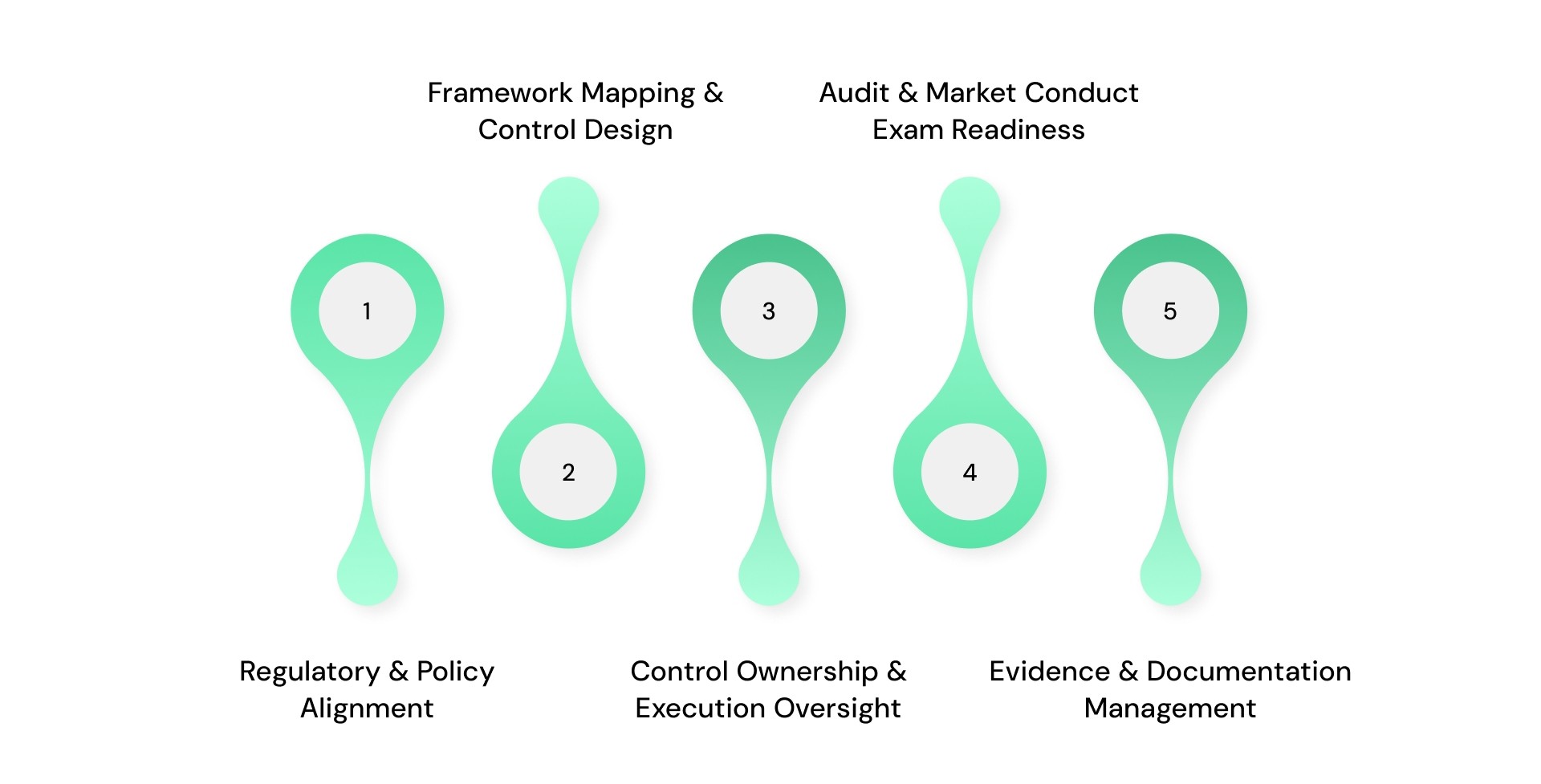
Compliance, in an organization, is not a static checklist or an annual exam exercise. It is a continuous operating discipline that translates regulatory expectations into repeatable, auditable business actions. For you, compliance exists where regulatory intent meets daily execution across underwriting, claims, IT, and vendor management.
Below are the core compliance responsibilities and how they connect to operations.
- Regulatory and Policy Alignment: You interpret state-based regulations and internal policies, then translate them into operational requirements teams can realistically follow. This includes aligning NAIC models and state DOI guidance with underwriting rules, claims handling procedures, and customer communications.
- Framework Mapping and Control Design: You map regulatory obligations to internal controls and assign ownership to operational teams. Each control must clearly connect to a real process, such as claims approvals, premium calculations, or data access provisioning.
- Control Ownership and Execution Oversight: You ensure business owners understand their control responsibilities and execute them on schedule. Examples include quarterly access reviews performed by IT, underwriting approval thresholds enforced by operations, and segregation of duties maintained in financial workflows.
- Audit and Market Conduct Exam Readiness: You prepare the organization for state exams and internal audits by maintaining clear documentation, current policies, and traceable evidence. Operations teams generate the evidence, while you validate completeness and consistency.
- Evidence and Documentation Management: You coordinate how evidence is captured, stored, and retrieved across systems. This includes vendor due diligence records, training attestations, system logs, and exception handling documentation.
Also Read: Top 10 Archer Alternatives for Compliance in 2026
To understand where tension begins, it’s important to look at how operations function day to day and why speed and execution are their primary focus.

What “Operations” Means and Why It Prioritizes Speed
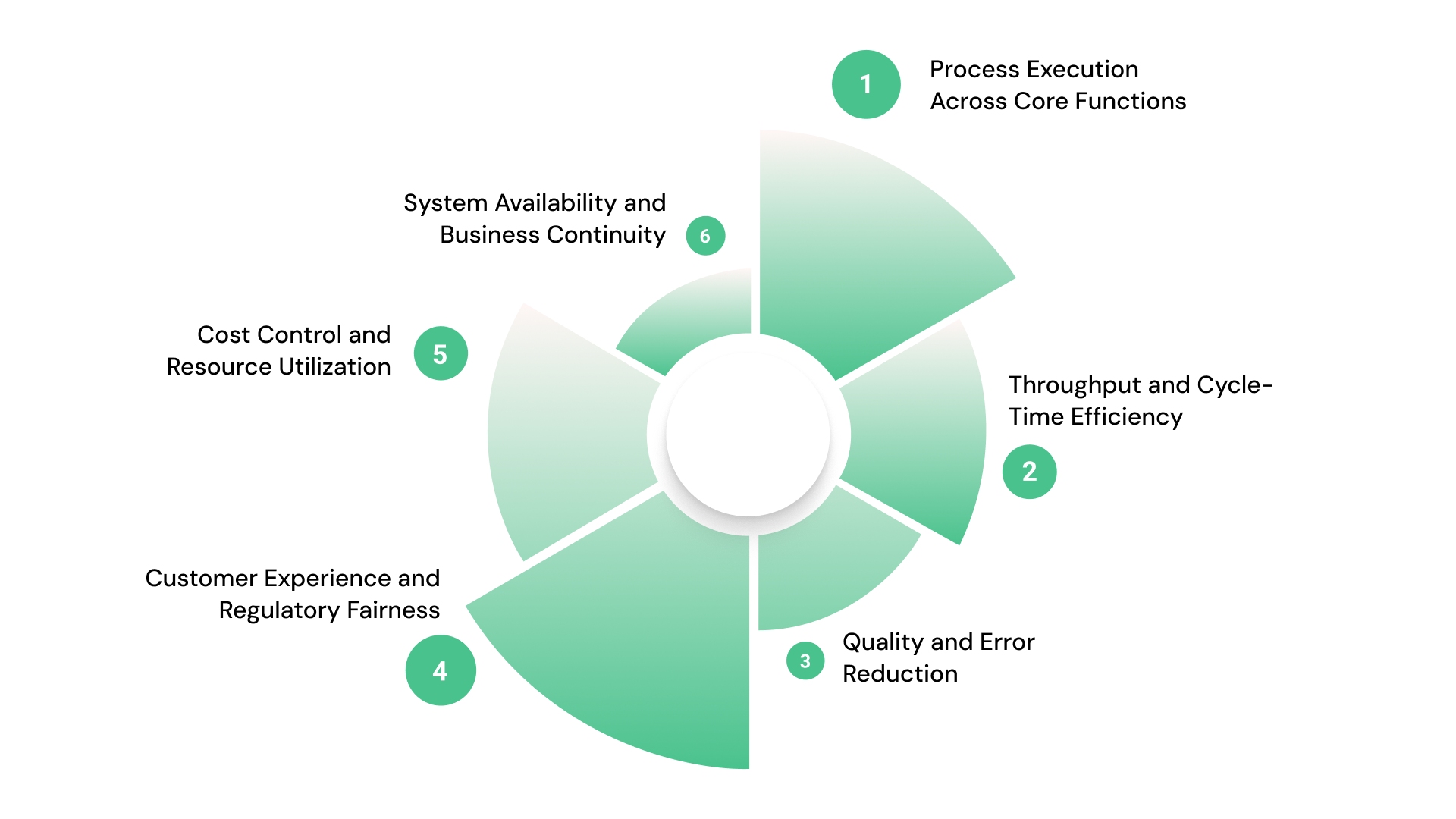
In organizations, operations are where regulatory intent becomes customer-facing reality. Operations teams execute the processes that move policies, premiums, claims, and data through the business every day. Their success depends on speed, consistency, and reliability across people, processes, and systems operating at scale.
Below are the core operational priorities and where compliance friction emerges.
- Process Execution Across Core Functions: Operations owns the end-to-end execution of underwriting, policy administration, billing, claims handling, and customer service. These workflows span multiple systems and teams, making consistency and clarity essential for timely outcomes.
- Throughput and Cycle-Time Efficiency: Operations optimize for processing volume and turnaround time, especially in high-impact areas such as claims adjudication and policy issuance. Delays caused by unclear compliance requirements directly affect service levels and backlog management.
- Quality and Error Reduction: Operational teams focus on minimizing rework, exceptions, and downstream corrections. When compliance controls are poorly defined or introduced late, error rates increase, and corrective actions consume valuable capacity.
- Customer Experience and Regulatory Fairness: Operations balance speed with accuracy to meet policyholder expectations and regulatory standards for fair treatment. Inconsistent guidance creates variability in outcomes, increasing both customer dissatisfaction and regulatory exposure.
- Cost Control and Resource Utilization: Operations manages staffing, vendor costs, and system usage to stay within budget. Manual compliance tasks, duplicate reporting, and unplanned evidence requests increase operational costs without improving outcomes.
- System Availability and Business Continuity: Operations depend on stable systems to maintain uptime and service continuity. Uncoordinated compliance activities, such as ad hoc access reviews or documentation requests, disrupt normal operating rhythms.
When compliance expectations meet operational reality, misalignment often emerges, leading to the friction organizations experience in practice.
Compliance Vs Operations: Where The Conflict Really Comes From
The conflict between compliance and operations rarely stems from intent or effort. In organizations, it emerges from how requirements are designed, introduced, and managed across fast-moving business processes. When regulatory expectations are not operationalized early, friction becomes unavoidable and escalates during audits, market conduct exams, and executive reviews.
Below is a practical breakdown of where and why this conflict occurs.
| Aspect | Compliance Perspective | Operations Perspective |
| Policy Design | Policies reflect regulatory language and exam expectations but lack process-level clarity. | Policies feel disconnected from real underwriting, claims, or servicing workflows. |
| Control Implementation Timing | Controls are often added after processes go live due to regulatory updates or findings. | Late-stage controls disrupt established workflows and increase rework. |
| Evidence Collection Approach | Evidence is requested periodically to support audits and state exams. | Evidence requests arrive as unplanned work, outside normal operating cycles. |
| Ownership and Accountability | Control ownership appears defined, but execution responsibility is unclear. | Teams are unsure who owns tasks, timelines, and approvals. |
| Change Management | Regulatory changes require rapid policy updates and control adjustments. | Operational teams struggle to absorb changes without clear guidance. |
| Visibility and Reporting | Limited real-time insight into control execution and evidence status. | Little awareness of how daily actions impact compliance posture. |
| Impact On Leadership | Compliance leaders manage audit risk and regulatory exposure. | Operations leaders manage delays, cost overruns, and service levels. |
| Executive Experience | Executives see fragmented reporting and rising compliance risk. | Executives experience slowed execution and competing priorities. |
VComply’s Compliance Ops centralizes your regulatory frameworks, policies, and controls in a single platform. By linking operational tasks directly to regulatory obligations, Compliance Ops ensures evidence is captured as work happens, reduces duplicated efforts, and makes audit readiness continuous rather than reactive.
Once this conflict takes hold, its impact extends beyond workflow inefficiencies into measurable operational and regulatory costs.
The Hidden Cost of Treating Compliance as Separate From Operations
When compliance operates in isolation, the impact extends far beyond regulatory risk. Separation creates hidden operational costs that surface during audits, market conduct exams, system changes, and growth initiatives. These costs accumulate quietly until they affect delivery timelines, error rates, and leadership confidence.
Below are the operational and risk impacts of a disconnected compliance model.
- Audit Disruptions and Exam Fire Drills: When compliance is not embedded into daily workflows, audits trigger urgent evidence requests. Operational teams pause core activities to reconstruct records, respond to regulators, and resolve gaps under pressure.
- Duplicated Work Across Teams: Separate compliance tracking forces multiple teams to maintain similar documentation in different systems. This duplication increases effort without improving control strength or regulatory confidence.
- Delayed Product and Process Changes: Compliance reviews performed late in the change lifecycle slow policy launches, system updates, and process improvements. Rework becomes necessary when controls are introduced after execution begins.
- Higher Error Rates From Manual Execution: Manual control steps and ad hoc tracking increase the likelihood of missed tasks, incomplete documentation, and inconsistent application across business units.
- Control Failures During Regulatory Reviews: Disconnected execution leads to gaps between policy intent and operational behavior. Regulators identify failures when controls exist on paper but lack consistent evidence.
- Inconsistent Execution Across Locations and Vendors: Without centralized oversight, controls are applied differently across sites, third parties, and lines of business, increasing regulatory scrutiny and remediation effort.
Also Read: Understanding Regulatory Compliance Management in the U.S.
Understanding these hidden costs clarifies why high-performing organizations take a different, more integrated approach.
What Balance Looks Like In High-Performing Organizations
Compliance and operations function as a single system rather than competing priorities. Balance is achieved when regulatory requirements are designed into how work is performed, not layered on afterward.
Below is what a balanced compliance and operations model looks like in practice.
- Controls Embedded Into Operational Workflows: Regulatory controls are built directly into underwriting, claims, vendor management, and IT processes. Operational teams execute controls as part of standard work, without additional steps or parallel tracking.
- Evidence Captured As Work Happens: Documentation and proof of control execution are generated automatically through normal system activity. This eliminates retrospective evidence gathering and reduces disruption during audits and state examinations.
- Shared Visibility Across Compliance and Operations: Both compliance and operational leaders have access to real-time insight into control status, task completion, and exceptions. Visibility supports faster issue resolution and informed decision-making.
- Shared Accountability With Clear Ownership: Control ownership and execution responsibilities are clearly assigned and understood. Compliance sets standards and monitors outcomes, while operations execute consistently within defined timelines.
- Before: Reactive, Manual, and Siloed Execution: Compliance activities occur in response to audits, relying on spreadsheets, email follow-ups, and fragmented documentation across teams.
- After: Integrated, Measurable, and Repeatable Execution: Compliance activities operate continuously, supported by structured workflows, measurable outcomes, and consistent execution across locations and business units.
With a clear picture of what success looks like, the next step is translating it into a practical, repeatable operating framework.
A Practical Framework To Balance Compliance and Operations
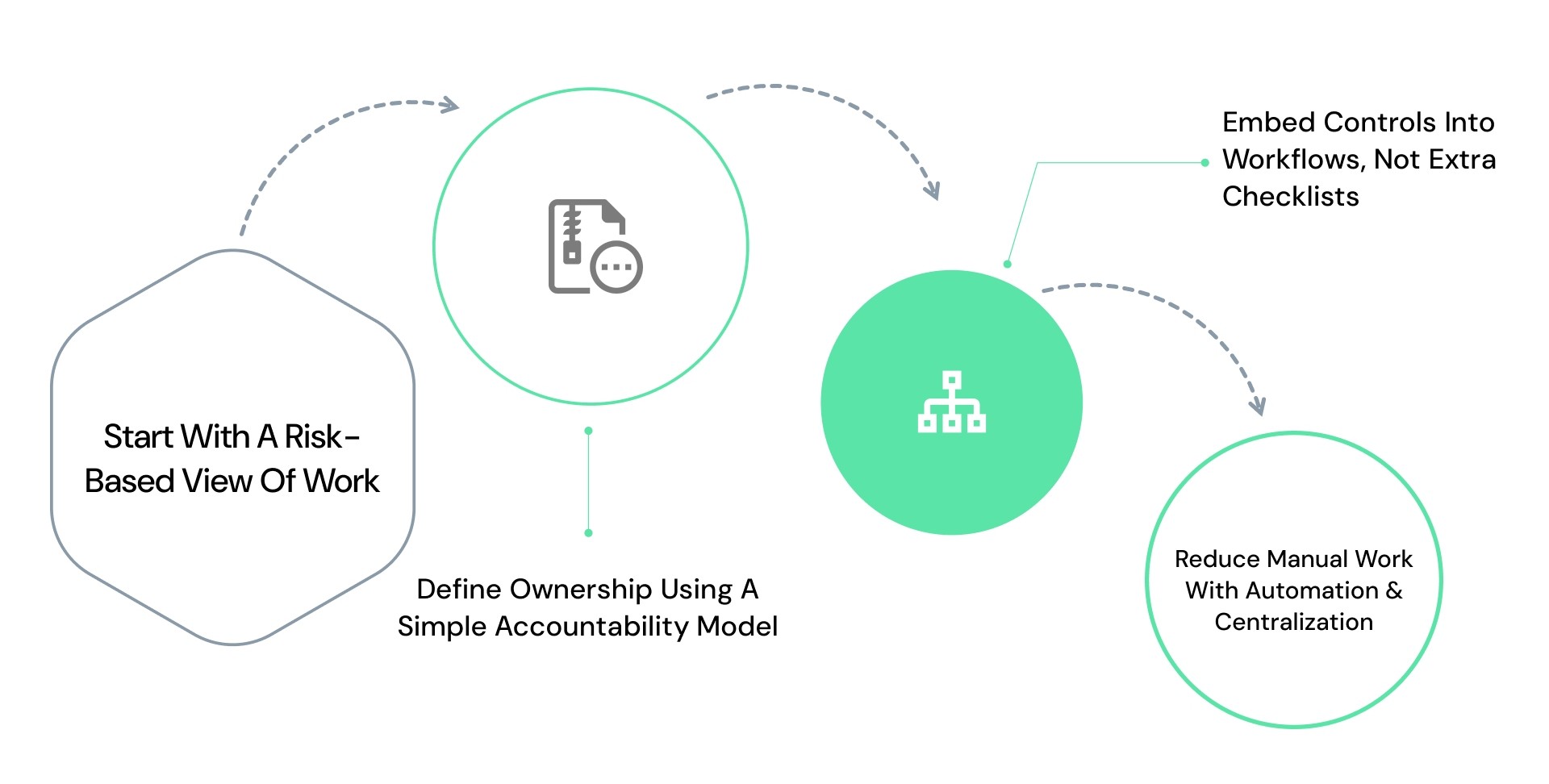
Balancing compliance and operations requires more than best intentions or periodic reviews. High-performing organizations rely on a repeatable operating model that aligns regulatory expectations with daily execution.
Below is a practical, execution-focused framework built for real operations.
Start With A Risk-Based View Of Work
A risk-based approach ensures compliance efforts align with real exposure rather than treating every requirement equally. You reduce noise, improve consistency, and strengthen exam readiness by aligning controls with risk, not volume.
Below is how to apply a risk-based view in day-to-day operations.
- Identify Business Processes With Highest Regulatory Impact: Begin by isolating processes that carry the greatest regulatory and financial consequences, such as premium billing accuracy, claims adjudication, financial reporting, and third-party oversight. These areas warrant tighter monitoring and clearer ownership.
- Tier Processes Based On Risk and Materiality: Classify processes into high, medium, and low risk based on potential consumer harm, regulatory scrutiny, and dollar impact. High-risk tiers require more frequent reviews, stronger evidence standards, and formal escalation paths.
- Align Control Strength To Process Criticality: Apply stronger controls where failure would trigger regulatory findings or reputational damage. Lower-risk processes can rely on lighter controls without compromising overall compliance posture.
- Focus Monitoring On Outcomes, Not Activities: Measure whether controls achieve their intended purpose rather than tracking task completion alone. This approach improves signal quality and supports regulator-facing narratives during exams.
With Risk Ops by VComply, you can prioritize controls based on regulatory and operational risk, monitor high-impact processes in real time, and focus on outcomes rather than tasks. RiskOps reduces noise from low-risk activities, strengthens exam readiness, and ensures operational teams are working on what matters most.
Define Ownership Using A Simple Accountability Model
Clear ownership is the foundation of consistent compliance execution. A simple accountability model clarifies who does the work, who oversees it, and who reports outcomes, reducing friction between compliance and operations.
Below is a practical accountability model for compliance execution.
- First Line Ownership: Operational Execution: Business and operational teams own the execution of controls within their processes. This includes completing assigned tasks, following approved procedures, and generating evidence as part of routine work.
- Second Line Oversight: Compliance Enablement and Monitoring: Compliance teams define standards, interpret regulatory expectations, provide guidance, and monitor execution. They validate effectiveness, identify gaps, and prepare reporting for leadership and regulators.
- Policy Drafting Responsibility: Compliance owns drafting and maintaining policies to reflect regulatory intent and business reality. Operational input ensures policies align with actual workflows and system capabilities.
- Control Execution Responsibility: Operational owners execute controls according to defined frequency and scope. Execution occurs within existing systems and processes, not through separate compliance activities.
- Leadership Reporting Responsibility: Compliance consolidates execution status, exceptions, and trends into clear reports for executives and boards. Operations support reporting by maintaining timely and accurate execution data.
Embed Controls Into Workflows, Not Extra Checklists
Controls are most effective when they operate inside the processes your teams already follow. Embedding controls into workflows ensures requirements are met naturally, evidence is generated automatically, and execution remains aligned with regulatory expectations.
Below are practical examples of embedding controls into operations.
- Procurement and Vendor Onboarding Controls: Vendor risk assessments are completed during onboarding, not after contracts are signed. Due diligence, financial stability checks, and data security reviews occur before system access or data sharing is approved.
- Human Resources Onboarding and Training Controls: Compliance training and policy acknowledgements are embedded into employee onboarding. New hires complete required attestations before gaining access to sensitive systems or customer data.
- IT Access Management Controls: Access reviews run on defined schedules with assigned system owners. Role-based access is validated within identity systems, and evidence is captured automatically for audit purposes.
- Claims Handling Controls: Claims review checkpoints are integrated into claims processing systems. Required documentation, supervisory approvals, and timeliness standards are enforced as part of normal execution.
- Third-Party Administrator Oversight: Service-level reviews and compliance attestations are aligned with vendor reporting cycles. Operational data supports both performance management and regulatory oversight.
Reduce Manual Work With Automation and Centralization
Manual compliance work creates delays, inconsistencies, and visibility gaps that scale poorly in environments. Automation and centralization remove friction by standardizing execution and evidence handling across teams.
Below are the core areas where automation and centralization create impact.
- Automated Task Assignments and Escalations: Compliance tasks are assigned to responsible owners with defined timelines. Reminders and escalations ensure tasks are completed on schedule without manual follow-up or email tracking.
- Centralized Evidence Collection and Storage: Evidence is captured and stored in a single system tied to specific controls and processes. Centralization reduces version conflicts and simplifies retrieval during audits and state examinations.
- Framework-To-Control Mapping: Regulatory frameworks are mapped directly to internal controls, creating clear traceability. Updates to regulations automatically reflect across mapped controls, reducing manual maintenance.
- Real-Time Dashboards and Status Visibility: Dashboards provide current insight into control execution, overdue tasks, and exceptions. Visibility supports proactive issue resolution and informed leadership reporting.
- Consistent Execution Across Business Units: Standardized workflows ensure controls are applied consistently across teams, locations, and third parties. Consistency strengthens regulatory confidence and simplifies remediation.
Once processes are streamlined, the next step is measuring whether alignment is actually being achieved.
How To Measure Whether Compliance and Operations Are Truly Aligned
Alignment between compliance and operations cannot rely on perception or intent. Without measurement, discussions become subjective and reactive, especially during audits or executive reviews. Clear metrics create a shared language that helps you evaluate effectiveness, identify gaps early, and demonstrate control maturity to regulators and leadership.
Below are practical metrics that indicate true alignment.
- Cycle Time Impact on Controlled Processes: Measure how compliance controls affect processing time in areas such as claims handling or policy issuance. Stable or improving cycle times indicate controls are embedded without disrupting execution.
- Rework and Exception Rates Linked to Controls: Track how often transactions require correction due to control failures or unclear requirements. Declining rework rates signal improved clarity and operational consistency.
- On-Time Completion Of Compliance Tasks: Monitor whether operational owners complete assigned compliance tasks within defined timelines. Timely completion reflects clear ownership and manageable workloads.
- Audit Readiness By Control Evidence: Assess evidence completeness and accuracy for each control before audits or state examinations. High readiness reduces last-minute remediation and regulatory scrutiny.
- Remediation Plan for Findings and Issues: Track how quickly identified gaps are resolved. Shorter remediation cycles demonstrate operational responsiveness and effective compliance oversight.
Without the right guardrails, even well-designed programs can drift, leading to common mistakes that undermine alignment.
Common Mistakes That Break The Balance
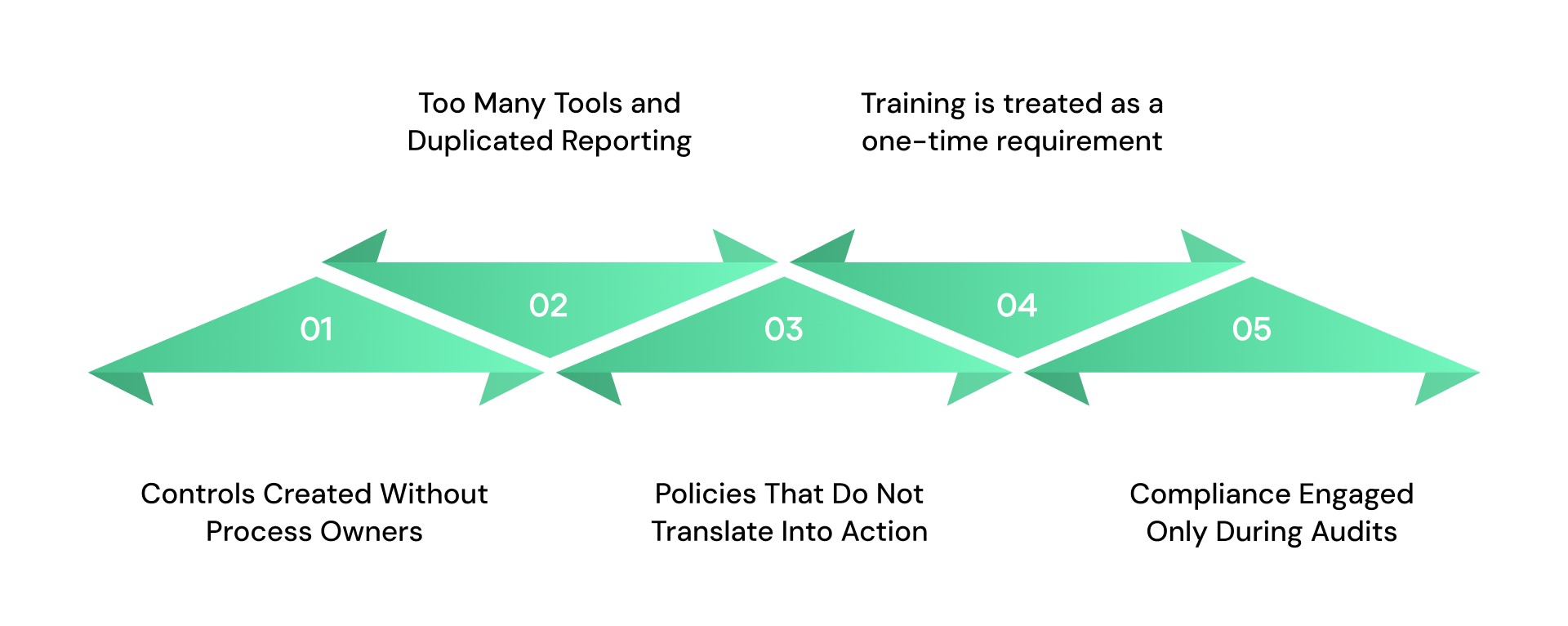
Even well-intentioned compliance programs lose effectiveness when execution details are overlooked. Small structural missteps compound over time, creating inefficiency, audit risk, and operational strain.
Below are common mistakes that undermine compliance and operational alignment.
- Controls Created Without Process Owners: Controls are defined without assigning clear operational ownership. When execution responsibility is unclear, tasks are missed or inconsistently performed across teams.
- Too Many Tools and Duplicated Reporting: Compliance activities are tracked across spreadsheets, email, shared drives, and disconnected systems. Fragmentation increases effort while reducing accuracy and visibility.
- Policies That Do Not Translate Into Action: Policies describe regulatory intent but fail to specify executable steps. Operational teams struggle to apply guidance consistently, leading to interpretation gaps.
- Training is treated as a one-time requirement: Training is delivered during onboarding or annually, with limited reinforcement. Without ongoing validation, understanding erodes as roles, systems, and regulations change.
- Compliance Engaged Only During Audits: Compliance involvement occurs primarily during audits or examinations. This reactive approach leaves gaps unaddressed and forces operational teams into last-minute remediation.
VComply’s GRCOps Suite provides end-to-end governance across frameworks, policies, risks, and incidents, giving leaders real-time visibility into control execution, exceptions, and trends. By integrating operational workflows with compliance and risk management, GRCOps reduces manual work, ensures consistent execution across teams, and strengthens regulatory assurance.
Avoiding these pitfalls requires a structured, phased approach that teams can realistically execute.
Implementation Roadmap For Real Teams
Building a balance between compliance and operations does not require a full transformation overnight. Successful organizations follow a phased approach that delivers early stability while creating a foundation for scale.
Below is a practical, phased roadmap designed for real teams.
Days 1 – 30: Build Shared Clarity
The first thirty days set the tone for sustainable alignment between compliance and operations. This phase focuses on creating shared understanding, reducing ambiguity, and establishing a baseline that supports consistent execution.
Below are the key actions to establish shared clarity.
- Identify Top Regulatory Drivers and Business Processes: Document the primary state regulations, market conduct requirements, and financial reporting obligations that affect your organization. Map these drivers to critical business processes such as underwriting, claims handling, billing, and vendor management.
- Assign Clear Owners for Controls and Processes: Designate accountable owners for each prioritized process and associated controls. Ownership should align with operational responsibility, ensuring execution occurs within the teams performing the work.
- Define Minimum Evidence Expectations: Establish clear standards for what acceptable evidence looks like for each control. Consistent evidence definitions reduce rework and improve audit readiness across teams.
- Standardize A Core Set of Controls: Select a limited number of high-impact controls and apply them consistently across business units. Standardization improves clarity, reduces variation, and supports scalable compliance execution.
Days 31 – 60: Operationalize The Workflow
Once clarity and ownership are established, the next phase focuses on execution consistency. This stage moves compliance from defined expectations into daily operational reality.
Below are the key actions to operationalize compliance workflows.
- Implement System-Based Task Management: Move compliance activities into a centralized system that assigns tasks, tracks due dates, and triggers reminders. Automated escalation ensures delays are addressed before they impact audits or examinations.
- Centralize Evidence Collection and Storage: Consolidate evidence capture into a single repository linked to specific controls and processes. Centralization simplifies retrieval and supports consistent documentation standards.
- Align Evidence To Control Frequency: Ensure evidence is collected according to defined control schedules rather than ad hoc requests. Predictable collection reduces disruption and improves reliability.
- Establish A Monthly Governance Cadence: Hold structured monthly reviews to assess execution status, exceptions, and trends. Governance meetings reinforce accountability and enable early issue resolution.
Days 61 – 90: Optimize and Scale
After workflows are operational, the final phase focuses on strengthening maturity and supporting growth. This stage emphasizes refinement, visibility, and scalability, ensuring compliance adapts as business complexity increases.
Below are the key actions to optimize and scale compliance execution.
- Expand Coverage To Additional Frameworks and Processes: Extend standardized controls to additional regulatory frameworks, business units, and third-party relationships. Expansion should follow the same risk-based prioritization to maintain consistency.
- Enhance Leadership Reporting and Visibility: Introduce executive-level reporting that highlights control performance, trends, and emerging risks. Clear visibility supports informed decision-making and board-level oversight.
- Analyze Exception Patterns and Root Causes: Review recurring exceptions to identify process weaknesses or unclear requirements. Root cause analysis prevents repeated issues and reduces remediation effort.
- Redesign Processes To Reduce Exceptions: Adjust workflows to eliminate manual steps and ambiguity that drive exceptions. Process improvements strengthen both compliance outcomes and operational efficiency.
- Formalize Continuous Improvement Cycles: Establish regular reviews to reassess controls, evidence quality, and ownership. Continuous refinement ensures compliance remains aligned with changing regulatory and business needs.
At this stage, technology becomes the enabler that sustains alignment and scale.
How VComply Helps You Balance Compliance and Operations
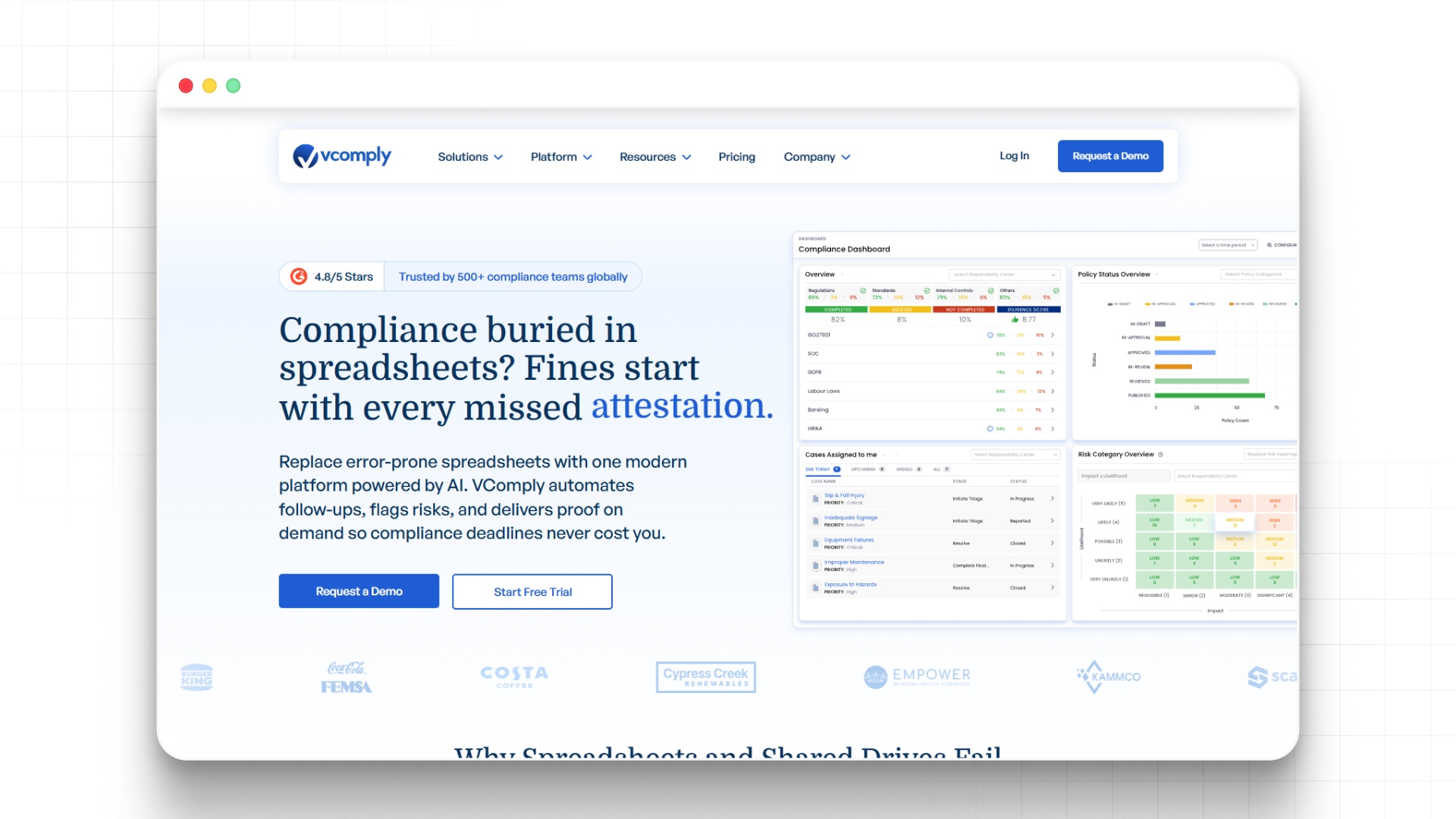
Balancing compliance and operations requires an execution layer that connects regulatory intent to daily work without creating friction. VComply is built to support organizations that need structure, visibility, and accountability across complex, state-driven regulatory environments.
Below is how VComply enables sustainable balance at scale.
- Centralized Governance Across Frameworks, Policies, and Evidence: VComply centralizes regulatory frameworks, internal policies, controls, and evidence within a single cloud-based platform. This structure ensures consistent interpretation of state regulations, reduces duplication, and enables faster updates when regulatory requirements change.
- Operational Task Ownership and Execution Tracking: Compliance tasks are assigned to operational owners with defined timelines and accountability. VComply tracks completion, triggers reminders, and escalates delays, ensuring execution remains aligned with business workflows.
- Continuous Audit and Exam Readiness: Evidence is organized, accessible, and mapped directly to controls and frameworks. This allows you to demonstrate compliance confidently during audits and state examinations without last-minute evidence collection or operational disruption.
- End-To-End Visibility For Leaders and Boards: Dashboards provide real-time insight into control status, exceptions, and trends. Compliance leaders and executives gain a shared view of performance, supporting informed decision-making and regulatory assurance.
- Unified Ops Coverage Across The GRC Lifecycle: VComply supports ComplianceOps, RiskOps, PolicyOps, and CaseOps within a single platform. This unified approach enables you to manage regulatory obligations, risk assessments, policy lifecycle, and incident handling cohesively, eliminating silos and improving execution consistency across the organization.
Also Read: GDPR Compliance Software: Features, Benefits, and Why VComply is the #1 Choice in 2026
Book a demo and discover how VComply helps you align compliance with operational performance.
Final Thoughts
The real challenge with compliance vs operations is not choosing one over the other, but designing a model where both move in sync. Alignment determines whether regulatory obligations slow execution or strengthen it. When compliance operates as part of daily workflows, you gain consistency, predictability, and confidence during audits and state examinations.
VComply enables this alignment by acting as the execution layer that connects compliance intent to operational action. Through centralized governance, clear ownership, automated workflows, and real-time visibility, VComply helps teams reduce friction, improve exam readiness, and scale compliance without sacrificing operational speed.
Start a free trial of VComply to see how you can balance compliance and operations with clarity and control.
FAQs
Compliance supports innovation when embedded early in product design and process planning. Clear regulatory alignment reduces rework, shortens approval cycles, and prevents launch delays. When compliance operates reactively, innovation slows due to late-stage changes and increased regulatory risk.
Shared KPIs work when metrics reflect both execution quality and regulatory outcomes. Indicators such as on-time control execution and reduced exceptions align teams around common goals. Misalignment occurs when KPIs measure speed without considering regulatory impact.
Controls should be reviewed annually at a minimum and whenever regulations, systems, or business processes change. State regulatory updates, new products, and third-party relationships often trigger earlier reviews to maintain exam readiness and execution accuracy.
Vendors and TPAs extend operational and regulatory risk beyond internal teams. Inconsistent oversight can lead to data security gaps, service failures, and compliance findings. Clear controls, periodic reviews, and documented evidence reduce third-party exposure.
State-level regulations vary in scope, interpretation, and enforcement timelines. Operations struggle when requirements differ across jurisdictions. Centralized tracking and standardized execution help maintain consistency while adapting to state-specific obligations.