

10 Inexpensive Compliance Tools for 2026 That Balance Cost, Control & Audit Readiness
Compliance programs rarely fail due to a lack of intent. They fail when tracking obligations, controls, and evidence becomes fragmented across spreadsheets, emails, and disconnected systems. As regulatory expectations increase, this fragmentation creates gaps that surface during audits and internal reviews.
Many teams adopt inexpensive compliance tools to control costs, but these tools often introduce trade-offs. Limited automation, weak ownership tracking, and inconsistent audit trails reduce visibility and slow response to compliance issues.
This guide evaluates 10 inexpensive compliance tools, focusing on how they support control visibility, accountability, and audit readiness as your program grows.
TL;DR
- Tools like Eramba and SimpleRisk focus on basic risk registers and control tracking, while Vanta and Hyperproof emphasize automated evidence collection and continuous monitoring.
- Platforms such as SafetyCulture and NAVEX One Compliance Essentials handle inspections or policy workflows well, but often require additional systems to connect risks, controls, and audit trails into one view.
- Tools like ZenGRC, Hyperproof, and AuditBoard improve audit preparation by linking controls, evidence, and audit workflows instead of storing documents in isolation.
- Vanta and Hyperproof automate control testing and evidence collection, while tools like SimpleRisk rely more on manual updates, which increases operational overhead as compliance scope grows.
- LogicGate offers flexible, no-code workflow design, but requires setup discipline, while structured platforms like VComply prioritise standardised workflows and accountability out of the box.
- Many teams start with point tools such as Eramba, SafetyCulture, or Vanta, but eventually shift toward unified platforms like VComply or NAVEX One to eliminate silos and maintain consistent governance visibility.
What Are Inexpensive Compliance Tools?
Inexpensive compliance tools are platforms designed to help organizations track regulatory obligations, controls, and audit activities at a lower cost. These tools typically focus on basic workflows such as task tracking, documentation, and reporting, while offering limited automation and integration compared to full-scale GRC platforms.
Also read: 11 Best GRC Tools and Platforms to Use in 2025
3 Reasons Why Cost-Effective Compliance Tools Matter for Growing GRC Programs
Cost constraints often shape early compliance decisions, but the impact extends beyond budget considerations. The way tools structure workflows directly affects visibility, accountability, and audit readiness.
The importance becomes clearer across the following areas:
1. Managing compliance without increasing operational overhead
Teams need tools that reduce manual follow-ups and centralize tracking. Without this, compliance efforts rely heavily on emails and spreadsheets, increasing the risk of missed obligations.
2. Supporting audit readiness with structured evidence tracking
Auditors expect clear documentation showing how controls operate. Tools that lack structured evidence management make it difficult to demonstrate compliance during reviews.
3. Enabling cross-functional visibility across teams
Compliance activities span multiple departments, including legal, IT, and operations. Without shared visibility, leadership cannot accurately assess compliance status or risk exposure.
Also read: 6 Best OSHA Compliance and Safety Audit Software
Key Features to Look for in Low-Cost Compliance Platforms
Not all inexpensive tools provide the same level of operational control. Evaluating features based on how they support workflows is critical.
The most important capabilities include:
- Task ownership and accountability tracking: Every compliance activity should have a clear owner, deadline, and escalation path. This ensures tasks are completed and monitored consistently.
- Centralized documentation and audit trails: Compliance evidence must be stored in a structured, searchable format. This allows teams to retrieve documentation quickly during audits.
- Workflow automation and reminders: Automated notifications reduce manual follow-ups and help teams stay on track with compliance deadlines.
- Reporting and dashboard visibility: Leaders need real-time insights into compliance status, overdue tasks, and control effectiveness to make informed decisions.
Also read: 5 Essential Compliance Management Tools For Teams
Top 10 Inexpensive Compliance Tools for Teams Struggling with Compliance
Low-cost compliance tools often work initially but struggle as programs require structured ownership, audit trails, and cross-functional visibility. The real challenge is not cost, but whether the system can support consistent execution as regulatory demands increase.
The tools below represent different approaches to compliance management. As you evaluate them, focus on how well each platform supports accountability, evidence tracking, and audit readiness beyond basic task management.
1. VComply
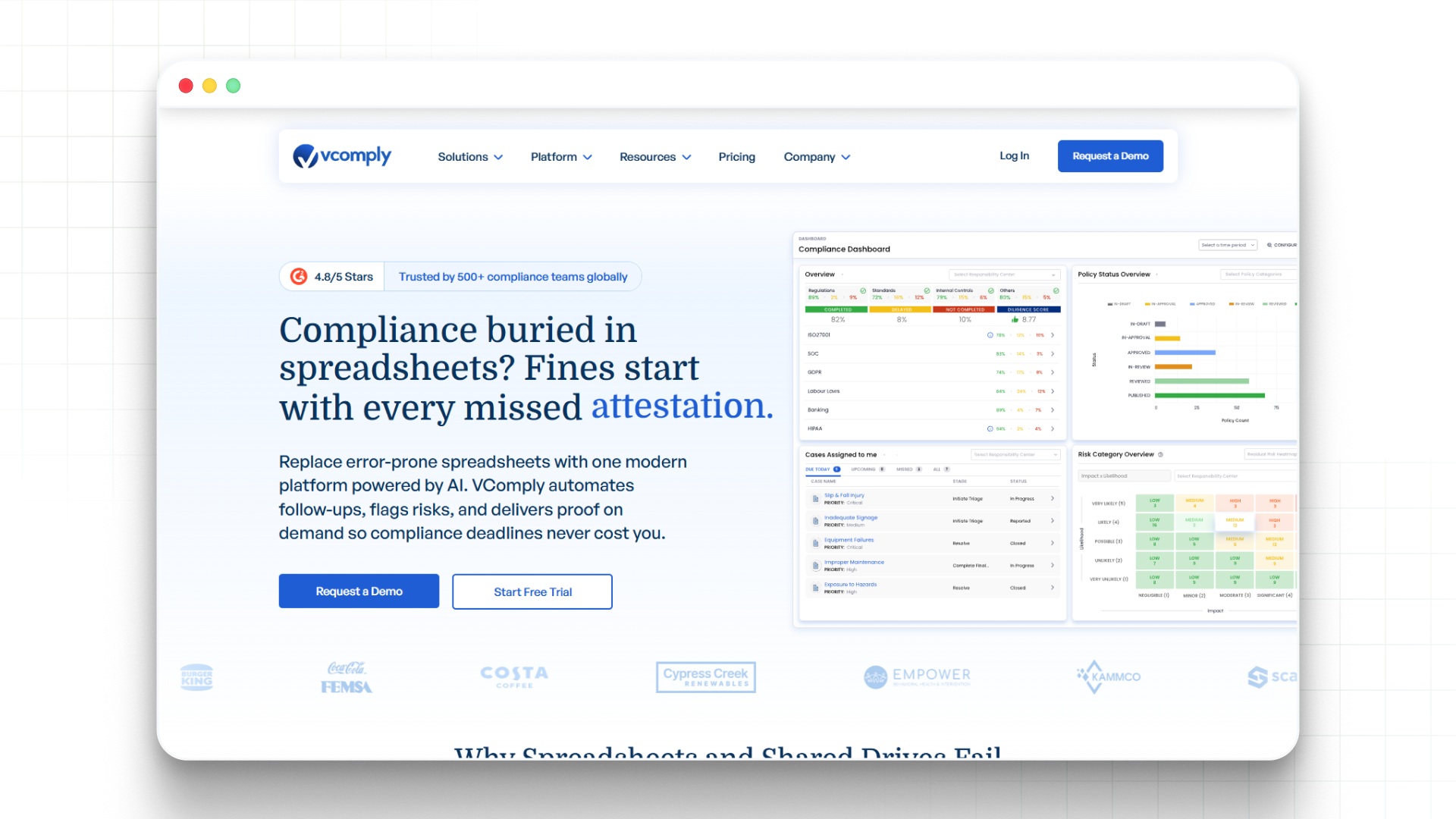
VComply provides a structured GRC platform that centralizes compliance, risk, policy, and audit workflows within a single system. It is designed for organizations that need stronger visibility and accountability without adopting overly complex enterprise systems.
With VComply, you can:
- Convert regulatory requirements and controls into executable workflows
- Assign clear ownership with deadlines, reminders, and escalation paths
- Maintain audit-ready evidence tied directly to controls and activities
Instead of tracking compliance across spreadsheets and emails, everything runs inside one system with visibility for leadership.
How VComply Is Structured:
VComply is built as a modular GRC system, where each module handles a specific operational layer but stays connected.
- Tracks regulatory obligations and control activities
- Assigns tasks with owners, due dates, and escalation paths
- Maintains structured evidence for audits
2. RiskOps
- Manages risk identification, assessment, and mitigation
- Supports scoring models and risk treatment planning
- Provides real-time dashboards for risk visibility
3. PolicyOps
- Manages policy creation, approval, distribution, and attestation
- Tracks version control and employee acknowledgement
- Connects policies directly to compliance controls
4. CaseOps
- Tracks incidents, issues, and remediation workflows
- Assigns ownership and ensures closure accountability
- Links incidents back to risks and policies
This is the real differentiator.
Instead of separate tools for compliance, risk, policies, and incidents, VComply connects all four into one system:
- Shared control library
- Shared evidence repository
- Unified dashboards for leadership
- Centralized compliance task management with ownership tracking
- Automated reminders and escalation workflows
- Audit-ready evidence collection and storage
- Real-time dashboards for compliance visibility
- Integrated risk and policy management
Best for: Mid-market and regulated organizations scaling compliance programs
G2 rating: 4.6
Pricing: Custom pricing based on requirements
Free trial/demo: Demo available
See how ComplianceOps structures control tracking, ownership, and audit evidence within a single, connected workflow.
2. Eramba
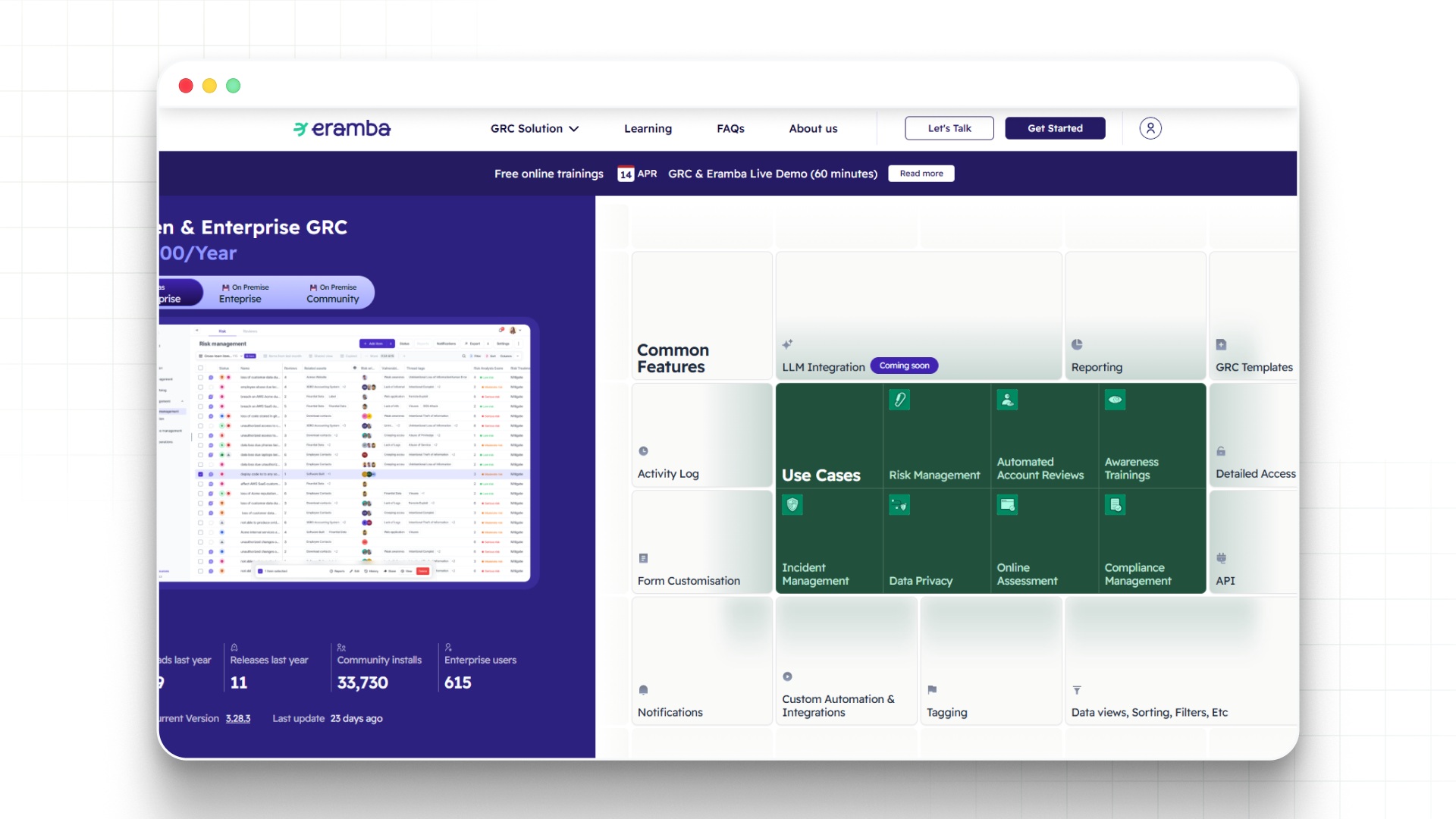
Eramba is an open-source Governance, Risk, and Compliance (GRC) software platform developed to help organizations manage security, compliance, and risk frameworks in a structured and affordable way. Established in 2011, it has become a trusted tool for CISOs, auditors, and compliance professionals across industries worldwide.
Eramba offers comprehensive self-paced courses through its Learning Portal, covering installation, configuration, and implementation of risk, compliance, and data protection programs. The software supports Docker and VMware installations and provides partner-led training and consulting worldwide.
Key features:
- Open-source compliance and risk management
- Control and audit tracking modules
- Customizable workflows
- Risk register management
- Basic reporting capabilities
Best for: Budget-conscious teams with internal technical resources
G2 rating: 4/5
Pricing: Free and paid versions available
Free trial/demo: Demo available
3. SimpleRisk
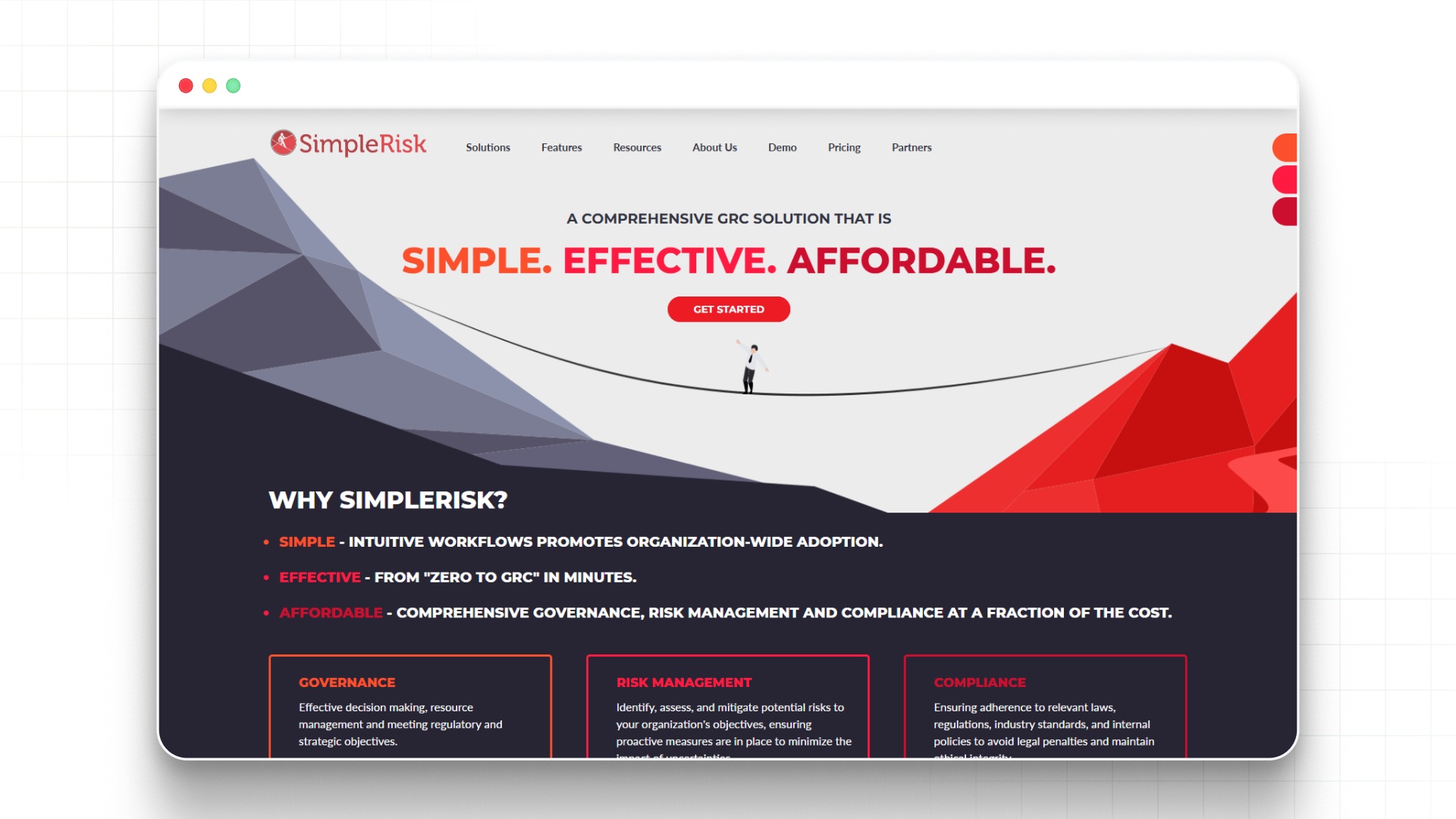
SimpleRisk is a Governance, Risk Management, and Compliance (GRC) software platform aimed at helping organizations centralize and streamline their security and compliance programs. It emphasizes being simple, effective, and affordable, with options ranging from a free open-source core to enterprise cloud and on-premise deployments.
Beyond core GRC, the platform includes incident management, vendor/third-party risk workflows, questionnaires, and reporting tailored to executive, technical, or business stakeholders. Integrations include APIs, import/export, vulnerability data, and tooling such as Jira.
Key features:
- Risk assessment and scoring tools
- Compliance tracking workflows
- Basic reporting dashboards
- User-friendly interface
- Rapid deployment
Best for: Teams transitioning from spreadsheets to structured tools
G2 rating: 4.5
Pricing: Custom pricing
Free trial/demo: Available
4. ZenGRC
ZenGRC is a cloud-based governance, risk, and compliance (GRC) platform focused on simplifying regulatory compliance, audits, and risk management for organizations of all sizes.
Its compliance functionality includes audit management, task workflows, evidence collection, policy and contract tracking, plus dashboards for real-time status and audit readiness.
The platform is positioned for “lean teams,” emphasizing reduced manual documentation and faster time-to-value compared with traditional GRC suites.
Key features:
- Framework mapping and control tracking
- Automated evidence collection
- Audit workflow management
- Integration with cloud platforms
- Compliance dashboards
Best for: Mid-sized teams managing multiple frameworks
G2 rating: 4.4
Pricing: Custom pricing
Free trial/demo: Demo available
5. Hyperproof
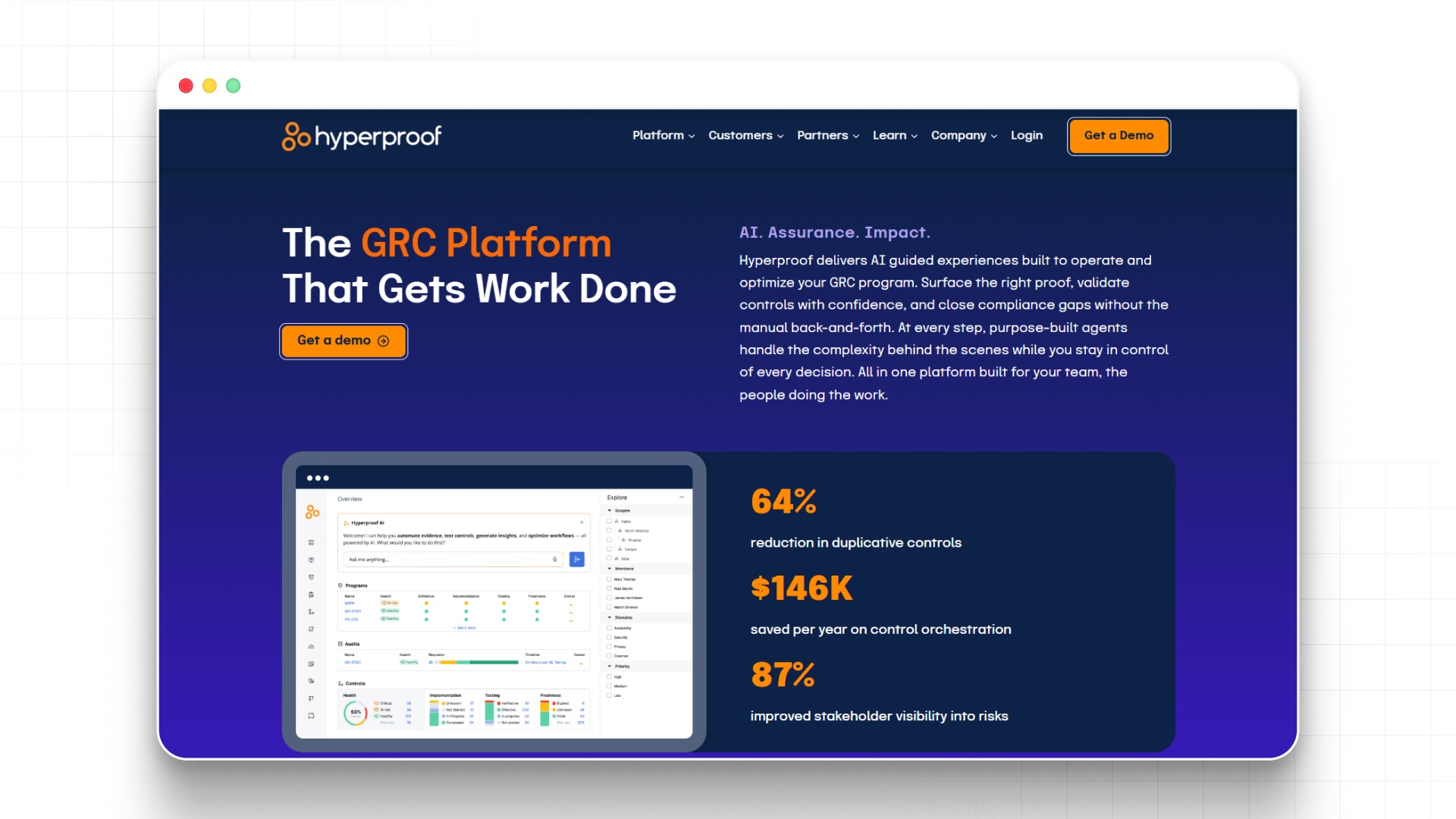
Hyperproof is a cloud-based compliance and risk management software platform designed to help organizations streamline governance, risk, and compliance (GRC) workflows.
It centralizes audit readiness, evidence collection, and control management, reducing the manual effort needed to meet regulatory and certification requirements.
The software offers prebuilt connectors and APIs for integration with ticketing systems, cloud infrastructure, and document repositories. This interoperability supports automated evidence collection and real-time control verification, aligning compliance with existing business operations.
Key features:
- Continuous compliance monitoring
- Task tracking and ownership assignment
- Evidence management
- Integration capabilities
- Compliance reporting
Best for: Teams focused on ongoing compliance monitoring
G2 rating: 4.5
Pricing: Custom pricing
Free trial/demo: Demo available
6. SafetyCulture
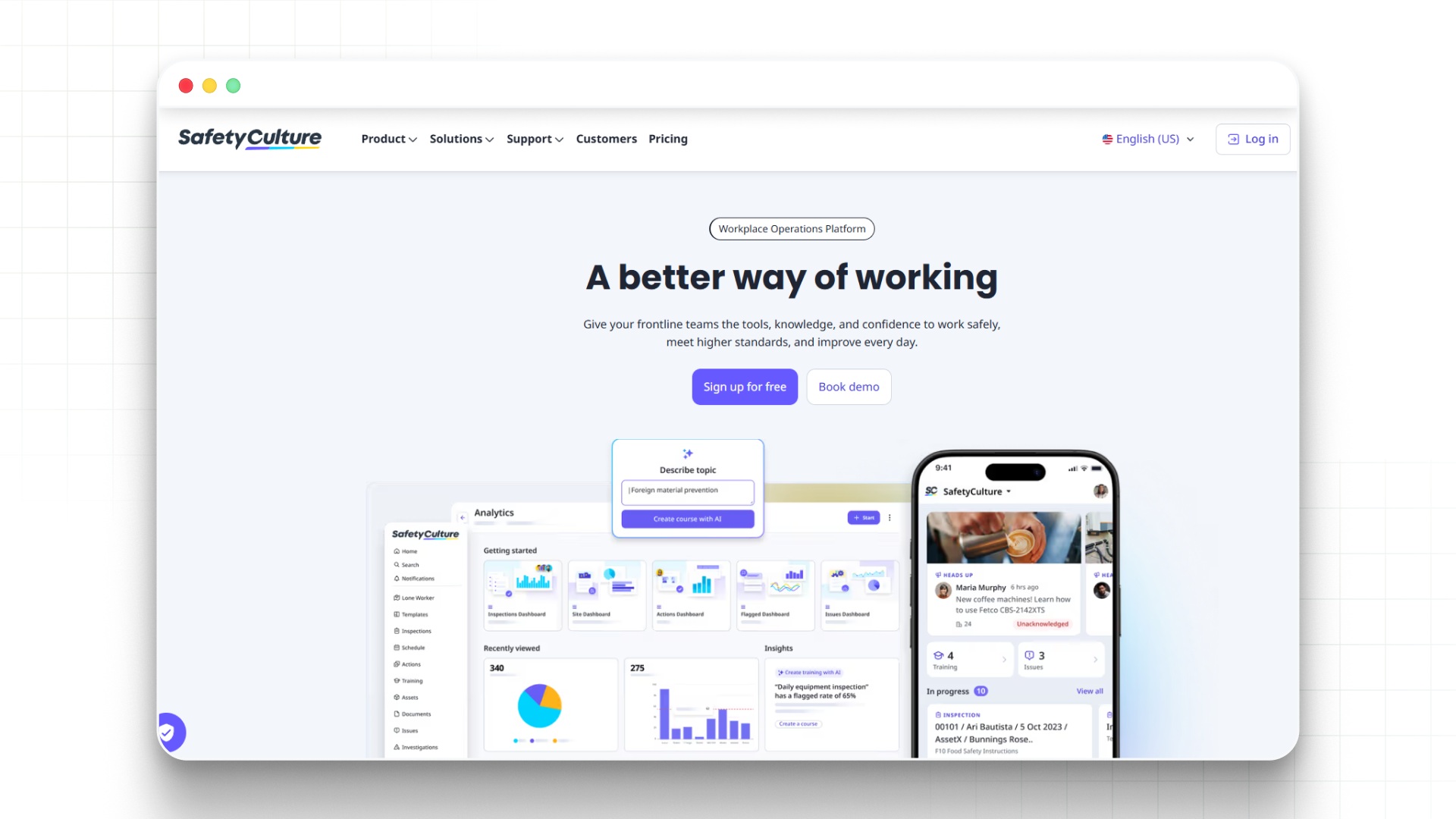
SafetyCulture is a cloud-based, mobile-first operations platform focused on workplace safety, compliance, and inspection management. It’s best known for digitizing checklists, audits, and issue management so organizations can standardize inspections, prove compliance, and close corrective actions across multiple sites in real time.
Beyond inspections, the platform offers incident reporting, asset management, task management, and basic workflow automation.
This allows organizations to connect findings (e.g., non-conformances) to actions, training, and documentation in one place, improving traceability for standards like ISO, OSHA, and industry-specific regulations.
Key features:
- Inspection and audit checklists
- Mobile data collection
- Reporting and analytics
- Workflow automation
- Issue tracking
Best for: Field operations and safety compliance
G2 rating: 4.7
Pricing: Free, paid and custom plans available
Free trial/demo: Available
7. LogicGate
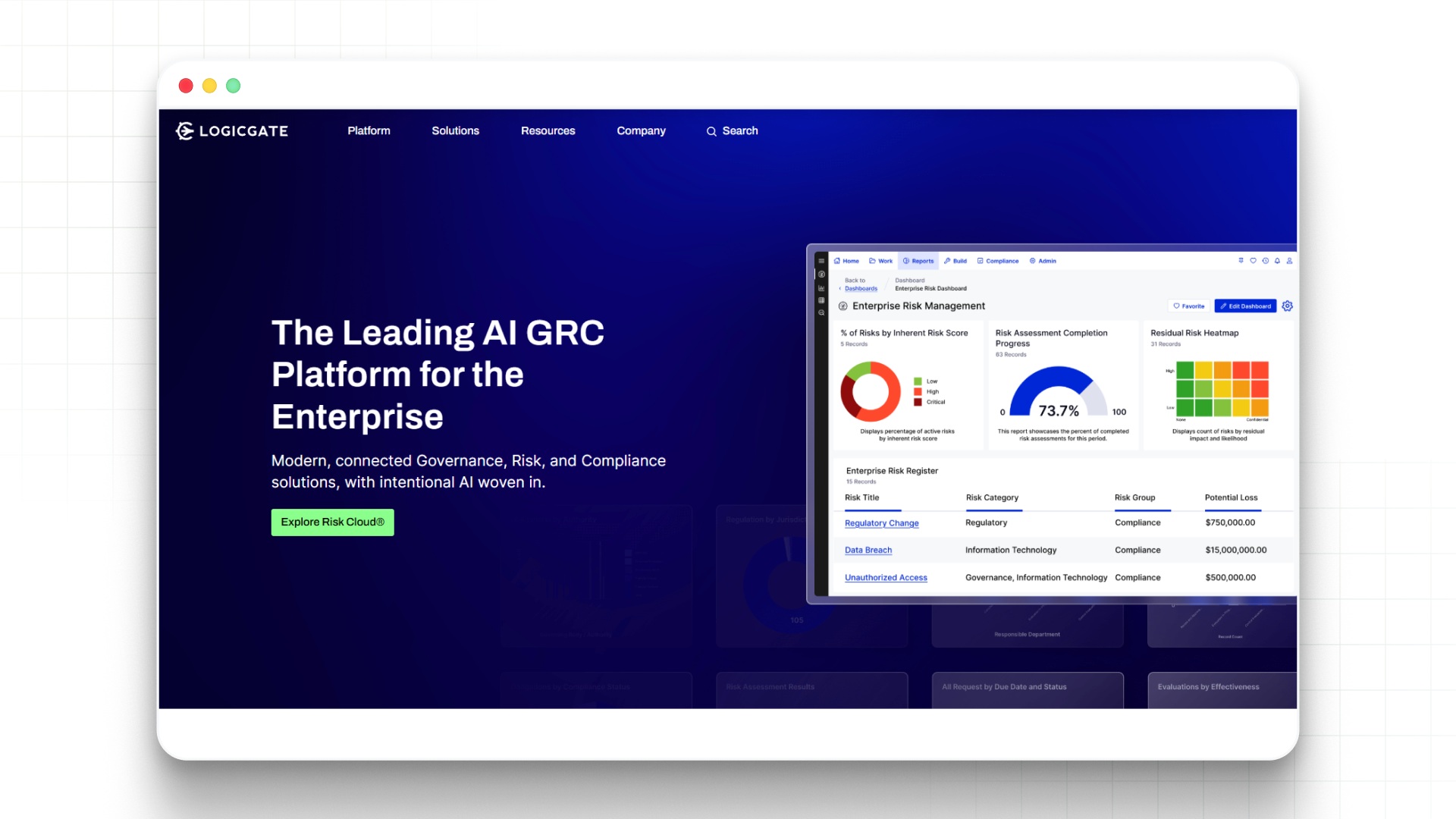
LogicGate is an enterprise software platform for governance, risk, and compliance (GRC) management. Its flagship product, Risk Cloud®, provides a no-code environment that helps organizations automate risk assessments, compliance tracking, and audit workflows.
LogicGate is notable for integrating artificial intelligence and workflow automation to modernize GRC programs across industries.
Key features:
- No-code workflow builder
- Risk and compliance tracking
- Process automation
- Reporting dashboards
- Integration support
Best for: Organizations needing customizable workflows
G2 rating: 4.6
Pricing: Custom pricing
Free trial/demo: Demo available
8. Vanta
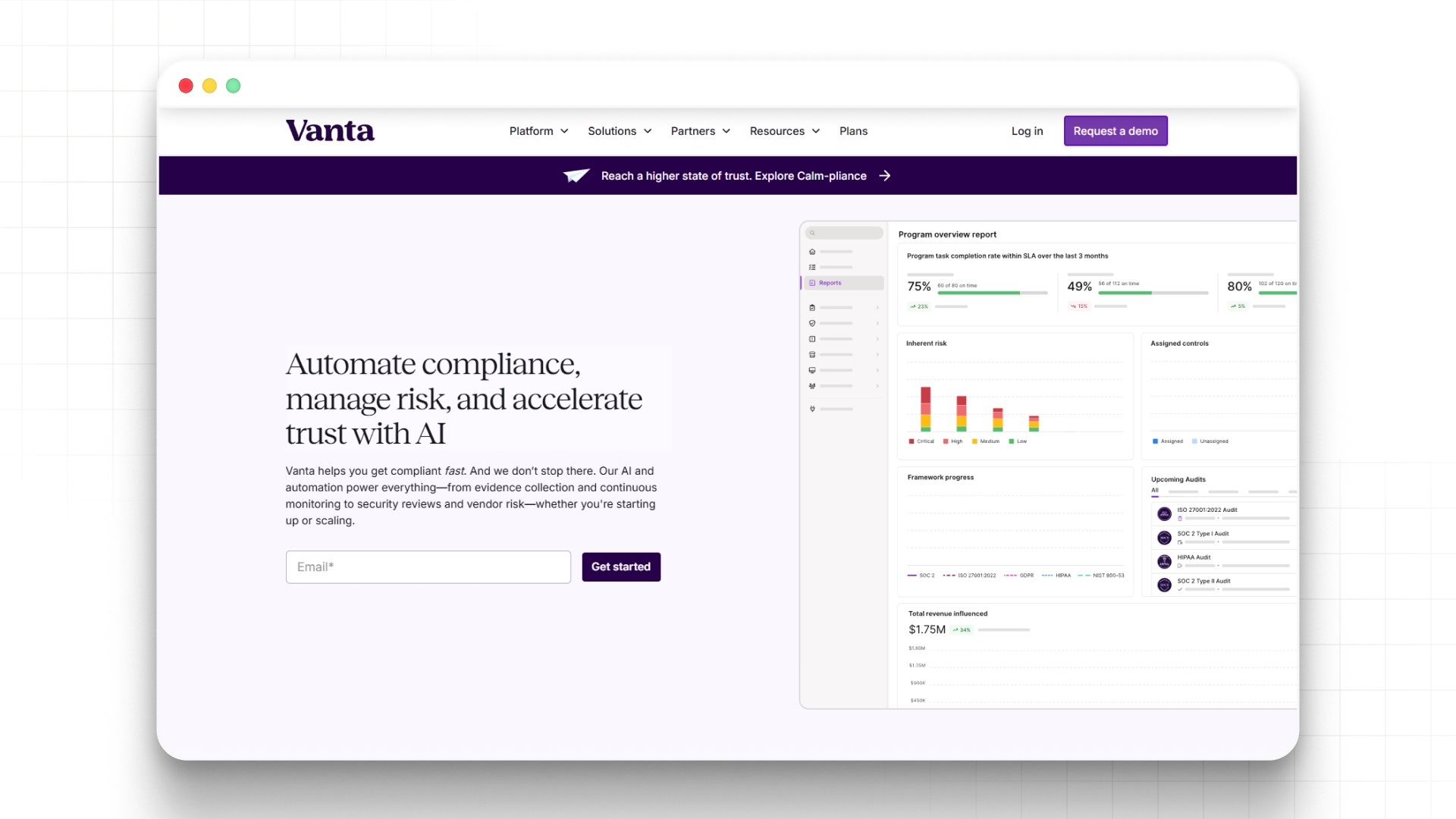
Vanta is a San Francisco–based software company providing an AI-powered platform for automating security, risk, and compliance management. It helps organizations achieve and maintain certifications like SOC 2, ISO 27001, HIPAA, PCI DSS, and GDPR while continuously monitoring controls to prove trust and streamline audits.
Vanta’s “Agentic Trust Platform” centralizes governance, risk, and compliance (GRC) operations. Automated workflows and AI agents collect evidence, map controls, detect policy gaps, and assist in remediation.
Key features:
- Automated compliance monitoring
- Integration with cloud systems
- Audit readiness tools
- Security control tracking
- Reporting dashboards
Best for: Startups and SaaS companies
G2 rating: 4.6
Pricing: Subscription-based
Free trial/demo: Demo available
9. Optro AI
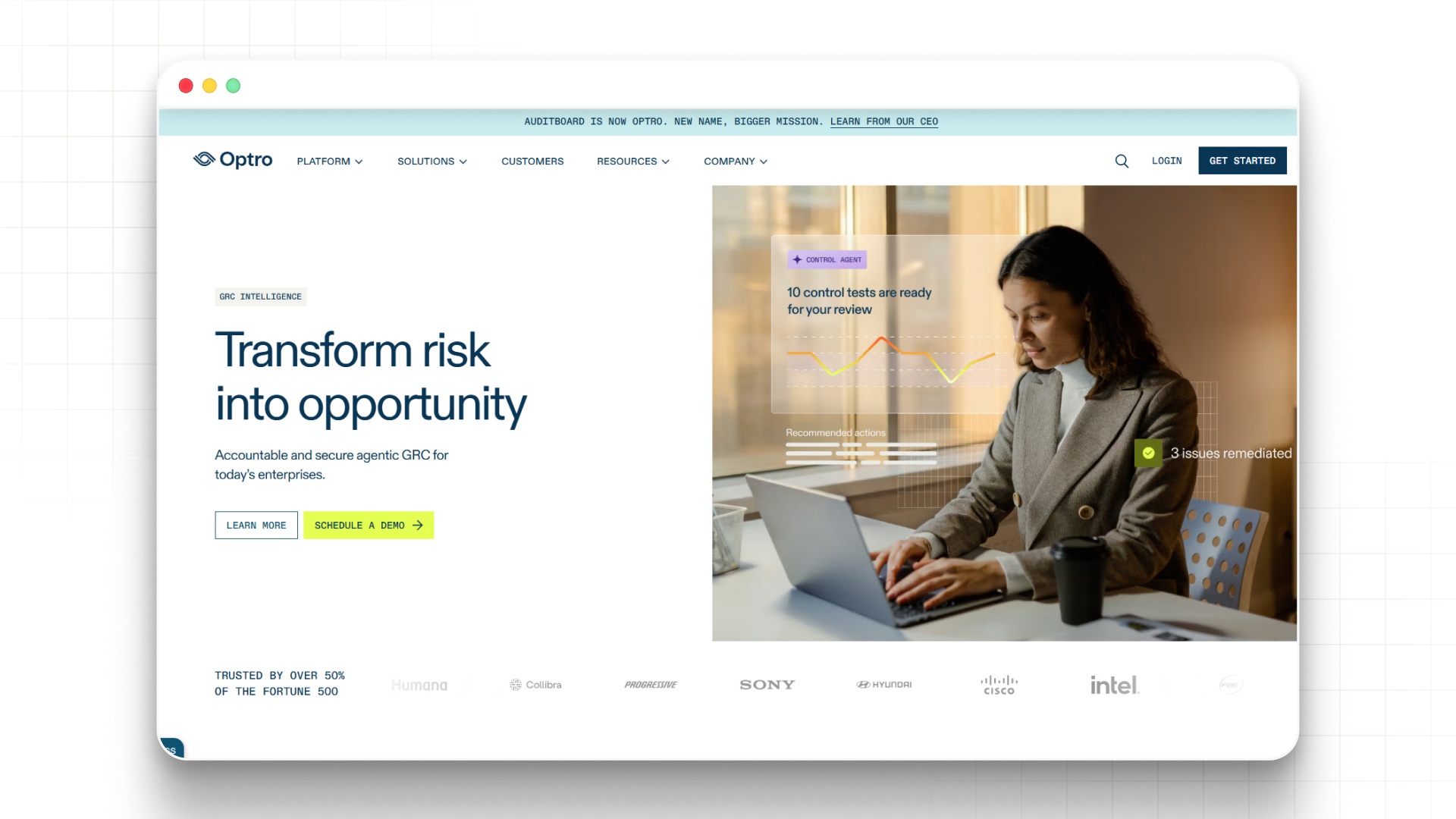
Optro AI is an AI-powered governance, risk, and compliance (GRC) software platform designed to connect audit, risk, and compliance functions across enterprises. Founded in 2014 and trusted by more than half of the Fortune 500, it helps organizations manage internal audit, SOX compliance, IT risk, and ESG initiatives through a unified “connected risk” framework.
Key features:
- Audit and compliance management
- Risk tracking and reporting
- Control testing workflows
- Dashboard visibility
- Integration capabilities
Best for: Organizations scaling audit and compliance programs
G2 rating: 4.6
Pricing: Custom pricing
Free trial/demo: Demo available
10. NAVEX One Compliance Essentials
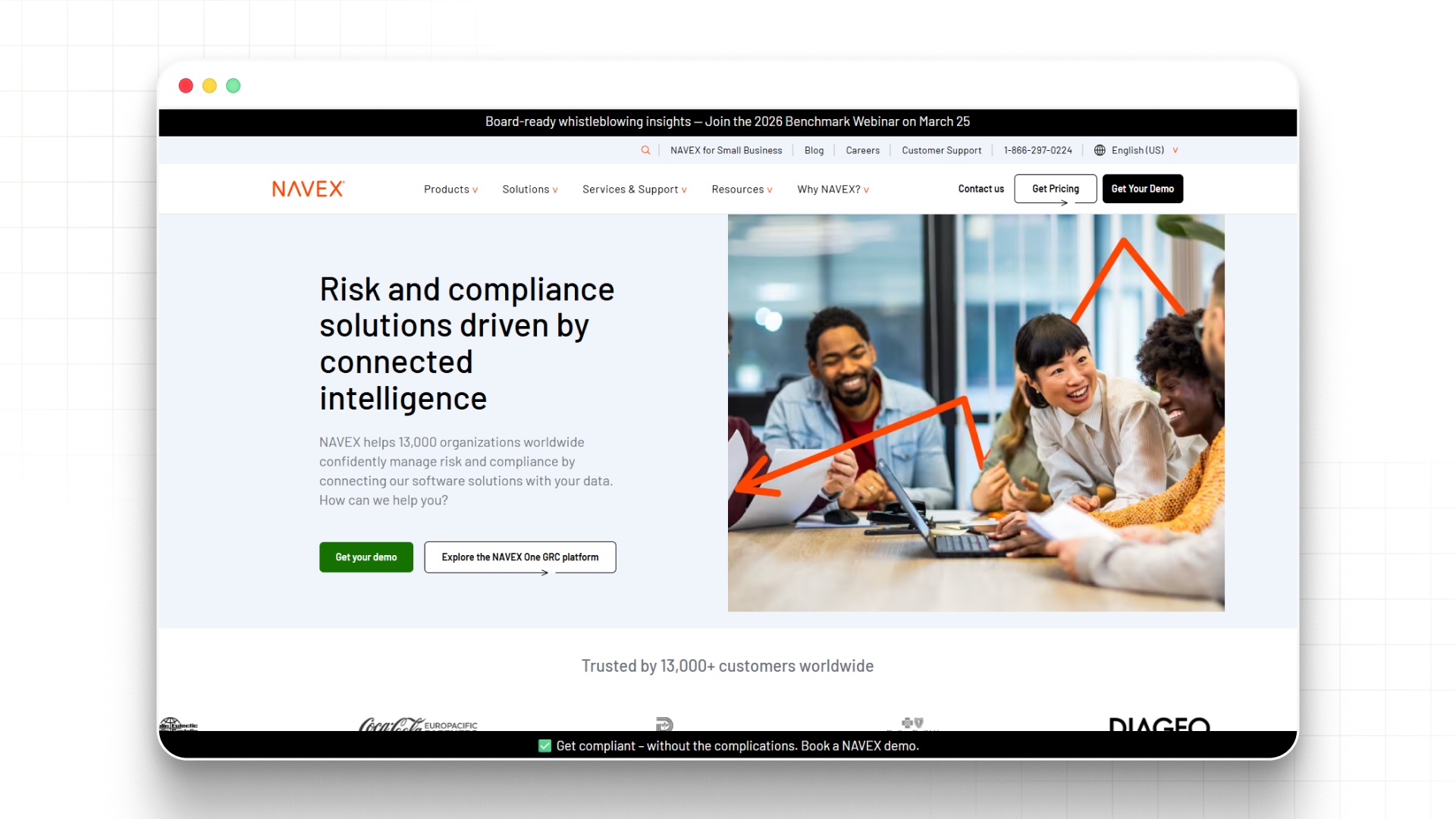
NAVEX One Compliance Essentials is a pre-packaged governance, risk, and compliance (GRC) software bundle from NAVEX, built on the NAVEX One platform. It’s positioned as a “ready-to-go” compliance solution, especially for small and mid-sized organizations that want core ethics and compliance capabilities without assembling multiple point tools.
Compliance Essentials bundles multiple NAVEX One modules into one package: whistleblowing and incident management, online ethics and compliance training, policy and procedure management or disclosure management, awareness materials, and an employee compliance portal.
Key features:
- Policy and compliance tracking
- Training and awareness tools
- Incident reporting workflows
- Risk management modules
- Reporting dashboards
Best for: Organizations starting structured compliance programs
G2 rating: 3.8
Pricing: Custom pricing
Free trial/demo: Demo available
Also read: Review of The Top 3 Internal Audit Management Software Systems in 2025
Common Limitations of Inexpensive Compliance Tools
Lower-cost tools often introduce structural limitations that affect long-term scalability. Recognising these early helps avoid operational gaps.
- Fragmented workflows across systems: Many tools handle only specific aspects of compliance, such as audits or documentation.
Solution: Consolidate workflows into a unified system as the compliance scope expands.
- Limited automation and manual tracking: Manual follow-ups increase workload and introduce delays in task completion.
Solution: Use tools with built-in automation for reminders and escalation tracking.
- Weak audit trail visibility: Inconsistent documentation makes it difficult to demonstrate compliance during audits.
Solution: Implement structured evidence repositories with clear version tracking.
- Lack of cross-functional visibility: Disconnected tools prevent leadership from gaining a complete view of compliance status.
Solution: Use centralized dashboards that aggregate data across teams.
Also read: Top 5 Policy Management Software in 2026 (Best Picks Ranked with Features & Pricing)
Conclusion
Inexpensive compliance tools provide a starting point for managing regulatory obligations, but their effectiveness depends on how well they support workflows, accountability, and audit readiness. As compliance programs grow, limitations in visibility and automation often become more apparent.
Platforms such as VComply address these gaps by centralizing compliance activities, improving ownership tracking, and maintaining structured audit trails across teams. This approach supports consistent governance and reduces operational complexity.
Explore how ComplianceOps structures compliance workflows and strengthens audit readiness.
Start a 21-day free trial of VComply to review how structured governance systems improve visibility and control.
FAQs
Inexpensive compliance tools help organizations track regulatory obligations, manage controls, and maintain documentation for audits. They support basic workflows but may lack advanced automation and integration capabilities.
They can support early-stage programs, but regulated industries often require stronger audit trails, automation, and centralized visibility to meet compliance expectations.
Focus on how the tool supports workflows, ownership tracking, and audit readiness rather than just pricing. Evaluate whether it can scale with your compliance requirements.
Common limitations include fragmented workflows, manual processes, and limited reporting capabilities. These gaps can affect visibility and audit preparedness.
Organizations can centralize compliance workflows, automate tracking, and maintain structured audit trails using platforms such as VComply, which connects compliance, risk, and policy management.