

What Do Recent Compliance Fines in the U.S. Have in Common?
In late 2025 and early 2026, compliance enforcement in the United States made one thing clear: regulators are no longer accepting “good intent” as a defense.
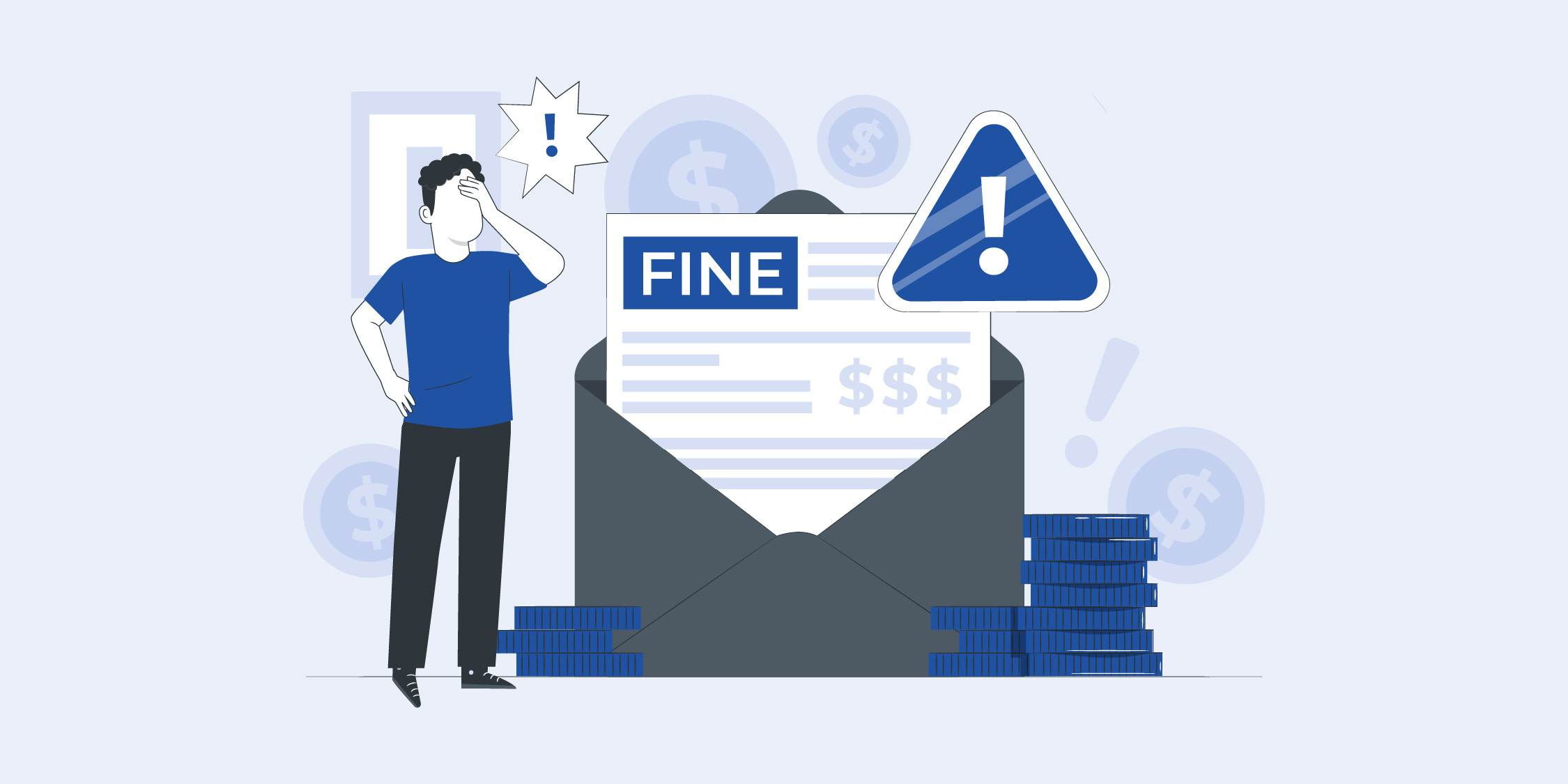
Organizations that believed they were compliant, with policies in place, controls defined, and processes documented, are still facing significant fines. The shift is subtle but critical. Enforcement is no longer based on whether a program exists, but on whether it can be demonstrated clearly, consistently, and without delay. Regulators are asking for proof, not explanations. And when that proof is incomplete, delayed, or scattered, the outcome is the same, penalties.
Why Compliance Fines Are Telling a Bigger Story
Key Takeaways
- Compliance fines in the U.S. are increasingly driven by execution gaps, not lack of regulations or policies.
- Regulators now expect organizations to demonstrate compliance in real time, not reconstruct it during audits.
- The most common trigger for fines is the inability to provide clear, consistent evidence of controls being followed.
- Delayed reporting and slow response times are now treated as compliance failures, especially in cybersecurity and financial disclosures.
- Fragmented systems and manual tracking lead to poor visibility, inconsistent documentation, and higher risk exposure.
- Overlapping regulations are creating duplication, making it critical to manage controls centrally rather than by framework.
- Clear ownership and accountability are essential, without them, even well-designed programs fail in execution.
- The shift in 2026 is clear: compliance is moving from periodic audits to continuous, operational execution.
- Organizations that treat compliance as a system of record with real-time tracking and evidence are better positioned to avoid fines.
- The key question today is no longer “Are we compliant?” but “Can we prove it, right now?”
Compliance Didn’t Fail. Execution Did.
The U.S. Securities and Exchange Commission (SEC) and Commodity Futures Trading Commission (CFTC) continued their crackdown on off-channel communications, issuing multi-million dollar fines to major financial institutions for failing to retain business-related messages on personal devices like WhatsApp and iMessage. In several cases, firms were penalized $10M to $35M+, not because they lacked policies, but because they couldn’t demonstrate consistent enforcement.
In healthcare, the U.S. Department of Health and Human Services (HHS), through its Office for Civil Rights, increased enforcement of HIPAA violations. Organizations faced six- and seven-figure settlements for issues tied to data breaches, incomplete risk assessments, and failure to implement adequate safeguards. In many cases, the breach itself was only part of the problem, the larger issue was the inability to prove that proper controls were in place before the incident.
At the same time, new cybersecurity disclosure rules introduced by the U.S. Securities and Exchange Commission required publicly listed companies to report material cyber incidents within four business days. Several organizations came under scrutiny for delays, highlighting a growing expectation: not just to manage incidents, but to respond and disclose them in near real time.
On the privacy front, enforcement under California’s California Consumer Privacy Act (CCPA) and its expansion through the CPRA continued to increase. Companies faced penalties for mishandling consumer data, failing to honor user rights, or lacking transparency in data practices, with fines reaching $2,500 per violation and $7,500 for intentional violations.
Across these examples, one thing stands out.
These organizations were not unaware of their obligations.
They had compliance programs.
They had policies.
They had controls.
And yet, they were fined.
What changed was not the rules.
What changed was how compliance is being evaluated.

The Evolution of Enforcement: From Documentation to Demonstration
Historically, compliance audits focused heavily on documentation. Regulators would review policies, examine procedures, and assess whether an organization had established controls that aligned with regulatory expectations. If the right documents existed and periodic reviews were conducted, organizations were often considered compliant.
That model no longer holds.
Today, regulators are placing far greater emphasis on execution. They are not satisfied with knowing that a control exists. They want to see that it is consistently followed, that it produces reliable outcomes, and that the organization can provide evidence of this without delay. The question has shifted from “Do you have this in place?” to “Can you show that it is working right now?”
This change is subtle but significant. It has exposed weaknesses in compliance programs that were previously hidden. Organizations that relied on periodic audits and static documentation are now finding it difficult to meet expectations that require continuous visibility and real-time proof.
The Evidence Problem: When Work Exists but Cannot Be Shown
One of the most common threads across recent compliance fines is the absence of reliable, accessible evidence. In many cases, organizations had performed the necessary work. Controls were implemented. Reviews were conducted. Processes were followed. Yet when regulators requested proof, the organization could not produce it in a consistent or timely manner.
This is not a failure of intent. It is a failure of structure.
Evidence is often scattered across systems, stored in emails, shared drives, spreadsheets, or disconnected applications. Documentation may exist, but it is fragmented, outdated, or difficult to retrieve. When audits occur, teams are forced to reconstruct records under pressure, increasing the likelihood of gaps and inconsistencies.
Regulators interpret this lack of evidence as a lack of compliance. In their view, if an organization cannot demonstrate that a control was executed, it is equivalent to the control not existing at all.
This is one of the defining characteristics of modern enforcement. Compliance is no longer judged by what an organization says it does. It is judged by what it can prove.
The Speed Factor: Why Delayed Response Is Now a Violation
Another common factor in recent fines is delayed response. Organizations are increasingly being penalized not just for what went wrong, but for how long it took them to identify, report, and address the issue.
This is especially evident in areas like cybersecurity and financial disclosures, where regulatory timelines have tightened significantly. Companies are expected to report material incidents within strict windows, sometimes within days. Meeting these expectations requires more than awareness. It requires coordination, visibility, and structured processes.
Delays often occur because organizations lack a unified view of their operations. Information is distributed across departments, systems, and teams. When an issue arises, it takes time to gather data, verify details, and determine the appropriate response. This lag is what regulators are targeting.
From a regulatory perspective, delayed response indicates a lack of control. It suggests that the organization does not have the systems or processes in place to manage risk effectively in real time. As a result, even organizations with otherwise strong compliance programs are facing penalties simply because they could not act quickly enough.
Fragmentation: The Hidden Driver of Compliance Failure
Behind many compliance failures is a less visible but equally important issue: fragmentation. Most organizations do not operate within a single, unified compliance environment. Instead, they rely on a patchwork of tools, processes, and systems that have evolved over time.
Policies may be stored in one system. Risk assessments in another. Audit records in a third. Communication and approvals may take place through email or messaging platforms. Each of these components may function well on its own, but together they create a fragmented landscape that is difficult to manage.
This fragmentation leads to inconsistencies. The same control may be interpreted differently across departments. Documentation may be updated in one place but not in another. Ownership of tasks may be unclear or duplicated. Over time, these inconsistencies accumulate, creating gaps that are only discovered during audits or investigations.
Regulators are increasingly sensitive to these issues. They expect organizations to demonstrate not only that controls exist, but that they are applied consistently across the entire organization. Fragmentation makes this extremely difficult, and it is a key reason why otherwise compliant organizations are being fined.
Ownership and Accountability: The Missing Link
A recurring theme in compliance failures is the absence of clear ownership. In many organizations, compliance is considered a shared responsibility. While this is true in principle, it often leads to ambiguity in practice.
When everyone is responsible, no one is accountable.
Tasks may be assigned informally or tracked inconsistently. Follow-ups may depend on individual initiative rather than structured workflows. When something is missed, it is often unclear who was responsible for ensuring it was completed.
Regulators are paying close attention to this. They are not only evaluating whether tasks were completed, but also whether the organization can demonstrate clear accountability. They want to see that responsibilities are defined, tracked, and enforced.
Without this level of clarity, compliance becomes unpredictable. Even well-designed programs can fail if execution depends on informal processes rather than structured accountability.
The Complexity of Overlapping Regulations
In the United States, organizations rarely operate under a single regulatory framework. Financial institutions must comply with SEC and FINRA requirements. Healthcare organizations must adhere to HIPAA and CMS regulations. Technology companies must navigate a combination of federal guidelines and state-level privacy laws.
Each of these frameworks introduces its own set of requirements, but many of them overlap. The same control may apply to multiple regulations, but with slight variations in language or reporting expectations.
Managing this overlap is one of the biggest challenges in modern compliance. When controls are tracked separately for each framework, duplication becomes inevitable. Teams spend time repeating the same work in different contexts, increasing the risk of inconsistency.
This is where many organizations struggle. They are not failing to meet requirements entirely. They are failing to manage them consistently across frameworks. Regulators are increasingly identifying these inconsistencies as evidence of weak control environments.
The Disconnect Between Policy and Practice
Policies are the foundation of any compliance program. They define expectations, establish guidelines, and provide a framework for decision-making. However, policies alone are not sufficient.
Recent fines have highlighted a disconnect between what is written in policies and what actually happens in practice. Organizations may have comprehensive policies that cover all relevant requirements, but these policies are not always reflected in day-to-day operations.
This disconnect can occur for several reasons. Policies may not be effectively communicated. Staff may not be adequately trained. Processes may not be designed to support policy requirements. Over time, these gaps widen, creating a situation where policies exist in theory but not in practice.
Regulators are increasingly focused on this alignment. They expect organizations to demonstrate that policies are not only defined, but also implemented and followed consistently. Failure to do so is seen as a fundamental weakness in the compliance program.
The Shift Toward Continuous Compliance
One of the most important developments in recent years is the move toward continuous compliance. Organizations can no longer rely on periodic reviews and audits to maintain compliance. Instead, they are expected to monitor and manage compliance on an ongoing basis.
This shift is driven by several factors. Regulatory expectations are increasing. Risks are evolving more quickly. The cost of non-compliance is rising. Together, these factors are pushing organizations to adopt more proactive approaches.
Continuous compliance requires a different mindset. It requires organizations to treat compliance as an operational function rather than a periodic activity. It involves maintaining up-to-date records, tracking tasks in real time, and ensuring that evidence is always available.
Organizations that have adopted this approach are better positioned to meet regulatory expectations. Those that have not are finding it increasingly difficult to keep up.
The Role of Technology in Closing the Gap
Technology is playing a critical role in addressing the challenges outlined above. Modern compliance platforms are designed to centralize information, automate processes, and provide real-time visibility into compliance activities.
These platforms enable organizations to assign tasks with clear ownership, track progress consistently, and maintain structured evidence repositories. They reduce reliance on manual processes and improve the accuracy and reliability of compliance data.
Artificial intelligence is also beginning to play a role. AI can help identify gaps in data, highlight inconsistencies, and provide insights into risk patterns. While still evolving, these capabilities are becoming increasingly important as compliance programs grow in complexity.
Bringing It Together with VComply
VComply is designed to address the exact challenges that are driving compliance fines today. It provides a unified platform for managing governance, risk, and compliance activities in a structured and transparent way.
By centralizing compliance tasks, policies, and evidence, VComply helps organizations maintain a clear and consistent view of their compliance status. It enables teams to assign responsibilities, track execution, and ensure that all activities are properly documented.
The platform’s AI capabilities further enhance this by identifying gaps, surfacing insights, and reducing the manual effort required to manage compliance programs. This allows organizations to move from reactive compliance to continuous, execution-focused compliance.
When regulators ask for proof, organizations using VComply are able to provide it immediately. Not because they prepared for the audit, but because they are always prepared.
Explore how VComply’s ComplianceOps helps organizations manage internal controls, automate testing workflows, and maintain continuous oversight of SOX obligations. Book a demo today.
Conclusion
Fines today aren’t about what’s missing. They’re about what can’t be proven. Regulators now expect compliance to be visible, continuous, and immediate, not reconstructed after the fact.
The shift toward evidence-based enforcement, faster response expectations, and continuous monitoring is redefining compliance. It is no longer sufficient to have a program that looks complete. Organizations must be able to prove that it works, consistently and without delay.
This requires a new approach. One that prioritizes visibility, accountability, and execution. One that treats compliance as an ongoing operational function rather than a periodic requirement.
In 2026, the most important question for any organization is simple:
Can you prove your compliance, right now?
The answer to that question will determine not only your audit outcomes, but your ability to avoid the growing wave of compliance fines.
FAQs
1. Why are compliance fines increasing in the U.S.?
Compliance fines are increasing because regulators are focusing more on execution rather than just documentation. Organizations are expected to demonstrate real-time compliance, maintain accurate records, and respond quickly to incidents. Failures in evidence, reporting, or control execution are now leading to higher penalties.
2. What is the most common reason organizations get fined today?
The most common reason is not the absence of policies, but the inability to prove they are being followed. Missing evidence, incomplete records, delayed reporting, and inconsistent control execution are the leading causes of fines across industries.
3. How have regulatory expectations changed in recent years?
Regulators have shifted from periodic audits to continuous oversight. They now expect organizations to provide up-to-date evidence, maintain clear ownership of compliance tasks, and demonstrate that controls are functioning consistently across operations.
4. Which industries are most impacted by compliance fines in the U.S.?
Financial services and healthcare continue to see the highest enforcement activity due to strict regulations like SEC, FINRA, and HIPAA. However, industries such as technology, manufacturing, and energy are also facing increased scrutiny, especially around cybersecurity, data privacy, and operational compliance.
5. How can organizations reduce the risk of compliance fines?
Organizations can reduce risk by moving toward continuous compliance. This includes centralizing compliance processes, assigning clear ownership, maintaining real-time visibility, and ensuring audit-ready evidence is always available. Using structured systems instead of manual tracking significantly improves compliance outcomes.