

How Process Compliance Actually Works Across Tasks, Controls, and Evidence
Regulatory audits increasingly expose the same pattern: organizations can demonstrate policies, but struggle to produce consistent evidence of execution. Process compliance rarely fails because policies are missing; it fails when policies remain disconnected from daily execution, leaving tasks unassigned, controls unverified, and evidence scattered across systems.

As operations scale, this gap widens. Teams rely on emails, spreadsheets, and informal follow-ups, which creates inconsistent ownership, missed deadlines, and weak audit trails. Leadership loses visibility, while compliance becomes reactive instead of structured and measurable.
This guide examines how process compliance actually works across tasks, controls, and evidence, with a focus on execution, accountability, and audit readiness.
An Overview
- Process compliance fails at the execution layer, where policies are not translated into assigned tasks, measurable controls, and verifiable evidence.
- Effective systems connect workflows, ownership, and audit trails into a single structure rather than isolated activities.
- Compliance maturity depends on traceability, where every control links to a task, owner, and supporting evidence.
- Measurement requires defined control tests, consistent monitoring cycles, and risk-based prioritization.
- Audit readiness is achieved when evidence is captured during execution, not reconstructed afterward.
- Sustainable compliance depends on systemization, not manual coordination across disconnected tools.
What Is Process Compliance and Where It Breaks in Real Operations
Process compliance ensures that operational workflows consistently align with regulatory requirements, internal policies, and control expectations. It connects tasks, controls, and evidence into a structured system.
Breakdowns occur when tasks lack ownership, controls are not validated consistently, and evidence is stored inconsistently, making it difficult to demonstrate compliance during audits.
Also read: How to Improve Compliance Management for Audit-Ready Programs 2026

Why Process Compliance Fails Even When Policies Exist
Policies define intent, but execution depends on how those policies are translated into workflows. Failures typically occur in the operational layer, where ownership, tracking, and validation mechanisms are unclear or inconsistent.
The breakdown becomes visible across the following execution gaps:
1. Lack of Task-Level Ownership
Policies often define requirements without assigning clear ownership at the task level. This creates ambiguity in execution, where teams assume responsibility lies elsewhere. Without defined owners and deadlines, accountability structures weaken, leading to inconsistent compliance execution across departments.
2. Controls Are Not Operationalized
Controls remain documented but are not embedded into workflows. Teams treat them as static requirements rather than recurring activities. Without operationalization, controls are not tested consistently, and compliance becomes dependent on manual intervention instead of structured processes.
3. Evidence Is Collected After the Fact
Many organizations attempt to gather evidence during audits instead of capturing it during execution. This creates incomplete or inconsistent documentation, increasing audit risk. Evidence must be generated as part of the workflow, not reconstructed retrospectively.
4. Fragmented Systems and Tools
Compliance activities often span multiple tools that do not communicate with each other. This fragmentation reduces visibility and makes it difficult to track progress across workflows. Leadership cannot obtain a unified view of compliance status or risk exposure.
Also read: 10 Compliance Software Best Practices That Improve Audit Readiness
The 5 Core Components of a Process Compliance System That Actually Works
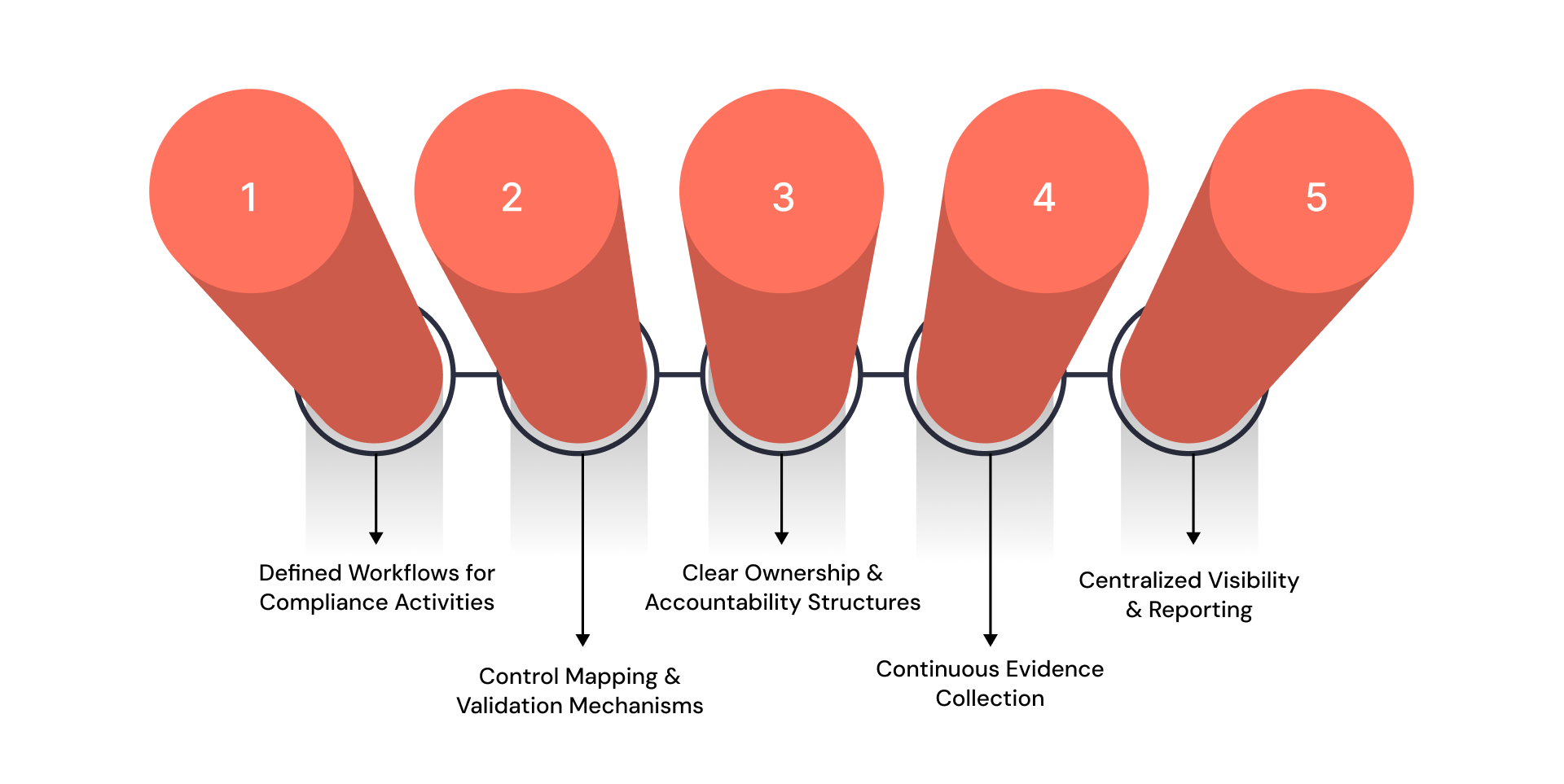
A functional compliance system is not defined by policies alone. It is defined by how effectively it connects workflows, controls, and evidence into a structured execution model.
The system typically includes the following components:
1. Defined Workflows for Compliance Activities
Compliance activities must be structured into repeatable workflows that align with operational processes. These workflows ensure consistency across teams and reduce dependency on manual coordination.
2. Control Mapping and Validation Mechanisms
Each regulatory requirement must map to specific controls that can be tested and validated. This ensures that compliance is measurable and not based on assumptions or informal verification.
3. Clear Ownership and Accountability Structures
Every compliance task requires a designated owner, along with defined deadlines and escalation paths. This ensures accountability and prevents tasks from being overlooked.
4. Continuous Evidence Collection
Evidence should be captured during execution, directly linked to controls and workflows. This approach ensures audit readiness without requiring last-minute documentation efforts.
5. Centralized Visibility and Reporting
Leadership requires real-time visibility into compliance status, overdue tasks, and control effectiveness. Centralized dashboards provide this insight and support informed decision-making.
At this stage, the challenge is not identifying these components but operationalizing them consistently across teams. See how ComplianceOps connects workflows, controls, and evidence into a unified operational layer.
4 Simple Steps to Map Business Processes to Regulatory Requirements
Mapping processes to regulations ensures that compliance becomes part of daily operations rather than an external requirement. This alignment reduces gaps between policy and execution.
Follow these steps to establish structured mapping:
1. Identify Regulatory Obligations and Scope
Start by identifying all applicable regulatory requirements based on your industry and operations. This includes frameworks such as SOX, HIPAA, or NIST. Define the scope clearly to avoid overextension or missed obligations.
- List all applicable regulations and frameworks
- Define scope by business unit or function
- Prioritize based on risk exposure
- Assign responsibility for requirement tracking
2. Break Down Business Processes Into Workflows
Decompose high-level processes into individual workflows and tasks. This helps identify where compliance requirements intersect with daily operations.
- Document workflows step by step
- Identify decision points and dependencies
- Map tasks to operational roles
- Highlight areas with compliance relevance
3. Map Controls to Specific Workflow Steps
Align each regulatory requirement with controls embedded within workflows. This ensures that compliance is executed as part of operations.
- Link controls to workflow steps
- Define expected outcomes for each control
- Assign control owners
- Establish validation frequency
4. Define Evidence Requirements for Each Control
Specify what evidence is required to demonstrate compliance for each control. This ensures consistency in documentation and audit readiness.
- Define acceptable evidence formats
- Standardize documentation templates
- Link evidence to control execution
- Store evidence in a centralized system
Also read: Automating Compliance Processes for Easier Nonprofit Management
How to Measure Process Compliance Using Clear Metrics and Control Tests
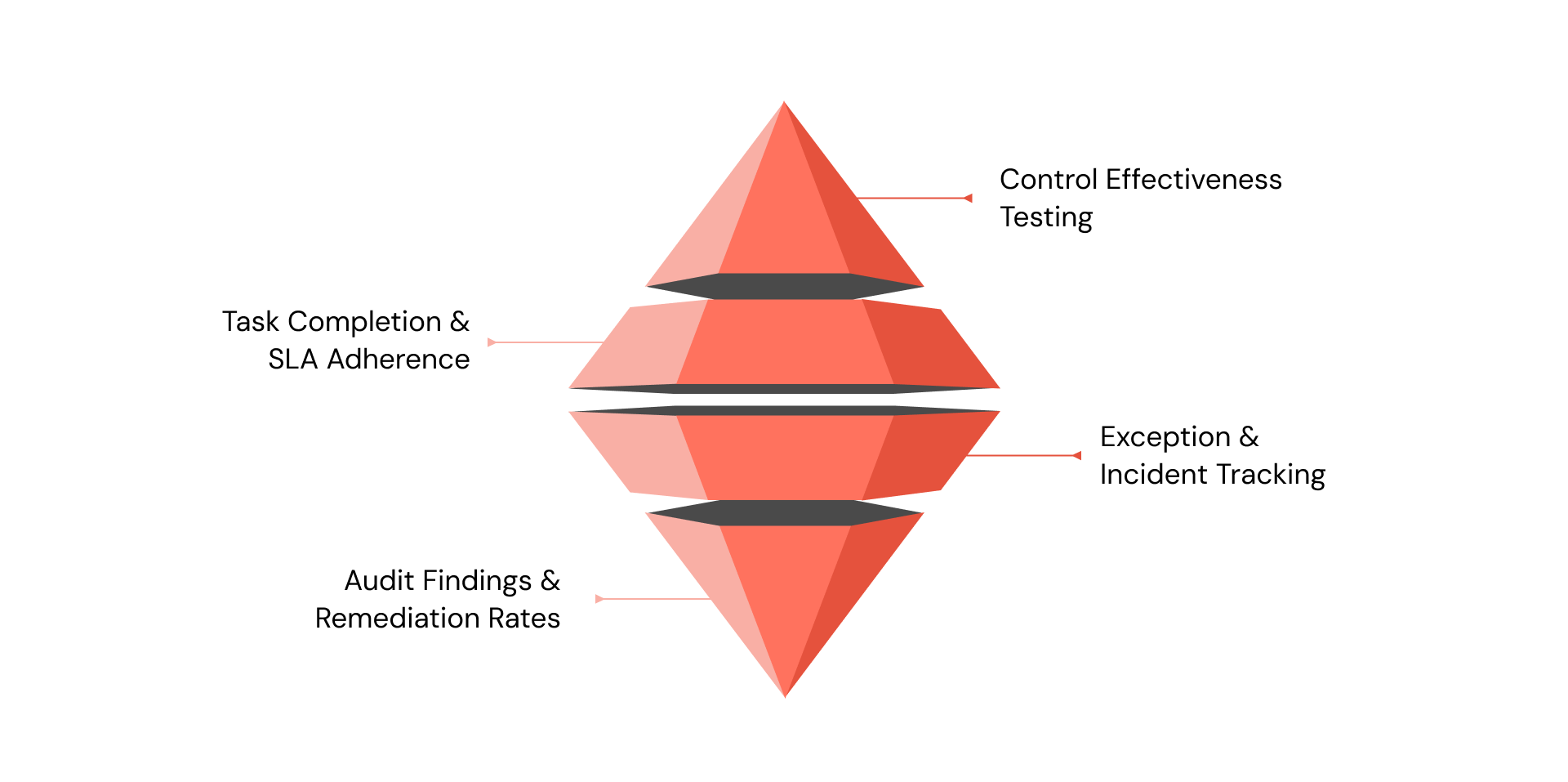
Measurement transforms compliance from a static requirement into a measurable system. Without defined metrics, organizations rely on assumptions rather than data.
Measurement frameworks typically include:
- Control Effectiveness Testing: Controls must be tested regularly to confirm they operate as intended. Testing frequency depends on risk levels and regulatory expectations.
- Task Completion and SLA Adherence: Tracking task completion rates and adherence to deadlines provides insight into operational discipline. Delays often indicate deeper process gaps.
- Exception and Incident Tracking: Monitoring exceptions helps identify recurring issues and systemic weaknesses. This supports continuous improvement in compliance processes.
- Audit Findings and Remediation Rates: Audit outcomes provide direct feedback on compliance effectiveness. Tracking remediation timelines ensures issues are resolved systematically.
How to Assign Ownership, Deadlines, and Escalations Without Creating Bottlenecks
Ownership structures must balance accountability with operational flexibility. Overly rigid systems create bottlenecks, while loose structures reduce accountability.
Effective models include:
- Role-Based Ownership Assignment: Assign responsibilities based on roles rather than individuals. This ensures continuity even when team structures change.
- Defined Deadlines With Context: Deadlines should align with regulatory requirements and operational capacity. Arbitrary timelines often lead to delays or incomplete execution.
- Escalation Paths for Delays: Escalation mechanisms ensure that delays are addressed promptly. This prevents minor issues from becoming systemic failures.
- Automated Notifications and Reminders: Automation reduces manual follow-ups and ensures tasks remain visible. This improves consistency across compliance workflows.
How to Build Audit-Ready Evidence Into Everyday Processes
Audit readiness depends on how evidence is captured, not just stored. Evidence must be generated as part of execution to ensure accuracy and completeness.
Key practices include:
- Embed Evidence Capture in Workflows: Ensure that evidence is generated during task execution. This eliminates the need for retrospective documentation.
- Standardize Documentation Formats: Consistent formats improve clarity and reduce ambiguity during audits. Standardization also simplifies review processes.
- Link Evidence Directly to Controls: Each piece of evidence should map to a specific control. This ensures traceability and supports audit validation.
- Maintain Version Control and History: Version tracking ensures that changes are documented and traceable. This is critical for demonstrating compliance over time.
Also read: Choosing Compliance Management Solutions for Financial Services
Common Process Compliance Gaps and What Breaks in Execution
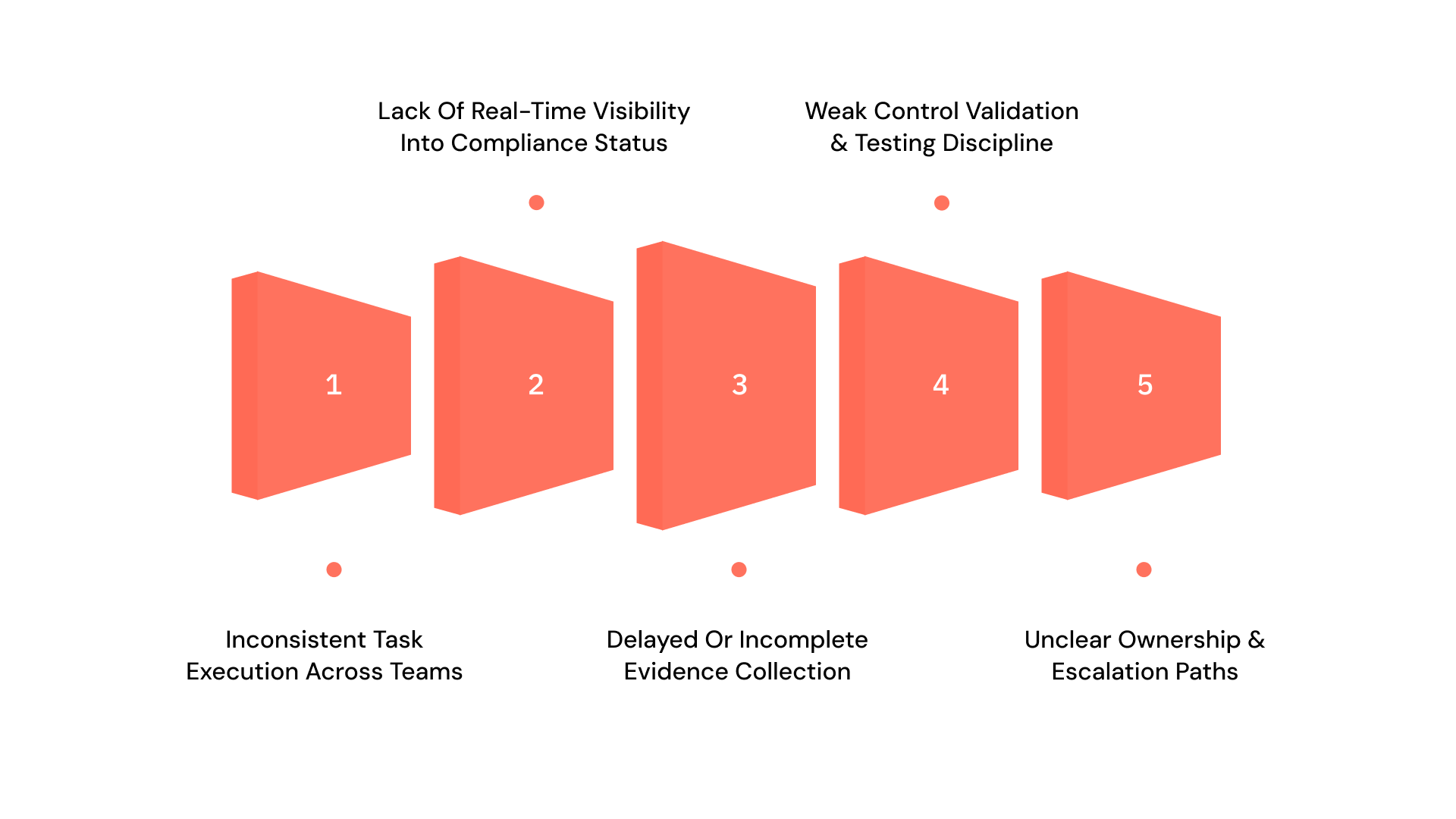
Even well-designed compliance programs fail at the execution layer, where workflows, ownership, and validation mechanisms are not consistently enforced. These gaps do not appear in policy documents but surface during audits, incidents, or regulatory reviews.
The breakdown becomes visible across the following execution failures:
1. Inconsistent Task Execution Across Teams
Teams interpret compliance tasks differently due to unclear instructions, missing workflows, or lack of standardization. What should be a repeatable control becomes dependent on individual judgment, which introduces variability in how tasks are performed across departments.
What breaks in execution:
Control outcomes become inconsistent, evidence varies in quality, and audit reviews reveal gaps because the same requirement is executed differently across teams.
2. Lack of Real-Time Visibility Into Compliance Status
Compliance data is often spread across spreadsheets, emails, and isolated tools, making it difficult to understand the current status. Leadership relies on periodic updates instead of real-time insights, which delays decision-making and issue resolution.
What breaks in execution:
Overdue tasks remain unnoticed, risks escalate without visibility, and leadership cannot intervene early because compliance tracking is fragmented and reactive.
3. Delayed or Incomplete Evidence Collection
Evidence is often collected after tasks are completed or just before audits, rather than during execution. This leads to missing documentation, inconsistent formats, and reliance on manual reconstruction of activities.
What breaks in execution:
Audit trails become weak, documentation gaps increase, and teams spend excessive time gathering proof instead of demonstrating continuous compliance.
4. Weak Control Validation and Testing Discipline
Controls are documented but not tested consistently, which creates a false sense of compliance. Without defined validation cycles, organizations assume controls are working without verifying their effectiveness.
What breaks in execution:
Control failures go undetected, risks accumulate silently, and audits expose gaps where controls exist on paper but lack proof of execution.
5. Unclear Ownership and Escalation Paths
Compliance tasks are assigned without clear ownership or escalation mechanisms, leading to delays and missed deadlines. When responsibilities are ambiguous, accountability weakens across teams.
What breaks in execution:
Tasks remain incomplete, follow-ups rely on manual tracking, and compliance issues escalate only when they become visible during audits or incidents.
How to Fix Process Compliance Failures Without Increasing Operational Overhead
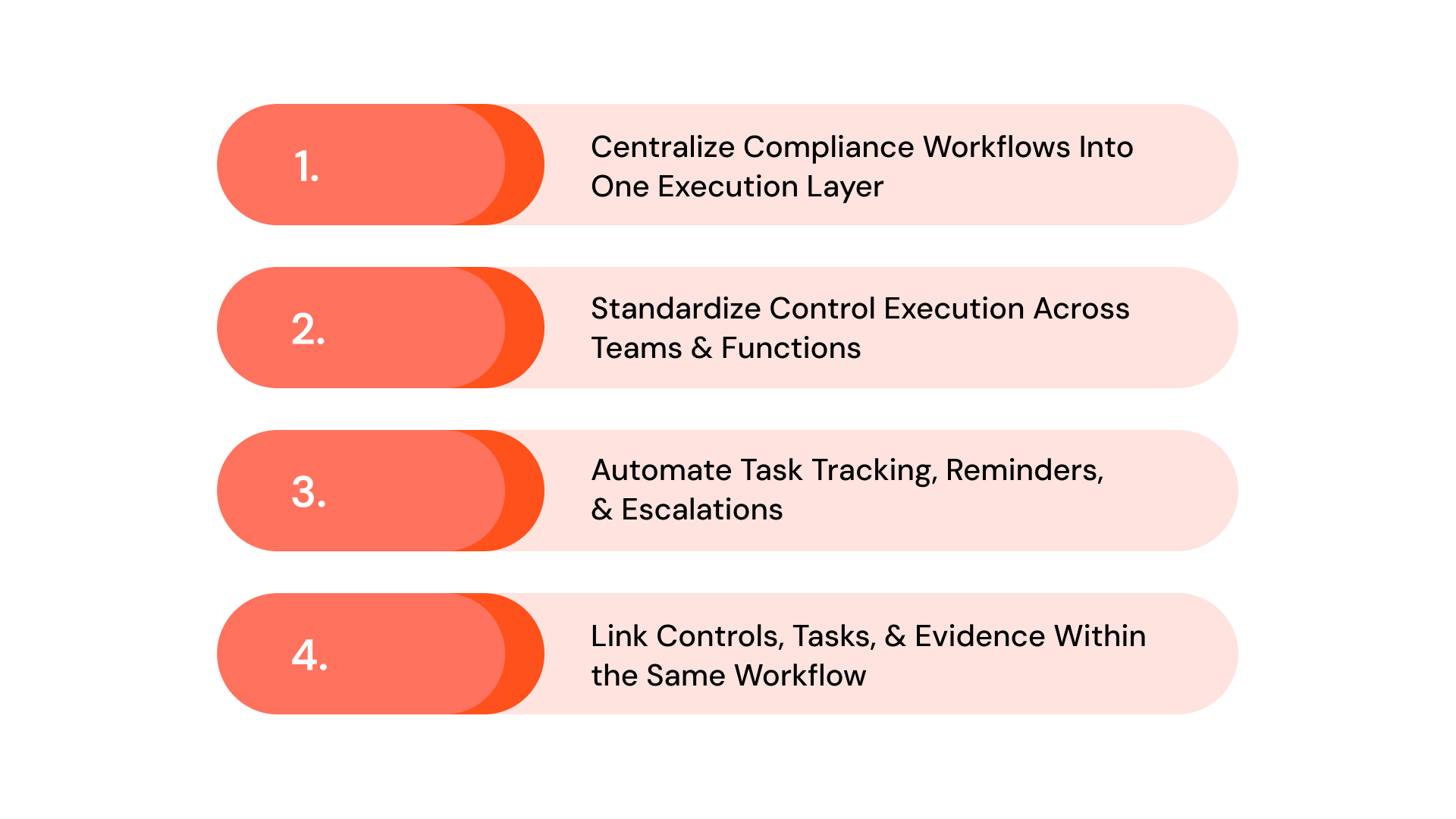
Most compliance failures are not due to missing controls but due to inconsistent execution across workflows. Fixing this requires restructuring how compliance is embedded into operations, not adding more tools or manual oversight.
Focus on structural corrections that reduce friction while increasing traceability:
1. Centralize Compliance Workflows Into One Execution Layer
When compliance activities are distributed across spreadsheets, emails, and tools, execution becomes inconsistent and difficult to track. Centralizing workflows creates a single source of truth where tasks, controls, and evidence remain connected.
This allows teams to operate within a shared system instead of coordinating across disconnected channels. Visibility improves because leadership can track progress, delays, and gaps without relying on manual reporting.
2. Standardize Control Execution Across Teams and Functions
Even when controls are defined, different teams execute them differently, which introduces variability and audit risk. Standardization ensures that every control follows the same process, documentation format, and validation frequency.
This removes ambiguity and ensures that compliance does not depend on individual interpretation. It also improves audit consistency because evidence and execution patterns remain predictable across departments.
3. Automate Task Tracking, Reminders, and Escalations
Manual follow-ups are one of the biggest sources of compliance inefficiency. Teams spend time tracking deadlines instead of executing tasks. Automation ensures that tasks move forward without constant supervision.
Automated reminders keep owners accountable, while escalation paths ensure delays are addressed before they impact compliance. This reduces reliance on individual discipline and introduces system-driven execution.
4. Link Controls, Tasks, and Evidence Within the Same Workflow
In many organizations, controls, tasks, and evidence exist in separate systems. This breaks traceability and makes audits difficult because the relationships between them are unclear.
Linking all three elements ensures that every control is tied to a task, and every task produces verifiable evidence. This creates a continuous chain of accountability from requirement to execution.
Sustaining these improvements requires a system that connects execution layers rather than adding more manual processes. See how ComplianceOps structures compliance execution by connecting workflows, controls, and evidence into a single operational system.
Best Practices to Maintain Continuous Process Compliance Across Functions
Maintaining compliance is not about periodic reviews but about ensuring that workflows remain aligned with requirements at all times. This requires continuous monitoring, structured feedback loops, and cross-functional coordination.
The following practices ensure compliance remains consistent as operations evolve:
1. Establish Continuous Control Monitoring Instead of Periodic Checks
Periodic reviews often miss issues that occur between audit cycles. Continuous monitoring ensures that controls are tested regularly and deviations are identified early.
This approach shifts compliance from reactive validation to proactive oversight, where issues are addressed before they escalate into audit findings or regulatory concerns.
Impact:
Continuous monitoring reduces compliance surprises, improves control reliability, and ensures that issues are detected and resolved in real time.
2. Create Shared Visibility Across Compliance, Risk, and Operations
Compliance cannot operate in isolation. When teams lack visibility into each other’s activities, gaps emerge between policy, execution, and risk management.
Shared dashboards and reporting structures ensure that all stakeholders operate with the same information. This alignment improves coordination and enables faster decision-making when issues arise.
Impact:
Cross-functional visibility reduces silos, improves response time, and ensures that compliance decisions are informed by real operational data.
3. Align Compliance Activities With Risk Prioritization
Not all compliance tasks carry the same level of risk. Without prioritization, teams spend equal effort on low-impact and high-impact activities.
Integrating risk scoring into compliance workflows ensures that critical controls receive more attention and monitoring. This improves resource allocation and strengthens overall governance.
Impact:
Risk-aligned compliance improves efficiency, ensures focus on critical areas, and reduces exposure to high-impact regulatory failures.
4. Build Feedback Loops From Audits and Incidents Into Processes
Audit findings and incidents often remain isolated instead of informing process improvements. Without feedback loops, the same issues repeat across cycles.
Integrating these insights into workflows ensures that processes evolve based on real execution data. This creates a system that improves continuously rather than remaining static.
Impact:
Feedback-driven improvement reduces recurring issues, strengthens control effectiveness, and ensures that compliance maturity increases over time.
5. Maintain Version Control and Change Tracking for Policies and Controls
Regulatory requirements and internal policies change frequently. Without version control, teams may operate on outdated information, creating compliance gaps.
Tracking changes ensures that updates are communicated clearly and implemented consistently across workflows. This maintains alignment between policy and execution.
Impact:
Version control ensures consistency, reduces confusion, and helps organizations demonstrate compliance and continuity during audits.
Also read: Insurance Risk and Compliance Management Software Solutions
Process Compliance Checklist for Implementation and Internal Audits
A checklist is only useful when it reflects actual execution requirements, not high-level intentions. This checklist focuses on validating whether compliance is operationalized across workflows, controls, and evidence.
Use this during implementation and internal audits:
- Confirm Regulatory Requirements Are Mapped to Processes: Ensure that every applicable regulation is translated into specific workflows and controls. Missing mappings indicate gaps that will surface during audits.
- Verify Ownership Exists at the Task and Control Level: Check that every compliance activity has a clearly assigned owner, deadline, and escalation path. Lack of ownership is one of the most common execution failures.
- Validate That Controls Are Tested and Not Assumed: Review whether controls are actively tested at defined intervals. Controls that are not validated regularly cannot be relied upon during audits.
- Check Evidence Is Captured During Execution: Confirm that evidence is generated as part of workflows and linked directly to controls. Post-facto documentation indicates weak compliance processes.
- Ensure Visibility Exists Through Centralized Reporting: Leadership should be able to view compliance status, overdue tasks, and control performance in real time. Lack of visibility indicates fragmented systems.
Operationalize Process Compliance Across Tasks, Controls, and Evidence with VComply
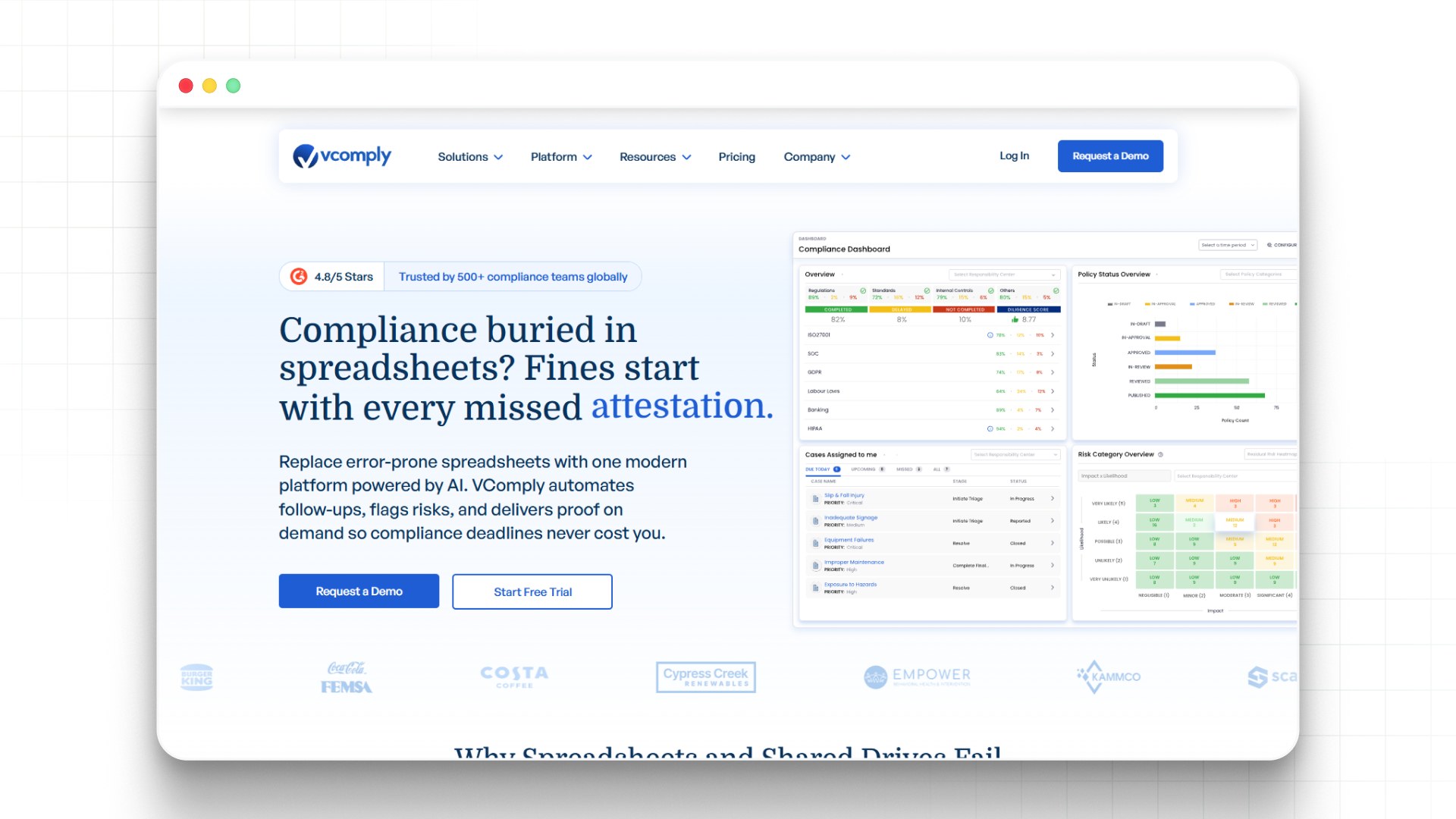
Process compliance breaks when execution is fragmented across tools, teams, and workflows. Tasks are tracked in one system, controls in another, and evidence is stored separately. This disconnect weakens traceability, delays issue resolution, and creates gaps that surface during audits or regulatory reviews.
VComply structures compliance execution through an integrated system where workflows, controls, and evidence remain connected. Its modular approach ensures that compliance, risk, policy, and incident management operate as a unified system rather than isolated functions.
- Use ComplianceOps to convert regulatory requirements into structured workflows with assigned owners, deadlines, and escalation paths, ensuring consistent execution across teams
- Apply RiskOps to connect controls with risk scoring, helping prioritize compliance activities based on exposure and impact
- Manage policy lifecycle through PolicyOps, linking policies directly to controls and ensuring teams operate on current, approved versions
- Track incidents and remediation workflows using CaseOps, ensuring issues are logged, investigated, and resolved with full accountability
- Leverage the GRCOps Suite to unify compliance, risk, policy, and case management into a single system with shared controls, evidence, and dashboards
This structure ensures that process compliance operates as a continuous system, where every task, control, and piece of evidence is connected, visible, and audit-ready. Book a demo with VComply to learn more.
Conclusion
Process compliance depends on execution, not documentation. Organizations that connect tasks, controls, and evidence into structured workflows achieve stronger accountability and audit readiness.
Platforms like VComply provide a unified approach to managing compliance, risk, policies, and incidents, enabling organizations to move from fragmented tracking to structured governance systems.
Start a 21-day free trial of VComply to see how we structure process compliance workflows and support continuous audit readiness across your organization.
FAQs
Process compliance ensures that business workflows consistently align with regulatory requirements, internal policies, and control expectations. It focuses on execution by linking tasks, controls, and evidence so organizations can demonstrate compliance through verifiable actions rather than documentation alone.
Failures occur when policies are not translated into assigned tasks, validated controls, and real-time evidence. Without ownership, workflow integration, and consistent monitoring, compliance remains theoretical and breaks down during audits where execution must be demonstrated.
Organizations measure process compliance through control testing, task completion rates, SLA adherence, exception tracking, and audit findings. These metrics provide visibility into whether controls operate consistently and whether workflows produce reliable, audit-ready evidence across systems.
Evidence validates that controls are executed as intended. It must be generated during workflows, linked directly to controls, and stored with traceability. Without structured evidence, organizations cannot prove compliance, even if policies and controls exist.
Reducing manual effort requires automating task tracking, reminders, and escalation workflows while centralizing compliance activities. When workflows, controls, and evidence operate within a single system, teams spend less time coordinating and more time executing compliance consistently.
Organizations can operationalize process compliance by integrating workflows, control mapping, ownership tracking, and evidence collection into a unified system. Platforms like VComply provide one structured approach to maintaining visibility, accountability, and audit readiness across distributed teams.