

How to Improve Compliance Management for Audit-Ready Programs 2026
Compliance professionals deal with more than policies and checklists. Tight regulatory deadlines, unexpected audit findings, and evolving requirements create constant pressure for compliance officers, risk managers, and executives across regulated industries.

Weak compliance programs lead to operational disruptions, repeated remediation work, and preventable incidents that drain time and resources. Research shows that 67% of organizations experience at least 21 compliance-related incidents each year, underscoring the cost of reactive compliance.
In this blog, we explain what compliance management means and how organizations can improve it through clear processes and technology.
Key Takeaways
- Compliance management strengthens risk mitigation, audit readiness, and operational efficiency across industries.
- Structured frameworks, mapped regulations, and centralized documentation ensure consistency and accountability.
- Cloud-based platforms automate monitoring, reporting, tasks, and incident tracking for real-time insights.
- Metrics like audit completion, gaps closed, and task adherence drive continuous improvement.
- VComply’s ComplianceOps, RiskOps, PolicyOps, and CaseOps simplify compliance across industries efficiently.
Did you know?
According to Swimlane’s 2025 “GRC Chaos” survey, only 29% of organizations in the U.S. and U.K. consistently meet internal and external compliance standards, meaning 71% are at risk of failing audits due to fragmented processes and manual controls. This gap weakens audit readiness and increases regulatory risk, highlighting why strong compliance management is essential.
What Compliance Management Means and Why It Matters
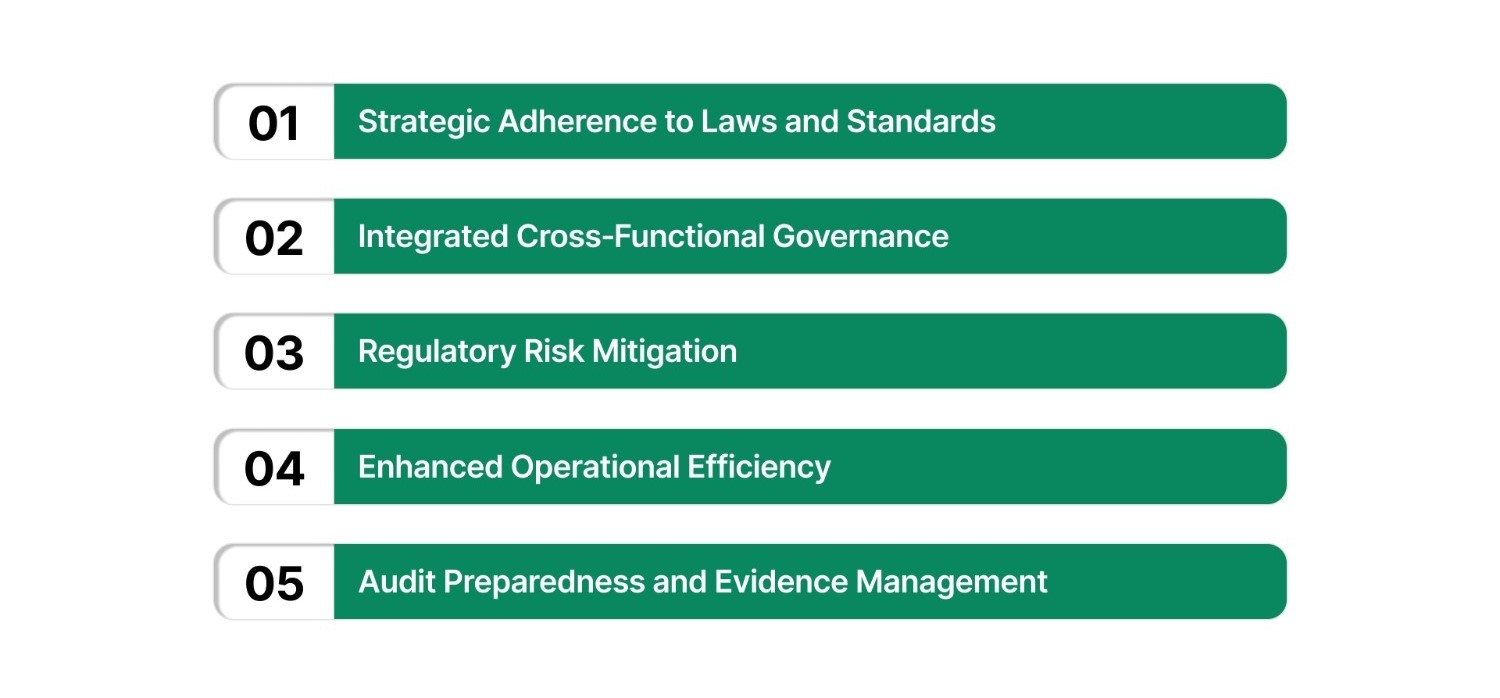
Compliance management refers to a systematic process organizations use to ensure they meet legal, regulatory, industry, and internal policy requirements across all operations. It involves structured frameworks, controls, and processes that help you ensure ethical conduct, prevent violations early, and sustain operational integrity.
Below are the defining elements and key reasons it matters across sectors:
- Strategic Adherence to Laws and Standards: Ensures your organization consistently meets applicable regulations such as SOX in finance, HIPAA in healthcare, and industry standards in other regulated environments.
- Integrated Cross‑Functional Governance: Aligns teams across departments so compliance isn’t siloed; this reduces redundant controls and clarifies roles in complex operations.
- Regulatory Risk Mitigation: Detects and manages compliance risks proactively to avoid penalties, operational disruptions, and legal consequences.
- Enhanced Operational Efficiency: Standardizes processes and documentation, reducing manual errors and accelerating internal reviews and audits.
- Audit Preparedness and Evidence Management: Maintains comprehensive records and control logs ready for audit requests, simplifying inspections and reducing response time.
Also Read: Choosing Compliance Management Solutions for Financial Services
Understanding what compliance management means is only the first step; knowing how to improve compliance management in day-to-day operations is what turns regulatory intent into measurable results across industries.
6 Proven Ways to Improve Compliance Management Across Industries
To improve compliance management effectively, focus on practical, measurable actions that enhance oversight, accountability, and adaptability across your organization’s regulatory environment.
Below are six proven methods used in industries such as healthcare, finance, manufacturing, energy, and higher education.
1. Map Regulations To Internal Business Processes
Regulatory compliance succeeds when requirements like HIPAA in healthcare and SOX in finance are explicitly linked to your internal workflows, controls, and checkpoints. Mapping regulations to processes ensures consistent enforcement and reduces interpretation gaps during audits and reviews.
2. Automate Monitoring And Reporting
Continuous monitoring and automated reporting replace periodic checks with real‑time oversight. Automated systems reduce human error and broaden visibility across operations, enabling quicker detection and escalation of risks. Automated dashboards also streamline reporting cycles and support executive decision‑making.
3. Assign Responsibilities And Enforce Accountability
Clarifying roles and assigning specific regulatory obligations to individuals or teams reinforces accountability. When ownership is clear, compliance tasks are completed more reliably, and responses to gaps are faster and better documented.
4. Regular Employee Training And Awareness
Ongoing, structured training increases understanding of policies, changing regulations, and compliance expectations. Educated employees are better prepared to identify issues proactively rather than reactively, improving overall organizational resiliency.
5. Create Centralized Documentation Of Policies And Evidence
Centralizing documents, evidence of compliance, and policy updates in one repository makes retrieval during audits seamless. This approach helps reduce duplication, supports knowledge continuity, and strengthens historical traceability for regulators and internal stakeholders.
6. Continuously Review And Update Compliance Frameworks
Regulatory environments change rapidly. Establish a cycle for reviewing compliance frameworks against new rules, emerging risks, and lessons from past non‑conformities to ensure your program remains current and effective.
VComply’s Compliance Ops helps centralize policies, automate compliance tasks, and maintain a verifiable audit trail. This reduces manual errors and ensures your team consistently meets regulatory obligations.
Examples:
- Healthcare: Automating HIPAA compliance audits improves accuracy in patient data protection workflows.
- Finance: Streamlining SOX reporting using dashboards shortens audit preparation time and reduces errors.
Also Read: Understanding Regulatory Compliance Management in the U.S.
While these six strategies outline practical steps, understanding how to improve compliance management sustainably requires anchoring them within a strong, well-structured compliance framework.
Creating a Strong Compliance Framework for Your Organization
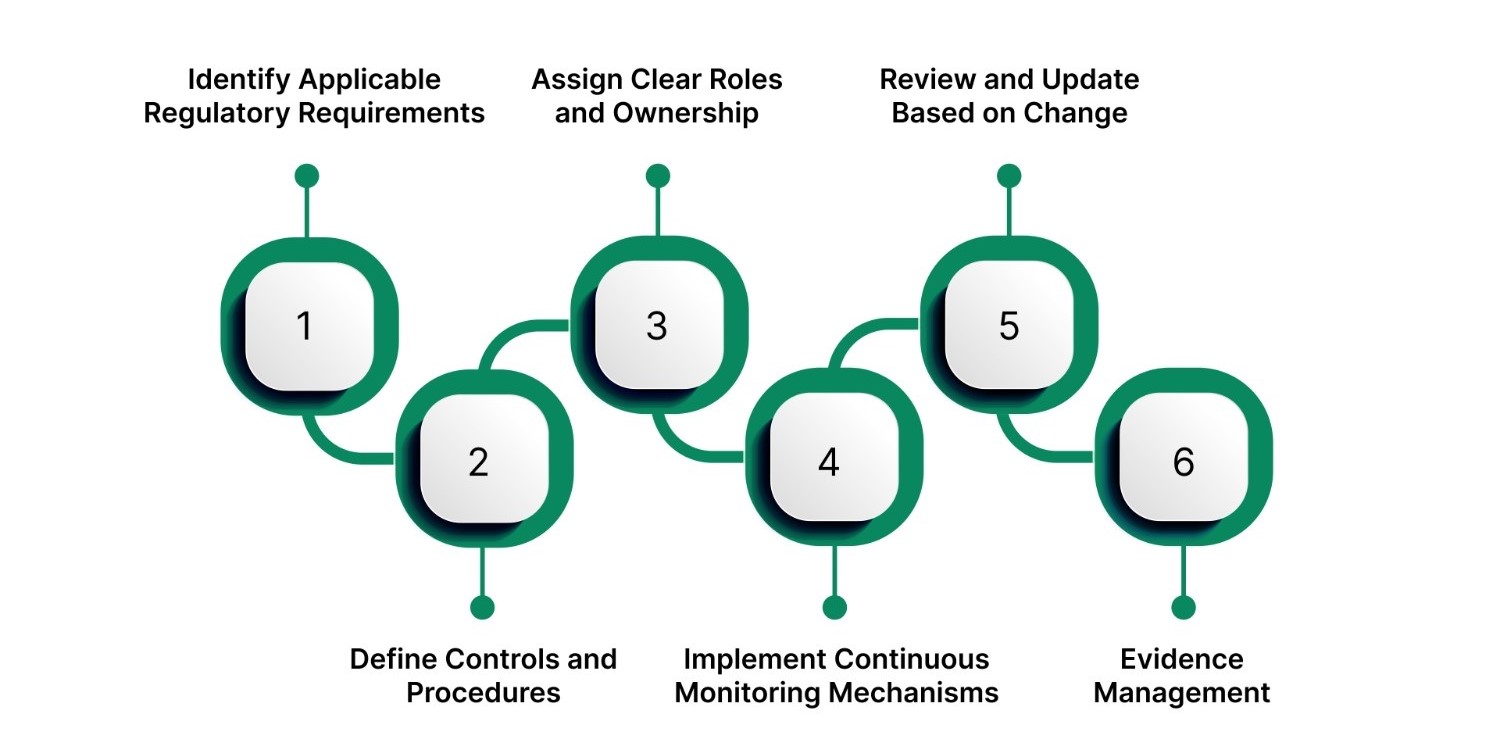
A strong compliance framework provides the structured architecture your organization needs to manage complex regulations and internal policies reliably. Across industries like finance, healthcare, manufacturing, energy, and higher education, a well‑designed framework ensures consistent adherence, traceability, and operational control.
Below are the essential elements your framework must include:
- Identify Applicable Regulatory Requirements: Begin by assessing which federal, state, and industry‑specific regulations apply to your organization. This ensures your framework targets precise obligations from the outset.
- Define Controls and Procedures: After identifying regulations, establish controls and operational procedures that enforce those requirements consistently across functions. Clear procedures reduce interpretive gaps.
- Assign Clear Roles and Ownership: Designate accountability for each part of your framework. When individuals and teams know their responsibilities, compliance tasks are executed more reliably and tracked effectively.
- Implement Continuous Monitoring Mechanisms: Use ongoing oversight tools and activities to evaluate control effectiveness and detect deviations early, rather than relying solely on periodic reviews.
- Review and Update Based on Change: Regulatory scenes change. Establish a cycle to revise your policies, controls, and evidence documentation so your framework stays current with updates in laws and industry norms.
- Centralize Documentation and Evidence Management: A single repository for policies, control evidence, and audit trails reduces duplication, minimizes errors, and accelerates audit preparations. This centralization also promotes transparency and cross‑team alignment.
Keep these elements interconnected to build a framework that not only meets compliance obligations but also strengthens operational consistency and accountability across your organization’s risk scope.
Once a strong compliance framework is in place, technology becomes the key enabler for executing, monitoring, and scaling it efficiently across the organization.
Implementing Compliance Management Efficiently with Technology
Technology is a foundational enabler that centralizes oversight, automates repetitive tasks, and provides actionable insights in real time. Modern cloud‑based compliance platforms help you reduce manual work, improve accuracy, and stay audit‑ready across regulated industries.
Below are key ways technology enhances your compliance efforts:
- Centralized Cloud Platforms for Unified Oversight: Cloud‑based solutions consolidate compliance data and processes into a single, secure environment, eliminating silos and enabling real‑time access to policies, controls, and evidence from anywhere. This centralization accelerates reporting and improves cross‑team collaboration.
- Automation of Routine Tasks and Reporting: Automation replaces manual workflows with smart, rule‑based processes for tasks such as evidence collection, control testing, and reporting. This reduces errors, shortens cycle times, and frees your team to focus on higher‑value risk mitigation activities.
- Interactive Dashboards and Real‑Time Insights: Intuitive dashboards give you a dynamic view of compliance posture, highlighting gaps and trends at a glance so you can take proactive action rather than reacting after issues occur.
- Automated Task Assignments and Alerts: Intelligent platforms assign compliance tasks to responsible owners and send automated alerts for approaching deadlines or deviations from standards, ensuring accountability and timeliness.
- Risk Detection and Data Analytics: Advanced analytics and AI‑enabled tools continuously monitor data across systems to identify patterns, anomalies, and potential compliance risks, helping you mitigate issues before they escalate.
- Improved Audit Readiness and Traceability: By automatically capturing evidence, maintaining version histories, and timestamping activities, technology ensures your organization is always prepared for internal and external audits with a clear, verifiable trail.
Example: A manufacturing company using a cloud compliance platform to track and document ISO standards across multiple plants can significantly streamline audit preparations, eliminate duplicated workflows, and maintain consistent compliance reporting enterprise‑wide.
Implementing technology streamlines processes and strengthens controls, but evaluating performance and outcomes shows precisely how to improve compliance management and drive continuous improvement.
Measuring the Success of Your Compliance Efforts
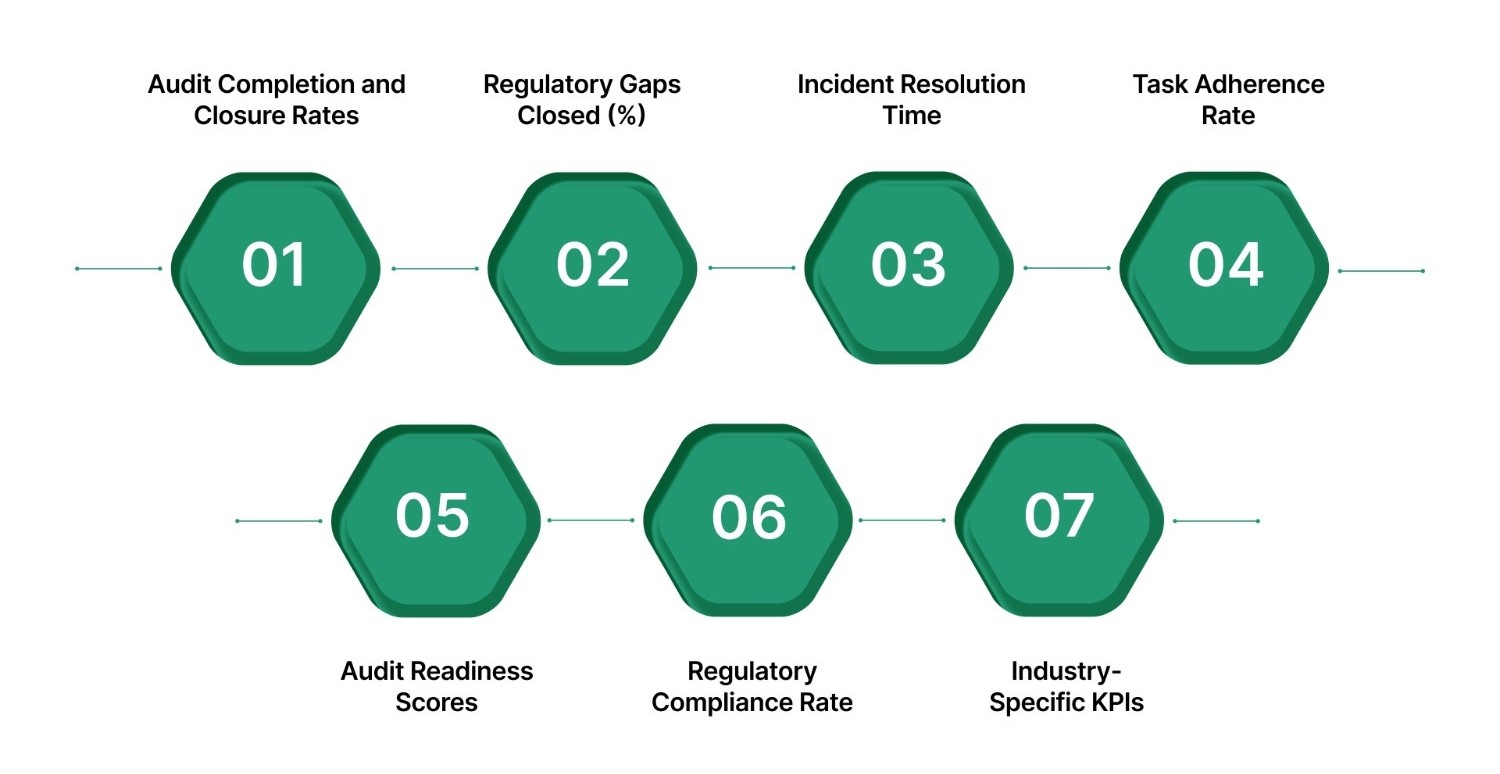
Effectively tracking your compliance program’s performance ensures that your initiatives deliver real value, sustain regulatory alignment, and improve over time. The right set of metrics and KPIs helps you evaluate your compliance health, demonstrate accountability to executives, and make better strategic decisions.
Below are key compliance success metrics you should monitor:
- Audit Completion and Closure Rates: Measures how many scheduled internal and external audits are completed on time and how quickly findings are remediated. It reflects your team’s preparedness and responsiveness to audit feedback.
- Regulatory Gaps Closed (%): Tracks the percentage of identified compliance gaps that have been resolved versus total gaps found, giving a clear view of improvement over time.
- Incident Resolution Time: Calculates the average time from when a compliance incident is reported to when it is fully resolved, indicating how quickly your organization mitigates risks.
- Task Adherence Rate: Measures how consistently compliance tasks (e.g., reviews, control testing) are completed by assigned owners within set timeframes.
- Audit Readiness Scores: Assesses preparedness for regulatory inspections based on readiness checks, documentation availability, and internal reviews.
- Regulatory Compliance Rate: Quantifies how well your organization meets applicable regulatory requirements, calculated as the percentage of processes or functions found compliant during assessments.
- Industry-Specific KPIs:
- Healthcare: The percent of HIPAA audit readiness tasks completed indicates preparedness for HIPAA compliance activities and inspections.
- Finance: SOX control adherence score reflects how effectively Sarbanes‑Oxley financial controls are implemented and operating.
- Higher Education: Compliance program adoption rate shows the percentage of departments actively using compliance tools and processes, signaling cultural integration of compliance.
VComply’s GRCOps Suite unifies ComplianceOps, RiskOps, PolicyOps, and CaseOps into a single platform, giving your executives a clear view of governance, risk, and compliance. Streamlined workflows and centralized reporting help your organization stay audit-ready and reduce operational bottlenecks.
Measuring compliance performance reveals strengths and weaknesses, helping organizations identify obstacles and understand how to improve compliance management more effectively.
5 Common Compliance Challenges Organizations Face
Understanding the real obstacles that keep compliance teams up at night is critical to strengthening your program. Organizations across industries consistently report that changing regulations, outdated processes, and poor visibility into compliance activities are top barriers to effective management.
Below are five of the most prevalent challenges:
- Rapidly Changing Regulatory Requirements: Compliance scenes change continually, with new rules and standards emerging that demand timely interpretation and implementation. Falling behind on updates increases operational risk and complicates adherence.
- Manual Processes and Documentation Gaps: Relying on spreadsheets and disconnected systems leads to errors, duplication, and incomplete audit trails, making it difficult to maintain consistent compliance records.
- Poor Cross‑Department Coordination: Siloed functions and fragmented communication hinder seamless compliance execution, delaying task completion and obscuring accountability.
- Lack of Real‑Time Visibility for Executives: Without centralized dashboards and up‑to‑date insights, leadership struggles to assess compliance posture, prioritize risks, and make informed decisions.
- Accountability and Role Ambiguity: When compliance responsibilities are not clearly defined or enforced, tasks are overlooked, and compliance performance suffers, which may weaken governance and increase exposure.
Also Read: Top 10 Real Estate Compliance Management Software in Dubai for 2025
Identifying common compliance challenges is the first step; the next is discovering practical solutions that show how to improve compliance management across complex operations.
How VComply Helps Improve Compliance Management Across Industries
When you’re responsible for compliance in complex, regulated environments like finance, healthcare, manufacturing, energy, or higher education, you need a platform that transforms how your compliance program operates end‑to‑end.
VComply’s cloud‑based GRC platform unifies all core capabilities into one system designed for clarity, accountability, and audit readiness.
Below is how VComply can help you strengthen compliance management across your organization.
- Streamlined Compliance Management with ComplianceOps: VComply’s ComplianceOps enables you to implement multi‑framework compliance programs, assign and monitor tasks, centralize evidence, and automate workflows, reducing manual errors and ensuring obligations are met consistently across teams.
- Centralized Policy Management and Control: With PolicyOps, policies are created, approved, and distributed in a centralized repository, with version tracking and employee acknowledgments to ensure everyone follows the most current standards.
- Integrated Risk Management Capabilities: RiskOps helps you identify, assess, and mitigate risks with customizable risk registers, control mapping, and automated monitoring. This gives you a proactive view into risk exposure and treatment plans.
- Incident Handling and Resolution Tracking: CaseOps supports end‑to‑end incident tracking, from detection and investigation to task assignment and closure, improving accountability and follow‑through on corrective actions.
- Real‑Time Dashboards and Reports: VComply provides customizable dashboards that give you and your executives actionable visibility into compliance status, gaps, and trends, enabling data‑driven decision‑making.
- Automated Alerts, Notifications, and Integrations: Built‑in alerts notify owners of due tasks or deviations, and integrations (e.g., with communication tools like Slack or Outlook) help operationalize compliance within your existing workflows.
Book a demo with VComply today to see how ComplianceOps and the full GRCOps suite can elevate your compliance management across industries.
With the right technology in place, teams can see measurable results, illustrating effective strategies for how to improve compliance management and sustain compliance excellence.
Final Thoughts
Effective compliance management is not a one‑time project; it’s an ongoing strategic commitment that strengthens your organization’s resilience, safeguards stakeholder trust, and drives operational excellence. Strong programs help you identify risk early, respond rapidly, and demonstrate accountability to regulators, executives, and partners.
With VComply, you get a unified platform that brings Governance, Risk, and Compliance (GRC) together into a cohesive system, from ComplianceOps and RiskOps to PolicyOps and CaseOps, helping you streamline frameworks, automate evidence and reporting, assign responsibilities, and maintain audit readiness for your organization.
Ready to drive smarter compliance? Start your 21‑day free trial with VComply today and transform the way you manage compliance across finance, healthcare, manufacturing, energy, and higher education.
FAQs
A compliance management system includes structured policies, clearly defined controls, risk assessment processes, ongoing monitoring, employee training, and documentation for audits. These elements work together to ensure regulatory adherence, operational consistency, and risk mitigation across all functions and industries, from healthcare to finance and manufacturing.
Organizations track regulatory changes by subscribing to updates from government agencies, industry associations, and professional networks. Many use automated compliance platforms that notify teams of new requirements and integrate updates into workflows. Regular reviews and cross-department collaboration ensure policies, procedures, and controls remain current and effective across all operations.
Regulatory compliance refers specifically to meeting legal and statutory requirements, while compliance management is the broader organizational approach to implementing, monitoring, and sustaining compliance programs. Compliance management includes policy creation, risk assessments, training, and reporting, providing a structured system to consistently meet regulatory obligations.
Compliance management identifies risks by mapping regulations to internal processes and controls, tracking deviations, and highlighting gaps. It enables proactive monitoring through dashboards and automated alerts, allowing teams to mitigate risks before escalation. This systematic approach ensures operational, legal, and reputational risks are detected and managed effectively.
Effective audits require clear objectives, pre-audit planning, and documentation review. Assign responsibilities, use checklists aligned with regulations, and understand centralized evidence repositories. Engage stakeholders for verification and follow-up on findings. Technology can automate tracking, ensuring consistent compliance evaluation and reducing manual errors while improving audit readiness.