

Manual vs Automated Compliance Management: Costs, Risks, and When to Transition
Audit cycles often expose where manual compliance begins to fail. For compliance managers, risk leaders, and internal audit teams, audit preparation often means weeks of reconciling spreadsheets, validating evidence, and coordinating across functions. What appears manageable in day-to-day operations becomes difficult to control under audit scrutiny.

As regulatory scope expands, the operational burden increases. Teams spend more time tracking updates, chasing documentation, and aligning stakeholders, while leadership still expects clear, real-time visibility into compliance status. This gap between effort and oversight introduces both inefficiency and risk.
At this point, the question is no longer whether manual processes can work, but whether they can scale. Evaluating manual vs automated compliance management becomes essential to maintaining control, improving audit readiness, and sustaining governance as complexity grows.
Key Takeaways
- Manual compliance appears low-cost but becomes expensive over time, driven by labor, audit preparation, and error correction rather than licensing fees.
- Audit readiness is the clearest breaking point; manual systems force reactive evidence collection, while automated systems support continuous, audit-ready documentation.
- Lack of visibility, not effort, is the core risk in manual compliance, limiting leadership’s ability to identify control gaps and emerging issues early.
- Automation standardizes execution across teams, reducing dependency on individuals and making compliance more consistent and measurable.
- The transition point is operational, not optional. Once regulatory scope, audit frequency, or organizational complexity increases, manual compliance stops scaling effectively.
What Is Manual Compliance Management?
Manual compliance management relies on people-driven processes to track regulatory requirements, controls, and evidence. Teams typically use spreadsheets, documents, emails, and shared drives to manage compliance activities across the organization.
In this model, compliance knowledge often lives in individuals’ inboxes or personal files. Updates depend on manual follow-ups, reminders, and disciplined version control. While this approach may work for small teams or low regulatory exposure, it becomes fragile as obligations grow.
Manual compliance also creates silos between departments. Evidence collection, policy updates, and audit preparation happen in parallel, with limited visibility into overall compliance status. This lack of centralized oversight makes it harder to identify gaps early and respond confidently to auditors.
What Is Automated Compliance Management?
Automated compliance management uses centralized software to track regulatory requirements, controls, evidence, and compliance activities in one system. Instead of relying on spreadsheets and email reminders, workflows are system-driven and continuously updated.
This approach replaces manual follow-ups with structured processes. Compliance tasks, ownership, deadlines, and evidence are clearly defined and monitored in real time. Teams gain immediate visibility into what is compliant, what is at risk, and what needs attention.
Automation also standardizes how compliance is executed across departments. Policies, controls, and evidence follow consistent workflows, reducing variation and human error. As regulatory scope expands, automated systems scale without adding proportional manual effort.
Key Challenges of Manual Compliance Management
Manual compliance management introduces risk because it depends heavily on human consistency. Even well-run teams struggle to maintain accuracy when tracking requirements, controls, and evidence across multiple systems.
The most common challenges include:
- High risk of human error due to manual data entry, version control issues, and missed updates.
- Limited visibility into compliance status makes it difficult to identify gaps before audits.
- Inefficient audit preparation, with teams scrambling to locate and validate evidence.
- Poor accountability, as ownership and deadlines are often unclear or undocumented.
- Lack of scalability as regulatory requirements and organizational complexity increase.
These challenges compound over time, increasing operational strain and regulatory exposure. This is where automated compliance management becomes beneficial. Read how.
Benefits of Automated Compliance Management
Automated compliance management transforms compliance into a continuous, controlled process. Instead of reacting to audits and regulatory changes, you operate with real-time awareness and structured execution.
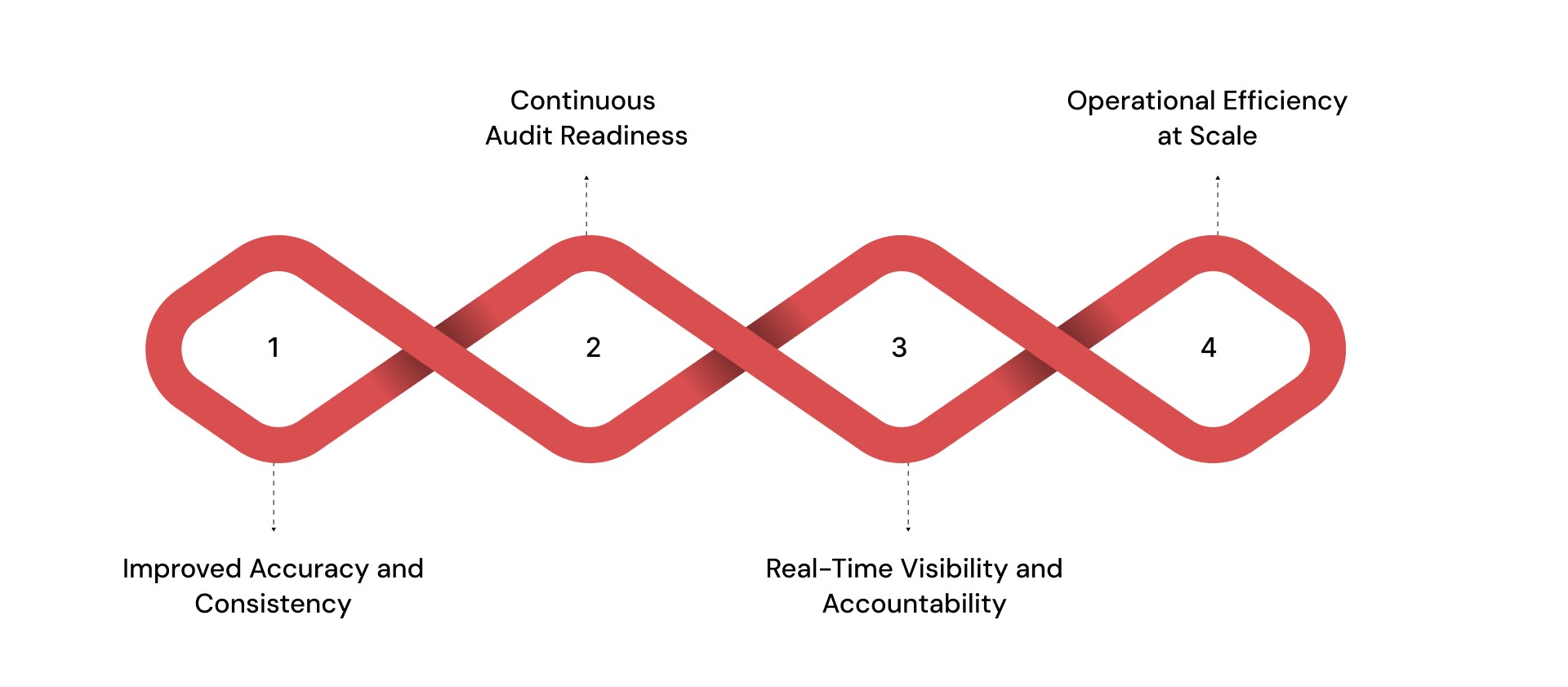
Below are the core benefits, broken down by outcome.
1. Improved Accuracy and Consistency
Automation reduces dependence on manual data entry and individual judgment. Controls, evidence, and regulatory requirements follow standardized workflows, lowering the risk of inconsistencies or outdated documentation.
This consistency is especially critical when managing multiple regulations or business units. It ensures compliance is executed the same way, every time.
2. Continuous Audit Readiness
With automated compliance, evidence is collected and mapped as work happens. You no longer scramble to assemble documentation weeks before an audit.
Auditors gain faster access to organized, traceable evidence. Your team spends less time preparing and more time addressing real compliance gaps.
Also Read: Are You Audit-Ready? A Deep-Dive Guide for Internal Compliance Leaders
3. Real-Time Visibility and Accountability
Automated systems provide a centralized view of compliance status across regulations and teams. You can instantly see what is compliant, what is overdue, and where risks exist.
Clear ownership, automated reminders, and tracked progress improve accountability. Compliance stops being reactive and becomes measurable.
4. Operational Efficiency at Scale
Automation eliminates repetitive tasks like manual follow-ups, spreadsheet updates, and duplicate reporting. As regulatory scope increases, your workload does not grow at the same rate.
This efficiency allows compliance teams to focus on strengthening controls and reducing risk, rather than maintaining paperwork.
Manual vs Automated Compliance Management
The differences between manual and automated compliance management are easiest to evaluate side by side. This comparison shows how each approach performs as regulatory complexity and audit expectations increase.
| Category | Manual Compliance Management | Automated Compliance Management |
|---|---|---|
| Efficiency and Time Investment | Relies on manual tracking, follow-ups, and updates, increasing workload with every new requirement. | Uses workflows and automation to reduce repetitive tasks and administrative effort. |
| Accuracy and Error Risk | High risk of human error due to manual entry, version control issues, and inconsistent processes. | Enforces standardized workflows and version control, significantly reducing errors. |
| Audit Readiness and Reporting | Audit preparation is reactive and time-consuming, often requiring last-minute evidence collection. | Supports continuous audit readiness with real-time reporting and organized evidence. |
| Visibility and Accountability | Limited visibility across teams and regulations, with unclear ownership and status tracking. | Provides centralized visibility, clear ownership, and real-time compliance status. |
| Scalability | Does not scale well as regulations, audits, and business units increase. | Scales efficiently without proportional increases in manual effort. |
| Cost Over Time | Appears low-cost initially, but becomes expensive due to labor, inefficiencies, and audit remediation. | Higher upfront investment but delivers long-term cost savings and reduced risk exposure. |
Impact on Audit Readiness and Regulatory Exams
Audit readiness is where the difference between manual and automated compliance management becomes most visible. Auditors expect timely, accurate, and traceable evidence, not last-minute document collection.
With manual compliance, audit preparation is often reactive. Teams spend weeks tracking down evidence, validating versions, and confirming ownership. This increases stress, disrupts daily operations, and raises the risk of audit findings.
Automated compliance supports continuous audit readiness. Evidence is collected, mapped, and updated as part of daily workflows. When an audit begins, documentation is already organized, current, and accessible.
This shift reduces audit timelines and improves auditor confidence. Compliance teams move from defensive explanations to informed, structured conversations.
Compliance as a Risk Management Function
Compliance is often treated as a checklist exercise, but in reality, it is a core risk management function. When compliance activities are manual, risks remain hidden until an audit or incident exposes them.
Manual compliance makes it difficult to identify emerging risks. Without real-time visibility, leadership cannot see where controls are weak, overdue, or inconsistently applied. This creates blind spots that increase regulatory, operational, and reputational risk.
Automated compliance connects requirements, controls, and evidence into a single operational view. This allows teams to identify gaps early and address issues before they escalate. Compliance shifts from reactive enforcement to proactive risk reduction.
When Manual Compliance Breaks Down
Manual compliance usually fails gradually, not suddenly. Early warning signs often appear long before teams acknowledge them.
Common indicators include missed internal deadlines, repeated audit findings, and growing dependence on a few key individuals. As regulations evolve, manual tracking struggles to keep pace with updates and evidence requirements.
Manual compliance also breaks down during growth events. Mergers, new business lines, or expanded regulatory scope multiply complexity. What once felt manageable quickly becomes fragile and error-prone.
At this point, continuing manually increases risk more than it saves cost.

Is a Hybrid Compliance Approach Sustainable?
Many organizations attempt a hybrid approach, combining manual processes with limited automation. This often feels like a safer transition, but it rarely scales well.
Hybrid models introduce inconsistencies. Some controls are tracked centrally, while others remain manual. Evidence lives in multiple places, reducing clarity and increasing the need for reconciliation work.
Over time, hybrid compliance creates confusion rather than control. Teams spend more time managing the system than improving compliance outcomes. For most regulated organizations, full operational alignment is more sustainable than partial automation.
Operationalizing Automated Compliance with ComplianceOps
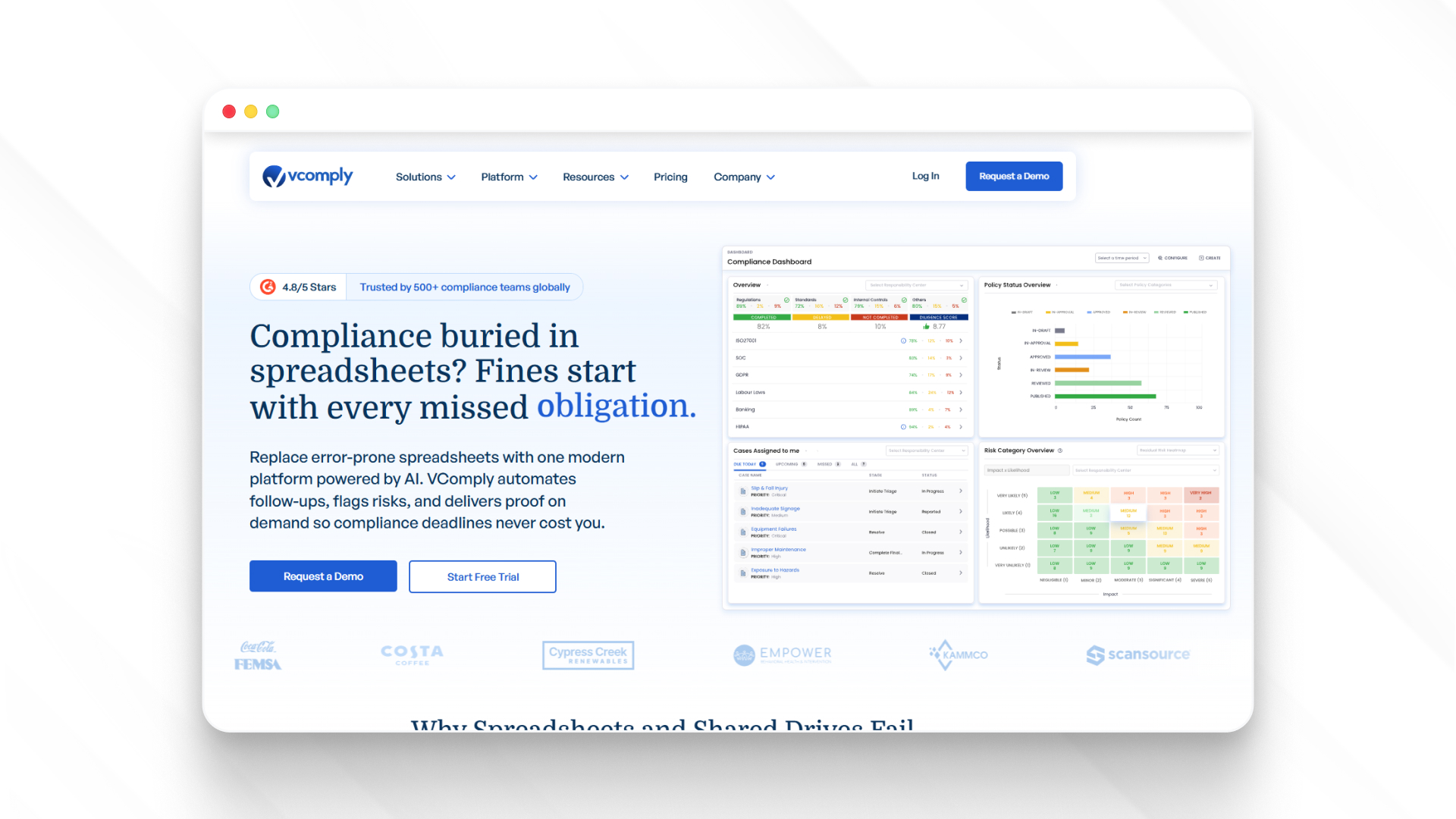
Moving from manual to automated compliance requires more than tools. You need a system that aligns regulatory requirements, controls, audits, and reporting into one operational framework.
ComplianceOps is designed to centralize compliance execution. It helps you track regulatory obligations, manage controls, collect evidence, and prepare for audits without relying on spreadsheets or disconnected tools.
The platform supports continuous compliance by improving visibility, accountability, and consistency across teams. This allows compliance leaders to reduce risk, improve audit readiness, and operate with confidence.
Explore how ComplianceOps structures compliance oversight, connecting regulatory obligations, control tracking, and audit evidence within a single operational system. Book a free demo.
Conclusion
Manual compliance management may work temporarily, but it becomes risky as regulatory demands grow. Human error, limited visibility, and reactive audits create unnecessary exposure for regulated organizations.
Automated compliance management addresses these challenges by introducing structure, consistency, and real-time insight. It enables continuous audit readiness and integrates compliance into everyday operations.
VComply provides a practical path forward with ComplianceOps, helping you operationalize compliance without adding complexity. Start a 21-day free trial to see how automated compliance can reduce risk and improve control across your organization.
FAQs
Manual compliance management relies on spreadsheets, documents, and emails to track regulatory requirements, controls, and evidence. It depends heavily on human coordination and manual follow-ups.
Automated compliance management uses centralized software to manage compliance workflows, evidence, and reporting. It provides real-time visibility and supports continuous compliance.
Manual compliance may work for small organizations with limited regulatory exposure. As complexity increases, it becomes inefficient and risky.
Automation collects and organizes evidence continuously. This reduces last-minute audit preparation and improves documentation accuracy.
Organizations should consider automation when regulatory requirements increase, audits become more frequent, or manual tracking causes delays and errors.
Organizations typically improve compliance outcomes by centralizing regulatory requirements, control tracking, and audit evidence within structured systems. Platforms such as VComply help operationalize compliance by connecting policies, controls, reporting, and accountability workflows into a unified governance framework.