

5 Best Compliance Solutions in the UK Market
The increasing complexity of laws and regulatory frameworks in the UK means that companies must manage compliance effectively to avoid fines, legal repercussions, and reputational damage.

According to a report by Xoralia, organizations using policy management software can achieve attestation rates of over 75%. This indicates a significant improvement in policy compliance through the use of specialized tools.
In this article, we’ll explore the best compliance solutions in the UK and provide a detailed comparison of the top five options to help you choose the right tool for your organization.
What Are Compliance Solutions?
Compliance solutions are software programs designed to assist UK businesses in following internal policies, local laws, and regulations. By monitoring and managing risks, these tools help businesses comply with legal and regulatory requirements like the GDPR, FCA regulations, and UK anti-money laundering (AML) laws.
Compliance solutions help businesses stay current with changing regulations and align with industry standards like ISO 27001 and SMCR. In the UK market, these tools provide risk management, policy management, audits, reporting, training, and continuous monitoring.
Now that we know what compliance solutions are, it’s essential to examine the main compliance regulations that UK businesses must adhere to.
Important Compliance Policies in the UK
In the UK, businesses must adhere to a range of regulations to ensure they remain compliant and avoid legal and financial risks. Here’s a summary of essential UK compliance policies:
1. Financial Services and FCA Compliance
The FCA regulates financial markets, requiring compliance with FSMA, AML regulations, and Payment Services Regulations. Financial businesses must monitor transactions and report suspicious activities to avoid legal consequences.
2. Health and Safety Compliance
Under the Health and Safety at Work Act 1974, businesses must ensure employee safety. This includes conducting risk assessments and complying with regulations such as RIDDOR for incident reporting.
3. Environmental and Sustainability Policies
Businesses must comply with regulations like the Environmental Protection Act 1990 and WEEE Regulations to manage waste and reduce carbon emissions, as outlined in the Climate Change Act 2008.
4. Employment and Equality Policies
The Equality Act 2010 ensures equal treatment in recruitment and promotions, preventing discrimination based on race, gender, or disability. Businesses must implement policies that align with these legal requirements.
5. Anti-Bribery and Corruption Compliance
The Bribery Act 2010 requires businesses to prevent bribery and corruption. Companies must demonstrate adequate procedures to prevent illegal practices and maintain ethical standards.
6. Data Protection and Privacy Policies
GDPR governs how personal data is collected, processed, and stored in the UK. Businesses must ensure privacy rights, data breach notifications, and data protection by design are in place to avoid penalties.
7. Tax Compliance and HMRC Regulations
Businesses must comply with HMRC tax regulations, including Income Tax and VAT rules. HMRC’s Making Tax Digital (MTD) initiative requires digital tax filing and record-keeping for VAT purposes.
Next, let’s explore the key benefits that compliance software can bring to your business.
5 Benefits of Using Compliance Software
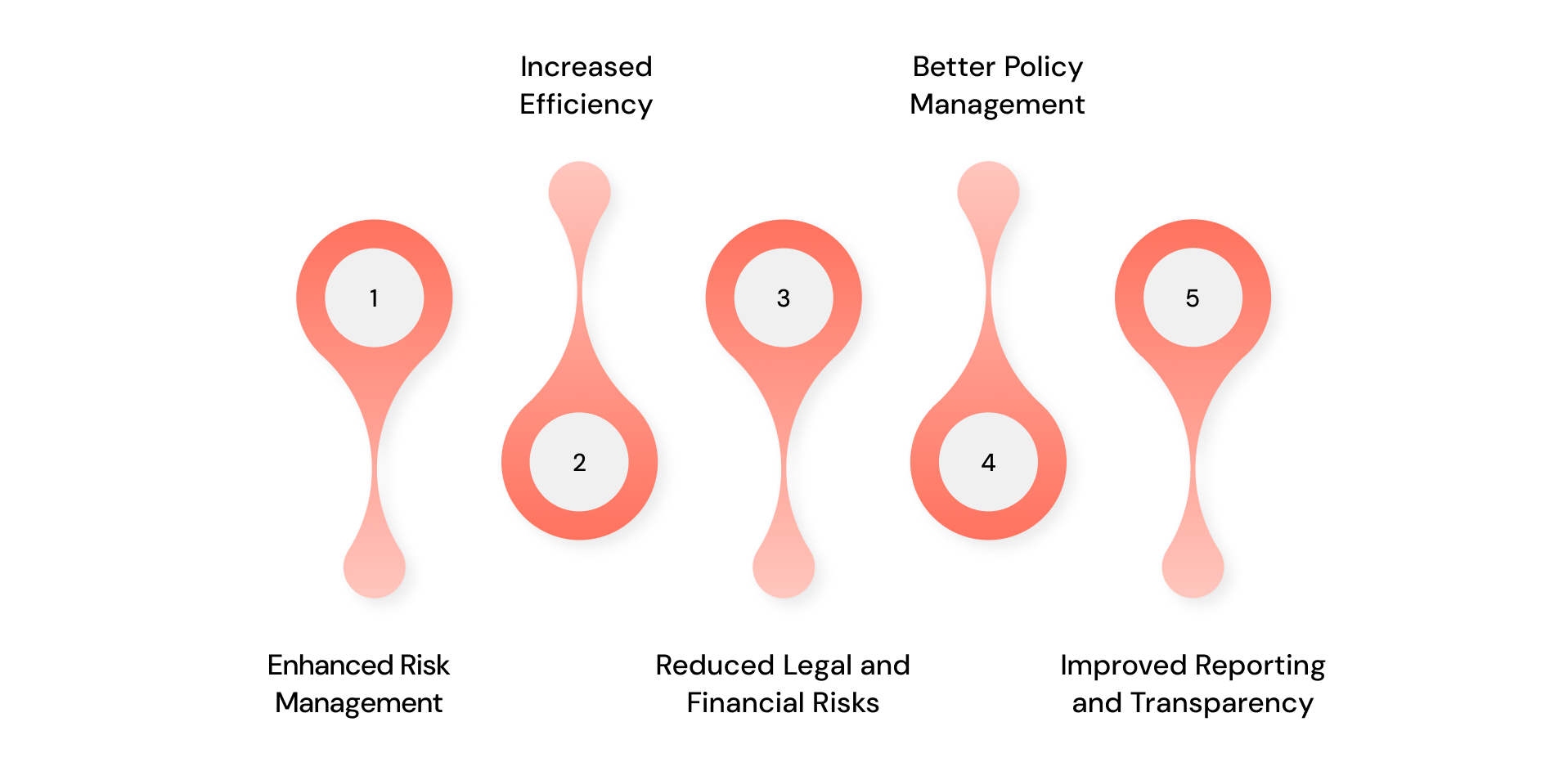
Compliance software provides UK businesses with the tools to streamline regulatory processes, mitigate risks, and ensure they remain compliant with national and industry standards. Here are five key benefits of using such software.
1. Enhanced Risk Management
Compliance software helps UK businesses identify and mitigate risks early by offering real-time monitoring and alerts. Tools such as GDPR compliance trackers and FCA reporting features enable businesses to detect potential compliance issues before they escalate into serious legal or financial problems.
2. Increased Efficiency
By automating compliance processes like reporting, audits, and training, software reduces the need for manual intervention, allowing teams to focus on other critical tasks. In the UK, automating workflows related to SMCR compliance or health and safety regulations significantly improves operational efficiency across departments.
3. Reduced Legal and Financial Risks
Compliance software ensures that your business adheres to local and international regulations, helping to avoid fines and penalties. For UK businesses, this is especially important in areas such as HMRC tax reporting, GDPR, and anti-money laundering (AML) compliance, where failure to comply can result in significant financial repercussions.
4. Better Policy Management
With compliance software, you can easily create, distribute, and track compliance policies across your UK-based organization. This ensures your team stays up-to-date with the latest regulatory changes.
To take your policy management a step further, VComply’s PolicyOps simplifies policy drafting, approval, and tracking with customizable templates, version control, and a centralized dashboard. With automated workflows and integrated tools, you can ensure policy compliance across teams.
5. Improved Reporting and Transparency
Compliance solutions offer solid reporting capabilities, providing clear, actionable insights. In the UK market, this ensures businesses are always prepared for regulatory audits, such as those required by the Information Commissioner’s Office (ICO) for GDPR compliance.
Also read: The Shift Towards Digital Compliance Management in the UK
Now, let’s take a look at the top compliance solutions in the UK market that offer these benefits and more.
5 Best Compliance Solutions in the UK Market
Before going into the details of each solution, here’s a quick comparison table to highlight the key aspects of the top five compliance solutions in the UK market:
| Solution | Scalability | Integration Capabilities | Customization Options | Support & Training |
| VComply | High (for mid to large businesses) | Integrates with ERP and HR systems | Customizable workflows and reports | 24/7 customer support with training resources |
| SAI360 | Enterprise-grade scalability | Strong integration with ERP, HRMS, and other platforms | Highly customizable to industry needs | Extensive training resources and support services |
| Ideagen | Scalable for healthcare and finance | Integrates with ERP and financial systems | Customizable templates for audit and compliance | Dedicated account manager and training webinars |
| NAVEX One | Suitable for large enterprises | Integrates with multiple business tools | Flexible with compliance management | Access to extensive support materials and live training |
| MetricStream | Global scalability for large enterprises | Seamless integration with complex systems | High customizability for complex needs | Dedicated support team and professional services |
Now let’s explore each solution in detail.
1. VComply

VComply is a cloud-native Governance, Risk, and Compliance (GRC) platform designed to help organizations manage their policy lifecycle effectively. It centralizes policy management for industries like healthcare, finance, and education, offering scalable features to simplify execution and ensure compliance across various regulatory frameworks.
- Centralized Policy Repository: Organizes all organizational policies in a secure, cloud-hosted environment. This feature is ideal for businesses that need consistent access to policies across locations with version control.
- Automated Policy Lifecycle Management: Simplify the workflow of policy creation, approval, publishing, and review using custom approval paths, role-based permissions, and scheduled reviews, ensuring compliance with standards like ISO 9001 and ISO 27001.
- Version Control: Tracks different policy versions automatically, allowing users to revert to previous versions when necessary, ensuring transparency and up-to-date documentation.
- Risk-Linked Policy Controls: Connects policies to specific organizational risks, making it easier to identify policy gaps and implement effective mitigation strategies, a key requirement for managing risk-based compliance frameworks.
- Compliance Acknowledgment & Tracking: Monitors employee acknowledgments and ensures adherence to internal policies and external regulations, helping businesses demonstrate compliance during audits and regulatory reviews.
- Real-Time Reporting & Dashboards: Provides on-demand insights into compliance status, overdue acknowledgments, and audit trails, which are crucial for regulatory reporting and internal governance.
- Mobile Access: Enables on-the-go and offline access to policies and compliance data, ensuring that employees and stakeholders can stay connected from anywhere, be it in the office or on-site.
- Tracked Changes: Keeps policy updates transparent and traceable by tracking detailed changes, including what was altered, when it happened, and by whom.
- Approval Workflows: Implements multi-level approval workflows, reducing the risk of oversight and enhancing compliance across departments by ensuring policies go through the right channels.
- Access Control: Customizes access controls to ensure that only the appropriate personnel have access to specific policies, maintaining policy integrity and security.
- Policy Templates: Provides a library of customizable policy templates that simplify policy creation and ensure that all organizational documents meet best practices and regulatory standards.
Also read: Creating GRC Dashboard: Steps and Insights for Effective GRC Reporting
VComply offers flexible pricing that is tailored to your organization’s size and specific compliance needs. A 21-day free trial and a free demo are available for you to test the platform.
Request a demo now and discover how we can help simplify your compliance efforts.
2. SAI360

SAI360 is a comprehensive compliance and risk management platform designed to help businesses meet regulatory requirements, maintain ethical standards, and manage internal policies. With real-time monitoring and advanced analytics, SAI360 provides actionable insights that allow businesses to make informed decisions and improve their overall compliance processes.
Key Features:
- Risk and Compliance Management: Aligns processes with regulations, ensuring business compliance.
- Training and Education: Provides resources to keep employees updated on compliance standards.
- Incident Reporting: Simplifies reporting of compliance incidents for quick resolution.
- Real-Time Analytics: Offers insights into compliance program effectiveness for continuous improvement.
Pricing:
Pricing is flexible, tailored to the organization’s size and requirements. Contact SAI360 for more information.
3. Ideagen

Ideagen specializes in providing compliance solutions for highly regulated industries like healthcare, finance, and manufacturing. It includes features for document control, incident management, and real-time compliance tracking, ensuring organizations stay aligned with industry regulations such as ISO and FDA standards.
Key Features:
- Document Control: Manages and controls documents to ensure regulatory compliance.
- Incident Management: Tracks and resolves compliance-related incidents.
- Real-Time Compliance Tracking: Monitors and tracks compliance status in real time.
- Audit Management: Helps businesses maintain audit trails and meet industry regulations.
Pricing:
Pricing is available upon request, with details varying based on your organization’s needs and scale, offering tiered or unlimited plan options.
4. NAVEX One

NAVEX One is a comprehensive platform that offers policy management, compliance training, and risk mitigation. It provides incident reporting, automated policy distribution, and a learning management system. NAVEX One is designed to integrate with other business functions and ensures that all compliance tasks are tracked and managed in real time.
Key Features:
- Policy Management: Automates policy creation, distribution, and tracking.
- Compliance Training: Offers training tools to help employees stay compliant.
- Incident Reporting: Tracks and manages incidents related to compliance.
- Learning Management System (LMS): Provides on-demand training resources for employees.
Pricing:
Pricing offers customizable options based on company size and specific needs.
5. MetricStream

MetricStream is a leading governance, risk, and compliance (GRC) platform that helps businesses monitor and manage compliance activities. It offers powerful tools for risk management, auditing, and real-time compliance monitoring. MetricStream’s advanced analytics enable businesses to stay ahead of potential risks and make informed decisions.
Key Features:
- Governance, Risk, and Compliance (GRC): Provides an integrated approach to risk and compliance management.
- Real-Time Dashboards: Visualizes key compliance and risk data in real time.
- Automated Workflows: Streamlines compliance tasks and workflows.
- Advanced Analytics: Offers insights into potential compliance gaps and risks.
Pricing:
Pricing is available upon request, depending on the scale and scope of your business.
Having compared these solutions, it’s crucial to understand how to select the best compliance management tool that aligns with your unique requirements.
How to Select the Best Compliance Management Tool?

When selecting a compliance management tool in the UK, it’s essential to assess features that cater specifically to your industry needs and meet the regulatory demands of UK laws. Here are the key aspects to consider:
Step 1: Assess Scalability
Ensure the compliance tool can scale as your UK business grows, managing larger data volumes and more complex regulatory needs. It should also adapt easily to new regulations, like updates to GDPR or industry-specific frameworks such as FCA requirements in financial services.
Step 2: Evaluate User-Friendliness
Choose a compliance tool with an intuitive, easy-to-use interface. Even teams with limited compliance experience should be able to navigate it easily without extensive training. Look for features such as automated workflows, simple dashboards, and easy-to-follow user guides that will simplify compliance tasks and reduce the time spent on training.
Step 3: Check Integration Capabilities
Select a compliance tool that integrates with your existing systems. Integration with HMRC’s Making Tax Digital helps automate processes like VAT reporting, ensuring data accuracy and reducing manual errors.
Step 4: Ensure Customizability
Look for a compliance solution that can be tailored to meet your industry’s specific requirements. For example, if your business operates in the financial sector, the tool should align with FCA regulations. For healthcare, ensure it supports NHS compliance standards.
Step 5: Review Analytics and Reporting Features
Choose a tool that offers detailed, real-time analytics and reporting capabilities. It should provide automated insights into your compliance status, risks, and key performance indicators (KPIs).
Tools like VComply allow you to track compliance metrics in real time, such as overdue tasks, and offer instant notifications for potential risks. With VComply’s ComplianceOps, you can centralize all risk and compliance programs in one platform, automate workflows, set custom alerts, and improve processes with tailored dashboards, reporting, and evidence management.
Once you’ve chosen your tool, it’s important to implement it effectively, ensuring smooth adoption across your organization.
5 Strategies for Compliance Software Implementation and Integration
An easy implementation process is essential for regulations such as GDPR, FCA requirements, and other industry-specific standards. Here are five proven strategies to help ensure a successful implementation and maximize the value of your compliance tool.
1. Start with a Pilot Program
Begin with a small-scale implementation to assess the compliance tool’s features and its compatibility with your existing systems, such as your ERP or HR systems. This initial phase allows you to identify potential challenges, address any integration issues, and fine-tune the process.
2. Involve Key Stakeholders Early
Engage key departments such as IT, legal, and compliance from the start. Collaboration between teams ensures the tool aligns with your company’s goals, addresses departmental needs, and provides valuable insights.
3. Provide Proper Training
Offer comprehensive training to ensure all users understand how to use the compliance tool effectively. In the UK, where regulations are constantly shifting, training ensures your team remains up to date with compliance practices related to laws like PIPEDA, FCA, or HMRC regulations.
4. Monitor Performance Continuously
After implementation, regularly monitor the software’s performance and gather feedback from end users. Continuous evaluation helps identify any issues, refine workflows, and ensure that the solution meets UK compliance requirements.
5. Ensure Ongoing Support and Updates
Work closely with the vendor to secure ongoing support and regular updates to the tool. With UK regulations such as GDPR and FCA rules frequently changing, it’s important that your compliance software remains up-to-date with the latest features and security patches.
Also Read: Custom Tailored Compliance Software Solutions
Wrapping Up
Choosing the right compliance solution is essential for UK businesses aiming to navigate the complexities of local and international regulations. With the right tool, you can streamline your compliance processes, mitigate risks, and improve operational efficiency.
For those seeking a comprehensive compliance solution in the UK market, VComply can help you manage all your risk and compliance programs in one place, eliminating manual processes and improving efficiency.
Start your 21-day free trial with VComply to take control of your compliance processes!
FAQs
GRC software in the UK covers a broader scope, including risk management, audits, and governance processes, whereas regular compliance software focuses primarily on meeting legal and regulatory requirements, such as GDPR or FCA regulations.
Yes, many compliance solutions in the UK are customizable to meet the unique regulatory requirements of various industries. For example, solutions can be tailored for sectors like healthcare (NHS compliance), finance (FCA compliance), or manufacturing with industry-specific templates and workflows.
Most UK compliance solutions integrate with accounting systems, ERP tools, and HR software to simplify workflows and enhance data sharing. For instance, integration with HMRC’s Making Tax Digital (MTD) ensures smooth VAT reporting and tax compliance.
Compliance tools should be updated regularly to stay aligned with the constantly changing UK regulations, such as GDPR and FCA rules. Regular updates ensure that your business remains compliant with the latest legal standards and mitigates the risk of non-compliance.
Yes, many compliance solutions in the UK are specifically designed to help businesses comply with GDPR. These platforms assist in tracking data subject requests, monitoring processing activities, and maintaining data security, ensuring that your organization meets all data privacy obligations under UK law.