

Tips to Manage and Resolve Compliance Issues in the Workplace
Compliance issues in the workplace occur when an organization does not adhere to legal, regulatory, or ethical standards. These issues can involve areas such as safety, employee rights, data privacy, or financial reporting. Proactively managing compliance helps prevent legal penalties, financial losses, and reputational damage.

Introduction
Compliance issues rarely appear all at once. They usually begin as missed follow-ups, outdated policies, unclear ownership, incomplete evidence, ignored audit findings, or small process gaps that no one resolves in time. Over time, these gaps create operational, legal, financial, and reputational risk across the organization.
The cost of poor compliance management continues to rise. According to IBM’s 2025 Cost of a Data Breach Report, the global average cost of a data breach reached approximately $4.44 million, while U.S. organizations faced average breach costs exceeding $10 million in many highly regulated sectors. At the same time, regulatory investigations, workplace misconduct claims, cybersecurity incidents, and third-party failures are increasing pressure on compliance teams to respond faster and maintain stronger documentation.
In 2026, regulators, auditors, boards, customers, and employees expect organizations to demonstrate that compliance issues are not only reported, but actively tracked, investigated, resolved, and documented with clear accountability. A policy alone is no longer enough. Organizations are expected to show who owned the issue, what corrective actions were taken, when the issue was resolved, and whether controls were improved afterward.
Managing compliance issues in the workplace now requires structured workflows for reporting concerns, assessing risk, assigning corrective actions, monitoring deadlines, escalating overdue items, and maintaining audit-ready evidence. Without that structure, small compliance gaps can quickly become regulatory penalties, audit findings, workplace culture problems, data privacy incidents, or reputational damage.
This guide explains how organizations can identify, manage, investigate, and resolve workplace compliance issues through better reporting processes, risk-based prioritization, corrective action management, policy oversight, employee accountability, and continuous compliance monitoring.
Key Takeaways
- Compliance management reduces risks, enforces accountability, and protects business reputation and continuity.
- Establishing clear, up-to-date policies aligned with relevant regulations is foundational to effective compliance.
- Employee training and awareness programs are essential to ensure understanding and adherence to compliance requirements.
- A risk-based approach helps prioritize efforts on critical compliance areas, optimizing resources and mitigating high-impact risks.
- Regular internal audits and monitoring detect gaps early and prepare organizations for external inspections.
What are the Compliance Issues in the Workplace?
What Are Compliance Issues?
Compliance issues are situations where an organization, employee, vendor, or business process fails to meet applicable laws, regulations, internal policies, contractual obligations, industry standards, or ethical expectations. These issues may involve workplace safety, data privacy, financial reporting, harassment, discrimination, conflicts of interest, fraud, policy violations, third-party risk, or failures in documentation and training.
A compliance issue does not always mean intentional wrongdoing. It may result from unclear policies, poor training, manual tracking, lack of ownership, outdated procedures, or weak internal controls. What matters is how quickly the organization identifies the issue, assesses its impact, assigns responsibility, documents actions, and prevents recurrence.
Common Compliance Issues in the Workplace
| Type of Compliance Issue | What It Means | Common Examples | Potential Impact |
|---|---|---|---|
| Policy violations | Employees fail to follow internal policies or procedures | Code of conduct breaches, missed approvals, improper expense claims | Disciplinary action, audit findings, inconsistent enforcement |
| Workplace safety issues | The organization fails to meet health and safety requirements | Unsafe equipment, poor incident reporting, missed safety inspections | Employee harm, OSHA penalties, operational disruption |
| Data privacy and security issues | Sensitive data is mishandled or inadequately protected | Unauthorized access, weak passwords, vendor data exposure | Data breaches, regulatory fines, loss of trust |
| Employment law issues | HR or managers fail to comply with labor and employment requirements | Wage errors, discrimination, harassment, retaliation | Legal claims, employee turnover, reputational harm |
| Financial compliance issues | Financial controls, reporting, or approvals are not followed | Inaccurate reporting, weak segregation of duties, fraud risks | Restatements, penalties, investor concern |
| Training and attestation gaps | Employees do not complete required compliance training or policy acknowledgments | Missed annual training, incomplete certifications | Weak defensibility during audits or investigations |
| Third-party compliance issues | Vendors or partners fail to meet required standards | Vendor security gaps, contract non-compliance, unethical conduct | Supply chain disruption, regulatory exposure |
| Conflicts of interest | Personal, financial, or external interests affect business judgment | Undisclosed vendor relationships, gifts, outside employment | Bias, fraud risk, loss of stakeholder trust |
| Reporting and investigation failures | Concerns are not escalated, investigated, or documented properly | Delayed case review, missing evidence, no corrective action | Escalation risk, whistleblower claims, repeat issues |
What Constitutes Compliance in the Workplace?
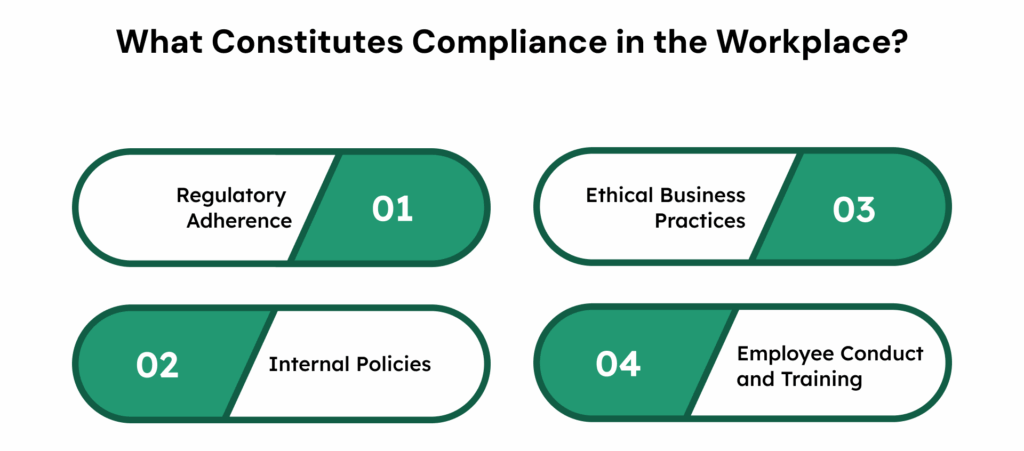
Compliance in the workplace goes beyond legal requirements; it includes internal policies, industry guidelines, and ethical standards. A well-defined compliance program should cover:
- Regulatory Adherence: Meeting federal, state, and local laws governing labor practices, safety regulations, and data privacy.
- Internal Policies: Implementing codes of conduct, conflict-of-interest policies, and operational procedures that align with legal standards.
- Ethical Business Practices: Ensuring transparency in financial transactions, preventing fraud, and maintaining fair labor practices.
- Employee Conduct and Training: Educating staff on compliance protocols, reporting mechanisms, and anti-discrimination policies.
A structured compliance management framework establishes clear expectations, ensuring organizations remain legally compliant while maintaining workplace integrity.
Understanding the key components of compliance sets the stage for recognizing why maintaining compliance is vital to a business’s operations.
Why is it Important to Maintain Compliance at the Workplace?
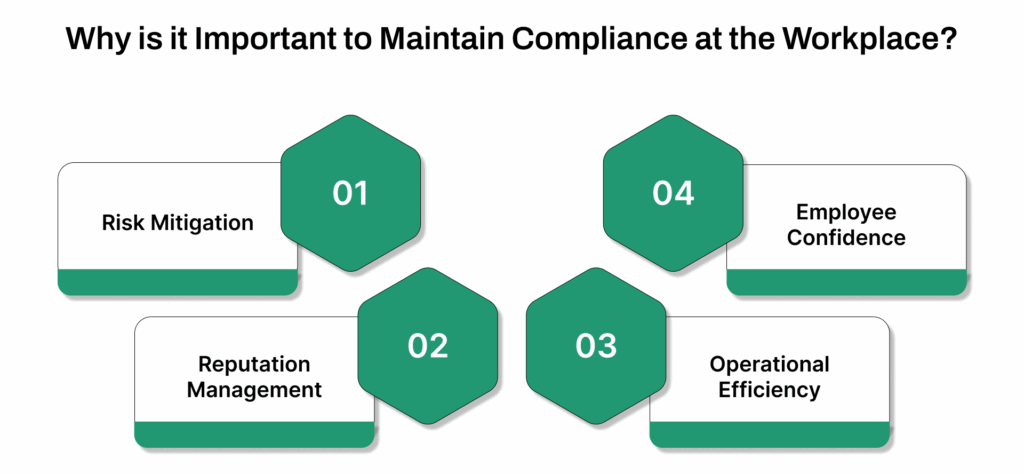
Non-compliance can result in legal penalties, reputational harm, and operational disruptions. Creating a strong compliance system provides several key benefits advantages:
- Risk Mitigation: Proactively addressing regulatory requirements reduces legal liabilities and financial penalties.
- Reputation Management: A compliance-focused organization builds trust among stakeholders, clients, and employees.
- Operational Efficiency: Clear compliance policies streamline workflows, minimize errors, and prevent misconduct.
- Employee Confidence: A well-regulated workplace promotes ethical conduct, fostering a culture of accountability.
While understanding the importance of compliance is crucial, businesses must also be aware of the challenges they face in maintaining it.
Check out this Compliance Checklist for a seamless and successful compliance process.
Common Compliance Challenges
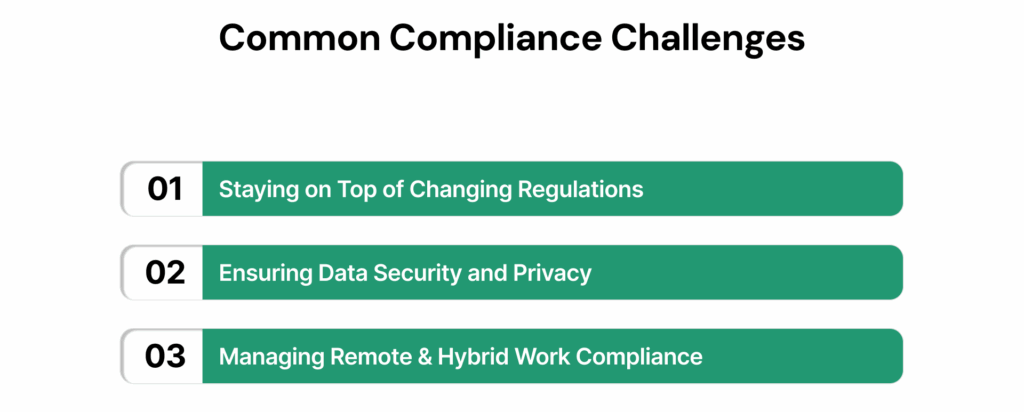
Multiple sources cause compliance problems, including regulatory changes, shifting workplace frameworks, and mounting cybersecurity threats. Properly resolving these operational challenges is essential for operating effectively and avoiding legal penalties.
Staying on Top of Changing Regulations
Regulations are always changing, which means organizations need to stay informed and flexible. Compliance teams must ensure that policies keep up with new laws while ensuring consistency across all business areas.
- Frequent legal updates: Laws and industry standards change regularly, requiring continuous monitoring.
- Multi-jurisdictional compliance: Companies operating across regions must manage varying legal frameworks.
- Limited compliance expertise: Organizations without dedicated legal teams may struggle with regulatory interpretation.
- Inconsistent enforcement: Different departments may apply compliance policies unevenly, leading to gaps.
Failure to adapt to regulatory changes can result in penalties and operational disruptions. Establishing automated tracking systems and compliance audits can improve adherence.
Ensuring Data Security and Privacy
Stringent data protection laws necessitate strong security frameworks to prevent breaches and unauthorized access. Compliance involves balancing accessibility with rigorous security protocols.
- Rising cyber risks: Phishing, ransomware, and data breaches necessitate proactive security measures.
- Third-party data handling risks: Vendors with access to sensitive information must also meet compliance standards.
- Data governance complexities: Proper classification, retention, and disposal policies prevent non-compliance.
- Evolving technologies: Cloud storage and AI-driven systems introduce new security vulnerabilities.
A structured approach to data protection that includes encryption, access controls, and regular security assessments helps reduce compliance risks.
Managing Remote and Hybrid Work Compliance
Decentralized workforces create challenges in policy enforcement, data security, and labor law compliance. Organizations must maintain control without disrupting operations flexibility.
- Workplace safety regulations: Remote setups may require adherence to occupational health and safety standards.
- Secure system access: Remote employees must comply with cybersecurity policies to protect company data.
- Labor law compliance: Tracking work hours and fair compensation is more complex across locations.
- Policy awareness and training: Employees need regular compliance training to minimize risks.
With a clear understanding of the challenges, businesses need to implement advanced tips for managing compliance.
Utilize this 5-step Guide to Compliance for a successful implementation of regulatory standards in your organization.
10 Tips to Manage and Resolve Compliance Issues
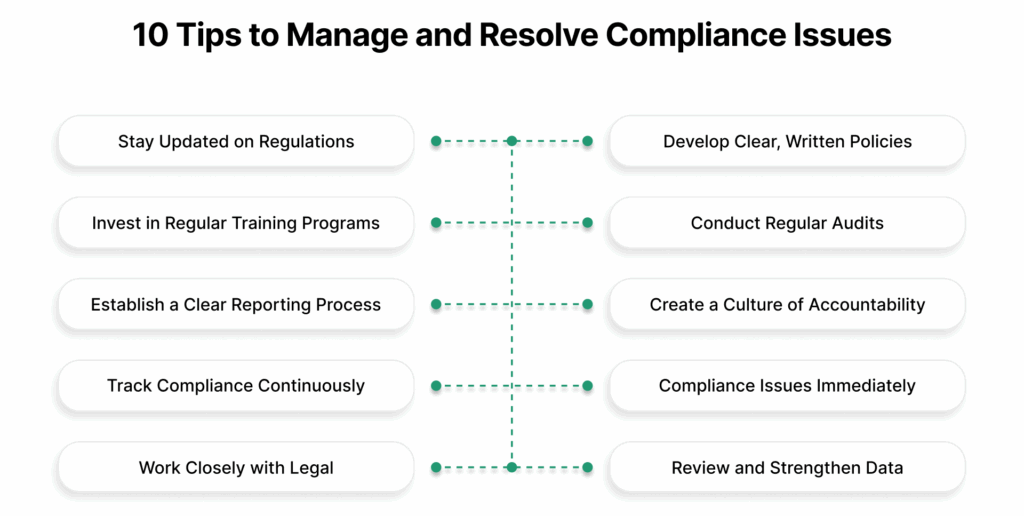
Every organization must manage and resolve compliance issues to avoid legal and financial risks. This guide covers 10 essential tips, from staying informed on regulations to developing clear policies, conducting audits, and fostering accountability across all levels.
1. Understand and Stay Updated on Regulations
Staying informed about changing laws is essential for compliance management. Continuous monitoring of legal updates is necessary, requiring compliance teams to regularly check government bulletins, industry associations, and legal experts for new rules. This effective approach helps organizations avoid penalties for non-compliance.
2. Develop Clear, Written Policies
A compliant organization starts with clear, written policies that define expectations for legal compliance, ethical behavior, and operational procedures. Policies should be accessible to all employees and regularly updated to reflect changes in laws. A solid policy manual helps employees understand their responsibilities and reduces the risk of confusion or violations.
3. Invest in Regular Training Programs
Training is vital for compliance. Employees must undergo continuous training relevant to their roles and compliance responsibilities, including updates on regulations, policies, and legal risks. Programs should be mandatory and repeated regularly, with tests to ensure employees understand and can apply the knowledge effectively.
4. Conduct Regular Audits and Inspections
Auditing is an essential tool for evaluating the effectiveness of compliance efforts. Regular internal and external audits help identify areas of vulnerability and potential risks before they become serious issues. Auditors should focus on areas such as financial reporting, safety standards, data privacy, and employee conduct. After each audit, it’s essential to address any non-compliance findings by implementing corrective actions and verifying that they are effectively resolved.
5. Establish a Clear Reporting Process
Establishing a system for employees to report compliance concerns is crucial for early problem identification. An anonymous reporting system encourages employees to express concerns without fear of retaliation. Organizations should ensure these systems are publicized and user-friendly. Employees need to understand that their reports will be taken seriously and appropriate actions will follow. Clear reporting helps prevent small issues from escalating into larger compliance problems.
6. Create a Culture of Accountability
Compliance is the responsibility of the entire team, not just the compliance department. Fostering a culture of accountability ensures compliance is prioritized at all levels. Management must lead by example, showing commitment to compliance through their actions. When employees witness leadership upholding high standards, it sets a positive precedent. Employees should also be encouraged to take ownership of their actions, understanding that accountability for compliance is a shared responsibility.
7. Monitor and Track Compliance Continuously
It’s important to actively monitor and track compliance efforts to ensure ongoing adherence to regulations. Implementing a compliance management system (CMS) or software that tracks compliance performance, audit results, training completion, and incidents can provide a real-time overview of compliance status. By using automated tracking tools, organizations can ensure they don’t miss important deadlines or necessary follow-ups and stay ahead of any issues that might arise.
8. Address Compliance Issues Immediately
When a compliance issue is identified, swift action is crucial to prevent escalation. Immediate steps contain the problem and minimize legal or financial risks. As violations escalate quickly, timely resolution is essential. A clear process for addressing issues ensures breaches are corrected promptly, reducing future risks.
9. Work Closely with Legal and Compliance Experts
Due to the complexity of modern regulations, consulting legal professionals or compliance specialists is often necessary. These experts provide insights into regulatory changes and tailored advice to address industry-specific challenges. Regular collaboration with legal teams or consultants ensures the organization’s compliance practices remain robust and current, helping to manage compliance risks and protect the organization from potential legal issues.
10. Review and Strengthen Data Protection Practices
Data protection is crucial for businesses handling sensitive customer or employee information. Regulations like GDPR and HIPAA mandate the safeguarding of personal data. It’s essential to implement strong cybersecurity measures, conduct regular audits, and educate employees on secure data practices. Protecting sensitive information helps maintain compliance and builds trust with customers.
To effectively manage these adaptations, organizations can rely on VComply’s tools that seamlessly integrate policy updates and training programs with the latest regulations.
Resolve Workplace Compliance Issues with VComply
VComply’s ComplianceOps platform delivers a comprehensive, cloud-based solution designed specifically to simplify and automate the most complex compliance management tasks.
Through ComplianceOps, organizations can automate tracking of regulatory requirements with precision, ensuring no deadlines or obligations are missed.
- Automated Compliance Tracking and Reporting: Ensures all regulatory obligations are met on time through automated task management and error-free reporting, eliminating manual gaps.
- Centralized Policy Management: Simplifies creation, distribution, version control, and employee acknowledgement tracking of compliance policies, maintaining organization-wide alignment.
- Real-Time Monitoring and Alerts: Provides immediate notifications on upcoming deadlines, audit requirements, and non-compliance risks to keep teams proactive and accountable.
- Audit Readiness and Documentation: Streamlines evidence collection and maintains historical audit trails, significantly reducing audit preparation time and improving transparency.
- Risk Prioritization: Categorizes compliance tasks by risk levels to help focus resources on critical areas and generate targeted risk reports.
- Collaboration and Workflow Management: Facilitates cross-functional compliance teamwork with task assignments, progress tracking, and escalation features.
By choosing VComply ComplianceOps, businesses can maintain a compliance strategy, stay ahead of evolving regulations, and ensure the security of essential data. Start your 21-day free trial today!
Final Thoughts
Effective compliance management requires clear policies, risk assessment, and ongoing monitoring. VComply automates risk management and issue tracking, improving collaboration and visibility while ensuring organizations stay compliant and ahead of regulatory changes.
See how VComply can strengthen your compliance strategy. Book a live demo today!
FAQs
An effective program includes risk assessment, documented policies, employee training, ongoing monitoring, and a mechanism for reporting and resolving issues promptly. Coordination across departments is essential for comprehensive coverage.
Leadership must set a clear ethical tone and communicate expectations consistently. Regular training, transparent policies, and non-retaliatory whistleblower channels help engage employees and encourage accountability.
It helps prioritize efforts on the most critical risks, ensuring efficient allocation of resources and reducing the likelihood of costly violations by addressing higher-impact areas first.
Technology automates tracking, reporting, alerts, and documentation to reduce human error and delays. It enables centralized oversight and facilitates faster, data-driven decision-making and audit readiness.
Internal audits identify control weaknesses and non-compliance early, allowing corrective actions before external regulatory inspections occur, thus minimizing disruption and penalties.