

HIPAA Security Rule: How Leaders Maintain Audit-Ready Compliance
Healthcare organizations face constant risk when handling electronic protected health information. A single misconfiguration, missed update, or phishing incident can expose sensitive patient data and trigger serious consequences.

In 2025 alone, nearly 57 million individuals in the U.S. were affected by healthcare data breaches, with more than 640 large breaches reported under HIPAA. For compliance officers, risk leaders, and executives, this is an ongoing operational challenge. Protecting ePHI must happen alongside demands for efficiency, access, and system availability, leaving little room for error.
In this blog, we break down the HIPAA Security Rule, what it requires, who must comply, how it differs from the Privacy Rule, and practical steps to achieve and maintain compliance.
Key Takeaways
- The HIPAA Security Rule protects ePHI through administrative, physical, and technical safeguards.
- Both covered entities and business associates must implement required and addressable safeguards based on risk.
- Regular risk analysis, policies, controls, and compliance documentation are essential for compliance.
- Challenges like limited resources, cyber threats, and human error require monitoring and training.
- VComply centralizes compliance, automates safeguards, and provides real-time monitoring and audit trails.
Did you know?
In a single healthcare cyberattack on the tech unit of a major U.S. insurer, approximately 192.7 million Americans had their sensitive health information impacted, making it the largest healthcare data breach in U.S. history. This is a stark reminder of the consequences when electronic protected health information isn’t secured adequately under HIPAA safeguards.
What Is The HIPAA Security Rule?
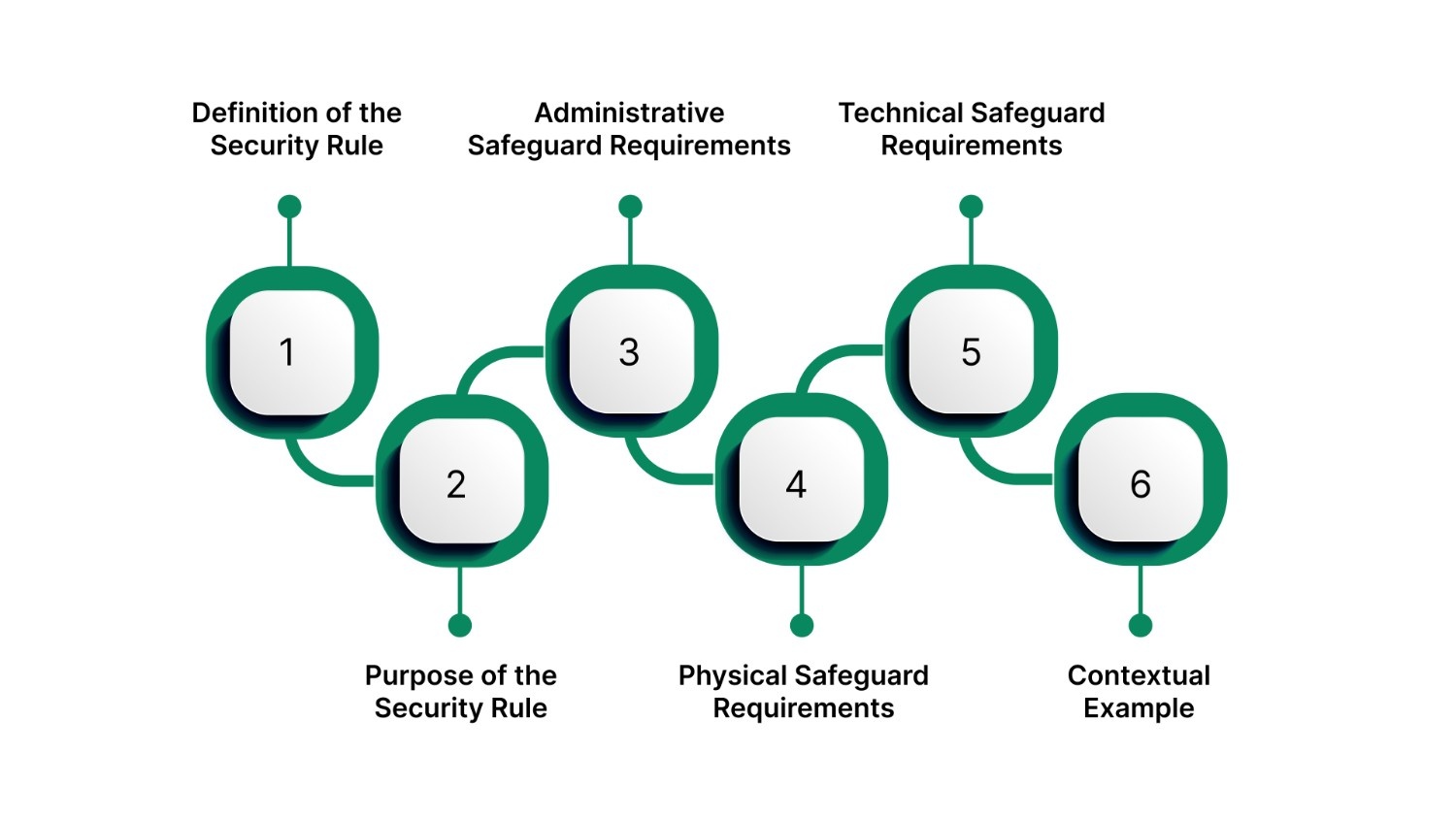
The HIPAA Security Rule is a U.S. federal regulation that sets national standards to protect electronic protected health information (ePHI) by requiring covered entities and their business associates to implement reasonable and appropriate safeguards for confidentiality, integrity, and availability of ePHI.
Below are the core aspects that define how the HIPAA Security Rule achieves its purpose:
- Definition of the Security Rule: A set of standards under HIPAA requiring regulated entities to implement security measures specifically for ePHI maintained or transmitted electronically.
- Purpose of the Security Rule: To ensure the confidentiality, integrity, and availability of ePHI, protecting it from threats and unauthorized access while allowing adoption of new technologies.
- Administrative Safeguard Requirements: Policies, procedures, and workforce controls to manage risk to ePHI, including risk analysis and management processes that are documented and maintained.
- Physical Safeguard Requirements: Measures that control physical access to electronic systems and facilities, such as workstation security and device controls on equipment storing ePHI.
- Technical Safeguard Requirements: Technology and related policies that control access to ePHI, including authentication, audit controls, and transmission security.
- Contextual Example: A large healthcare provider securing patient electronic records must apply all three safeguard categories to protect against unauthorized disclosure and ensure compliance.
Also Read: Understanding HIPAA Compliance and Security Rules
To protect electronic protected health information, the HIPAA Security Rule organizes requirements into three core safeguard categories.

3 Core Safeguard Categories in the HIPAA Security Rule
The HIPAA Security Rule is structured around three essential safeguard categories that together help protect electronic protected health information (ePHI). These safeguard groups outline what organizations must secure and how they should do it to meet regulatory expectations.
Below are the three safeguard categories covered under the rule:
1. Administrative Safeguards
Administrative safeguards are the organizational policies, procedures, and management controls required to protect electronic protected health information (ePHI) throughout its lifecycle.
Below are the principal components of HIPAA’s administrative safeguards:
- Security Management Process: Conduct an accurate and thorough assessment of potential risks and vulnerabilities to ePHI, implement risk mitigation strategies, and regularly evaluate the effectiveness of those measures.
- Assigned Security Responsibility: Designate a qualified security official responsible for developing, implementing, and maintaining your organization’s security policies and procedures.
- Workforce Security Controls: Establish policies and procedures that ensure your workforce has appropriate access to ePHI based on their role and prevent unauthorized access.
- Information Access Management: Define and enforce access authorizations aligned with job functions, including procedures for granting, modifying, and terminating access rights.
- Security Awareness and Training: Provide ongoing, role‑based training and security awareness programs to all members of the workforce to minimize human error and enforce secure practices.
2. Physical Safeguards
Physical safeguards are the measures, policies, and procedures your organization must implement to protect the physical access to systems, buildings, devices, and media that store or transmit electronic protected health information (ePHI).
Below are the core physical safeguard requirements under the HIPAA Security Rule:
- Facility Access Controls: Policies and procedures that limit physical access to facilities and areas where systems housing ePHI are located, while still allowing authorized personnel to perform their duties safely and securely.
- Workstation Use Standards: Define how workstations that access ePHI should be used to minimize the risk of unauthorized access or exposure, including procedures for secure workstation configuration.
- Workstation Security Measures: Physical measures such as screen positioning, privacy filters, timed lock screens, and restricted workstation placement to protect ePHI from unauthorized viewing or access.
- Device and Media Controls: Procedures governing the receipt, movement, removal, reuse, and disposal of hardware and electronic media that contain ePHI to prevent data loss, unauthorized access, or inadvertent disclosure.
3. Technical Safeguards
Technical safeguards are the technology‑based protections and related policies your organization must implement to protect electronic protected health information (ePHI) and control access to it.
Below are key technical safeguards required under the HIPAA Security Rule:
- Access Control Requirements: Mechanisms that allow you to regulate who can view or interact with ePHI, including unique user identification, emergency access procedures, and automatic log‑off to minimize unauthorized access risks.
- Audit Controls Standards: Hardware, software, and procedural mechanisms that record and examine activity in information systems holding ePHI, enabling traceability and accountability for access and use.
- Integrity Control Specifications: Measures and policies that protect ePHI from unauthorized alteration or destruction, ensuring data remains accurate and reliable throughout its lifecycle.
- Person or Entity Authentication: Procedures that verify the identity of anyone seeking access to ePHI, strengthening confidence that only authorized individuals gain entry.
- Transmission Security Measures: Security mechanisms that guard against unauthorized access during the electronic transmission of ePHI, such as encryption and protective network controls.
Also Read: What to Expect from an OCR HIPAA Investigation
Understanding the core safeguards is essential before exploring which requirements are mandatory and which are flexible under the Security Rule.
Required vs. Addressable HIPAA Security Rule Requirements
The HIPAA Security Rule includes two types of implementation specifications that guide how you protect electronic protected health information (ePHI): required and addressable.
Below is a concise comparison of how these requirements work and how a risk‑based approach determines what you implement:
| Specification Type | What It Means | How You Must Respond |
| Required | Must be implemented exactly as written because it supports essential ePHI protection under the Security Rule. | You must implement the safeguard regardless of your organization’s size or risk profile. |
| Addressable | Provides flexibility; not inherently optional, but must be evaluated for your environment. | You must assess whether it’s “reasonable and appropriate” given your risks; then either implement it, implement an equivalent alternative, or document why not. |
VComply Compliance Ops centralizes policies, tracks workforce adherence, and automates safeguard implementation. Simplifying documentation and continuous monitoring, it reduces human error and ensures your organization consistently meets HIPAA Security Rule requirements.
Once you know which safeguards are required or addressable, the next step is identifying the organizations that must implement them.
Which Organizations Must Follow the HIPAA Security Rule?
The HIPAA Security Rule applies to specific types of organizations that handle electronic protected health information (ePHI) as part of their operations. Entities that create, receive, maintain, or transmit ePHI must adhere to the Security Rule’s safeguards to protect the confidentiality, integrity, and availability of patient data.
Below are the two primary groups required to comply with the HIPAA Security Rule:
Covered Entities
Covered entities are organizations that fall directly under HIPAA regulations due to their core healthcare functions.
Below are examples and subcategories:
- Health Care Providers: Entities that provide medical or health services and transmit health information electronically in standard transactions (e.g., hospitals, clinics, physicians, pharmacies).
- Health Plans: Organizations that pay for health care services, including health insurance companies and government programs that cover health care costs.
- Health Care Clearinghouses: Entities that process nonstandard health information into standard formats and vice versa, acting as intermediaries between providers and payers.
Business Associates
Business associates are third‑party vendors, contractors, or subcontractors that perform functions involving ePHI on behalf of covered entities.
Below are examples and responsibilities:
- Service Providers Handling ePHI: Vendors such as cloud storage providers, billing software companies, and IT managed service firms that create, receive, maintain, or transmit ePHI for covered entities.
- Subcontractors of Business Associates: Entities engaged by business associates to handle ePHI (e.g., data storage partners) must also comply with the Security Rule through contractual obligations.
Covered entities and business associates both bear responsibility for implementing HIPAA Security Rule safeguards to protect ePHI and demonstrate compliance when audited.
Also Read: HIPAA Right of Access in 2025: What Compliance Leaders Need to Know
Now, the next step is understanding how to put the Security Rule into practice.
5 Steps to Achieve HIPAA Security Rule Compliance
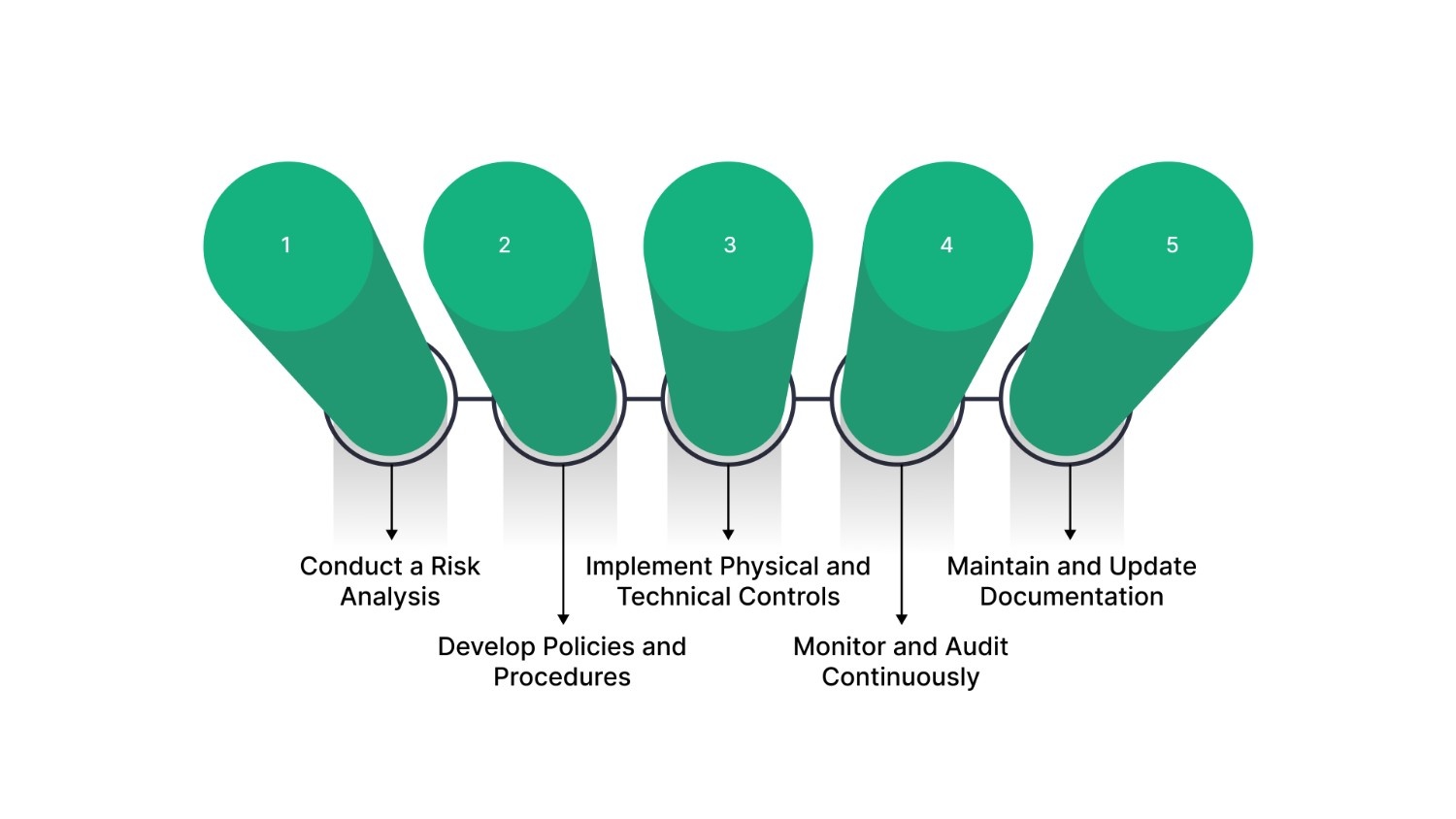
HIPAA Security Rule compliance requires identifying risks to ePHI, applying appropriate safeguards, and maintaining ongoing protection. The steps below reflect core expectations under the Security Rule.
- Conduct a Risk Analysis: Identify threats and vulnerabilities across all systems and workflows that create, receive, maintain, or transmit ePHI.
- Develop Policies and Procedures: Document administrative safeguards covering access control, workforce conduct, incident response, and contingency planning.
- Implement Physical and Technical Controls: Secure facilities and devices, and apply technical controls such as access management, audit trails, audit logs, authentication, and encryption.
- Monitor and Audit Continuously: Review logs, access activity, and control effectiveness to detect risks and compliance gaps.
- Maintain and Update Documentation: Retain and regularly update records of risk analyses, safeguards, and audit results to demonstrate compliance.
With VComply Risk Ops, your team can automate risk assessments, track vulnerabilities across systems, and maintain a real-time view of your security posture. This ensures threats to ePHI are identified and mitigated efficiently, helping you stay audit-ready without overburdening your staff.
While these five steps provide a roadmap for compliance, many professionals encounter practical challenges when implementing them effectively.
Common Challenges Professionals Face with HIPAA Security Rule Compliance
Many regulated entities struggle to implement HIPAA Security Rule requirements, especially those with limited resources or complex operations. Below are four common challenges and practical ways to address them.
- Limited Resources: Smaller teams often lack budget or dedicated security staff to fully implement safeguards.
Solution: Focus on high-risk areas through regular risk assessments, outsource specialized security tasks, and use automation to reduce manual effort and document compliance. - Evolving Cyber Threats: Ransomware, phishing, and cloud misconfigurations continue to increase risk to ePHI.
Solution: Use layered security controls, keep systems patched, and regularly reassess threats to update safeguards. - Complex Documentation Requirements: Managing policies, risk assessments, and audit evidence manually is time-consuming and error-prone.
Solution: Standardize documentation, centralize evidence in compliance tools, and review records regularly. - Human Error: Employees remain a major source of compliance risk through improper access or data handling.
Solution: Provide role-based training, monitor access activity, and enforce technical access controls.
VComply’s GRCOps Suite brings all compliance, risk, and policy operations into one platform, giving you a holistic view of your ePHI protection program. By integrating monitoring, reporting, and audit trails, it ensures leadership can make informed decisions while maintaining regulatory readiness across the organization.
Understanding these challenges also helps put policy enforcement and potential penalties into context, highlighting why strict adherence to the HIPAA Security Rule is critical.
Who Enforces the HIPAA Security Rule and What Are the Penalties?
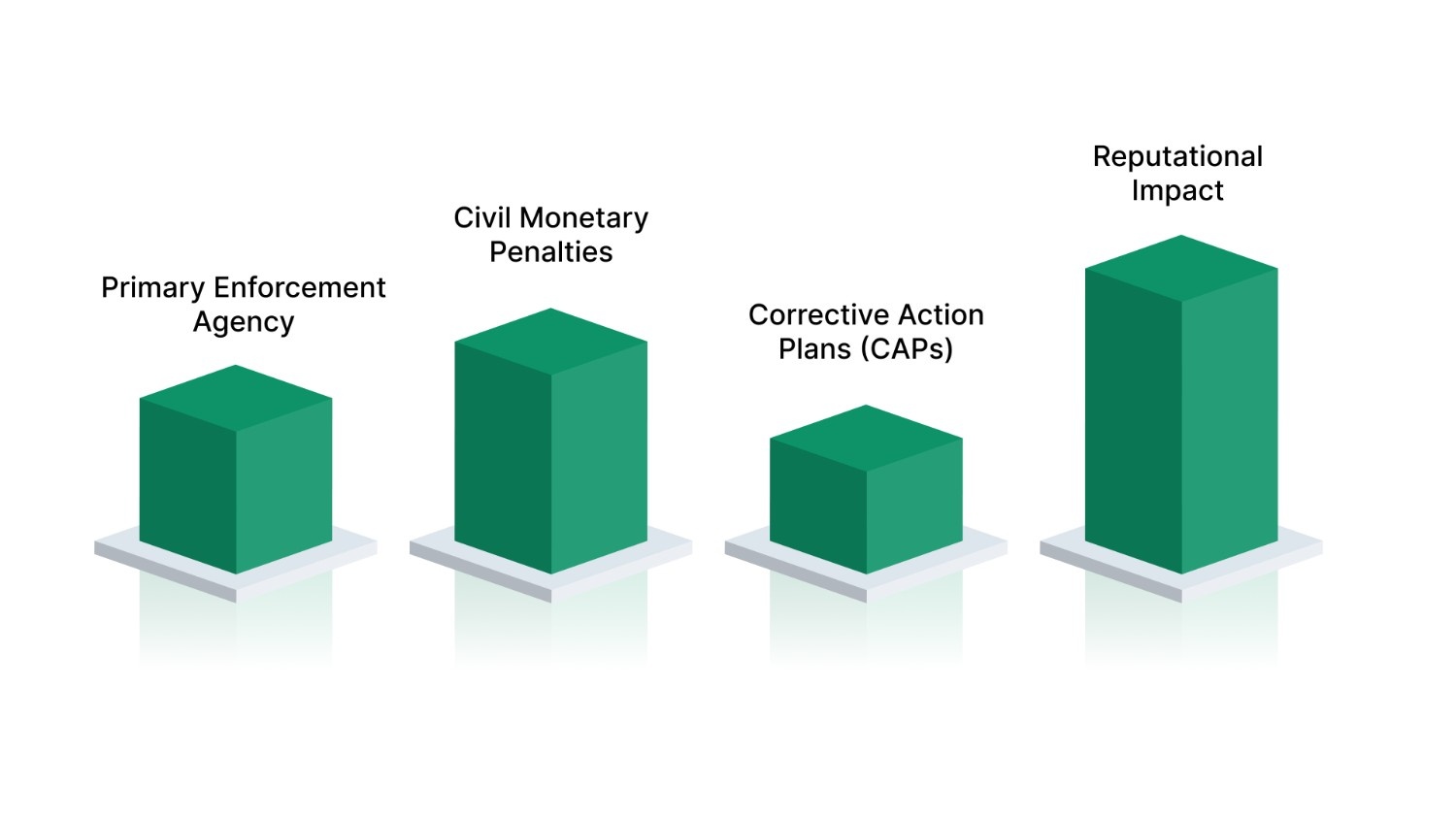
The HIPAA Security Rule is enforced primarily by the U.S. Department of Health and Human Services (HHS) Office for Civil Rights (OCR), which investigates compliance and non‑compliance with both the Privacy and Security Rules.
Below are the enforcement mechanisms and typical penalties associated with Security Rule violations:
- Primary Enforcement Agency: The HHS Office for Civil Rights (OCR) oversees enforcement of the Security Rule, including investigating complaints, conducting reviews, and securing compliance resolutions with entities handling ePHI.
- Civil Monetary Penalties: OCR can impose civil monetary penalties for non‑compliance, with fines ranging from tens of thousands to millions of dollars per violation, depending on culpability and corrective actions taken.
- Corrective Action Plans (CAPs): When non‑compliance is identified, OCR often requires organizations to enter corrective action plans to remediate deficiencies, update policies, and regularly report progress to OCR.
- Reputational Impact: Beyond fines, enforcement actions can damage public trust, attract media attention, and increase scrutiny of your compliance operations.
Example: A hospital that failed to implement required technical safeguards may face a civil settlement and be mandated to strengthen its security program under an OCR corrective action plan.
Also Read: 2025 HIPAA Compliance Updates: What Healthcare Organizations Need to Know
With enforcement mechanisms and penalties in mind, understanding tools like VComply can make managing HIPAA Security Rule compliance more efficient and less risky.
How VComply Can Simplify HIPAA Security Rule Compliance
When you’re responsible for protecting electronic protected health information (ePHI) under the HIPAA Security Rule, maintaining continuous compliance across risk, controls, policies, audits, and reporting can quickly become overwhelming.
VComply is an integrated Governance, Risk, and Compliance (GRC) platform that brings all of these functions together, helping you automate manual tasks, maintain documentation, and stay audit‑ready in one centralized system.

Below is how VComply can support every major aspect of your HIPAA Security Rule compliance journey.
- Automated Risk and Compliance Workflows: VComply’s RiskOps and ComplianceOps modules automate risk assessments, safeguards implementation, compliance obligations tracking, and task assignments. This reduces manual effort, ensures consistency across risk management and regulatory activities, and helps you proactively mitigate risks to ePHI.
- Centralized Documentation and Audit Trails: With a unified repository for policies, evidence, audit logs, and compliance documentation, VComply ensures you are always prepared for internal or external audits. Detailed audit trails make investigations and regulatory reporting more transparent and defensible.
- Continuous Monitoring and Real‑Time Reporting: Real‑time dashboards, alerts, and customizable reports give you visibility into your security posture, compliance gaps, and risk status so you can address issues before they escalate. These insights support faster decision‑making and stronger governance processes.
- Integrated Policy, Risk, and Case Management: Beyond risk and compliance, VComply’s PolicyOps and CaseOps modules help manage policy lifecycles and incident responses within the same platform, establishing cross‑functional coordination and improving your overall HIPAA compliance posture.
Ready to see how VComply can streamline your HIPAA Security Rule compliance? Book a demo with VComply and explore tailored solutions that automate risk, compliance, and audit management across your organization.
Final Thoughts
Achieving and sustaining compliance with the HIPAA Security Rule is about protecting some of the most sensitive information in your organization: electronic protected health information (ePHI). Effective compliance also means embedding risk assessment, documentation, and continuous improvement into your operational processes so that security becomes a part of daily practice.
For organizations like yours that must protect patient data and meet regulatory expectations, VComply offers a unified Governance, Risk, and Compliance platform. It integrates risk assessment, control implementation, audit tracking, and reporting in one place.
Ready to streamline your ePHI protection and strengthen compliance operations? Start your 21‑day free trial with VComply today to experience automated risk management and continuous compliance monitoring designed for modern healthcare and regulated environments.
FAQs
The Security Rule protects electronic protected health information (ePHI), including electronic medical records, billing data, lab results, imaging, prescriptions, and patient identifiers stored, transmitted, or received electronically. Any system or device that handles ePHI must be secured according to administrative, physical, and technical safeguards to ensure confidentiality and integrity.
Yes. Cloud service providers handling ePHI are considered business associates under HIPAA and must implement safeguards, enter into Business Associate Agreements, and follow administrative, physical, and technical controls. Their compliance is critical, as any breach or misconfiguration could directly affect the covered entity’s HIPAA obligations.
A designated Security Official is responsible for developing, implementing, and maintaining the organization’s HIPAA security program. This includes performing risk assessments, enforcing safeguards, managing workforce training, monitoring systems, and ensuring policies and procedures align with regulatory requirements to protect electronic protected health information.
HIPAA requires periodic risk assessments, typically at least annually or whenever significant system, operational, or technology changes occur. Regular assessments identify vulnerabilities, evaluate threats, and inform updates to safeguards, ensuring ePHI remains secure and compliant.
Organizations must maintain documentation, including risk analyses, mitigation strategies, policies, workforce training records, access logs, audit trails, and incident reports. Proper recordkeeping ensures regulatory readiness, demonstrates compliance to auditors or OCR, and supports effective monitoring and continuous improvement of security measures.