

Governance vs Compliance: Key Differences Every Organization Should Understand
The U.S. business environment has reached a point where leadership strategy and regulatory adherence must be treated as distinct, yet tightly aligned, disciplines. Organizations can no longer afford to blur the line between setting direction and following rules.

Senior leaders are moving beyond checklist-driven thinking and focusing on how internal decision-making frameworks support long-term accountability. Understanding governance vs compliance is critical in this shift.
Compliance ensures required obligations are met, while governance shapes how decisions are made, risks are owned, and accountability is enforced. Together, they form the foundation for sustainable, resilient organizations.
Key Takeaways
- Governance represents the internal rationale and methodology of leadership, whereas compliance represents the requirements of regulatory adherence.
- Governance originates internally from the board of directors and shareholders; compliance is mandated by external government agencies such as the SEC and FTC.
- Robust governance frameworks streamline the adherence process by embedding legal requirements into the operational fabric of the company.
- Regulatory scrutiny of board oversight responsibilities has intensified in recent years, prompting directors to take a more active role in governance structures that support compliance programs.
- Centralized governance structures often reduce operational friction by consolidating reporting, policy oversight, and compliance documentation into a unified system.
What is Governance?
To analyze the difference between governance and compliance, one must first identify the origin of authority. Corporate governance refers to the system of rules, practices, and processes by which an entity is directed and controlled.
It serves as the architectural blueprint of the organization, designed to balance the interests of stakeholders, including shareholders, management, customers, and the community.
In the United States, the board of directors defines the governance landscape. Their role involves providing strategic direction and ensuring the management team acts in the interest of the owners.
This includes establishing executive ethics, defining risk appetite, and setting the long-term objectives that guide every business decision.

The Strategic Rationale of Governance
Governance is inherently forward-looking. It addresses the destination of the company and the behavioral standards expected during that journey. This strategic focus aligns organizational resources with long-term objectives.
For instance, a governance policy might prioritize sustainable supply chain practices to drive brand reputation, a choice made by leadership to enhance value rather than simply meet a minimum legal standard.
Core Components of an Effective Framework
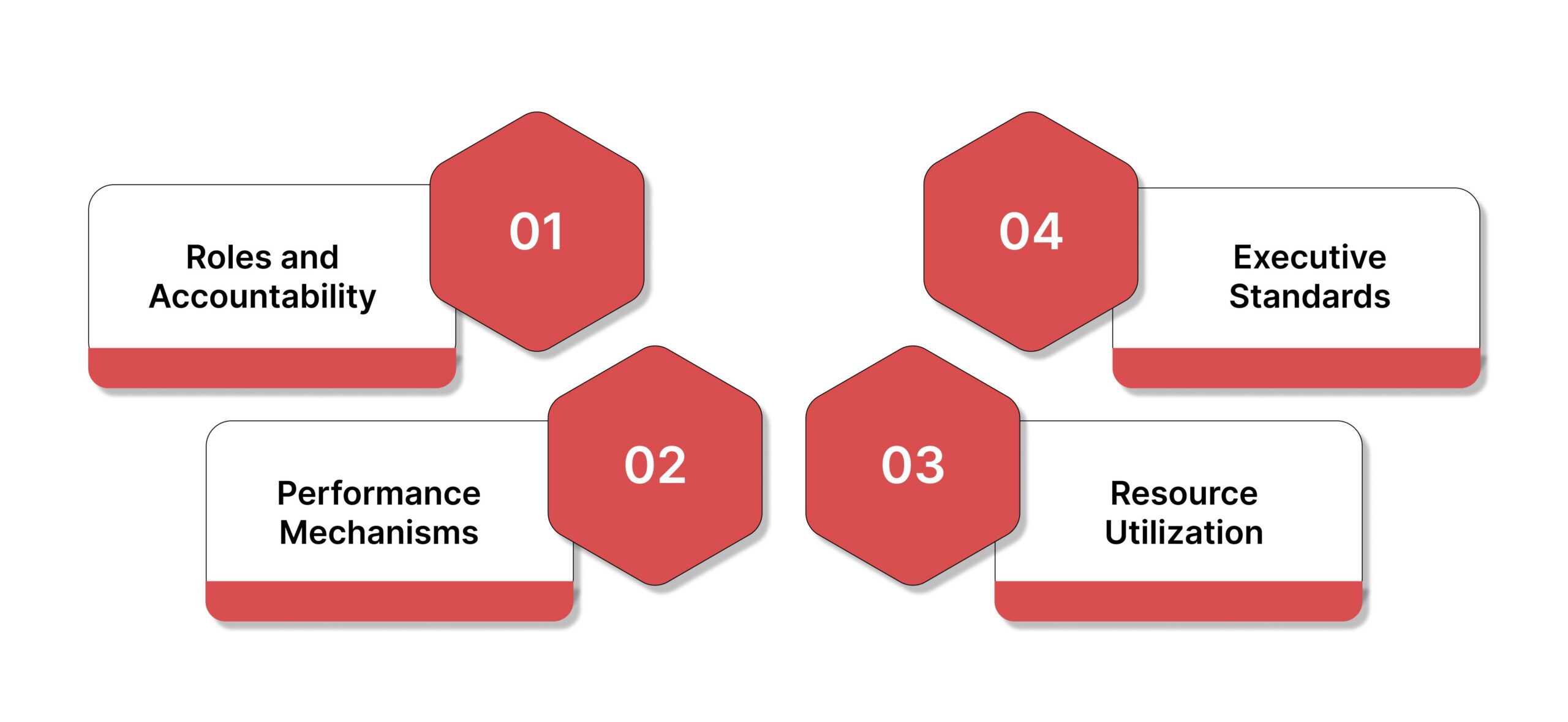
- Roles and Accountability: Clearly defining decision-making authority and the consequences of the resulting outcomes.
- Performance Mechanisms: Utilizing internal audits and performance reviews to ensure management stays aligned with board directives.
- Resource Utilization: Guaranteeing that capital and human talent are deployed efficiently to meet the stated goals.
- Executive Standards: Developing a code of conduct that exceeds legal requirements to establish the company’s specific ethical identity.
Also Read: A Guide on Understanding Governance and Its Importance
While governance establishes the internal destination, compliance provides the legal boundaries that the organization must respect during the pursuit of its objectives.
What is Compliance?
Compliance refers to the process of following the laws, regulations, and standards that apply to an organization. In the compliance vs governance comparison, compliance represents the ongoing effort to remain within the legal parameters established by external authorities.
For US companies in 2026, this involves navigating a dense environment of requirements, including the Sarbanes-Oxley Act (SOX), the Health Insurance Portability and Accountability Act (HIPAA), and evolving Federal Trade Commission (FTC) mandates regarding consumer privacy.
The Tactical Nature of Adherence
Compliance is tactical because it focuses on immediate risk mitigation and the meeting of specific criteria. The process involves verifying that reports are filed correctly, data encryption meets NIST standards, and employees possess the required certifications.
Unlike governance, which is often a choice of values, compliance is an obligation. Failure to adhere to external legal standards results in fines, litigation, and the potential revocation of operating licenses.
Core Elements of a Compliance Program
- Regulatory Monitoring: Tracking changes in federal and state laws to ensure internal policies remain current.
- Data Privacy: Implementing technical controls required by state laws like the CCPA or federal privacy mandates.
- Evidence Management: Maintaining an organized repository of documentation to prove adherence during a regulatory inquiry.
- Incident Remediation: Following a structured process for identifying and resolving breaches of law or policy.
Suggested Read: Master 2026 Compliance With Risk Management and Governance Practices
A common error in modern enterprise management is treating these two distinct functions as identical, which leads to either legal exposure or strategic stagnation.
Key Differences Between Governance and Compliance
The difference between governance and compliance is analogous to a ship’s captain selecting a destination (governance) and the Coast Guard ensuring the ship follows safety laws (compliance). One concerns direction; the other concerns legality.
Comparison Analysis: Governance vs Compliance
| Feature | Corporate Governance | Regulatory Compliance |
| Primary Intent | Strategy, long-term goals, and values. | Tactics, rules, and risk avoidance. |
| Origin of Authority | Internal (Board, Shareholders). | External (Federal Laws, Standards). |
| Primary Objective | Drive performance and trust. | Prevent breaches and penalties. |
| Operational Stance | Proactive and visionary. | Ongoing and often reactive to laws. |
| Consequences | Internal (Removal, Termination). | External (Fines, Lawsuits, Penalties). |
| Scope of Action | Broad (Organizational ethos). | Narrow (Specific legal mandates). |
Strategic Vision vs Tactical Execution
Governance involves high-level decision-making that shapes the future. Compliance involves the execution of specific controls to meet a standard. A board governs by deciding to enter a new market; the compliance team then implements the specific legal controls required to operate in that jurisdiction.
Internal Standards vs External Requirements
Governance policies are created within the organization to achieve its specific vision. Compliance requirements are defined by external bodies and must be followed regardless of the company’s individual goals.
An organization chooses its leadership methodology, but it cannot choose whether to follow SEC reporting mandates.
Quality of Decision-Making vs Legal Breach Prevention
Effective governance ensures that the company makes ethical and profitable decisions. Compliance ensures the company avoids illegal decisions. An organization can be fully compliant yet suffer from poor governance, just as it can have strong governance but fail a technical compliance audit due to a documentation error.
While distinct, these pillars are not separate; a failure in one almost inevitably leads to a failure in the other.
Interrelationship Between Governance and Compliance
The governance vs compliance dynamic is most effective when treated as a feedback loop. Governance frameworks provide the structure and authority that adherence programs require to be successful. Without executive accountability, compliance is often viewed as a hurdle rather than a fundamental business practice.
Streamlining Efforts Through Policy Integration
Governance can simplify the adherence process by establishing high-level policies that cover multiple regulations simultaneously.
For example, an internal governance policy focused on data integrity serves as the foundation for meeting various standards, such as SOC 2 and the CCPA. By setting the strategic expectation of excellence, the board facilitates the work of the compliance team.
Compliance Shaping Governance
Conversely, new legal requirements often force boards to update their leadership structures. The 2026 shift in federal rules regarding climate-related disclosures has compelled many boards to create new governance committees.
In this scenario, the external requirement has directly shaped the internal leadership framework.
Suggested Read: Understanding Policy Definition and the Difference Between Procedures and Guidelines
The consequences of failing to balance these two pillars are existential for modern businesses, impacting everything from market valuation to talent retention.
Consequences of Neglecting Governance or Compliance
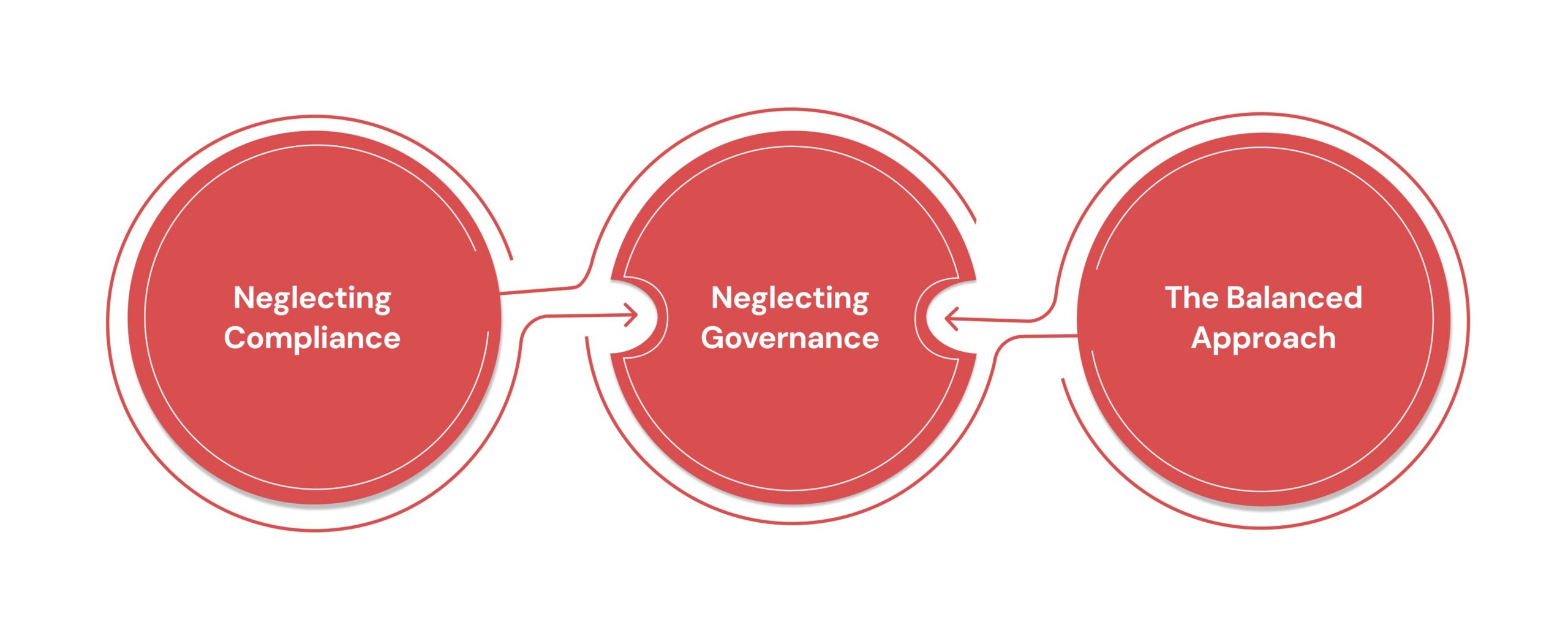
Imbalance in these areas leads to predictable failures that can devastate an organization’s reputation and financial stability.
Neglecting Compliance: The Risk of Legal Exposure
A company with a visionary board but weak compliance operates without necessary boundaries. Rapid innovation without regulatory adherence leads to massive fines and legal interventions.
Neglecting Governance: The Risk of Inefficiency
A company focused solely on compliance without governance often becomes buried in bureaucracy. This culture leads to inefficiencies where employees focus on following rules while losing sight of the organizational mission.
Such entities are slow to adapt because their tactical focus prevents them from identifying strategic shifts.
The Balanced Approach
A synchronized approach minimizes risk while promoting efficiency. It ensures the purpose of the organization is supported by the methodology of the law. This balance enhances performance and fosters trust with investors who seek companies demonstrating both leadership and integrity.
Navigating these complexities requires a digital architecture that bridges the gap between the executive level and the operational department.
Strategic Importance and Best Practices for 2026
In 2026, successful US organizations have digitized their GRC (Governance, Risk, and Compliance) functions to keep pace with the speed of federal regulatory changes.
Adapting to Evolving Standards
The US regulatory environment is in constant flux. Best practices involve utilizing automated monitoring to alert teams to legislative updates. This allows organizations to adjust internal policies in days, maintaining the difference between governance and compliance by allowing one to inform the other rapidly.
Continuous Adaptation
Governance policies must not be static. Boards must conduct regular reviews to ensure alignment with the current risk landscape. This includes stress-testing policies against enforcement scenarios to identify gaps before they result in a breach.
Technology Integration
Utilizing technology to integrate these functions is the most effective way to improve performance. Centralized dashboards allow the board to see real-time data, providing the visibility needed for effective leadership.
Organizations using specialized technology realize significant reductions in annual management costs.
Bridging the gap between the board and the department requires a platform that treats policies and actions as two sides of the same coin.
Achieving Operational Excellence with VComply
Bridging the gap in the governance vs compliance debate requires a centralized platform capable of handling both high-level policy needs and detailed task management. VComply provides a unified ecosystem that replaces fragmented systems with a digital environment for leadership and adherence.
VComply’s specialized services address every facet of the GRC landscape:
- PolicyOps for Strategic Governance: VComply’s Policy Management Software allows leadership to create, distribute, and track acknowledgements of internal policies. This ensures that the governance framework is a lived reality for every employee.
- ComplianceOps for Tactical Execution: The Compliance Management module breaks down external regulations into actionable tasks. It automates evidence collection and provides real-time alerts for missed deadlines.
- RiskOps for Predictive Oversight: To support strategic goals, RiskOps provides a comprehensive view of the organizational risk profile, utilizing heatmaps and scoring to prioritize leadership efforts.
- CaseOps for Incident Remediation: When a gap is identified, CaseOps manages the resolution process, ensuring every incident contributes to the continuous improvement of the governance framework.
By utilizing VComply, US enterprises can transition from reactive adherence to proactive governance, protecting their reputation and ensuring long-term success.
Book a demo today
Conclusion
The distinction between governance and compliance is the foundation of modern organizational integrity. While one provides the vision and values to lead, the other provides the discipline and documentation to survive.
As US organizations face rigorous enforcement and heightened penalties in 2026, the need for a unified approach is urgent. By establishing a robust internal framework and utilizing automated tools to manage external requirements, businesses can move beyond risk avoidance to achieve true governance excellence.
Sustainable success is not found in choosing one over the other, but in building a culture where they work in harmony.
The VComply GRCOps Suite helps organizations operationalize governance frameworks while ensuring regulatory requirements are consistently tracked and executed.
Start a 21-day free trial to explore how centralized governance, risk, and compliance workflows can support more disciplined oversight and operational clarity.
Frequently Asked Questions (FAQs)
Both are interdependent. Without governance, an organization lacks the direction to grow sustainably. Without compliance, an organization will be stopped by legal and financial penalties. Growth requires a governance framework that includes adherence as a core value.
While the scale varies, the principle remains. A firm governs itself by setting internal rules for conduct and strategy. It stays compliant by following federal tax and labor laws. Separating these functions helps leadership focus on growth while avoiding legal complications.
Yes. An organization can follow every law perfectly but suffer from a toxic culture, poor leadership, or a failing business strategy. Compliance is the minimum requirement for operation, while governance is the framework for excellence.
Agencies like the SEC primarily enforce compliance through disclosure laws. However, they influence governance by requiring companies to disclose board composition, executive compensation, and risk oversight processes, holding leadership accountable for the methodology of their adherence programs.
Automation acts as a bridge. It allows the strategic policies set by leadership to be translated into tasks for the staff. It also ensures the results of those tasks are reported back to the board in real-time, providing the feedback necessary for effective leadership.