

Vendor Risk Management: A Practical Guide for 2026
In 2026 and beyond, organizations depend on sprawling vendor ecosystems that touch everything from data processing and cloud infrastructure to analytics and customer experience. That dependence has transformed vendor risk from a procurement checklist item into a strategic business risk that compliance officers, risk managers, CTOs, and CEOs must own and manage daily.
In the United States, auditors and regulators expect you to demonstrate continuous oversight over vendor risks, not just annual assessments, because third-party vulnerabilities are now linked to major breaches and compliance failures. Over the past 3 years, 77% of security breaches originated with vendors or third parties, illustrating how deeply vendor ecosystems influence your enterprise risk profile.
In this blog, we will explore the modern vendor risk management lifecycle, what auditors expect, and how you can run vendor risk management as a repeatable operating system.
Key Takeaways
- Vendor risk management is now a continuous, strategic function protecting operations and compliance.
- A structured lifecycle ensures repeatable, audit-ready oversight from inventory to offboarding.
- Tiering and trigger-based reassessments focus attention on high-impact vendors.
- Centralized evidence and clear ownership enhance exam readiness and reduce manual effort.
- VComply RiskOps, integrated with ComplianceOps, PolicyOps, and CaseOps, enables scalable and defensible VRM.
Did you know? 61% of organizations reported experiencing a third‑party data breach or cybersecurity incident in the past year. A 49% increase over the prior year, highlighting how vendor‑linked security failures are escalating across industries.
Vendor Risk Management Defined For Modern Organizations
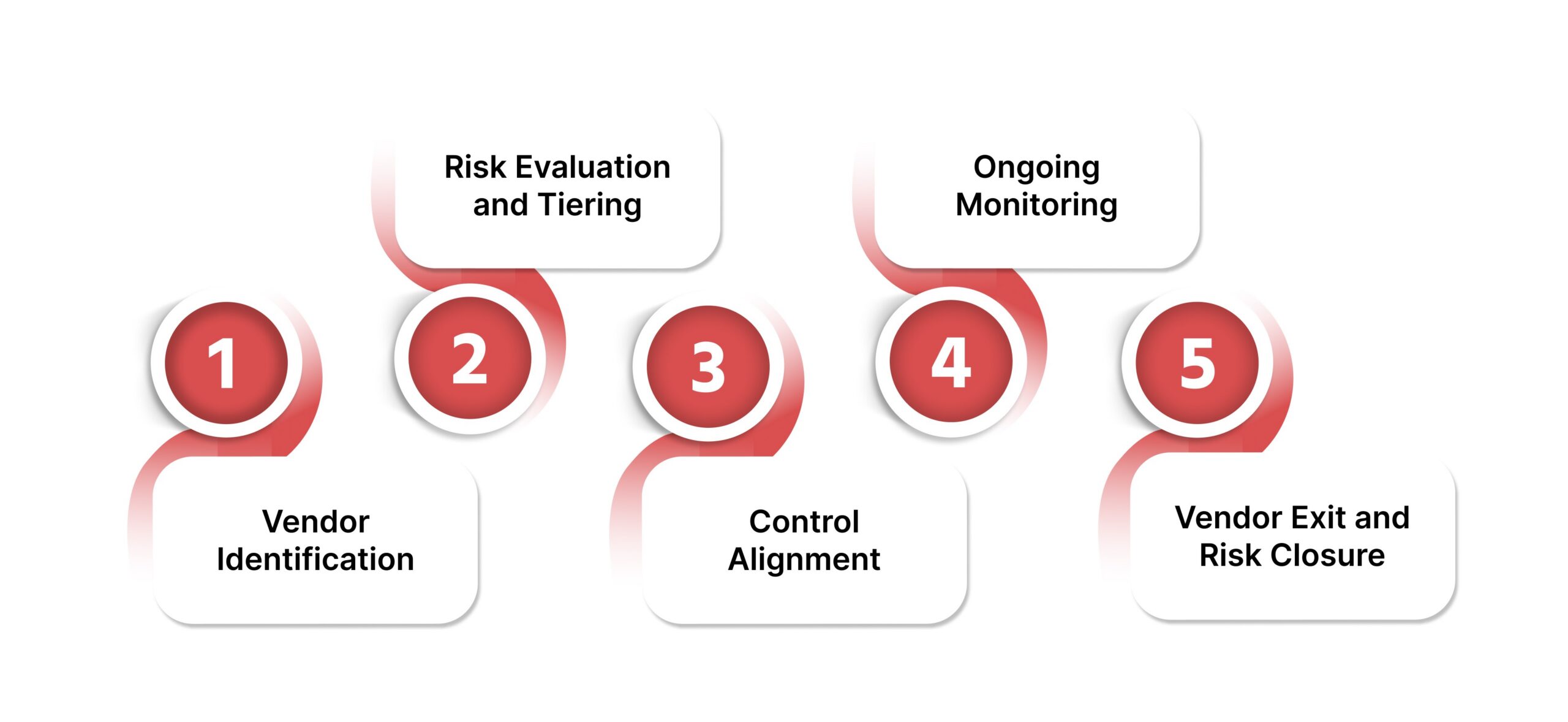
Vendor risk management is the structured discipline of identifying, assessing, controlling, and monitoring risks introduced by external parties you rely on to run critical business operations. It exists to ensure third-party relationships do not undermine regulatory compliance, operational resilience, or exam readiness.
Below is what vendor risk management covers in practice.
- Vendor Identification and Scoping: Establishing a complete, continuously updated inventory of vendors, service providers, SaaS platforms, contractors, and suppliers that support regulated operations.
- Risk Evaluation and Tiering: Assessing inherent risk based on data access, system connectivity, operational criticality, and regulatory exposure to determine oversight depth and review frequency.
- Contractual and Control Alignment: Embedding risk-based controls into contracts, including security, privacy, audit rights, and incident notification requirements aligned with state regulations.
- Ongoing Monitoring and Oversight: Performing periodic reviews, trigger-based reassessments, and issue tracking to demonstrate continuous oversight during audits and regulatory exams.
- Vendor Exit and Risk Closure: Managing offboarding activities such as access revocation, data return, and evidence retention to formally close vendor risk and maintain defensible records.
While the fundamentals of vendor risk management remain consistent, the way organizations must apply them has evolved significantly in recent years.
Why Vendor Risk Management Changed In 2026
Vendor risk management evolved in 2026 because the nature of vendor dependency fundamentally changed. Organizations now rely on interconnected, always-on external services to meet policyholder, regulatory, and operational demands.
Below are the forces driving this shift.
- SaaS Sprawl and API Integrations: Core functions now depend on dozens of SaaS tools connected through APIs. Each integration expands your attack surface and increases the need for continuous risk visibility.
- Remote and Distributed Vendor Operations: Vendors operate across jurisdictions and time zones, making oversight more complex and requiring stronger documentation to demonstrate effective supervision during state examinations.
- AI-Enabled Vendors and Data Sharing Complexity: AI-driven vendors process sensitive underwriting, claims, and customer data, creating new transparency, accountability, and data governance expectations for your organization.
- Fourth-Party Dependencies and Concentration Risk: Your vendors rely on subcontractors you do not contract with directly, yet you remain accountable for downstream failures that impact regulated operations.
- Higher Expectations For Audit Readiness: Regulators now expect proof of ongoing vendor oversight, not retrospective explanations, making evidence management and process consistency business-critical.
Also Read: Six Step Guide for Vendor Risk Management Programs
As vendor ecosystems expanded, so did confusion around terminology, making it essential to distinguish vendor risk management from broader third-party risk programs.
Vendor Risk Management Vs. Third-Party Risk Management
Vendor risk management and third-party risk management are often used interchangeably, but they serve different operational purposes. This distinction matters because regulators expect consistent scoping, ownership, and evidence across all external relationships that impact regulated activities.
Below is a practical comparison to clarify the difference.
| Aspect | Vendor Risk Management (VRM) | Third-Party Risk Management (TPRM) |
| Primary Scope | Direct vendors providing products or services | All external relationships, including vendors, partners, affiliates, and service providers |
| Typical Ownership | Procurement, compliance, or risk teams | Enterprise risk, compliance, legal, and executive leadership |
| Focus Of Oversight | Operational, security, compliance, and service delivery risks | Strategic, financial, operational, reputational, and systemic risks |
| Assessment Depth | Risk-based, often tiered by criticality | Broader and deeper, especially for high-impact relationships |
| Audit Expectations | Proof of vendor-level due diligence and monitoring | Evidence of enterprise-wide third-party governance and escalation |
Once the distinction is clear, the next step is understanding the specific categories of risk that vendor relationships introduce.
The Vendor Risks You Must Manage
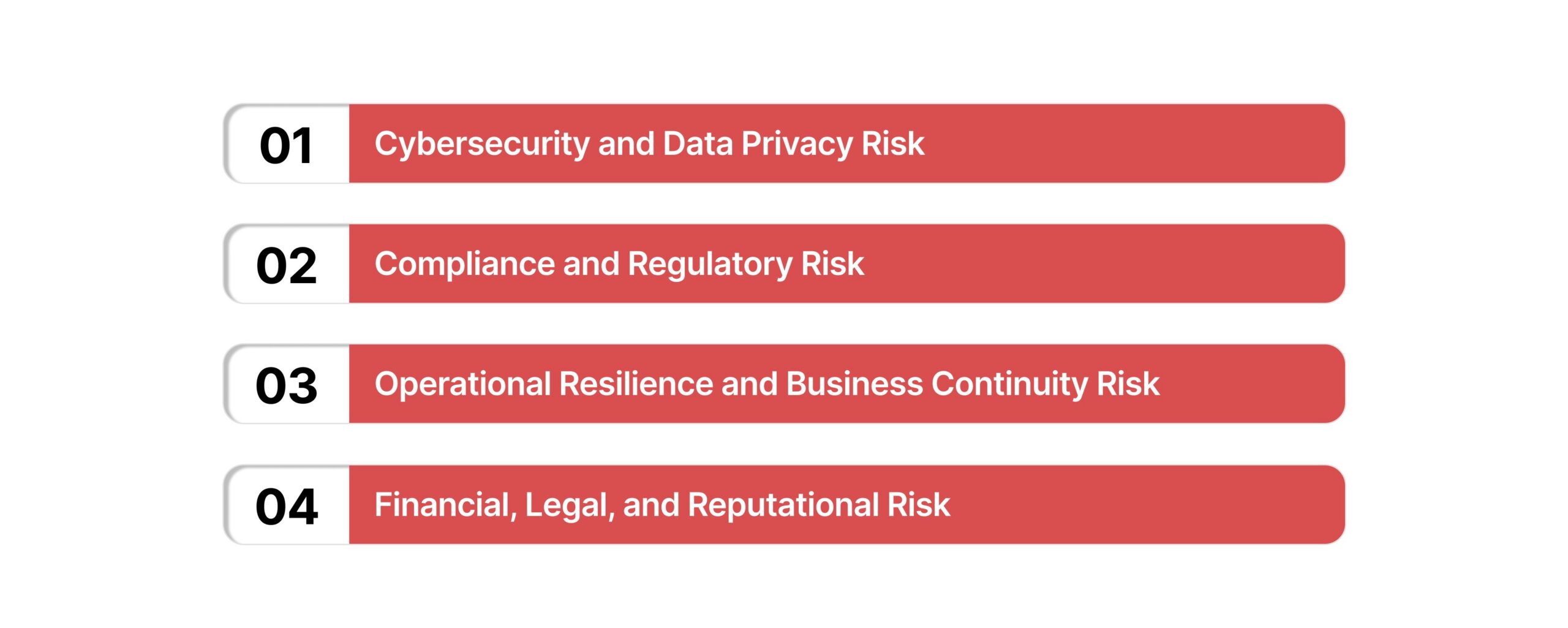
Effective vendor risk management starts with understanding that not all risks require the same level of scrutiny. Clear risk categories allow you to calibrate assessment depth, monitoring frequency, and remediation effort based on potential impact to regulated operations, customer trust, and exam outcomes.
The following risk categories define where oversight must be focused.
Cybersecurity and Data Privacy Risk
Cybersecurity and data privacy risk represent the highest-impact exposure in vendor relationships for organizations. When vendors process policyholder or claims data, regulators expect you to demonstrate control over how access is granted, monitored, and revoked, supported by clear and defensible evidence.
Below are the cybersecurity and privacy risk signals that require heightened oversight.
- Privileged System and Data Access: Vendors with administrative or elevated access to core systems introduce higher breach and misuse risk, requiring stronger approval, monitoring, and revocation controls.
- Sensitive Data Handling Practices: Vendors that store, transmit, or process personally identifiable information must demonstrate documented safeguards for data protection, retention, and secure disposal.
- System Integrations and API Connectivity: Integrated vendors expand the attack surface of your environment, increasing the need for visibility into security controls, change management, and dependency mapping.
- Incident Response Maturity and History: Past security incidents, response timelines, and remediation actions provide insight into a vendor’s readiness to meet notification and containment expectations.
- Ongoing Evidence Availability: The ability to produce current security documentation during audits is critical for demonstrating continuous oversight rather than point-in-time compliance.
Manage vendor risks with precision using VComply Risk Ops. By centralizing assessments, monitoring critical vendor controls, and tracking remediation actions, Risk Ops helps compliance teams reduce exposure to data breaches, regulatory violations, and operational disruptions.
Compliance and Regulatory Risk
Compliance and regulatory risk focus on whether vendor activities can expose your organization to violations during state examinations. Regulators evaluate not only vendor behavior, but also your ability to prove active oversight through documented policies, controls, and consistent evidence management.
Below are the compliance risk areas auditors expect you to substantiate.
- Documented Policy Alignment: Vendors must formally acknowledge and align with your compliance, privacy, and security policies, supported by written attestations or contractual references.
- Control Ownership and Accountability: Clear assignment of compliance responsibilities between your organization and the vendor is essential to demonstrating governance during regulatory reviews.
- Evidence of Ongoing Oversight: Auditors expect current records showing periodic reviews, issue tracking, and follow-up actions rather than one-time onboarding documentation.
- Regulatory Scope Coverage: Vendor activities must be mapped to applicable state requirements to show that regulatory obligations are understood and actively managed.
- Exception and Remediation Tracking: Identified compliance gaps require documented remediation plans, ownership, timelines, and closure evidence to avoid repeat findings.
Operational Resilience and Business Continuity Risk
Operational resilience risk evaluates whether vendor disruptions could impair your ability to serve policyholders or meet regulatory obligations. For organizations, regulators expect evidence that critical vendor dependencies are identified, tested, and managed to minimize downtime and systemic exposure.
Below are the operational risk areas that require structured oversight.
- Critical Service Dependency Impact: Vendors supporting underwriting, claims processing, billing, or customer communications must be assessed for the business impact of service interruption.
- Vendor Concentration and Single-Point Risk: Reliance on a single vendor for essential services increases exposure and requires documented contingency planning and risk acceptance decisions.
- Disaster Recovery Capability: Vendors should demonstrate tested disaster recovery plans, recovery time objectives, and recovery point objectives aligned with operational needs.
- Business Continuity Testing and Validation: Evidence of periodic continuity testing and remediation actions strengthens audit defensibility and demonstrates preparedness beyond written plans.
- Change and Incident Communication Controls: Timely notification of outages, system changes, or incidents is critical to maintaining operational stability and regulatory confidence.
Financial, Legal, and Reputational Risk
Financial, legal, and reputational risks determine whether a vendor failure could escalate beyond operational disruption into regulatory findings or loss of public trust. Regulators expect you to assess vendor stability, contractual protections, and downstream exposure with the same rigor applied to internal operations.
Below are the financial and legal risk factors that require oversight.
- Vendor Financial Viability: Evaluating financial stability helps identify vendors at risk of service interruption, acquisition, or insolvency that could affect critical functions.
- Subprocessor and Outsourcing Transparency: Vendors using subcontractors introduce indirect risk, requiring visibility into subprocessor relationships and associated controls.
- Regulatory and Litigation Exposure: Past enforcement actions, lawsuits, or regulatory scrutiny can signal elevated risk that warrants enhanced monitoring and documentation.
- Public Incident and Reputation History: Repeated public incidents or negative disclosures can erode policyholder trust and increase regulatory attention on your vendor oversight program.
Also Read: Supplier Compliance Software for Vendor and Risk Management
Understanding these risk categories is only part of the equation; organizations must also be able to prove oversight to regulators and auditors.
What Auditors Expect To See In A US Vendor Risk Program
Auditors do not assess vendor risk management based on intent or policy language alone. They evaluate whether your organization can produce clear, current evidence that vendor risks are identified, owned, monitored, and addressed in a consistent manner across regulated operations.
Below is what evidence-ready vendor risk management looks like in practice.
- Current Vendor Inventory With Defined Ownership: A complete, up-to-date inventory that identifies each vendor’s business purpose, criticality, and accountable internal owner.
- Documented Risk Tiering Rationale: Clear justification showing how vendors are categorized by inherent risk and why specific oversight levels were applied.
- Completed Due Diligence and Formal Approvals: Records demonstrating that assessments were completed, reviewed, and approved before vendors began supporting regulated activities.
- Contractual Controls Mapped To Risk Levels: Evidence that security, privacy, audit, and incident response clauses align with the vendor’s risk profile.
- Exception Management and Remediation Tracking: Centralized tracking of exceptions, risk acceptance decisions, corrective actions, and closure timelines.
- Vendor Offboarding and Risk Closure Evidence: Proof that access was revoked, data was returned or destroyed, and obligations were formally closed when vendor relationships ended.
Streamline audit readiness with VComply Compliance Ops. Centralize vendor policies, maintain continuous oversight, and ensure exam-ready evidence is always accessible. Compliance Ops simplifies regulatory adherence while reducing manual workload for your risk and compliance teams.
Meeting audit expectations requires more than documentation; it requires a structured lifecycle that governs vendors from onboarding through exit.
The Vendor Risk Management Lifecycle You Can Operationalize

Vendor risk management is most effective when it operates as a defined lifecycle rather than a series of disconnected tasks. A structured lifecycle reduces last-minute exam preparation, clarifies ownership, and ensures vendor oversight remains consistent as relationships and risks evolve.
Below is the vendor risk management lifecycle that supports ongoing control and audit readiness.
Step 1 – Build A Complete Vendor Inventory
A complete vendor inventory is the foundation of an effective vendor risk management program. Without a single, reliable source of truth, organizations struggle to demonstrate oversight, assign accountability, or respond confidently during regulatory examinations.
Below are the vendor inventory attributes auditors expect you to maintain.
- Defined Vendor Business Purpose: A clear description of the service provided and how it supports regulated operations.
- Data Types Touched Or Processed: Identification of whether the vendor accesses policyholder, claims, financial, or other sensitive data.
- Systems and Integration Access: Documentation of applications, platforms, or environments that the vendor can access, including integration points.
- Internal Business Ownership: Assignment of a responsible internal owner accountable for vendor performance and risk oversight.
- Contract and Renewal Milestones: Visibility into contract start dates, renewal timelines, and termination terms to support proactive risk review.
Step 2 – Tier Vendors By Inherent Risk
Risk tiering allows you to focus oversight where it matters most. By classifying vendors based on inherent risk before applying controls, organizations can allocate review effort proportionately and demonstrate a defensible, repeatable approach during regulatory examinations.
Below is how inherent risk tiering should be applied.
- High-Risk Vendors: Vendors with access to sensitive data, core systems, or mission-critical operations that require frequent assessments and continuous monitoring.
- Medium-Risk Vendors: Vendors supporting important functions with limited system access or indirect data exposure that warrant periodic reviews and documented oversight.
- Low-Risk Vendors: Vendors with minimal access and no impact on regulated operations, requiring baseline due diligence and infrequent reassessment.
Tiering Mistakes To Avoid: Avoid classifying vendors based solely on spend or contract value. Do not assign uniform tiers without a documented rationale, as this undermines audit defensibility and inflates compliance workload.
Step 3 – Perform Due Diligence Before Contracting
Due diligence establishes whether a vendor can meet your organization’s risk, security, and compliance expectations before any contractual commitment. Consistency and documentation are critical, as regulators evaluate whether assessments were completed and approved before onboarding.
Below are the core due diligence components auditors expect to see.
- Independent Assurance Reports: SOC reports or equivalent third-party assessments, when available, provide independent validation of a vendor’s control environment.
- Standardized Security Questionnaires: Structured questionnaires capture security practices in a consistent format, enabling comparison across vendors and risk tiers.
- Privacy and Data Protection Review: Evaluation of data handling, retention, and disposal practices ensures alignment with privacy obligations.
- Financial Stability Assessment: Financial reviews help identify vendors at risk of disruption due to insolvency, acquisition, or operational instability.
- Formal Review and Approval Records: Documented approvals confirm that due diligence findings were reviewed, accepted, or remediated before contract execution.
Step 4 – Contract Controls That Match The Risk
Contracts translate risk assessments into enforceable obligations. Regulators expect contract terms to reflect the vendor’s inherent risk and clearly define how security, compliance, and accountability are maintained throughout the relationship.
Below are the contract control areas that should align with vendor risk.
- Security and Control Requirements: Contracts should specify baseline security standards, control expectations, and ongoing compliance obligations appropriate to the vendor’s access level.
- Incident Notification and Response Timelines: Defined notification windows and cooperation requirements ensure timely response to security or operational incidents affecting regulated activities.
- Subcontractor and Outsourcing Controls: Vendors must disclose and govern subcontractor use to prevent unmanaged downstream risk and ensure oversight continuity.
- Audit and Examination Rights: Audit provisions enable your organization to request evidence or conduct reviews when required by regulators or internal oversight teams.
- Data Return, Retention, and Deletion Obligations: Clear data handling requirements protect policyholder information during contract termination or service transitions.
Step 5 – Ongoing Monitoring and Reassessments
Ongoing monitoring ensures vendor risk management remains current as vendor relationships, services, and risk profiles change. Below is how ongoing monitoring should be operationalized.
- Risk-Based Review Cadence By Tier: High-risk vendors require more frequent reviews, while medium- and low-risk vendors follow defined periodic schedules aligned with their potential impact.
- Trigger-Based Reassessment Events: Reassessments should be initiated when predefined events occur, ensuring risks are evaluated promptly rather than deferred to annual cycles.
- Security or Privacy Incidents: Vendor breaches or control failures require immediate reassessment to validate containment, remediation, and continued suitability.
- Material Service or Scope Changes: Changes to services, data usage, or system access can alter inherent risk and must be formally reviewed and documented.
- New Integrations or Technology Changes: Additional integrations introduce new dependencies and access points that require updated risk evaluation.
- Mergers, Acquisitions, or Ownership Changes: Structural changes can affect governance, controls, and financial stability, necessitating reassessment.
- Repeated Service Level or Performance Failures: Persistent SLA issues may signal operational or financial risk requiring escalation and remediation.
Step 6 – Offboarding and Access Removal
Vendor risk does not end when a contract expires or a service is discontinued. Regulators expect clear proof that access is revoked, data obligations are fulfilled, and unresolved risks are formally closed to prevent lingering exposure after vendor termination.
Below are the required offboarding outcomes auditors look for.
- Data Return or Secure Destruction: Evidence that policyholder and business data were returned or securely destroyed in accordance with contractual and regulatory requirements.
- Formal Vendor Attestations: Written confirmation from the vendor validating completion of access removal and data handling obligations.
- Outstanding Issue and Finding Closure: Documentation showing all open risk findings were resolved, accepted, or formally transferred before termination.
- Record Retention For Examination Purposes: Retained documentation supporting offboarding actions to demonstrate focused oversight during future audits.
Managing offboarding activities through platforms like VComply ensures closure is documented, traceable, and defensible.
Also Read: Top 5 Policy Management Software in 2026 (Best Picks Ranked with Features & Pricing)
With lifecycle controls in place, the next challenge is sustaining vendor oversight without overwhelming internal teams.
How To Run Vendor Risk Management Without Burning Out Your Team
Most compliance and risk teams operate with limited resources while facing expanding vendor ecosystems and rising regulatory expectations. Sustainable vendor risk management requires prioritization, role clarity, and systems that reduce manual effort without weakening oversight or exam readiness.
Below is a practical operating model that balances control and capacity.
- Clear Ownership By Function: Business owners remain accountable for vendor performance, while compliance and risk teams define standards, review evidence, and oversee consistency. IT and security teams support technical validation where required.
- Risk-Based Review Cadence: Oversight effort scales by tier, allowing high-risk vendors to receive focused attention while lower-risk relationships follow streamlined review cycles.
- Evidence Reuse and Standardization: Reusing approved assessments, reports, and attestations reduces repetitive requests and minimizes vendor fatigue while preserving audit defensibility.
- Defined Escalation Paths For High-Risk Findings: Clear thresholds for escalation ensure critical issues are reviewed by appropriate leadership and resolved promptly.
- Automation for Tracking and Accountability: Centralized tracking of tasks, evidence, and approvals reduces manual follow-ups and ensures nothing is missed during examinations.
Operate vendor risk management seamlessly with VComply’s GRCOps Suite. By integrating RiskOps, ComplianceOps, PolicyOps, and CaseOps, GRCOps provides a single platform for managing all vendor-related governance, risk, and compliance activities, ensuring teams can scale oversight without operational burnout.
Now, let us have a look at the metrics to track for your vendor risk program.
Metrics That Show Your Vendor Risk Program Is Working
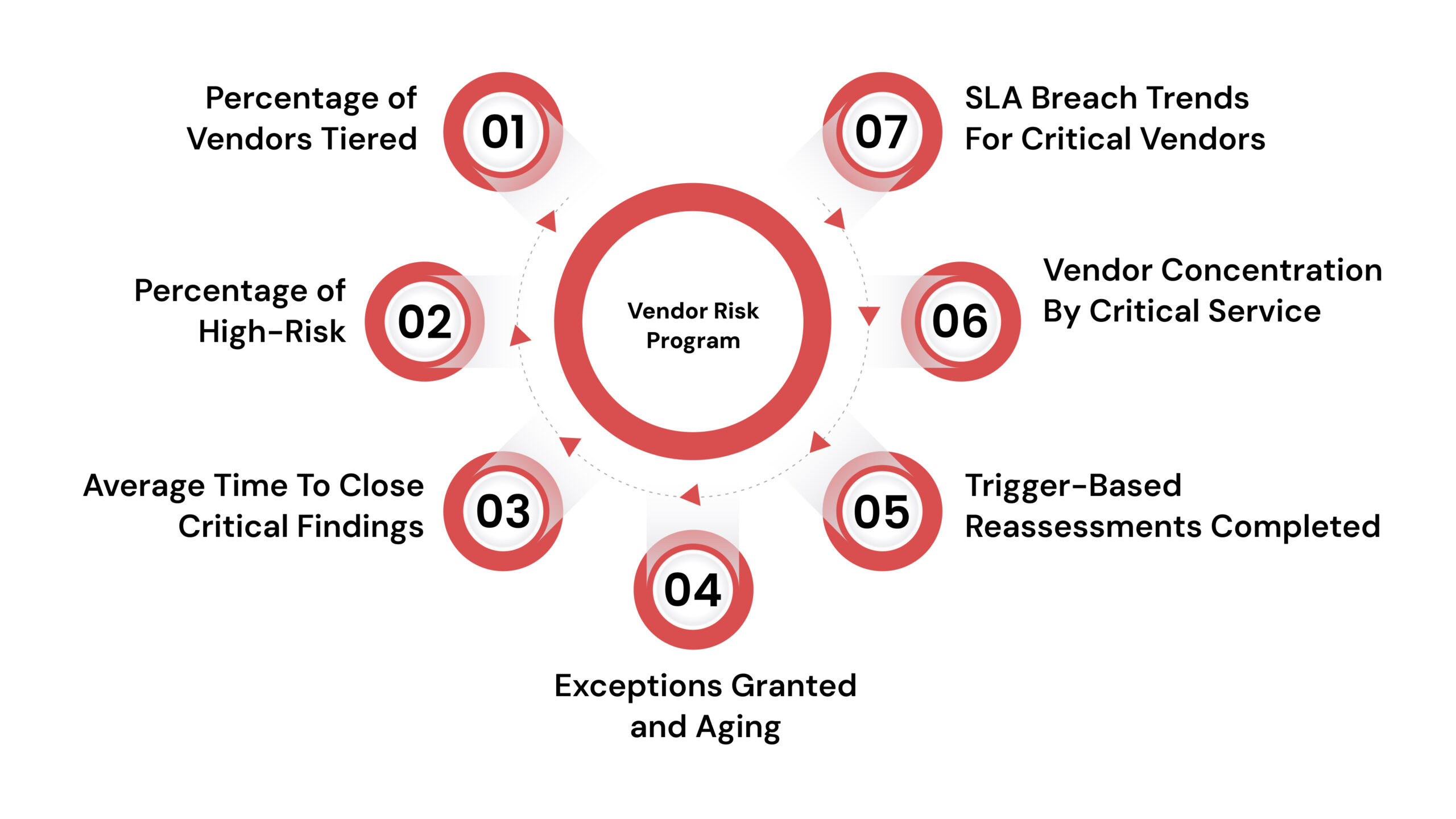
Measuring the effectiveness of your vendor risk program ensures your oversight is operationally sound and defensible during regulatory examinations. Executive-friendly and audit-ready metrics demonstrate where risks are managed, where attention is needed, and whether processes consistently meet internal and state regulatory expectations.
Below are the key performance indicators to track vendor risk effectiveness.
- Percentage of Vendors Tiered: Measures the completeness of your risk-based classification and ensures oversight is focused on the right vendors.
- Percentage of High-Risk Vendors Assessed on Time: Tracks adherence to planned assessment schedules for critical vendors, demonstrating regulatory readiness.
- Average Time To Close Critical Findings: Indicates efficiency in resolving high-priority issues and reducing exposure for regulated operations.
- Exceptions Granted and Aging: Monitors outstanding risk acceptances, enabling timely remediation or escalation.
- Trigger-Based Reassessments Completed: Tracks responsiveness to events that require reassessment, such as incidents, changes in scope, or mergers.
- Vendor Concentration By Critical Service: Identifies over-reliance on single vendors, informing contingency planning and risk mitigation strategies.
- SLA Breach Trends For Critical Vendors: Highlights performance issues that could impact policyholder services or regulatory obligations.
Even with strong metrics, common execution mistakes can undermine an otherwise well-designed program.
Common Vendor Risk Management Mistakes In 2026
Even well-intentioned organizations can fall into operational traps that undermine vendor risk programs. Regulators focus on consistent, documented processes, so errors in approach or execution can lead to audit findings, inefficiencies, and overlooked risks.
Below are the most frequent vrm mistakes to avoid.
- Treating VRM as Annual Paperwork: Performing assessments once per year fails to address changing risks and regulatory expectations for continuous oversight.
- No Tiering, Treating All Vendors Equally: Assigning uniform priority inflates workload and obscures focus on high-risk vendors, reducing operational efficiency.
- Contracting Before Completing Due Diligence: Onboarding vendors without validated assessments creates exposure and weakens audit defensibility.
- No Trigger-Based Reassessment: Ignoring risk events such as breaches, M&A, or service changes delays mitigation and increases regulatory scrutiny.
- Tracking Findings In Emails Or Spreadsheets Without Ownership: Informal tracking prevents accountability, obscures status, and complicates evidence collection during audits.
Avoiding these pitfalls requires a structured, repeatable, and centrally managed VRM system, which platforms like VComply provide for consistent oversight and exam readiness.

How VComply RiskOps Helps You Run Vendor Risk Management At Scale
VComply RiskOps transforms vendor risk management from a manual, fragmented activity into a repeatable, auditable process. For U.S.-based compliance leaders, it enables oversight at scale while maintaining exam-ready evidence, clear ownership, and operational consistency across all vendor relationships.
Below are the operational capabilities that strengthen VRM with VComply.
- Centralized Vendor Inventory and Ownership: Consolidates all vendors, service providers, SaaS platforms, and subcontractors in a single repository. Each vendor is linked to a responsible business owner, ensuring accountability and enabling quick retrieval of information for audits or regulatory inquiries.
- Standardized Tiering and Assessment Workflows: Applies consistent risk-based tiering, ensuring high-risk vendors receive enhanced oversight while lower-risk vendors follow streamlined reviews. Assessment templates are tailored to each risk category, promoting repeatable, defensible evaluation processes.
- Task Assignment and Remediation Tracking with Accountability: Assigns action items to appropriate stakeholders across business, compliance, and IT/security teams. Tracks remediation progress, escalates overdue tasks, and maintains a complete history of issue resolution to support audit readiness.
- Audit-Ready Evidence and Reporting Dashboards: Automatically collects and stores policies, attestations, audit reports, incident summaries, and BCP documentation. Dashboards provide executives with high-level risk visibility while allowing examiners to drill down into vendor-level detail.
- Integration With Broader GRCOps Framework (ComplianceOps, RiskOps, PolicyOps, and CaseOps): Connects VRM activities with compliance management, policy enforcement, incident/case management, and enterprise risk operations. This ensures that vendor risks are managed in alignment with organizational governance objectives, regulatory obligations, and operational workflows, providing a single source of truth for all GRC oversight.
Also Read: Understanding Regulatory Compliance Management in the U.S.
By operationalizing VRM through VComply RiskOps, organizations can achieve scale, maintain consistency, and provide defensible evidence during audits and regulatory examinations. Schedule a demo with VComply and discover a faster, more consistent way to manage vendor risks.
Final Thoughts
Vendor risk management in 2026 is no longer a back-office task; it is a strategic function that protects your organization’s operations, regulatory standing, and customer trust. By focusing on tiered oversight, evidence-backed assessments, and continuous monitoring, you can proactively mitigate risks and reduce the likelihood of operational or compliance failures.
Centralizing these processes through an execution layer like VComply ensures your vendor risk program is not only repeatable and auditable but also integrated with broader GRC operations. RiskOps, combined with ComplianceOps, PolicyOps, and CaseOps, provides a single platform to track, manage, and remediate vendor risks efficiently.
Take control of your vendor risk management today. Start your 21-day free trial of VComply RiskOps to operationalize oversight across all vendors.
FAQs