

Best Supplier Compliance Software for Vendor Risk Management in 2026
Supplier Compliance Software mitigates risks like financial losses, reputational damage and enhances decision-making with comprehensive data.

Organizations today rely heavily on third-party vendors, suppliers, contractors, logistics providers, technology partners, and outsourced service providers to maintain daily operations. While these relationships improve efficiency and scalability, they also introduce growing regulatory, operational, financial, cybersecurity, and reputational risks across the supply chain.
Recent research highlights the scale of the challenge. According to IBM’s 2025 Cost of a Data Breach Report, third-party involvement remains one of the leading contributors to cybersecurity incidents and operational disruptions. At the same time, global regulatory expectations around vendor oversight, ESG accountability, privacy protection, cybersecurity governance, and supply chain transparency continue to expand across industries. (ibm.com) (nist.gov)
Managing supplier compliance manually through spreadsheets, email approvals, shared drives, and disconnected tracking systems often creates visibility gaps, inconsistent documentation, delayed responses, and weak audit readiness. As supplier ecosystems grow larger and more distributed, organizations need better ways to monitor vendor performance, assess third-party risks, maintain regulatory compliance, and standardize supplier oversight across operations.
Supplier compliance software helps organizations centralize vendor governance, automate compliance workflows, track supplier obligations, manage audits, monitor risks, maintain documentation, and improve accountability across the entire supplier lifecycle. These platforms support stronger operational resilience while helping organizations reduce compliance exposure, strengthen supplier relationships, and improve decision-making.
For organizations building broader governance programs, supplier compliance management also connects closely with risk management, compliance management, audit management, policy management, and incident management initiatives.
In this guide, we’ll explain what supplier compliance software is, why vendor risk management is becoming more critical, the biggest supplier compliance challenges organizations face, the key features to evaluate, and how modern businesses use these platforms to improve third-party oversight and operational resilience.
Key takeaways (TL; DR)
- Learn what supplier compliance means and why it is crucial for risk mitigation, quality control, and regulatory adherence.
- Understand common challenges—tracking evolving regulations, managing supplier data, and ensuring cooperation at scale.
- Explore key benefits of supplier compliance software, like automation, real-time alerts, and strong supplier relationships.
- Discover solutions like VComply, UpGuard, LogicManager, SupplierGateway, with their features and pricing insights.
- See how effective supplier compliance tools prevent penalties, streamline workflows, and enhance supply chain efficiency.
What is Supplier Compliance and Its Importance?
Supplier compliance involves ensuring that vendors and suppliers adhere to regulatory requirements and internal standards set by your organization. It encompasses various aspects like ethical practices, quality assurance, legal compliance, and financial stability. This comprehensive approach ensures that suppliers contribute positively to your business operations and align with your company’s values and policies.
Importance of Supplier Compliance
- Prevents Delays and Quality Issues: Ensures that suppliers meet delivery schedules and quality standards, preventing operational disruptions.
- Mitigates Financial Risks: Reduces the risk of non-compliance penalties, which can be significantly higher than compliance costs.
- Protects Reputation: Maintains the company’s reputation by avoiding scandals and compliance breaches that could damage public trust.
- Enhances Operational Efficiency: Streamlines supplier management processes, reducing manual effort and errors and increasing overall efficiency.
- Ensures Regulatory Adherence: Keeps the business in line with evolving regulations, avoiding legal complications and potential fines.
- Improves Supplier Relationships: Facilitates better communication and collaboration with suppliers, leading to stronger partnerships and improved performance.
Challenges in Supplier Compliance
Various challenges that can impact business operations and overall supply chain efficiency are presented by managing supplier compliance. Identifying and resolving these challenges is critical for maintaining smooth and compliant supplier relationships. Key challenges include:
- Keeping Up with Regulations: Constantly evolving regulations can be difficult to track and implement.
- Data Accuracy: You must ensure accurate and up-to-date supplier information.
- Risk Assessment: Identifying and mitigating risks linked to each supplier.
- Resource Intensity: Manual compliance processes are time-consuming and prone to errors.
- Supplier Cooperation: Ensuring suppliers comply with your standards and regulations.
- Scalability: Managing a growing number of suppliers across different regions and industries.
Overview of Supplier Compliance Software
Compliance software for supplier management is designed to automate and streamline the process of managing vendor compliance. This software ensures that suppliers adhere to regulatory requirements and internal standards, mitigating risks and improving overall supply chain efficiency.
Key Benefits of Supplier Compliance Software
Compliance software offers numerous advantages that enhance overall supply chain management. These benefits streamline operations, improve communication, and ensure regulatory adherence. Key benefits include:
- Access to comprehensive data for informed decisions and risk management.
- Real-time alerts for early detection and mitigation of risks.
- Automation of onboarding, monitoring, and reporting for efficient workflows.
- Ensures adherence to applicable regulations, reducing legal risks.
- Minimizes manual effort and costs, allowing focus on strategic activities.
- Enhances communication and collaboration with suppliers, fostering stronger partnerships.
Essential Features of Supplier Compliance Software
Compliance software for supplier management includes various features designed to optimize and improve the management of supplier relationships and compliance. Key features include:
- Evaluates supplier stability and ensures legal compliance to mitigate risks.
- Provides instant notifications to address compliance issues promptly.
- Supports regulatory adherence through automated compliance checks.
- Consolidates supplier information for easy access and management.
- Simplifies the process of adding and removing suppliers.
- Ensures seamless connections with other business systems for a unified workflow.
- Facilitates easy navigation and use, reducing the learning curve.
- Supports business growth by accommodating an expanding supplier network.
Why Supplier Compliance Risks Are Increasing
Third-party risk management has become significantly more complex over the last few years. Organizations now depend on suppliers for critical services, cloud infrastructure, software platforms, logistics, manufacturing, financial processing, and operational support.
Several factors are increasing supplier compliance risks across industries:
- Rising cybersecurity threats targeting vendors and third parties
- Expanding ESG and supply chain transparency requirements
- Increasing privacy and data protection regulations
- Greater regulatory scrutiny around vendor oversight
- Complex global supply chains and outsourcing models
- Vendor access to sensitive customer and operational data
- Operational disruptions caused by supplier failures
- Growing expectations around ethical sourcing and labor standards
As supplier ecosystems expand, organizations are expected to maintain stronger governance over vendor onboarding, due diligence, certifications, audits, contract obligations, and ongoing compliance monitoring.
Common Supplier Compliance Challenges
Many organizations struggle to maintain consistent supplier oversight because vendor compliance activities are often managed through disconnected systems and manual processes.
Common Supplier Compliance Gaps Include:
- Incomplete vendor due diligence
- Missing supplier certifications or documentation
- Limited visibility into third-party risks
- Poor audit preparation and reporting
- Inconsistent onboarding workflows
- Weak cybersecurity oversight of vendors
- Lack of centralized supplier records
- Delayed issue escalation and remediation
- Difficulty tracking regulatory obligations across suppliers
- Manual spreadsheet-based compliance tracking
These gaps increase exposure to operational disruptions, regulatory violations, cybersecurity incidents, reputational damage, and financial losses.
Why Manual Supplier Compliance Tracking Creates Risk
Many organizations still rely on spreadsheets, emails, PDFs, and shared drives to manage supplier compliance activities. While these methods may work temporarily, they become increasingly difficult to manage as supplier networks expand.
Manual supplier management processes often create:
- Limited visibility into supplier performance and risks
- Missing or outdated compliance documentation
- Inconsistent approval workflows
- Delayed issue resolution
- Weak accountability across teams
- Duplicate records and version control issues
- Increased audit preparation time
- Difficulty monitoring supplier certifications and renewals
Centralized supplier compliance platforms help organizations standardize vendor governance, automate workflows, improve audit readiness, and maintain consistent oversight across suppliers and business units.
What to Look for in Supplier Compliance Software
Not all supplier compliance platforms provide the same level of visibility, automation, and risk oversight. As vendor ecosystems grow larger and more distributed, organizations need solutions that improve operational control without increasing administrative complexity.
When evaluating supplier compliance software, organizations should prioritize:
Centralized Supplier Records
Maintain contracts, certifications, audits, onboarding documents, and vendor information in one accessible location.
Vendor Risk Management Capabilities
Track operational, cybersecurity, financial, ESG, and regulatory risks tied to suppliers and third parties.
Workflow Automation
Automate onboarding, approvals, reminders, escalations, and recurring compliance activities.
Audit Trails and Documentation
Maintain detailed records showing supplier reviews, approvals, certifications, issue resolution, and compliance activities.
Real-Time Dashboards and Reporting
Provide visibility into supplier performance, compliance gaps, unresolved issues, and high-risk vendors.
Integration Capabilities
Connect with ERP, procurement, HR, document management, and operational systems to reduce duplicate work.
Incident and Corrective Action Tracking
Manage supplier incidents, remediation efforts, investigations, and follow-up activities.
Scalability Across Supplier Networks
Support growing vendor ecosystems across multiple regions, business units, and operational environments.
Policy and Procedure Management
Maintain supplier-related policies, governance requirements, onboarding standards, and regulatory documentation.
Cybersecurity and Data Protection Oversight
Monitor vendors that handle sensitive customer, operational, or financial data.
The right supplier compliance platform should not only improve regulatory readiness but also strengthen operational resilience, supplier accountability, and long-term vendor governance.
Top Supplier Compliance Software
Effective vendor and risk management requires choosing the right compliance software for supplier management. Various tools are available, each offering unique features and benefits tailored to different business needs. In this section, we will explore the top compliance software options to help you make an informed decision.
1. VComply
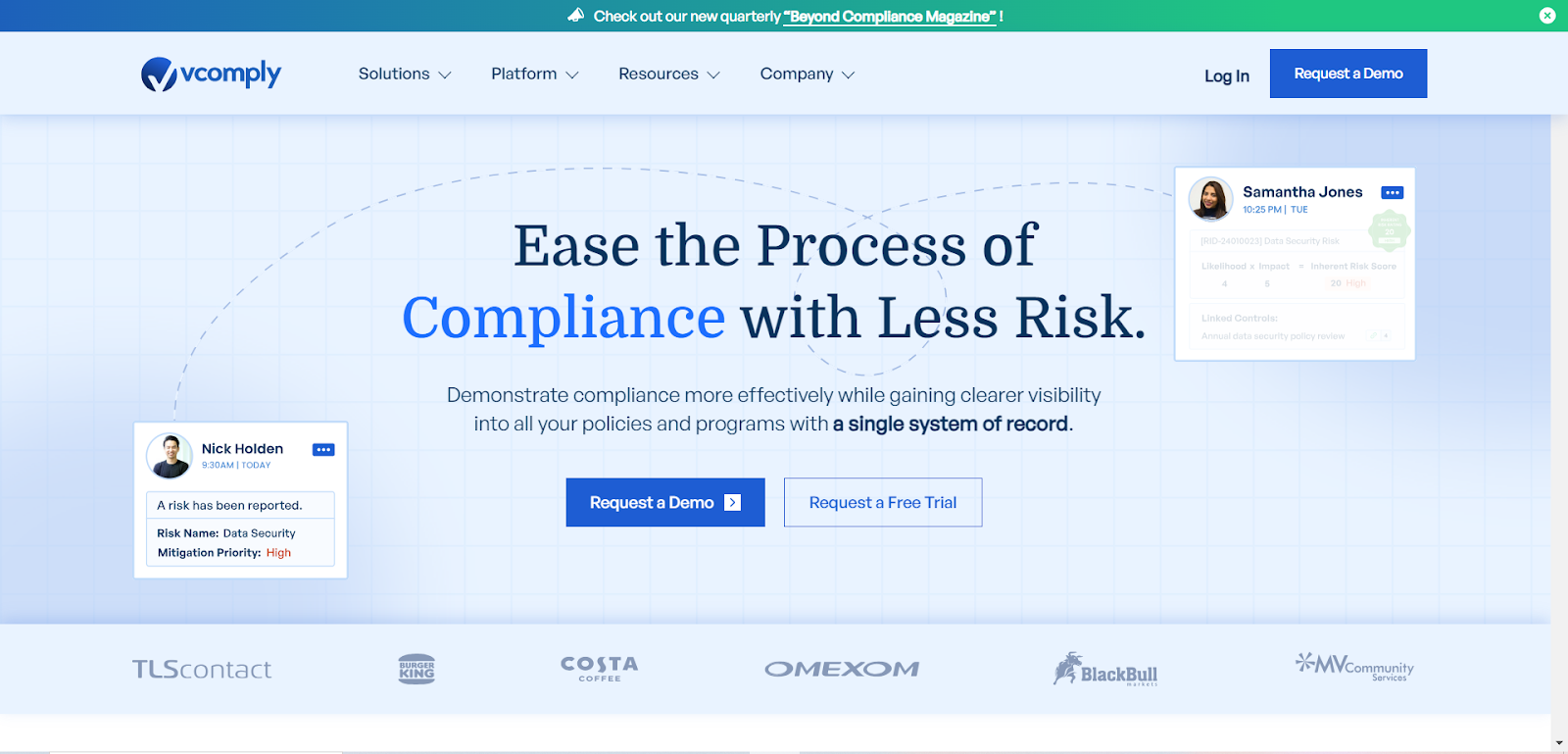
VComply stands out as one of the best compliance software solutions for suppliers due to its comprehensive and user-friendly approach. VComply manages the intricacies of supplier compliance, equipping businesses with the tools necessary for regulatory adherence and operational efficiency. It integrates powerful features with an intuitive interface, ensuring accessibility for users at all levels.
Key Features Include:
- Centralized Compliance Management: Integrates all compliance activities on a single platform, making it easier to track and manage supplier compliance across the entire organization.
- Automated Workflows: Streamlines compliance processes, reducing manual errors and increasing efficiency. Automated workflows ensure the timely completion of compliance tasks.
- Real-Time Regulatory Updates: Keeps you informed about the latest regulatory changes, ensuring your compliance practices are always up to date.
- Detailed Reporting and Analytics: Provides insights into supplier performance and compliance status, aiding in better decision-making and risk management.
- Audit Readiness: Maintains comprehensive records of all compliance activities, simplifying the audit process and ensuring your organization is always prepared for regulatory inspections.
- Customizable Dashboards: Customizable views are provided to address specific needs, enabling users to concentrate on the most relevant data and streamline their workflow.
- Robust Security Measures: Ensures data protection and compliance with data regulations, safeguarding sensitive supplier information.
- Scalability: Grows with your business needs, easily accommodating an expanding supplier network and increased compliance requirements.
- Vendor Risk Assessment: Continuously evaluates the risk profile of suppliers, helping you identify and mitigate potential compliance issues early.
- Supplier Performance Tracking: Monitors supplier performance against set benchmarks, ensuring they meet your standards for quality and reliability.
- Collaboration Tools: Facilitates seamless communication and collaboration between internal teams and suppliers, improving compliance and operational efficiency.
Pricing:
VComply pricing starts at $1,199 per month for the Starter GRC Suite and $1,999 per month for the Pro GRC Suite, with custom pricing for the Enterprise GRC Suite.
2. D&B Risk Analytics
D&B Risk Analytics is a leading platform for managing supplier risks through advanced data analysis and intelligence. It provides powerful tools to help businesses identify, monitor, and mitigate potential supplier risks effectively.

Key Features Include:
- Compliance Monitoring: Ensures that suppliers meet compliance standards and helps identify third-party risks.
- Pros: Offers strong support and continuous updates, ensuring users have the latest information.
- Cons: It may have limited industry or regional coverage and can be complex to implement.
Pricing:
D&B Risk Analytics pricing starts at CHF 3,000 (approximately $3,300) per year for small businesses. Contact their sales team for detailed pricing.
3. UpGuard
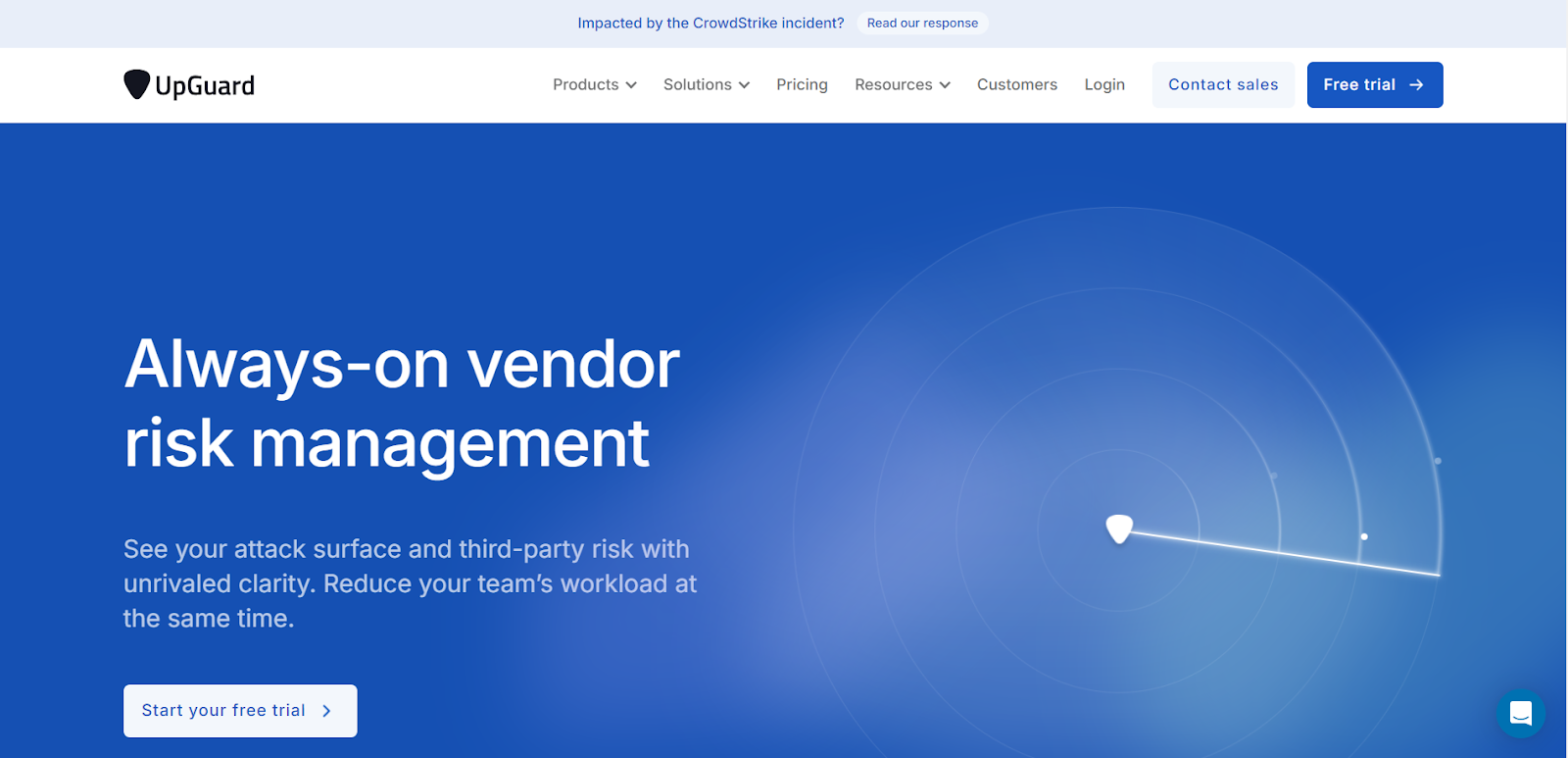
UpGuard is a leading platform for managing third-party risk and monitoring the cybersecurity posture of your vendors. Known for its robust security ratings and comprehensive risk assessments, UpGuard helps organizations proactively manage and mitigate potential risks in their supply chain.
Key Features Include:
- Security Ratings and Monitoring: Provides a security rating out of 950, assessing the cybersecurity posture of vendors based on various factors, including website security, network security, and more.
- Security Questionnaires: Conduct detailed risk assessments and gather information through security questionnaires to evaluate vendor security practices.
- Pros: Offers a simple platform with strong customer support, making it user-friendly and efficient for managing vendor risks.
- Cons: Faces issues with pricing transparency and the potential for false positives in security ratings.
Pricing:
UpGuard offers pricing starting at $5,999 per year, with additional vendors costing $1,500-$2,000 per vendor per year.
4. LogicManager
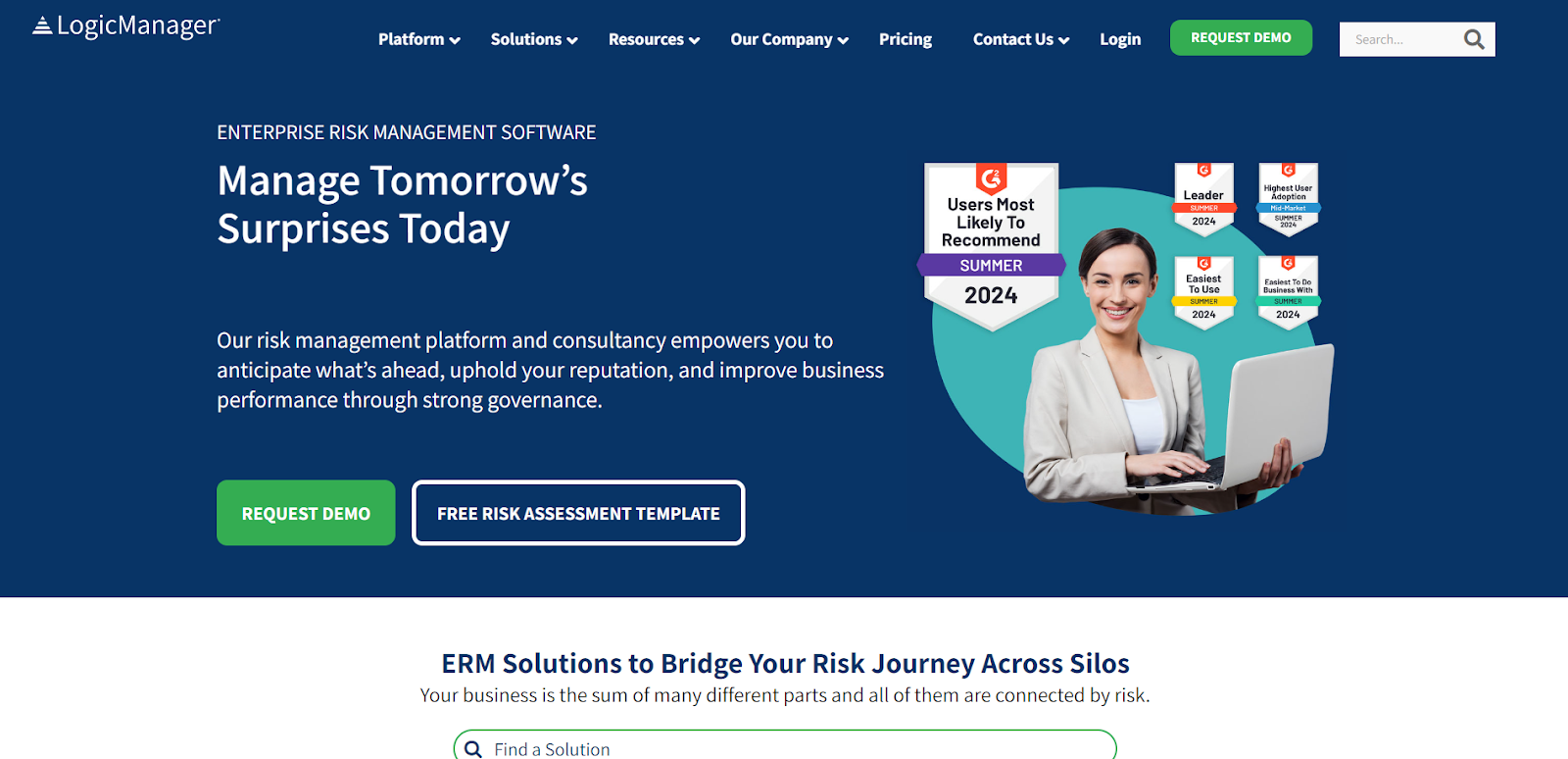
LogicManager is a leading enterprise risk management (ERM) software. Known for its comprehensive risk management capabilities, LogicManager helps organizations anticipate and mitigate risks while improving business performance.
Key Features Include:
- Tracking and Reporting Tools: Offers flexible tools for tracking and reporting on various compliance metrics.
- Risk Identification and AI Insights: Utilizes AI to identify and analyze critical risks, providing actionable insights.
- Pros: High customer support and a user-friendly interface enhance the user experience.
- Cons: It can be expensive for large-scale deployment and has reports that may seem clunky to some users.
Pricing:
LogicManager offers custom pricing plans based on specific business needs. Contact LogicManager directly for a personalized quote.
5. SupplierGateway
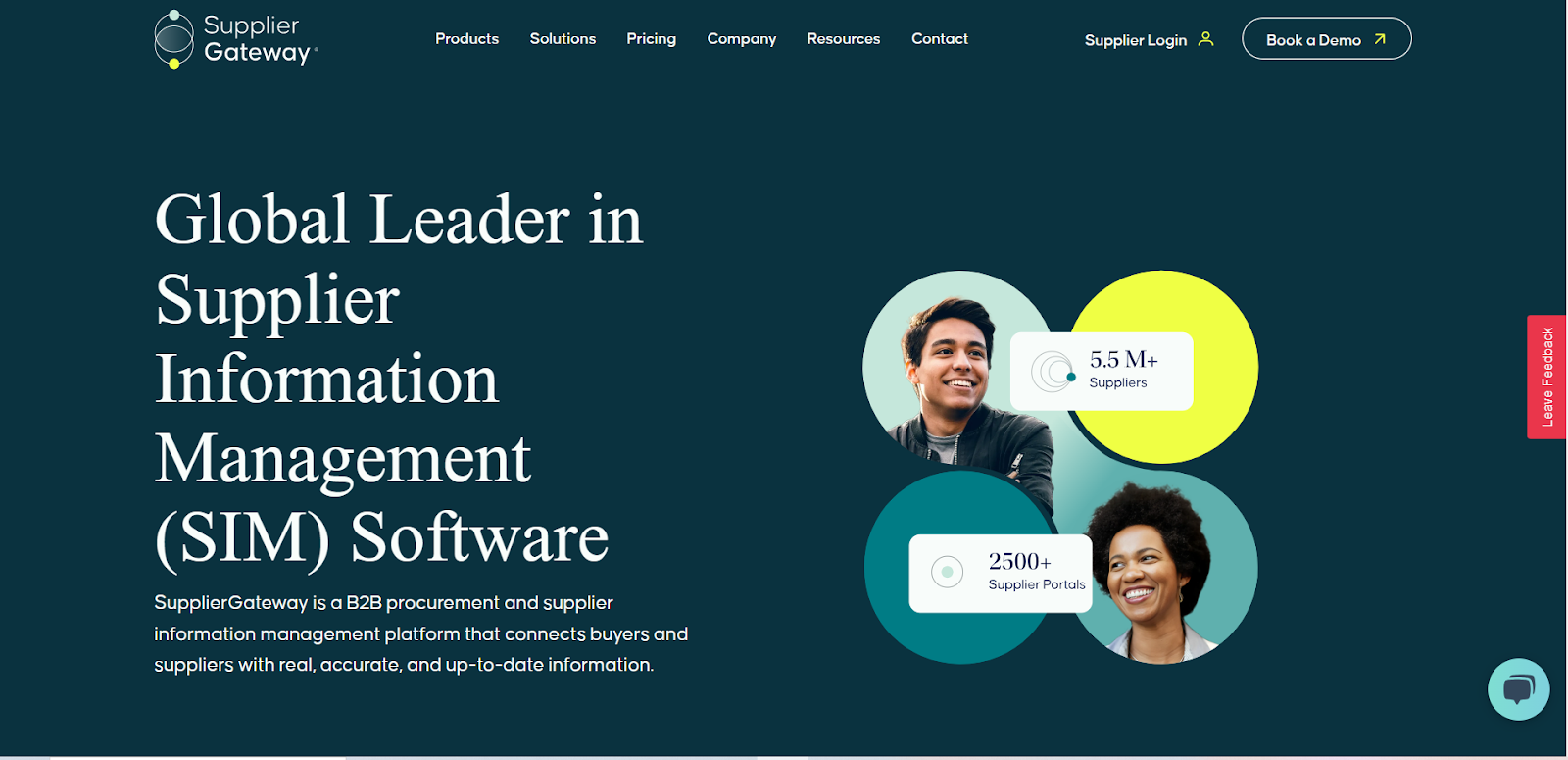
SupplierGateway is a comprehensive compliance software known for its powerful management capabilities. It offers robust tools to streamline vendor management and ensure efficient and compliant operations.
Key Features Include:
- Risk Monitoring and Reporting: Continuously assesses and reports on supplier risks to mitigate potential issues.
- Streamlined Onboarding: Centralizes supplier information, simplifying the onboarding process.
- Pros: Extensive supplier database and API integrations with ERP systems.
- Cons: It may require extensive initial setup and potential complexity in large-scale deployment.
Pricing:
SupplierGateway’s pricing starts at $20,500 per year for the Supplier Diversity Basic Platform and $25,000 per year for the Supplier Diversity Premium Platform.
VComply’s extensive features make it an ideal choice for businesses seeking effective supplier compliance management, ensuring regulatory adherence, operational efficiency, and enhanced supplier relationships.
Manage Vendor Risk with Supplier Compliance Software
Maintaining a resilient and compliant supply chain requires effective vendor risk management. Risks are managed, and vendor interactions are streamlined across various industries, including healthcare, financial services, retail, manufacturing, and more, with compliance software.
Key advantages include:
- Streamlined Compliance: Ensures adherence to regulatory standards.
- Customizable Workflows: Tailors processes to specific business needs.
- Seamless Integration: Connects easily with existing systems.
- Centralized Information: Consolidates supplier data for easy access and management.
Alright, now that we’ve explored the core functionalities of top compliance software, it’s insightful to see how these tools have made real-world impacts.

Case Studies
1. Ford Motor Company
In 2006, Ford Motor Company faced significant penalties due to customs compliance failures. Two court decisions revealed that Ford failed to notify Customs about provisional prices and engineering changes, leading to a total penalty of over $20 million.
The courts found Ford grossly negligent for not following internal compliance procedures, resulting in substantial fines. These cases highlight the vital need for effective compliance software in supplier management to ensure accurate reporting and adherence to customs regulations.
2. Trek Leather
In 2011, Trek Leather and its president faced penalties for not including fabric assists in the price of imported suits. This omission led to a lower duty payment and fines totaling $2.39 million, along with additional penalties of $534,420.32 and $45,245.39 in unpaid duties.
Despite previous violations and warnings, Trek’s president failed to comply with customs regulations. This case highlights the importance of robust compliance software for supplier management to prevent repeated compliance failures and ensure accurate documentation.
How VComply Helps Organizations Manage Supplier Compliance and Vendor Risk
Managing supplier compliance requires more than maintaining vendor lists or collecting onboarding documents. Organizations need ongoing visibility into supplier risks, compliance obligations, certifications, audits, incidents, contracts, and performance across the entire vendor lifecycle.
VComply helps organizations centralize supplier compliance and vendor risk management activities into one system designed to improve accountability, operational visibility, and regulatory readiness. Instead of managing supplier oversight through disconnected spreadsheets and manual follow-ups, organizations can automate workflows, assign responsibilities, track documentation, monitor risks, and maintain audit-ready records across suppliers and third parties.
Key capabilities include:
Centralized Supplier Compliance Management
Maintain supplier records, certifications, contracts, audits, obligations, and compliance activities from one platform.
Vendor Risk Assessments
Identify operational, financial, cybersecurity, regulatory, and third-party risks while tracking mitigation activities and remediation efforts.
Automated Workflows and Notifications
Reduce manual follow-up work through automated approvals, reminders, escalations, recurring tasks, and compliance deadlines.
Audit Preparation and Documentation
Maintain audit-ready supplier records, approval histories, certifications, and compliance documentation.
Policy and Procedure Management
Track supplier-related policies, onboarding procedures, security requirements, and vendor governance standards.
Incident and Issue Management
Monitor supplier-related incidents, compliance concerns, corrective actions, and issue resolution activities.
Real-Time Dashboards and Reporting
Gain visibility into supplier performance, compliance status, unresolved risks, overdue actions, and audit readiness metrics.
Vendor Oversight Across Multiple Business Units
Support centralized governance while managing suppliers across departments, regions, and operational teams.
By centralizing these activities, organizations can strengthen third-party governance, improve supplier accountability, reduce operational risk, and maintain stronger compliance oversight across their supply chain.
VComply stands out as the best platform for supplier compliance, offering comprehensive features such as centralized compliance management, automated workflows, real-time regulatory updates, and robust security measures. Its intuitive interface and scalability make it perfect for businesses of any size.
Take the next step towards effective supplier management. Try VComply by scheduling a free demo today!
Supplier compliance software helps organizations manage vendor compliance, supplier onboarding, third-party risk assessments, audits, certifications, regulatory requirements, and supplier governance activities from a centralized platform.
Supplier compliance helps organizations reduce operational, financial, cybersecurity, legal, and reputational risks associated with third-party vendors and suppliers.
Common risks include cybersecurity breaches, incomplete vendor due diligence, regulatory violations, ESG failures, missing certifications, operational disruptions, and poor supplier documentation.
Important features include supplier onboarding, risk assessments, audit tracking, workflow automation, dashboards, incident management, policy management, document storage, reporting, and vendor performance tracking.
Automation reduces manual work by handling reminders, approvals, escalations, recurring tasks, documentation tracking, and supplier compliance monitoring workflows.
VComply helps organizations centralize supplier oversight, automate compliance workflows, track vendor risks, maintain audit-ready records, manage incidents, and improve visibility across third-party governance programs.