

Appliances Electrical & Electronics Manufacturing Regulations: A Comprehensive Guide
Compliance in the U.S. electronics manufacturing sector isn’t optional; it’s business-critical.

Manufacturers face fines in the millions for violating regulations such as the Consumer Product Safety Improvement Act of 2008 (CPSIA) and export controls, including the International Traffic in Arms Regulations (ITAR).
For example, firms in the electronics and electrical equipment industries have incurred penalty totals exceeding $250 million in the U.S. alone. This blog cuts through the complexity of appliance and electronics manufacturing regulations to provide a clear guide on staying compliant.
Let’s understand the key standards, pitfalls you’ll want to avoid, and how platforms like VComply can automate your compliance and risk workflows.
At A Glance:
- Compliance is Essential for Electronics Manufacturers: Regulatory adherence ensures product safety, quality, and consumer trust while avoiding costly penalties and recalls.
- Global Regulations are Complex: Electronics manufacturers must comply with various standards (UL, CE, RoHS, FCC), making it crucial to stay up-to-date with region-specific and international regulations.
- Non-Compliance Can Be Expensive: Fines, legal repercussions, and product recalls are major risks. Non-compliance can harm both your finances and brand reputation.
- Centralized Documentation is Key: Managing compliance documents in one place makes audits easier and ensures you’re always prepared for inspections.
- Stay Proactive and Prepared: Regular audits, risk assessments, and ongoing staff training are crucial for maintaining compliance and mitigating potential issues before they escalate.
Why Compliance Matters in Electronics Manufacturing?
Regulations ensure that products meet safety, quality, and environmental standards before reaching consumers. Compliance is not just about avoiding penalties; it directly impacts the reliability of products and the safety of end-users. Manufacturers who neglect compliance risk not only face costly fines but also damage their brand reputation and erode consumer trust.
For example, a defective product that fails to meet regulatory standards can lead to widespread recalls, as seen in multiple high-profile cases within the consumer electronics industry.

Key Regulations in Electronics Manufacturing
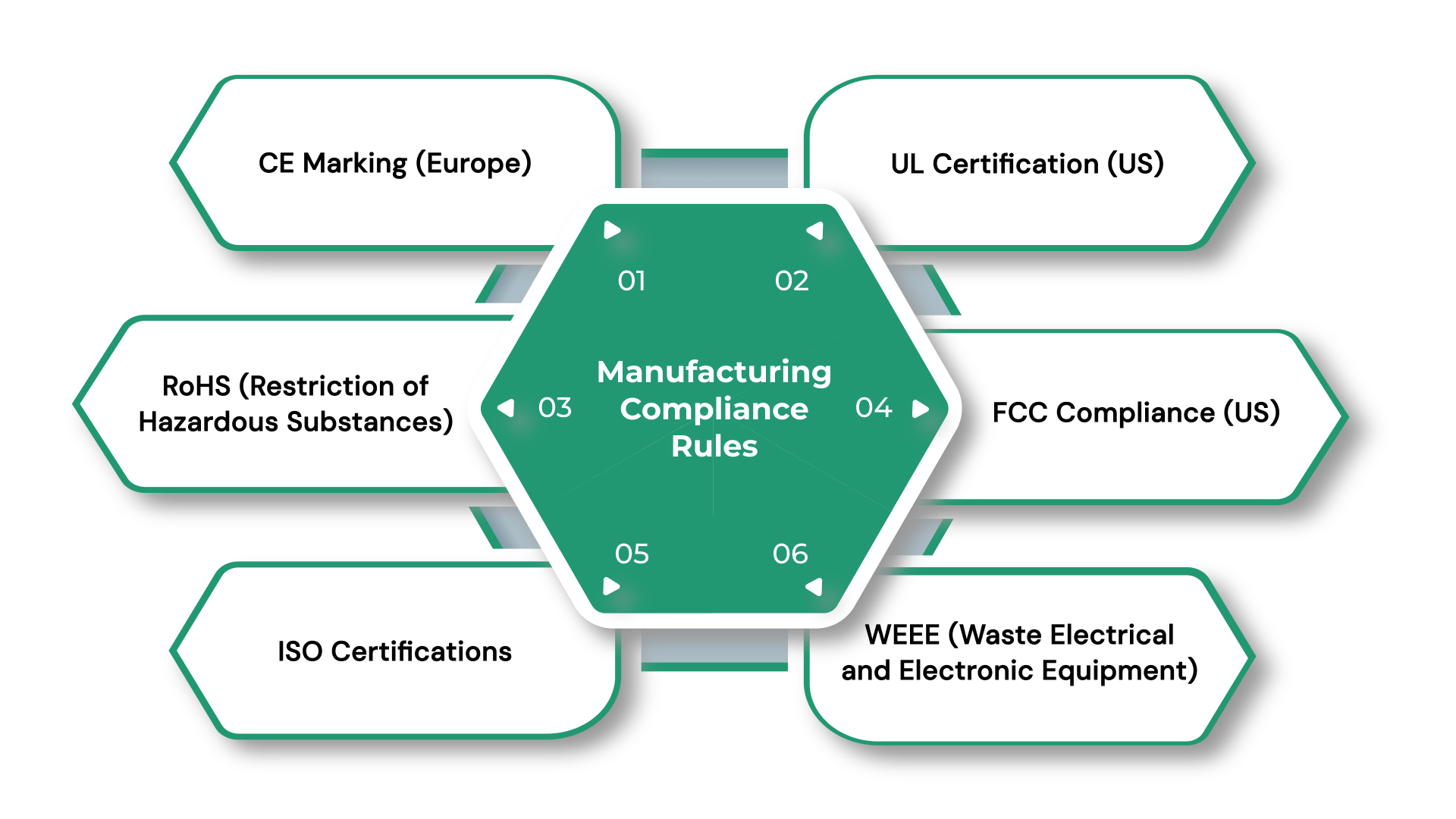
Electronics manufacturers must comply with various regulatory agencies as well as certifications, each with its own set of rules. Manufacturers that fail to comply with these standards face significant risks, including financial penalties and loss of market access.
1. CE Marking (Europe)
The CE mark indicates that a product complies with EU safety, health, and environmental requirements. It’s required for electronics manufacturers selling products in the European Economic Area (EEA).
Compliance ensures that products, such as mobile devices, computers, and home appliances, meet stringent European standards before entering the market. Non-compliance can lead to legal penalties, product recalls, and denial of market access.
Also read: What are the Five Reasons for Compliance Failure?
2. UL Certification (US)
In the U.S., UL (Underwriters Laboratories) certification is essential for ensuring product safety, particularly for electrical and electronic products. UL testing addresses safety concerns, including electrical hazards, fire safety, and shock protection.
Without UL certification, manufacturers cannot legally market specific products in the U.S., especially those used in residential and commercial applications.
3. RoHS (Restriction of Hazardous Substances)
The RoHS directive limits the use of certain hazardous materials in the manufacturing of electrical and electronic equipment. This regulation ensures that products like consumer electronics, LED lights, and batteries are safer for consumers and easier to recycle.
Manufacturers must meet the stringent limits on substances such as lead, mercury, and cadmium, or risk fines and market bans.
4. FCC Compliance (US)
The Federal Communications Commission (FCC) mandates that electronics manufacturers meet specific regulations to ensure their products do not cause harmful interference with communication systems.
Devices like radios, televisions, and cell phones must comply with the FCC’s electromagnetic interference (EMI) standards. Non-compliance can result in product recalls and the inability to sell the product in the U.S.
5. ISO Certifications
ISO 9001 and ISO 14001 are essential for quality management and environmental responsibility. These ISO standards demonstrate a manufacturer’s commitment to quality control and sustainability in production processes.
Adhering to these standards can lead to increased operational efficiency and enhanced customer trust, while also meeting industry-specific regulatory requirements.
6. WEEE (Waste Electrical and Electronic Equipment)
The WEEE directive requires electronics manufacturers to responsibly manage the recycling and disposal of electrical and electronic equipment once it reaches the end of its useful life. It’s part of a broader movement towards sustainable manufacturing.
Manufacturers must ensure that their products are designed with recycling in mind and meet the standards for proper disposal and reduced environmental impact.
As global regulations evolve, manufacturers must stay ahead of emerging standards that impact the electronics manufacturing sector. Regulations surrounding data protection (such as GDPR) and environmental sustainability are becoming increasingly prevalent and require rapid adaptation.
Also Read: How to Ensure Regulatory Compliance in Electronics Manufacturing?
Challenges Faced by Manufacturers in the Regulatory Scene
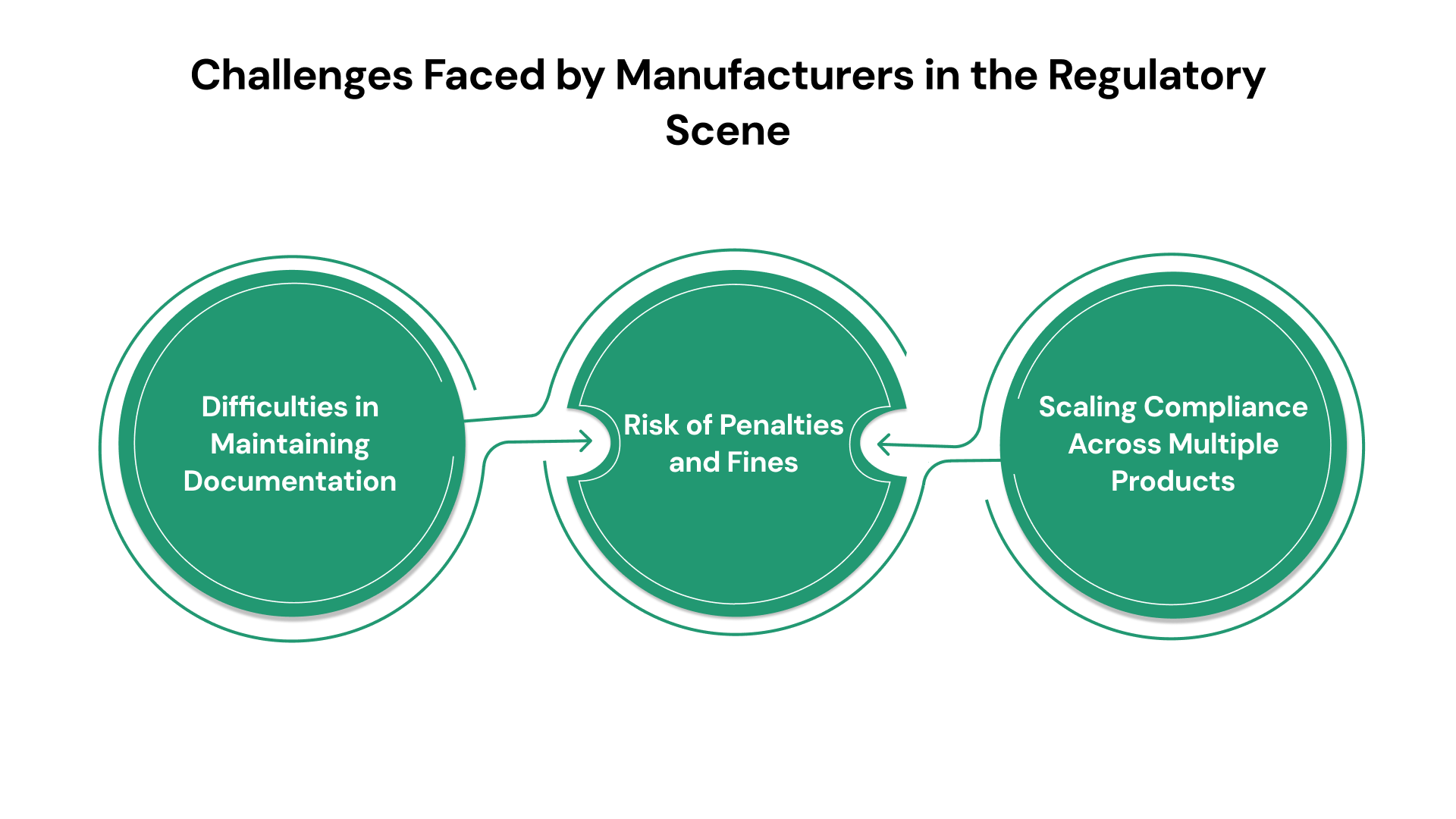
Each region, be it the EU, US, or Asia, has its own set of rules governing product safety, environmental standards, and technical specifications. This means manufacturers may need to process multiple compliance frameworks for each market they serve.
For example, a product sold in both the U.S. and Europe must meet UL safety standards for the U.S. and CE certification for the EU, each with slightly different requirements.
This complexity can lead to confusion, misinterpretation of the rules, and, ultimately, the risk of non-compliance. Other than this, primarily, other challenges faced by manufacturers include:
1. Difficulties in Maintaining Documentation
Proper documentation is key to regulatory compliance, but managing it can be a huge headache. Manufacturers need to keep track of:
- Test Reports
- Certification Records
- Audit Trails
Without a centralized system, documentation can become disorganized, making it more difficult to prove compliance during inspections or audits. Mismanaged records could lead to compliance violations or delays in product release.
2. Risk of Penalties and Fines
The cost of non-compliance can be steep:
- Financial Penalties: Fines for non-compliance can be substantial. For instance, the FCC can impose fines of up to $100,000 per day for violations of electromagnetic interference standards.
- Product Recalls: Non-compliant products often face costly recalls. In addition to the immediate financial costs, product recalls damage brand reputation and consumer trust, leading to long-term losses.
For example, Samsung incurred significant financial losses and a tarnished reputation due to product safety violations, demonstrating how regulatory breaches can disrupt operations.
3. Scaling Compliance Across Multiple Products
As companies grow and expand their product lines, keeping up with compliance becomes more challenging:
- Each new product may require additional certifications and regulatory approvals.
- The complexity increases when managing multiple product categories with varying compliance standards.
Without an automated system, tracking and ensuring compliance for a larger variety of products can quickly become unmanageable.
ComplianceOps centralizes how you manage, track, and enhance your compliance training efforts across your organization. It combines compliance checklists, training tracking, and automated workflows to create a streamlined and efficient compliance management process.
Best Practices for Achieving and Maintaining Compliance
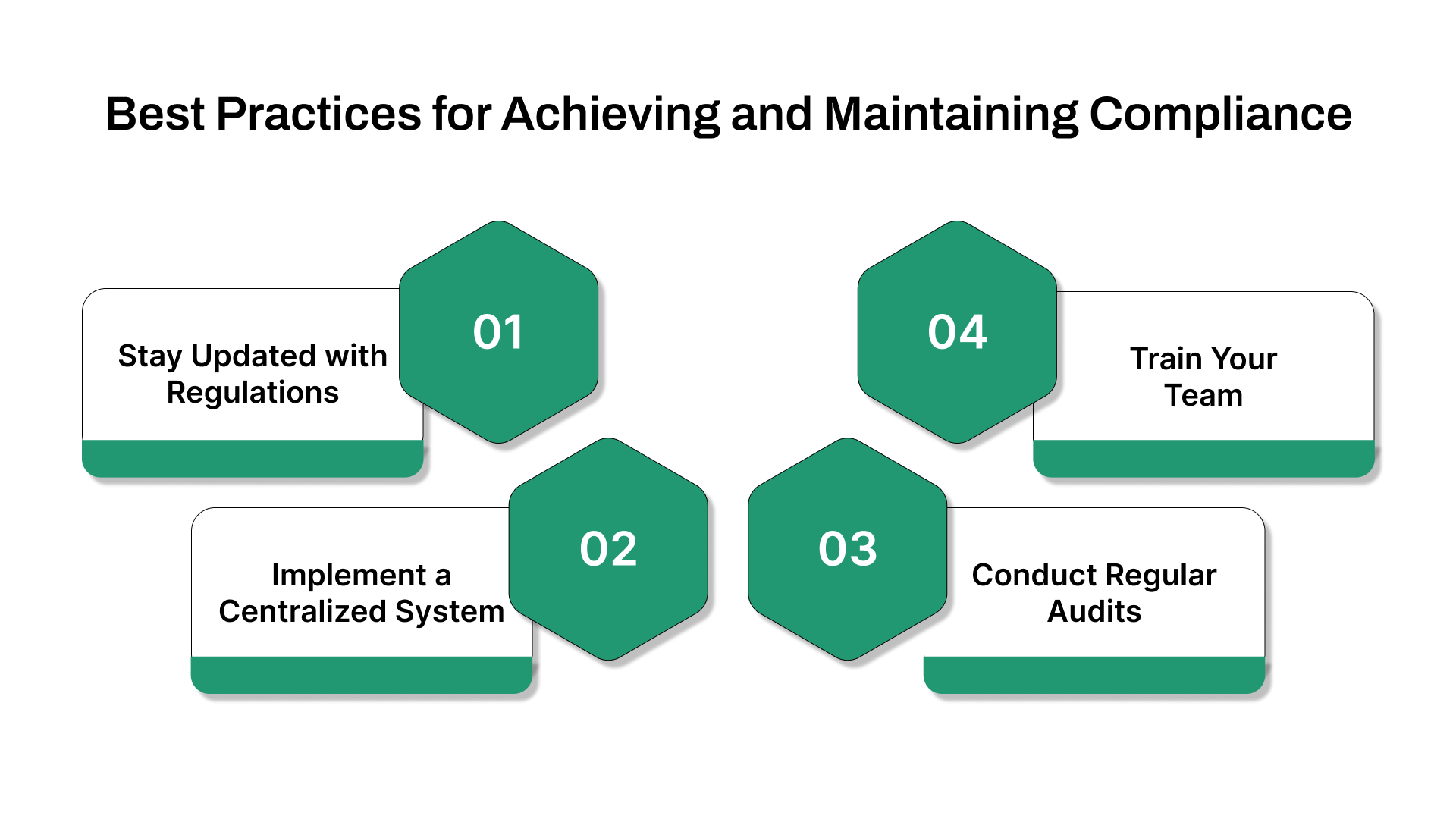
Today, compliance is not just a checkbox, but a competitive advantage. Recent data highlights just how high the stakes are: the manufacturing sector alone faces regulatory compliance costs of about $29,100 per employee annually, with smaller firms seeing costs climb to around $50,100 per employee.
Meanwhile, fully 68 % of compliance spending in the manufacturing sector is tied directly to labor hours spent managing regulation‑related tasks. These figures expose how regulatory complexity consumes both time and resources.
Let’s look at some concrete, actionable steps that transform compliance from a burden into a guardrail for innovation and growth:
1. Stay Updated with Regulations
Regulatory standards are constantly evolving, so manufacturers must stay informed about changes in compliance requirements. Key practices include:
- Regular Monitoring: Set up automated alerts to track changes in regulations like RoHS or FCC guidelines. This will help you keep up with shifts in legislation across multiple regions.
- Engage with Regulatory Bodies: Actively monitor communications from regulatory bodies such as UL or CE to stay on top of new updates and guidelines that affect your products.
2. Implement a Centralized Compliance System
Managing compliance across multiple products, regions, and standards can get chaotic without a centralized system. Here’s why centralization is key:
- Streamlined Documentation: Use a single platform, like VComply, to house all your compliance documents, from test reports to audit records. This ensures nothing slips through the cracks.
- Ease of Access: With a centralized system, all compliance-related data is readily available for audits, inspections, and internal reviews – no more hunting for files or scrambling at the last minute.
3. Conduct Regular Audits and Risk Assessments
To maintain compliance, regular audits and risk assessments are essential:
- Schedule Audits: Implement a consistent audit schedule, ideally quarterly or biannually, to ensure products continue to meet regulatory standards.
- Identify Risks Early: Regular risk assessments help identify areas where compliance gaps may exist, allowing for timely remediation.
With VComply’s risk management tools, you can proactively mitigate those risks, preventing costly compliance issues from arising.
4. Train Your Team
Compliance isn’t just the responsibility of the legal or compliance team; it’s everyone’s job:
- Ongoing Training: Ensure that your team, from engineers to senior leadership, receives training on compliance standards relevant to their roles. This minimizes errors and ensures that compliance is embedded into everyday operations.
- Internal Knowledge Sharing: Promote a culture of compliance across your organization. Regularly share updates and changes in regulations with your team to keep them engaged and informed.
How VComply Supports Compliance in Electronics Manufacturing?
VComply offers a secure, AI-driven platform that streamlines regulatory monitoring, risk management, and audit-readiness. As manufacturers face a growing web of complex regulations, VComply empowers organizations to stay ahead of regulatory requirements while improving operational efficiency.
Key Features Supporting Compliance in Electronics Manufacturing:
- ComplianceOps:Automates the monitoring of essential regulatory frameworks like UL, CE, FCC, RoHS, and ISO 9001. VComply tracks evidence for audits, sends early alerts on regulatory changes, and ensures proof of ongoing compliance for each product line, all within one unified system.
- RiskOps:Continuously evaluates compliance risks across production facilities and the organization. Through AI-powered dashboards, RiskOps prioritizes remediation efforts based on severity, helping executives manage risks related to product safety, electromagnetic interference, and environmental regulations effectively.
- PolicyOps:Simplifies the creation, approval, and update of compliance policies, ensuring they align with safety standards, environmental laws, and evolving global mandates. By using version-controlled workflows, manufacturers can stay ahead of policy updates, ensuring their operations remain compliant with the latest regulations.
- CaseOps:Centralizes incident management for issues like product recalls, quality control failures, or compliance breaches. VComply assigns responsibility, tracks remediation timelines, and ensures that all incidents are documented and resolved in line with industry standards and legal requirements.
- Framework Management & Task Assignments:Maps controls to regulatory frameworks such as ISO 9001, ISO 14001, and industry-specific standards like RoHS and WEEE. Manufacturers can assign compliance tasks to team members, track progress, and validate task completion via automated reporting, ensuring that no critical action is missed.
- Automated Reporting & Analytics:Provides real-time dashboards that track compliance posture, risk trends, and audit trails for each product line. Executives and regulatory bodies receive transparent, real-time reports that are easily exportable, ensuring full visibility and confidence in operational compliance.
Get started today with a free demo of ComplianceOps and experience seamless audit readiness, automated regulatory monitoring, and proactive risk mitigation customized for the electronics manufacturing industry.
Take the first step toward transforming your compliance management. Request a Demo of VComply now.

Final Thoughts
Compliance in electronics manufacturing is no longer a passive requirement; it’s a crucial driver of business success and long-term stability. Automation ensures the accuracy, consistency, and speed that manual processes simply can’t match.
The future of compliance lies in a balanced approach. While automation tools like VComply streamline processes and mitigate risks, human oversight remains vital to ensure that compliance is upheld ethically and with full accountability.
Strengthen your electronics manufacturing compliance with VComply. Start a free trial today to experience how our platform can simplify regulatory workflows and ensure you stay ahead of evolving industry standards.
FAQs
Different regulations for each region can be a time-consuming process. Using a centralized platform like VComply enables you to manage multiple frameworks, such as UL, CE, and RoHS, in one place, thereby reducing complexity and ensuring effortless compliance with local and international standards.
Start by keeping all your compliance documentation in one secure platform. With VComply, you can automate audit reminders, track progress, and ensure that all records are up-to-date, so you’re always ready for inspections without scrambling at the last minute.
VComply’s RiskOps feature helps manufacturers proactively identify compliance risks by continuously assessing potential issues. This allows you to prioritize remediation efforts based on severity, helping you avoid costly penalties and product recalls before they happen.
Yes, VComply stays updated with the latest regulatory changes, including RoHS and FCC guidelines, through real-time alerts. This ensures that you can quickly adapt to new standards and maintain compliance across all your products and markets, reducing regulatory risks.
Non-compliance can lead to hefty fines and product recalls, which are costly and damaging to your brand. By automating compliance tracking and audits with VComply, you reduce human error, stay ahead of regulatory changes, and ensure compliance in real-time – ultimately saving you from expensive penalties and protecting your reputation.