

Code of Conduct Violations: Key Types and Real Consequences
Code of conduct violations occur when individuals fail to follow the ethical guidelines and policies that govern workplace behavior. These breaches—such as harassment, discrimination, or misuse of company resources—can erode trust, damage morale, and expose the organization to legal risks. Understanding and addressing violations promptly helps maintain a safe, respectful, and compliant work environment.

Leaders responsible for compliance know that workplace issues rarely start with dramatic incidents. They usually begin with small behaviors that slip through outdated rules, scattered files, or unclear reporting paths, which is why code of conduct violations continue to appear even in structured environments.
U.S. federal agency anti-harassment and EEO policy reports show that misconduct covers far more than harassment. It includes workplace violence, unprofessional communication, misuse of IT resources, inaccurate time entries, and leave policy violations. These problems escalate when policies are inconsistent or difficult for employees to access.
What Are Code Of Conduct Violations?
Code of conduct violations happen when an employee or organization fails to follow the established rules, policies, or ethical guidelines. It is to maintain professionalism, integrity, and accountability within the workplace. Common violations include harassment, discrimination, misuse of company resources, and conflicts of interest.
When you breach these rules, it leads to disciplinary actions, loss of trust, and, in some cases, legal consequences. As an organization, you must understand and follow the code of conduct to maintain a respectful and compliant work environment.
In this guide, you will find a clear breakdown of the violations that surface most often, the consequences tied to them, and the structure teams need to reduce repeat patterns.
Key Takeaways
- Employees rely on incorrect versions when policies lack consistent updates, distribution, and acknowledgment tracking.
- Patterns like inaccurate time logs, device misuse, or disruptive behavior become conduct breaches even without malicious intent.
- Unapproved entry into systems, data, or restricted resources can trigger disciplinary action, data exposure, and legal liabilities.
- Centralized records, AI drafting, role-based access, and acknowledgment workflows reduce gaps that often trigger code of conduct violations.

What is a Code Of Conduct?
A code of conduct is a policy, and strong policy frameworks give teams the structure needed to prevent confusion and misaligned behavior. When policies are clear, current, and easy to reference, they reduce the friction points that often lead to code of conduct violations.
What Are The Advantages Of a Code Of Conduct?

Following the code of conduct is essential for your organization for several reasons. Platforms like VComply can assist in establishing and automating these codes, guaranteeing consistent adherence. They promote a positive working environment, prevent misconduct, and more. Let’s see some of them now.
- Establishes Clear Expectations: It provides a clear framework for acceptable behavior in your organization, helping employees understand what is expected from them to maintain professionalism.
- Promotes a Positive Work Environment: It develops a culture of respect, inclusivity, and accountability, contributing to a positive organizational atmosphere.
- Prevents Misconduct: The code of conduct outlines prohibited behaviors and the consequences of violations. It may reduce code of conduct violations and promote a positive environment.
- Protects the Organization: A strong code of conduct protects your organization from legal issues and reputational damage and makes sure that you follow laws and regulations.
- Improves Decision-Making: When faced with ethical conduct difficulties, employees can refer to the code of conduct for help, allowing better-informed and moral decision-making.
- Builds Trust: A code of conduct builds trust among employees and stakeholders.
These advantages matter only when the code is reinforced consistently, and the clearest test of that consistency shows up in the violations that surface most often.
You might find this interesting: Differences Between Policy and Code of Conduct
What Are The Common Code Of Conduct Violations?

The code of conduct is the foundation for your organization’s ethical behavior and professional standards. When your workers violate these guidelines, it can disrupt the workplace and lead to severe consequences. Let’s explore some of the most frequent violations and their impact.
Dishonesty And Fraud
They are serious code of conduct violations that affect your company’s reputation and operations. You must understand these types of dishonest behavior to prevent these violations and take appropriate action when necessary. VComply can offer comprehensive monitoring and reporting features to help identify and manage such issues.
- Plagiarism: It happens when an employee uses someone else’s work without giving proper credit. This can include copying reports, presentations, or ideas, which may harm the original creator and undermine trust within the organization.
- Falsification: This can include inflating hours worked, exaggerating expenses, or lying about qualifications. It can lead to disciplinary action, financial loss, and damage to your company’s credibility.
- Forgery: Forgery happens when someone in your organization creates false documents or signatures with the intent to deceive. This could include signing off on contracts or other official documents without proper authority, posing a significant legal risk to the business.
- Bribery: One may offer or accept bribery in exchange for influence or actions that benefit one party unfairly. You must prevent this unethical activity because it may lead to legal consequences and damage your firm’s public image.
Alcohol and Drug Violations
Using alcohol and drugs in the workplace can seriously undermine safety, productivity, and professionalism. Companies must have clear policies to handle alcohol and drug violations.
- Alcohol Use During Work Hours: Consuming alcohol while on the job affects the performance of employees. Alcohol use at work is a serious violation because it leads to accidents, poor decision-making, and disciplinary action.
- Possession or Use of Controlled Substances: Possessing or using illegal drugs at work is a violation of the law, but also a breach of workplace conduct. This behavior is dangerous for the safety of the individual and their colleagues. It usually results in immediate termination and legal consequences.
- Drug Paraphernalia: Having drug paraphernalia on company property is a direct breach of workplace policies. The presence of these items signals potential drug use and poses a significant risk to the workplace environment.
- Misuse of Prescription Drugs: Sometimes, legally prescribed medications can be problematic if someone misuses them at the workplace. When your employees use them, it will affect their job performance and lead to serious health risks and disciplinary measures.
Disruptive Conduct in the Workplace
Disruptive behavior is dangerous for workplace harmony and productivity. As an organization, you must address these violations to maintain a respectful and efficient environment.
- Interference with Work Processes: Disrupting meetings, procedures, or tasks is unacceptable and creates frustration among coworkers. This interference negatively impacts overall workflow and efficiency.
- Excessive Noise: When an employee creates unnecessary noise in the workplace, such as loud conversations, music, or equipment, it may distract others and make it difficult to focus. It may affect both individual and team performance.
- Obscene Language or Behavior: Using inappropriate language or gestures violates the code of conduct. Such behavior can make other workers uncomfortable and potentially lead to harassment claims.
- Endangerment: Any action that puts others’ lives in danger is a serious offense. Whether it’s bad behavior or ignoring safety protocols, it breaks workplace rules and may cause accidents and legal consequences.
Electronic Communication and Technology Violations
Technology has a significant role in today’s workplace. Sometimes, there is a chance for misuse of electronic communication and company equipment. Using technology solutions like VComply can help track and control the use of these resources effectively.
- Misuse of Company Equipment: Inappropriate use, such as using computers for personal tasks during work hours or damaging equipment, is a code of conduct violation. Misuse can lead to productivity loss, equipment damage, and even security breaches.
- Inappropriate Email or Messaging: Work communication channels are only for professional use. Sending personal, offensive, or harmful content through company email is a serious problem and can result in disciplinary action.
- Unauthorized Access: Suppose your employees access confidential data or secure systems without permission. This can lead to data breaches and the theft of sensitive information, which can have severe consequences for both the individual and the company.
- Internet Abuse: Using the company internet for non-work-related or inappropriate activities such as browsing social media, streaming content, or visiting harmful websites may violate company policies. It may compromise productivity and even pose security risks.
To prevent reputational and compliance risks tied to employee social activity, use the Social Media Policy Template.
Harassment and Discrimination in The Workplace
Harassment and discrimination are severe code of conduct violations that affect your positive working environment. You need to address these issues promptly to develop respect and inclusivity. VComply can assist in setting up clear reporting channels and policies to handle such violations effectively.
- Bullying and Intimidation: Engaging in verbal threats or manipulative actions can create a toxic workplace. Bullying disrupts team coordination and can cause emotional distress, which affects individuals and the company.
- Physical Abuse: If any of your employees engage in physical abuse against colleagues, it is not only a violation of workplace policies but also a violation of human decency.
- Racial and Gender Harassment: Discrimination based on race, gender, or other protected characteristics is strictly prohibited. Such behavior damages workplace morale and can lead to legal actions and fines.
Property Damage and Theft In The Workplace
Damaging company property and theft are serious violations. Implementing a comprehensive GRC platform like VComply can help track these incidents and enforce policies to prevent them. They affect both the company’s operations and its financial health.
- Destruction of Company Property: Vandalizing or damaging company equipment, furniture, or assets violates workplace rules. This behavior is not acceptable and can disrupt business operations and reduce productivity.
- Stealing or Possessing Stolen Property: Taking company belongings or holding onto stolen items is a code of conduct violation. Whether it’s office supplies or high-value equipment, this breach of trust can lead to immediate termination and legal action.
- Forgery and Fraudulent Actions: Sometimes, your workers may create false documents, such as receipts or contracts, for personal or professional gain. Such fraudulent actions carry severe legal and professional consequences, including termination and prosecution.
Each of these violations carries operational impact, and the level of that impact determines the type of consequence that follows.
Read more: The 7 Best GRC Systems Redefining Compliance and Risk Management in 2024
Common Consequences for Code of Conduct Violations
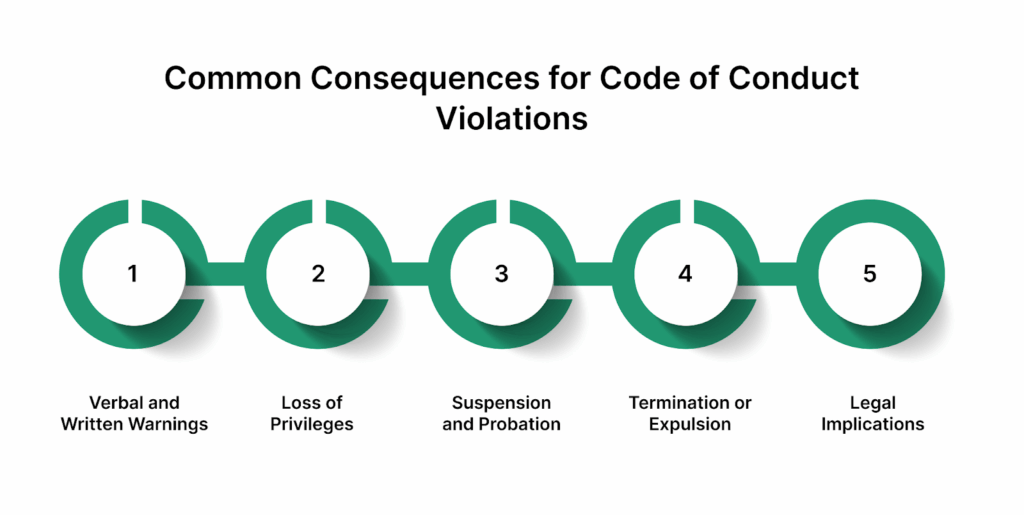
Depending on the severity of the offense, violating the rules can result in serious consequences. These consequences are essential to maintaining order, accountability, and a safe environment for everyone involved.
- Verbal and Written Warnings: For minor violations, you may give a verbal or written warning. These warnings are formal notices; if repeated, you can seek stricter penalties.
- Loss of Privileges: Sometimes, your employees may lose certain privileges, such as access to specific office areas, work-from-home options, or other benefits.
- Suspension and Probation: You can consider temporary suspension from duties or probation if someone commits serious violations. An organization may also allow such employees to work under closer supervision.
- Termination or Expulsion: Dismissal may be the only option for unacceptable code of conduct violations, especially those involving illegal activities or repeated offenses. This guarantees the safety of other employees and improves trust.
- Legal Implications: People who indulge in activities such as theft, fraud, or sexual misconduct should face criminal or civil charges. In these cases, the charges may extend beyond termination, resulting in fines, lawsuits, or even imprisonment for the offender.
These consequences highlight where employee behavior breaks down, giving clarity on which policies require direct reinforcement during training.
Code of Conduct Training Policies That Strengthen Workforce Accountability
Effective training connects each code of conduct violation category to clear, enforceable policies. These policies give employees unambiguous rules tied to access rights, communication channels, data classifications, and operational thresholds where misconduct typically occurs.
- Acceptable Use and Communication Policy: Defines device usage limits, network rules, file-transfer restrictions, and what employees may share through internal or external communication channels.
- Time, Attendance, and Financial Control Policy: Requires accurate records for work hours and approvals, sets authority limits for expenses or payments, and mandates audit trails for edits or reimbursements.
- Data Handling, Information Security, and Record Retention Policy: Covers classification levels, storage requirements, redaction steps, access provisioning, password rules, session controls, and timelines for retaining or disposing of regulated records.
- Workplace Conduct, Anti-Harassment, and Safety Policy: Outlines prohibited behavior, documentation expectations for reports, inquiry steps for HR, hazardous-area rules, and equipment-use requirements.
- Conflict of Interest and Gifts Policy: Lists disclosure triggers, approval paths for outside engagements, vendor restrictions, gift thresholds, and logging requirements for all exchanges.
- Whistleblower and Reporting Policy: Whistleblower reporting routes, confidentiality protections, acknowledgment timelines, and protocols for reviewing and validating internal reports.
Once training ties each policy to real misconduct patterns, the next step is embedding daily practices that prevent violations and surface issues early.
How Do You Prevent and Report the Code Of Conduct Violation?
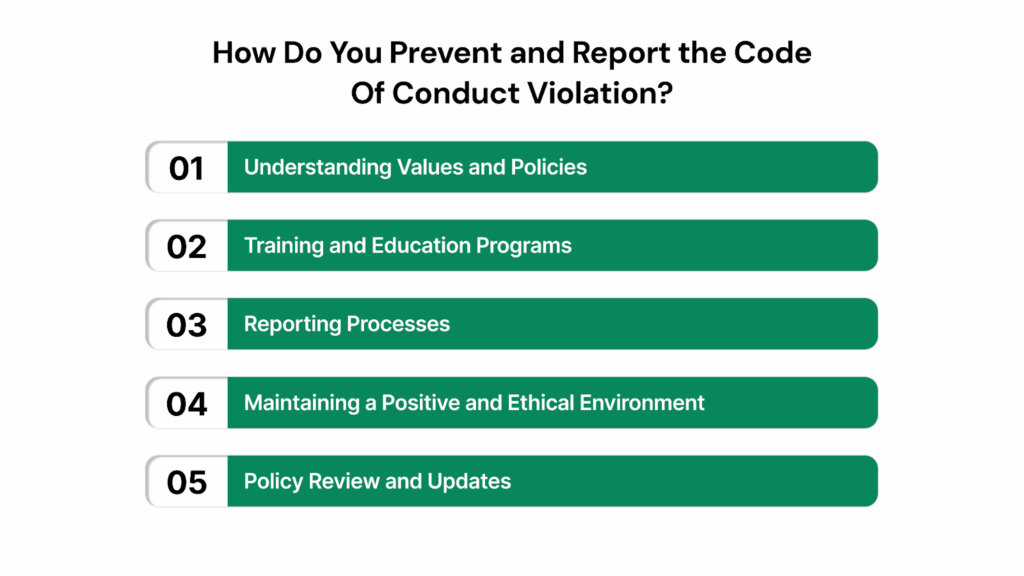
Preventing such issues in your business needs a proactive approach, such as education, clear communication, and an environment that promotes ethical behavior. Here’s how organizations can effectively promote prevention and reporting.
- Understanding Values and Policies: Employees must know the company’s code of conduct and core values. Discuss policies and help everyone understand what is expected of them and the consequences of breaking the rules.
- Training and Education Programs: Train your employees, educate them about ethical practices, and keep employees informed about the importance of adhering to the code of conduct. Platforms like VComply offer training modules that can be customized to your organization’s specific needs. You may conduct workshops, seminars, or online courses to address specific workplace challenges.
- Reporting Processes: As a reputable organization, you can provide channels for reporting violations. Employees should feel safe and supported when reporting misconduct through anonymous hotlines, designated HR contacts, or online reporting tools.
- Maintaining a Positive and Ethical Environment: Create a workplace culture that values respect. Top leadership should be a model for your employees, encourage open communication, and promote a positive environment.
- Policy Review and Updates: Always review and update your policies to face new challenges and standards. This ongoing process guarantees that the code of conduct remains relevant and effective, adapting to the growing workplace landscape.
Even with strong prevention and reporting habits, gaps still appear when policies sit in scattered systems, making unified policy management essential for reducing repeat incidents.
For a ready-to-deploy framework that supports consistent conduct standards, download the Code of Conduct Policy Template.
Unified Policy Management That Reduces Code of Conduct Violation Risk
A unified system reduces misconduct by keeping every policy current, traceable, and accessible through one governed workflow. This eliminates the version gaps, approval delays, and visibility issues that often contribute to code of conduct violations across multi-location teams. PolicyOps supports this structure by centralizing policy creation, updates, distribution, and attestation within a single governed environment.
- Centralized System of Record: Combines drafting, approvals, published versions, and historical edits in one governed repository so every team references the same rulebook.
- AI-Supported Drafting and Structured Approvals: Uses guided templates, tracked edits, and multi-level routing to prevent contradictory clauses and to document who reviewed each update.
- Targeted Distribution With Attestation and Training: Delivers policies to the correct employees based on role or location, with one-click acknowledgment and integrated training for higher adherence.
- Role-Based Access Controls and Advanced Search: Restricts visibility to authorized groups while giving employees fast access to exact clauses through full-content search and AI assistance.
- Real-Time Dashboards, Alerts, and Automated Renewals: Surfaces acknowledgment gaps, aging drafts, and pending approvals, while reminders and renewal automation prevent outdated policies from driving risky behavior.
Start a free trial to see how unified controls strengthen policy discipline, reduce violation risk, and give every team clear, current, audit-ready guidance.

Final Thoughts
Code of conduct violations reveal where internal controls struggle to keep pace with real workflow behaviors. These patterns surface in communication gaps, outdated rules, and inconsistent review paths that make enforcement harder than it should be. Addressing code of conduct violations at scale depends on a policy framework that stays current, traceable, and aligned across every team.
This is where PolicyOps from VComply becomes practical. It brings drafting, routing, access controls, training, and acknowledgment into one governed system so leaders can keep policies aligned with daily operations instead of scattered across files and inboxes.
If you want to see how PolicyOps supports stronger compliance discipline, request a demo.
FAQs About Code of Conduct Violations
Organizations must maintain version histories of policies, acknowledgment logs, access records, interview notes, email trails, and workflow approvals. These documents allow investigators to confirm timelines and accountability.
Yes. When contractors access internal systems, customer data, or facility space, they fall under the same conduct requirements. Many violations arise when external teams operate without clear policy sign-off.
Yes. If an employee relies on an outdated version, the violation still stands. Employers must keep distribution, acknowledgment, and version control current to prevent this gap.
Yes. Minor behaviors such as improper device use or inaccurate time entries become violations when repeated, since they indicate pattern-level risk rather than isolated mistakes.
No. Many violations are assessed on impact, not intent. Misuse of data, incorrect record handling, or unauthorized communication can lead to consequences even when unintentional.