

Social Media Policy
A social media policy is a set of guidelines that outline how employees should conduct themselves online when representing or engaging with the company.
 AI Policy Builder tool
Share



Introduction
In an age where a single tweet or post can go viral in seconds, the importance of a robust social media policy cannot be overstated. With 70% of employees admitting to posting content on social media that could potentially harm their company’s reputation, the stakes have never been higher for organizations navigating the digital environment.
What Is a Social Media Policy?
A social media policy is a workplace policy that explains how employees should use social media when representing, mentioning, or engaging with the organization online. It covers official company accounts, personal posts that reference the company, confidential information, brand voice, employee conduct, crisis response, security risks, and legal responsibilities.
A good social media policy helps employees understand what they can post, what they should avoid, who can speak on behalf of the company, and how to handle sensitive topics, customer complaints, or public issues online.
In this blog, we’ll explore the key elements of an effective social media policy, its vital role in safeguarding your organization’s reputation, and strategies for successful implementation. Let’s make sure your team is prepared to approach the digital world with confidence and professionalism. To get started, here is our free downloadable social media policy template.
Did You Know?
98% of employees use at least one social media platform personally, and half of them already share posts about their company. Yet, 63% say their employer doesn’t have a social media policy in place.
The Benefits of Having a Social Media Policy
A solid social media policy also addresses privacy, security, and ethical considerations, helping employees understand what is appropriate to post, what to avoid, and how to handle sensitive situations online.
A social media policy can guide online conduct and clarify how employees can advocate positively for the brand, allowing them to feel confident in sharing their achievements and experiences. This framework is essential for businesses aiming to foster a cohesive brand image while managing potential risks in the digital landscape.
The Benefits of Having a Social Media Policy
- Protects Brand Reputation: Defines acceptable online conduct to safeguard the company’s image.
- Maintains Consistency in Brand Voice: Ensures alignment in tone, values, and messaging across all content.
- Reduces Legal and Security Risks: Guides employees on safe sharing practices to avoid accidental disclosures.
- Enhances Crisis Management: Provides clear response instructions during crises to protect the company’s image.
- Encourages Positive Brand Advocacy: Empowers employees to share positive experiences that align with brand values.
Why is it Important for Businesses to have a Social Media Policy?
Information spreads instantly in the digital era, which can impact a company’s reputation with a single post. A social media usage policy acts as a shield, preventing potential damage that could arise from inappropriate or unprofessional behavior online. This policy sets boundaries for how employees represent the company in digital spaces, reinforcing values, brand voice, and ethics. By aligning employees’ online activities with brand guidelines, companies minimize risks to their reputation and foster trust with customers, partners, and stakeholders, all of whom expect professionalism and integrity in public-facing content.
Addressing Productivity, Privacy, and Legal Concerns
While beneficial, social media can be a significant distraction, especially during work hours. A well-crafted social media usage policy manages this by encouraging productive behavior and defining personal use boundaries.
The policy should clarify expectations, such as limiting personal social media use during work hours to ensure focus on tasks. Privacy protections are equally important—by defining what information can be shared, the policy prevents the unauthorized disclosure of sensitive data.
Legal considerations are also critical: the policy should guide employees on compliant behavior, such as respecting intellectual property and privacy laws, which reduces the risk of accidental legal infractions.
Impact of Social Media on Brand Consistency and Trust
Did you know? The typical internet user spends 2.5 hours a day on social media. With this level of engagement, maintaining consistency across all communication channels, including social media, is essential for building credibility and fostering trust with customers.
A well-crafted social media policy helps ensure that every post aligns with brand standards by defining the tone, messaging, and visual guidelines employees should follow.
This consistency makes the brand more recognizable and dependable. Additionally, by setting clear expectations for how employees should interact with audiences, companies can maintain a positive brand image and strengthen relationships with followers, which contributes to a loyal customer base and better engagement.
Reducing Miscommunication Risks
Social media posts can be easily misinterpreted, especially when shared without context. A comprehensive social media policy addresses this by providing guidelines for clear, respectful, and accurate communication.
By defining appropriate language, tone, and topics, the policy helps prevent misunderstandings that could damage client or stakeholder relationships.
Employees are encouraged to think before posting and to avoid controversial or inappropriate topics, reducing the risk of unintentional messaging that could reflect poorly on the company.
Ensuring Compliance with Industry Standards
Many industries, such as healthcare and finance, have strict regulations that govern what can be shared online. A social media usage policy helps ensure that employees’ online activities remain compliant with these standards by outlining specific guidelines for content.
By including industry-specific requirements, the policy prevents non-compliance, protects sensitive information, and avoids legal issues. A well-defined policy reassures stakeholders and regulatory bodies that the company upholds ethical practices and adheres to the standards expected in its field.
Key Elements of a Social Media Policy
Creating a comprehensive social media policy involves more than basic guidelines. Each element should address specific aspects of online conduct, security, and compliance to keep the company’s social media interactions professional and safe.
Introduction
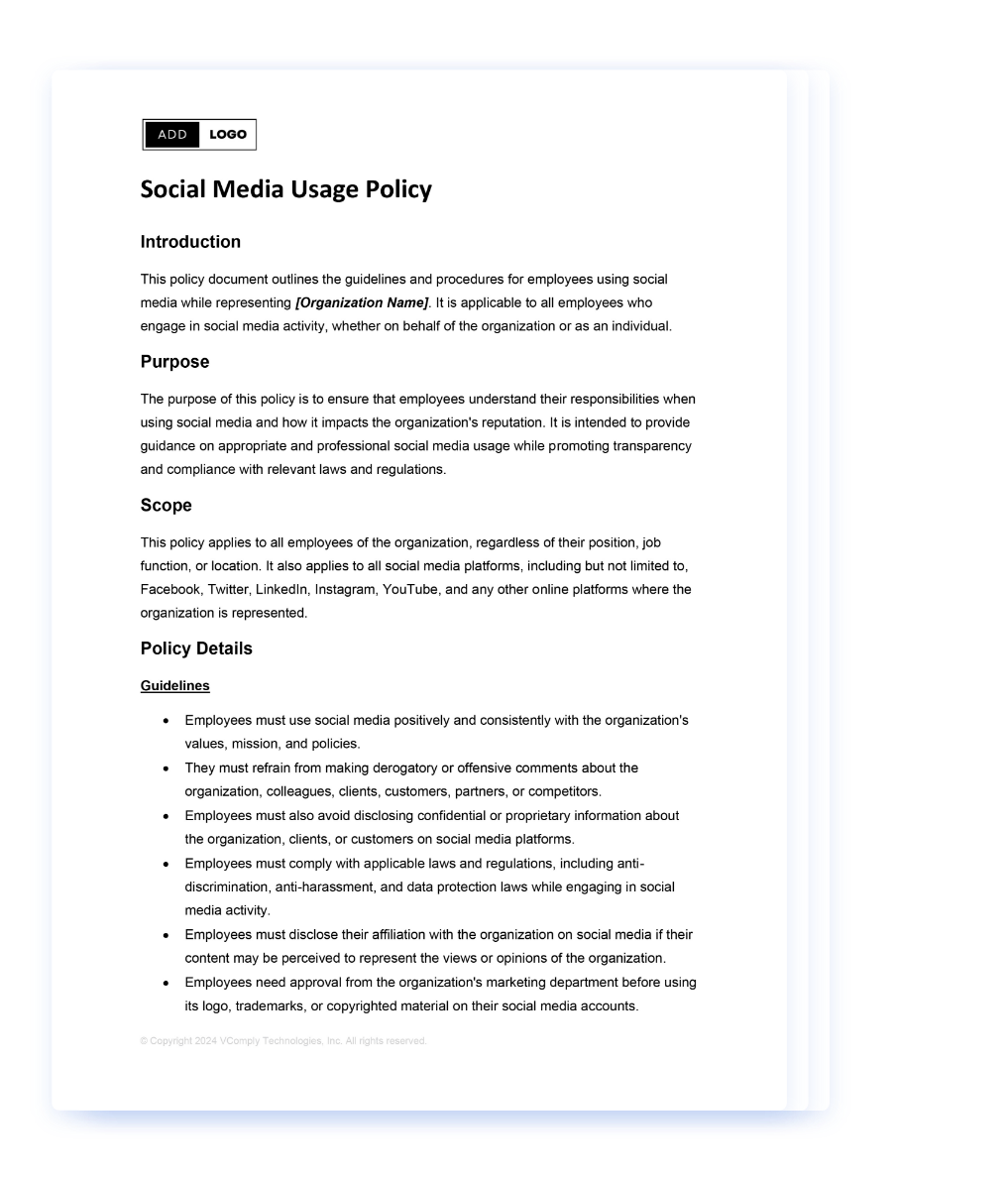
This policy document outlines the guidelines and procedures for employees using social media while representing [Organization Name]. It is applicable to all employees who engage in social media activity, whether on behalf of the organization or as an individual.
Purpose and Scope of the Policy
The purpose of this policy is to ensure that employees understand their responsibilities when using social media and how it impacts the organization’s reputation. It is intended to guide appropriate and professional social media usage while promoting transparency and compliance with relevant laws and regulations.
Scope
This policy applies to all employees of the organization, regardless of their position, job function, or location. It also applies to all social media platforms, including but not limited to, Facebook, Twitter, LinkedIn, Instagram, YouTube, and any other online platforms where the organization is represented.
Roles and Responsibilities of Employees and Departments
Designating specific roles for managing social media activity is crucial for clarity and accountability. The policy should outline which employees or departments have the authority to post on behalf of the company, handle customer inquiries, or respond to potential crises.
By assigning clear responsibilities, the policy ensures that only trained personnel engage in public-facing interactions, reducing the risk of miscommunication or inconsistent messaging. This structure also streamlines workflows and fosters collaboration across departments, making social media management more effective.
Guidelines for Personal and Professional Online Conduct
With the blending of personal and professional identities on social media, it’s essential to set clear guidelines for conduct. The policy should address how employees are expected to conduct themselves online, both personally and as representatives of the company.
This includes respecting privacy, avoiding offensive language, and refraining from discussions that could be divisive or controversial. By defining acceptable behavior, the policy helps employees present themselves professionally and reinforces a positive company image.
- Align with Company Values: Employees should use social media in a way that aligns with the organization’s mission, values, and policies, promoting a positive and professional image.
- Avoid Negative Comments: Employees must refrain from making derogatory, offensive, or harmful remarks about the organization, its employees, clients, customers, partners, or competitors.
- Confidentiality Matters: Do not share confidential, proprietary, or sensitive information related to the organization, its clients, or customers on social media platforms.
- Legal Compliance: Ensure that all online activities adhere to relevant laws, including those related to anti-discrimination, anti-harassment, and data protection.
- Clear Disclosure: If discussing work-related topics, employees must clearly disclose their affiliation with the organization, ensuring there’s no confusion about representing the company’s views.
- Use of Company Branding: Employees must seek prior approval from the marketing or communications department before using company logos, trademarks, or any copyrighted material on personal social media accounts.
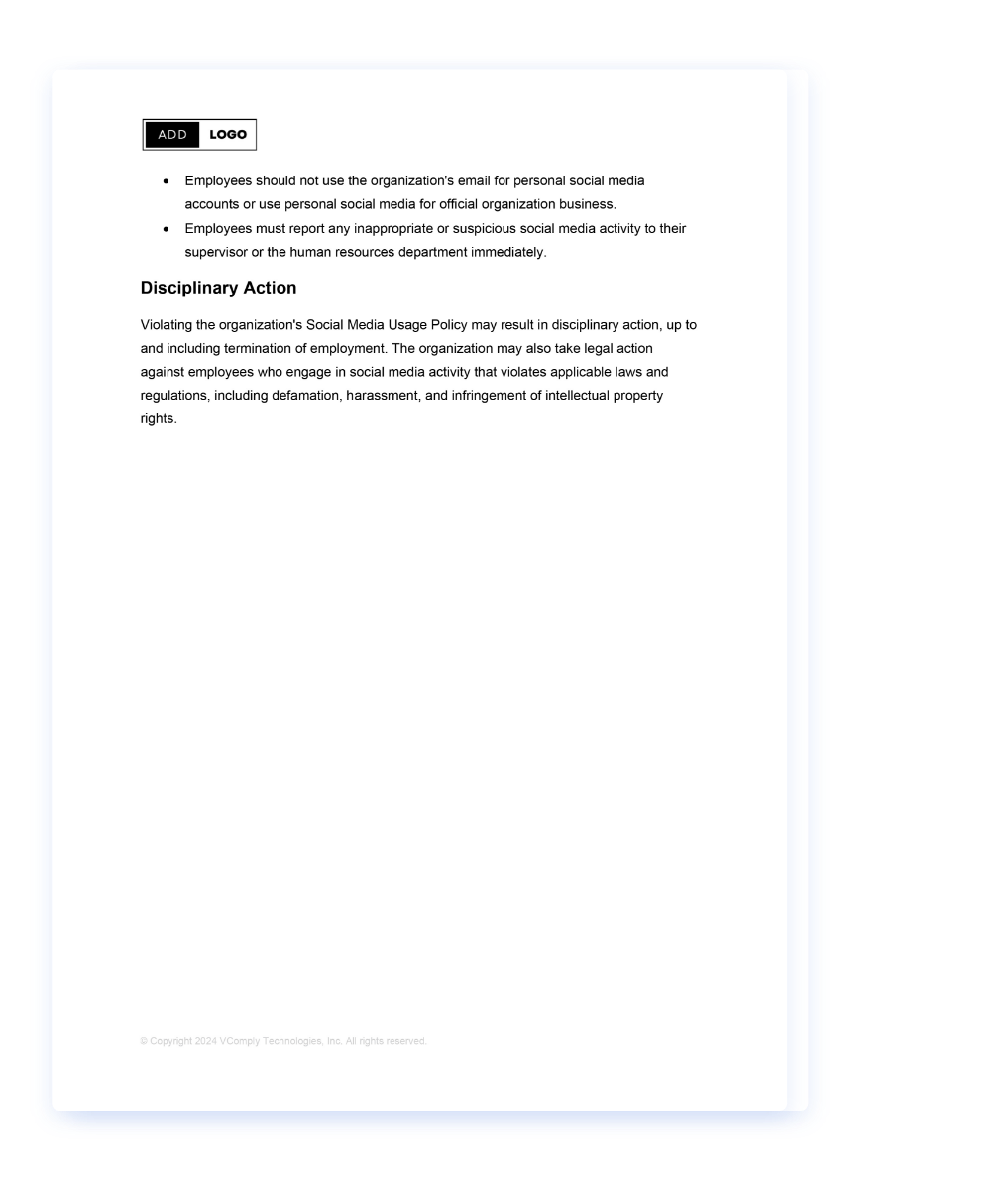
- Separation of Personal and Professional: Personal social media accounts should not be used for official company business, and company email accounts should not be linked to personal social media profiles.
- Report Inappropriate Content: Employees must immediately report any inappropriate, harmful, or suspicious social media activity related to the company, colleagues, or clients to their supervisor or the HR department.
These guidelines are designed to protect both the employee and the organization while ensuring a professional, respectful, and legally compliant online presence.
Security Protocols and Guidelines
Security is paramount in today’s digital landscape, and social media accounts are no exception. This section should include best practices for password protection, multi-factor authentication, and account access protocols to prevent unauthorized entry.
Employees should be trained on the importance of protecting company accounts and reminded not to share credentials. Clear security protocols help protect against cyber threats and data breaches, ensuring that company and customer information remains secure.
Acceptable and Unacceptable Content
Defining what constitutes acceptable and unacceptable content is fundamental to a social media policy. Acceptable content may include informative posts, product updates, and customer engagement, whereas unacceptable content could range from unverified information and political comments to offensive language or hate speech.
By offering examples of both, the policy sets a standard for online interactions, helping employees make better decisions about what to share and reducing the risk of inappropriate content being posted.
Privacy Expectations
Employees must understand privacy expectations when posting on social media. The policy should clarify what types of information should remain confidential, including client data, project details, or sensitive company information.
Setting these boundaries reinforces the importance of respecting data privacy and helps employees avoid posting information that could result in breaches of confidentiality or compliance issues. Clear privacy expectations contribute to a safe, trusted environment for all stakeholders.
Disciplinary Measures for Policy Violations
A social media policy is most effective when there are consequences for non-compliance. The policy should outline potential disciplinary actions for violations, ranging from warnings to suspension or termination, depending on the severity of the infraction.
By clearly communicating the repercussions of misconduct, the company underscores the importance of adhering to the policy, deterring potential violations, and maintaining a professional, respectful online presence.
Also Read: Key Features and Benefits of Policy Center Software

What Should a Social Media Policy Include?
A social media policy should include:
- Purpose and scope: Who the policy applies to and when it applies.
- Authorized users: Who can post from official company accounts.
- Personal account rules: How employees should behave when mentioning the company online.
- Confidentiality rules: What company, customer, employee, financial, or legal information cannot be shared.
- Brand guidelines: Approved tone, language, logos, visuals, and messaging standards.
- Legal and regulatory requirements: Rules for privacy, intellectual property, advertising, disclosures, and industry-specific compliance.
- Security guidelines: How to avoid phishing, fake accounts, account misuse, and unsafe links.
- Crisis response process: Who employees should notify before responding to complaints, negative posts, media questions, or public issues.
- Disciplinary consequences: What happens if the policy is violated.
- Review schedule: How often the policy should be reviewed and updated.
Best Practices to Create and Launch a Social Media Policy
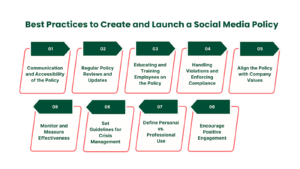
To launch a successful social media usage policy, it’s essential to follow a structured approach. This includes identifying the primary objectives, collaborating with departments, and drafting a clear, comprehensive document.
Communicating the new policy and guidelines for compliance to all employees ensures that everyone understands their role and responsibility in upholding company standards.
Communication and Accessibility of the Policy
A social media usage policy should be accessible to all employees, ideally hosted on the company intranet or internal communications platform. Regular reminders and updates help ensure that employees remain aware of the policy’s contents and their responsibilities.
When employees can easily access and reference the policy, it becomes part of their routine, reinforcing responsible social media practices.
Regular Policy Reviews and Updates
Social media and digital landscapes change rapidly, requiring regular reviews and updates to the policy. The company should assess the policy periodically to ensure it remains relevant and effective in addressing emerging trends, risks, or new platforms.
Involving key stakeholders in these reviews also ensures that the policy evolves alongside the company’s needs and regulatory changes.
Educating and Training Employees on the Policy
Policy awareness is strengthened through education and training sessions. These can be part of onboarding for new employees and ongoing for existing staff, ensuring everyone understands the policy’s importance and how to follow it.
Training also allows employees to ask questions, gain clarity on complex issues, and reinforce a culture of responsibility and accountability.
Handling Violations and Enforcing Compliance
Effective enforcement mechanisms help reinforce the policy’s importance. Employees should understand that, depending on the severity of the infraction, violations will lead to disciplinary action.
This might range from a verbal warning to more serious consequences. By consistently applying these measures, the company demonstrates its commitment to maintaining high standards and protecting its brand reputation.
Align the Policy with Company Values
Ensure the social media policy reflects the company’s core values, mission, and vision. This alignment helps employees understand the policy’s broader purpose and how it supports the company’s goals.
Encourage Positive Engagement
While the policy should focus on preventing negative behavior, it’s equally important to encourage employees to use social media as a platform for positive engagement. This includes sharing company achievements, community initiatives, or industry insights.
Define Personal vs. Professional Use
Clearly distinguish between personal and professional social media use. Employees should understand the boundaries of when and how they can represent the company, especially on personal accounts, to avoid any potential conflicts of interest.
Set Guidelines for Crisis Management
Outline a process for handling social media crises, such as negative publicity or customer complaints. Employees should know how to escalate issues to the right department, ensuring a coordinated response to protect the company’s reputation.
Monitor and Measure Effectiveness
Implement tools to track and measure the impact of the social media policy. Regularly assess how well the policy is being followed, its effect on the company’s online presence, and any adjustments that might be needed to improve compliance.
Also Read: Top 5 Compliance and Policy Management Software Solutions
FAQs
What is a social media policy?
A social media policy is a company policy that explains how employees should use social media when representing or mentioning the organization online.
Why does a company need a social media policy?
Companies need a social media policy to protect brand reputation, reduce legal and security risks, prevent confidential information from being shared, and guide employees on acceptable online conduct.
What should be included in a social media policy?
A social media policy should include rules for official accounts, personal posts, confidentiality, brand voice, employee conduct, legal requirements, security, crisis response, and disciplinary action.
Does a social media policy apply to personal accounts?
Yes, it can apply when employees mention the company, discuss work-related matters, share confidential information, or post content that may affect the organization’s reputation.
How often should a social media policy be updated?
A social media policy should be reviewed at least once a year or whenever there are changes in social platforms, privacy laws, industry regulations, brand standards, or internal communication rules.
Final Thoughts
A well-crafted social media policy serves as a crucial framework that empowers employees to engage positively while protecting your organization’s reputation. By clearly defining expectations and providing guidance on responsible online behavior, companies can mitigate risks and foster a culture of accountability.
As social media continues to evolve, regular updates and training will ensure that your team remains informed and prepared to navigate the digital landscape effectively.
Investing in a comprehensive social media policy safeguards your brand and enhances employee confidence in representing your organization online.
By promoting responsible engagement, organizations can harness social media’s power as a force for good, driving positive interactions and strengthening their presence in the digital sphere.
Don’t let compliance slip through the cracks. With VComply’s compliance solutions, create a reliable framework for responsible and legally sound social media management. Start your 21-day free trial today to see VComply in action!
Check out other policy templates
Employee Code of Conduct Policy
A Code of Conduct Policy is the foundation of an organization’s ethical framework, and an Employee Code of Conduct Policy Template offers a clear and structured approach to defining professional standards and behavioral expectations.
Remote Work Policy
Remote work, also known as telecommuting, has transformed from a niche practice into a mainstream workforce strategy.
Sick Leave Policy
Creating a supportive work environment that values both employee health and business productivity starts with one essential element: a clear sick leave policy.
Social Media Policy
For your own record keeping, we’ll also send a copy of the policy to your email.