

Workplace Compliance Guide for 2026 Regulatory Change
Workplace compliance has become more complex and far less forgiving as regulatory expectations continue to expand. What once passed as minor oversights now carries real operational, legal, and reputational consequences for employers.

Even a single missed policy update can trigger inspections, enforcement actions, or class-action claims that disrupt business continuity.
In 2024 alone, OSHA issued more than 28,000 safety citations, with penalties for willful or repeat violations exceeding $165,126 per case. Early federal data for fiscal year 2025 already shows over 23,500 citations across the most frequently cited standards. As enforcement tightens across workplace safety, AI hiring tools, wage transparency, DEI, and data privacy, maintaining “business as usual” compliance is no longer sustainable.
This guide highlights the most important regulatory changes, the highest-risk areas, and clear, practical actions organizations can take to protect their workforce and operations without overloading HR teams.
Key Takeaways
- Workplace compliance in 2026 requires continuous monitoring, clear ownership, and documented execution, not one-time policies or annual audits.
- A strong compliance program combines clear policies, role-based accountability, training, monitoring, and structured issue handling.
- Non-compliance should be addressed quickly through standard investigations, corrective actions, and root-cause fixes to prevent recurrence.
- Technology plays a critical role in scaling compliance; manual tracking increases risk and inconsistency.
- VComply ComplianceOps, supported by PolicyOps and RiskOps, enables end-to-end, audit-ready workplace compliance from a single platform.
What Is Workplace Compliance?
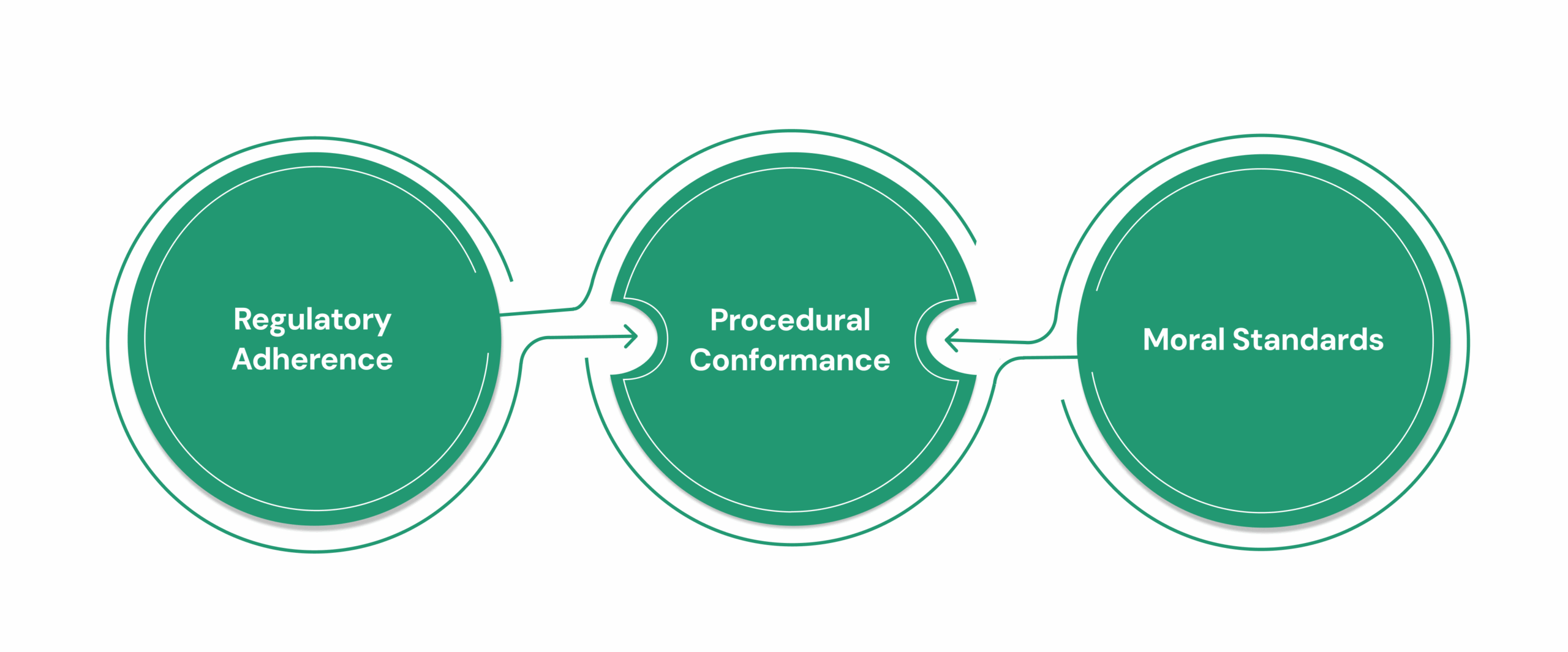
Workplace compliance refers to the adherence of an organization and its employees to all applicable laws, regulations, internal policies, and ethical standards that govern how work is conducted.
It’s not limited to avoiding legal trouble; it’s about creating a safe, fair, and efficient work environment that aligns with both external regulations and internal corporate values.
The main aspects of workplace compliance are:
1. Legal and Regulatory Adherence
Ensures the organization follows all applicable laws and regulations, protecting it from fines and legal penalties. Examples include labor laws, safety standards, environmental rules, and data privacy laws.
2. Policy and Procedural Conformance
Focuses on following internal company policies and standard procedures to maintain consistent behavior and reduce operational errors.
3. Ethical and Moral Standards
Encourages integrity, fairness, and accountability in daily workplace actions, including honest reporting, responsible resource use, and respectful conduct.
Now that we’ve defined what workplace compliance means, the next step is understanding where these requirements come from and how they apply inside your organization.
Internal vs. External Workplace Compliance
Workplace compliance operates on two distinct but connected levels: external obligations imposed by law and internal rules set by the organization. Understanding the difference helps businesses stay compliant without confusion or overlap.
Here’s a detailed explanation of both the compliance workflows:
External Workplace Compliance
External compliance refers to laws, regulations, and standards enforced by government authorities or regulatory bodies. These requirements are mandatory and non-negotiable.
External compliance typically covers:
- Employment and labor laws (wages, working hours, worker classification)
- Workplace health and safety regulations
- Data protection and employee privacy laws
- Industry-specific regulations
Failure to meet external compliance can lead to fines, legal action, audits, or business restrictions.
Internal Workplace Compliance
Internal compliance focuses on rules and policies created by the organization to guide employee behavior and operations. While not legally imposed, these policies are enforceable within the company.
Internal compliance includes:
- Codes of conduct and ethics policies
- Anti-harassment and workplace behavior standards
- IT, data access, and security policies
- Internal approval processes and SOPs
Strong internal compliance helps organizations prevent violations before they become legal issues.
Also Read: Manufacturing OSHA Compliance: Ensure Workplace Safety Today
Knowing what compliance requires is one thing; building a system that actually enforces it every day is where most organizations struggle.
Essential Components Of A Corporate Compliance Program
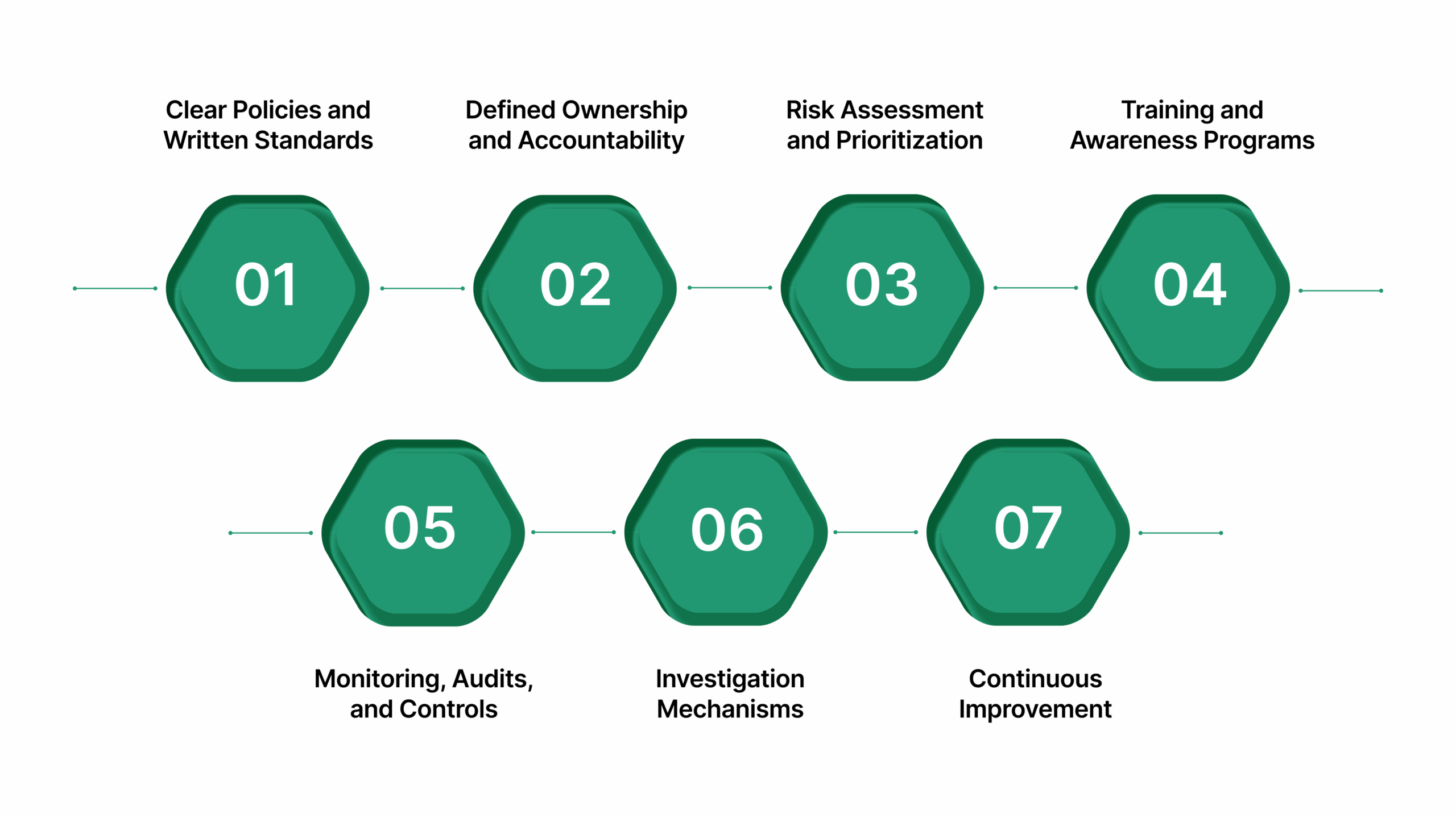
A corporate compliance program is the operating system behind workplace compliance. It defines how rules are translated into action, how risks are identified early, and how issues are handled before they escalate.
The U.S. Department of Justice (DOJ) consistently emphasizes a few core components when assessing whether a program is well designed, properly resourced, and effective in real life, not just on paper.
Below are the core components every effective compliance program must have.
1. Clear Policies and Written Standards
Policies are the foundation of any compliance program. They clearly explain what is expected, what is allowed, and what is not.
- A well-written code of conduct sets behavior standards for everyone
- Workplace policies cover areas like safety, data use, and professional conduct
- Role-specific procedures help employees follow rules that apply directly to their jobs
When policies are clear and accessible, employees don’t have to guess what “compliance” means.
2. Defined Ownership and Accountability
Compliance only works when responsibility is clearly assigned.
- Compliance owners or committees oversee implementation and updates
- HR, legal, managers, and leadership each have defined responsibilities
- Clear escalation paths ensure issues are addressed quickly and correctly
When ownership is defined, compliance doesn’t fall through the cracks.
3. Risk Assessment and Prioritization
Not all compliance risks are equal, and treating them that way wastes time.
- Identify where legal, operational, or reputational risks exist
- Evaluate how likely each risk is and how serious the impact could be
- Focus first on areas with the highest potential damage
This approach helps organizations act proactively instead of reacting after violations occur.
4. Training and Awareness Programs
Policies are ineffective if employees don’t understand them.
- Compliance training should start during onboarding and continue regularly
- Managers and high-risk roles need deeper, role-specific training
- Real-world examples work better than legal or technical language
Good training helps employees recognize risks and make compliant decisions daily.
5. Monitoring, Audits, and Controls
Compliance needs ongoing attention, not one-time checks.
- Regular audits help detect gaps early
- Tracking tools and reminders keep tasks and deadlines visible
- Proper documentation proves compliance during audits or investigations
Monitoring ensures small issues are fixed before they turn into serious problems.
6. Reporting and Investigation Mechanisms
Employees must feel safe speaking up.
- Anonymous reporting channels encourage early issue reporting
- Clear investigation processes ensure fairness and consistency
- Strong anti-retaliation measures build trust in the system
A transparent reporting process helps organizations uncover problems they might otherwise miss.
7. Corrective Action and Continuous Improvement
No compliance program is perfect, and that’s expected.
- Violations should lead to timely corrective action
- Root-cause analysis helps prevent repeat issues
- Policies and processes must be updated as regulations change
Continuous improvement keeps the compliance program effective and relevant.
A compliance program is only worth the effort if it delivers real value; this is where workplace compliance proves why it’s not optional.
Why Is Workplace Compliance Important?
Workplace compliance protects an organization from legal exposure, operational disruption, and loss of trust. But beyond avoiding penalties, it creates a stable environment where employees know the rules, managers act consistently, and leadership can make confident decisions.
Here are a few more reasons:
1. Prevents Legal and Financial Risk
Workplace compliance protects organizations from serious legal and financial exposure. When laws related to labor, safety, or data protection are violated, the result is often fines, lawsuits, regulatory audits, or operational restrictions that disrupt business continuity.
Weak or inconsistent documentation makes matters worse. During disputes or inspections, the inability to prove compliance can significantly increase penalties and long-term reputational damage. A strong compliance framework reduces uncertainty and acts as a safeguard against avoidable risk.
2. Creates Consistency Across the Organization
Compliance brings order to how decisions are made and enforced across teams. Instead of relying on individual judgment, the organization operates under clearly defined rules.
This consistency shows up in everyday operations:
- Managers follow standardized procedures
- Employees receive equal and fair treatment
- Decisions are based on documented policies, not personal opinion
As a result, internal conflicts decrease, and governance becomes stronger and more predictable.
3. Builds Employee Trust and Workplace Safety
Employees are more engaged when they know the workplace is fair, transparent, and safe. Compliance helps remove uncertainty by clearly defining expectations and protections.
A compliant workplace:
- Reduces confusion through clear policies
- Lowers incidents by enforcing safety standards
- Encourages transparency through trusted reporting mechanisms
When employees feel protected and heard, trust grows, and so does accountability.
4. Supports Business Growth and Stability
Compliance is what allows organizations to grow without losing control. Companies with mature compliance systems can expand operations, hire across regions, and adapt to regulatory changes without disruption.
Key benefits include:
- Easier entry into new markets or jurisdictions
- Faster response to legal or regulatory updates
- Increased credibility with partners, clients, and investors
Instead of slowing growth, compliance creates a stable foundation for it.
5. Enables Faster and Better Decision-Making
Clear compliance rules remove hesitation from daily decisions. Managers know what actions are allowed, and leadership can rely on accurate records when making strategic choices.
This leads to:
- Fewer delays caused by uncertainty
- Faster issue resolution through defined processes
- Consistent decisions backed by documentation
Rather than adding bureaucracy, compliance provides clarity and confidence at every level.
Now that we’ve covered why workplace compliance matters, let’s have a look at important regulations which deserve your immediate attention as enforcement tightens toward 2026.
Critical Workplace Compliance Regulations Employers Must Prepare for in 2026
Workplace compliance is not governed by a single law. It spans multiple regulatory areas, each enforced by different agencies, each carrying its own risks. For 2026, employers must be especially vigilant across the following core compliance domains:
1. Anti-Discrimination & Anti-Harassment Compliance
U.S. federal anti-discrimination laws enforced by the EEOC prohibit employment discrimination based on race, color, religion, sex, national origin, age, disability, and genetic information.
According to EEOC data, tens of thousands of discrimination charges are filed each year, with retaliation cited in more than 50% of all charges, making it the most frequently alleged violation.
Why it matters in 2026
EEOC enforcement increasingly targets how employers document, investigate, and resolve discrimination and harassment complaints. Delayed investigations, inconsistent handling, or weak retaliation controls can trigger audits and litigation even when claims are unsubstantiated.
Manage anti-harassment policies, employee acknowledgments, and complaint investigations in one audit-ready system with VComply PolicyOps.
2. Wage & Hour Compliance (FLSA)
The Fair Labor Standards Act (FLSA) sets federal requirements for minimum wage, overtime pay, recordkeeping, and youth employment, enforced by the U.S. Department of Labor (DOL).
Why it matters in 2026
DOL enforcement is increasingly focused on misclassification, exempt status errors, and incomplete time records. Poor documentation or outdated pay practices can now trigger back-pay liability, liquidated damages, and civil penalties.
3. Workplace Health & Safety (OSHA)
The Occupational Safety and Health Act requires employers to provide a workplace free from recognized hazards and to comply with OSHA safety standards and recordkeeping rules.
OSHA continues to issue thousands of citations annually, with willful or repeat violations carrying penalties exceeding $165,000 per violation under current federal limits.
Why it matters in 2026
OSHA inspections increasingly assess written safety programs, hazard assessments, and incident logs. Missing safety documentation or inconsistent corrective actions now significantly increase enforcement exposure.
4. Employee Classification & Independent Contractor Rules
Federal law requires workers to be correctly classified as employees or independent contractors under wage, tax, and benefits regulations.
Misclassification remains a top enforcement priority across federal agencies, as it directly impacts overtime pay, payroll taxes, and unemployment insurance eligibility.
Why it matters in 2026
Stricter scrutiny of contractor arrangements means classification errors can now cascade across wage claims, tax penalties, and benefits violations, increasing cumulative compliance risk.
5. Immigration & Employment Eligibility (I-9 Compliance)
Federal immigration law requires employers to verify employee identity and work authorization using Form I-9 for all hires.
U.S. Immigration and Customs Enforcement (ICE) regularly conducts I-9 audits, with civil penalties issued for paperwork violations even when workers are legally authorized.
Why it matters in 2026
ICE enforcement emphasizes audit readiness, retention accuracy, and timely corrections. Incomplete or improperly stored I-9s can result in fines regardless of intent.
Ensure fairness and EEOC compliance with VComply’s equal employment opportunity policy template.
Understanding why compliance matters is important, but mastering it requires disciplined, repeatable practices that work at every level of the organization.
10 Best Practices To Master Workplace Compliance
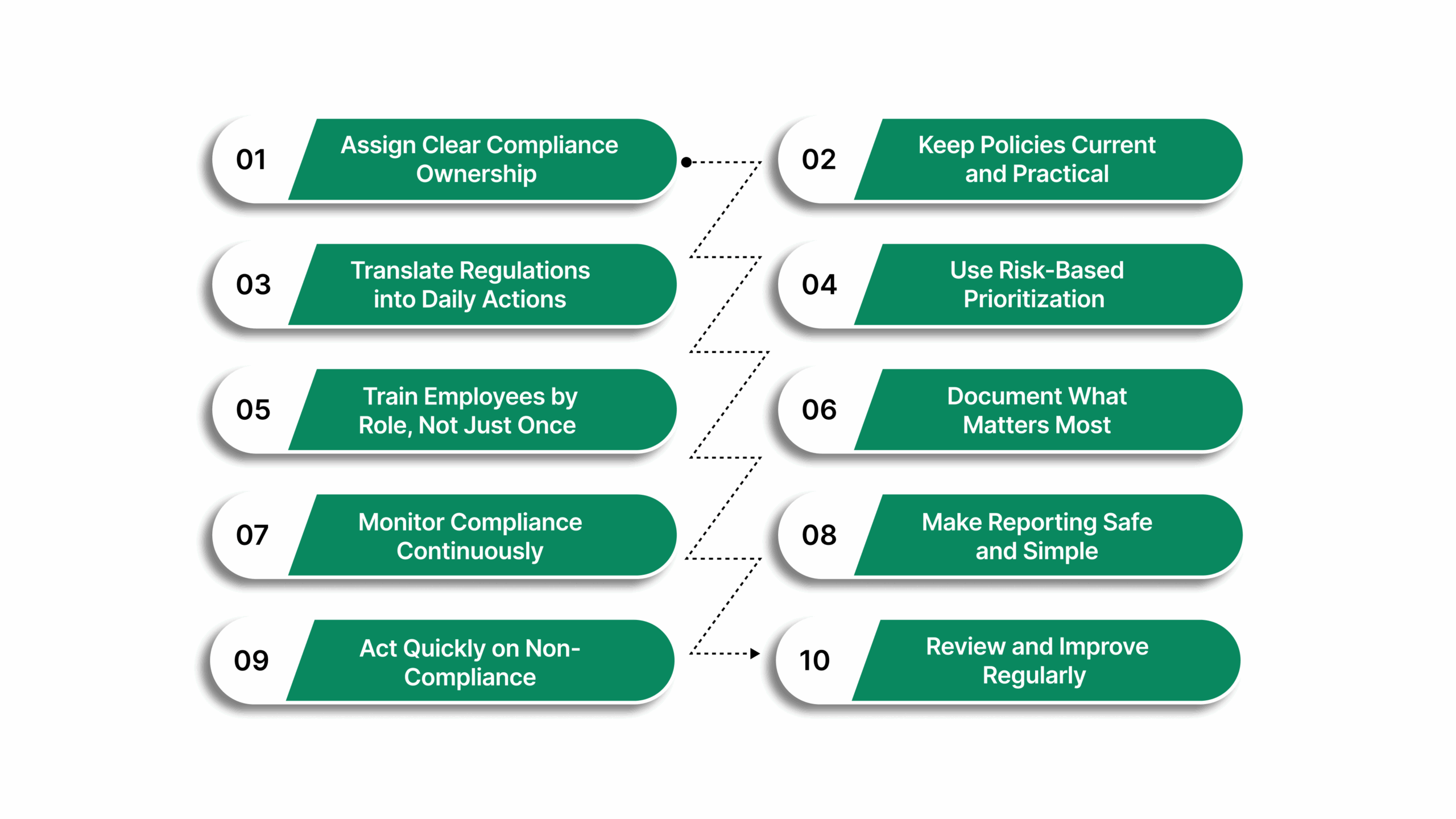
Workplace compliance doesn’t succeed through policies alone. It requires consistent execution, ownership, and visibility. The following best practices focus on how high-performing organizations manage compliance day-to-day.
1. Assign Clear Compliance Ownership
Compliance should never be “everyone’s job” without clarity. Each regulation, policy, or risk area must have a clearly defined owner who is responsible for oversight, updates, and issue resolution. This accountability prevents delays and confusion when compliance actions are required.
2. Keep Policies Current and Practical
Policies quickly lose value when they are outdated or hard to follow. Organizations should review and update them regularly while keeping language simple and actionable.
- Schedule policy reviews around regulatory updates
- Remove legal jargon where possible
- Make policies easily accessible to employees
3. Translate Regulations into Daily Actions
Compliance fails when rules stay theoretical. Employees need to know what compliance looks like in their daily work.
- Map regulations to specific roles and tasks
- Use checklists or SOPs for high-risk activities
- Clarify acceptable vs non-compliant behavior
This approach turns legal requirements into practical guidance.
4. Use Risk-Based Prioritization
Not every compliance risk deserves equal attention. Organizations should focus resources on areas with the highest likelihood and impact of failure. Risk-based prioritization helps teams prevent serious issues instead of reacting after damage is done.
5. Train Employees by Role, Not Just Once
One-time training is rarely effective. Compliance education should evolve with roles and responsibilities.
- Mandatory training during onboarding
- Role-specific sessions for managers and sensitive functions
- Scenario-based learning instead of theory
6. Document What Matters Most
Documentation is a critical but often overlooked part of compliance. Training records, policy acknowledgments, audits, and approvals must be recorded and stored centrally. Without evidence, even compliant actions can fail during audits or disputes.
7. Monitor Compliance Continuously
Compliance needs ongoing visibility, not annual reviews.
- Regular internal checks and reviews
- Automated reminders for deadlines
- Tracking unresolved actions
Continuous monitoring helps catch issues early.
8. Make Reporting Safe and Simple
Employees are more likely to report issues when the process feels safe and easy.
- Offer anonymous reporting options
- Communicate zero tolerance for retaliation
- Respond consistently to reports
Trust in reporting systems is essential for early risk detection.
9. Act Quickly on Non-Compliance
Delays in addressing non-compliance weaken the entire program. Issues should be investigated promptly, corrective actions applied fairly, and root causes addressed to prevent recurrence.
10. Review and Improve Regularly
Compliance is not static. Programs must evolve as regulations and operations change.
- Analyze audit and incident trends
- Update controls and training
- Adjust processes based on lessons learned
Check out this Compliance Checklist for a seamless and successful compliance process.
Even the strongest compliance programs will face issues; what truly matters is how quickly and effectively non-compliance is handled.
How To Deal With Non-Compliance In The Workplace?
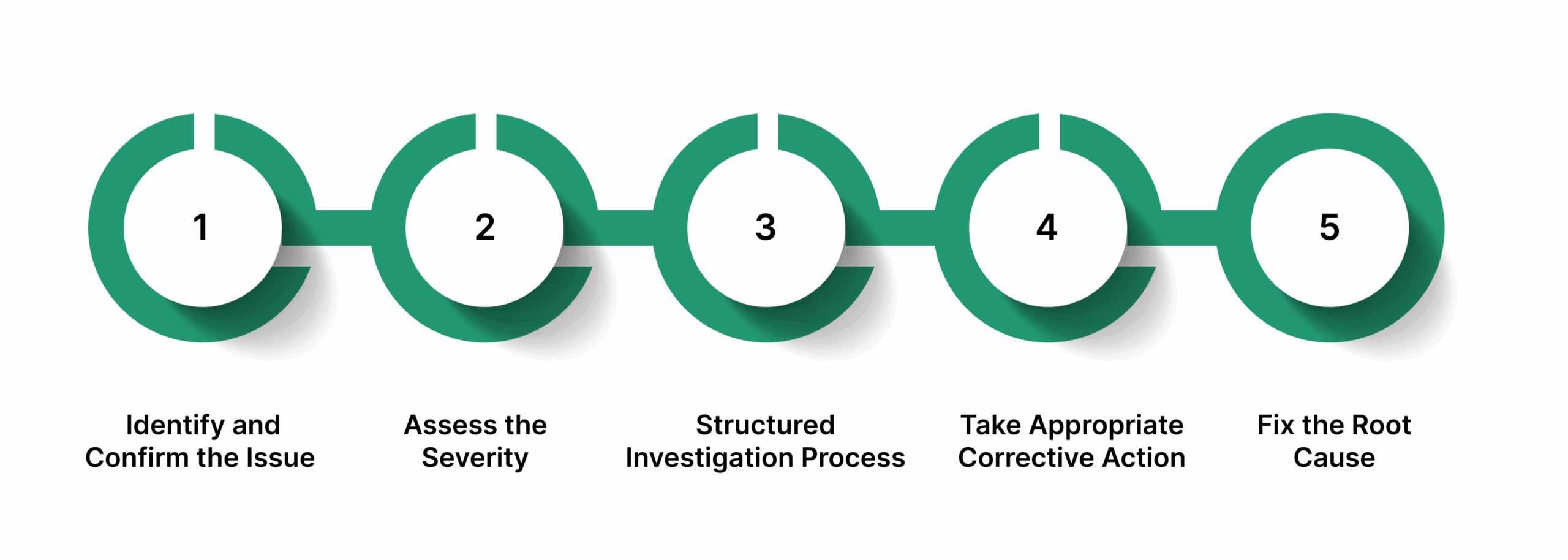
Non-compliance should never be ignored or handled informally. A structured, fair, and documented response helps contain risk, protect employees, and prevent repeat violations.
Below are mentioned issues to deal with non-compliance:
1. Identify and Confirm the Issue
The first step is to identify what went wrong clearly. This may come from audits, employee reports, system alerts, or external inspections. Before acting, confirm the facts and understand which rule or regulation was breached, who was involved, and the potential impact.
2. Assess the Severity and Risk Level
Not all non-compliance carries the same risk. Classifying the issue helps determine the right response.
- Was the violation accidental or intentional?
- Does it expose the organization to legal or safety risk?
- Is it a repeat issue or a first-time occurrence?
This assessment guides the urgency and level of escalation required.
3. Follow a Structured Investigation Process
Investigations should be consistent and unbiased.
- Assign trained investigators
- Collect documents, logs, and statements
- Maintain confidentiality throughout the process
A standardized approach ensures fairness and defensibility.
4. Take Appropriate Corrective Action
Once the facts are clear, corrective action must follow. This may include retraining, process changes, disciplinary measures, or policy updates. Actions should be proportionate, consistent, and documented to avoid claims of unfair treatment.
5. Fix the Root Cause, Not Just the Symptom
Stopping the immediate issue isn’t enough. Prevent future violations by addressing the underlying cause.
- Gaps in training or awareness
- Unclear policies or procedures
- System or process failures
This step is critical for long-term compliance.
Also read: Impact of Non-compliance on Organizations
Handling and monitoring compliance manually gets harder as organizations grow; this is where a centralized compliance platform becomes essential.
How Vcomply Supports End-To-End Workplace Compliance?
VComply is a cloud-based GRC and Compliance Operations platform designed to help organizations manage workplace compliance in a structured, auditable, and continuous way. It brings policies, compliance tasks, risks, and reporting into one centralized system, replacing fragmented tools and manual tracking.
Here’s how VComply helps in workplace compliance:
- Centralizes policies and controls so employees always access the latest requirements
- Assigns clear ownership to compliance tasks with deadlines and escalation
- Tracks compliance activities in real time, reducing missed actions
- Manages incidents and non-compliance with structured workflows and audit trails
- Maintains evidence and reports to stay audit-ready at all times.
See how VComply ComplianceOps simplifies workplace compliance by centralizing obligations, ownership, tracking, and audit readiness in one system.
Start your 21-day free trial of ComplianceOps and experience automated workplace compliance management.
Final Thoughts
Workplace compliance in 2026 is no longer about reacting to audits or maintaining static policies. It requires continuous oversight, clear ownership, and real-time visibility across regulations, people, and processes.
Organizations that treat compliance as an operational function, not an annual exercise, are better equipped to reduce risk, protect employees, and scale with confidence.
By combining structured practices with the right technology, teams can move from fragmented compliance efforts to a consistent, auditable, and proactive compliance program that keeps pace with regulatory change.
Take control of workplace compliance with VComply ComplianceOps. Book a demo today
FAQs
Workplace compliance refers to following labor laws, safety regulations, data protection rules, and internal policies that govern how employees are managed and protected at work.
Workplace compliance is a shared responsibility, typically led by compliance, HR, and legal teams, with managers accountable for day-to-day execution within their teams.
Key risks include labor law violations, workplace safety failures, data privacy breaches, inadequate documentation, and poor handling of employee complaints or incidents.
Organizations should use centralized tracking, assign clear ownership, automate reminders, conduct regular reviews, and maintain audit-ready documentation.
VComply ComplianceOps is the primary solution for managing workplace compliance, supported by PolicyOps for policy control and RiskOps for risk-based prioritization.