

Top 10 Integrated GRC and risk software
As regulatory scope expands and operational complexity increases, many organizations find their governance, risk, and compliance programs constrained by fragmented tools and disconnected processes. Compliance obligations are tracked in one system, risk registers in another, audit evidence in shared drives, and executive reporting stitched together manually.
The result is limited visibility, inconsistent controls, and delayed decision-making at precisely the moments when clarity matters most.
Integrated GRC and risk software addresses these gaps by consolidating compliance, risk, audit, and governance workflows into one operating model. Instead of reacting to audits or chasing evidence, organizations gain continuous insight into control effectiveness, risk exposure, and remediation progress across business units and frameworks.
In this, we will guide you through the top integrated GRC and risk software platforms, compare their strengths, and help you choose the right one for your organization.
Key Takeaways
- Integrated GRC software helps organizations connect compliance, risk, audit, and governance activities into one system to improve transparency and governance.
- The right choice of best GRC software depends on organizational size, regulatory complexity, and operational readiness.
- High-performing GRC systems differ in strengths, from enterprise analytics and audit automation to flexible, no-code workflows.
- Comparison tables and buyer criteria assist executives in evaluating top GRC software options quickly and confidently.
- Choosing a scalable, easy-to-adopt platform like VComply supports ongoing regulatory assurance.
What Is Integrated GRC and Risk Software? Why Integrated GRC Matters for Organizations
Integrated GRC and risk software brings governance, risk management, and compliance together in one unified system. It replaces fragmented tools, manual spreadsheets, and disjointed reports with connected workflows that help you see, respond to, and manage risks and compliance requirements across your organization in real time.
Below are the key reasons integrated GRC matters for modern organizations, especially in the US regulatory and operational scene:
- End-to-End Governance Visibility: Integrated platforms break down silos between risk, compliance, audit, and governance data, providing a unified data repository that drives strategic decision-making at the executive level.
- Consistent Regulatory Alignment: By unifying frameworks and controls, integrated GRC software helps organizations stay compliant with evolving requirements such as HIPAA, SOX, and data privacy standards, all without duplicative effort.
- Risk Mitigation: Instead of reacting to incidents or audits, an integrated system enables real-time risk identification, prioritization, and mitigation aligned with business objectives.
- Improved Executive Decision Support: Real-time dashboards and consolidated insights empower US leaders to make informed strategic choices that balance risk tolerance and growth goals.
- Cost Reduction: Automation of recurring tasks, like control mapping and evidence reporting, reduces redundancies, saves time, and optimizes resources across departments.
Also Read: Understanding the Purpose of a Policy Summary
Now, let’s have a look at the step-by-step guide to buy integrated GRC and risk software.
Step-by-Step Buying Guide for Integrated GRC and Risk Software
Selecting the right integrated GRC and risk platform requires more than comparing features; it’s about finding a solution that fits your organization’s operational complexity, compliance obligations, and risk management goals.
Follow these steps to make a confident choice:
Step 1: Define Your Governance, Risk, and Compliance Scope
Identify which functions the platform needs to cover: compliance tracking, risk assessment, audit management, policy lifecycle, and incident handling. Determine which regulatory frameworks (e.g., SOX, HIPAA, ISO) your organization must comply with.
Step 2: Map Current Processes and Pain Points
Document how your team currently handles risk, compliance, audit, and policy management. Highlight inefficiencies such as siloed tools, manual spreadsheets, or fragmented reporting that an integrated platform should address.
Step 3: Prioritize Key Features
List the features that will drive the most impact. Typical priorities include:
- Centralized dashboards for risk visibility
- Automated policy lifecycle and attestation
- Incident and case management
- Multi-framework compliance mapping
- Audit readiness and evidence management
- Configurable workflows and risk registers
Step 4: Evaluate Integration Capabilities
Ensure the platform can connect with your existing IT, HR, finance, and security systems. Smooth integration reduces duplicate data entry, improves reporting accuracy, and supports automated evidence collection.
Step 5: Consider Scalability and Flexibility
Assess whether the software can grow with your organization. Look for customizable workflows, modular architecture, and multi-entity or multi-jurisdiction support to accommodate evolving regulatory demands.
Step 6: Review Security and Support
Verify enterprise-grade security features such as encryption, access controls, and audit logs. Evaluate vendor support, training resources, and implementation assistance to ensure smooth adoption.
Step 7: Request Demos and Trials
Experience the software firsthand through demos or free trials. Focus on usability, dashboard clarity, and how easily your team can perform compliance, risk, and audit tasks within the platform.
Step 8: Compare Pricing and Licensing Models
Check tiered pricing, module costs, and user limits. Confirm whether the pricing aligns with your budget and organizational size. Contact vendors for detailed quotes if pricing is not publicly listed.
Step 9: Gather Feedback from Stakeholders
Include input from compliance officers, risk managers, auditors, and IT teams. Their perspective ensures the platform meets operational needs and supports executive reporting requirements.
Step 10: Make an Informed Selection
Weigh the platform’s features, scalability, integration, security, and support against your organization’s priorities. Choose a solution that not only meets current needs but also strengthens continuous governance reliability.
Here’s a closer look at the top GRC software in 2026 and what makes each one stand out for compliance, risk, and audit.
Top 10 Integrated GRC and Risk Software Platforms
Integrated platforms not only reduce manual effort but also improve visibility across risk and compliance functions, enabling proactive decision-making. From AI-driven analytics to no-code workflow automation, these tools cater to diverse organizational needs and sizes.
Selecting the right software requires understanding how features align with organizational priorities, regulatory demands, and operational workflows.
Below is a closer look at the top 10 GRC platforms and what makes each stand out.
1. VComply (Integrated GRCOps Platform)

VComply is a unified GRCOps platform built to help you operationalize governance, risk, and compliance without juggling disconnected tools. Instead of treating compliance and risk as periodic checklists, VComply brings them into your daily workflows so you can assess risks continuously, manage obligations centrally, and maintain clear executive visibility.
Below are key aspects that set VComply apart and make it the top choice for modern compliance and risk teams:
- Unified GRCOps Platform: VComply integrates ComplianceOps, RiskOps, PolicyOps, CaseOps, and Governance workflows into a single platform. This eliminates fragmented point solutions and gives you one source of truth for compliance activities, risk data, policy governance, and issue management across teams.
- Risk Assessment, Register, and Mitigation Management: The RiskOps module supports structured risk assessments, centralized risk registers, and clearly defined mitigation plans. You can identify inherent and residual risks, assign ownership, link controls, and track mitigation progress over time, helping you move from risk identification to measurable risk reduction.
- Real-Time Dashboards & Enterprise Risk Visibility: Interactive dashboards, risk heatmaps, and status views give you real-time insight into compliance posture, risk exposure, overdue actions, and control effectiveness. This makes it easier for leadership to understand where risks exist, which controls are working, and where attention is needed.
- Centralized Evidence, Controls, and Audit Readiness: VComply centralizes evidence collection, control documentation, audit trails, and task histories in one place. This ensures continuous audit readiness and reduces last-minute effort during internal reviews or external audits.
- Automated Workflows, Alerts, and Accountability: Automated notifications and reminders keep assessments, policy reviews, mitigation tasks, and audits on schedule. Clear task ownership and status tracking improve accountability and reduce reliance on manual follow-ups.
- Policy Management & Governance: PolicyOps enables end-to-end policy lifecycle management, from drafting and approvals to version control and employee attestations. Governance workflows ensure policies remain current, traceable, and aligned with regulatory and organizational requirements.
- Framework Mapping & Multi-Compliance Management: VComply supports multiple regulatory frameworks, such as ISO, SOX, HIPAA, and others, within a single environment. You can map controls across frameworks, track obligations, and manage overlapping requirements efficiently.
- Due Diligence & Third-Party Risk Oversight: Built-in due diligence capabilities help you assess third parties, vendors, and partners by linking risk assessments, evidence, and mitigation actions. This allows you to manage third-party risk as part of your broader governance and risk strategy rather than as a standalone process.
- Enterprise-Grade Security & Ongoing Support: The platform is designed with strong security controls, encryption standards, and role-based access. Dedicated support helps you configure, adopt, and scale your GRCOps program as your requirements evolve.
Pricing: Pricing is structured across Starter, Pro (starting at $1000/m), and Enterprise plans. Contact the vendor for detailed pricing based on organizational requirements.
G2 Rating: 4.6/5 on G2 based on verified user reviews, reflecting strong satisfaction with compliance and risk management workflows
Experience a 21-day free trial with VComply to simplify compliance, risk, policy, and case management in one platform, reducing manual work and improving visibility.
2. AuditBoard Connected Risk Platform
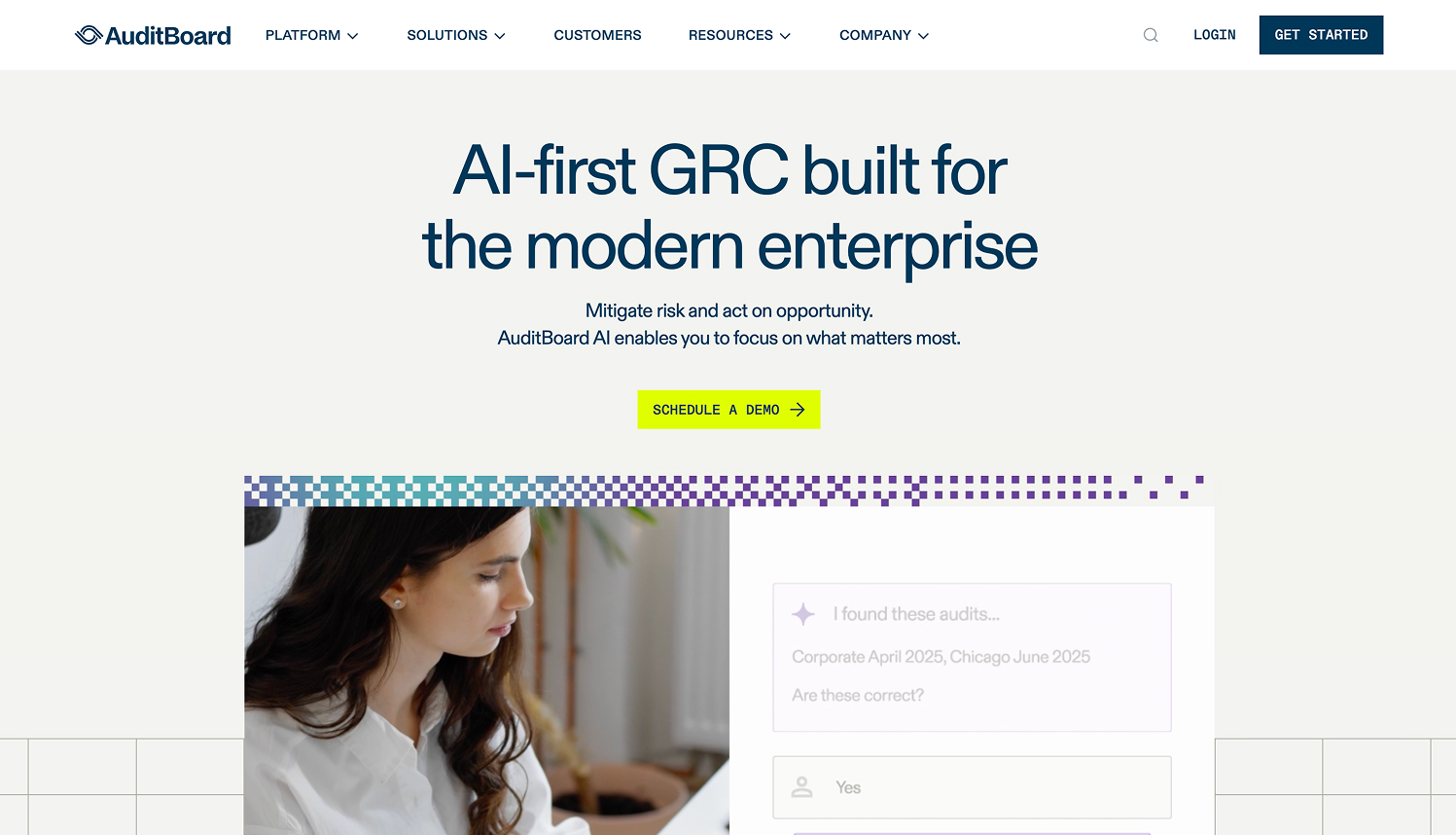
AuditBoard’s Connected Risk Platform is widely recognized for helping organizations bring audit, risk, and compliance teams onto the same page. It is designed for enterprises that want clearer ownership and better coordination across assurance functions without relying on disconnected spreadsheets or legacy tools.
Below are the core capabilities that make AuditBoard a strong option for integrated audit and risk management teams:
- Unified Audit And Risk Collaboration: AuditBoard enables seamless collaboration between internal audit, risk, and compliance teams, ensuring shared visibility into risks, controls, and assurance activities across the organization.
- Advanced Reporting And Executive Dashboards: Customizable dashboards and visual reports help translate complex risk and audit data into clear insights for leadership, supporting faster and more confident decision-making.
- Strong Internal Audit Management: The platform excels at audit planning, workpaper management, issue tracking, and remediation follow-up, making it especially valuable for audit-led GRC programs.
- Enterprise Risk Management Support: AuditBoard allows teams to document, assess, and monitor enterprise risks, aligning them with strategic objectives and helping organizations prioritize what matters most.
- Workflow-Driven Issue Tracking: Built-in workflows streamline the identification, assignment, and resolution of audit findings and risk issues, improving accountability across business units.
- Scalable For Large Organizations: Designed with complex enterprises in mind, AuditBoard supports multiple departments, business units, and assurance functions without sacrificing performance or clarity.
Pricing: Contact vendor for pricing (no public pricing tiers; typical enterprise spend often ranges from about $20,000–$88,000+ per year, depending on modules and scale).
G2 Rating: 4.7/5 on G2 based on user satisfaction and verified reviews.
Demo available on request via vendor sales; no publicly listed free trial.
AuditBoard is best suited for organizations where internal audit and risk management play a central role in governance and where leadership expects structured reporting and strong assurance alignment.
3. ServiceNow Governance, Risk & Compliance
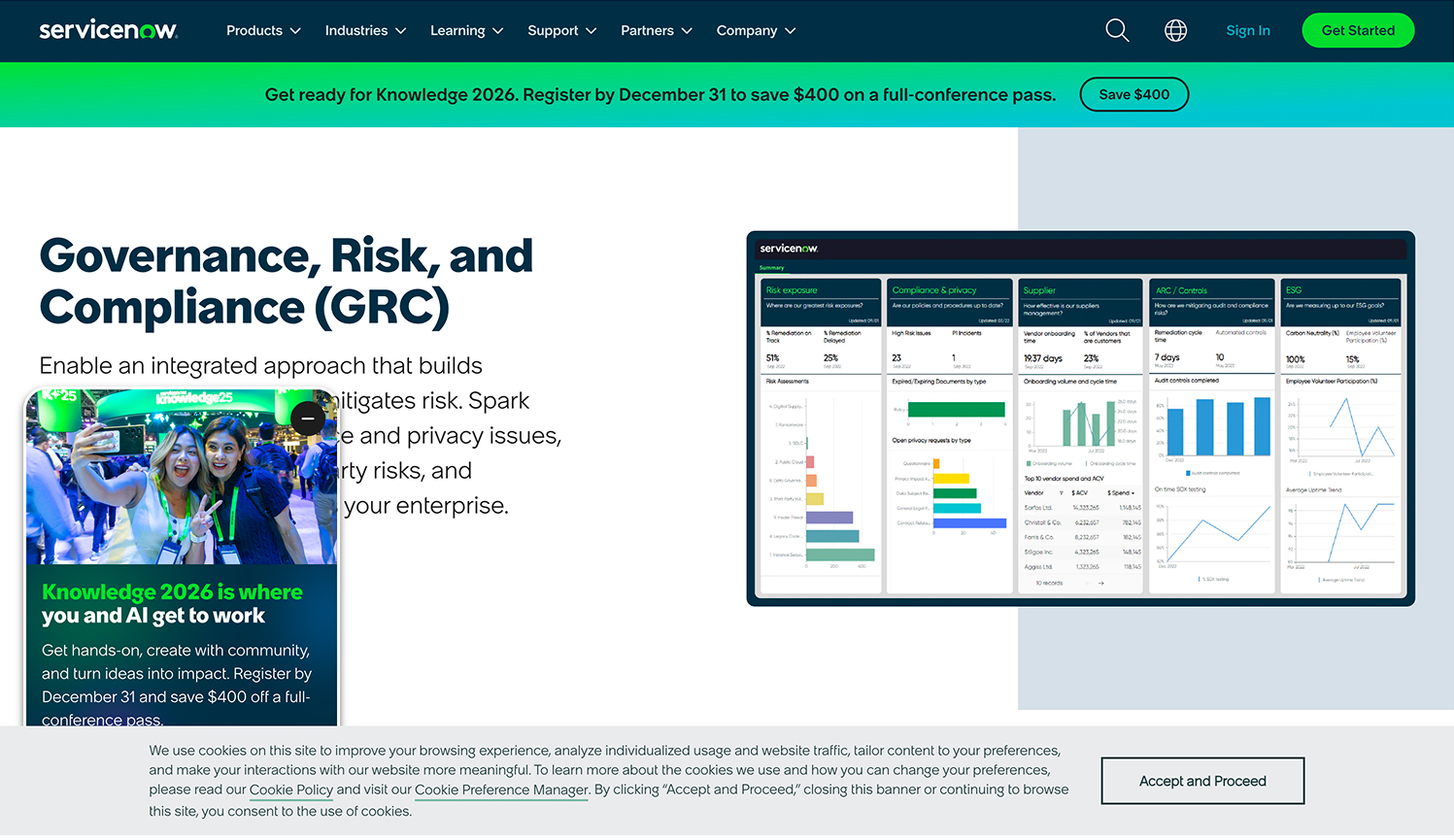
ServiceNow Governance, Risk & Compliance (GRC) is a powerful platform that brings enterprise-grade automation and risk visibility to organizations already invested in the broader ServiceNow ecosystem. It connects risk, compliance, and IT operations with real-time insights and workflow automation, helping teams operate more proactively and cohesively.
Below are the key capabilities that make ServiceNow GRC a strong choice, especially for ServiceNow users looking to extend existing digital workflows into governance and risk domains:
- End-to-End Risk Automation: ServiceNow GRC integrates risk assessment, continuous monitoring, and automated controls testing, reducing manual work and providing real-time updates to risk owners.
- Policy and Control Library Management: It offers a centralized library for policies and controls that can be mapped to risks, regulations, and standards, ensuring consistency and traceability across governance functions.
- Real-Time Risk Scoring And Prioritization: ServiceNow’s risk scoring engine analyzes risk data continuously and prioritizes risks based on business context, enabling faster executive decisions and resource allocation.
- Advanced Issue And Remediation Workflows: Built-in workflows help teams track issues from detection through resolution, assign accountability, and automate reminders and escalation paths.
- Integration With IT Operations And Security Tools: As part of the broader ServiceNow platform, GRC connects seamlessly with ITSM, SecOps, and other modules, enabling cross-functional visibility into how IT risks impact compliance and business outcomes.
- Scalability For Global Enterprises: Designed for large organizations, ServiceNow GRC handles complex data structures, multiple business units, and large user bases while maintaining performance and governance oversight.
- Automated Evidence Collection Capabilities: The platform can automate evidence gathering from integrated systems, reducing time spent on audits and increasing the accuracy of compliance attestations.
Pricing: Contact vendor for pricing (enterprise GRC typically starts around $50,000+ annually with quote‑based licensing and can vary widely by modules, implementation, and scale).
G2 Rating: 4.4/5 on G2 across ServiceNow products
Demo available (contact sales or access the hosted demo instance); no publicly listed self‑serve free trial.
4. LogicGate Risk Cloud
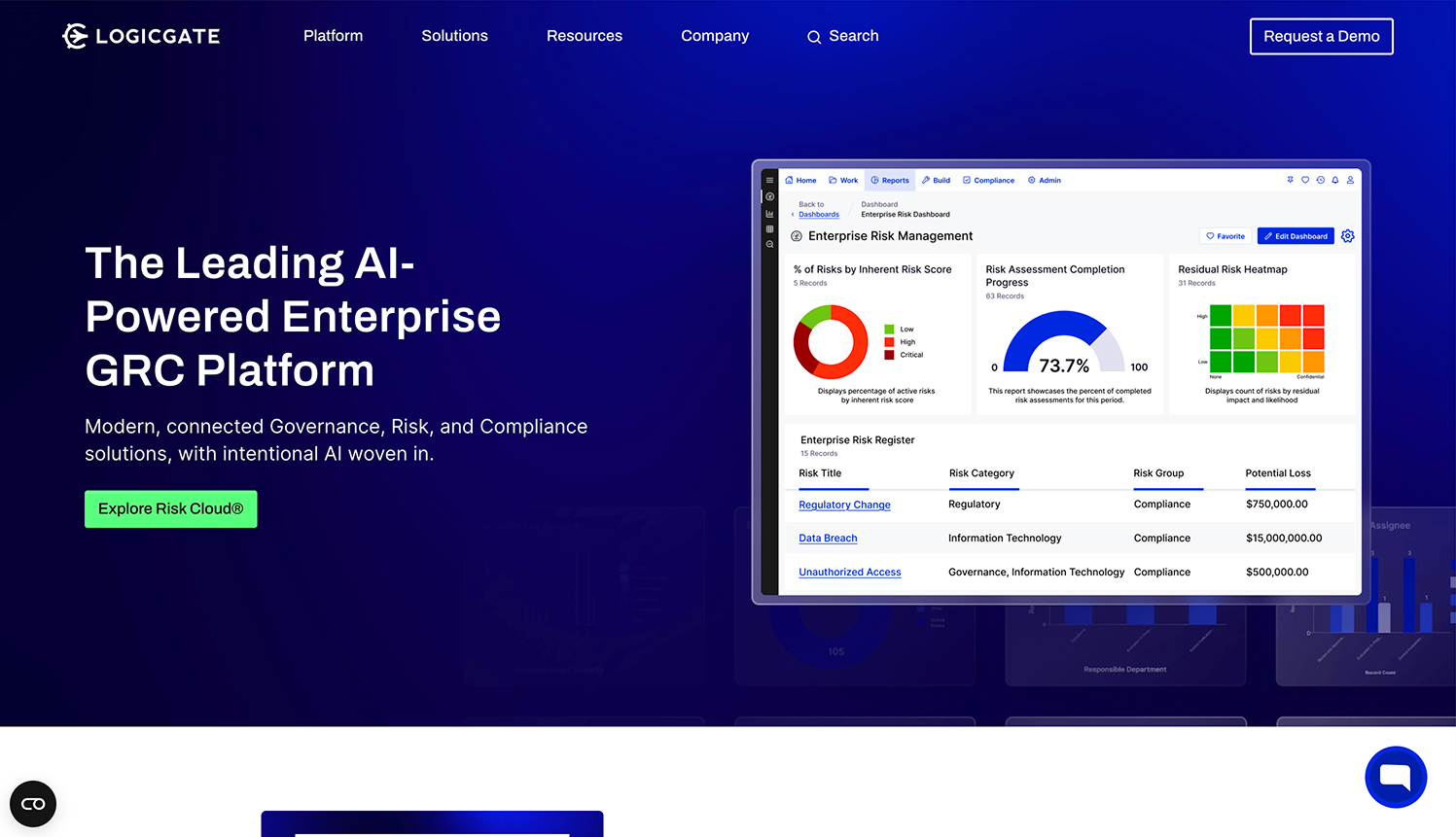
LogicGate Risk Cloud is a highly adaptable GRC platform that empowers teams to build and modify risk, compliance, and governance workflows without coding. Its no-code approach gives mid-market and evolving organizations the freedom to design processes that match their unique operational requirements, rather than conforming to rigid templates.
Below are the detailed capabilities that make LogicGate Risk Cloud particularly appealing for teams seeking flexibility and tailored risk management:
- No-Code Workflow Builder: Drag-and-drop workflow tools let you create, adjust, and automate GRC processes without developer support, reducing dependency on IT and speeding up implementation.
- Dynamic Risk Registers: LogicGate offers configurable risk registers that allow you to capture custom attributes, risk scoring metrics, and business unit-specific details for deep analysis.
- Custom Assessment Templates: Build tailored questionnaires and control assessments that reflect your industry, risk profile, or regulatory requirements, offering more nuanced evaluation than generic templates.
- Scenario Planning And What-If Analysis: LogicGate enables teams to model potential risk scenarios, evaluate mitigation strategies, and visualize impacts, helping decision-makers better prepare for uncertainty.
- Automated Notifications And Task Assignments: The platform supports automated alerts, task triggers, and escalation paths so stakeholders are always aware of responsibilities, deadlines, and risk trends.
- Role-Based Permissions And Governance: Fine-grained access controls help you ensure that sensitive risk data is visible only to the right users, while supporting audit trails and compliance requirements.
Pricing: Contact vendor for pricing (custom quotes based on selected applications and Power User licenses; pricing varies by deployment size and modules).
G2 Rating: 4.6/5 on G2 from verified user reviews
Demo available via vendor request; no publicly listed free trial or free version is offered.
5. NAVEX One / Keylight Platform
NAVEX One, built around the Keylight GRC platform, is a strong suite designed to help organizations manage risk and compliance while also strengthening ethical culture and policy oversight. Its integrated approach widens the scope beyond traditional GRC, putting a strong emphasis on compliance, ethics reporting, and policy management at scale.
Below are the detailed capabilities that make NAVEX One / Keylight valuable for organizations prioritizing ethics, culture, and policy control:
- Comprehensive Policy Management Framework: The platform centralizes policy creation, distribution, attestation tracking, and version control, ensuring policies are consistently understood and upheld across the organization.
- Integrated Ethics & Compliance Reporting: NAVEX One includes anonymous reporting and case management tools for ethics concerns, whistleblower reports, and compliance incidents, helping improve corporate culture and risk visibility.
- Enterprise-Level Risk And Control Mapping: Organizations can link risks, controls, and compliance requirements with business processes and objectives, enabling deeper insight into compliance gaps and operational risk alignment.
- Third-Party Risk Management Support: The platform facilitates vendor risk assessments, monitoring, and remediation tracking, giving organizations control over risks that originate from external partners or suppliers.
- Advanced Case And Incident Workflows: Automated workflows for incident reporting, investigation tracking, and action plans help teams close out issues efficiently while maintaining a full audit trail of decisions and actions.
- Configurable Dashboards And Analytics: Custom dashboards provide executives with real-time visibility into ethical reports, compliance trends, risks, and audit outcomes, supporting data-driven governance decisions.
Pricing: Contact vendor for pricing (custom quotation required; pricing details aren’t publicly listed).
G2 Rating: 3.8/5 on G2 (based on 78+ verified reviews)
Demo available via vendor request; no standard free trial is listed.
6. Onspring GRC Platform
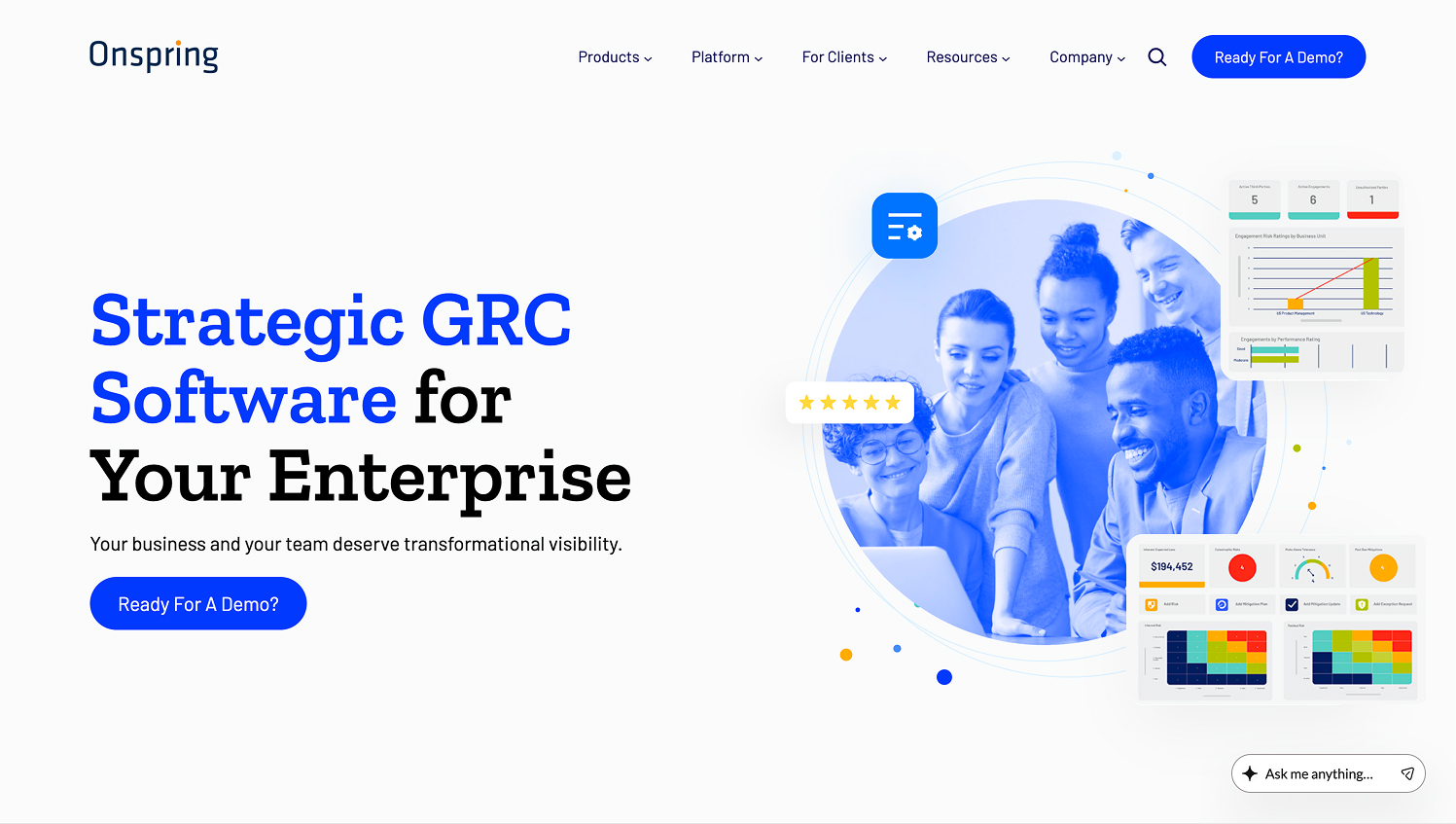
Onspring GRC Platform delivers no-code automation and deep integration capabilities that allow organizations to rapidly configure and operationalize governance, risk, and compliance processes. Its focus on tailored data modeling and connected workflows helps teams eliminate manual processes while adapting quickly to evolving business needs without technical overhead.
Below are the detailed capabilities that make Onspring a strong choice for teams seeking fast deployment and flexible GRC configuration:
- No-Code Workflow Designer: Onspring’s intuitive drag-and-drop interface lets you build workflows that mirror your organization’s unique processes without relying on IT support or developers.
- Rapid Application Configuration: Pre-built GRC templates and customizable data models enable quick configuration, accelerating time to value for risk assessments, compliance audits, and issue tracking.
- Interactive Relationship Mapping: Onspring connects data relationships across risk, compliance, audit, and controls, giving users a networked view of dependencies and impacts across programs.
- Automated Alerts And Escalations: Built-in notifications support escalation rules, status updates, and assignment loops to ensure timely action and accountability across teams.
- Flexible Report Builder: Users can create real-time reports tailored to stakeholder needs, including executive summaries, risk heatmaps, and compliance scorecards without coding or scripting.
- Integration With Existing Systems: The platform integrates with enterprise tools and data sources, ERPs, ticketing systems, and HRIS, reducing duplicate entry and enhancing data consistency.
Pricing: Contact vendor for pricing (enterprise GRC pricing is custom; you’ll need to request a quote based on modules and users).
G2 Rating: 4.7/5 on G2 based on user reviews
Demo available via vendor request; no standard self‑serve free trial is publicly listed.
7. Diligent One Platform
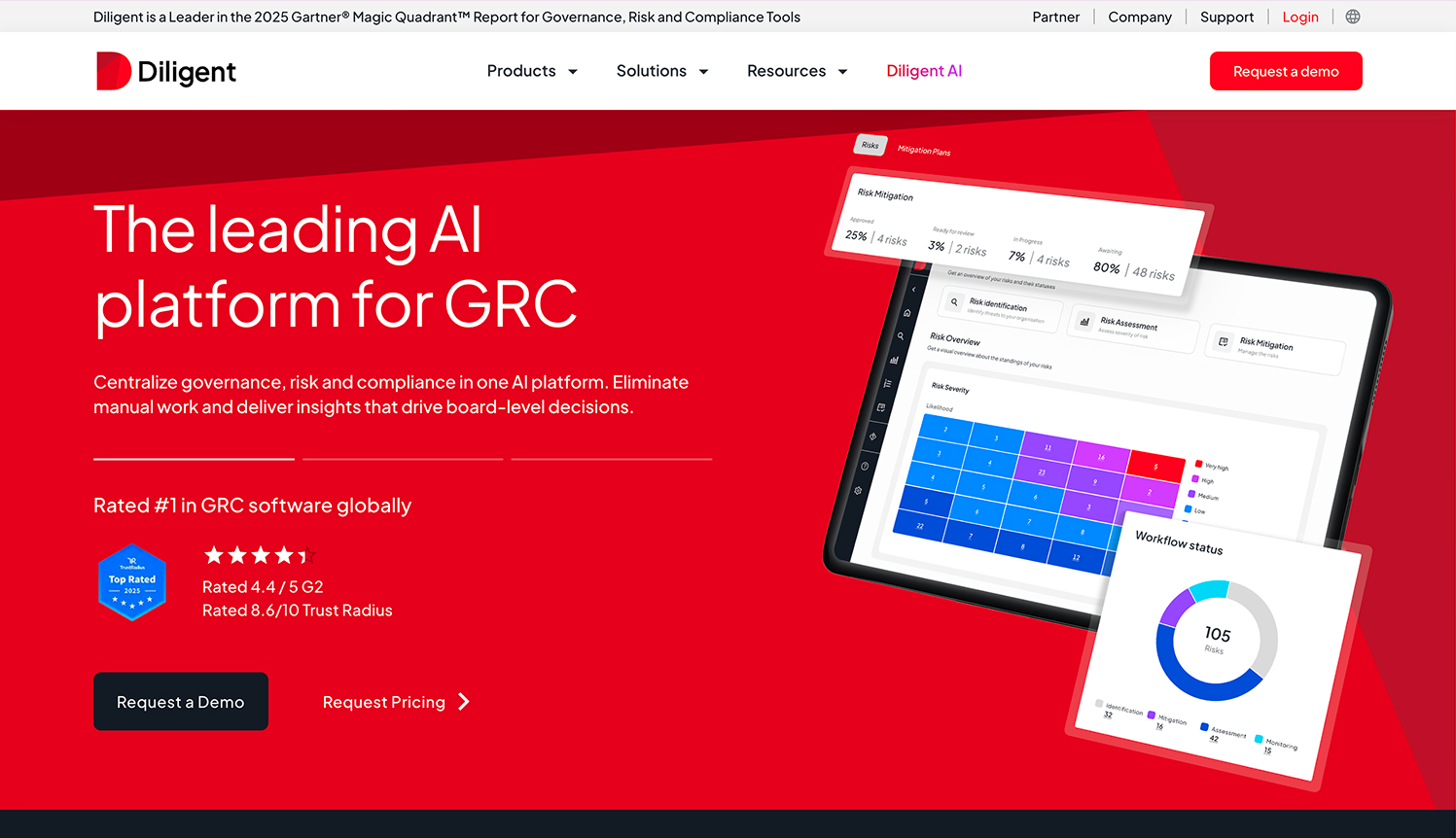
Diligent One Platform is a modern governance, risk, and compliance suite built with AI-enhanced analytics and enterprise oversight in mind. It helps organizations move beyond traditional GRC reporting toward predictive insights, easy board reporting, and strategic risk prioritization, making it especially valuable for executive and governance stakeholders.
Below are the detailed capabilities that make Diligent One a top choice for organizations focused on board reporting and enterprise-level risk insights:
- AI-Powered Risk Signal Detection: Diligent uses AI to analyze risk data continuously, uncover emerging risk trends, and surface insights that might be missed through manual review, helping leaders anticipate risks before they escalate.
- Board-Level Dashboards: Customizable dashboards translate complex risk and compliance data into board-level visuals, heatmaps, and scorecards that enhance strategic decision-making and governance transparency.
- Integrated Governance Management: The platform unifies governance processes, such as meeting management, policy governance, and decision-tracking, reducing administrative barriers and improving alignment between risk and board priorities.
- Comprehensive Risk Taxonomy Frameworks: Diligent supports deep risk categorization and taxonomy structures that map risks to organizational objectives, enabling analysts and executives to see how specific risks affect business goals.
- Scenario Simulation And Forecasting: With built-in modeling tools, risk teams can simulate potential outcomes and test “what-if” scenarios to evaluate the impact of strategic decisions on enterprise risk profiles.
- Centralized Document And Evidence Repository: All risk assessments, governance documents, and compliance evidence are kept in a single, secure repository, making audit preparation and executive reporting more seamless.
Pricing: Contact vendor for pricing (quote‑based; enterprise module and scale determine costs; generally higher for full GRC suites and large implementations).
G2 Rating: 4.3/5 on G2 based on verified reviewer scores
Demo available via vendor request; no standard public free trial is listed.
8. Archer (RSA Archer Suite)

Archer, also known as RSA Archer Suite, is a mature enterprise GRC platform built to handle highly complex risk, compliance, and governance programs across large, established organizations. Its configurability and depth make it a strong choice for enterprises with legacy systems and intricate compliance needs.
Below are the core capabilities that make Archer a trusted option for large organizations with complex footprints:
- Highly Configurable GRC Architecture: Archer’s platform supports deep customization of applications, data structures, forms, and workflows, enabling organizations to tailor the solution to highly specific regulatory and business requirements.
- Enterprise Risk Management and Control Libraries: The platform includes extensive libraries for risk and control definitions, which organizations can extend and customize to match industry-specific standards or internal taxonomies.
- Strong Third-Party And Supplier Risk Management: Archer enables organizations to assess, monitor, and manage vendor risk, including questionnaires, risk scoring, remediation tracking, and ongoing performance validation.
- Integrated Issue And Remediation Tracking: The suite provides detailed issue identification, assignment, tracking, and closure processes with audit logs, ensuring accountability for remediation plans across divisions.
- Comprehensive Audit Management Tools: Audit teams can use planning, scheduling, sampling, findings, and reporting modules that link directly to risk and control registers for a unified assurance view.
Pricing: Contact vendor for pricing (no public pricing available; deployment costs vary widely by modules and scope).
G2 Rating: 3.6/5 on G2 based on verified user reviews
Demo available via vendor contact; no standard free trial publicly offered.
9. IBM OpenPages GRC Platform
IBM OpenPages is a scalable, enterprise-grade GRC platform that blends AI-powered analytics with big risk and compliance capabilities. Designed for complex, regulated industries, it supports broad governance needs, from operational risk to third-party risk management, while giving executives the insights they need to act confidently in uncertain environments.
Below are the detailed features and strengths that make IBM OpenPages a top choice for organizations with advanced analytics and regulatory demands:
- AI-Driven Insights & Automation: Using built-in AI and integrations with IBM’s WatsonX and analytics tools, OpenPages helps identify emerging risk patterns, automate repetitive tasks, and accelerate risk assessments, giving teams predictive capability, not just oversight.
- Modular and Scalable Architecture: Organizations can deploy only the components needed, such as operational risk, regulatory compliance, third-party risk, and business continuity, without sacrificing the unity of a single data model. This modularity supports growth and evolving risk programs.
- Advanced Regulatory Compliance Management: The platform consolidates regulatory requirements into a centralized data repository, maps them to risk taxonomies, and automates response workflows, reducing manual tracking and enhancing compliance accuracy.
- Integrations with Enterprise Data Sources: Extensive REST APIs, connectors, and integration with tools like IBM App Connect allow OpenPages to pull risk signals from multiple systems.
- Dynamic Dashboards & Predictive Analytics: Custom dashboards and analytical visuals help stakeholders analyze risk trends, drill into root causes, and communicate risk posture effectively to leadership and boards.
- Single Repository For Enterprise Risk Data: A unified data model ensures consistency across risk and compliance records, reducing errors, redundancies, and misaligned reporting that can plague decentralized systems.
Pricing: Edition pricing starts at around $3,300–$9,000/month, depending on deployment and features; detailed cost varies widely by modules and enterprise scale. Contact the vendor for exact pricing.
G2 Rating: 4.2/5 on G2 based on verified user reviews
Demo available via vendor request; no standard public free trial currently listed.
10. MetricStream GRC Solution
MetricStream GRC Solution is a comprehensive and enterprise-ready governance, risk, and compliance platform designed to support organizations with broad, global risk and regulatory demands. Its breadth of modules, extensive configurability, and strong enterprise controls make it a go-to choice for large, multinational teams looking to unify GRC operations at scale.
Below are the key capabilities that distinguish MetricStream as a strong choice for global GRC programs:
- Global Regulatory Content and Framework Libraries: MetricStream includes an expansive regulatory database and pre-mapped controls that help multinational organizations stay compliant across regions and industry standards without building frameworks from scratch.
- End-to-End Risk, Compliance, and Control Coverage: The platform supports enterprise risk management, compliance obligations, policy management, operational risk tracking, and control validation, all within the same GRC ecosystem.
- Centralized Issue And Corrective Action Management: MetricStream’s corrective action workflows allow teams to capture issues, assign remediation owners, track progress, and close out findings with full audit traceability.
- Integrated Third-Party Risk Management (TPRM): Built-in TPRM capabilities help you assess, monitor, and manage supplier and vendor risks, from initial onboarding questionnaires to ongoing performance evaluations.
- Automated Control Testing And Validation: MetricStream enables automated scheduling of control tests, evidence collection, and results aggregation to help teams maintain compliance standards and prepare for external audits more efficiently.
- Multilingual and Multicurrency Support: For organizations operating internationally, MetricStream supports multiple languages and currencies, making it easier to deploy consistent GRC processes across global locations.
Pricing: Contact vendor for pricing (custom quote model based on modules, seats, and implementation; enterprise costs often start around tens of thousands per year and can exceed $750,000–$1M annually depending on scale and services).
G2 Rating: 3.9/5 on G2 across products and reviews
Demo available via vendor request; limited trial offers.
To help you decide, we’ve summarized the best GRC software features, usability, and coverage in one easy-to-read comparison table.
Comparison Table – Top 10 Integrated GRC Software
A concise comparison helps you understand how these tools stack up across core evaluation criteria that matter most to compliance, risk, and executive leaders.
Below is the comparison table for the top 10 integrated GRC software platforms:
| Platform | Best For | Key Feature Strength | Compliance + Risk + Audit Coverage | Ease of Use / Flexibility |
| VComply | Unified GRCOps | Integrated Compliance, Risk, Policy, Incident Workflows | High (All Domains) | High (Configurable + Intuitive) |
| AuditBoard | Audit + Risk Teams | Audit-led Assurance & Reporting | High (Audit + Risk) | Medium (Structured Workflows) |
| ServiceNow GRC | Enterprise ServiceNow Users | End-to-End Automation | High (Integrated with IT) | Medium-High (Strong for IT Ops) |
| LogicGate Risk Cloud | Mid-Market Customization | No-Code Process Builder | Medium-High (Custom Assessments) | High (Flexible + Configurable) |
| NAVEX One / Keylight | Ethics & Policy Focus | Policy + Ethics Case Mgmt | High (Policy + Compliance) | Medium (Structured Modules) |
| Onspring GRC | Rapid Configuration | No-Code Automation | Medium-High (Unified Data) | High (Fast Setup + Dashboards) |
| Diligent One | Executive Analytics | AI-Driven Risk Insights | High (Enterprise Focus) | Medium (Governance Tools) |
| Archer (RSA) | Large Complex Enterprises | Deep Configurability | High (Comprehensive) | Medium (Enterprise Focus) |
| IBM OpenPages | Regulated Industries | AI + Predictive Analytics | High (Broad Coverage) | Medium (Enterprise Tier) |
| MetricStream GRC | Global Compliance Programs | Global Framework Support | High (Multi-Jurisdiction) | Medium (Enterprise Level) |
Also Read: Your Guide to Major Life Science Compliance Risks
Even the top GRC software can underperform without proper adoption. Here are the most common hurdles organizations face.
Common Challenges In Implementing GRC Software
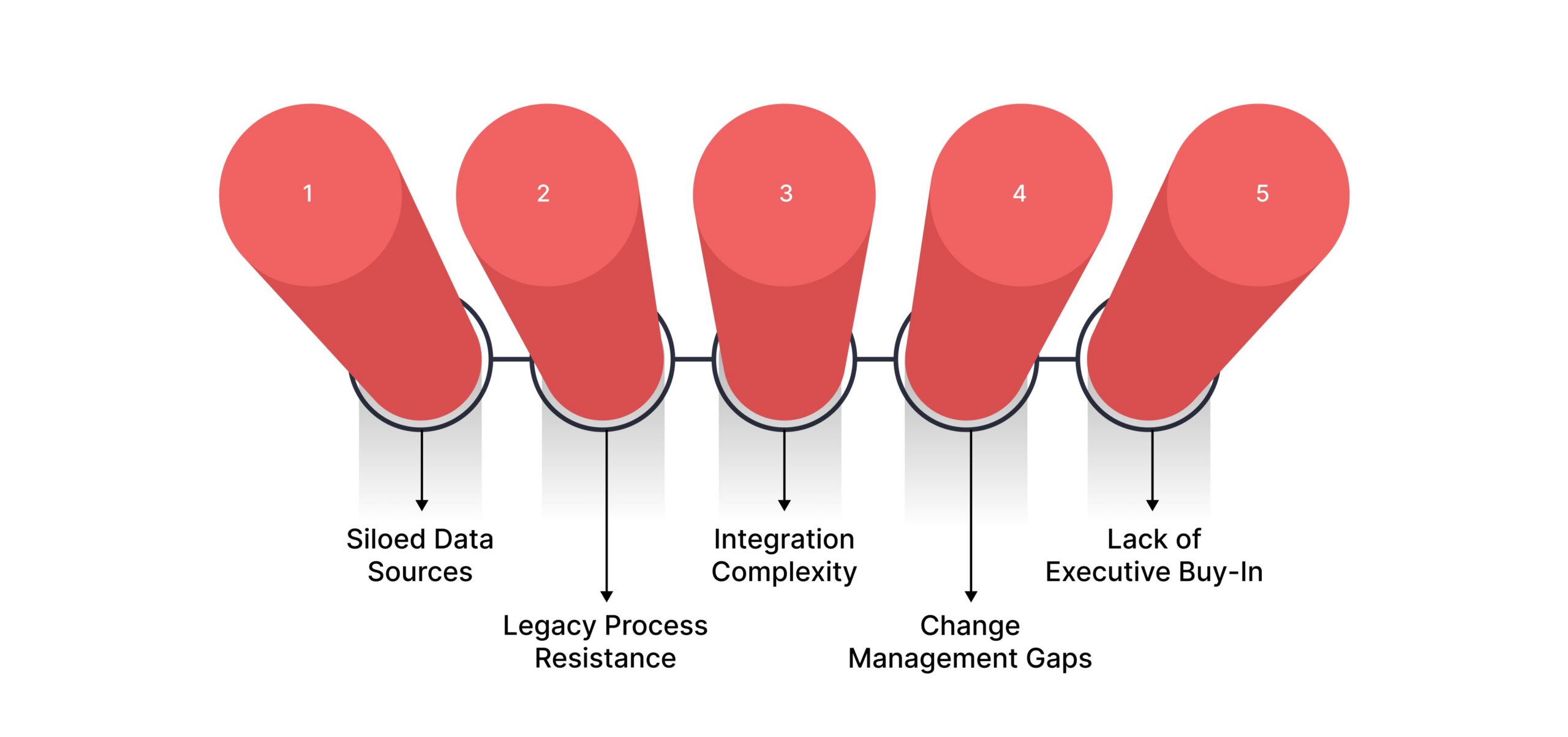
Adopting GRC software is as much an organizational transformation as it is a technology decision. Even the best GRC platforms can underdeliver if internal readiness gaps are ignored.
Below are the most frequent obstacles organizations encounter during GRC implementation:
- Siloed Data Sources: Risk, compliance, audit, and policy data often live in disconnected systems, making it difficult to create a single source of truth without deliberate data consolidation planning.
- Legacy Process Resistance: Teams accustomed to spreadsheets and manual workflows may resist standardized processes, slowing adoption and reducing the effectiveness of automated GRC programs.
- Integration Complexity: Connecting GRC software with existing IT, HR, finance, or security systems can be technically demanding without clear ownership, clean data structures, and integration expertise.
- Change Management Gaps: Lack of structured training, communication, and role clarity can cause confusion, limiting user engagement and weakening overall program outcomes.
- Lack of Executive Buy-In: Without visible leadership support, GRC initiatives risk being viewed as administrative burdens rather than strategic enablers of operational performance.
Explore how VComply’s RiskOps module helps your organization proactively identify and mitigate risks, providing real-time dashboards and insights for confident decision-making.
Selecting the best GRC software isn’t just about features. Here’s how to match a platform to your organization’s size, complexity, and regulatory needs.
How to Choose the Right GRC Software: A 6-Point Evaluation Framework
Picking the right GRC software isn’t just about features; it’s about fit. The tool must align with your organization’s size, regulatory demands, technical ecosystem, and reporting expectations.
Below are practical factors to evaluate when choosing GRC software:
- Organizational Size and Complexity: Smaller teams may prioritize ease of use and rapid deployment, while larger enterprises need scalability, multi-entity support, and role-based governance controls.
- Regulatory And Compliance Complexity: Assess the breadth of regulations you must comply with (e.g., SOX, HIPAA, PCI-DSS). Organizations facing multiple overlapping requirements benefit from platforms with built-in regulatory content and mapping tools.
- Framework Coverage and Flexibility: Look for tools that support key frameworks (NIST, ISO, COSO) and allow you to map controls across frameworks for efficient multi-standard compliance tracking.
- Ease of Integration with Existing Systems: Consider how well the GRC platform connects with your current systems, ERPs, HRIS, ticketing platforms, and security tools, to reduce manual data transfers and improve workflow automation.
- Reporting and Dashboard Capabilities: Evaluate the quality of reporting tools, executive dashboards, and customizable visualizations, especially if leadership or auditors demand real-time insights.
- User Adoption And Administration: Platforms with intuitive interfaces, role-based training tools, and clear admin controls reduce training time and improve organizational uptake.
Read Next: How to Build a Risk Register That Actually Guides Decisions
Integrated top GRC software moves organizations from reactive compliance to proactive risk management, connecting data, controls, and decisions seamlessly.

Wrapping Up
As GRC programs mature, the real differentiator is no longer the number of features a platform offers, but how well those capabilities work together. Integrated GRC software helps you move from reactive compliance to risk intelligence by connecting controls, data, and decisions across your organization.
That’s where alignment matters most. The right platform should scale with your organization, adapt to evolving regulations, integrate smoothly with existing systems, and deliver insights that leadership can actually act on. VComply is designed with this balance in mind, bringing compliance, risk, policy, audit, and incident management together in one GRCOps platform.
Ready to see how VComply can simplify and strengthen your GRC operations? Book a personalized demo today.
FAQs
GRC software manages governance, compliance obligations, audits, policies, and risks in a unified system. ERM software focuses primarily on identifying, assessing, and mitigating enterprise risks. Integrated GRC platforms provide broader oversight by connecting risk management with compliance tracking and governance workflows.
Implementation timelines depend on organizational size, data complexity, and platform flexibility. Modern cloud-based GRC tools can be deployed in weeks, while enterprise platforms may take several months. Faster implementations usually rely on configurable workflows, prebuilt frameworks, and minimal custom development.
Leading cloud-based GRC platforms use enterprise-grade security measures such as encryption, role-based access controls, audit logs, and regular security testing. These protections often exceed what organizations can maintain internally, making cloud GRC software a secure option for sensitive regulatory and risk data.
Yes, integrated GRC software allows internal teams and external auditors to access shared evidence, controls, and findings through permission-based access. This reduces duplicate requests, improves transparency, and accelerates audit cycles by maintaining a single, continuously updated source of audit documentation.
While GRC software cannot eliminate regulatory risk entirely, it significantly reduces exposure by improving control consistency, documentation accuracy, and remediation tracking. Strong compliance visibility helps organizations identify gaps early and demonstrate due diligence during regulatory reviews.