

Impact and Benefits of Real-Time Compliance
Compliance is no longer something you “check” once a quarter and forget about. Regulations change quickly, risks emerge overnight, and a single missed control can create outsized consequences. Relying on periodic audits leaves organizations exposed in the gaps between reviews.

This is where the impact and benefits of real-time compliance truly stand out. By continuously monitoring controls and activities as they happen, real-time compliance turns oversight into a live, always-on process.
It enables faster issue detection, smoother audits, and stronger decision-making, shifting compliance from a reactive obligation into a source of operational confidence and resilience.
Key Takeaways
- Continuous Audit Readiness: Eliminate the high-stress “audit scramble” by maintaining a live repository of evidence and control status.
- Proactive Risk Mitigation: Identify control failures or regulatory drift the moment they occur, rather than months later.
- Enhanced C-Suite Visibility: Provide leadership with data-driven “Compliance Scores” to inform faster, more confident business decisions.
- Stakeholder Trust: Build reputation capital by demonstrating a transparent and reliable commitment to global standards like GDPR and HIPAA.
What is Real-time Compliance?
To understand the Impact and Benefits of Real-time Compliance, you must first distinguish it from traditional models. Traditional compliance is often retrospective. It looks at what happened over the last six months to prove adherence.
Real-time compliance, however, is prospective and active. It uses automated workflows and API integrations to pull data from your IT infrastructure, HR systems, and financial tools as transactions occur.
In practice, this means your organization no longer waits for an internal auditor to find a missed security patch. Instead, your ComplianceOps platform flags the gap instantly. It triggers a remediation task for the IT team and updates your compliance dashboard in real time.
This “always-on” approach ensures that your governance remains synchronized with your operational reality.
Top 5 Benefits of Real-time Compliance Monitoring
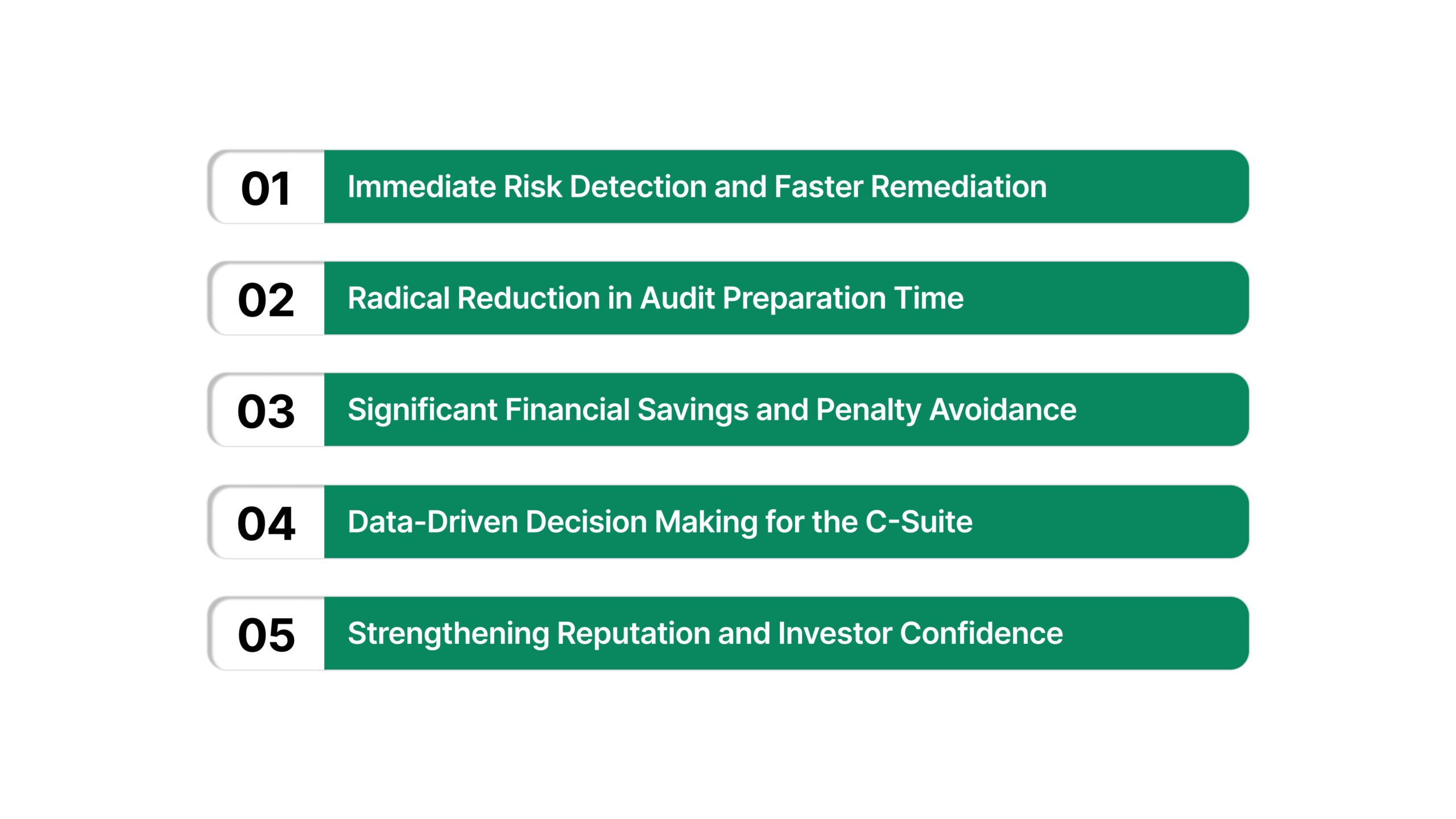
While the shift toward continuous oversight is driven by necessity, the advantages it offers are multifaceted. By embedding compliance logic into the operational fabric of your business, you unlock efficiencies that were previously unattainable.
1. Immediate Risk Detection and Faster Remediation
The most immediate benefit is the reduction in “dwell time”, the period a compliance failure goes unnoticed. In a manual environment, a misconfigured database might remain exposed until the next quarterly review.
With real-time monitoring, an alert is triggered the second the configuration drifts from the policy. This allows your team to act before a minor oversight escalates into a catastrophic data breach.
2. Radical Reduction in Audit Preparation Time
Traditional audits are notoriously resource-intensive. Teams often spend weeks chasing evidence and reconciling spreadsheets. Real-time compliance platforms automate this collection process. Because evidence is captured at the point of action, your organization stays in a state of constant audit readiness.
When auditors arrive, you simply grant them access to a centralized, pre-verified repository of truth.
3. Significant Financial Savings and Penalty Avoidance
The cost of non-compliance far outweighs the cost of maintaining a robust GRC program. In 2024 alone, the SEC ordered $8.2 billion in financial remedies. Beyond avoiding fines, real-time compliance reduces the manual labor costs associated with repetitive reporting.
Organizations using automated GRC tools report up to a 40% reduction in compliance-related expenses by eliminating redundant tasks.
4. Data-Driven Decision Making for the C-Suite
Leadership cannot steer a company effectively using six-month-old data. Real-time compliance provides executives with live dashboards and “Compliance Scores.” This visibility allows for risk-based resource allocation. If a particular department shows a dip in its compliance score, leadership can intervene with targeted training or additional support before a violation occurs.
5. Strengthening Reputation and Investor Confidence
In 2026, transparency is a form of currency. Investors and partners are increasingly prioritizing organizations with mature GRC programs. Demonstrating that you have continuous oversight of your GDPR or ISO 27001 obligations builds immense trust. It signals to the market that your organization is resilient, ethical, and built to withstand regulatory scrutiny.
Also Read: Why the Future of Compliance Management Lies in Operational Execution
While individual benefits like risk detection are vital, the collective impact of these factors creates a more resilient organizational culture.
The Strategic Impact on Organizational Resilience
The Impact and Benefits of Real-time Compliance extend deep into the cultural heart of an organization. It breaks down the traditional silos between IT, Legal, Finance, and Operations. When compliance is a continuous activity, it becomes a shared responsibility rather than a specialized department’s burden.
- Elimination of Compliance Silos: By using a unified platform, different departments share a common language and a single source of truth.
- Clear Ownership and Accountability: Automated workflows assign specific tasks to owners with clear deadlines. This removes ambiguity and ensures that everyone knows their role in the compliance lifecycle.
- Proactive Culture Shift: Moving away from “fire-fighting” near audit season allows teams to focus on innovation. When the basics of compliance are automated, your talent can focus on high-impact strategic initiatives.
- Measurable Operational Excellence: Continuous monitoring provides benchmarks for performance. You can track how fast your organization responds to gaps, creating a culture of continuous improvement.
Suggested Read: Understanding Policy Definition and the Difference Between Procedures and Guidelines
While general resilience is improved, the specific regulatory pressures in 2026 vary significantly across different industry sectors.
Real-time Compliance in Specific Industries: 2026 Outlook
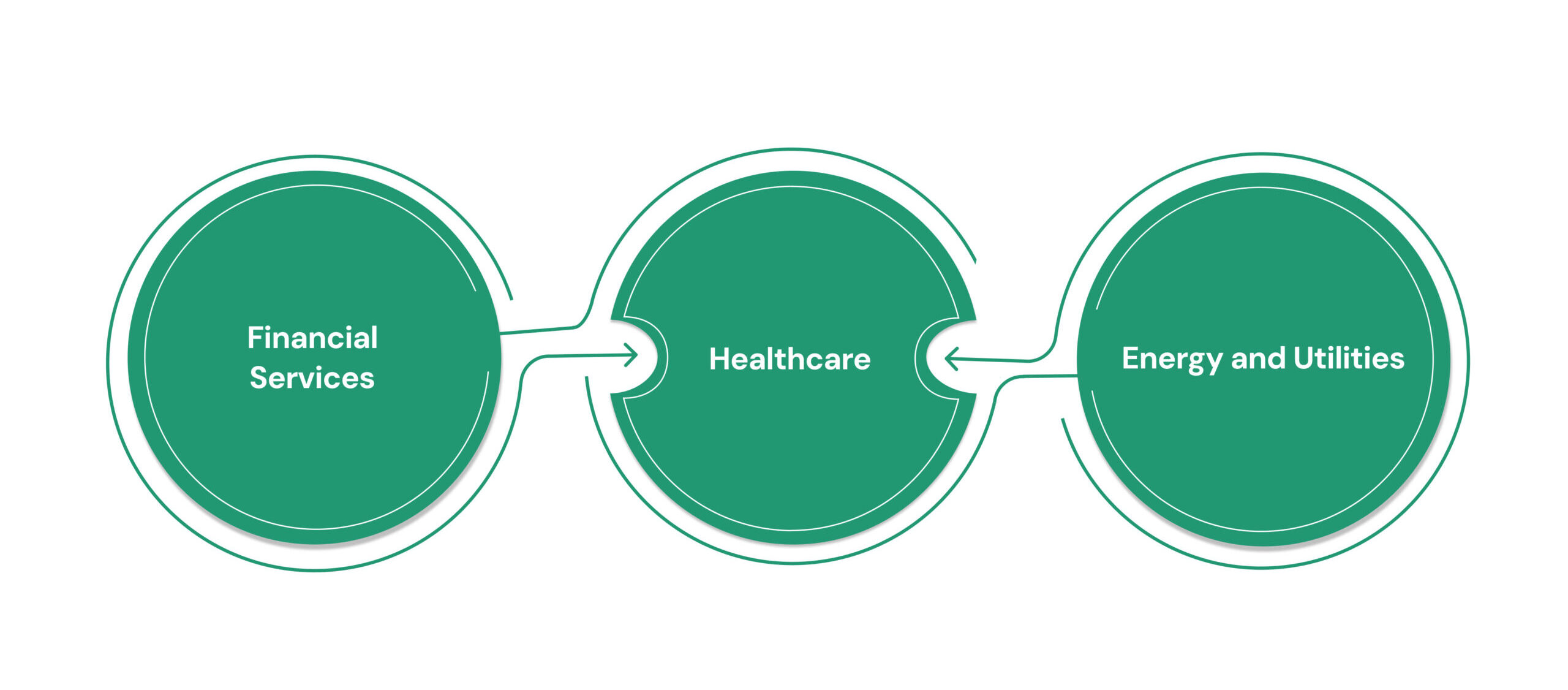
The Impact and Benefits of Real-time Compliance are most visible in highly regulated sectors where the margin for error is zero.
Financial Services: Managing Transactional Integrity
For banks and fintechs, real-time compliance is essential for anti-money laundering (AML) and Sarbanes-Oxley (SOX) adherence. Continuous monitoring allows these institutions to detect suspicious patterns in milliseconds. This prevents fraudulent transactions and ensures that financial disclosures are always backed by verified, real-time data.
Healthcare: Protecting Patient Trust and Data
Healthcare providers are facing unprecedented pressure under updated HIPAA provisions. Real-time compliance monitoring ensures that patient data access logs are reviewed continuously. It prevents unauthorized disclosures and ensures that medical devices are operating within security baselines, directly impacting patient safety and revenue.
Energy and Utilities: Safeguarding Critical Infrastructure
In the energy sector, compliance with NERC CIP standards is a matter of national security. Real-time oversight allows utility providers to monitor physical and cybersecurity controls across vast, distributed networks. It ensures that any breach or equipment failure is identified and remediated before it can impact service delivery or public safety.
To achieve this level of oversight, organizations must move beyond the limitations of legacy tools and embrace modern ComplianceOps.
The Role of Technology: From Spreadsheets to ComplianceOps
You cannot achieve real-time compliance using static tools. Spreadsheets are where compliance data goes to die. They are disconnected, prone to human error, and offer zero visibility into live risks.
The Impact and Benefits of Real-time Compliance are only realized when you transition to a dedicated GRC platform.
- API-Led Data Ingestion: Modern platforms connect directly to your tech stack. They pull data from AWS, Azure, Jira, and Slack to verify controls automatically.
- Automated Workflow Engines: Instead of manual emails, the system triggers tasks based on logic. If a policy is updated, the platform automatically pushes it to relevant employees for attestation.
- AI-Driven Anomaly Detection: In 2026, AI is used to scan vast amounts of compliance data to find patterns that a human might miss. It can predict which controls are most likely to fail based on historical trends.
- Centralized Risk Registers: Every risk, control, and piece of evidence lives in one place. This creates a “Golden Thread” of accountability that is accessible to every stakeholder.
Suggested Read: The Role of Regulatory Audits in Different Sectors
Transitioning to this technology requires a structured approach to ensure that your real-time program is both effective and sustainable.
Implementing Real-time Compliance: A 4-Step Strategy
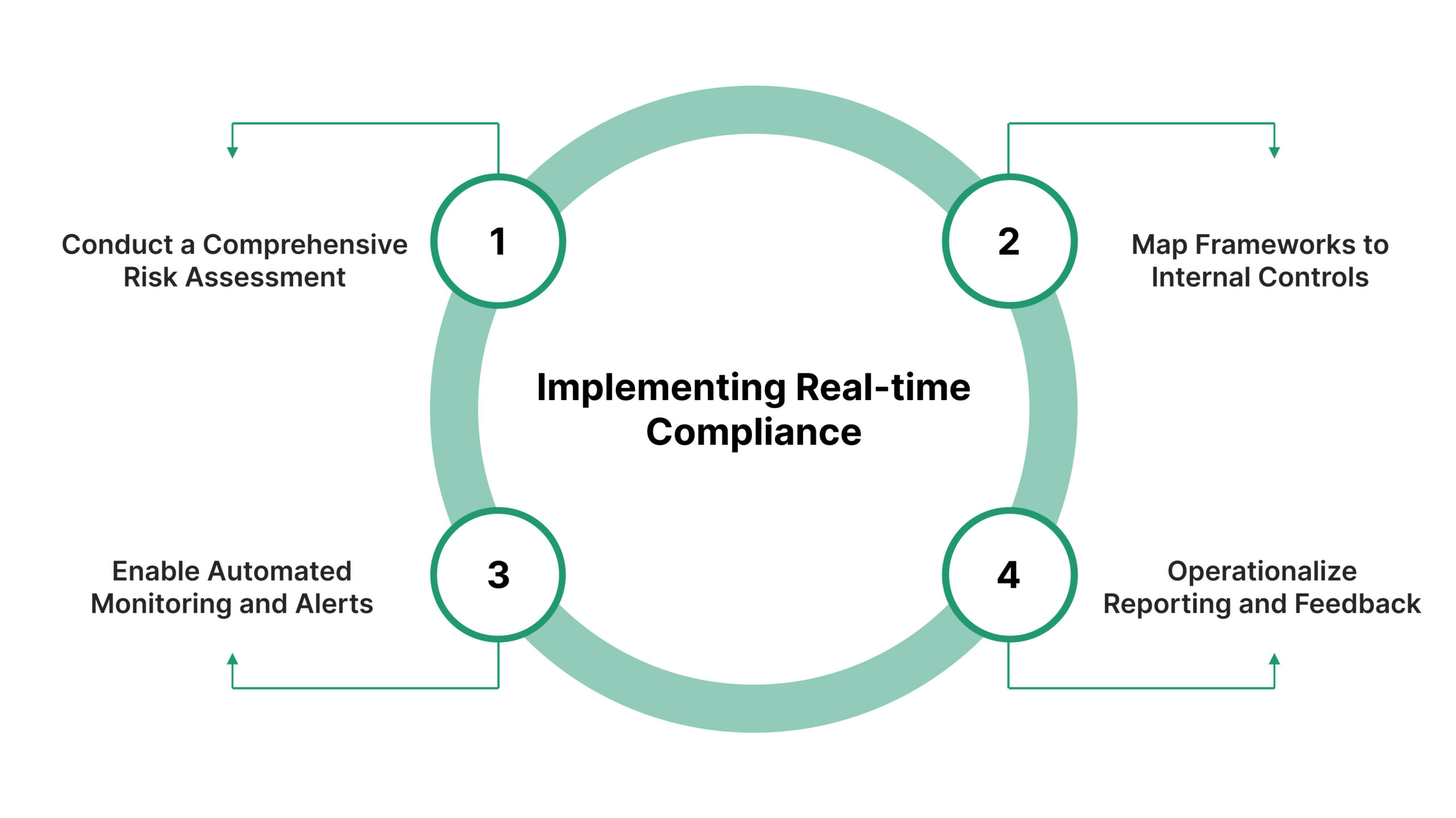
If your organization is currently reliant on periodic assessments, the move to real-time oversight may seem daunting. However, by breaking the implementation into logical phases, you can achieve “quick wins” while building a long-term foundation for GRCOps.
Step 1: Conduct a Comprehensive Risk Assessment
Before you can monitor in real time, you must know what to monitor. Identify your most critical assets and the regulations that govern them. Focus on high-impact areas where a compliance failure could lead to significant fines or safety risks.
Step 2: Map Frameworks to Internal Controls
Use your GRC platform to map regulations like NIST or SOC 2 to your internal controls. This “map once, comply many” approach ensures that one automated check can satisfy multiple regulatory requirements.
Step 3: Enable Automated Monitoring and Alerts
Connect your systems to your GRC platform. Start with “low-hanging fruit” like access logs and policy attestations. Configure real-time alerts so that the relevant team is notified the moment a control moves outside of its defined baseline.
Step 4: Operationalize Reporting and Feedback
Use your dashboards to report status to the board. More importantly, use the data to improve your program. If a specific control frequently fails, investigate the root cause. Real-time compliance is a cycle of continuous improvement, not a one-time setup.
As you refine this cycle, your organization becomes better prepared for the emerging challenges of the next decade.

Future-Proofing for 2026 and Beyond: AI and Sustainability
The Impact and Benefits of Real-time Compliance are also evolving to meet new mandates. In 2026, two major areas are dominating the GRC conversation: AI Governance and ESG (Environmental, Social, and Governance) reporting.
- AI Compliance Monitoring: With the EU AI Act in full effect, organizations must monitor their AI models for bias, transparency, and safety in real time. Static audits are insufficient for the dynamic nature of machine learning.
- Real-time Sustainability Tracking: Regulators are increasingly demanding live data on carbon emissions and supply chain ethics. Real-time compliance allows you to track these metrics continuously, ensuring you meet green mandates without the risk of “greenwashing” accusations.
Streamline Your Real-time Strategy with VComply
In an era of unprecedented regulatory change, you need more than just a tool; you need a partner that understands the operational reality of compliance. VComply is a leading cloud-based GRC management platform designed to help you bridge the execution gap and embrace the Impact and Benefits of Real-time Compliance.
Our GRCOps suite provides a unified ecosystem where governance, risk, and compliance converge into a single, actionable stream of data. By automating the most labor-intensive parts of the compliance lifecycle, VComply empowers your team to lead with confidence and transparency.
Explore the VComply GRCOps Suite:
- ComplianceOps: Achieve continuous adherence with multi-framework mapping, automated evidence collection, and real-time dashboards for over 500+ global regulations.
- RiskOps: Proactively identify and mitigate organizational risks with dynamic risk registers and AI-driven scoring that reflects your live operational environment.
- PolicyOps: Centralize your policy management lifecycle. From creation and communication to employee attestation and version control, ensure everyone is on the same page.
- CaseOps: Simplify incident management. Track, report, and remediate compliance breaches or safety incidents with full traceability and automated escalation paths.
Don’t let manual processes and siloed data hold your organization back. Move toward a more productive, reliable, and transparent future in 2026.
Schedule a free demo to see the platform in action.
Final Thoughts
The transition toward continuous oversight is the most significant shift in governance this decade. The Impact and Benefits of Real-time Compliance are clear: it reduces risk, cuts costs, and builds a foundation of trust that is essential for modern business success.
By moving away from the “compliance scramble” of the past and embracing an “always-on” philosophy, your organization can navigate the complexities of 2026 with confidence.
Compliance is no longer a burden to be managed; it is a capability to be mastered. When you have real-time visibility into your risks and controls, you don’t just stay out of trouble; you gain the strategic agility needed to grow, innovate, and lead in your industry.
FAQs
A traditional internal audit is a backward-looking, point-in-time assessment that samples a subset of data to prove past compliance. Real-time compliance is a forward-looking, continuous process that monitors 100% of your data and transactions as they occur, allowing for immediate remediation of gaps.
While there is an initial investment in technology and setup, real-time compliance significantly lowers the total cost of ownership (TCO) for GRC. It reduces manual labor by up to 40%, eliminates the costs of “audit fire-drills,” and prevents massive regulatory fines that stem from undetected lapses.
No. External auditors are still required for certifications and regulatory filings. However, real-time compliance makes the external audit process much faster and smoother. Instead of searching for evidence, you provide the auditor with a pre-verified, real-time report, significantly reducing the duration and cost of the external engagement.
Absolutely. Real-time compliance is particularly effective for dynamic regulations. It allows you to monitor data privacy controls and AI model behavior continuously, ensuring you stay within the strict boundaries of global laws even as your business operations and technologies evolve.
A Compliance Score is a real-time numerical metric calculated by the platform based on your live control performance, task completion rates, and open risk items. It provides an at-a-glance health check of your GRC program, allowing leadership to benchmark performance across different departments or regions.