

Top 10 Healthcare Policy Management Software in the US (2026 Guide)
In healthcare, policy management breaks down in execution. Policies are scattered across shared drives, approvals happen over email, reviews get missed, and staff acknowledgments are incomplete or hard to prove.

When HIPAA, CMS, or accreditation surveys begin, compliance teams scramble to confirm which policies are current, approved, and acknowledged.
These gaps create real audit risk: outdated procedures in circulation, missing attestations, and last-minute reconstruction of evidence. The problem isn’t writing policies, it’s governing them consistently across departments and facilities.
Healthcare policy management software closes these gaps by automating reviews, approvals, distribution, and tracking of acknowledgments while preserving audit-ready records. The right tools turn policy management from reactive cleanup into continuous readiness.
This guide compares the top 10 healthcare policy management software based on how effectively they reduce audit risk and support HIPAA and CMS compliance in real-world healthcare environments.
Key Takeaways
- Healthcare policy management software centralizes policies, approvals, and acknowledgments to support HIPAA, CMS, and OSHA compliance.
- Manual policy processes increase audit risk through outdated versions, missing approvals, and incomplete staff attestations.
- The best tools automate policy lifecycles, maintain audit trails, and generate evidence quickly during surveys.
- Different solutions fit different needs, from small practices needing templates to large systems requiring scalability.
- Choosing the right platform reduces administrative burden while improving compliance visibility and control.
What Is Healthcare Policy Management Software?
Healthcare policy management software centralizes and automates policy creation, distribution, and tracking to support regulatory compliance.
Healthcare policy management software lets you create, publish, and maintain policies and procedures in a centralized digital system that supports the full lifecycle of policy governance. It eliminates reliance on disparate drives and email chains by ensuring stakeholders have access to the latest approved versions anytime.
These tools integrate audit trails, version control, and acknowledgment tracking so regulators can verify who approved, distributed, or read a policy at any time, features critical for HIPAA and CMS compliance.
By automating approvals and evidence capture, policy management software reduces administrative overload and strengthens organizational accountability, empowering compliance officers and risk teams to prepare for surveys faster and with confidence.
How to Choose Top Healthcare Policy Management Tools
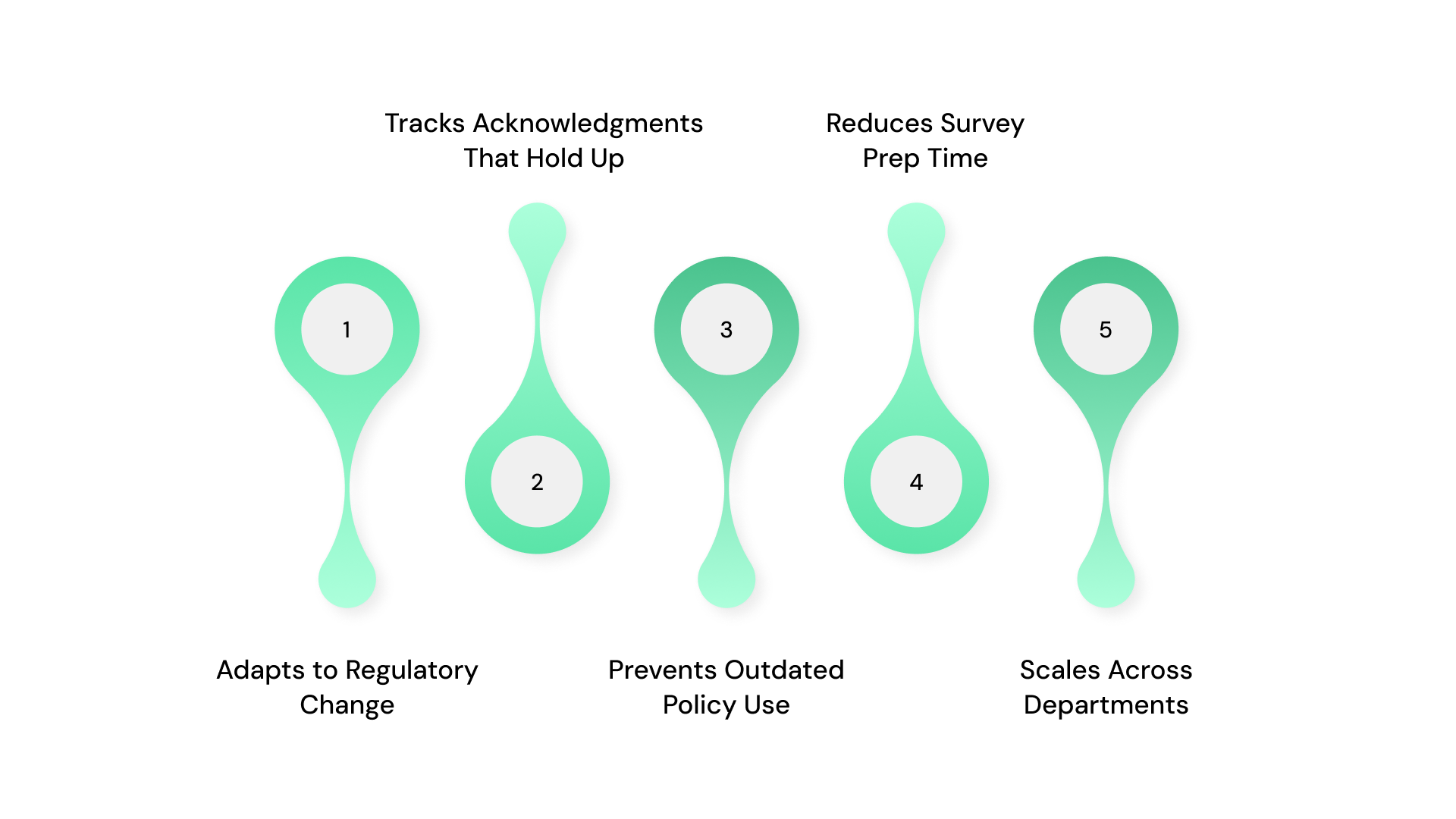
In healthcare, policy management fails quietly. Not when policies are written, but when they’re updated mid-year, rolled out across departments, or tested during a survey. The right software choice depends on whether it can handle those moments without manual cleanup.
Use the criteria below to evaluate tools based on real healthcare execution pressure, not feature labels.
1. Adapts to Regulatory Change
Healthcare policies change whenever HIPAA guidance, CMS rules, or accreditation standards update. Tools that rely on manual review tracking quickly fall out of sync.
Look for systems that enforce review cycles, retire outdated versions automatically, and keep only active policies in circulation.
2. Tracks Acknowledgments That Hold Up
In healthcare, acknowledgments are complicated by shift work, role-based access, and staff turnover. Surveyors expect clean proof, not explanations.
Choose tools that track acknowledgments by role and department, automate follow-ups, and produce defensible reports without cleanup.
3. Prevents Outdated Policy Use
Policies lose value when staff access old versions during clinical or operational decisions.
The right platform locks retired versions, surfaces only current policies, and makes it easy for staff to find what applies to them.
4. Reduces Survey Prep Time
Some tools organize policies but still require manual evidence assembly when surveys begin.
Prioritize platforms that generate approval history, version records, and acknowledgment reports instantly, reducing last-minute audit work.
5. Scales Across Departments
Healthcare organizations grow fast, adding services, facilities, and compliance obligations.
Choose software that supports decentralized ownership, consistent governance, and visibility across departments without increasing admin effort.
The right policy management software replaces manual tracking with continuous governance, helping compliance teams stay survey-ready without constant intervention. Let us look at the top tools that meet these requirements.
Top 10 Healthcare Policy Management Software in the US
Healthcare policy tools vary widely in what they actually solve. Some store documents well, while others help teams manage reviews, approvals, acknowledgments, and audit evidence under real HIPAA and CMS pressure.
This list compares leading healthcare policy management software based on policy lifecycle automation, audit readiness, regulatory alignment, and usability at scale.
1. VComply
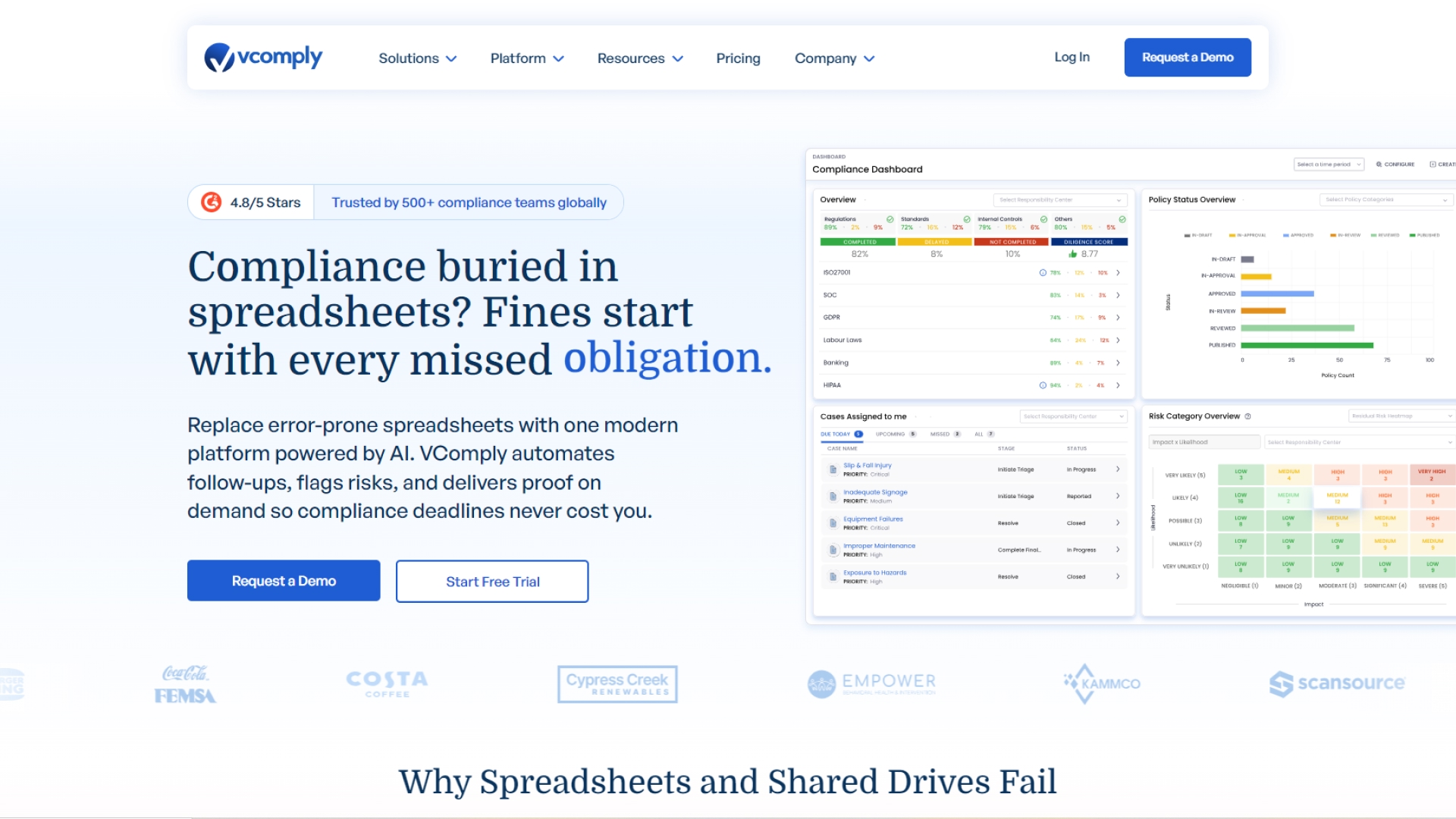
VComply is built for healthcare compliance teams that struggle not with writing policies, but with keeping them current, approved, acknowledged, and defensible during surveys. Instead of treating policies as static documents, VComply governs the full policy lifecycle, so teams can prove, at any point, which policy was active, who approved it, and who acknowledged it.
What sets VComply apart is its focus on execution under regulatory pressure. Policies don’t live in isolation; they’re connected to controls, audits, and evidence. This reduces the common healthcare failure points: missed reviews, outdated versions still in circulation, and last-minute scrambling for proof during HIPAA, CMS, or accreditation surveys.
Key Features:
- Centralized Policy Repository & Version Control: Store all policies in one secure location with full version histories, so compliance teams and staff always see the most current policy and past versions remain auditable.
- Automated Policy Lifecycles: Structured workflows for drafting, review, approval, scheduled reviews, and publication eliminate manual tracking and help ensure policies stay current as regulations like HIPAA or CMS evolve.
- Approval & Acknowledgment Tracking: Role-based attestations with timestamped records ensure you can prove who approved and who acknowledged each policy, key for survey and audit evidence.
- Automated Reminders & Alerts: Push notifications, reminders, and escalations help keep review cycles and acknowledgments on schedule without manual follow-ups.
- Policy Collaboration & Template Support: Centralized drafting, sharing, and feedback tools plus templates reduce policy creation effort and improve consistency across departments.
- Integrated Audit Trails & Evidence: Every action is captured with a timestamped trail that supports external survey and audit responses without manual evidence assembly.
- Dashboards & Reporting: Real-time views into policy status, overdue reviews, and acknowledgment gaps help compliance leaders monitor risk and readiness at a glance.
Best For:
Healthcare compliance and risk teams that need continuous, audit-ready policy governance, not just document storage. VComply works well for organizations that struggle with fragmented approvals, missed review cycles, and proving who acknowledged policies during HIPAA, CMS, or accreditation surveys. It scales from single-facility compliance programs to multi-department and multi-site healthcare systems, providing clear ownership, automated reminders, centralized evidence, and real-time visibility into policy status, helping reduce manual effort and strengthen readiness under regulatory pressure.
G2 Rating: 4.6 / 5
Pricing: Starts at $1,000/month for the Pro GRC Suite.
Trial/Demo: Free demo available on request; 21-day trial available on request.
Also Read: Understanding Enterprise Compliance Management Practices
2. PowerDMS
PowerDMS is a policy and document management platform widely used in healthcare, public safety, and regulated environments to centralize policies, procedures, and accreditation-related documentation. In healthcare settings, it is commonly adopted to manage policy distribution, staff acknowledgments, and version control in preparation for HIPAA, CMS, and Joint Commission surveys.
PowerDMS emphasizes document control, accessibility, and attestation, helping organizations ensure staff are referencing the correct policy versions and that acknowledgments are recorded consistently across departments and facilities.
Key Features:
- Centralized Policy & Procedure Repository: Maintains a single, searchable source of truth for healthcare policies with controlled access to current and historical versions.
- Policy Review & Approval Workflows: Supports configurable review cycles and approval processes to keep policies current and aligned with regulatory requirements.
- Acknowledgment & Signature Tracking: Tracks staff attestations and electronic signatures to demonstrate policy awareness during audits and surveys.
- Version Control & Audit Trails: Preserves detailed version histories showing when policies were updated, approved, and distributed.
- Reporting & Compliance Visibility: Provides reports that highlight acknowledgment status, overdue reviews, and policy gaps to support internal compliance reviews.
- Accreditation Support: Commonly used to organize and surface documentation required for Joint Commission and other accreditation reviews.
Best For:
PowerDMS is best suited for healthcare organizations and multi-facility systems that need a reliable, centralized policy repository with strong distribution and acknowledgment tracking, particularly for accreditation and survey preparation.
Teams looking for deep integration between policies, controls, audits, and risk workflows or more advanced automation across the broader compliance lifecycle may require additional tools alongside PowerDMS.
G2 Rating: 4.3 / 5
Pricing: Custom
Trial / Demo: Demo available on request
3. NAVEX One PolicyTech
https://www.navex.com/en-us/platform/employee-compliance/policytech-policy-management-software/
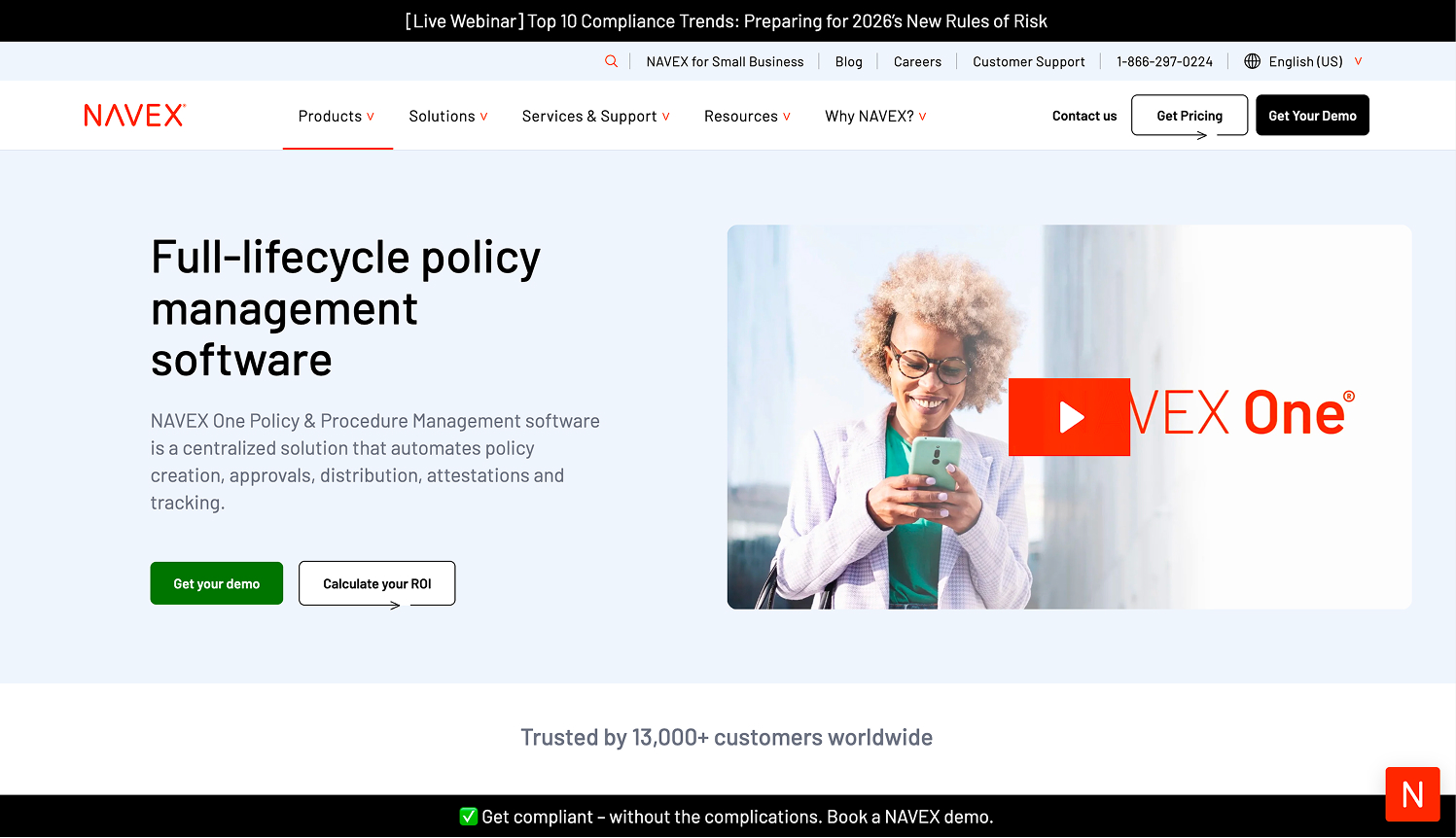
NAVEX One PolicyTech is an enterprise policy management solution designed to help regulated organizations create, review, distribute, and enforce policies at scale. In healthcare environments, it is often used to manage large policy libraries, standardize review cycles, and maintain defensible audit trails for HIPAA, CMS, OSHA, and accreditation requirements.
PolicyTech is part of the broader NAVEX One GRC platform, which allows healthcare organizations to connect policies with incidents, training, risk, and reporting workflows. This makes it suitable for organizations that want policy management tightly aligned with wider governance and compliance programs.
Key Features:
- Policy Lifecycle Management: Automates drafting, review, approval, publishing, and scheduled reviews to keep healthcare policies current and consistently governed.
- Centralized Policy Library: Maintains version-controlled policies with full audit history showing approvals, revisions, and effective dates.
- Acknowledgment & Attestation Tracking: Captures employee acknowledgments and attestations with time-stamped records to support survey and audit evidence.
- Workflow Configuration: Supports configurable approval and review workflows to accommodate complex organizational structures and regulatory requirements.
- Audit Trails & Reporting: Provides built-in reporting and audit logs to demonstrate policy governance during HIPAA, CMS, and accreditation surveys.
- Integration with NAVEX GRC Modules: Links policies to incidents, training, and risk data within the NAVEX ecosystem for broader compliance oversight.
Best For:
NAVEX One PolicyTech is best suited for large healthcare systems and enterprise providers that need structured, scalable policy governance integrated with broader risk and compliance programs.
Organizations primarily looking for lightweight policy execution or faster rollout with minimal configuration may find the platform more complex than necessary for day-to-day policy management alone.
G2 Rating: 4.2 / 5
Pricing: Custom
Trial / Demo: Demo available on request
4. MedTrainer
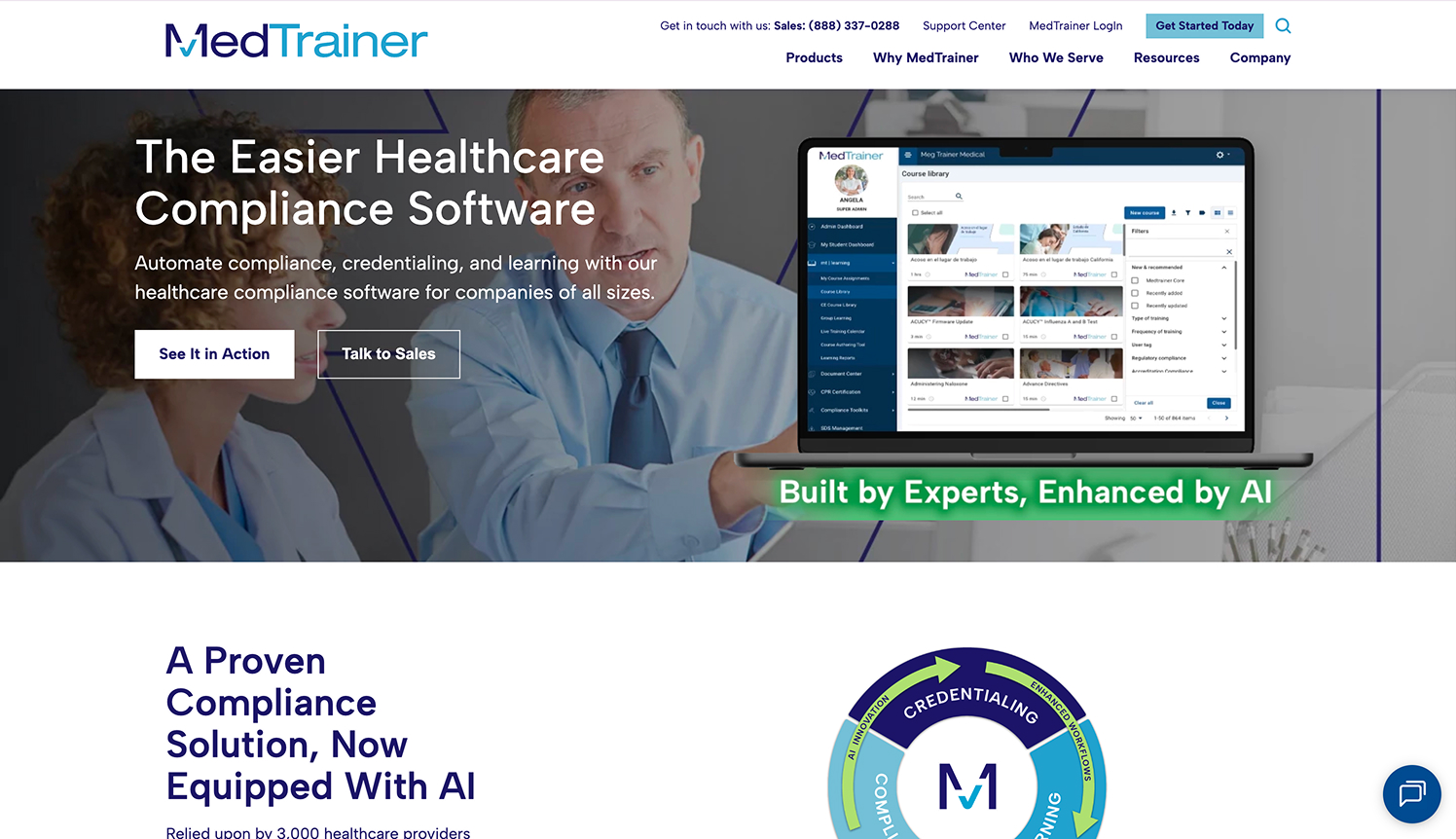
MedTrainer is a healthcare-specific compliance platform that combines policy management with training, credentialing, and risk workflows. It is designed for provider organizations that want policy updates, staff acknowledgments, and compliance training managed together rather than across separate systems.
In healthcare settings, MedTrainer is commonly used to ensure policies stay current with HIPAA and CMS requirements while tying policy acknowledgments directly to employee training and competency tracking.
Key Features:
- Healthcare Policy Management: Centralizes policies and procedures with version control, approval workflows, and scheduled review cycles tailored to healthcare regulations.
- Pre-Built Healthcare Templates: Provides policy templates aligned to common healthcare compliance requirements, helping teams reduce setup time.
- Acknowledgment & Attestation Tracking: Captures staff acknowledgments and maintains audit-ready records for surveys and inspections.
- Integrated Compliance Training: Links policies directly to required training, reducing gaps between policy updates and staff education.
- Credentialing & Risk Modules: Supports provider credentialing and incident tracking within the same platform for broader compliance oversight.
- Reporting & Audit Support: Generates reports showing policy status, acknowledgments, and training completion for HIPAA and CMS reviews.
Best For:
MedTrainer is best suited for small to mid-sized healthcare providers and clinics that want policy management tightly integrated with compliance training and credentialing in a single system.
Organizations with large, complex policy libraries across multiple facilities or those needing advanced policy-to-audit evidence linking may require a more specialized or scalable policy governance platform.
G2 Rating: 4.4 / 5
Pricing: Custom
Trial / Demo: Demo available on request
5. RLDatix PolicyStat
https://www.rldatix.com/en-uki/solution/policy-stat/
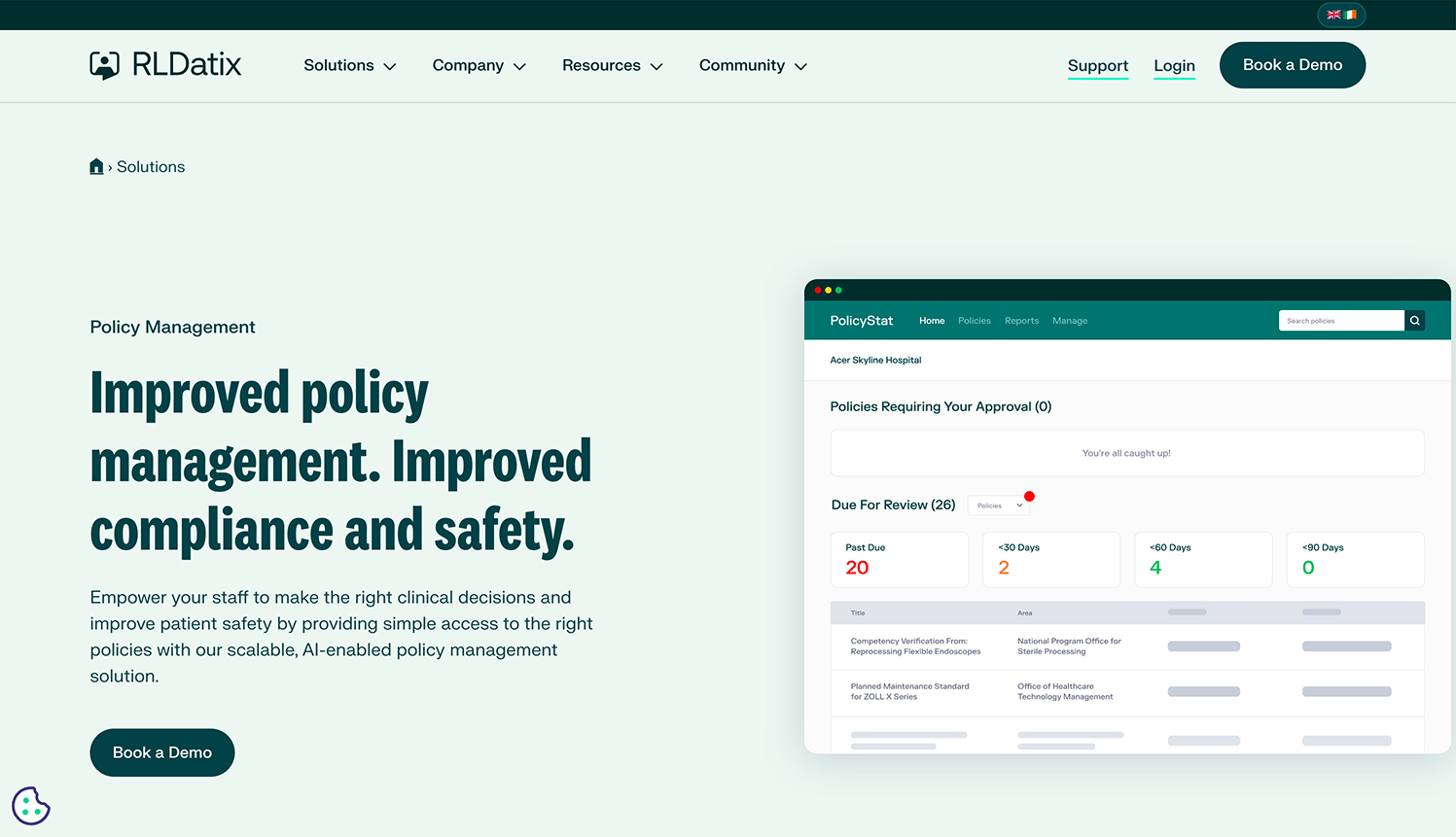
RLDatix PolicyStat is a healthcare-focused policy and procedure management platform used widely by hospitals and large health systems. It is designed to support enterprise-scale policy governance with strong collaboration, searchability, and audit readiness for HIPAA, CMS, and accreditation surveys.
PolicyStat is often adopted by organizations that need to manage large, complex policy libraries across multiple departments, while ensuring staff can quickly find and follow the most current procedures.
Key Features:
- Centralized Policy & Procedure Repository: Maintains a single, searchable source of truth for policies with controlled access to active and archived versions.
- Structured Review & Approval Workflows: Automates review cycles, approvals, and reminders to help teams stay on schedule and avoid missed updates.
- Advanced Search & Accessibility: Strong search functionality helps clinical and operational staff quickly locate relevant, current policies.
- Version Control & Audit Trails: Preserves detailed version histories and approval records to support accreditation and regulatory surveys.
- Collaboration & Commenting: Enables cross-department input during policy development and review, supporting enterprise governance.
- Reporting for Survey Readiness: Provides reports that highlight review status and policy compliance gaps.
Best For:
RLDatix PolicyStat is best suited for hospitals and large healthcare systems that manage extensive policy libraries and need strong collaboration, search, and audit support at scale.
Smaller organizations or teams looking for lighter-weight policy execution with minimal setup may find the platform more than they need for day-to-day policy management.
G2 Rating: 4.2 / 5
Pricing: Custom
Trial / Demo: Demo available on request
Also Read: Top 5 Policy Management Software in 2026 (Best Picks Ranked with Features & Pricing)
6. HealthStream Policy Manager
https://www.healthstream.com/solution/quality-compliance/policy-management/policy-manager
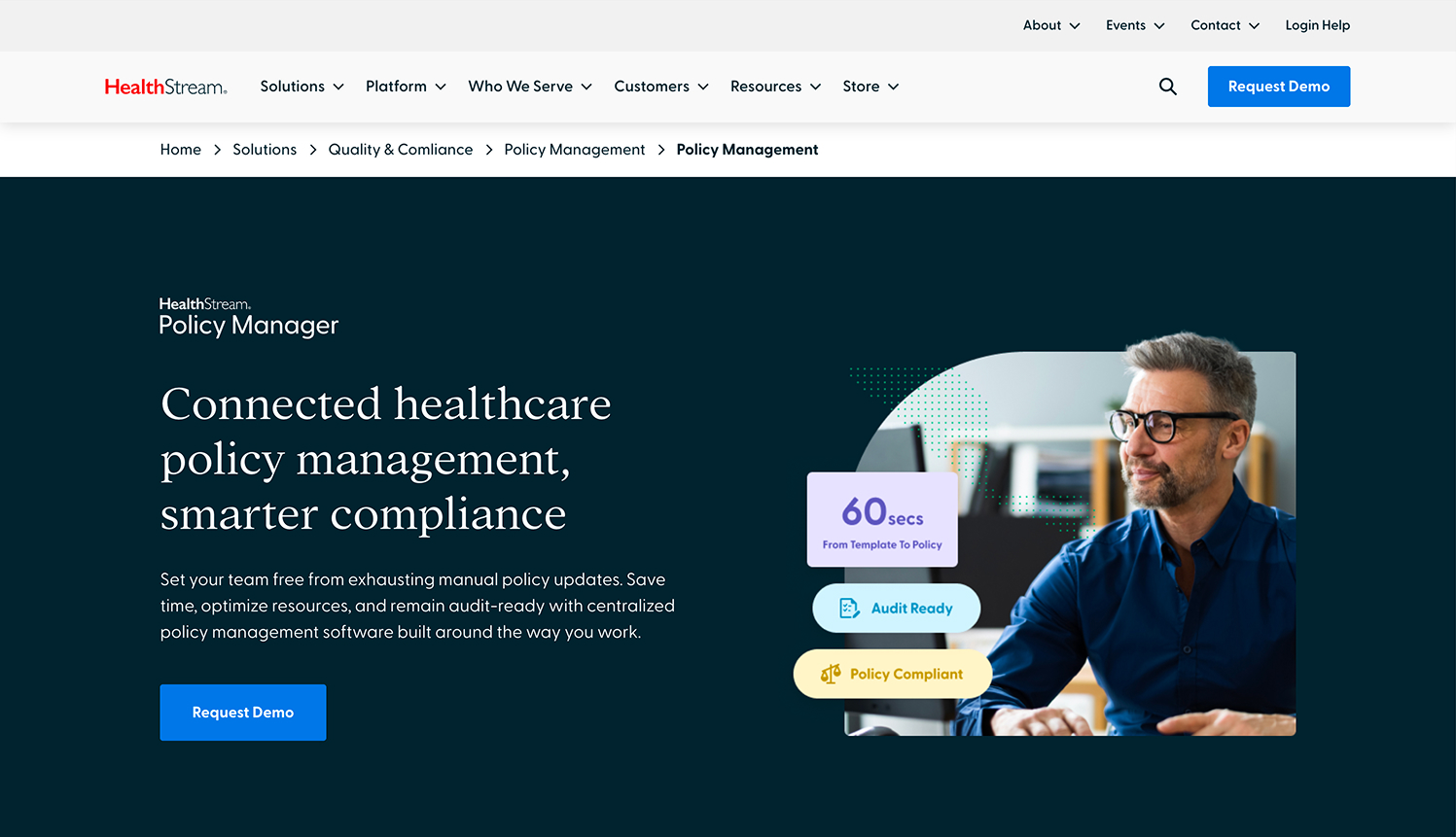
HealthStream Policy Manager is a healthcare-focused policy and procedures management platform built to help hospitals, clinics, and health systems centralize, update, and enforce policies with less manual effort and greater audit readiness. It’s designed around healthcare compliance realities like HIPAA, CMS, and accreditation survey preparation, with a strong emphasis on streamlined workflows and ease of use.
Key Features:
- Centralized Policy Repository: Houses all policies and procedures in a searchable cloud-based system with organized storage and quick access.
- Automated Review, Approval & Revision Workflows: Keeps policies current by automating review cycles, updates, and approvals, reducing missed reviews and manual tracking.
- Version Control & Audit Trails: Maintains detailed version histories and audit trails that demonstrate when revisions, approvals, and acknowledgments occurred—important for HIPAA/CMS surveys.
- Staff Attestation & Tracking: Records employee acknowledgments and attestations to show who has reviewed and accepted specific policies.
- Policy Templates & Best Practices: Includes ready-to-use policy templates based on healthcare standards to help speed creation and alignment.
- Reporting & Dashboards: Enables compliance teams to monitor policy status, overdue reviews, and acknowledgment gaps with built-in reporting.
Best For:
Healthcare organizations that want a purpose-built, cloud policy management solution focused on making policy governance and survey readiness easier. It works well for hospitals, clinics, and health systems that need automated workflows, strong version control, staff attestation tracking, and ready-to-use templates that align with healthcare compliance needs. Organizations that require deep integration with broader GRC systems or more extensive cross-module workflows may combine Policy Manager with other tools.
G2 Rating: 4.7 / 5
Pricing: Starting around $4,350/year
Trial / Demo: Demo available on request
7. ComplianceBridge
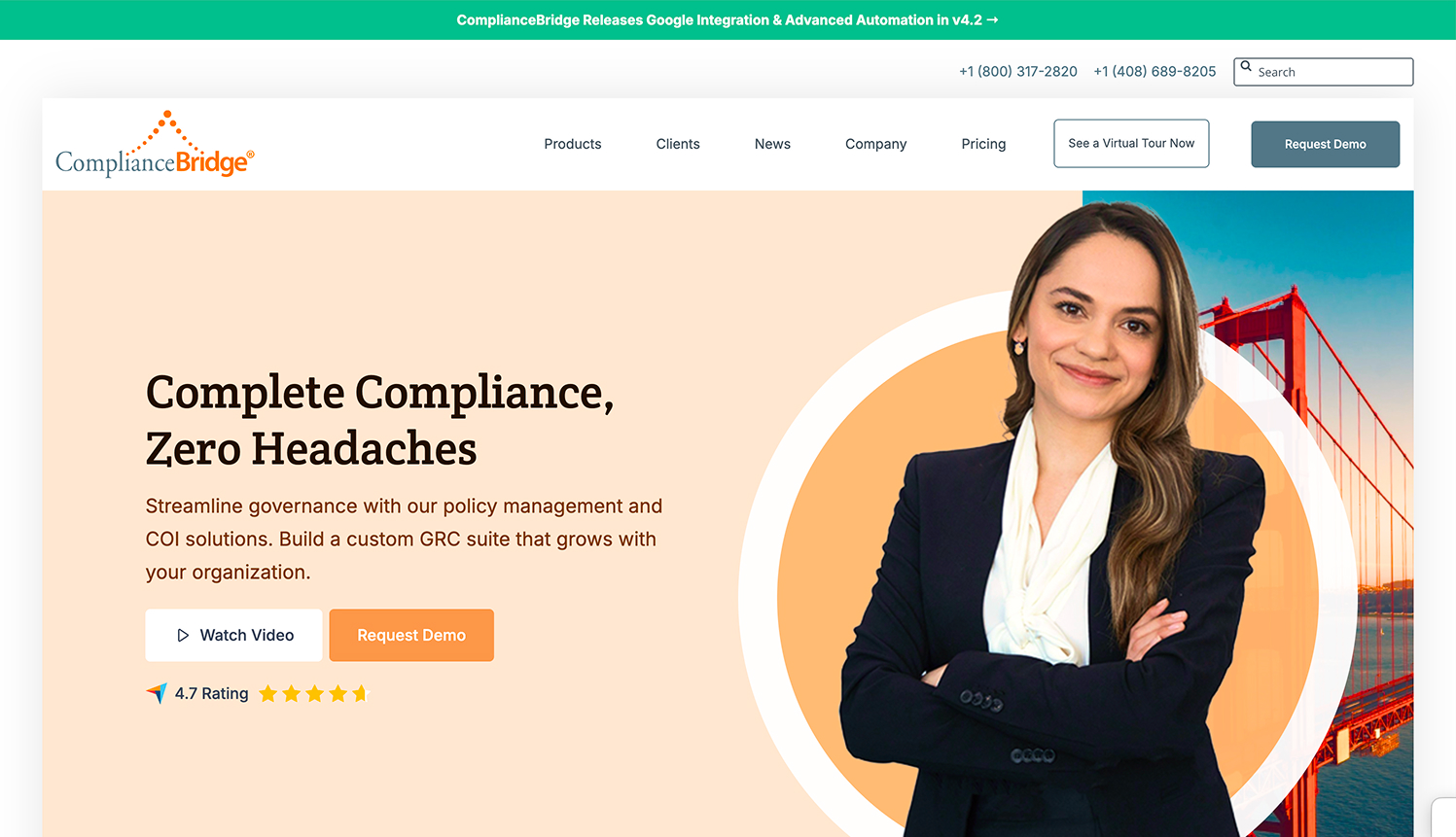
ComplianceBridge is a policy and procedure management platform used to automate the creation, review, distribution, and tracking of organizational policies and procedures. It offers a comprehensive workflow for managing the entire policy lifecycle with automation and collaboration features that reduce manual work and improve compliance visibility.
Key Features:
- Policy Creation & Revision: Create, import, edit, and publish policies and procedures using built-in editors and customizable workflows.
- Workflow Automation: Supports automated review, approval, distribution, and notifications to help ensure policies are updated and communicated consistently.
- Acknowledgment Tracking: Captures acknowledgment and electronic signatures, making it easier to show who has received and accepted policies.
- Real-Time Dashboards & Reporting: Displays progress and compliance status across policy lifecycles, including dashboards and reports for review status and attestations.
- Collaboration & Flexible Workflows: Allows multiple stakeholders to collaborate on policy creation and review with adaptable workflow structures.
- Version Control & Audit Trails: Tracks revisions with version histories and audit logs, helpful for compliance evidence and surveys.
Best For:
ComplianceBridge is best suited for small to mid-sized healthcare organizations and teams that need a straightforward, automated policy lifecycle solution without heavy GRC complexity. It’s a good option when teams want automated workflows, acknowledgment tracking, and visibility across policy lifecycles without investing in larger enterprise-focused suites.
G2 Rating: 4.7 / 5
Pricing: Tiered subscriptions (Silver, Gold, Platinum) with increasing capabilities.
Trial / Demo: Demo available on request
8. ConvergePoint
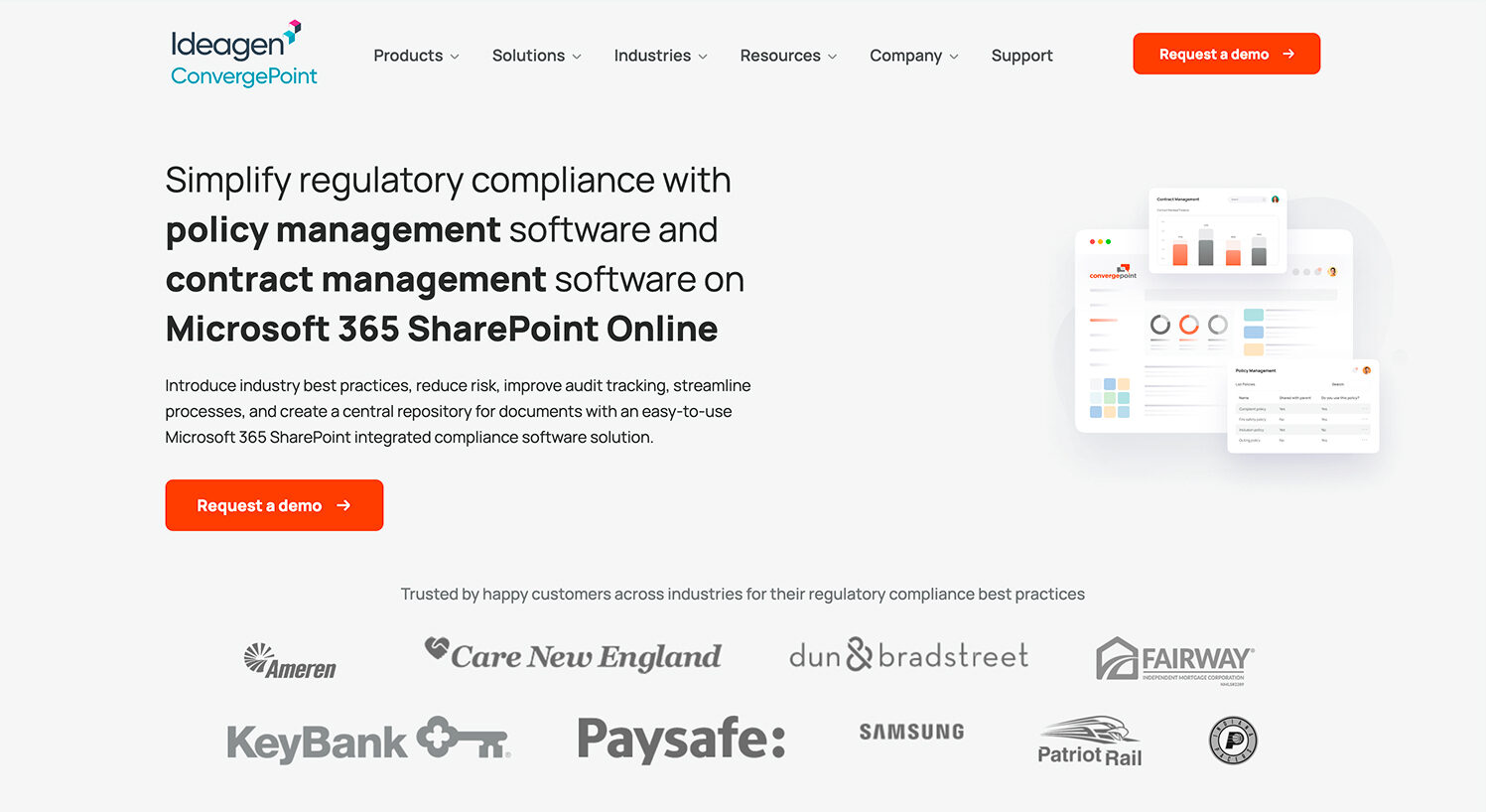
https://www.convergepoint.com/
ConvergePoint Policy Management Software extends Microsoft 365 SharePoint to manage the full policy and procedure lifecycle within one centralized system. Built on SharePoint, it combines content creation, workflow automation, distribution, acknowledgments, search, and audit trails to support structured policy governance across departments. This architecture leverages familiar Microsoft tools while adding compliance-oriented automation and reporting.
Key Features:
- Policy Creation & Templates: Create and revise policies using built-in templates or start from existing documents, with support for drafting directly in Word Online.
- Automated Workflows & Approvals: Structured, rules-based workflows ensure policies move through drafting, review, approval, and publishing stages with role-based assignments and notifications.
- Version Control & Audit Trails: Tracks revisions, approvals, reviewer comments, and version history so organizations can demonstrate clear governance and document lineage for surveys and audits.
- Policy Library & Search: Centralized repository with metadata and advanced search makes it easy for staff to find current policies and procedures.
- Acknowledgment & Certification Tracking: Distribute policies to employees, send notifications, and track acknowledgments or completion status from a real-time dashboard.
- Reporting & Dashboards: Real-time dashboards and reporting show approval statuses, overdue tasks, and acknowledgment completion to support compliance visibility.
Best For:
ConvergePoint is best suited for healthcare organizations already using Microsoft 365 SharePoint that want to add structured policy workflows, version control, and acknowledgment tracking without moving to a separate system.
Teams that need policy management tightly connected to broader compliance, audit, or risk workflows, or that don’t operate in a Microsoft environment, may find standalone or GRC-integrated platforms a better fit.
G2 Rating: 4.7 / 5
Pricing: Tiered subscriptions (Silver, Gold, Platinum) with increasing capabilities.
Trial / Demo: Demo available on request
9. Mitratech PolicyHub
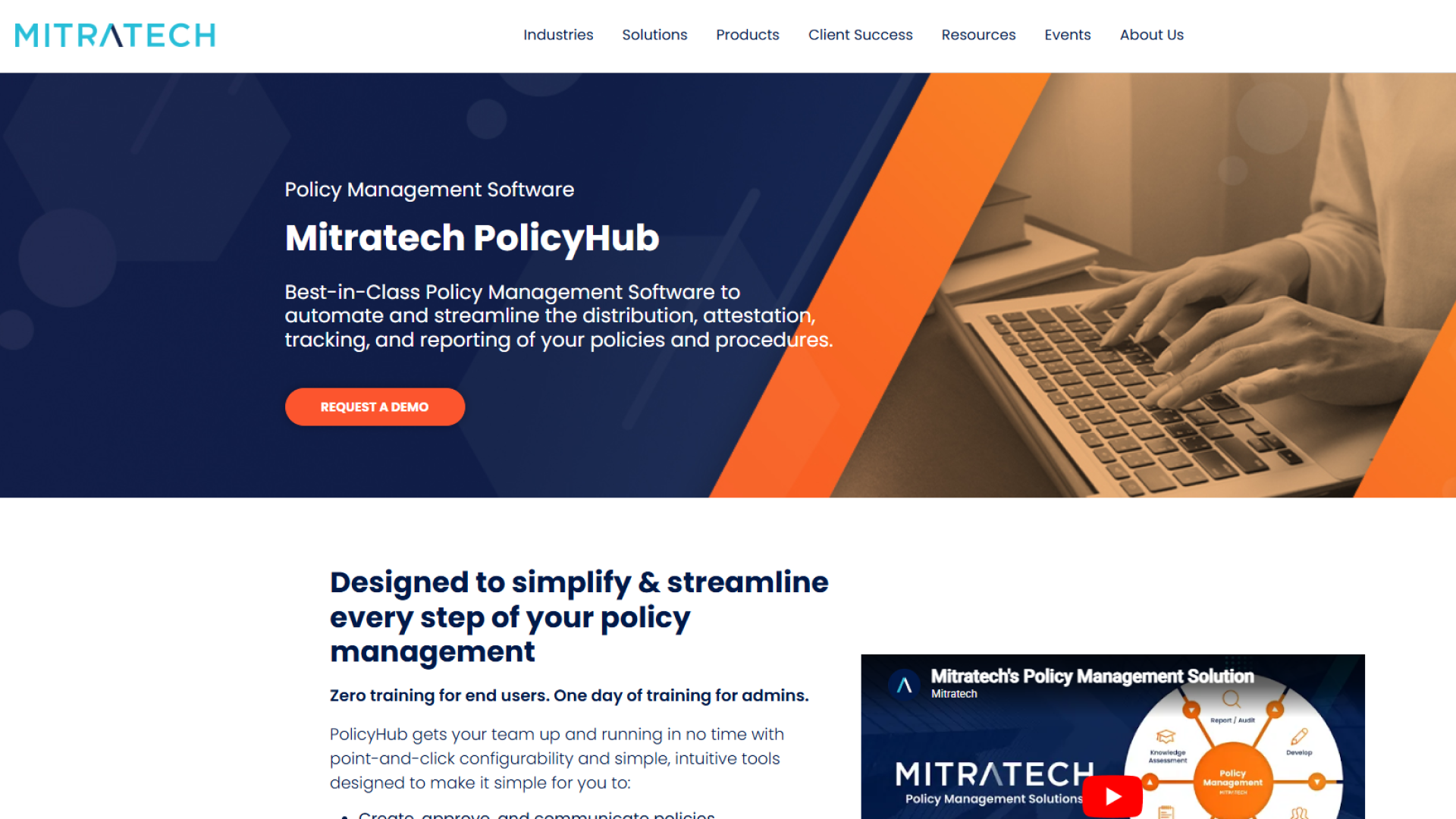
Mitratech PolicyHub is a policy and procedure management solution that automates the full policy lifecycle, from creation and approval through distribution, attestation, tracking, and reporting. While Mitratech is frequently referenced in broader GRC contexts, PolicyHub is also used by regulated industries that require strong lifecycle governance, version control, and defensible compliance evidence.
Key Features:
- Policy Creation & Approval Workflows: Simplifies drafting, review, and publishing with automated notifications and configurable workflows.
- Automated Distribution & Attestation: Distributes policies to the right employees and tracks acknowledgments and knowledge assessments.
- Version Control & Audit Trail: Maintains detailed histories of revisions, approvals, and attestations for audit readiness.
- Reporting & Compliance Insights: Offers dashboards and reporting that help demonstrate compliance to leadership and external auditors.
- Configurable & Intuitive: Designed to reduce training time with an easy, point-and-click interface.
Best For:
Organizations, including large healthcare systems, that want structured policy governance backed by automated workflows, acknowledgment tracking, and strong audit trails. It fits teams needing enterprise-grade policy management that scales and integrates with broader GRC programs. Simpler standalone healthcare policy use cases might find lighter, healthcare-focused tools more streamlined.
G2 Rating: 4.3
Pricing: Custom
Trial / Demo: Demo available on request
10. ComplyAssistant Healthcare Policy Management
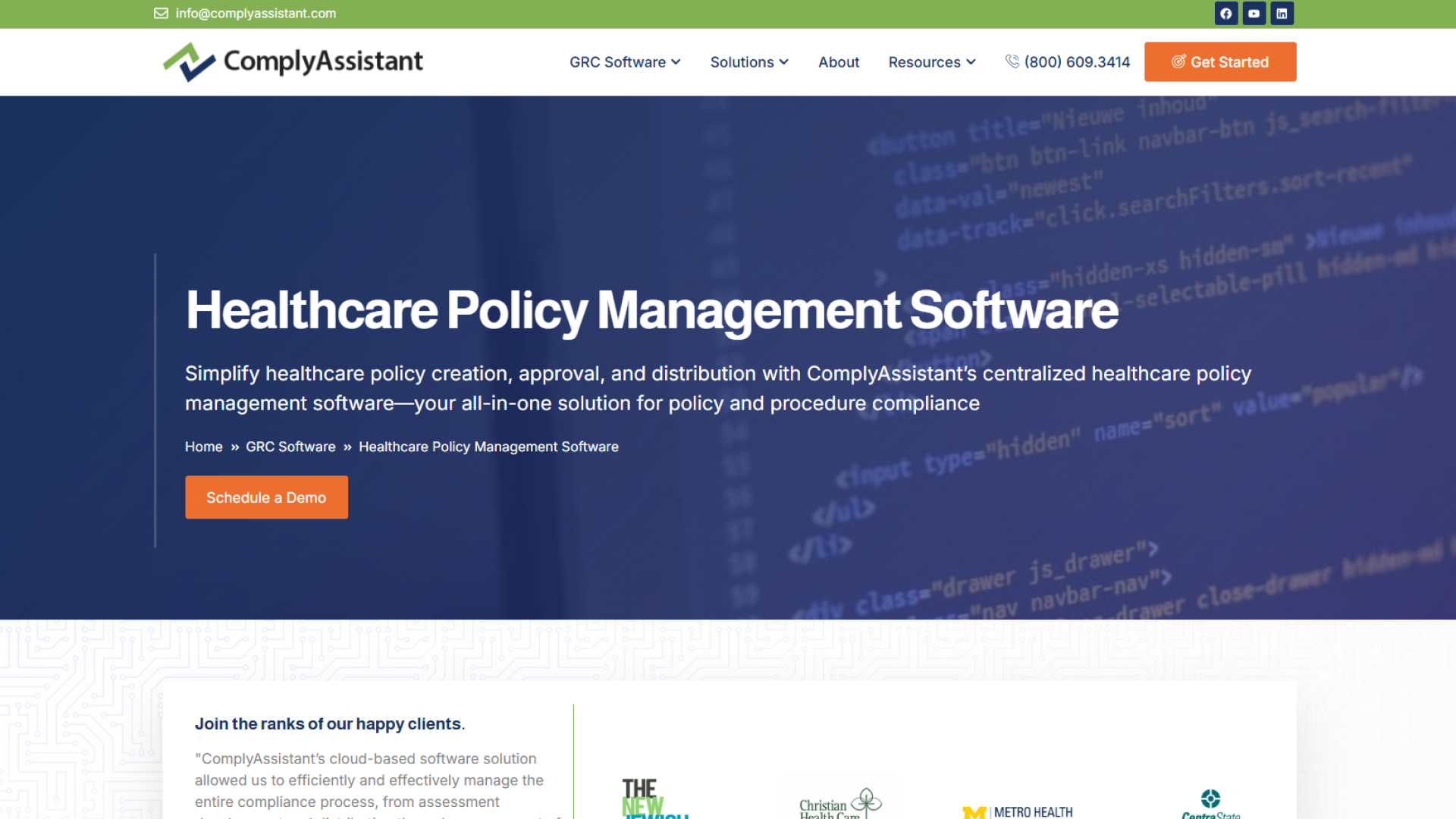
ComplyAssistant offers a healthcare-focused GRC and compliance platform with built-in policy management designed around real healthcare regulatory needs such as HIPAA and CMS. Its policy module centralizes policies, automates approval workflows, tracks acknowledgments, and supports audit-ready reporting, while also covering risk, incident, and contract management as part of a broader compliance ecosystem.
Key Features:
- Centralized Repository: Store, manage, and access all policies from a secure, cloud-based system with version control and filtering.
- Automated Policy Workflows: Assign tasks, set due dates, and automate reviews and approvals across teams.
- Acknowledgment Tracking: Track digital signatures and attestations with reminders and centralized documentation.
- Real-Time Reporting & Audit Support: Generate exportable reports for auditors and internal reviews.
- Role-Based Approvals: Define and enforce role-specific review and approval processes to match organizational hierarchy.
Best For:
Healthcare providers, from clinics to multi-site health systems, that want core policy management tightly integrated into a broader compliance/GRC platform with centralized tracking, role-based workflows, and strong audit documentation. Its features work well where policy tasks are handled alongside risk and compliance activities.
G2 Rating: N/A
Pricing: Custom
Trial / Demo: Demo available on request
Why Integrated Policy And Compliance Management Matters
Fragmented policy and compliance processes increase risk, waste time, and hamper audit readiness. Integrated solutions align policies with controls, risks, and evidence.
Integrated systems reduce manual handoffs by linking policy updates with risk assessments and audit evidence, enabling compliance officers to respond to inquiries faster. They help standardize procedures across departments and automate attestations and reminders. Visibility into policy execution strengthens operational controls and minimizes gaps that regulators might flag during surveys.
Implementation Decisions That Reduce Policy Audit Risk
Implementing healthcare policy management software is not just a technology change. It’s an operational shift that affects compliance, clinical staff, leadership, and audit readiness. These best practices help ensure adoption, accuracy, and long-term value.
- Audit and Rationalize Your Existing Policies First
Before migrating anything, review your current policy library. Identify outdated, duplicate, or conflicting policies and retire what no longer applies. Starting with a clean, organized policy set reduces confusion and prevents legacy issues from carrying over into the new system. - Standardize Policy Structure and Ownership
Define consistent formats for titles, numbering, review cycles, and approval roles. Assign clear policy owners responsible for updates and reviews. Standardization improves usability and makes audits easier by showing consistent governance across departments. - Automate Review Cycles and Regulatory Updates
Use automated review schedules and reminders to keep policies current with HIPAA, CMS, OSHA, and accreditation requirements. Automation prevents missed reviews and reduces reliance on manual tracking that often fails under audit pressure. - Integrate Acknowledgments Into Daily Workflows
Make policy acknowledgments part of normal staff workflows rather than one-off tasks. Automated notifications, reminders, and tracking ensure staff attestations are completed and documented, which is critical during surveys and investigations. - Train Staff Based on Roles, Not Just Features
Compliance teams, department leaders, and frontline staff interact with policies differently. Provide role-based training that shows users exactly how to find policies, acknowledge updates, and follow procedures relevant to their responsibilities. - Use Dashboards to Monitor Compliance Gaps
Regularly review dashboards that highlight overdue reviews, missing acknowledgments, and policy exceptions. Proactive monitoring helps compliance teams address gaps before they become audit findings. - Align Policies With Risk, Controls, and Audits
Policies should not exist in isolation. Link them to controls, risk assessments, and audit evidence wherever possible. This alignment strengthens enforcement and makes it easier to demonstrate compliance during HIPAA, CMS, or Joint Commission surveys.
When implemented with these practices, healthcare policy management software becomes a continuous compliance engine rather than a static document repository.
Why VComply PolicyOps Stands Out for Healthcare Compliance
Healthcare compliance officers often struggle with policy sprawl across shared drives and email chains, making it impossible to prove HIPAA attestations or CMS survey readiness when regulators demand evidence. VComply PolicyOps eliminates this by centralizing the full policy lifecycle, drafting, automated reviews, approvals, distribution, and staff acknowledgments, in a HIPAA-compliant platform built for US healthcare.
PolicyOps automates scheduled reviews to keep policies current with evolving HIPAA, CMS, and OSHA rules, while generating instant audit trails and reports that prove version control, approvals, and 100% staff sign-off. It integrates seamlessly with ComplianceOps for evidence linking, so your policies directly support controls and risk mitigation during audits.
Start a 21-day free trial to explore how.
Conclusion
When policies are scattered across drives, approvals live in email threads, and acknowledgments are incomplete, the pressure only intensifies, especially when surveys or investigations begin.
The right healthcare policy management software changes that experience. Instead of reactive fire drills, you gain a centralized system where policies stay current, approvals are documented automatically, and staff attestations are always audit-ready. Compliance shifts from chasing documents to maintaining continuous visibility and control.
This is where VComply stands apart. By unifying policy governance with audit evidence, risk alignment, and real-time reporting, VComply helps healthcare organizations move from manual policy administration to confident, scalable compliance. Teams spend less time tracking versions and more time strengthening controls and readiness.
If your goal is fewer audit surprises, clearer accountability, and confidence that policies are enforced, not just written, book a free demo of VComply to see how PolicyOps and ComplianceOps work together to simplify healthcare compliance.
Frequently Asked Questions
Healthcare policy management software centralizes policy creation, approvals, distribution, and tracking. It helps organizations maintain compliance with HIPAA, CMS, OSHA, and accreditation requirements.
Auditors expect proof that policies are current, approved, communicated, and acknowledged. Poor policy management often leads to audit findings, delays, and corrective action plans.
These tools provide version history, approval records, acknowledgment tracking, and exportable reports. That evidence helps compliance teams respond quickly and confidently during audits.
Look for automated review cycles, role-based access, acknowledgment tracking, and real-time reporting. Integration with broader compliance and risk workflows adds long-term value.
No. Small clinics benefit from templates and automation, while large systems need scalability, reporting depth, and cross-department visibility.
Centralized governance prevents outdated policies, missed reviews, and inconsistent enforcement. Automation improves accountability and reduces reliance on manual tracking.