

Top 5 Governance, Risk and Compliance (GRC) Certifications
Governance, Risk, and Compliance (GRC) certifications have become increasingly valuable as organizations face rising regulatory pressure, cybersecurity threats, AI governance concerns, privacy regulations, and operational risk. Modern businesses are no longer looking for compliance professionals who only understand regulations. They want professionals who can manage enterprise risk, improve governance processes, strengthen internal controls, and support…

Key Takeaways (TL;DR)
-
Learn how GRC certifications validate your skills in governance, risk management, and compliance excellence.
-
Discover the top global GRC certifications like CRISC, CISA, and CISM to boost your career prospects.
-
Understand how GRC credentials enhance credibility, leadership opportunities, and earning potential in compliance roles.
-
Explore the practical costs, preparation, and time commitments needed to succeed in GRC certification journeys.
-
See how recognized GRC programs empower professionals to manage risks and strengthen corporate governance effectively.
Understanding GRC Certifications
Let’s define GRC certifications and understand how they validate your professional skills.
What are GRC Certifications?
GRC certifications are professional qualifications designed to equip individuals with the knowledge and skills to navigate the complexities of Governance, Risk, and Compliance. These certifications validate your expertise in managing risks, ensuring regulation compliance, and implementing effective governance strategies.
In a competitive job market, GRC certifications are more than just credentials—they are a mark of credibility. They demonstrate to employers that you have a structured approach to solving GRC challenges, making you an invaluable asset in industries where compliance and risk management are paramount.

How GRC Certifications Validate Professional Skills
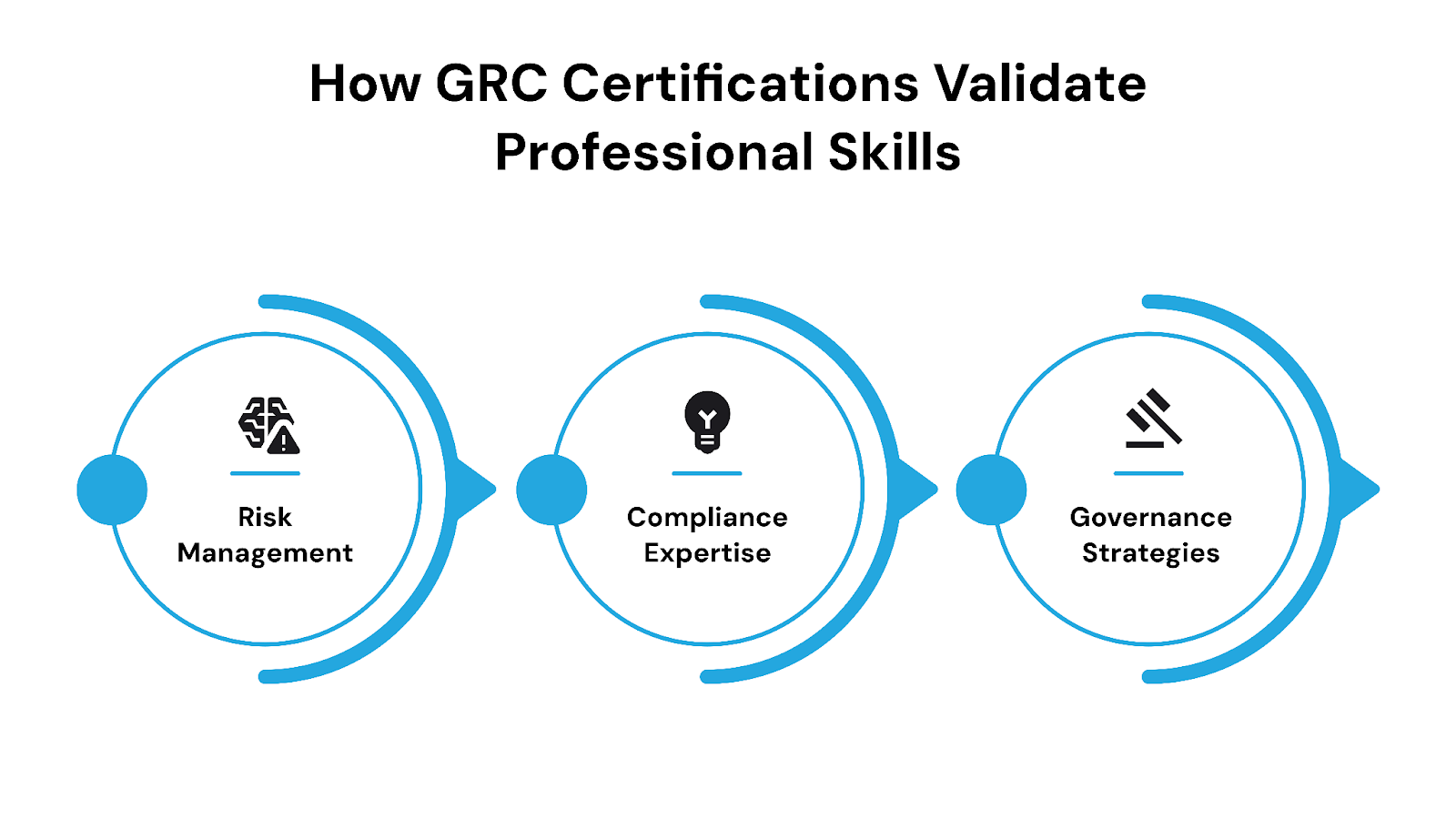
Earning a GRC certification is a way to solidify your skills in three critical areas:
- Risk Management
Certifications provide in-depth training in identifying, evaluating, and mitigating organizational risks. You’ll gain the ability to anticipate potential threats and develop strategic responses that align with business objectives. - Compliance Expertise
With a GRC certification, you’ll ensure your organization adheres to ever-evolving regulatory requirements. These certifications help you stay updated on global compliance standards, reducing the likelihood of legal and reputational risks. - Governance Strategies
Governance goes beyond managing risks; it’s about setting the tone for ethical and effective operations. Certifications validate your ability to design governance frameworks that promote accountability, transparency, and sustainability within your organization.
GRC certifications validate your ability to manage compliance and risks effectively. Platforms like VComply complement these certifications by providing professionals with the tools to implement governance strategies seamlessly.
Why GRC Certifications Matter More in 2026
Organizations today are managing overlapping regulations, growing cybersecurity risks, third-party dependencies, AI-related governance challenges, and increasing audit scrutiny. This has created stronger demand for professionals who understand governance frameworks, risk management methodologies, compliance operations, and information security controls.
GRC certifications help professionals:
- Validate governance and compliance expertise
- Improve career opportunities in risk and compliance roles
- Build credibility with employers and regulators
- Strengthen audit and risk management capabilities
- Improve understanding of cybersecurity and IT governance
- Support leadership and strategic decision-making
- Increase salary and long-term career growth potential
For organizations, certified GRC professionals help improve compliance maturity, reduce operational risk, and strengthen accountability across teams and business functions.
Top 5 GRC Certifications
For professionals aiming to advance their careers in governance, risk, and compliance, obtaining the right certification can be a game-changer. Below are the top GRC certifications, detailing their focus, requirements, and career benefits.
1. Certified in Risk and Information Systems Control (CRISC)
The CRISC certification is designed for professionals who manage enterprise risks and implement effective information systems controls. It focuses on identifying, assessing, mitigating, and monitoring IT and business risks.
Requirements and Exam Details:
- Minimum of three years of relevant work experience in at least two of the four CRISC domains.
- A comprehensive exam covering Risk Identification, Risk Assessment, Risk Response and Mitigation, and Risk and Control Monitoring.
Career Paths and Average Annual Salary:
- Career roles: Risk Manager, IT Control Analyst, and Compliance Officer.
- Average salary: Approximately $117,070 annually, depending on role and location.
Cost:
- ISACA Members: $575
- Non-Members: $760
2. Certified Information Systems Auditor (CISA)
CISA is globally recognized for auditing, control, and security of information systems. It certifies your ability to assess vulnerabilities and report on compliance.
Prerequisites for Certification:
- At least five years of work experience in information systems auditing, control, or security.
- Experience waivers are available for certain degrees and certifications.
The Benefits of Obtaining CISA:
- Enhances credibility and provides a competitive edge in the IT audit field.
- Opens doors to roles like IT Auditor, Information Security Analyst, and Compliance Manager.
Cost:
- ISACA Members: $575
- Non-Members: $760
3. Certified Information Security Manager (CISM)
CISM focuses on the management aspect of information security, equipping professionals to design and oversee secure systems while aligning them with business goals.
Certification Process and Prerequisites:
- Minimum of five years of work experience in information security, including at least three years in management roles.
- Passing a rigorous exam covering Information Security Governance, Risk Management, and Incident Management.
How CISM Enhances Careers:
- Recognized for advancing careers in information security management, CISM holders often secure senior roles like Security Manager or IT Governance Leader.
Cost:
- ISACA Members: $575
- Non-Members: $760
4. Certified in the Governance of Enterprise IT (CGEIT)
CGEIT is tailored for professionals focused on enterprise IT governance. It validates expertise in aligning IT with organizational goals and ensuring IT-related risks are managed effectively.
Eligibility Criteria and Exam Specifics:
- At least five years of relevant experience, including one year in IT governance frameworks.
- Exam domains include Framework for Governance of Enterprise IT, Strategic Management, and Risk Optimization.
Advantages for IT Governance Professionals:
- Positions you for leadership roles in IT governance, such as IT Director or CIO.
- Enhances credibility in managing IT governance frameworks effectively.
Cost:
- ISACA Members: $575
- Non-Members: $760
5. Project Management Institute’s Risk Management Professional Certification (PMI-RMP)
PMI-RMP is ideal for professionals specializing in project risk management. It focuses on identifying and managing project risks while maximizing opportunities.
Examination Domains and Eligibility Requirements:
- A secondary degree and 36 months of project risk management experience, or a four-year degree and 24 months of experience.
- Exam topics include Risk Strategy and Planning, Risk Monitoring and Reporting, and Risk Analysis.
Benefits for Risk Management Careers:
- Demonstrates expertise in risk management within project environments.
- This leads to roles like Risk Manager or Project Manager, with average salaries exceeding $100,000 annually.
Cost:
- PMI Members: $520
- Non-Members: $670
Considerations for Budgeting and Investment in GRC Certification Pursuit
When planning for GRC certification, it’s essential to consider the following factors beyond the examination fees:
- Study Materials and Training: Investing in quality study guides, practice exams, and training courses can enhance your chances of success. These resources may range from $200 to $2,000, depending on the depth and format of the material.
- Membership Fees: Joining professional organizations like ISACA or PMI can provide access to discounted exam fees, study resources, and networking opportunities. Membership fees vary but typically range from $135 to $225 annually.
- Recertification and Continuing Education: Maintaining your certification often requires earning Continuing Professional Education (CPE) credits and paying renewal fees. For example, ISACA certifications require 120 CPE hours over three years and a maintenance fee of $45 to $85 annually.
- Time Investment: Preparing for these certifications demands a significant time commitment. Balancing study time with professional and personal responsibilities is crucial for success.
By accounting for these factors, you can develop a comprehensive budget and timeline that aligns with your professional development goals.
Conclusion
Investing in GRC certifications is more than a career step—it’s a way to enhance your professional credibility, develop in-demand skills, and position yourself as a key player in governance, risk, and compliance. Whether you’re managing IT risks, improving audit processes, or aligning governance strategies with business goals, these certifications offer the tools and knowledge to excel.
While the journey requires planning, time, and resources, the long-term benefits—higher earning potential, career advancement, and the ability to navigate complex regulatory environments—make it a worthwhile pursuit.
If you’re ready to put your GRC skills into action or want to see how technology can simplify your compliance efforts, book a free demo with VComply today.
Frequently Asked Questions
GRC certifications are professional credentials that validate expertise in governance, risk management, compliance, auditing, information security, and enterprise controls. They help professionals demonstrate their ability to manage organizational risks and regulatory requirements effectively.
Yes. GRC certifications help professionals improve credibility, strengthen technical and governance knowledge, qualify for leadership roles, and increase earning potential in compliance, risk management, auditing, and cybersecurity careers.
CRISC and PMI-RMP are among the best certifications for professionals focused on enterprise risk management and project risk management. They provide specialized training in identifying, assessing, monitoring, and mitigating risks.
CISA and CISM are widely recognized certifications for IT audit, information security governance, cybersecurity risk management, and compliance oversight.
Most GRC certifications do not require coding skills. However, understanding cybersecurity concepts, IT systems, internal controls, and risk management frameworks can be helpful for certifications focused on information security and IT governance.