

Automated GDPR Compliance: Simplify Audits and Reduce Risks
GDPR audits rarely fail because of one big mistake. They fail because everyday tasks pile up quietly. Consent records are scattered across different tools, data requests are tracked via email, and audit trails break when you need them most. As a privacy or compliance leader, you deal with this operational clutter far more often than anyone admits.

This is where GDPR compliance automation becomes practical.
It helps you stay ready even when audits or regulator questions come without warning. Research shows that nearly half of the mobile apps collecting personal data display potential GDPR non-compliance when assessed using automated analysis, highlighting how easily gaps slip through routine processes.
These issues surface when scrutiny begins, not before. In this blog, we will explain how GDPR compliance automation simplifies audits, reduces hidden risks, and brings consistency to your day-to-day compliance work.
Key Takeaways
- GDPR compliance automation turns manual, periodic tasks into continuous, real-time readiness, reducing audit effort and operational risk.
- Automating control tracking, evidence collection, and DSAR workflows improves accuracy and consistency across systems.
- Real-time monitoring and dashboards give leaders visibility into compliance gaps for proactive remediation.
- VComply and similar platforms must support scalability, role-based access, framework mapping, and real-time reporting.
- Successful automation also requires clear ownership, cross-team alignment, and governance to enhance compliance without creating blind spots.
Did you know?
European data protection authorities have issued over €5.65 billion in fines and at least 2,245 GDPR penalties since the regulation went into effect, with average fines exceeding €2.3 million per breach. This highlights the Scale of enforcement and penalties across countries and industries, & financial risk of non‑compliance without automation and continuous readiness.
What Is GDPR Compliance Automation and How Does It Reduce Audit and Risk Burden?
GDPR compliance automation uses technology to enforce, monitor, and document GDPR requirements at scale, replacing slow manual processes with continuous workflows that keep compliance current and audit-ready. In regulated environments, it ensures controls remain active, reducing risk and operational burden.
Below are core aspects of GDPR compliance automation and how it reduces audit and risk burdens across industries:
- Automated Policy Enforcement: Software continuously applies GDPR policies like data minimization and consent tracking, eliminating manual updates and reducing control gaps across data systems.
- Real‑Time Compliance Monitoring: Continuous monitoring detects non‑compliance events as they occur, preventing issues from accumulating between periodic manual checks and enabling early remediation.
- Centralized Audit Evidence: Automation maintains an up‑to‑date repository of compliance evidence and audit trails, simplifying auditor queries and reducing preparation time.
- Risk Prioritization and Alerts: Systems identify high‑risk processing activities and generate alerts, enabling proactive risk mitigation instead of reactive fixes common with manual approaches.
- Consent Lifecycle Management: Automated tracking of consent records ensures lawful processing and timely updates for changes, reducing the risk of enforcement actions.
- Integration with Operational Systems: Automation integrates with existing data systems (CRM, HR, cloud infrastructure), keeping compliance workflows aligned with real‑world business processes across data sources.
Industry Application Impacts:
- Healthcare: Automation ensures patient data processing complies with GDPR requirements, linking consent and access controls to clinical and administrative systems.
- Financial Services: Real‑time tracking of customer data flows, and automated evidence support precision reporting obligations and audit readiness.
- Manufacturing & Energy and Utilities: Automated vendor risk feeds and continuous monitoring handle complex operational data across partner ecosystems.
- Higher Education: Automation covers student and research data lifecycles, ensuring valid legal bases and records of processing activities are maintained.
Also Read: GDPR Compliance Software: Features, Benefits, and Why VComply is the #1 Choice in 2026
To automate effectively, you first need to understand the GDPR principles, operational demands, and challenges that automation aims to resolve.
Core GDPR Concepts and Operational Challenges
To implement effective automated GDPR compliance, especially in healthcare, finance, manufacturing, energy, or higher education, you first need to understand the core GDPR concepts and the operational demands they place on teams.
Below, we explain key GDPR terminology and the operational realities that make compliance work complex without automation.
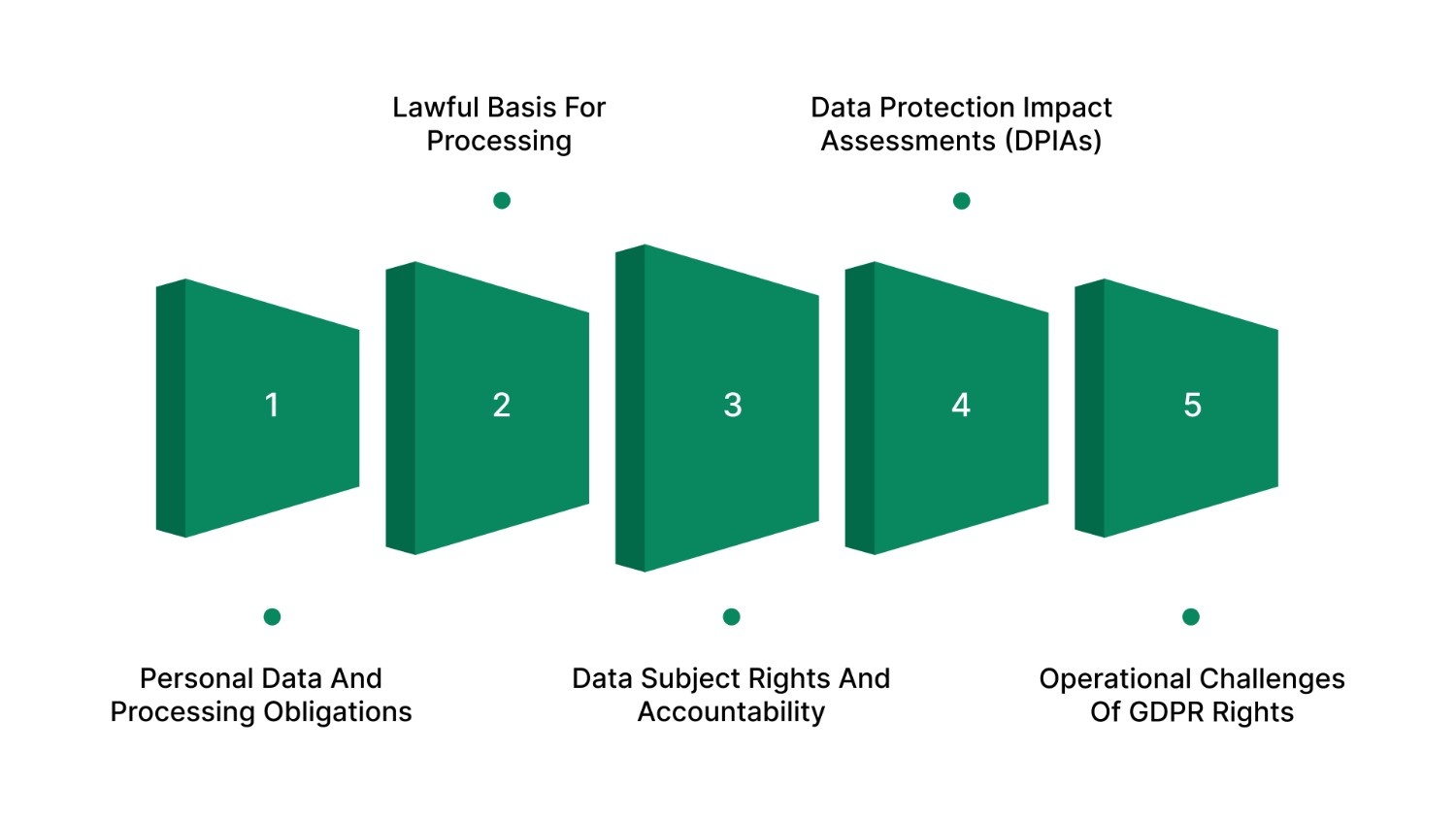
- Personal Data and Processing Obligations: GDPR covers any information identifying a living individual, from names and emails to system identifiers. Every step, collection, storage, use, sharing, and deletion requires clear workflows and traceability to demonstrate compliance.
- Lawful Basis for Processing: All processing must have a documented legal basis, such as consent, contractual necessity, or legitimate interest, to meet accountability requirements.
- Data Subject Rights and Accountability: Individuals can access, rectify, erase, or restrict processing of their data. Controllers must respond promptly, generally within one month, and provide detailed information on processing activities.
- Data Protection Impact Assessments (DPIAs): Required for high-risk processing, DPIAs document risk identification, mitigation, and decision logic, forming a key part of accountability.
- Operational Challenges of GDPR Rights: Fulfilling GDPR obligations becomes operationally demanding due to multiple factors:
- High DSAR Volume: Increasing requests require locating data across multiple systems quickly.
- Cross-Team Coordination: Legal, IT, security, and business units must collaborate efficiently.
- Evidence Assembly Under Deadlines: Rapid aggregation, redaction, and presentation of data are needed to meet regulatory timelines.
Once core concepts are clear, automation can transform these obligations into repeatable workflows that enhance control, accuracy, and audit readiness.
6 Ways GDPR Compliance Automation Improves Compliance Management
Below are six high‑impact benefits of GDPR compliance automation, each framed as a manual challenge → automated outcome → business value to show exactly how automation transforms your compliance operations and reduces risk.
Here’s the breakdown:
1. Faster Control Implementation With Prebuilt GDPR Mappings
- Manual Challenge: Compliance teams often build control frameworks from scratch, which can take weeks and introduce inconsistencies.
- Automated Outcome: Prebuilt GDPR control mappings automatically align system controls to GDPR requirements, removing manual setup.
- Business Value: Faster compliance program rollout, fewer gaps in control coverage, and reduced time to audit readiness.
2. Automated Evidence Collection for Audit Readiness
- Manual Challenge: Gathering evidence from scattered systems (logs, documents, configurations) is time‑consuming and error‑prone.
- Automated Outcome: Automation pulls evidence directly from integrated systems and maintains real‑time audit trails.
- Business Value: Continuous audit readiness without last‑minute scrambles, improved accuracy, and stronger audit defense confidence.
3. Continuous Compliance Monitoring Instead of Annual Checks
- Manual Challenge: Periodic manual audits miss interim non‑compliance issues and create compliance blind spots.
- Automated Outcome: Continuous monitoring tools detect control drift, misconfigurations, and policy violations in real time.
- Business Value: Early detection of compliance risks prevents escalation into enforcement actions or fines.
4. Streamlined Data Subject Request Handling
- Manual Challenge: Handling DSARs manually requires manually finding, aggregating, and redacting data from multiple systems.
- Automated Outcome: Workflows automatically verify identity, fetch relevant data, and track deadlines.
- Business Value: Faster, compliant responses within regulatory timeframes and reduced operational burden on privacy teams.
5. Reduced Human Error Through Workflow Automation
- Manual Challenge: Manual execution of repetitive tasks increases the risk of oversight, missing deadlines, or inconsistent control application.
- Automated Outcome: Automated workflows enforce repeatable processes with standardized logic and documentation.
- Business Value: Greater accuracy, fewer compliance gaps, and enhanced trust from regulators and partners.
6. Improved Cross‑Team Accountability and Visibility
- Manual Challenge: Compliance information spread across silos makes it difficult for teams (security, legal, IT) to stay aligned.
- Automated Outcome: Centralized dashboards and automated alerts show status, ownership, and progress in real time.
- Business Value: Enhanced collaboration, faster decision‑making, and clear accountability that strengthen governance.
VComply ComplianceOps centralizes GDPR controls, automates evidence collection, and continuously monitors compliance status across systems. This helps your team stay audit-ready without relying on spreadsheets, emails, or periodic fire drills.
Also Read: How to Set Up GDPR Compliance in 10 Steps
Now, let’s see how GDPR compliance automation simplifies audits.
How GDPR Compliance Automation Simplifies Audits
GDPR audits can be highly resource-intensive, especially when evidence is scattered and documentation is unorganized. Traditional audit prep involves chasing files and reacting to last-minute requests. GDPR regulatory compliance automation makes audit readiness continuous and predictable.
Below are the key ways automation streamlines audits and reduces disruption:
- Shift From Audit Prep to Continuous Audit Readiness: Automated systems keep compliance evidence and control status current, making controls “audit ready” in real time and turning audits into routine checks rather than disruptive events.
- Always‑Available Evidence Repository: Logs, policy attestations, control tests, and configuration evidence are centralized and searchable, eliminating manual compilation and reducing the risk of missing documentation.
- Reduced Audit Cycles and Disruption: Organized, correlated evidence lets auditors focus on evaluating compliance, shortening audit duration, minimizing disruption, and freeing teams for strategic work.
Auditor Collaboration Without Email, Spreadsheets, or Chaos
One of the biggest friction points in GDPR audits is coordination, collecting evidence, answering questions, and sharing documentation. Automation eliminates these pain points:
- Controlled Auditor Access: Role‑based access lets auditors view only the evidence and documentation relevant to their scope, reducing risk while making reviews faster and more focused.
- Centralized Compliance Documentation: Automated systems eliminate fragmented storage and replace it with a single source of truth for policies, logs, evidence, and control status. No more hunting through emails, spreadsheets, or shared folders.
- Real‑Time Status Visibility: Dashboards offer live views of compliance posture, control health, and evidence completeness, giving teams the transparency to track progress, address issues proactively, and reassure auditors.
Also Read: Compliance Controls 101: Types, Examples, and Best Practices
Now, let’s have a look at the step-by-step roadmap to implement GDPR compliance automation across your organization.
How to Automate GDPR Compliance Step by Step
Automating GDPR compliance transforms your program from fragmented activities into a structured, continuous compliance engine that supports audit readiness and risk reduction. The steps below provide a practical, non‑technical roadmap that compliance leaders can execute with cross‑functional buy‑in.
Below are the phases that establish clarity, ownership, and repeatable workflows.
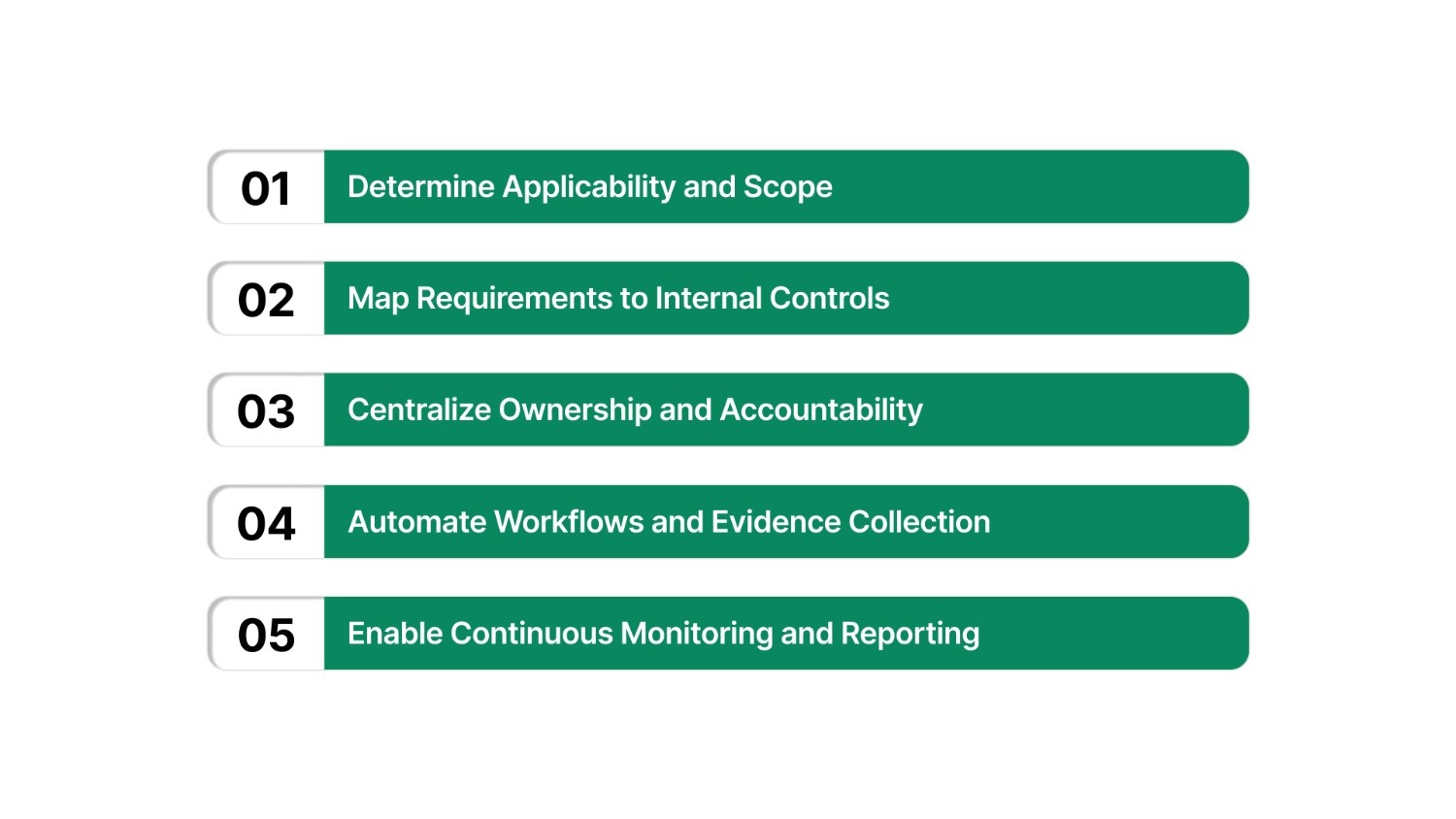
Step 1: Determine Applicability and Scope: Identify systems, processes, and data flows under GDPR, including third parties and subprocessors. Early scope clarity prevents blind spots and drift as automation matures.
Step 2: Map Requirements to Internal Controls: Translate GDPR principles into operational controls, mapping obligations like consent management, data retention, and access rights. This forms the foundation for automated evidence collection and monitoring.
Step 3: Centralize Ownership and Accountability: Assign clear owners for each process, control, and data domain to align legal, IT, security, and privacy teams, ensuring timely action when workflows trigger tasks or alerts.
Step 4: Automate Workflows and Evidence Collection: Implement automated routines for control testing, DSAR routing, and consent tracking. Integrate systems to pull evidence automatically and store it in audit-ready formats.
Step 5: Enable Continuous Monitoring and Reporting: Use real-time monitoring to detect drift, exceptions, and risks. Dashboards and automated reports provide ongoing visibility into control status, risk trends, and overall compliance health.
Structured implementation not only ensures compliance but also demonstrates measurable operational efficiency, cost savings, and ROI from automation.
ROI, Cost‑Benefit, and Implementation Timeline of GDPR Automation
Below are the ROI, cost‑benefit, and implementation timeline of GDPR automation.
- Time Savings and Efficiency Gains: Automated evidence collection and reporting decrease audit preparation time by consolidating documentation and tracking control status in real time, shortening audit cycles and minimizing disruption.
- Reduced Operational and Compliance Risk: Continuous monitoring and automated controls reduce error rates and lower the likelihood of compliance gaps, which could otherwise result in costly regulatory findings or operational disruptions.
- Implementation Timeline: A phased rollout typically looks like:
- Pilot Phase (2–3 months): Initial domain integration (e.g., DSAR automation).
- Mid Deployment (6–12 months): Broad automation of workflows, including control tracking and reporting.
- Full Enterprise Adoption (12–18 months): End‑to‑end automation with continuous monitoring and optimization.
ROI Payback: Most organizations begin to see payback within 6–12 months as manual task effort drops and audit cycles shorten. Mid‑market and enterprise teams often achieve full ROI within 12–18 months due to reductions in labor costs, error mitigation, and improved compliance outcomes.
VComply RiskOps identifies high-risk GDPR processing activities, continuously monitors control drift, and prioritizes remediation before issues escalate into audit findings or regulatory exposure. This gives leaders real-time visibility into where GDPR risk actually lives.
With expected benefits and timelines in mind, choosing the right platform is crucial to achieve scalable, continuous, and audit-ready GDPR compliance.
Selecting the Right GDPR Compliance Automation Platform
Choosing the right GDPR compliance automation platform is a strategic decision that affects audit readiness, risk reduction, visibility, and scalable compliance. Not all tools are equal, especially in highly regulated sectors. Effective evaluation goes beyond basic features to focus on capabilities that deliver real operational and regulatory impact.
Below are the key criteria to evaluate GDPR compliance automation platforms
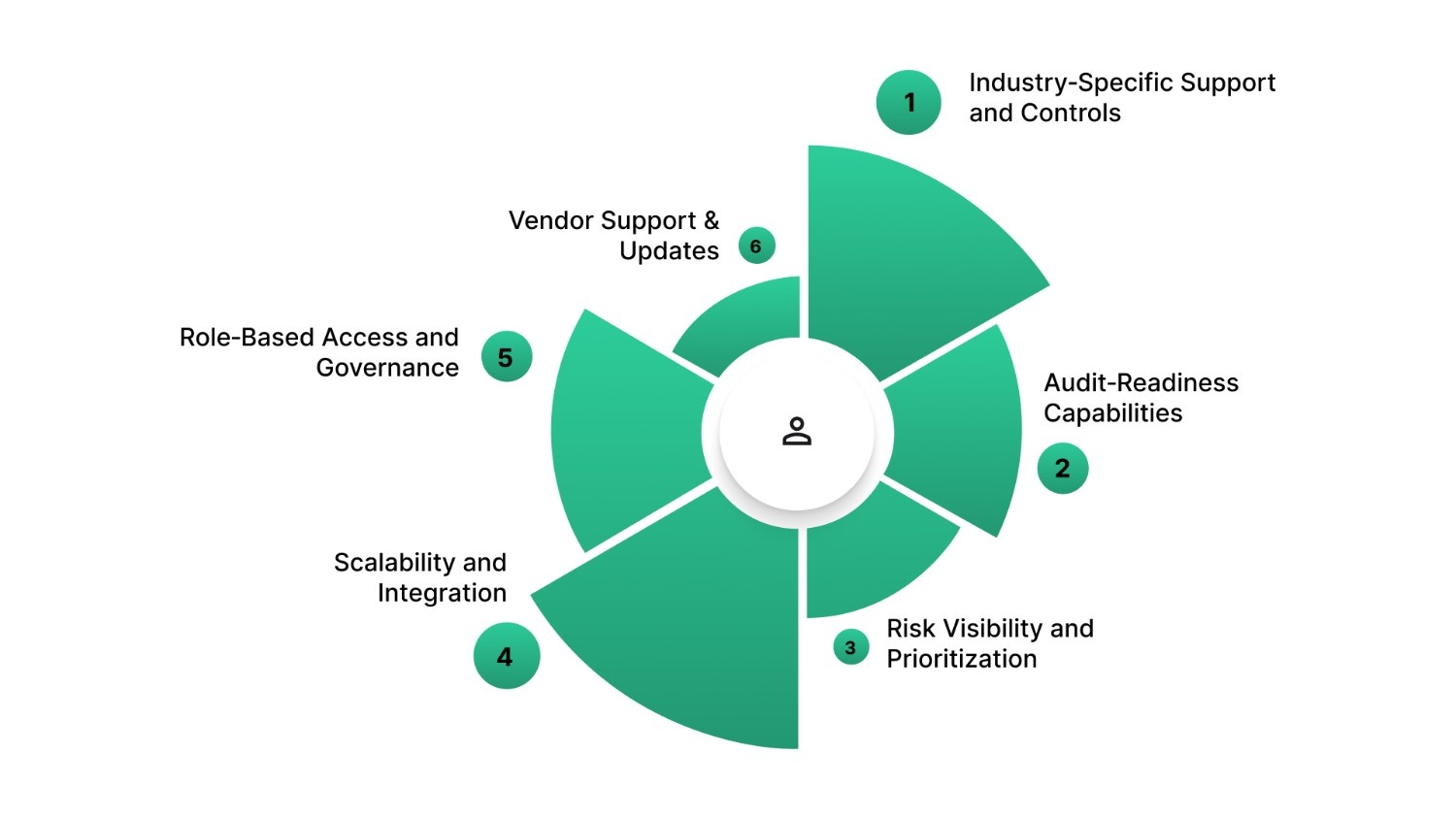
- Industry‑Specific Support and Controls: Choose platforms with flexible frameworks that address sector-specific requirements, like patient data protections in healthcare or financial reporting in banking, so workflows reflect regulatory realities.
- Audit‑Readiness Capabilities: Maintain centralized, real-time evidence, control logs, and dashboards to demonstrate compliance immediately, with automated documentation and traceable logs for regulator confidence.
- Risk Visibility and Prioritization: Platforms should offer automated risk scoring, gap insights, and alerts for emerging issues, enabling a focused remediation plan before risks escalate.
- Scalability and Integration: Solutions must grow with your organization, integrate with CRM, HR, cloud, and data tools, and handle increased data volumes efficiently.
- Role‑Based Access and Governance: Ensure sensitive compliance actions are restricted to authorized users with audit trails.
- Vendor Support & Updates: Evaluate whether the vendor provides ongoing updates for regulatory changes, dedicated support teams, and training resources, which help organizations stay compliant as requirements change.
VComply GRCOps connects compliance, risk, policy, and incident workflows into a single operational layer, so GDPR governance scales across teams, evidence stays defensible, and leadership gains a unified view of regulatory posture without managing disconnected tools.
Even with the right platform, organizations face adoption, ownership, and process challenges that can limit the effectiveness of GDPR automation.
Common Challenges in GDPR Compliance Automation Programs
Below are the most common challenges teams encounter when implementing GDPR compliance automation.
- Over-Automation Without Ownership: Automating tasks without clear owners creates accountability gaps, making controls ineffective and allowing hidden issues to persist.
- Siloed Teams: Disconnected compliance and security teams build isolated automation, leading to fragmented processes, integration challenges, and gaps between risk detection and compliance action.
- Treating GDPR as a One-Time Project: Approaching GDPR as a checklist rather than a continuous discipline causes compliance lapses as systems, data, and regulations change.
- Poor Tool Adoption: Lack of training or clear workflows leads teams to revert to spreadsheets and emails, undermining automation and consistency.
Also Read: How Middle Eastern Organizations Should Plan Their 2026 Compliance Budgets
Overcoming these challenges requires a centralized platform that operationalizes GDPR compliance while maintaining audit readiness and cross-team accountability.
How VComply Enables Scalable, Audit‑Ready GDPR Compliance
In complex enterprises, such as healthcare, finance, manufacturing, energy, or higher education, disconnected tools aren’t enough for GDPR compliance. VComply transforms fragmented activities into scalable workflows, enabling continuous, auditable compliance with audit readiness, risk visibility, and team accountability.
Below is how VComply can help you simplify GDPR compliance at scale:
- Centralized GDPR Control Management Across Teams: Unifies control definitions, framework mappings, and processing obligations into a structured library. Define controls once, assign ownership, and align with GDPR, eliminating spreadsheets and fragmented task lists.
- Continuous Compliance Visibility: Real-time dashboards provide full visibility into controls, tasks, exceptions, and evidence, helping teams spot issues before they become audit findings.
- Integrated Risk and Compliance Workflows (All 4 Ops): ComplianceOps, RiskOps, PolicyOps, and CaseOps work together to connect GDPR compliance with risk assessment, policy lifecycle, and incident management, offering a complete operational view.
- Automated Evidence and Audit-Ready Reporting: Captures compliance artifacts, logs attestations, and generates reports reflecting live and historical control status, removing manual compilation.
- Role-Based Access and Security: Ensures only authorized stakeholders have access to sensitive compliance data, with audit trails for defensibility.
Book a demo with VComply today to explore GDPR ComplianceOps and start streamlining your compliance and audit workflows.
Final Thoughts
As data volumes and regulatory scrutiny grow, GDPR compliance is increasingly demanding. Static audits aren’t enough; organizations need continuous, evidence-based compliance that adapts to changing processes and ecosystems. Automated verification enhances auditability and reduces manual effort, especially with real-time control and consent monitoring.
VComply’s Compliance Operations centralizes GDPR controls, automates evidence collection, enables real-time monitoring, and integrates compliance with risk and policy workflows. It turns compliance into a continuous discipline with scalable control mapping, role-based governance, and audit-ready reporting, helping organizations stay ahead of regulatory expectations.
Ready to experience the difference? Start your 21‑day free trial of VComply today to streamline GDPR compliance, simplify audits, and strengthen your organization’s compliance posture without disruption.
FAQs
GDPR compliance cannot be fully automated because while technology handles repetitive tasks like data mapping, consent tracking, and DSAR workflows, human judgment is still required for legal interpretation, contextual decisions, and strategic oversight. Automation should support humans, not replace expert decision‑making.
Implementation timelines vary by organizational size and scope. Focused pilots can be completed in 2–3 months, while full enterprise adoption across systems often takes 6–12 months. Initial ROI frequently appears within the first 6 months due to workload reduction and improved compliance readiness.
Before automation, you must clearly define your data inventory, establish processing scopes, and assign ownership across compliance, IT, and legal teams. A well‑mapped understanding of personal data flows and GDPR obligations ensures automation targets the correct systems and avoids inaccurate evidence collection.
GDPR does not issue a formal certification that automatically proves compliance. While some frameworks or tools offer certificates, GDPR compliance is demonstrated through evidence of continuous compliance, documented controls, impact assessments, and regulator‑ready reporting rather than a sealed certificate.
Traditional methods rely on manual spreadsheets, periodic audits, and static documentation. Automation replaces these with dynamic discovery, continuous control monitoring, task triggers, and real‑time reporting, making compliance more proactive and less susceptible to human error.