

What Compliance Maturity Really Looks Like In 2026
Regulatory expectations have shifted, moving past static documentation to prioritize how programs perform in real-time. Organizations relying on manual tracking and slow workflows now face unnecessary exposure, as they often prioritize retrospective reporting over continuous oversight.

This gap between policy intent and daily execution creates structural weaknesses that frequently surface during routine examinations. For leadership, the primary challenge is no longer just documentation; it is the ability to maintain stability and long-term credibility in an environment that demands constant awareness.
True compliance maturity addresses this by transforming governance from a static policy into an active, measurable driver of business performance.
Key Takeaways
- Modern maturity focuses on the execution of controls during live incidents, moving beyond mere paper-based evidence.
- High-maturity programs correlate directly with organizational resilience, enabling firms to maintain critical services during regulatory or technical failures.
- In 2026, the inclusion of AI model oversight and algorithmic fairness is a non-negotiable component of an optimized program.
- Leading organizations have replaced point-in-time assessments with continuous, automated data streams that provide real-time risk visibility.
- Federal regulators, including the SEC, now expect direct evidence of board involvement in the governance of emerging technologies and cybersecurity.
What is Compliance Maturity in a Digital Governance Environment?
In 2026, compliance maturity is a measurable capability that defines how effectively an organization manages its risk posture. While the initial stages of a program often focus on simply meeting minimum requirements, true maturity is found in the connectivity of an organization’s internal systems.
A mature program eliminates information gaps by ensuring that controls, evidence, and risk metrics are integrated into a single, unified view. This transition turns compliance from a background task into an operational asset, enabling teams to detect control failures and prevent federal penalties long before they escalate into material issues.

How Do Organizations Transition from Reactive to Predictive Oversight?
The standard for excellence has shifted toward predictive oversight. Under the 2026 SEC Examination Priorities, the focus has sharpened on the operational resiliency of automated systems and the accuracy of disclosures regarding emerging technologies. A mature program does not just record what happened; it provides the data necessary to anticipate where a control might fail next.
Advancing through the stages of development requires a structured understanding of the levels that define an organization’s journey.
Also Read: Workplace Compliance Guide for 2026 Regulatory Change
What are the 5 Levels of the Compliance Maturity Model?
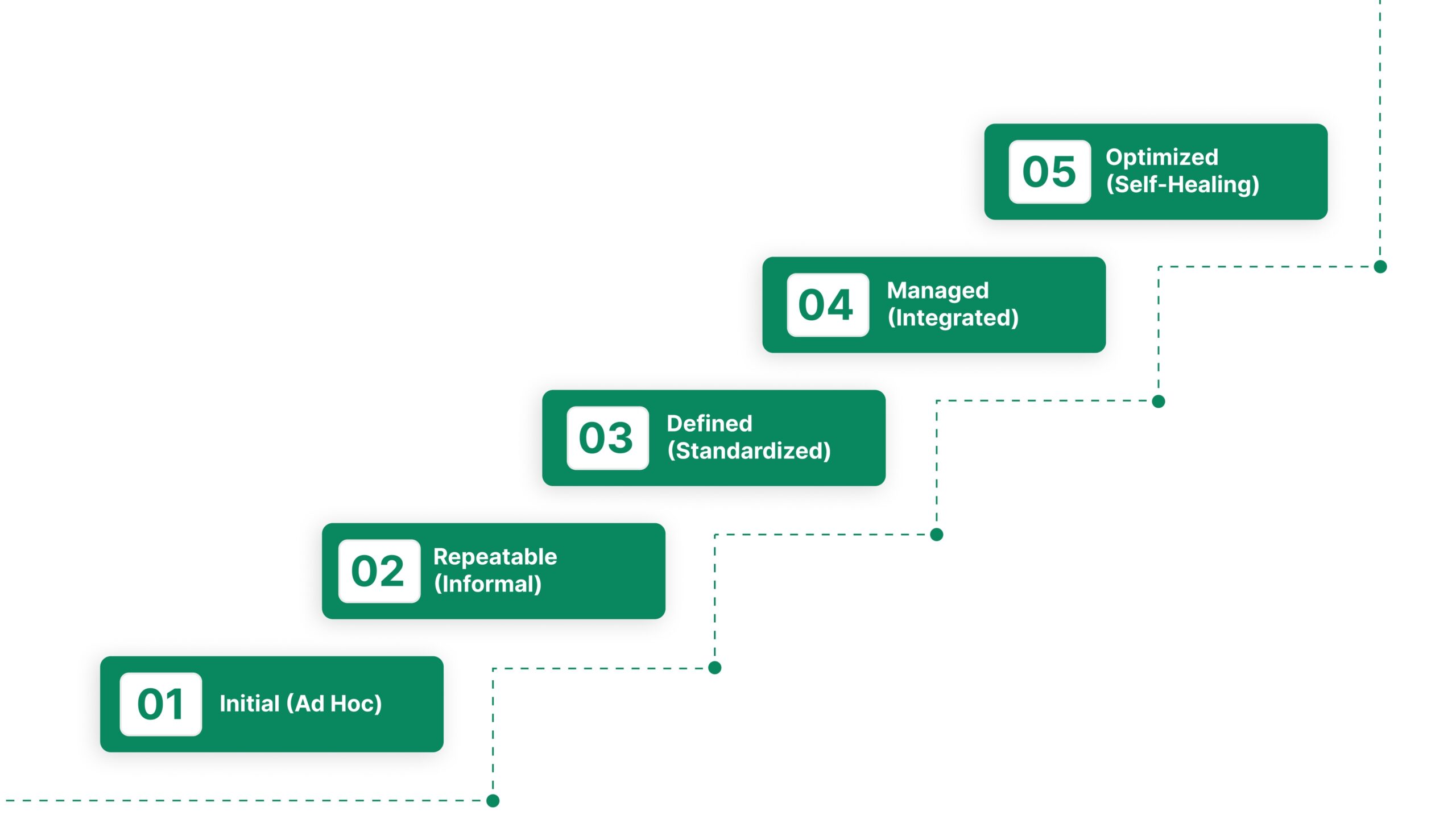
The compliance program maturity model provides a framework for evaluating current capabilities and identifying the investments required for improvement. In 2026, US firms are evaluated based on how their processes are integrated across departments like IT, HR, and Finance.
Level 1: Initial (Ad Hoc)
At this stage, activities are reactive, triggered only by an immediate crisis or a specific auditor request. Documentation is inconsistent, and evidence is gathered through manual threads like email and personal spreadsheets. This level carries the highest risk, as there is no systematic way to identify or fix gaps before they result in a penalty.
Level 2: Repeatable (Informal)
Basic processes are established based on previous experience, but they remain informal. Compliance depends heavily on the memory and habits of specific employees. If these individuals leave the organization, the institutional knowledge of how to maintain controls is lost, creating a gap in oversight that is difficult to bridge quickly.
Level 3: Defined (Standardized)
Processes are documented and standardized across the enterprise. There is a formal framework for oversight, and specific individuals are held accountable for their areas of responsibility. Organizations at this stage typically begin using specialized software to track obligations, though these systems often operate in silos from other operational data.
Level 4: Managed (Integrated)
This level marks a shift toward data-driven governance. The organization uses quantitative metrics to monitor its status continuously. Controls are measured in real-time, and the results are shared with leadership to inform strategic decisions. The focus here is on removing the manual burden of data collection and improving the accuracy of risk reporting.
Level 5: Optimized (Self-Healing)
In the final stage, governance is an automated, active component of the business. The organization uses advanced technology to detect and resolve issues as they occur. The system is dynamic, adjusting to external changes, such as the FTC 2026 Jurisdictional Threshold Updates, without requiring a complete manual overhaul of the program.
Beyond these structural levels, the most successful organizations recognize that a mature compliance program is not merely an audit requirement, but the primary defense mechanism against operational crises.
What is the Relationship Between Compliance Maturity and Resilience?
An organization’s ability to absorb sudden shocks, whether regulatory inquiries, cyber incidents, or technical failures, depends directly on its current level of compliance maturity. Resilience is not an isolated metric; it is the natural outcome of a system that provides the real-time data and structure necessary to maintain stability under pressure.
While lower-maturity organizations often default to crisis management during an audit, high-maturity firms treat these events as standard operational procedures.
Maintaining Operations Under Scrutiny
Federal examiners now expect proof of operational stability through performance testing rather than static reports. A mature program ensures that if one control fails, redundant systems are in place to prevent complete failure. This approach moves governance from a checklist to a strategic defense.
Adapting to Rapid Legal Shifts
Resilient organizations are characterized by their ability to change course quickly. With new mandates such as the 2026 FinCEN reporting requirements becoming effective this month, organizations must update their processes without disrupting core operations. A mature framework allows these changes to be integrated into existing workflows, protecting the organization from the penalties of late adoption.
Measuring the Resilience Factor
The impact of maturity on resilience can be measured by the time required to remediate an issue. High-maturity organizations (Level 4 and 5) often see a 40% faster recovery during an incident because their controls are already mapped to their incident response plans. This speed not only reduces legal liability but also protects the organization’s reputation with customers and investors.
To move from a reactive state to a resilient one, organizations must first conduct a thorough evaluation of their current processes.
Also Read: The Role of Regulatory Audits in Different Sectors
How to Conduct a Compliance Maturity Assessment in Q1 2026?
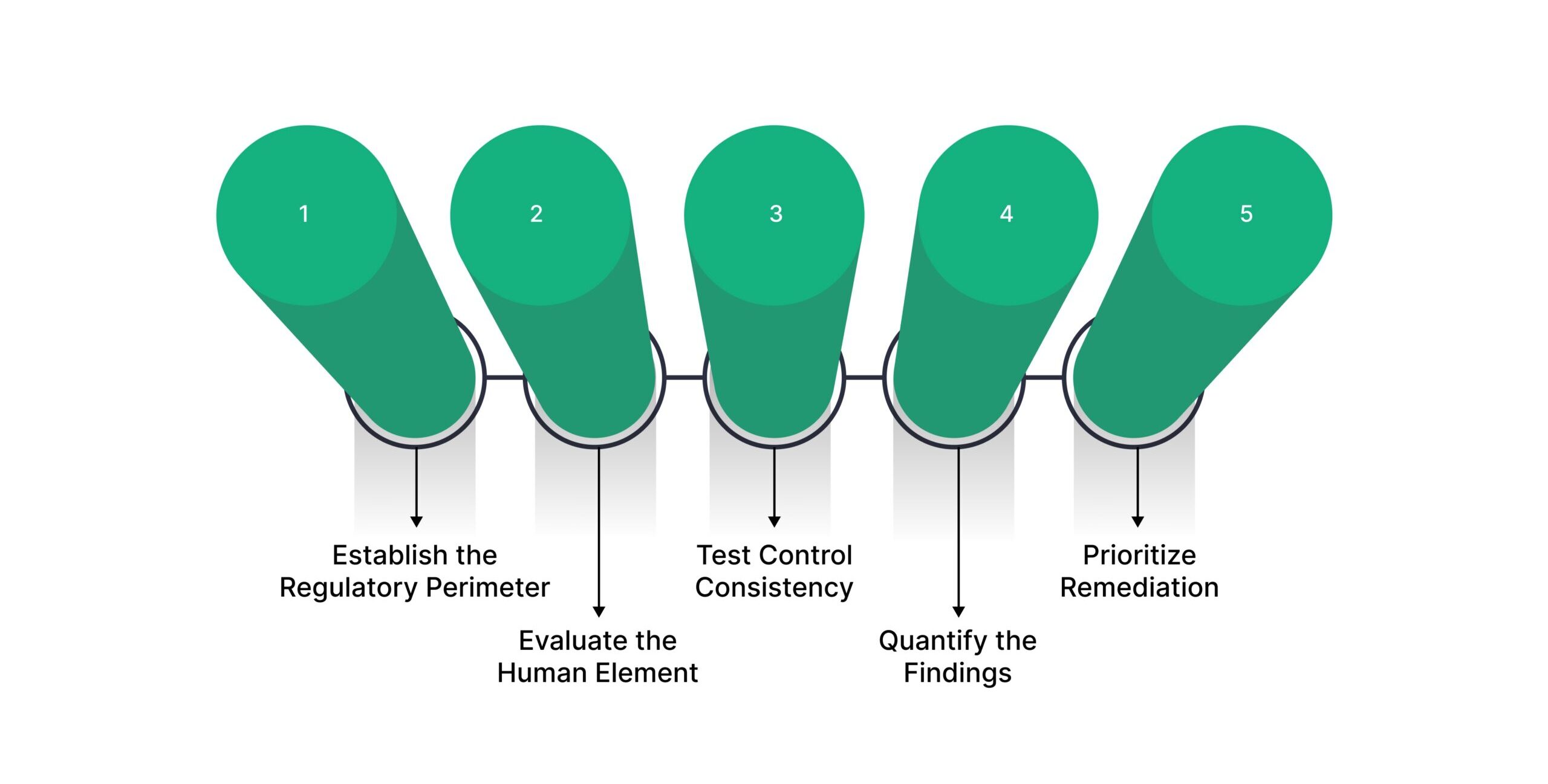
A compliance maturity assessment is a data-driven evaluation used to identify the gap between current operations and the desired level of performance. For the start of 2026, these assessments must move beyond subjective surveys to focus on verifiable evidence and technical integration.
Step 1: Establish the Regulatory Perimeter
The assessment begins by identifying every regulation that applies to the organization. This includes federal acts, industry-specific standards, and state privacy laws. Without a clear understanding of the regulatory perimeter, the assessment cannot accurately identify vulnerabilities or prioritize the right controls.
Step 2: Evaluate the Human Element
Maturity involves the people executing governance tasks as much as the technology itself. The assessment must review whether employees understand their specific responsibilities and possess the tools to fulfill them. In 2026, regulators have shifted their focus toward individual accountability, making clear ownership a requirement for a defensible program.
Step 3: Test Control Consistency
Rather than simply checking for the existence of a policy, the assessment tests the consistency of its application. This involves reviewing audit logs and cross-departmental data to ensure controls function as intended in real-world scenarios. Any inconsistencies are flagged as high-priority gaps in the 2026 roadmap.
Step 4: Quantify the Findings
Findings are translated into numerical scores across dimensions like process standardization, technical automation, and leadership oversight. Quantifying these results allows for a clear comparison against industry benchmarks and establishes a baseline for measuring future progress.
Step 5: Prioritize Remediation
The final step is to create an action plan that prioritizes the most significant risks. This plan serves as a strategic guide for the remainder of the year, ensuring that resources are allocated to the areas that will most effectively increase compliance maturity.
Suggested Read: Master 2026 Compliance With Risk Management and Governance Practices
Closing the gaps identified in your assessment requires moving from manual spot-checks to a centralized system of record. By transitioning to a digital infrastructure, you shift from periodic testing to a model of continuous verification that protects your organization throughout 2026. Explore how ComplianceOps provides the technical structure for continuous control monitoring.
How Should Organizations Approach AI Oversight?
In 2026, the maturity of an organization is heavily influenced by its ability to govern AI with the same rigor as traditional financial controls. As these tools integrate into core operations, the associated risks, including data privacy, model drift, and algorithmic fairness, must be managed through a disciplined, documented framework rather than an experimental mindset.
Regulatory Expectations for AI
The FTC and SEC have made it clear that 2026 will see increased scrutiny of how AI models are trained and used. A mature organization has an AI governance framework that includes model risk management and regular testing for biased outcomes.
The ability to explain the logic behind an AI-driven decision to a regulator is now a primary requirement for an optimized program.
Integrating AI with Privacy Standards
Maturity requires that AI oversight function as an extension of existing data privacy programs. This approach ensures that data minimization and consent standards remain consistent throughout the entire lifecycle of a model, from initial training data to real-time inference.
Organizations that successfully bridge this gap achieve a level of compliance maturity that allows them to scale innovation with confidence, ensuring their technologies remain legally and ethically sound.
Why is Compliance Maturity a Financial Priority?
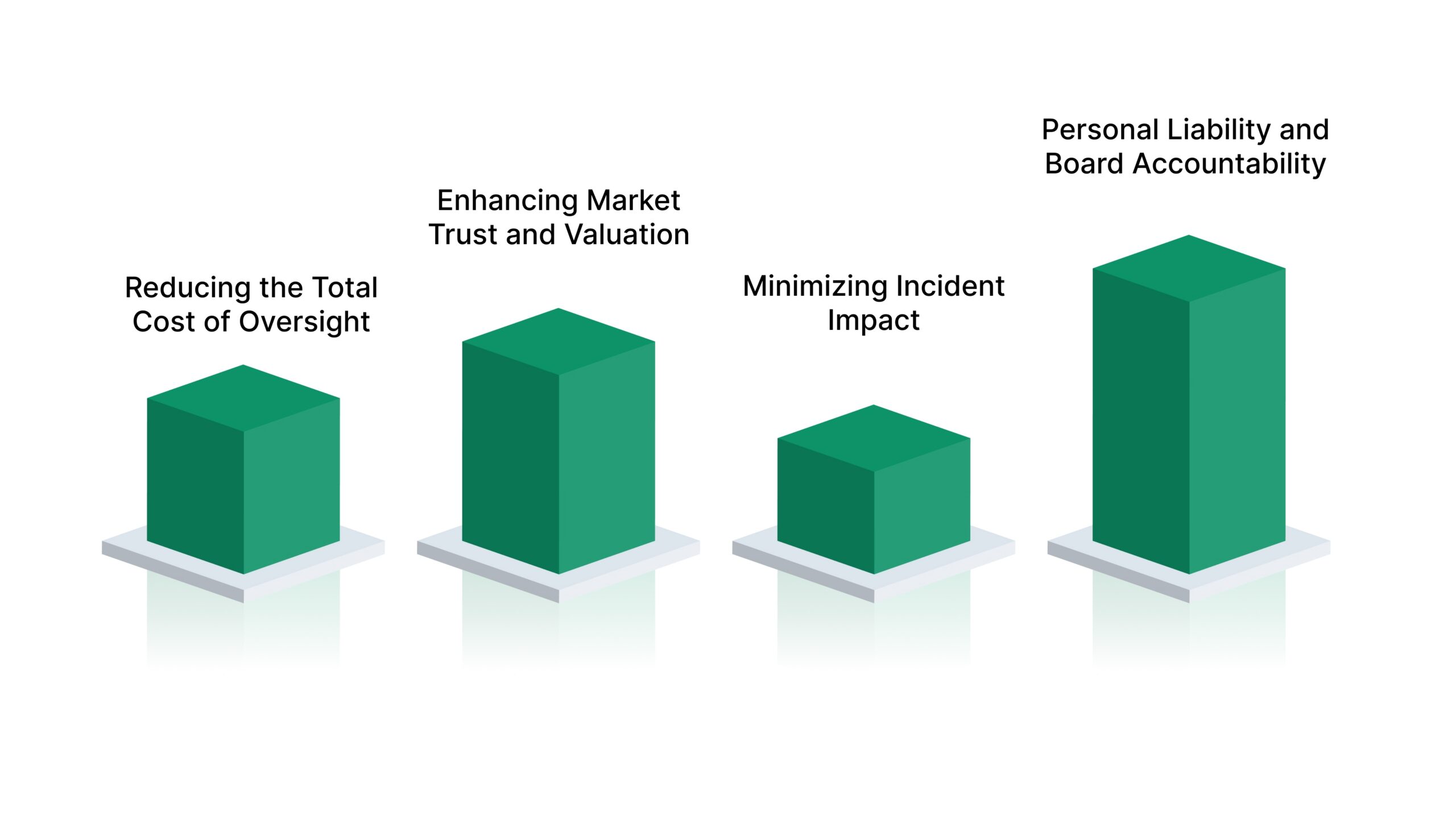
Investing in program maturity is a fundamental financial strategy for 2026. The expenses associated with a low-maturity program far exceed the investment required to reach Level 4 or 5.
Reducing the Total Cost of Oversight
Organizations that reach Level 4 or 5 on the maturity scale realize significant operational savings. By automating the collection of evidence and the monitoring of controls, they reduce the hundreds of man-hours typically spent on manual audit preparation.
This efficiency allows the compliance team to stop acting as data gatherers and start acting as strategic risk advisors to the business.
Enhancing Market Trust and Valuation
A mature program is a valuable brand asset. Investors and enterprise customers now conduct due diligence on a firm’s governance maturity before finalizing contracts or investments. A high maturity score serves as a verifiable indicator of stability, often accelerating the sales cycle and improving a firm’s valuation and access to capital.
Minimizing Incident Impact
When an incident occurs, a mature program ensures the impact is contained. Because controls are integrated and monitored in real-time, the organization can detect failures and trigger response plans immediately. This rapid reaction prevents minor technical glitches from escalating into major regulatory violations, protecting both the reputation and the balance sheet.
Personal Liability and Board Accountability
US regulators are increasingly holding individual executives accountable for systemic failures. In 2026, the risk of personal fines and legal action is a powerful motivator for senior leadership to move beyond paper-based efforts. A mature program provides the board with the verified data necessary to confidently certify the organization’s status, reducing personal legal exposure for officers and directors.
How Does VComply’s ComplianceOps Support Continuous Oversight?
Advancing through the stages of maturity requires a centralized system that replaces manual tasks with a disciplined digital infrastructure. When governance is treated as a core operational function, the ability to maintain visibility across departments becomes a standard requirement for long-term stability.
The ComplianceOps module is designed to support the transition from basic standardization to an optimized, data-driven program:
- Pre-loaded Framework Libraries: Centralize diverse compliance requirements by utilizing a library of regulatory frameworks and internal controls. This allows organizations to align their activities with industry standards, promoting the process standardization necessary for Level 3 maturity.
- Centralized Evidence Repository: Eliminate the risks of misplaced documentation by storing all evidence in a single location with role-based access. This ensures the organization is audit-ready at all times and provides the verifiable data required for higher maturity levels.
- Automated Workflows and Alerts: Reduce manual oversight by setting up customizable workflows and automated notifications. By defining the frequency, stakeholders, and lifecycle of each program, ComplianceOps ensures timely actions and maintains a proactive compliance posture.
- Real-time Dashboards and Reporting: Replace retrospective reports with department-specific dashboards that highlight key compliance metrics. Gaining immediate insights into control performance allows leadership to make informed decisions and demonstrate transparency to stakeholders.
By utilizing a unified digital infrastructure, enterprises can eliminate the friction of siloed data and achieve a level of maturity that protects both reputation and long-term financial stability.

Conclusion
Compliance maturity is now the defining characteristic of a resilient organization. The transition from reactive, manual procedures to a proactive, data-driven framework is the only effective way to manage the increasing risks of the US regulatory environment. By using a structured maturity model, your team can reduce the administrative burden of traditional governance and build a stable foundation for growth.
True maturity happens when compliance is integrated into your daily operations. Transitioning from fragmented spreadsheets to a unified digital system like ComplianceOps provides the automated evidence collection and real-time monitoring needed to move toward predictive, proactive governance.
Schedule a demo to see how ComplianceOps structures continuous oversight for your 2026 roadmap.
Frequently Asked Questions (FAQs)
Yes. Maturity is often uneven across a company. For example, the IT department might have a Level 5 cybersecurity program, while HR still uses Level 2 manual processes for tracking training records. A compliance maturity assessment identifies these inconsistencies so that leadership can prioritize improvements in the lagging areas.
The transition usually requires 18 to 24 months. This timeline accounts for the implementation of new technology and the necessary cultural shifts that ensure every employee understands their role in the new, more mature framework.
The current year is a turning point due to the confluence of new AI regulations, heightened personal liability for executives, and the increased cost of non-compliance. These factors have made the traditional, manual methods of management insufficient for the speed and complexity of the modern regulatory environment.
Insurance companies now use maturity as a primary factor in determining premiums for cybersecurity and professional liability coverage. Organizations that can demonstrate a Level 4 or 5 maturity level through automated logs and real-time monitoring often qualify for significantly lower rates and higher coverage limits.
Absolutely. Maturity is about the rigor of the process and the use of technology, not the size of the headcount. By using automated platforms like VComply, a small business can achieve a Level 4 or 5 state, providing them with the same level of oversight and protection as a much larger entity.