

How to Automate Compliance Workflow Efficiencies
Recent SEC and federal regulatory actions have reinforced a consistent expectation: compliance activities must be executed with clear documentation, traceability, and control integrity.

Expanding obligations around cybersecurity disclosures, data privacy, and financial reporting are increasing scrutiny on how compliance workflow processes operate in practice, not just on paper. Yet many organizations still rely on spreadsheets, email chains, and manual reconciliations, resulting in delays and limited visibility during audits or examinations.
Strengthening compliance workflow efficiency through automation has become a structural necessity, ensuring obligations are executed consistently, and oversight remains defensible under regulatory review.
Key Takeaways
- Modern workflows provide instant dashboards, moving away from “point-in-time” audits to continuous monitoring.
- A single source of truth for all compliance documentation prevents the “fire drill” scramble during regulatory inspections.
- Automated alerts notify stakeholders of potential breaches or missed deadlines before they result in financial penalties.
- Automation enables compliance teams to manage expanding regulatory burdens without a proportional increase in staff.
What is Compliance Workflow Automation
A compliance workflow is the series of repeatable steps an organization takes to ensure it adheres to external laws, industry standards, and internal policies. When these workflows are managed manually, they often become bottlenecks.
Compliance workflow automation involves using specialized software to trigger actions, collect evidence, and generate reports automatically.
Today, the focus has moved beyond simple task reminders. Organizations are now implementing regulatory compliance workflow systems that integrate with their entire IT stack.

This means that when a new employee is hired, the system automatically triggers a training module, records the completion certificate, and updates the compliance dashboard without a single manual intervention.
The move toward automation is often driven by a specific regulatory requirement, but the operational advantages extend far beyond mere legal compliance.
4 Key Benefits of Automating Compliance Workflows
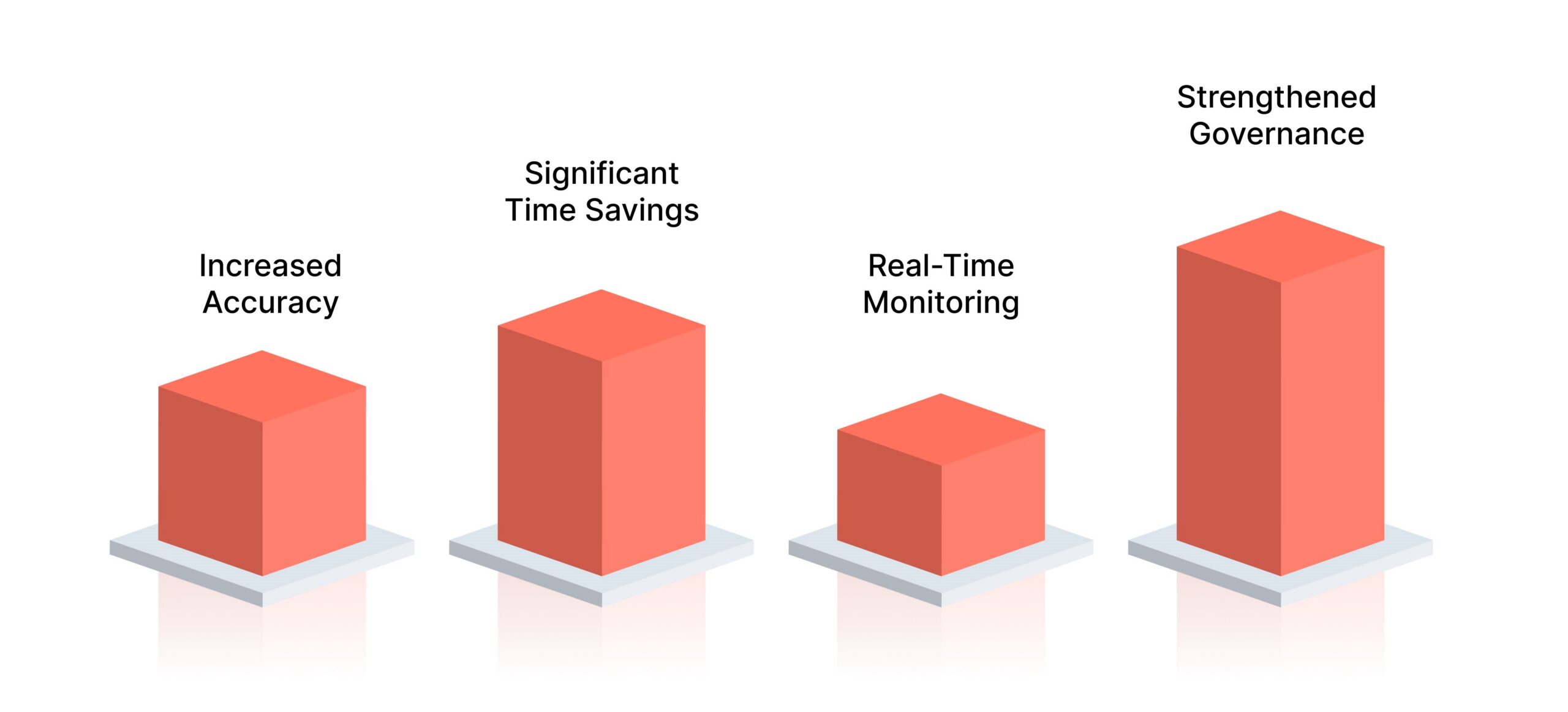
Implementing compliance workflow automation provides a structural foundation for organizational integrity. When compliance is built into the software systems employees use every day, it ceases to be an external pressure and becomes a standard operating procedure.
1. Increased Accuracy Through Standardized Data Capture
Human error remains the leading cause of compliance failures. A misplaced file or an incorrect date in a report can lead to significant regulatory scrutiny. A regulatory compliance workflow removes this risk by standardizing data entry and validation.
Automated systems can cross-reference internal records against external regulatory databases to ensure that every entry meets the required legal standard before it is finalized.
2. Significant Time Savings via Task Transformation
The professionals responsible for data collection often spend 30% to 50% of their time on administrative follow-up. Automation transforms this by using automated routing for approvals and notifications. If a task is not completed by a specific deadline, the system automatically escalates the issue to the appropriate manager.
This ensures that the compliance workflow moves forward without requiring constant manual intervention from the compliance officer.
3. Real-Time Monitoring and Enhanced Visibility
A compliance monitoring workflow provides leadership with a live view of the organization’s risk profile. Instead of waiting for a quarterly report, executives can access dashboards that show the status of every control across the company.
This visibility is essential for meeting the latest SEC requirements for timely disclosure of material risks. If a control fails in a specific department, the system flags it immediately, allowing for remediation before it results in a breach or a fine.
4. Strengthened Governance and Inter-Departmental Collaboration
Compliance is a shared responsibility that spans HR, Finance, IT, and Legal. Automation breaks down the barriers between these departments by providing a single source of truth.
When everyone uses the same system to record their compliance activities, it creates a transparent environment with clear accountability. This collaborative approach ensures that no regulation falls through the gaps between departments.
While the benefits are clear, the transition to an automated environment must be managed through a structured implementation process to be successful.
Also Read: Simplifying Compliance Workflows with VComply
5 Steps to Automate Compliance Workflows
Redesigning a compliance workflow requires a balance of technical integration and organizational strategy. Organizations must move beyond simply digitizing documents to creating a dynamic, interconnected system.
Step 1: Define Objectives and Align with Business Strategy
The first step is to identify the specific goals of the automation project. For some, the focus may be on meeting SOC 2 requirements for a new cloud service. For others, it might be streamlining the internal audit process for a growing global footprint.
By aligning the compliance workflow with the company’s broader strategic goals, leadership ensures that technology investments support business growth.
Step 2: Map Existing Processes and Identify Friction
Before applying technology, you must understand how work currently flows through the organization. This involves identifying every stakeholder, every hand-off point, and every manual step.
Mapping these processes helps identify areas of operational friction where tasks are frequently delayed or where data quality is consistently poor. These are the primary candidates for automation.
Step 3: Select No-Code Automation Tools
In 2026, compliance teams no longer have the luxury of waiting months for the IT department to build custom software. Selecting a tool with no-code capabilities allows the compliance department to build and modify its own compliance workflows.
This flexibility is critical for responding to rapid changes in US federal regulations. The chosen tool should integrate seamlessly with existing software, such as HR systems and financial platforms, to ensure a smooth flow of data.
Step 4: Implement and Integrate System Controls
Implementation should occur in phases, starting with high-risk or high-volume areas. Proper integration means the regulatory compliance workflow can automatically pull logs from security systems or training records from HR portals.
This eliminates the need for employees to manually upload evidence, as the system captures the required proof directly from the source.
Step 5: Continuous Evaluation and Process Improvement
Automation is an ongoing process. Once a compliance monitoring workflow is in place, it must be regularly reviewed to ensure it remains effective. If a specific automated task is consistently flagged for manual review, the underlying logic may need to be adjusted.
Organizations should use the data gathered by the system to refine their processes and identify new opportunities for further efficiency.
Suggested Read: Workflow Automation for Compliance Programs
Even with a clear roadmap, certain structural and cultural challenges can impede the successful adoption of automated compliance tools.
Challenges in Implementing Compliance Workflow Automation
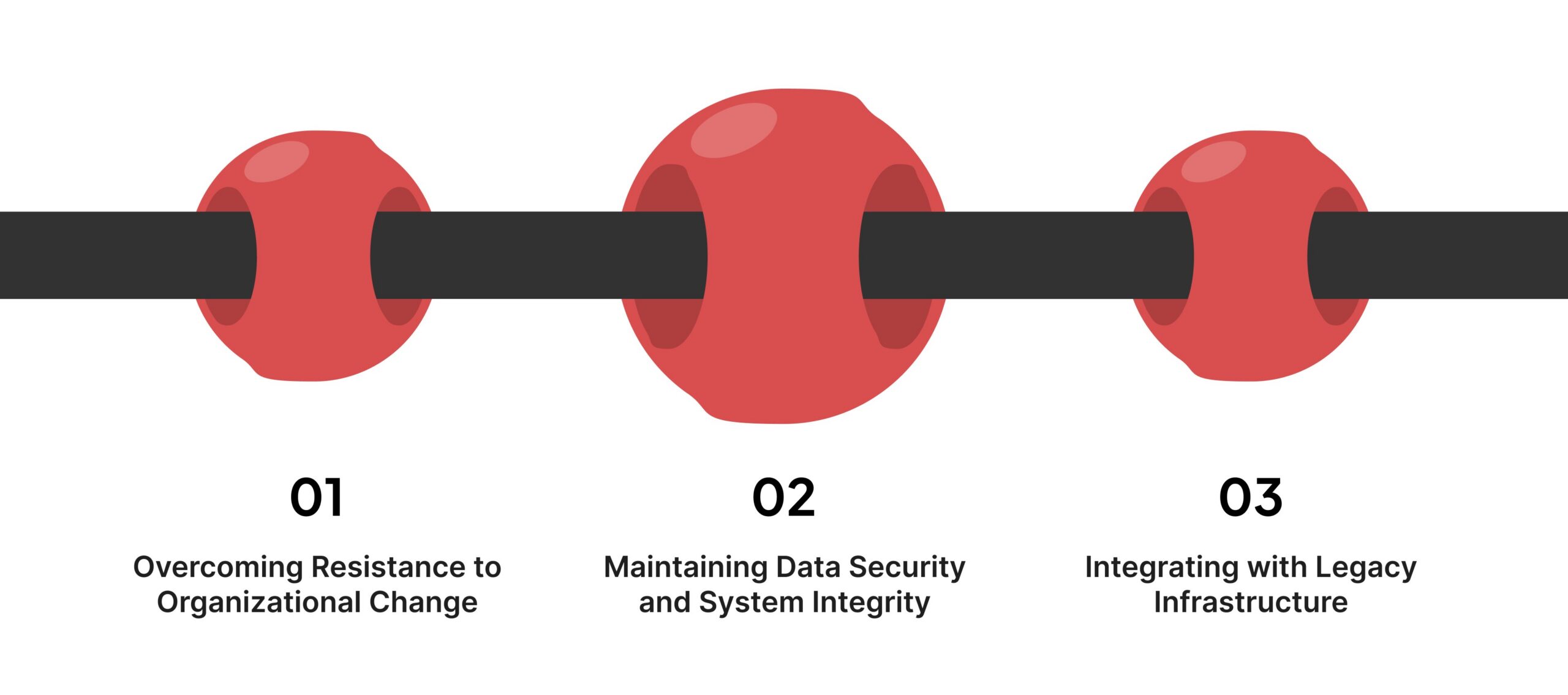
Transitioning from a manual compliance workflow to an automated one is a major organizational change. Recognizing potential obstacles early allows management to develop proactive strategies to mitigate them.
Overcoming Resistance to Organizational Change
Employees may be hesitant to adopt new technology if they believe it will increase their workload or replace their expertise. To overcome this, leadership must communicate the system’s personal benefits, such as reduced repetitive administrative tasks.
Training programs should focus on how the new compliance workflows empower staff to focus on more complex, high-value work.
Maintaining Data Security and System Integrity
Centralizing all compliance data into a single automated platform creates a high-value target for security threats. Organizations must ensure that their automation tools utilize robust encryption and multi-factor authentication.
Furthermore, the integrity of the system depends on the quality of the data it receives. Establishing strict data entry standards is necessary to prevent the automation of incorrect or incomplete information.
Integrating with Legacy Infrastructure
Many organizations continue to use older software systems that do not easily connect with modern, API-driven automation platforms. Bridging this gap often requires the use of specialized middleware or a phased approach to decommissioning legacy tools.
Ensuring that the regulatory compliance workflow can still capture data from these older systems is essential for maintaining a complete audit trail during the transition period.
The most effective compliance systems share several core features that allow them to manage the scale and speed of modern regulatory demands.
4 Key Features of Effective Compliance Workflow Tools
A modern compliance workflow requires more than just task management; it needs intelligence and connectivity to provide true operational value.
1. No-Code Workflow Design for Agility
In 2026, the speed of business requires that compliance teams be able to update their own systems. A no-code interface allows non-technical staff to create a new compliance workflow using visual tools.
This ensures that as soon as a new regulation is announced, the team can adjust its internal controls without waiting for a software development cycle.
2. Real-Time Reporting and Visualization
Visibility is the cornerstone of governance. Effective tools provide real-time dashboards that translate complex compliance data into easy-to-understand visualizations. These tools should allow for detailed reporting that can be presented to the board of directors, demonstrating the organization’s current risk posture and its adherence to the regulatory compliance workflow.
3. AI-Enhanced Evidence Management
Artificial Intelligence is now a standard feature in high-level compliance tools. AI can assist in the compliance monitoring workflow by analyzing thousands of documents to find specific proof of adherence.
It can also identify patterns in data that may suggest a future compliance failure, allowing the organization to take preventive action.
4. Automated Audit Trails and Documentation
Every action taken within the system should be automatically recorded and timestamped. This creates an immutable audit trail that can be shared with regulators or external auditors.
Automated documentation ensures that the organization can prove its compliance at any time, eliminating the urgent unplanned response usually required when an auditor arrives.
Governance programs increasingly depend on integrated systems that connect compliance data across the organization.
Achieving Governance Excellence with VComply
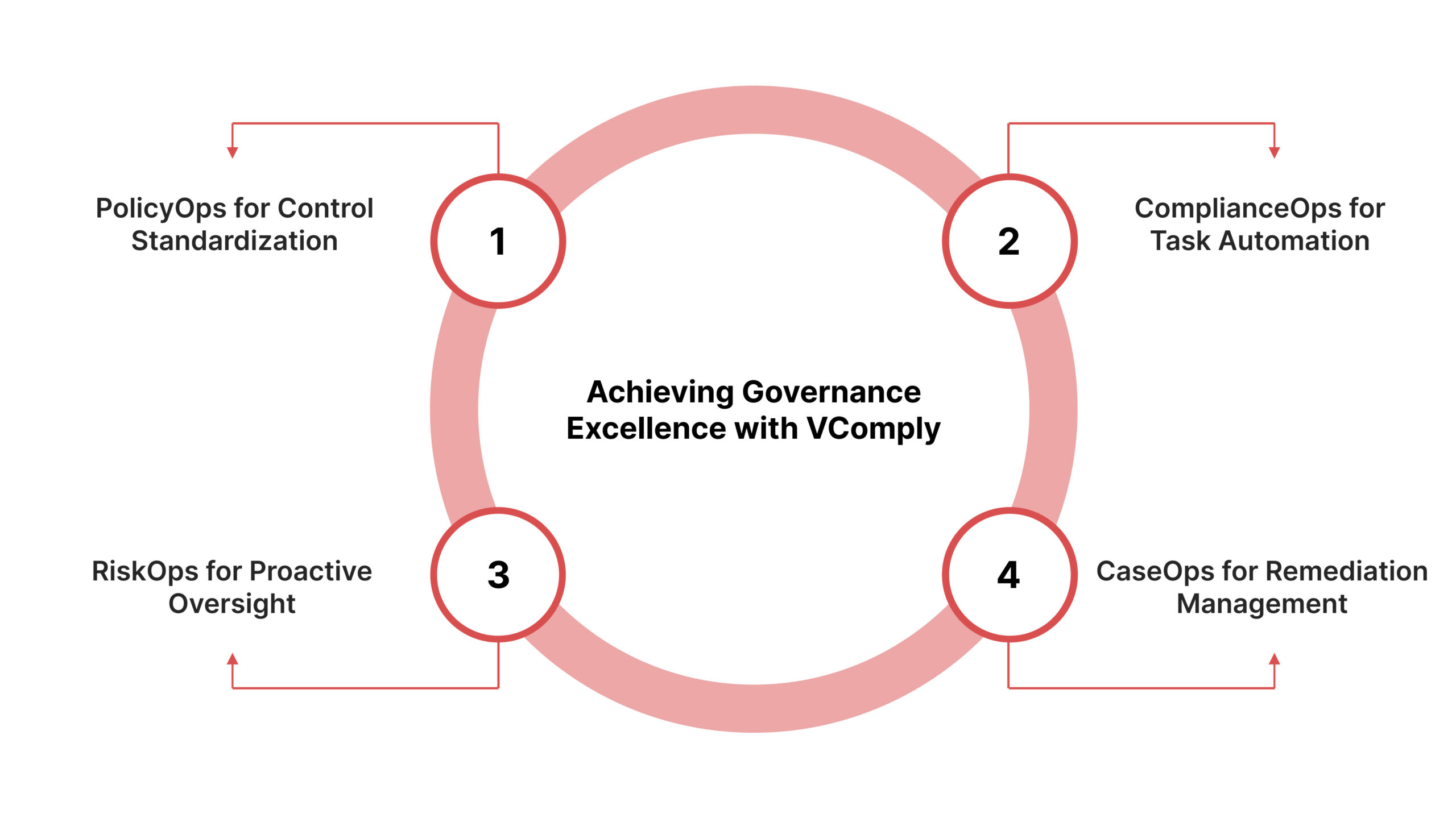
As US organizations strive to improve their compliance workflow efficiencies, VComply provides a centralized platform that simplifies the entire regulatory lifecycle. VComply is designed to replace fragmented manual processes with a unified environment for governance, risk, and compliance management.
VComply’s suite of services directly addresses the needs of the modern compliance department:
- PolicyOps for Control Standardization: Through PolicyOps, organizations can manage the entire lifecycle of their internal policies. The platform automates the distribution of policies and captures digital acknowledgments from employees, ensuring that the foundation of the compliance workflow is clearly communicated and documented.
- ComplianceOps for Task Automation: VComply’s ComplianceOps module allows teams to break down complex regulations into manageable tasks. These tasks are automatically assigned and tracked, ensuring that every element of a regulatory compliance workflow is completed on schedule and with the necessary evidence.
- RiskOps for Proactive Oversight: To manage potential liabilities, RiskOps provides a comprehensive view of the organization’s risk landscape. It links compliance failures to broader business risks, allowing strategic risk managers to prioritize their efforts where they will have the most significant impact.
- CaseOps for Remediation Management: When a compliance failure is detected, CaseOps provides a structured environment for managing the resolution. It ensures that the remediation process is documented and that lessons learned are integrated back into the compliance monitoring workflow to prevent future occurrences.
By utilizing VComply, enterprises can move from a state of reactive compliance to one of proactive, automated governance, protecting both their reputation and their financial stability.
Book a demo to see how VComply helps teams operationalize governance, risk, and compliance with greater clarity and accountability.
Wrapping Up
The shift toward an automated compliance workflow represents a fundamental change in how modern US enterprises protect their value. By replacing manual, fragmented processes with a centralized digital system, organizations can significantly reduce the risk of multi-million dollar penalties while improving daily operational efficiency.
These systems provide the real-time visibility and standardized accuracy required to navigate the high-stakes regulatory environment of 2026.
Ultimately, compliance workflow automation transforms governance from a reactive necessity into a resilient foundation for long-term growth and institutional trust.
Governance improvements are best understood in practice. VComply allows teams to structure policies, track compliance tasks, monitor enterprise risks, and manage incidents within one unified system.
Start a 21-day free trial to explore how VComply can support more structured and consistent governance operations.
Frequently Asked Questions (FAQs)
Automation removes the manual effort of following up on tasks and collecting evidence. By setting up automated triggers and reminders, the system ensures that the compliance workflow remains active without constant supervision.
This reduces the risk of missed deadlines and ensures that all documentation is captured and timestamped in real time.
Yes. Modern regulations require that material risks and compliance failures be reported quickly. An automated compliance monitoring workflow provides the real-time visibility needed to identify these issues as they happen. This allows leadership to meet strict disclosure timelines and avoid the penalties associated with late or incomplete reporting.
No-code technology allows the compliance department to manage the system itself. Because they do not need to write software code, they can create or update a regulatory compliance workflow in minutes. This agility is essential for keeping up with the rapid changes in US federal and state laws.
No. Most modern compliance workflow automation tools are designed to integrate with existing infrastructure. They can pull data from HR portals, financial systems, and IT security logs. This allows organizations to build a centralized layer of oversight without the need for a complete system overhaul.
Automation reduces audit costs by maintaining a continuous, organized record of all compliance activities. When an audit occurs, the team no longer needs to spend weeks searching for proof.
The system provides a centralized repository where all evidence is already linked to the relevant controls, making the audit process significantly faster and less resource-intensive.
Managing compliance across multiple departments requires a system that connects policies, regulatory obligations, and operational tasks. Platforms such as VComply help organizations structure compliance workflows by centralizing policy governance, task execution, risk monitoring, and incident management within a single governance environment. This reduces fragmentation and improves visibility for leadership and auditors.