

What Is GRC Software? A Practical Guide to 7 Best Governance, Risk, and Compliance Platforms in 2026
Governance, risk, and compliance are no longer back-office activities handled through spreadsheets, email reminders, and annual audit preparation.
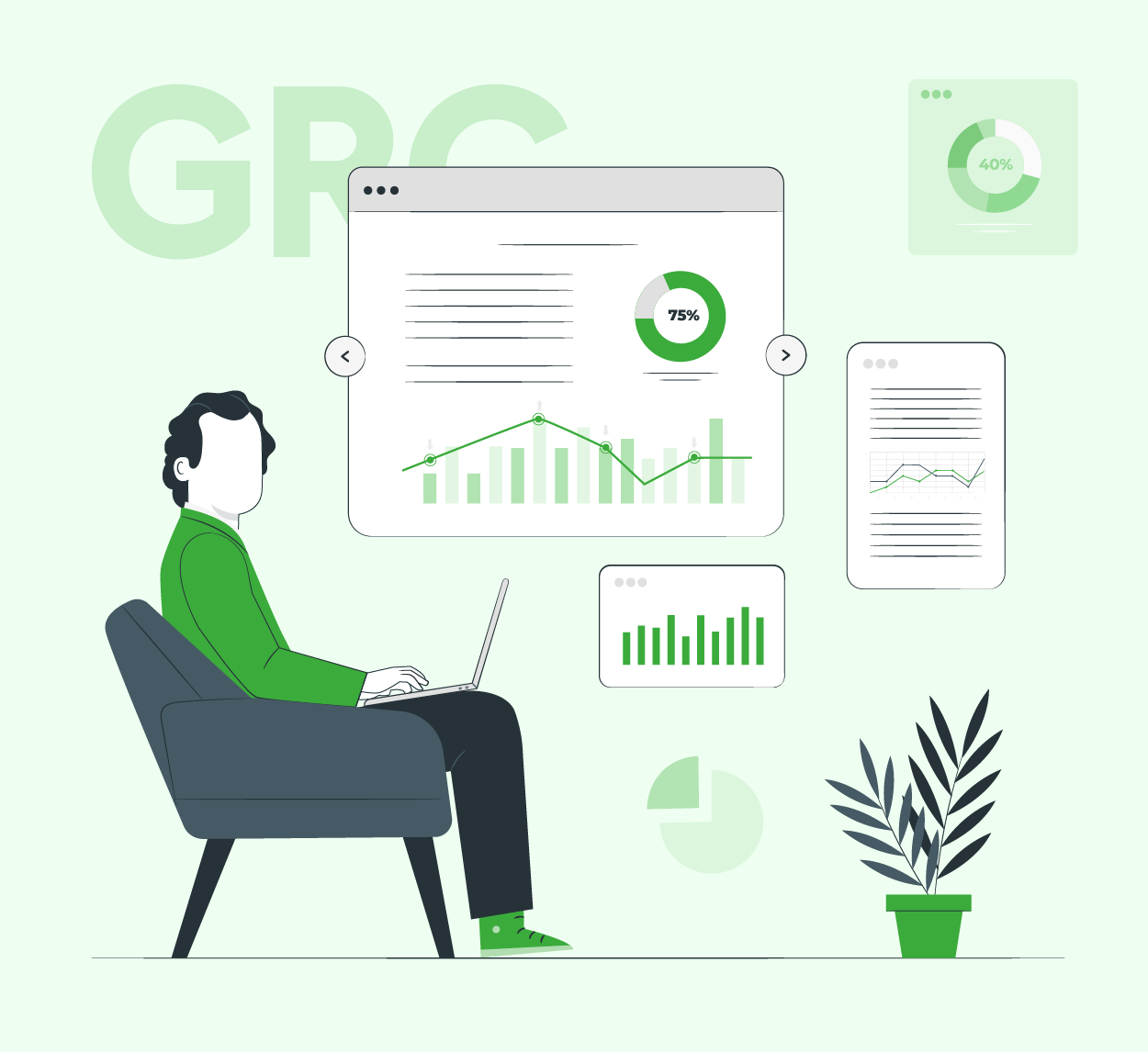
GRC (Governance, Risk, and Compliance) provides a holistic approach to managing an organization’s governance, risk management, and compliance with regulatory requirements and industry standards. GRC is different from traditional risk management and compliance management in several ways.
What Is GRC in 2026? A Practical View
In 2026, organizations are expected to know where risk exists, who owns each control, whether compliance work is being completed, and whether evidence is available when auditors, regulators, customers, or leadership ask for proof.
That is difficult to manage when policies live in shared drives, risk registers sit in spreadsheets, audit evidence is buried in inboxes, and compliance tasks depend on manual follow-up.
GRC software helps solve this problem by bringing governance, risk, compliance, controls, policies, audits, evidence, and reporting into one connected platform.
A modern GRC platform gives organizations a structured way to manage risk, assign accountability, track obligations, test controls, collect evidence, and report compliance posture across teams and business units.
This matters because compliance technology adoption is accelerating. PwC’s Global Compliance Survey 2025 found that 49% of respondents use technology for 11 or more compliance activities, with training, risk assessment, compliance monitoring, customer due diligence, and regulatory reporting among the top use cases.
The shift is clear: organizations are moving from manual compliance tracking to connected GRC systems that support visibility, accountability, and faster decision-making.
Key Takeaways (TL;DR)
- GRC software helps organizations manage governance, risk, compliance, policies, controls, audits, and evidence in one centralized system.
- A modern GRC platform replaces disconnected spreadsheets, shared folders, email-based follow-ups, and manual trackers.
- The best GRC software connects risk management, compliance execution, control testing, audit readiness, and leadership reporting.
- GRC platforms help organizations prove accountability by assigning owners, due dates, workflows, evidence, and audit trails.
- In 2026, GRC software is becoming more important because regulatory pressure, cybersecurity risk, third-party exposure, AI governance, and audit expectations are increasing.
- VComply helps organizations operationalize GRC by connecting policies, risks, controls, obligations, tasks, evidence, and reporting in one platform.
What Is GRC Software?
GRC software is a technology platform that helps organizations manage governance, risk, and compliance activities in a structured and connected way.
It allows teams to track:
- Risks
- Controls
- Policies
- Regulatory obligations
- Internal compliance tasks
- Audits
- Evidence
- Issues and findings
- Corrective actions
- Third-party compliance requirements
- Reports and dashboards
Instead of managing each of these areas separately, a GRC platform brings them into one system.
For example, a healthcare organization may need to manage HIPAA policies, internal audits, risk assessments, vendor reviews, incident tracking, and employee attestations. A financial services company may need to manage SOX controls, regulatory obligations, internal policies, risk registers, and audit evidence. An energy company may need to track NERC obligations, field-level evidence, recurring compliance tasks, and remediation activities.
Without GRC software, these activities are often managed through disconnected tools. That creates gaps in visibility and accountability.
With GRC software, each activity can be assigned, tracked, evidenced, reviewed, and reported from one platform.
Gartner defines GRC tools as platforms that support risk identification, assessment, mitigation, monitoring, and reporting, while helping teams create a unified view of enterprise risks and coordinate across compliance, risk, and audit functions.
That unified view is the real value of GRC software.
It does not just help organizations document compliance. It helps them manage the work required to stay compliant.
Why GRC Software Matters in 2026
The role of GRC has changed.
Earlier, many organizations treated governance, risk, and compliance as separate functions. Governance teams focused on policies and oversight. Risk teams maintained risk registers. Compliance teams tracked regulations and audits. Internal audit tested controls. Business teams handled evidence and tasks when asked.
This fragmented model no longer works well.
Organizations now face overlapping regulations, faster audit cycles, more third-party dependencies, higher cybersecurity exposure, and increasing pressure from boards and executives. Risk and compliance information must be available faster and in a more usable format.
GRC software matters because it helps organizations answer important questions:
- What are our top risks?
- Which controls are failing?
- Which policies are overdue for review?
- Which compliance tasks are incomplete?
- Who owns each obligation?
- Where is evidence missing?
- Which issues need escalation?
- Are we ready for an audit?
- What does leadership need to know?
A modern GRC system turns these questions into trackable workflows and dashboards.
It gives compliance, risk, audit, legal, security, and business teams one shared operating model.
The Problem With Manual GRC Management
Many organizations do not adopt GRC software because they lack compliance programs. They adopt it because their existing compliance process has become too fragmented.
The most common problems include:
1. Spreadsheets Become Risky at Scale
Spreadsheets are useful for early-stage tracking, but they become fragile as compliance programs grow.
They do not provide reliable workflow automation, audit trails, ownership tracking, version control, evidence management, or real-time reporting.
A spreadsheet may show that a control exists, but it may not prove:
- Who owns it
- When it was last tested
- Whether evidence was attached
- Whether the control failed
- Whether remediation was completed
- Whether leadership was notified
This becomes a major problem during audits and regulatory reviews.
2. Policies Are Managed Separately From Controls
In many organizations, policies live in one system while controls, risks, training, and evidence live elsewhere.
This creates a disconnect.
A policy may require employees to follow a specific process, but the organization may not have a clear way to confirm whether related controls are operating or whether employees acknowledged the latest version.
A strong GRC platform connects policies to controls, obligations, risks, attestations, and evidence.
3. Evidence Is Collected Too Late
Audit preparation often becomes stressful because evidence is collected after the fact.
Teams search through emails, shared folders, screenshots, ticketing tools, and spreadsheets to prove that compliance work was completed.
This creates delays and increases the chance of missing documentation.
GRC software helps organizations collect evidence continuously as work happens. That makes audit preparation faster and more defensible.
4. Ownership Is Unclear
Compliance work often breaks down because ownership is not clearly assigned.
A control may be assigned informally. A policy may need review, but no owner is accountable. A remediation task may be discussed in a meeting but never tracked to completion.
GRC software helps solve this by assigning owners, due dates, reminders, escalations, and completion records.
5. Leadership Lacks Real-Time Visibility
Executives and boards need risk and compliance visibility, but manual reporting often gives them outdated information.
By the time a report is prepared, the data may already be stale.
Modern GRC software provides dashboards that show open risks, overdue tasks, failed controls, pending approvals, missing evidence, and unresolved findings.
This helps leadership make faster and better-informed decisions.
Core Capabilities of Modern GRC Software
A good GRC platform should support the full lifecycle of governance, risk, and compliance work.
Here are the most important capabilities to look for.
1. Centralized Risk Register
A centralized risk register helps organizations document, assess, score, prioritize, and monitor risks.
It should allow teams to track:
- Risk category
- Likelihood
- Impact
- Inherent risk
- Residual risk
- Risk owner
- Mitigation actions
- Linked controls
- Review status
- Escalation history
This gives risk and compliance teams a clear view of organizational exposure.
2. Compliance Obligation Management
Organizations need to track obligations from laws, regulations, standards, contracts, internal policies, and industry frameworks.
A GRC platform should help teams manage:
- Recurring compliance tasks
- Regulatory deadlines
- Filing requirements
- Internal control activities
- Review cycles
- Certifications
- Evidence requirements
- Escalations
This is especially useful for organizations managing SOX, HIPAA, SOC 2, ISO 27001, NERC, OSHA, GDPR, PCI DSS, and other frameworks.
3. Policy Management
Policies are a core part of governance.
Modern GRC software should support the complete policy lifecycle:
- Drafting
- Review
- Approval
- Version control
- Publication
- Distribution
- Employee acknowledgment
- Periodic review
- Archival
- Reporting
The platform should also connect policies to relevant risks, controls, obligations, and training requirements.
4. Control Management
Controls are where GRC becomes operational.
A good GRC platform should help organizations define controls, assign owners, schedule testing, collect evidence, document failures, and track remediation.
Control management should include:
- Control library
- Control ownership
- Control testing
- Evidence attachment
- Issue tracking
- Corrective actions
- Control mapping across frameworks
- Reporting on control effectiveness
This is critical for organizations that need to prove compliance during audits or examinations.
5. Audit Management
Audit management capabilities help teams plan, execute, and report on internal and external audits.
A strong GRC platform should support:
- Audit planning
- Audit scope
- Control testing
- Evidence requests
- Auditor collaboration
- Findings management
- Corrective action tracking
- Audit reports
- Historical audit records
This reduces the burden of audit preparation and improves the quality of audit documentation.
6. Issue and Remediation Tracking
When a control fails or a compliance gap is identified, the organization needs a structured way to resolve it.
GRC software should help teams:
- Create findings
- Assign remediation owners
- Set due dates
- Track progress
- Attach evidence
- Escalate overdue actions
- Confirm closure
- Report status to leadership
Without this structure, findings can remain open for too long or fall through the cracks.
7. Third-Party Risk and Compliance Management
Third parties can create significant compliance and operational risk.
A GRC platform should help organizations track:
- Vendor risk assessments
- Due diligence documentation
- Contractual compliance requirements
- Security and privacy reviews
- Periodic reassessments
- Issues and remediation
- Approval workflows
- Risk ratings
This is especially important for organizations with complex vendor ecosystems.
8. Dashboards and Reporting
GRC software should give leadership a clear view of risk and compliance performance.
Dashboards should show:
- Top risks
- Open issues
- Failed controls
- Overdue tasks
- Pending approvals
- Audit readiness status
- Policy acknowledgment rates
- Remediation progress
- Framework coverage
Reporting should help compliance leaders explain what is working, what is delayed, and where action is needed.
9. AI-Assisted Insights
AI is becoming part of modern GRC, but it should be used carefully.
Useful AI capabilities may include:
- Summarizing policies
- Identifying policy gaps
- Suggesting control mappings
- Summarizing risk trends
- Helping users find relevant policy answers
- Supporting regulatory change review
- Highlighting overdue or high-risk areas
AI should not replace compliance judgment. It should help teams work faster, find information more easily, and improve visibility.
Good read: Key elements of effective GRC system
Benefits of GRC Software
GRC software creates value by improving structure, accountability, and visibility across governance, risk, and compliance programs.
Better Accountability
Every risk, control, policy, task, finding, and obligation can be assigned to an owner.
This reduces ambiguity and helps teams understand what they are responsible for.
Faster Audit Readiness
Evidence can be collected throughout the year instead of rushed together before an audit.
This makes audits faster, less disruptive, and easier to defend.
Stronger Risk Visibility
Teams can see which risks are increasing, which controls are weak, and which remediation items are overdue.
This helps organizations respond earlier instead of waiting for failures.
Reduced Manual Work
Automated reminders, recurring tasks, approval workflows, and dashboards reduce the time spent chasing updates and maintaining spreadsheets.
Better Leadership Reporting
Executives and boards can get clearer visibility into the organization’s risk and compliance posture.
This supports better decision-making and resource allocation.
Improved Compliance Consistency
A centralized GRC platform helps teams follow the same process across departments, locations, and frameworks.
This is especially useful for growing organizations and regulated industries.
Lower Operational Risk
GRC software cannot eliminate risk, but it can help organizations identify issues earlier, improve control oversight, and respond faster.
This matters because the cost of risk events can be significant. IBM’s 2025 Cost of a Data Breach report placed the global average cost of a data breach at USD 4.44 million.
GRC Software vs Compliance Management Software
GRC software and compliance management software are closely related, but they are not always the same.
Compliance Management Software
Compliance management software focuses mainly on regulatory requirements, compliance tasks, policies, evidence, audits, and reporting.
It helps organizations answer:
- Are we meeting our compliance obligations?
- Are tasks completed on time?
- Is evidence available?
- Are policies reviewed and acknowledged?
- Are audit requirements being met?
GRC Software
GRC software is broader. It connects compliance with governance and risk management.
It helps organizations answer:
- What risks affect the business?
- Which controls reduce those risks?
- Which policies support those controls?
- Which obligations apply?
- Which audits test those controls?
- Which issues need remediation?
- What should leadership prioritize?
In simple terms, compliance management software helps teams manage compliance work. GRC software connects that work to risk, governance, controls, and leadership oversight.
For many organizations, the best approach is a GRC platform that includes strong compliance management capabilities.
What Makes a Good GRC Software in 2026?
Choosing GRC software should not be based only on a feature checklist.
The real question is whether the platform helps your organization execute, track, and prove governance, risk, and compliance work.
Here is what to look for.
1. One System of Record
The platform should centralize policies, risks, controls, tasks, audits, issues, evidence, and reporting.
If teams still need multiple spreadsheets to understand compliance status, the system is not solving the core problem.
2. Strong Workflow Automation
GRC software should automate routine compliance work such as reminders, approvals, recurring reviews, evidence collection, and escalations.
This reduces manual follow-up and improves consistency.
3. Clear Ownership
Every task, control, risk, policy, and issue should have an owner.
Ownership is one of the most important parts of GRC maturity because it turns responsibility into action.
4. Evidence Management
The platform should make it easy to attach evidence to tasks, controls, audits, and obligations.
Evidence should be searchable, organized, and easy to retrieve.
5. Cross-Framework Mapping
Many organizations manage multiple frameworks at once.
A good GRC platform should allow teams to map one control to multiple requirements. This reduces duplicate work and simplifies reporting.
6. Real-Time Dashboards
Dashboards should give compliance, risk, audit, and leadership teams a live view of program status.
Static reporting is not enough for modern GRC.
7. Configurability
Every organization has different workflows, approval paths, risk scoring models, and reporting needs.
The software should be flexible enough to support different industries, frameworks, departments, and maturity levels.
8. Ease of Use
A GRC platform only works if people use it.
Business users, control owners, compliance teams, auditors, and leaders should be able to navigate the system without unnecessary complexity.
9. AI Support With Governance Controls
AI can help summarize information, surface insights, and reduce manual work.
But AI features should support compliance work responsibly. Organizations should still maintain human review, clear ownership, and audit trails.
Best GRC Software Platforms to Consider
The best GRC software depends on company size, industry, maturity, budget, and complexity.
Here are several platforms buyers commonly evaluate.
1. VComply
VComply is an AI-powered GRC and compliance operations platform built for organizations that need to manage policies, controls, risks, audits, evidence, obligations, and accountability in one place.
It is especially useful for teams moving away from spreadsheets, shared drives, email-based follow-up, and fragmented compliance tracking.
VComply helps organizations:
- Centralize compliance and risk activities
- Assign owners and due dates
- Manage policy reviews and acknowledgments
- Track controls and evidence
- Monitor risks and mitigation plans
- Prepare for audits
- Track findings and corrective actions
- Report compliance status to leadership
VComply is a strong fit for mid-market and regulated organizations that want practical GRC execution without unnecessary complexity.
Best fit:
- Policy-heavy organizations
- Healthcare, energy, education, financial services, manufacturing teams, and other growth-oriented organizations
- Organizations that need audit readiness and evidence tracking
- Teams that want clear ownership and workflow automation
Pricing: VComply offers pricing tailored to an organization’s specific requirements, so it can vary widely based on the size and complexity of the organization. For more information, refer to the pricing page.
ServiceNow GRC:
ServiceNow GRC is often considered by large enterprises that already use the ServiceNow ecosystem.
It supports risk, compliance, audit, policy, and enterprise workflow management.
Best fit:
- Large enterprises
- Organizations already using ServiceNow
- Teams with complex enterprise workflow requirements
RSA Archer:
Archer is a long-established GRC platform used by enterprises for risk management, compliance, audit, third-party risk, and operational resilience.
Best fit:
- Large enterprises
- Mature risk and compliance teams
- Organizations with complex GRC requirements
MetricStream:
MetricStream offers GRC solutions for risk, compliance, audit, third-party risk, policy, and regulatory change management.
Best fit:
- Enterprise organizations
- Global compliance programs
- Companies with mature risk and audit functions
5. NAVEX
NAVEX offers ethics, compliance, policy, risk, hotline, and incident management solutions.
Best fit:
- Organizations prioritizing ethics and compliance programs
- Teams needing hotline, case management, training, and policy capabilities
- Larger compliance functions
6. Diligent
Diligent provides governance, risk, compliance, audit, and board management solutions.
Best fit:
- Organizations looking for board-level governance visibility
- Enterprises needing connected governance, audit, and risk oversight
7. LogicGate
LogicGate offers risk and compliance workflow automation through its Risk Cloud platform.
Best fit:
- Teams that need configurable risk and compliance workflows
- Organizations focused on operational risk, compliance, and control tracking
| Platform | Best For | Key Strength | Consideration |
|---|---|---|---|
| VComply | Regulated teams that need compliance execution, audit readiness, risk, policies, and evidence in one place | Centralized workflows, ownership tracking, evidence management, dashboards, policy lifecycle, risk tracking, AI-enabled support | Best fit for teams that want to move beyond outdated systems, spreadsheets, and manage compliance as an ongoing operating process. Affordable for growing teams with AI Support. |
| ServiceNow GRC | Large enterprises already using ServiceNow | Strong enterprise workflow and IT service alignment | Can be complex and expensive for teams that need faster compliance adoption |
| RSA Archer | Large, mature enterprise GRC programs | Deep risk and compliance functionality | Often requires heavier implementation and admin support |
| MetricStream | Global enterprises with complex GRC needs | Broad risk, audit, compliance, and regulatory capabilities | Better suited for large teams with dedicated GRC resources |
| NAVEX | Ethics, hotline, case management, and policy programs | Strong ethics and incident reporting capabilities | May be less focused on day-to-day compliance execution and evidence tracking |
| Diligent | Governance, board reporting, audit, and enterprise risk | Strong executive and board-level visibility | Can be more governance-heavy than operational compliance-focused |
| LogicGate | Teams needing configurable risk and compliance workflows | Flexible workflow configuration | Requires setup to shape a complete compliance operating model |
How to Choose the Right GRC Software
Before selecting a GRC platform, organizations should define the problems they need to solve.
Use these questions during evaluation.
What Are We Trying to Fix?
Are you trying to replace spreadsheets? Improve audit readiness? Track policies? Manage controls? Improve risk visibility? Strengthen board reporting?
The clearer the problem, the easier it is to choose the right platform.
Which Teams Will Use the System?
GRC is not only used by compliance teams.
It may involve:
- Risk teams
- Internal audit
- Legal
- HR
- IT security
- Operations
- Finance
- Department heads
- Control owners
- Executives
The platform should be usable for everyone involved.
Which Frameworks and Regulations Do We Manage?
List the frameworks, standards, regulations, and internal requirements your organization must track.
Examples include:
- SOX
- HIPAA
- SOC 2
- ISO 27001
- NERC
- OSHA
- GDPR
- PCI DSS
- Internal policies
- Contractual obligations
The platform should support mapping, task assignment, evidence collection, and reporting across these requirements.
How Important Is Audit Readiness?
If audits are a major burden, prioritize evidence management, control testing, audit workflows, and reporting.
A good GRC platform should reduce audit preparation time by keeping evidence organized throughout the year.
How Easy Is It to Implement?
A powerful system is not useful if implementation takes too long or adoption fails.
Evaluate:
- Setup time
- Configuration flexibility
- User experience
- Training requirements
- Support model
- Migration from spreadsheets or legacy systems
Can It Scale With the Organization?
The platform should support more users, frameworks, business units, controls, risks, and workflows as the organization grows.
Common GRC Software Use Cases
Compliance Task Management
Track recurring obligations, deadlines, reviews, certifications, inspections, and filings.
Policy Lifecycle Management
Manage policy drafting, review, approval, publication, acknowledgment, and version history.
Risk Register Management
Document risks, assign owners, score likelihood and impact, and track mitigation plans.
Control Testing
Assign controls, schedule testing, collect evidence, document results, and track remediation.
Audit Readiness
Organize evidence, manage audit requests, track findings, and prepare defensible reports.
Third-Party Risk Management
Assess vendors, collect documentation, assign risk ratings, and track periodic reviews.
Corrective Action Tracking
Manage issues, assign remediation owners, track due dates, and confirm closure.
Board and Leadership Reporting
Provide dashboards that show compliance posture, risk trends, overdue actions, and audit readiness.
Why VComply Is a Strong GRC Platform for Modern Compliance Teams
VComply is designed for organizations that need to turn governance, risk, and compliance requirements into assigned, tracked, and evidence-backed work.
It helps compliance teams move away from fragmented systems and build a more connected operating model.
With VComply, teams can manage:
- Policies
- Risks
- Controls
- Obligations
- Compliance tasks
- Evidence
- Audits
- Issues
- Corrective actions
- Reports and dashboards
The platform is especially useful for teams that want to strengthen accountability.
Every task, control, review, or remediation item can be assigned to an owner with a due date, workflow, reminder, and evidence trail.
This makes it easier to show leadership what is complete, what is overdue, and what requires attention.
VComply’s value is not only that it centralizes GRC information. Its value is that it helps teams execute compliance work consistently.
That is what modern GRC requires.
Final Thoughts
GRC software has become essential for organizations that need better control over risk, compliance, policies, audits, and evidence.
Manual tracking may work for a small team, but it becomes risky as the organization grows, regulations increase, and leadership expects faster visibility.
A modern GRC platform helps organizations manage governance, risk, and compliance as an ongoing operating discipline.
It gives teams a way to assign ownership, track work, collect evidence, monitor risks, test controls, resolve issues, and report progress.
For organizations that want to move from reactive compliance to proactive risk management, GRC software is no longer optional.
It is the foundation for building a more accountable, audit-ready, and resilient compliance program.
Frequently Asked Questions