

Property Management Policies and Procedures for Real Estate
Managing a property, whether residential or commercial, involves much more than just collecting rent. It’s about creating a structured environment where both tenants and property owners feel secure, informed, and well-supported. One of the key ways to achieve this is through effective property management policies and procedures.

A strong set of policies can make or break the relationship between property managers, landlords, and tenants. These policies not only ensure day-to-day operations run smoothly but also help in maintaining legal compliance, promoting transparency, and building trust among all parties involved.
This blog will explore the essential property management policies and procedures every real estate professional should implement, ensuring both efficiency and compliance in every interaction.
Key Takeaways
- Well-defined property management policies ensure smooth day-to-day operations, minimize confusion, and help property managers maintain legal compliance.
- Consistent and transparent policies, from tenant screening to eviction procedures, are essential for minimizing legal risks and building trust with tenants.
- Using tools like VComply helps automate policy tracking, updates, and compliance monitoring, reducing manual errors and increasing efficiency.
- Policies must be reviewed annually and updated based on legal changes or feedback from tenants and staff to ensure continued effectiveness and compliance.
What Is Property Management Policy?
Property management policy and procedure management refers to the structured framework that guides how a property management company operates, ensures compliance with laws, and maintains efficient operations. These policies cover a wide range of activities that property managers must adhere to in order to maintain order, avoid legal complications, and provide high-quality service to tenants and property owners.

At its core, policy management in real estate is about creating clear, written guidelines that define how certain tasks or situations should be handled. These tasks range from tenant selection, rent collection, and lease agreements to maintenance schedules and safety protocols.
Key Components of Property Management Policy
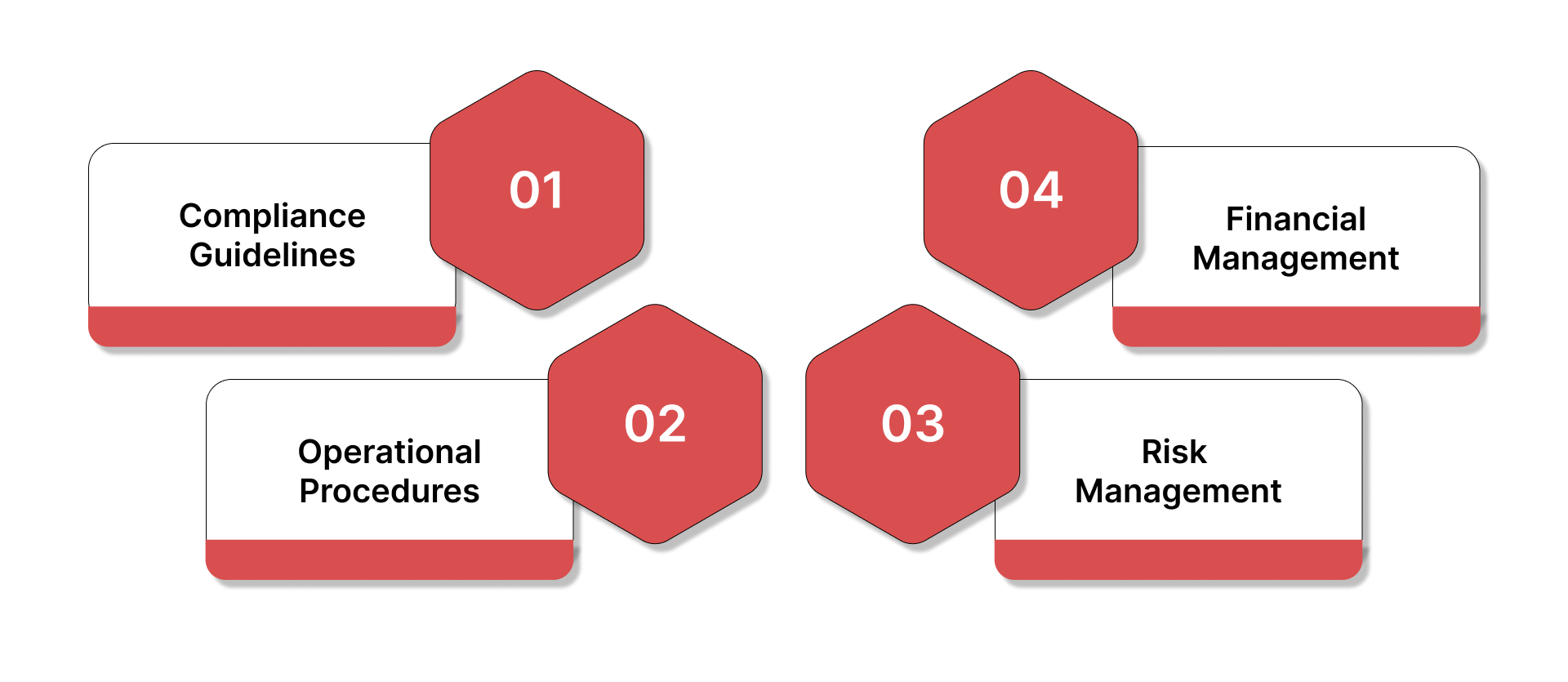
- Legal and Compliance Guidelines: Policies that ensure adherence to local, state, and federal laws (e.g., Fair Housing, landlord-tenant laws, and building codes).
- Operational Procedures: These include clear guidelines on how day-to-day activities are conducted, such as handling maintenance requests, managing tenant relations, and dealing with disputes.
- Financial Management Policies: Rules for managing finances, including rent collection, handling late payments, security deposits, and budgeting for property upkeep.
- Risk Management Policies: Guidelines on how to minimize risks, such as preventing accidents, managing tenant issues, and securing proper insurance coverage.
These policies not only help to protect the property manager from legal action but also ensure tenants are treated fairly and consistently. A good set of policies ensures that everyone involved is on the same page, reducing confusion, disputes, and inefficiencies.
Once the core structure is in place, it’s essential to focus on specific policies that directly impact daily operations, tenant relations, and property upkeep.
Acquire access to a broad selection of free policy templates that cater to an array of business requirements.
Also Read: Components of an Effective Policy Management Process
Key Policies Every Property Management Company Needs
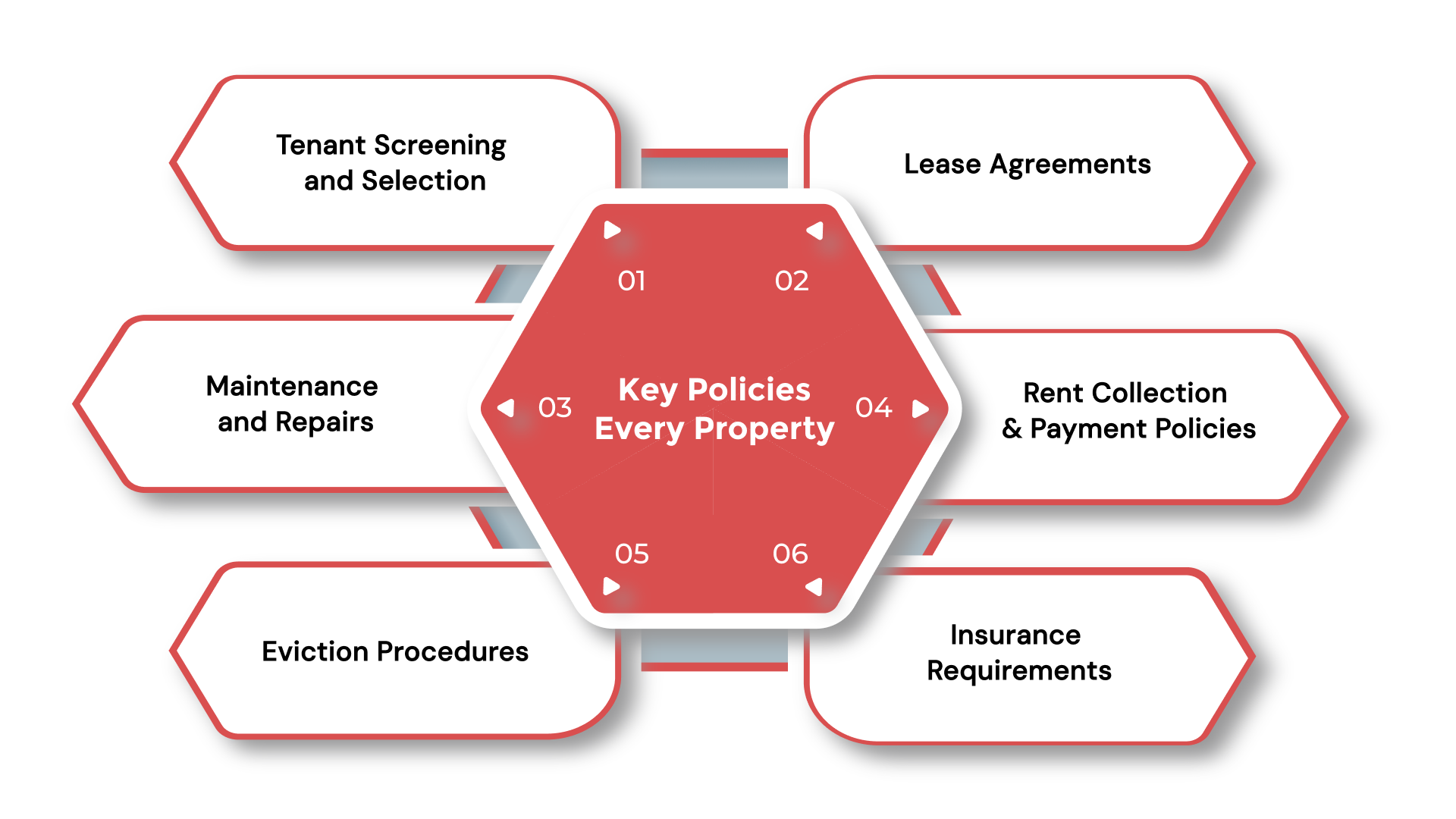
A comprehensive property management policy and procedures manual should cover a variety of aspects, from tenant relations to property maintenance. Below are some of the most crucial policies that every property management company should implement to ensure smooth operations, legal compliance, and tenant satisfaction.
1. Tenant Screening and Selection
A clear, standardized tenant screening policy is one of the most important aspects of property management. This policy should detail the steps involved in evaluating potential tenants, ensuring that the process is consistent and legally compliant.
Key Components:
- Credit Checks: Ensuring potential tenants have a history of responsible financial behavior.
- Background Checks: Screening for criminal history or any prior evictions.
- Income Verification: Ensuring tenants can afford the rent and meet income requirements.
- Fair Housing Compliance: Ensuring that tenant selection is non-discriminatory and compliant with local, state, and federal laws.
2. Lease Agreements
A well-drafted lease agreement sets the terms of the rental arrangement and protects both the property manager and tenant. Clear lease terms prevent misunderstandings and provide a legal framework to resolve disputes.
Key Clauses to Include:
- Rent Payment Terms: Specify the amount, due date, and late fee policies.
- Maintenance Responsibilities: Clearly define who is responsible for repairs and upkeep (tenant or property manager).
- Security Deposit Terms: Include details on the deposit amount, conditions for its return, and deductions for damage.
- Termination and Eviction Clauses: Outline the process for ending the lease and handling evictions.
- Renewal Terms: Specify if the lease automatically renews or if there are conditions for renewal.
3. Maintenance and Repairs
An effective maintenance policy ensures that all repairs are handled promptly and efficiently, which is essential for both tenant satisfaction and the preservation of the property. This policy should clearly define the process for handling both routine and emergency maintenance requests.
Key Guidelines:
- Routine Inspections: Schedule regular property inspections to identify and address maintenance needs before they become serious issues.
- Emergency Maintenance: Establish a clear process for tenants to report urgent issues and ensure that emergency repairs are handled swiftly.
- Vendor Management: Maintain a list of trusted, insured contractors and ensure that all vendors are properly vetted before performing work on the property.
4. Rent Collection and Payment Policies
A clear and consistent rent collection policy is vital for the financial health of the property management business. This policy should specify how rent payments are to be made, when they are due, and the consequences for late payments.
Key Elements:
- Payment Methods: Specify whether payments will be accepted via check, online payment portals, or other methods.
- Late Fees: Clearly define the penalties for late payments and the grace period allowed before fees are charged.
- Payment Tracking: Ensure that all payments are documented and tracked in an easy-to-access system.
- Handling Delinquencies: Set procedures for handling late or missed payments, including notifications and potential legal action for chronic late payers.
5. Eviction Procedures
Eviction is often the last resort when a tenant fails to pay rent, violates lease terms, or causes damage to the property. A clear eviction policy ensures that the process is handled legally, fairly, and efficiently, reducing the risk of legal action from tenants.
Key Steps:
- Notice of Violation: Outline the process for issuing warnings or notices when tenants violate lease terms.
- Legal Compliance: Ensure that all eviction procedures comply with state and local landlord-tenant laws.
- Court Involvement: Detail the process for involving the courts if a tenant fails to comply with eviction notices.
- Tenant Rights: Make sure that tenants are informed of their rights throughout the eviction process.
6. Insurance Requirements
Every property management company needs to have a clear insurance policy to protect the business, tenants, and the property from potential risks. This includes liability insurance, property insurance, and workers’ compensation insurance, among others.
Key Coverage Areas:
- General Liability Insurance: Covers accidents or injuries that occur on the property.
- Property Insurance: Protects the property from damage due to fire, vandalism, or natural disasters.
- Rent Loss Insurance: Covers lost rent in case the property becomes uninhabitable due to covered damage.
- Workers’ Compensation Insurance: Provides coverage for staff injuries incurred while on the job.
Without clear guidelines, property managers risk legal complications, financial instability, and damage to their reputation. It’s crucial to understand the potential ramifications of not having a well-established policy framework.
Effective property management policies are essential for smooth operations. With VComply, you can centralize policy management and track compliance. Streamline your policy workflows and make your management tasks more efficient. Request a Demo with VComply to see how our platform can help.
Get your free copy of VComply’s e-book on Policy Management: The Definite Guide to Getting It Right.
Consequences of Not Having a Proper Policy Framework
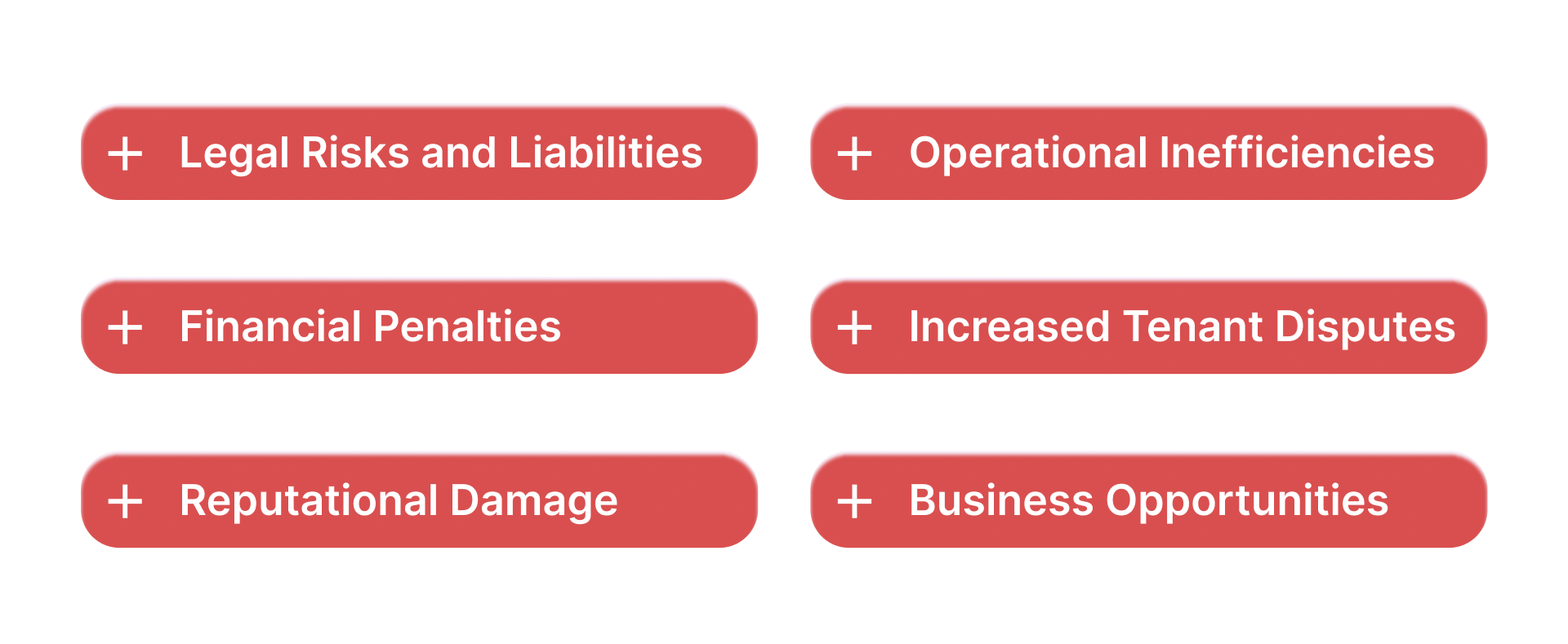
Without a proper property management policy and procedures manual, property managers expose themselves to numerous risks: legal, financial, and reputational. The lack of clear guidelines can result in costly mistakes, tenant dissatisfaction, and even legal repercussions.
Below are the potential consequences of not having a solid policy framework in place:
1. Legal Risks and Liabilities
Without clear policies on tenant screening, a property manager could unknowingly violate Fair Housing laws, leading to lawsuits or government penalties. Not having a clear, legally-compliant eviction policy could result in tenants contesting the eviction in court, potentially leading to costly delays and legal battles.
2. Financial Penalties and Losses
If a property manager doesn’t maintain a clear rent collection policy, tenants might miss payments or delay payments, causing cash flow issues for the property management company. A lack of proper insurance policies or failure to ensure tenant insurance coverage could lead to significant financial losses in case of property damage or liability issues.
3. Reputational Damage
A tenant who experiences inconsistent treatment regarding maintenance requests may post negative reviews, leading to a tarnished reputation and loss of future business. If tenants feel their rights are not protected or that policies are applied inconsistently, they may not renew their leases or recommend the property to others.
4. Operational Inefficiencies
If there is no standardized system for tracking maintenance requests, repairs might be delayed, leading to tenant frustration and potential legal violations if safety hazards are not promptly addressed.
5. Increased Tenant Disputes
When policies are unclear or inconsistently enforced, tenants may become frustrated with how issues are handled. For example, a tenant disputing a security deposit deduction may cause delays in the turnover process, leading to potential rent loss and additional legal costs.
6. Loss of Business Opportunities
Property owners might decide to switch to a competitor if they feel that the current property manager does not have clear, enforceable policies for tenant management or maintenance.
Also Read: Addressing the Importance of Policies in Compliance
Best Practices for Creating and Maintaining Property Management Policies
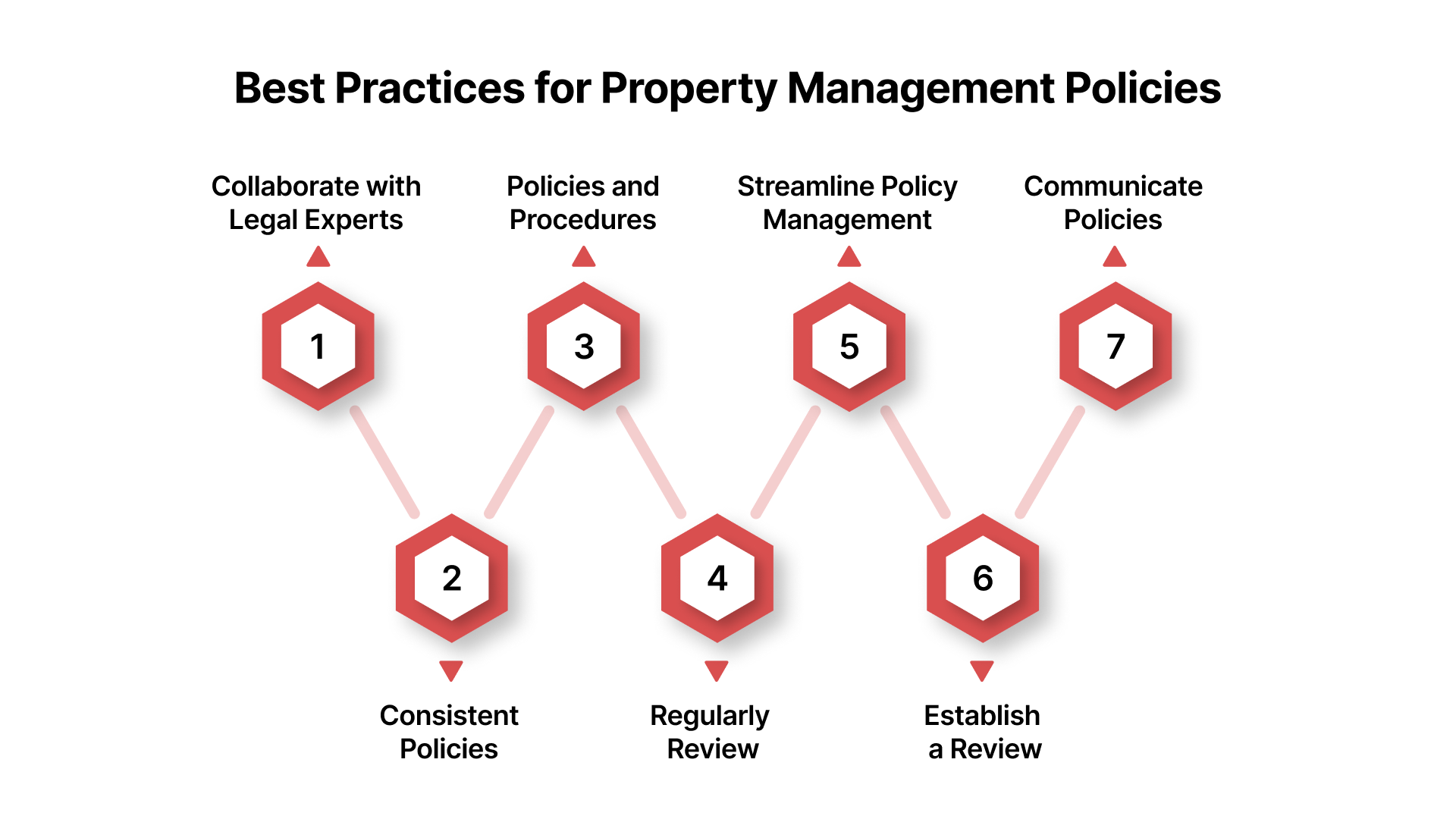
Developing and maintaining an effective property management policy and procedures manual requires careful planning, regular updates, and consistent enforcement. Here’s the best practice checklist to ensure you are creating and maintaining effective property management policies.
1. Collaborate with Legal Experts
Ensure policies comply with local, state, and federal regulations by working closely with legal professionals. Regularly review policies with attorneys to stay aligned with evolving laws, such as changes to Fair Housing regulations.
2. Develop Clear, Detailed, and Consistent Policies
A property management manual should contain detailed, clearly written policies that are easy for both staff and tenants to understand. Ensure consistency across all policies. Inconsistent policies can lead to confusion and may create unfair treatment of tenants.
3. Train Staff on Policies and Procedures
Regular training is essential for maintaining high standards of service and legal compliance.
- Onboarding: Include policy training as part of the onboarding process for new hires to ensure they understand their responsibilities from day one.
- Ongoing Education: Conduct regular training sessions to keep staff updated on policy changes, legal updates, and best practices.
- Documentation of Training: Maintain records of all training sessions.
4. Regularly Review and Update Policies
Review all policies at least annually to ensure they remain compliant with new regulations, industry standards, or company goals. Update policies when major changes occur, and gather feedback from tenants and staff to improve policies as necessary.
5. Use Technology to Streamline Policy Management
Leverage property management software and compliance tools like VComply to automate policy tracking and ensure compliance. These platforms make it easier to manage, update, and track policies in real-time, ensuring all staff and tenants have easy digital access and are always informed and up to date.
6. Establish a Review and Approval Process
Before implementing any new or updated policies, set up a formal review process. Involve key stakeholders, including department heads, legal advisors, and senior management, to ensure alignment with business goals and legal requirements.
7. Communicate Policies Effectively
Ensure that tenants receive relevant policies and lease agreements upon move-in, and provide timely updates when policies change. Use internal communications such as emails or meetings to keep staff informed of any policy updates.
Following best practices ensures that your policies remain effective and compliant. VComply allows you to automate and track these practices seamlessly, ensuring nothing falls through the cracks. With VComply, you’ll be able to centralize all policies and streamline updates, making your property management easier than ever. Learn More about VComply and simplify your policy management today.
Also Read: 5 Steps to Easy and Effective Policy Communication
The Role of Technology in Policy Management
As property management becomes more complex, integrating technology into policy management ensures smooth operations and compliance. Below are three essential tools that property managers should consider using to streamline their processes:
1. Property Management Software
Property management software automates essential tasks such as lease tracking, rent collection, and maintenance requests, ensuring that all activities align with established policies. By centralizing these tasks in one platform, property managers can efficiently manage daily operations and enforce policies consistently.
2. GRC Tools
Governance, Risk, and Compliance (GRC) tools like VComply help property managers streamline policy creation, implementation, and monitoring. These tools ensure compliance by automating policy reviews, tracking audit trails, and sending reminders for critical deadlines, reducing the risk of missed tasks and legal non-compliance.
3. Digital Document Management Systems
Digital document management systems store, organize, and easily retrieve important policy-related documents. These systems provide secure access, version control, and centralized storage, making it easier to ensure that policies and procedures are up-to-date and accessible for all team members.
While policy management is critical, there are common hurdles property managers face. Proactively addressing these challenges ensures that policies are consistently applied and updated.
Common Challenges in Policy Management and How to Overcome Them
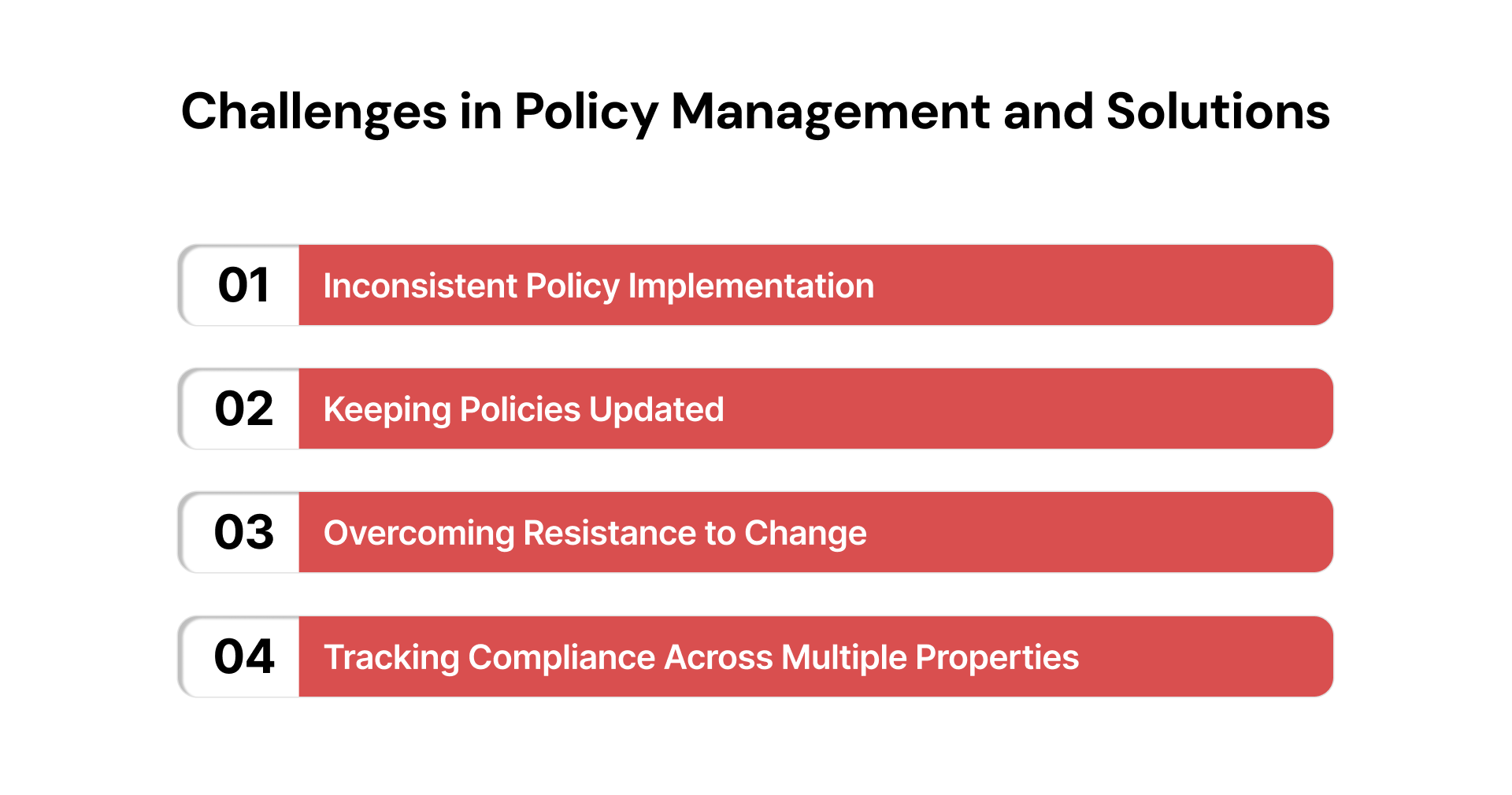
Even with well-defined policies, property managers often encounter challenges in ensuring effective policy management. Addressing these challenges head-on is crucial for maintaining smooth operations, legal compliance, and tenant satisfaction. Here are some common issues and strategies to overcome them:
1. Inconsistent Policy Implementation
Inconsistent policy implementation can lead to confusion, frustration, and potential legal risks.
Solution: To tackle this, establish a clear communication and training plan for all team members. Use technology, like property management software, to standardize procedures and create automated reminders.
2. Keeping Policies Updated
Outdated policies lead to non-compliance or missed opportunities for operational improvements.
Solution: Regularly review and update policies to stay in compliance with local laws and best practices. Consider using GRC tools like VComply to automate the policy review process and set up reminders to review documents annually or after significant regulatory changes.
3. Overcoming Resistance to Change
When new policies or updates are introduced, staff members may resist the changes, especially if they feel that the changes will disrupt their routine or increase their workload.
Solution: Engage employees in the policy development process and clearly communicate the benefits of the changes. Offer training and support to help them understand how the new policies will improve operations.
4. Tracking Compliance Across Multiple Properties
For property managers handling multiple properties, tracking compliance with policies can be a challenging task. Missing or overlooked tasks can lead to legal or operational risks.
Solution: Use property management software to centralize compliance tracking, maintenance schedules, and tenant communications. GRC tools like VComply also help with automated compliance monitoring and reporting, ensuring that all policies are being followed across all properties.
To simplify and centralize policy management, property managers can benefit from advanced tools like VComply, which help streamline compliance with ease.
Also Read: Four Mistakes to Avoid While Implementing Policy Management
Optimize Your Policy Management with VComply
Managing policies in real estate requires precision and consistency. VComply simplifies policy management by offering a comprehensive, centralized platform that enhances compliance and efficiency. Its AI-powered PolicyOps module offers a comprehensive solution for creating, distributing, and tracking policies across multiple properties and departments.
1. AI-Powered Drafting and Approval Workflows
VComply’s AI-assisted drafting tools help create compliant policies faster using built-in templates and collaborative editing. Approval workflows are clearly defined, with every step tracked, version-controlled, and audit-ready, ensuring consistency and compliance.
2. Centralized Policy Repository and Distribution
All policies are stored in a secure, centralized repository with mobile access. Employees can acknowledge or attest to policies with a single click, while training and attestation are seamlessly integrated into one workflow, driving higher compliance rates and employee engagement.
3. Get Policy Access & Answers Instantly with AI
With all policies centralized in one location, VComply makes it easy for employees to quickly access the policies they need. The platform’s AI assistant, Paula C., offers instant answers and guidance, eliminating confusion and making it simpler for property managers and staff to understand policy details.
4. Real-Time Policy Insights and Reporting
VComply provides a unified dashboard that brings clarity to the entire policy lifecycle. Real-time reports highlight adoption gaps, pending approvals, and compliance risks, allowing property managers to stay on top of every policy and ensure nothing slips through the cracks.
Also Read: 5 Common Policy Management Pain Points and How VComply Solves Them
Wrapping Up
Effective policy management in real estate is essential for ensuring smooth operations, legal compliance, and tenant satisfaction. A well-structured policy framework allows property managers to streamline processes, reduce risks, and maintain consistency in their day-to-day activities. Clear policies for tenant screening, rent collection, maintenance, and eviction help create a reliable system that fosters trust among tenants, property owners, and managers.
Utilizing technology, such as property management software and GRC tools like VComply, enhances policy management in real estate by automating processes, tracking compliance, and ensuring policies are up-to-date. These tools significantly improve efficiency, reduce errors, and guarantee that policies are consistently applied across properties.
Ready to streamline your policy management in real estate?
With VComply, you can automate policy tracking, ensure compliance, and maintain real-time visibility across all properties. Simplify your compliance process and keep your policies up to date with ease.
Request a Demo with VComply to see how our platform can enhance your operations and compliance workflow.
FAQs
Policy management in real estate refers to the process of creating, implementing, and maintaining policies and procedures that govern the operations of a property management company. It includes guidelines for tenant screening, lease agreements, rent collection, maintenance, and compliance with local, state, and federal regulations.
Technology, such as property management software and compliance tools like VComply, can streamline policy management by automating processes, tracking compliance, and providing easy access to policies. It ensures that policies are consistently updated, distributed, and followed across all properties, reducing errors and improving efficiency.
It’s recommended that property management policies be reviewed at least annually to ensure they comply with changes in regulations, market conditions, and company goals. Policies should also be updated when major legal or market shifts occur, or when feedback from tenants or staff indicates the need for revisions.
VComply helps property managers automate policy tracking, streamline approval workflows, and ensure real-time compliance. With its centralized policy repository, AI-driven insights, and real-time reporting, VComply makes it easy to manage, distribute, and update policies, ensuring they are always in line with current regulations and company practices.