
10 SOX Compliance Tools for Managing Internal Controls and Audit Readiness (2026)
Preparing for a Sarbanes-Oxley Act audit should not feel like a last-minute scramble. Yet many compliance and finance teams still manage controls, testing schedules, and evidence through spreadsheets, emails, and scattered systems. This fragmented approach makes it difficult to track ownership, monitor control performance, and stay audit-ready throughout the year.

For compliance officers, risk managers, and technology leaders, the stakes are high. Weak visibility into internal controls can delay audits, increase regulatory risk, and consume valuable time across finance, IT, and compliance teams. That is why organizations are turning to SOX compliance tools to centralize controls, automate testing, and maintain continuous oversight of financial reporting processes.
Key Takeaways
- SOX compliance tools centralize internal controls, testing schedules, and audit evidence to reduce manual tracking and dependency on spreadsheets.
- The right platform improves visibility into financial controls, helping you detect gaps and remediate issues before audits begin.
- Automation streamlines control testing, documentation, and reporting, saving compliance and finance teams significant time during audit cycles.
- Modern solutions enable continuous monitoring, allowing organizations to maintain year-round audit readiness rather than reactive preparation.
- Choosing the right tool depends on your organization’s control complexity, system integrations, and ability to scale compliance operations.
What Are SOX Compliance Tools?
SOX compliance tools are software platforms that help you manage the requirements of the Sarbanes-Oxley Act, especially internal controls over financial reporting. They replace spreadsheets and scattered documentation with a centralized system that tracks controls, testing, and audit evidence.
For compliance, finance, and IT teams, managing SOX obligations manually creates operational challenges. You must coordinate control owners, collect audit evidence, and ensure controls remain effective across multiple systems and departments. Without a structured system, these tasks quickly become time-consuming and harder to monitor across departments.
Most SOX compliance tools help you:
- Document and manage internal controls over financial reporting (ICFR).
- Assign control ownership and track testing schedules.
- Collect and organize audit evidence in one place.
- Monitor access risks and segregation-of-duties conflicts.
- Generate reports for internal and external audits.
Why Do Organizations Need SOX Compliance Tools
Managing SOX requirements becomes harder as your organization grows and financial systems expand. You must track dozens of internal controls, coordinate testing schedules, and collect evidence across finance, IT, and compliance teams.
When these processes rely on spreadsheets, emails, and shared folders, visibility quickly breaks down. Teams struggle to monitor and control performance, track ownership, and prepare audit documentation without last-minute effort.
SOX compliance tools help solve these operational challenges by centralizing and automating key compliance activities. Instead of reacting during audit season, you can maintain continuous oversight of your financial control environment.
Key Features to Look for in SOX Compliance Tools
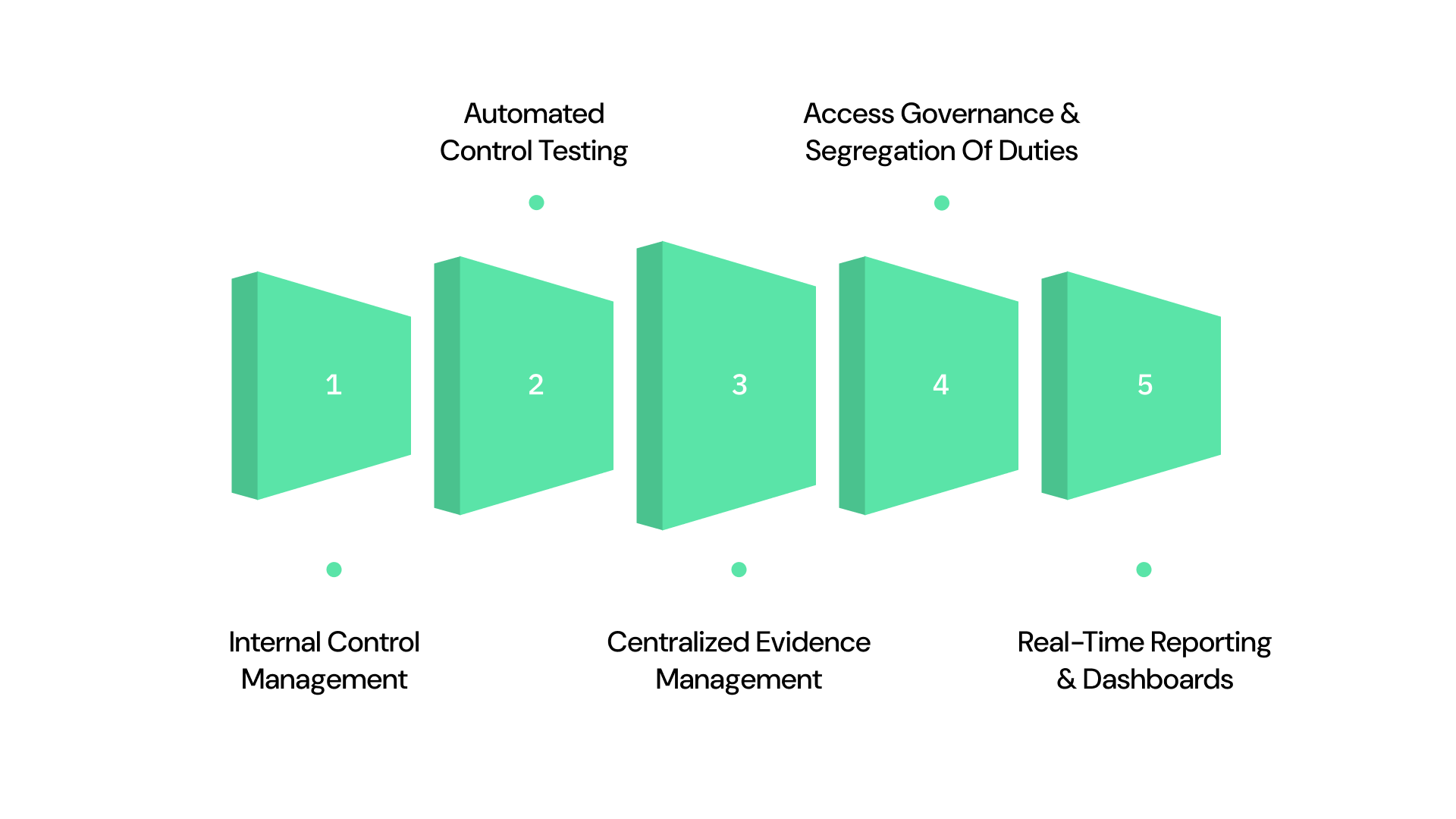
Not all SOX compliance tools provide the capabilities needed to manage financial controls effectively. The right platform should help you move beyond manual tracking and maintain continuous oversight of your internal control environment.
When evaluating solutions, focus on features that simplify control management, improve visibility, and reduce the operational burden on compliance and finance teams.
1. Internal Control Management
A strong platform helps you document, organize, and map internal controls across financial reporting processes. This creates a centralized record of your control framework and ownership.
2. Automated Control Testing
SOX compliance requires regular testing of controls. Automation helps you schedule tests, assign responsibilities, and track completion without relying on manual follow-ups.
3. Centralized Evidence Management
Audit evidence often comes from multiple systems and departments. A centralized repository helps you store documentation in one place and retrieve it quickly during audits.
4. Access Governance and Segregation of Duties
SOX requires strict oversight of system access. The right tools help you monitor user permissions and detect segregation-of-duties conflicts that could compromise financial controls.
5. Real-Time Reporting and Dashboards
Clear reporting helps compliance leaders understand the status of controls, testing progress, and outstanding remediation tasks. This visibility makes audit preparation significantly easier.
10 SOX Compliance Tools to Strengthen Financial Controls in 2026
Choosing the right SOX compliance tool can significantly reduce the operational burden of managing internal controls and preparing for audits.
Below are ten widely used SOX compliance platforms and how they support modern compliance programs.
1. VComply
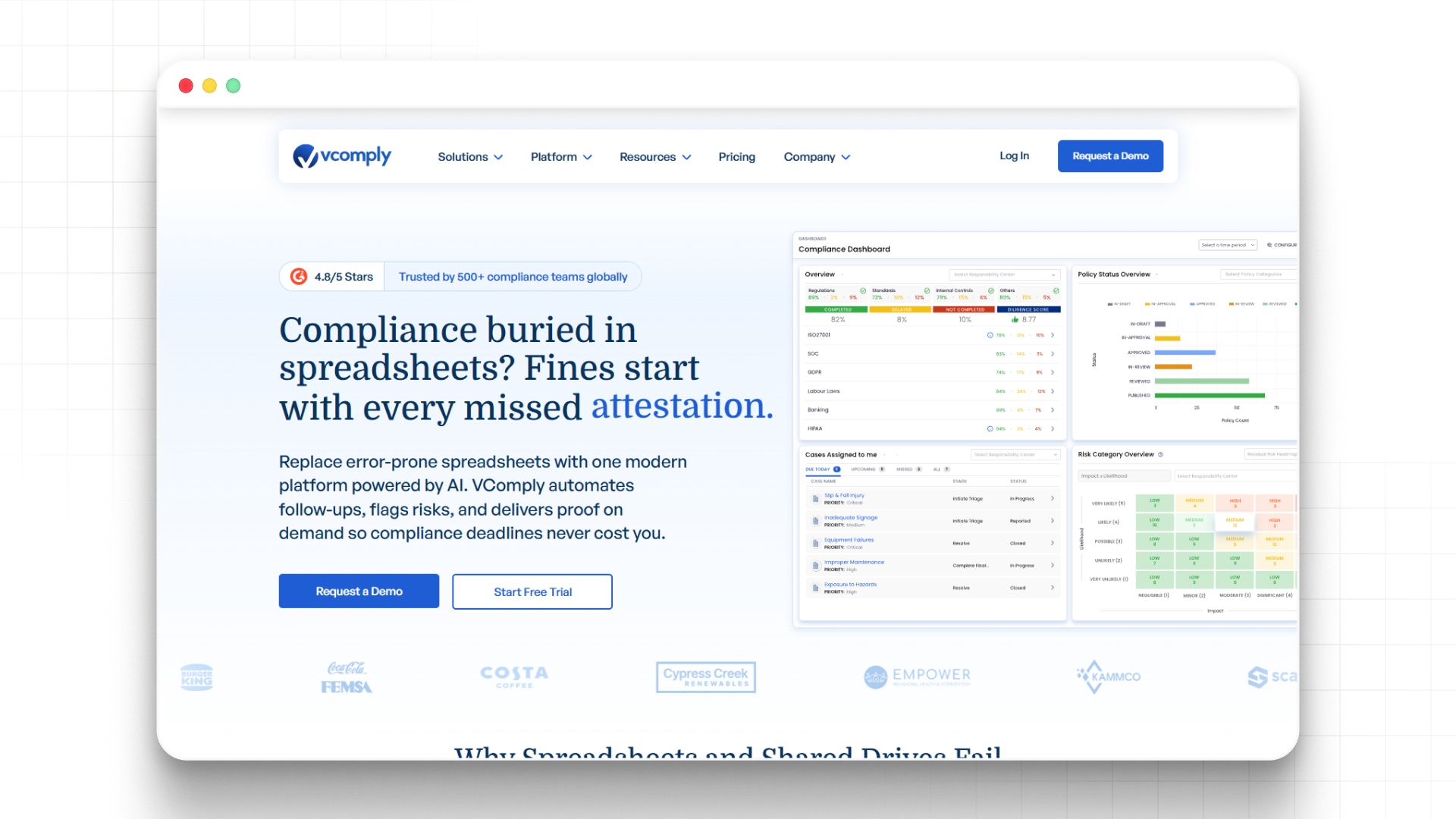
VComply is a cloud-based Governance, Risk, and Compliance (GRC) platform designed to help organizations operationalize compliance and internal control programs. Instead of managing controls, policies, and audit evidence across spreadsheets and disconnected tools, you can centralize compliance activities within structured workflows. The platform provides real-time visibility into control ownership, testing progress, and compliance status, helping teams stay audit-ready throughout the year.
Key Features
- Centralized management of compliance tasks, controls, and policies
- Automated workflows, reminders, and compliance calendars
- Real-time dashboards and customizable reporting
- Risk assessments and monitoring capabilities
- Incident and issue tracking for compliance investigations
- Role-based access controls with detailed audit trails
Best For: Mid-sized to enterprise organizations that want to manage compliance, risk, and internal controls within a single platform.
G2 Rating: 4.6 / 5
Pricing: Custom pricing
Demo / Free Trial: Free demo available
2. Workiva
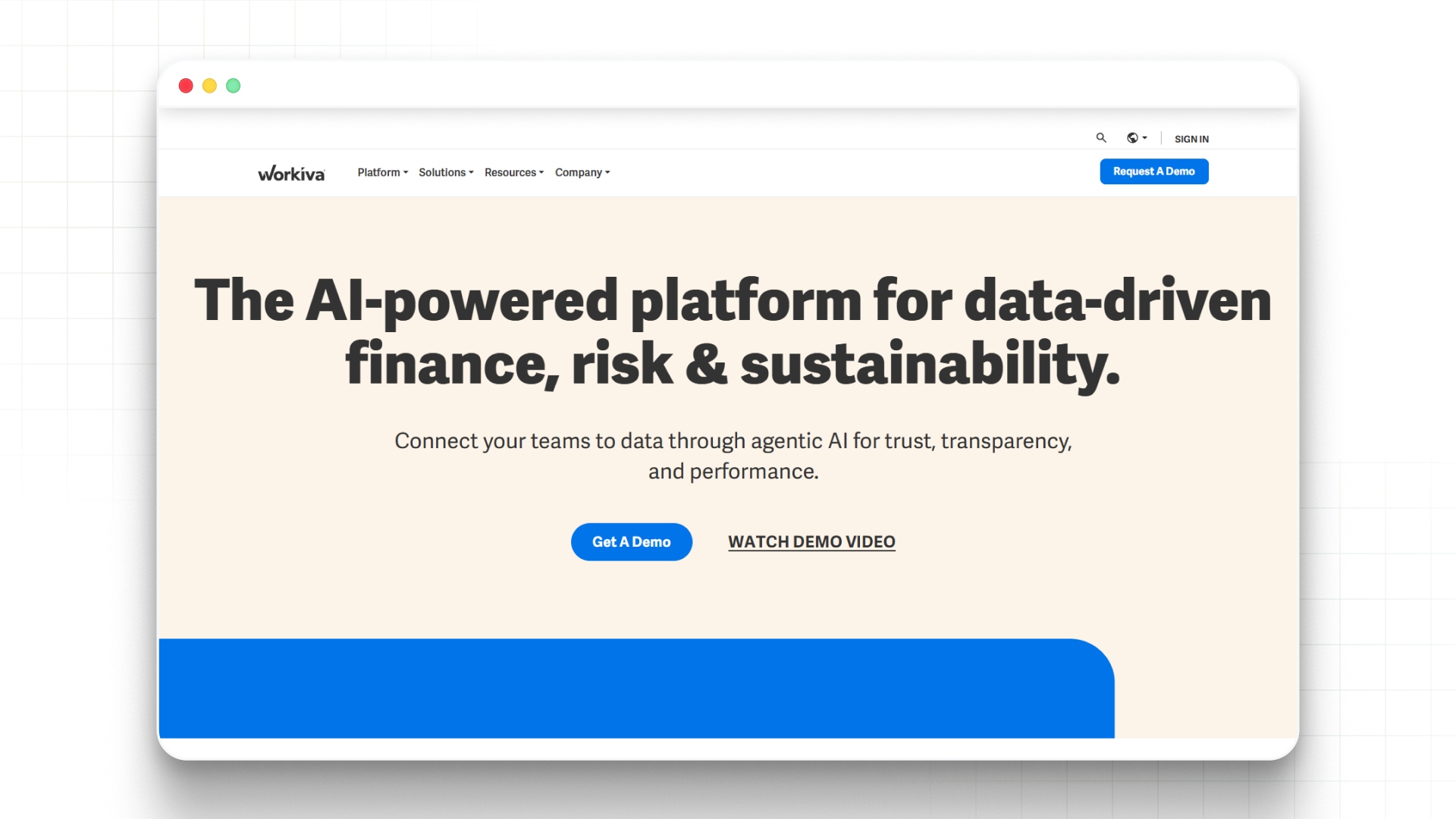
Workiva | Software for Sustainability, GRC & Financial Reporting
Workiva is a widely used platform for financial reporting, audit management, and SOX compliance. It connects financial data, internal controls, and reporting workflows in a collaborative environment. Teams can link financial statements, supporting documentation, and audit evidence so updates automatically synchronize across reports, improving accuracy and transparency.
Key Features
- Connected financial reporting and regulatory disclosures
- Workflow automation for internal controls and audits
- Real-time collaboration across finance, audit, and compliance teams
- Built-in audit trails and documentation tracking
- Data linking to maintain consistency across reports
Best For
Public companies and large enterprises that require integrated financial reporting and collaborative compliance workflows.
G2 Rating: 4.5 / 5
Pricing: Custom pricing
Demo / Free Trial: Demo available upon request.
3. AuditBoard
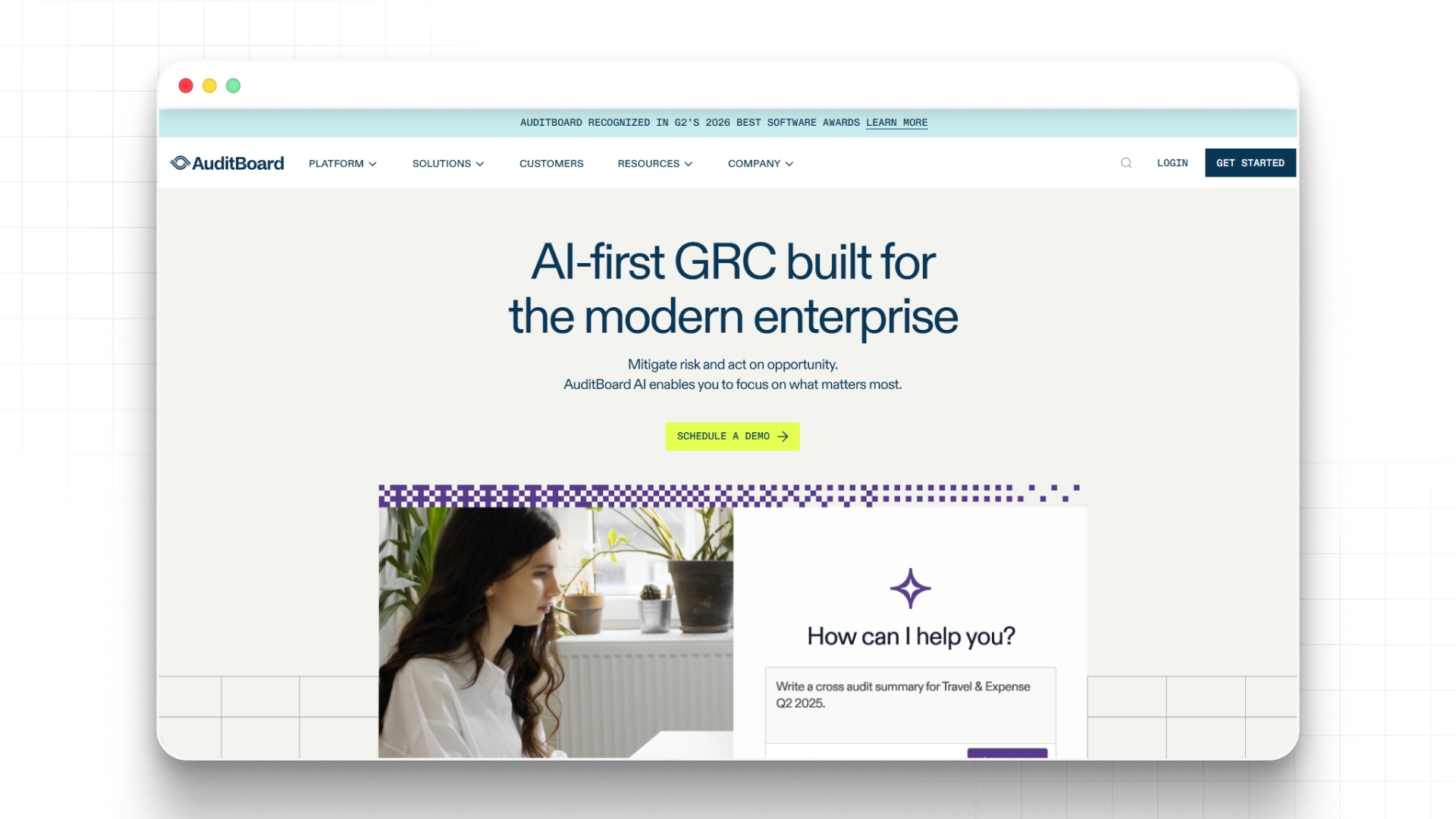
Audit, Compliance, & Risk Management Software | AuditBoard
AuditBoard is a widely used GRC platform designed to help organizations manage internal audits, SOX compliance, and enterprise risk programs. The platform centralizes risk, compliance, and audit workflows so internal auditors and compliance teams can automate testing, manage documentation, and collaborate across departments. By connecting control testing, risk assessments, and reporting in one system, AuditBoard helps organizations shift from reactive compliance to proactive risk management.
Key Features
- Centralized management of SOX controls and testing workflows
- Automated evidence collection and audit documentation
- Integrated risk assessments and issue tracking
- Workflow automation and collaboration tools
- Dashboards and analytics for compliance reporting
Best For: Large enterprises and internal audit teams managing complex SOX programs and multiple regulatory frameworks.
G2 Rating: 4.7 / 5
Pricing: Custom pricing.
Demo / Free Trial: Demo available upon request
4. MetricStream
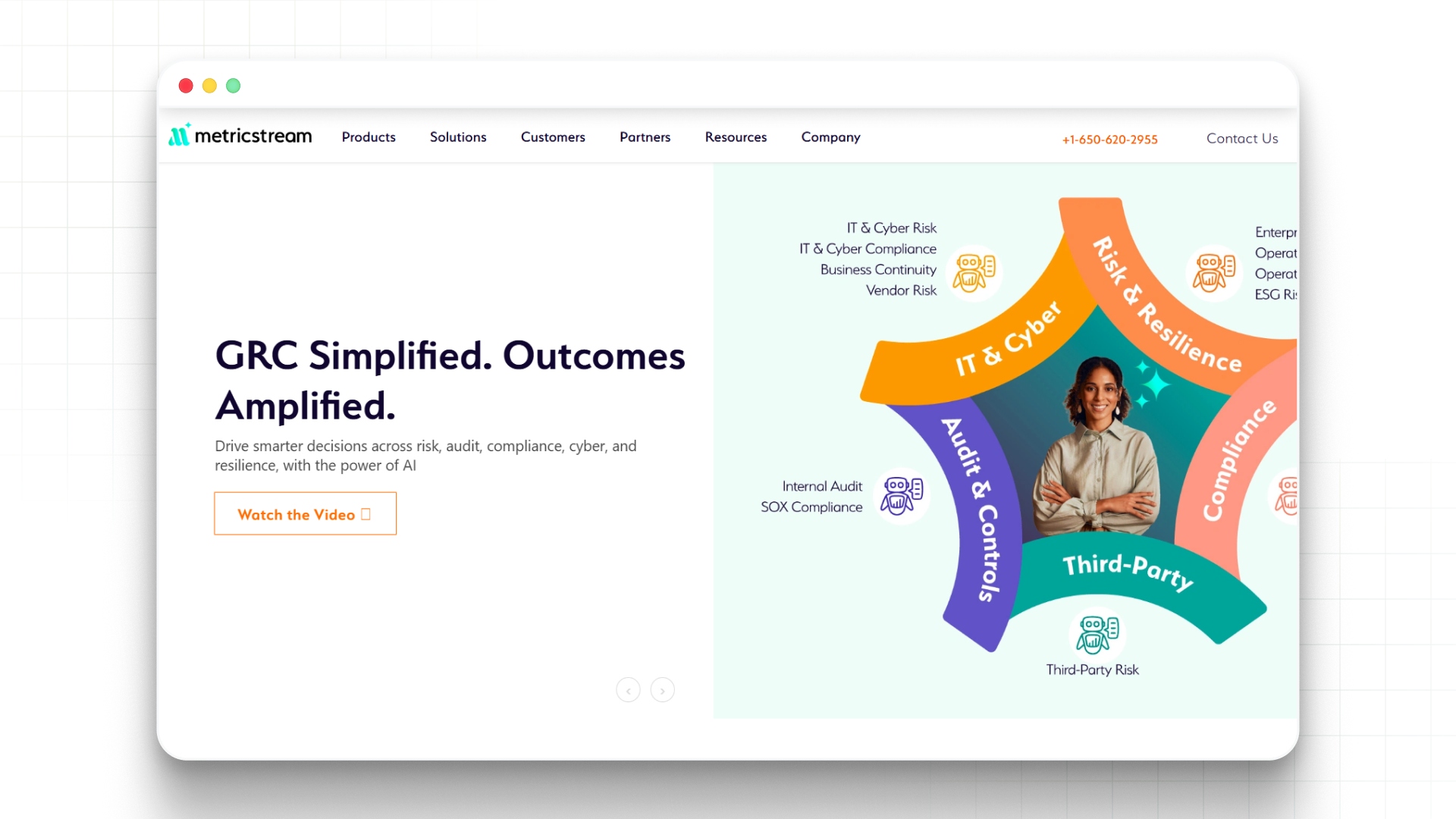
GRC | Governance, Risk and Compliance Software Solutions
MetricStream provides an enterprise-grade GRC platform that helps organizations manage regulatory compliance, internal controls, and enterprise risk programs. The platform supports SOX compliance by connecting risk assessments, control monitoring, and remediation workflows in one centralized system. This integrated approach helps compliance teams track controls, identify risks, and maintain continuous oversight across the organization.
Key Features
- Enterprise risk management and control monitoring
- Compliance management across multiple frameworks
- Automated control testing and remediation workflows
- Real-time dashboards and reporting
- Integrated issue management and audit tracking
Best For
Large enterprises with mature GRC programs that require advanced risk and compliance management capabilities.
G2 Rating: 4.3 / 5
Pricing: Custom pricing available through enterprise licensing.
Demo / Free Trial: Demo available upon request
5. Diligent HighBond (ControlsBond)
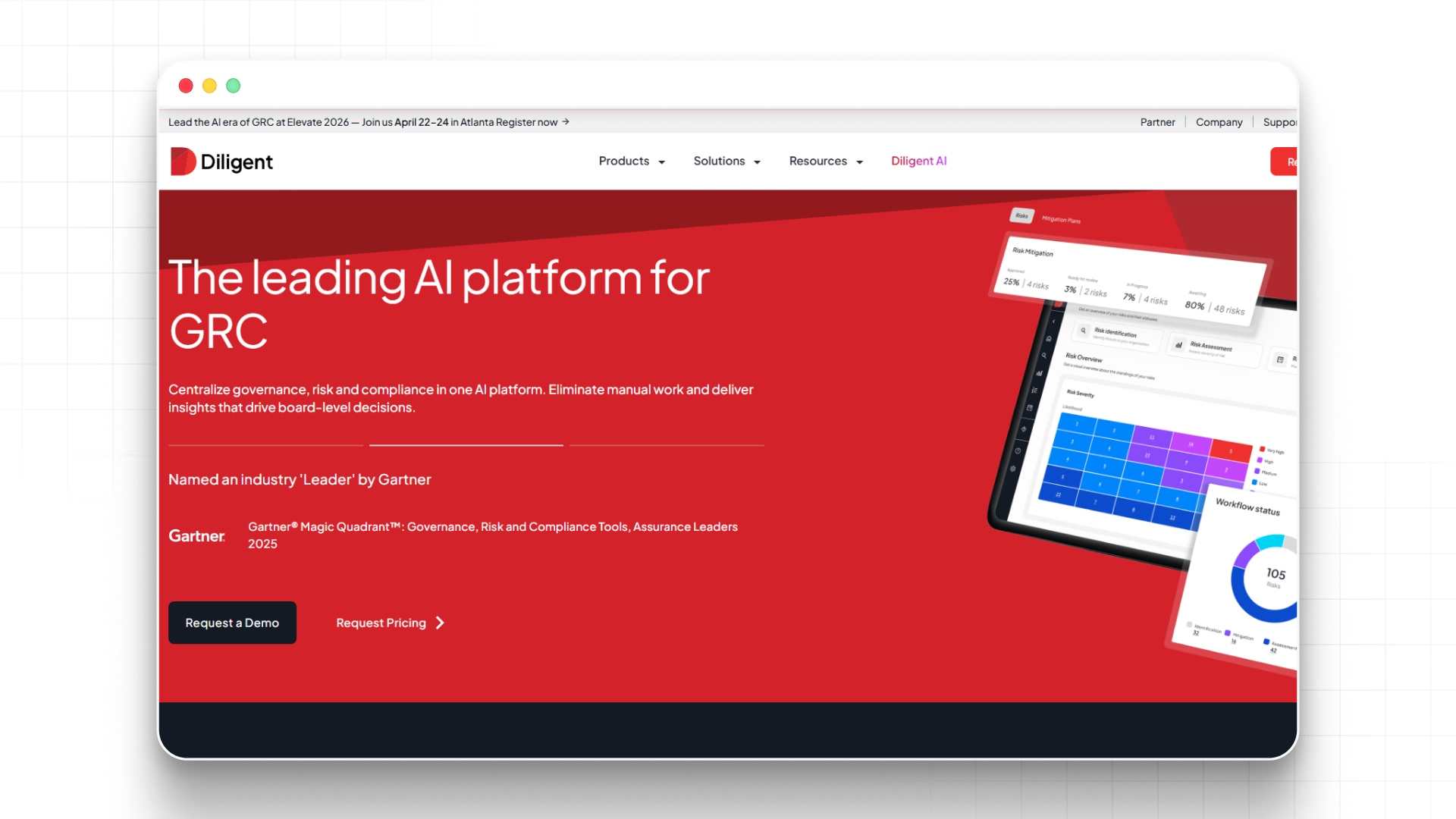
The only AI-powered board management software directors ask for by name
Diligent HighBond is a governance and risk management platform designed to help organizations manage internal controls, compliance programs, and audit workflows. Its SOX capabilities allow teams to document controls, track testing results, and monitor remediation activities through centralized dashboards. By integrating risk management and audit functions, HighBond helps organizations improve oversight and accountability across compliance programs.
Key Features
- Internal controls documentation and testing workflows
- Integrated risk and compliance management
- Audit planning and issue tracking
- Real-time dashboards and compliance reporting
- Workflow automation for remediation activities
Best For
Organizations with dedicated internal audit teams managing SOX and enterprise risk programs.
G2 Rating: 4.4 / 5
Pricing: Custom pricing available.
Demo / Free Trial: Demo available upon request
6. Onspring
Automated Business Process Solutions | Onspring Technologies
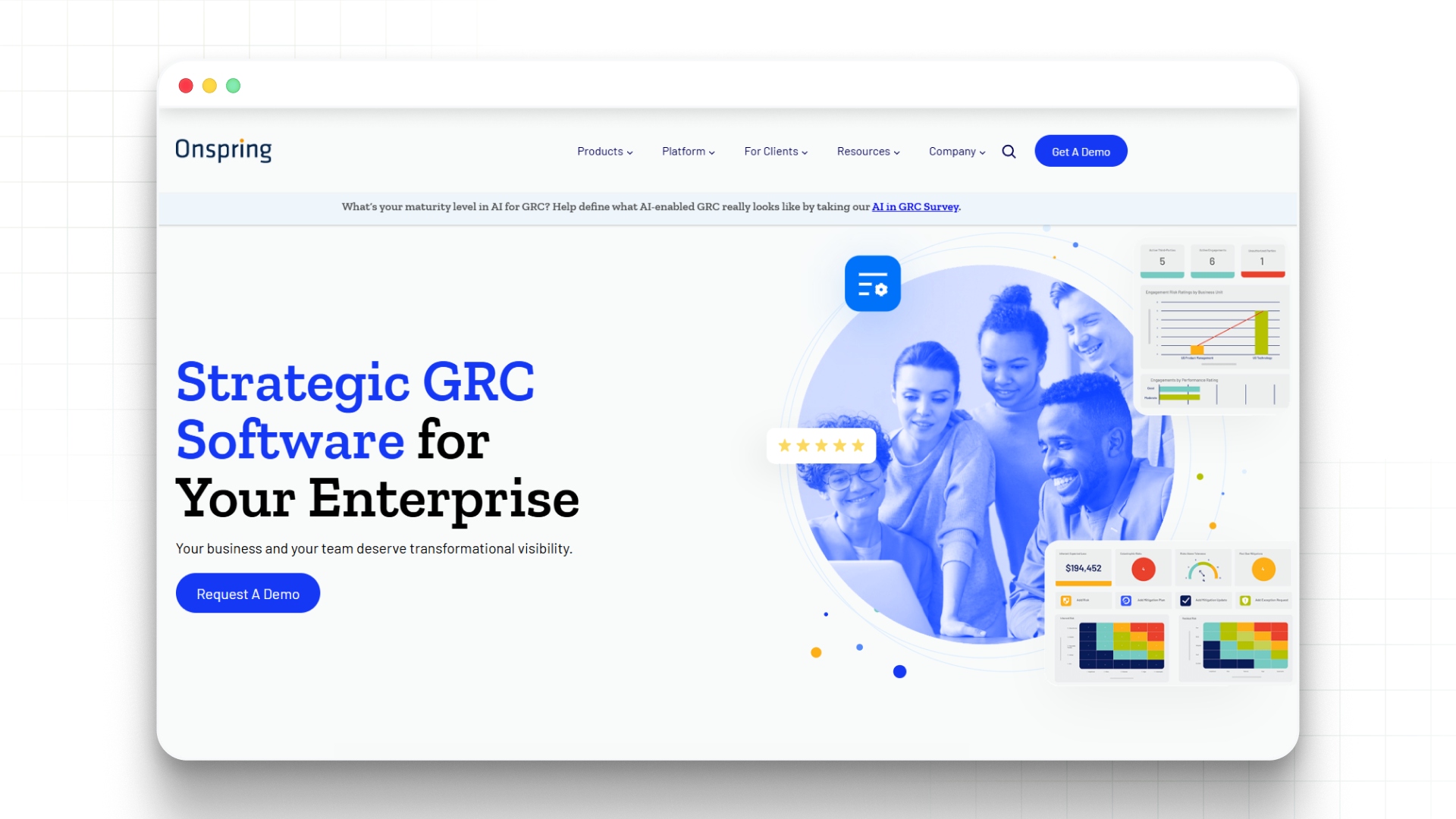
Onspring is a cloud-based platform that helps organizations automate compliance, risk management, and audit processes. The platform allows teams to digitize SOX workflows, centralize documentation, and track compliance activities through configurable dashboards and reporting tools. By replacing manual processes with automated workflows, Onspring improves visibility into compliance activities and operational risks.
Key Features
- Configurable compliance workflows and dashboards
- Centralized document and evidence management
- Risk assessments and issue tracking
- Real-time reporting and analytics
- Integration with existing enterprise systems
Best For
Organizations seeking a flexible platform to automate compliance processes and manage multiple frameworks.
G2 Rating: 4.5 / 5
Pricing: Custom pricing available.
Demo / Free Trial: Demo available upon request
7. Resolver
Resolver | Discover The Value Of Risk Intelligence
Resolver is a risk management and compliance platform designed to help organizations identify, assess, and mitigate operational risks. The platform supports SOX programs by connecting risk data with internal control management and incident tracking. This integration enables compliance and risk teams to analyze potential control failures and respond quickly to emerging issues.
Key Features
- Enterprise risk and incident management
- Compliance tracking and control monitoring
- Risk assessment and reporting tools
- Incident investigation and resolution workflows
- Real-time dashboards for risk visibility
Best For
Organizations that want to integrate enterprise risk management with compliance oversight.
G2 Rating: 4.3 / 5
Pricing: Custom pricing available.
Demo / Free Trial: Demo available upon request
8. LogicManager
LogicManager | Enterprise Risk Management Software
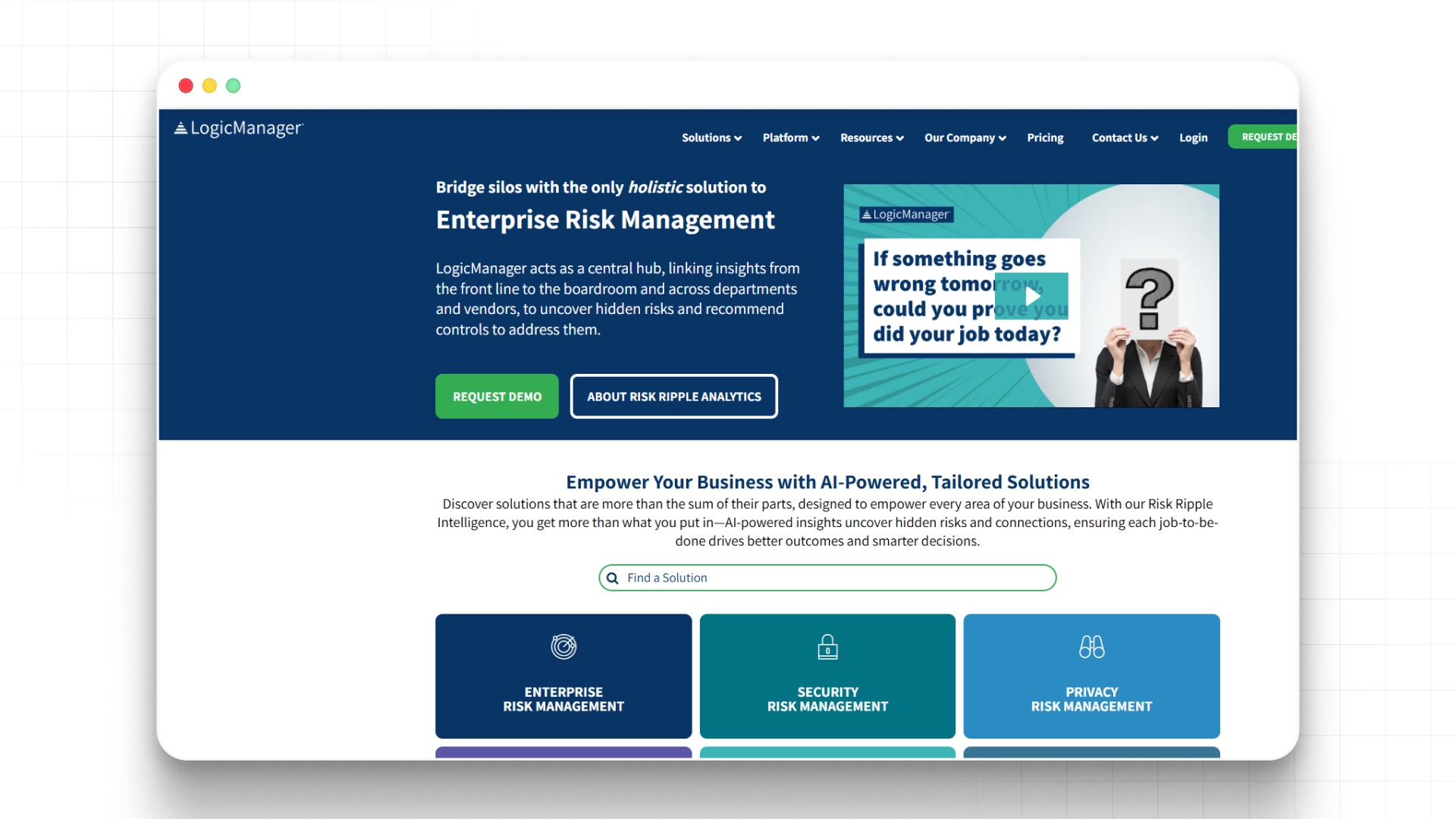
LogicManager is a risk and compliance management platform that helps organizations manage internal controls, risk assessments, and regulatory requirements. The platform supports SOX compliance by allowing teams to map risks to controls, perform testing, and track remediation activities. With centralized dashboards and reporting tools, organizations can maintain better visibility into compliance performance and risk exposure.
Key Features
- Risk and control mapping across compliance frameworks
- Internal control documentation and testing workflows
- Issue tracking and remediation management
- Centralized dashboards and reporting tools
- Pre-built compliance frameworks and templates
Best For
Organizations that want a structured framework for managing risk and SOX internal controls.
G2 Rating
4.4 / 5
Pricing
Custom pricing available.
Demo / Free Trial
Demo available upon request
Free trial: N/A
9. Pathlock
Compliance-Centric Identity Governance | Pathlock
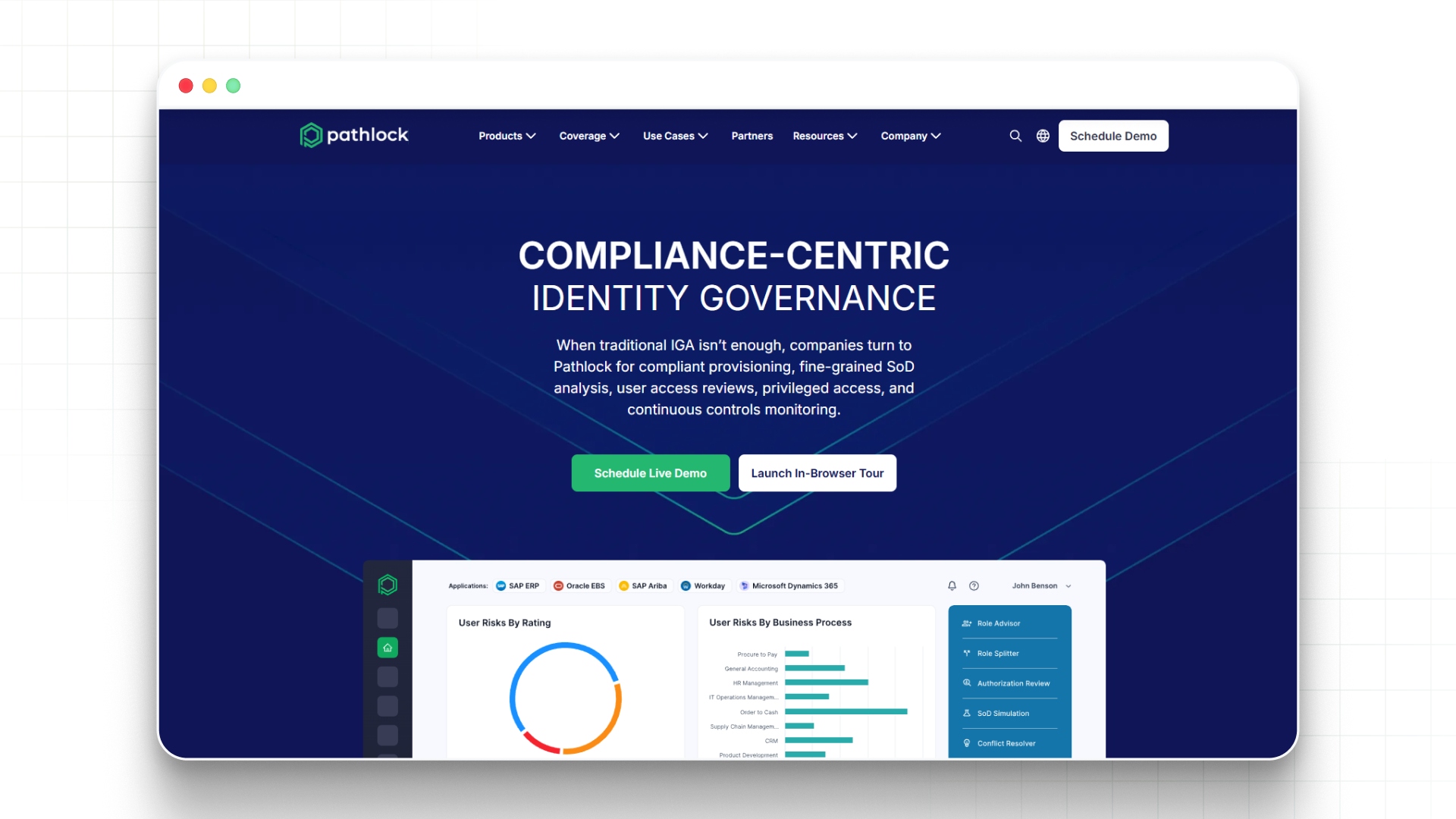
Pathlock focuses on access governance and segregation-of-duties management, which are critical components of SOX compliance. The platform continuously monitors system access, identifies permission conflicts, and helps organizations enforce internal control policies. This capability is particularly useful for companies that need stronger oversight of financial systems and user access risks.
Key Features
- Segregation-of-duties monitoring and enforcement
- Access governance and user activity monitoring
- Risk analysis and control testing
- Compliance reporting and audit trails
- Integration with ERP and financial systems
Best For
Organizations that need advanced monitoring of system access and segregation-of-duties controls.
G2 Rating: 4.5 / 5
Pricing: Custom pricing available.
Demo / Free Trial: Demo available upon request
10. Netwrix Auditor
Netwrix Auditor helps organizations maintain visibility into IT systems that support financial reporting. The platform monitors configuration changes, user activity, and access permissions across on-premise and cloud environments. These capabilities help organizations maintain detailed audit logs and detect suspicious activity that could impact SOX controls.
Key Features
- Real-time monitoring of system changes and user activity
- Automated collection of audit logs and evidence
- Alerts for suspicious access or configuration changes
- Compliance reporting and audit trails
- Integration with Active Directory and major enterprise systems
Best For
Organizations that need strong monitoring of IT infrastructure and access controls supporting financial reporting.
G2 Rating: 4.4 / 5
Pricing: Custom pricing available.
Demo / Free Trial: Demo available upon request
How to Choose the Right SOX Compliance Tool
Selecting the right SOX compliance tool depends on the complexity of your internal control environment and the maturity of your compliance program. Some organizations need advanced audit management capabilities, while others prioritize access governance or risk monitoring.
Consider the following factors:
1. Control management capabilities
The platform should allow you to document controls, assign ownership, and track testing across departments.
2. Automation and workflow management
Automated testing schedules, reminders, and evidence collection reduce manual effort and improve accountability.
3. Centralized visibility and reporting
Dashboards and reporting tools should provide real-time insights into control performance, compliance status, and outstanding issues.
4. Integration with financial and IT systems
The tool should integrate with ERP, financial reporting systems, and identity management platforms to simplify evidence collection.
5. Scalability and cross-department collaboration
As compliance programs expand, the platform should support multiple frameworks and enable collaboration across finance, IT, audit, and compliance teams.
Choosing a solution that supports these capabilities helps organizations move from reactive audit preparation to continuous compliance management.
Operational Best Practices for Managing SOX Compliance
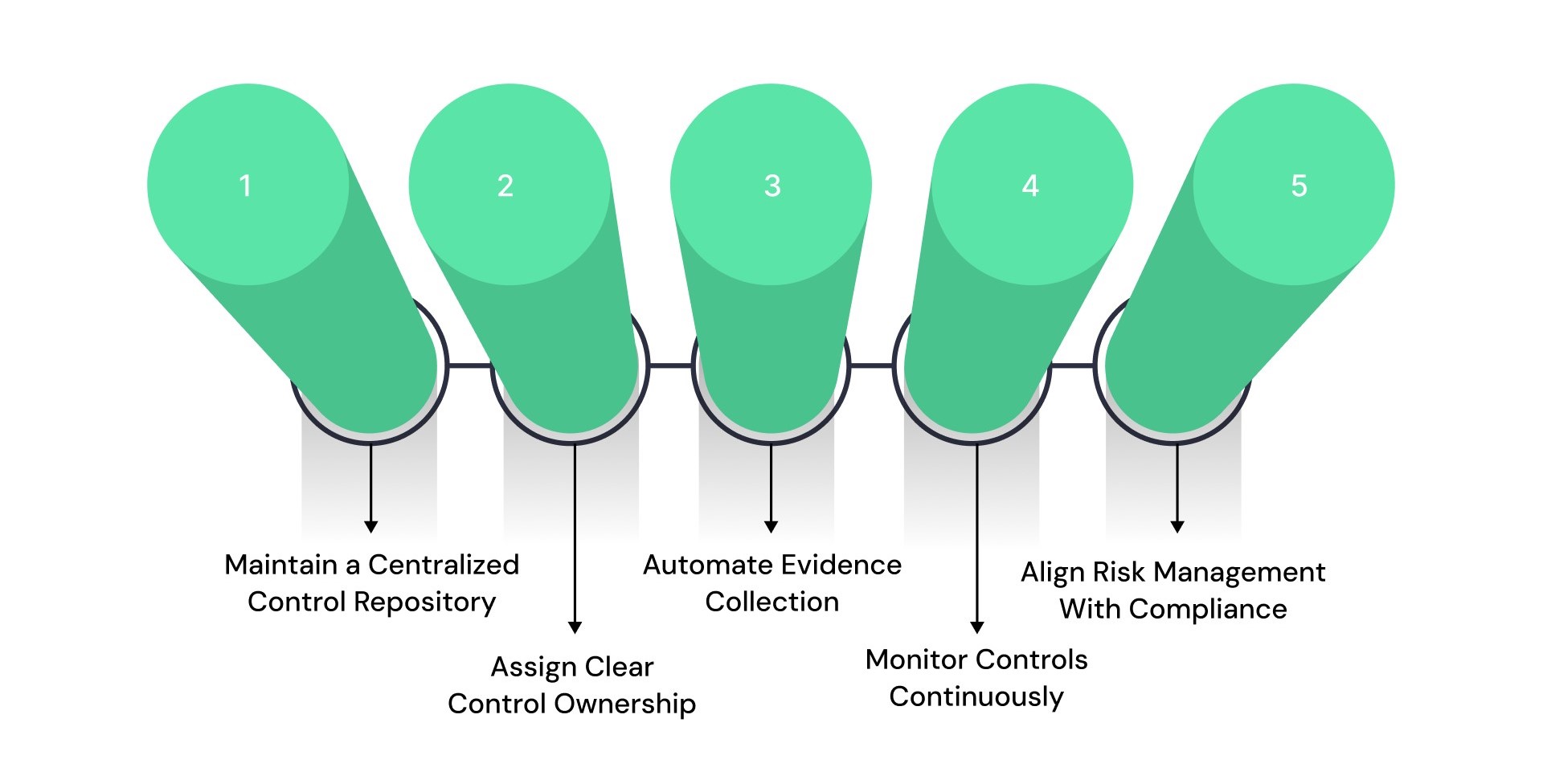
Even with the right tools, maintaining SOX compliance requires disciplined processes and clear accountability across your organization. Many compliance programs struggle because controls are poorly documented, ownership is unclear, or testing activities happen only during audit season.
Adopting structured operational practices can significantly improve the effectiveness of your SOX program.
1. Maintain a Centralized Control Repository
Create a single source of truth for all internal controls, documentation, and evidence related to financial reporting.
2. Assign Clear Control Ownership
Every control should have a designated owner responsible for testing, documentation, and remediation activities.
3. Automate Evidence Collection
Integrate systems that automatically capture logs, approvals, and transaction records to simplify audit preparation.
4. Monitor Controls Continuously
Instead of reviewing controls annually, track control performance throughout the year to identify issues early.
5. Align Risk Management With Compliance
Link risk assessments with internal control monitoring so you can prioritize high-impact financial risks.
Implementing these practices helps organizations maintain stronger governance, reduce audit stress, and improve financial reporting transparency.
Simplify SOX Compliance With VComply
Managing SOX controls across multiple teams and systems does not have to be complicated.
VComply helps compliance, finance, and risk teams centralize internal controls, automate compliance workflows, and maintain continuous audit readiness through a unified GRC platform.
With VComply, you can:
- Track SOX controls and ownership in one centralized system
- Automate control testing schedules and reminders
- Maintain organized audit evidence for faster reviews
- Monitor compliance activities through real-time dashboards
Organizations seeking greater structure around SOX control management often adopt centralized GRC platforms to coordinate testing, evidence collection, and audit readiness.
Explore how VComply’s ComplianceOps helps organizations manage internal controls, automate testing workflows, and maintain continuous oversight of SOX obligations. Book a demo today.
Conclusion
Managing SOX compliance is no longer just about preparing for annual audits. As financial systems become more complex and regulatory expectations increase, organizations must maintain continuous visibility into internal controls and financial reporting processes.
Relying on spreadsheets and disconnected tools makes it difficult to track control ownership, monitor testing activities, and maintain audit-ready documentation. This approach often leads to last-minute audit preparation, operational stress, and higher compliance risk.
VComply provides a structured approach to SOX compliance by centralizing control management, organizing testing workflows, and maintaining real-time visibility into control performance and documentation. This allows teams to move from reactive audit preparation to continuous oversight.
Start a 21-day free trial to see how VComply supports ongoing SOX compliance and audit readiness.
FAQs
SOX compliance tools are software platforms that help organizations manage internal controls, audit documentation, and financial reporting requirements under the Sarbanes-Oxley Act.
Organizations use these tools to automate control testing, centralize audit evidence, and maintain better visibility into internal control performance throughout the year.
Compliance officers, finance leaders, risk managers, internal auditors, and IT teams commonly use SOX compliance tools to manage regulatory requirements.
Key features include internal control management, automated testing workflows, centralized evidence storage, risk monitoring, and reporting dashboards for audit readiness.
Public companies must comply with SOX regulations, but private organizations preparing for IPOs or financial audits often adopt these tools as well.
Many organizations move beyond spreadsheets by adopting structured GRC platforms that centralize control documentation, testing workflows, and audit evidence. Platforms such as VComply help compliance and finance teams coordinate control ownership, automate reminders for testing activities, and maintain visibility into internal control performance throughout the year.