

How to Track, Measure & Resolve Regulatory Issues Without Increasing Overhead in 2026
Regulatory issues rarely surface as isolated failures. They emerge when obligations, controls, and evidence are tracked across spreadsheets, emails, and disconnected systems. Over time, this fragmentation weakens accountability, delays issue resolution, and limits leadership visibility during audits and regulatory reviews.

As organizations scale, the volume of regulatory requirements increases across departments, including legal, IT, operations, and compliance. Without structured tracking and ownership, teams struggle to identify gaps early, measure exposure accurately, and demonstrate control effectiveness when required.
This guide explains how to track, measure, and resolve regulatory issues using structured workflows, ownership models, and risk-based prioritization without increasing operational overhead.
TL;DR
- Regulatory issues signal breakdowns in ownership, workflows, and audit traceability, not isolated control failures.
- Most gaps emerge when compliance activities remain fragmented across teams, systems, and reporting structures.
- Effective issue management depends on systemization, including clear ownership, time-bound remediation, and real-time tracking.
- Risk scoring models that combine impact and likelihood enable consistent prioritization aligned with regulatory exposure.
- Mapping regulations to controls, policies, and evidence creates the traceability required for audits and internal validation.
- Organizations that centralize workflows and automate tracking reduce manual overhead while improving visibility, accountability, and audit readiness.
What Are Regulatory Issues in Business Operations
Regulatory issues are gaps, failures, or non-compliance events that arise when organizations do not meet legal, industry, or internal control requirements. These issues can originate from missing controls, weak enforcement, incomplete documentation, or delayed remediation.
They often appear across workflows such as audits, policy enforcement, vendor oversight, or operational processes. Without structured tracking, regulatory issues remain fragmented, making it difficult to assess exposure, assign ownership, and demonstrate compliance during audits.

Also read: Regulatory Gap Analysis: A Governance Framework for Risk and Compliance Teams
4 Reasons Why Regulatory Issues Escalate as Organizations Scale
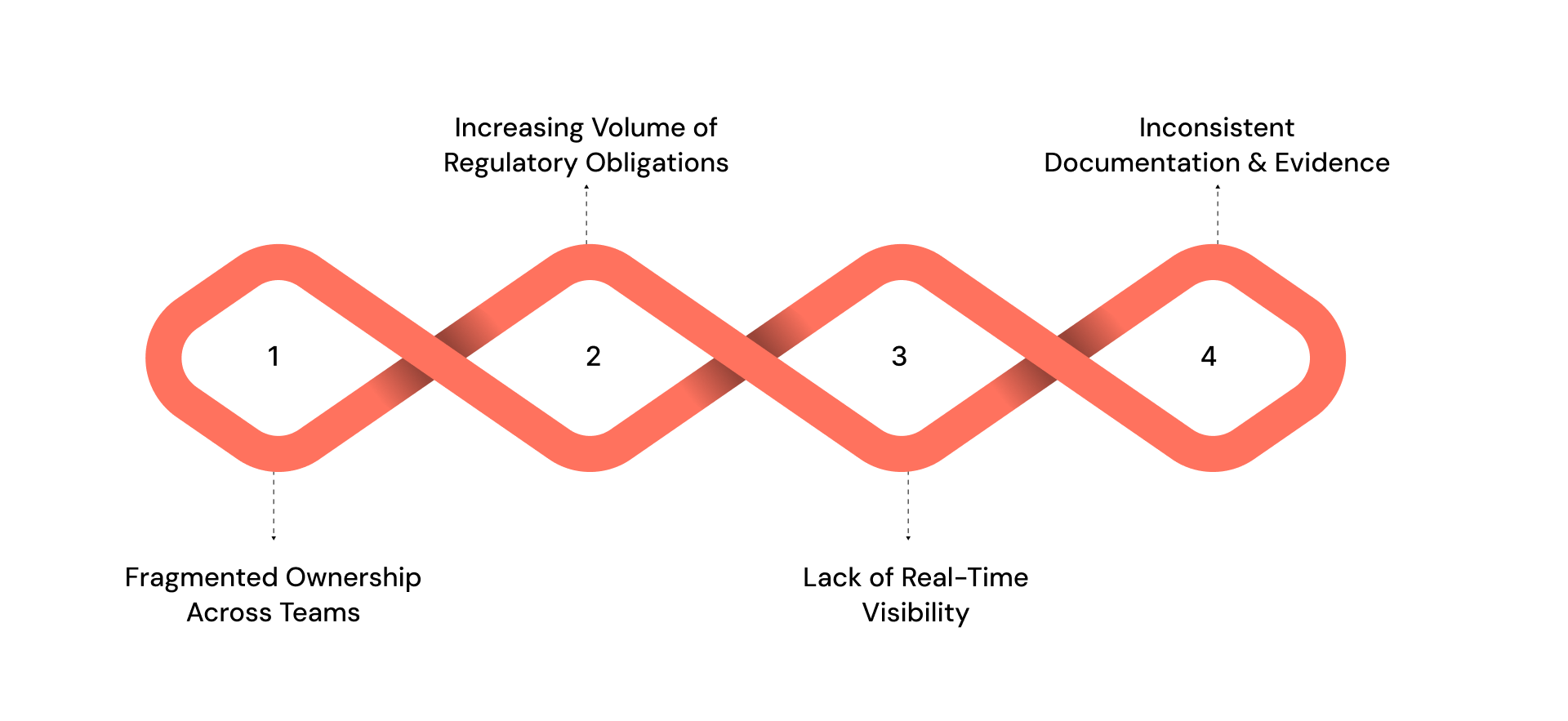
As organizations grow, regulatory complexity increases across systems, teams, and jurisdictions. Without structured processes, issues become harder to track and resolve consistently.
The escalation becomes clear across the following operational breakdowns:
1. Fragmented Ownership Across Teams
Regulatory responsibilities span compliance, legal, IT, and operations, often without clear ownership boundaries. This leads to duplicated efforts, missed tasks, and unresolved issues that remain open without accountability.
2. Increasing Volume of Regulatory Obligations
Frameworks such as SOX, HIPAA, and NIST introduce layered requirements that evolve continuously. Without structured tracking, teams struggle to keep obligations aligned with controls and workflows.
3. Lack of Real-Time Visibility
Leadership often relies on periodic reports instead of continuous monitoring of regulatory issues. This delays detection of emerging gaps and limits timely decision-making during audits or reviews.
4. Inconsistent Documentation and Evidence
Different teams maintain separate documentation standards, creating gaps in audit trails.
This makes it difficult to demonstrate compliance consistently across audits and regulatory inspections.
How to Identify Regulatory Issues Across Departments and Workflows
Identifying regulatory issues requires a structured approach that reflects how compliance activities occur across systems and teams.
Effective identification depends on integrating multiple operational inputs:
1. Audit Findings and Control Failures
Audit reports highlight gaps in control design and execution across departments. Tracking these findings consistently helps identify recurring issues and systemic weaknesses.
2. Incident and Case Data
Operational incidents, policy violations, and security events often signal underlying regulatory risks. Linking incidents to compliance obligations improves visibility into root causes.
3. System and Process Data
Data from operational systems reveals failures in workflows, approvals, and control execution. This provides real-time signals of compliance gaps that may not appear in audits.
4. Regulatory Updates and Changes
New regulations or updates introduce additional requirements that may not align with existing controls. Tracking these changes ensures the timely identification of potential compliance gaps.
Also read: How to Assess Compliance: 6 Steps to Take Today
7 Common Types of Regulatory Issues That Disrupt Operations
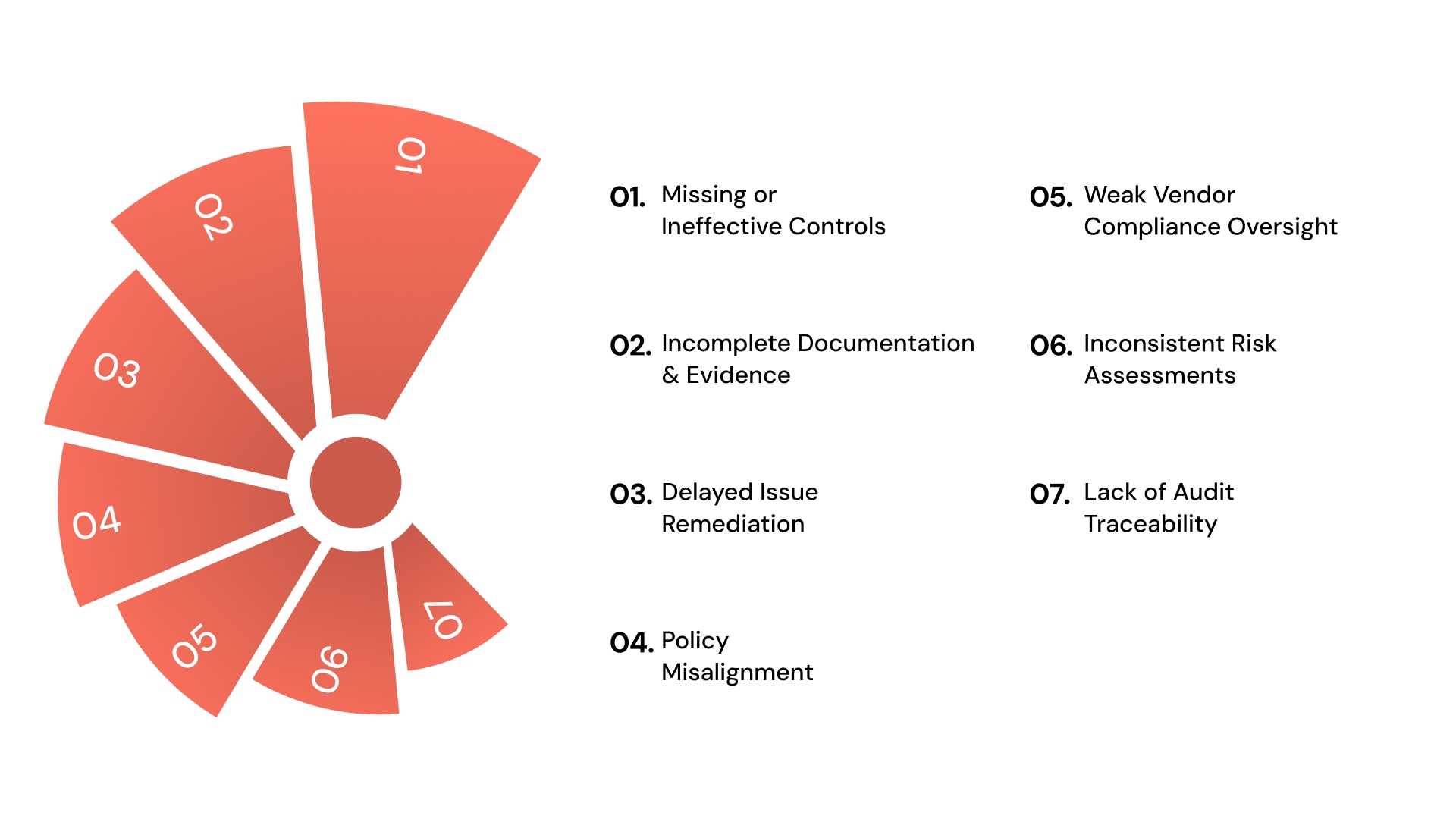
Regulatory issues rarely appear randomly. They follow repeatable failure patterns across ownership, controls, documentation, and tracking systems. Understanding these patterns helps you diagnose where execution is breaking, not just what is missing.
1. Missing or Ineffective Controls
Controls exist on paper but fail during execution due to poor design, lack of enforcement, or absence of monitoring. In many cases, controls are not mapped to real workflows, which means they cannot prevent or detect regulatory violations in practice.
Impact: Creates direct audit findings, increases regulatory penalties, and exposes systemic weaknesses in control design and enforcement.
2. Incomplete Documentation and Evidence
Control execution is not supported by structured, time-stamped evidence that can be retrieved during audits. Teams often store documentation across shared drives, emails, or local systems, making it difficult to prove that controls operated consistently.
Impact: Weakens audit defensibility, increases audit time, and creates compliance uncertainty even when controls are technically in place.
3. Delayed Issue Remediation
Regulatory issues are identified but not resolved within defined timelines due to unclear ownership, lack of escalation, or manual tracking. Issues remain open across reporting cycles, increasing exposure and compounding risk over time.
Impact: Extends regulatory exposure, increases the likelihood of repeat findings, and signals weak governance during audits and regulatory reviews.
4. Policy Misalignment
Policies are outdated or disconnected from current regulatory requirements and operational workflows. This results in a mismatch between documented expectations and how controls are actually executed across teams.
Impact: Creates compliance gaps, increases audit exceptions, and reduces the reliability of policies as enforceable governance instruments.
5. Weak Vendor Compliance Oversight
Third-party vendors operate without consistent monitoring, control, validation, or compliance tracking. Organizations often lack visibility into vendor risks, especially when oversight relies on periodic reviews instead of continuous monitoring.
Impact: Introduces indirect regulatory exposure, increases risk of third-party violations, and complicates audit reporting across vendor relationships.
6. Inconsistent Risk Assessments
Different teams evaluate regulatory risks using varying criteria, scoring models, or assumptions. This leads to inconsistent prioritization, where similar risks are treated differently across departments, reducing the effectiveness of mitigation efforts.
Impact: Misaligns risk prioritization, weakens decision-making, and prevents leadership from gaining an accurate view of regulatory exposure.
7. Lack of Audit Traceability
Organizations cannot establish a clear link between regulatory requirements, controls, issues, and supporting evidence. This fragmentation makes it difficult to demonstrate how compliance is maintained across workflows.
Impact: Reduces audit transparency, increases preparation effort, and raises questions about control effectiveness and governance maturity.
How to Assess Regulatory Impact and Risk Severity in 4 Steps

Assessing regulatory issues requires an evaluation based on operational and compliance impact.
The process should follow a consistent model:
1. Define Impact Criteria
Impact measures the consequence of a regulatory issue on operations, compliance, and financial outcomes. This includes penalties, service disruption, reputational damage, and audit findings. Clear criteria ensure consistent evaluation across teams.
- Define impact categories such as financial loss, regulatory penalties, and operational disruption
- Assign numeric ranges or scoring tiers for each impact level
- Align impact definitions with regulatory expectations and audit thresholds
- Document criteria to ensure consistent application across departments
2. Evaluate Likelihood
Likelihood reflects the probability of the issue occurring based on historical data and system indicators. Frequent control failures, repeated audit findings, or unresolved incidents increase likelihood ratings. This ensures risks are grounded in real conditions.
- Analyze historical incidents, audit findings, and control failures
- Use system data such as alerts, outages, or exception logs
- Define likelihood scales based on frequency or probability ranges
- Validate assumptions with operational and compliance teams
3. Apply a Risk Scoring Model
Risk scoring combines impact and likelihood to prioritize regulatory issues effectively. A standardized model ensures consistency across departments and enables clear escalation of high-risk issues.
- Use a scoring matrix such as 1–5 for both impact and likelihood
- Multiply or map scores to define overall risk severity
- Categorize risks into tiers such as low, medium, high, and critical
- Establish thresholds for escalation and immediate remediation
4. Validate with Stakeholders
Validation ensures risk assessments reflect actual operational and regulatory conditions. Cross-functional input improves accuracy and strengthens alignment between compliance, legal, and operations teams.
- Review risk scores with compliance, legal, and operational stakeholders
- Adjust scores based on real-world impact and regulatory sensitivity
- Document approvals and rationale for audit traceability
- Schedule periodic reviews to keep assessments current
Also read: Risk and Compliance: Understanding the Key Differences in 2026
How to Map Regulatory Requirements to Internal Controls and Policies
Mapping ensures regulatory requirements are directly connected to execution workflows and documentation.
This creates traceability across compliance activities:
1. Break Down Regulatory Requirements
Translate regulations into specific, actionable obligations that teams can implement within daily workflows. High-level regulatory language must be decomposed into clear control expectations to avoid interpretation gaps across departments.
- Identify clauses within regulations that require operational action
- Convert legal language into measurable compliance requirements
- Assign each requirement to a business function or process
- Maintain a structured repository of all regulatory obligations
2. Link Controls to Each Requirement
Assign controls that directly address each regulatory obligation to ensure enforceability.
This step ensures that requirements are not only documented but actively implemented through defined control activities.
- Map each requirement to one or more preventive or detective controls
- Define how each control operates within workflows
- Assign control owners responsible for execution and monitoring
- Validate that controls fully address the intent of the requirement
3. Align Policies with Controls
Policies should reflect how controls are implemented and enforced within the organization.
Misalignment between policies and controls often leads to audit findings and operational confusion.
- Update policies to reflect actual control processes and workflows
- Ensure policies clearly define responsibilities and procedures
- Link policies directly to controls and regulatory requirements
- Maintain version control and approval history for policy updates
4. Maintain Evidence Linkages
Each control should have associated documentation and audit evidence to prove execution.
Without structured evidence linkage, organizations struggle to demonstrate compliance during audits.
- Attach evidence directly to control activities and workflows
- Define acceptable evidence types, such as logs, reports, or approvals
- Maintain time-stamped records for all control executions
- Ensure evidence is easily retrievable for audits and reviews
How to Track Regulatory Issues with Ownership, Deadlines, and Audit Trails
Tracking regulatory issues is not about maintaining a register. It is about ensuring every issue moves through a defined lifecycle with visibility, accountability, and traceability.
Most programs fail because issues are logged but not operationalized. Without structured ownership, time-bound workflows, and audit-linked actions, issues remain open, duplicated, or unresolved.
Effective tracking requires a system where every issue behaves like an executable workflow, not a static record.
1. Assign Clear Ownership
Ownership must go beyond naming a department. Each issue needs a directly accountable individual responsible for resolution and reporting. Without ownership clarity, issues move between teams without progress, especially in cross-functional environments.
- Assign a single accountable owner per issue, not shared ownership across teams
- Define secondary stakeholders for review, validation, and escalation
- Link ownership to role-based responsibilities, not individuals only
- Track ownership changes with timestamps to maintain accountability history
2. Define Deadlines and Escalation Paths
Deadlines must reflect the severity of regulations and the operational impact, not arbitrary timelines. Escalation should be triggered automatically when timelines are breached or risk thresholds increase.
- Set remediation deadlines based on risk severity and regulatory requirements
- Define escalation tiers aligned with management levels or risk categories
- Trigger automated escalations for overdue or high-risk issues
- Track time-to-resolution as a measurable performance metric
3. Maintain Continuous Status Updates
Periodic updates create blind spots between reporting cycles. Regulatory issues require continuous tracking based on actual execution progress. Real-time visibility ensures leadership can intervene before issues escalate into audit findings.
- Update issue status based on workflow actions, not manual reporting cycles
- Capture progress stages such as identified, in progress, under review, and closed
- Integrate updates with system events such as audits, incidents, or control failures
- Enable dashboards that reflect live issue status across departments
4. Build Audit Trails
Audit trails must show not only that an issue was resolved, but how and when it was handled. This includes ownership actions, evidence submission, approvals, and validation of closure.
- Record every action taken on an issue with timestamps and user attribution
- Link remediation steps to supporting evidence and documentation
- Maintain version history for issue updates and status changes
- Ensure audit trails are exportable and aligned with audit requirements
Also read: Understanding the Role of Regulatory Audit in Different Sectors
How to Measure Regulatory Exposure Using Risk Scoring Models
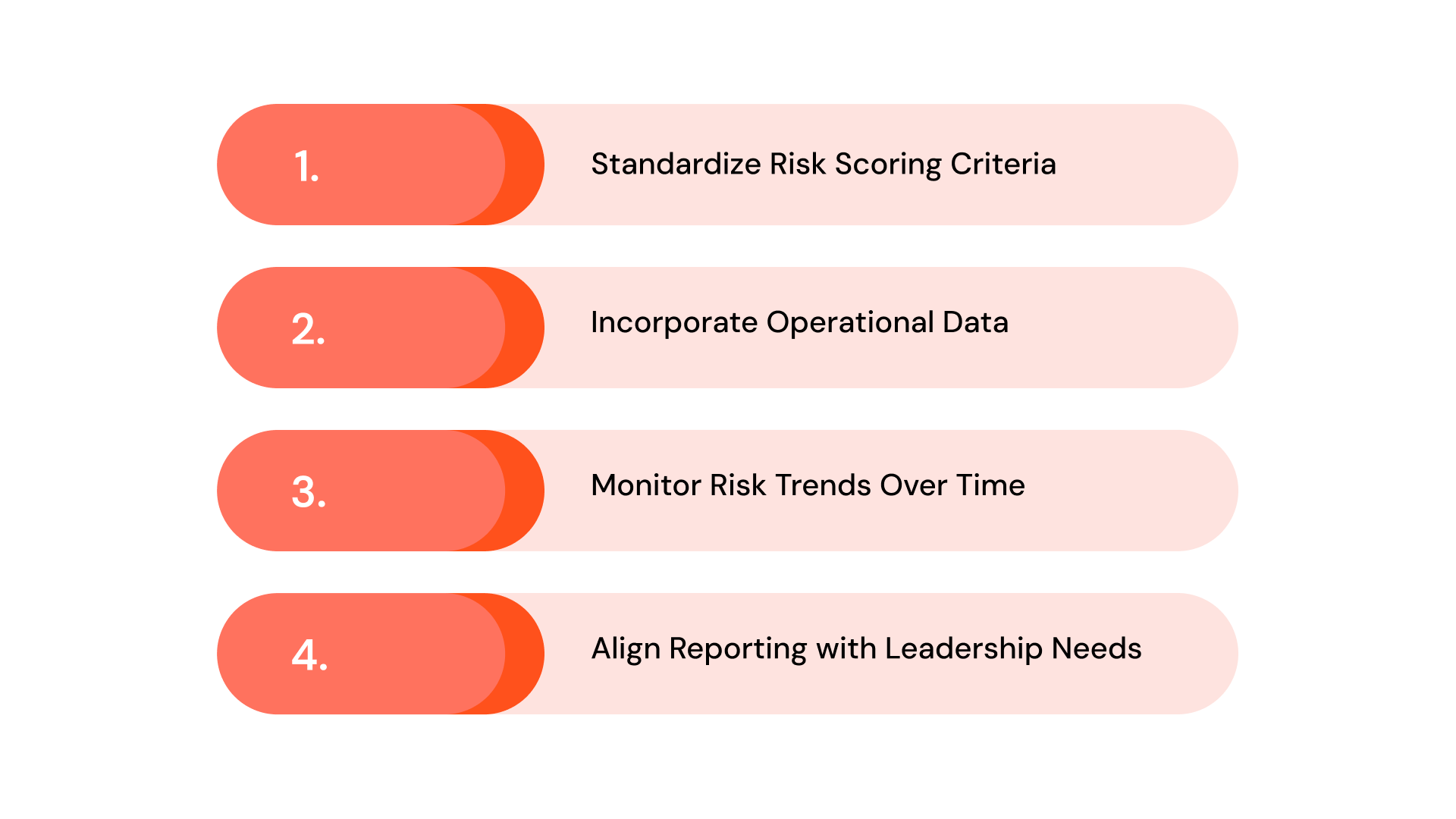
Measuring regulatory exposure requires more than assigning labels such as high or low risk. It requires a structured scoring model that reflects operational impact, regulatory consequences, and likelihood of recurrence.
Without standardized scoring, organizations cannot prioritize effectively or demonstrate risk awareness during audits.
1. Standardize Risk Scoring Criteria
Risk scoring must follow a consistent framework across all departments to ensure comparability and accuracy.
Inconsistent scoring leads to misaligned priorities and weak oversight of governance.
- Define impact categories such as financial, operational, and regulatory exposure
- Establish likelihood criteria based on frequency, history, and system indicators
- Use a standardized scoring scale across all teams
- Document scoring methodology for audit validation
2. Incorporate Operational Data
Risk scoring should reflect real-world conditions, not theoretical assumptions.
Operational data provides context that improves the accuracy and relevance of risk assessments.
- Use incident logs and audit findings to adjust risk scores
- Integrate system data such as alerts, failures, or anomalies
- Factor in vendor performance and third-party risks
- Update scores dynamically based on new data inputs
3.Monitor Risk Trends Over Time
Individual risk scores provide a snapshot, but trends reveal systemic issues.
Tracking changes over time helps identify recurring failures and emerging risks.
- Track risk score changes across defined time intervals
- Identify patterns such as recurring high-risk issues in specific functions
- Correlate trends with operational events or regulatory updates
- Use trend data to inform risk mitigation strategies
4. Align Reporting with Leadership Needs
Risk data must be presented in a format that supports decision-making, not just compliance reporting.
Leadership requires clear visibility into exposure, priorities, and unresolved risks.
- Build dashboards that highlight high-risk and overdue issues
- Segment risk data by department, function, or regulation
- Provide summary views alongside detailed drill-down options
- Align reporting formats with board and audit expectations
Common Regulatory Failures and What Breaks in Real Execution
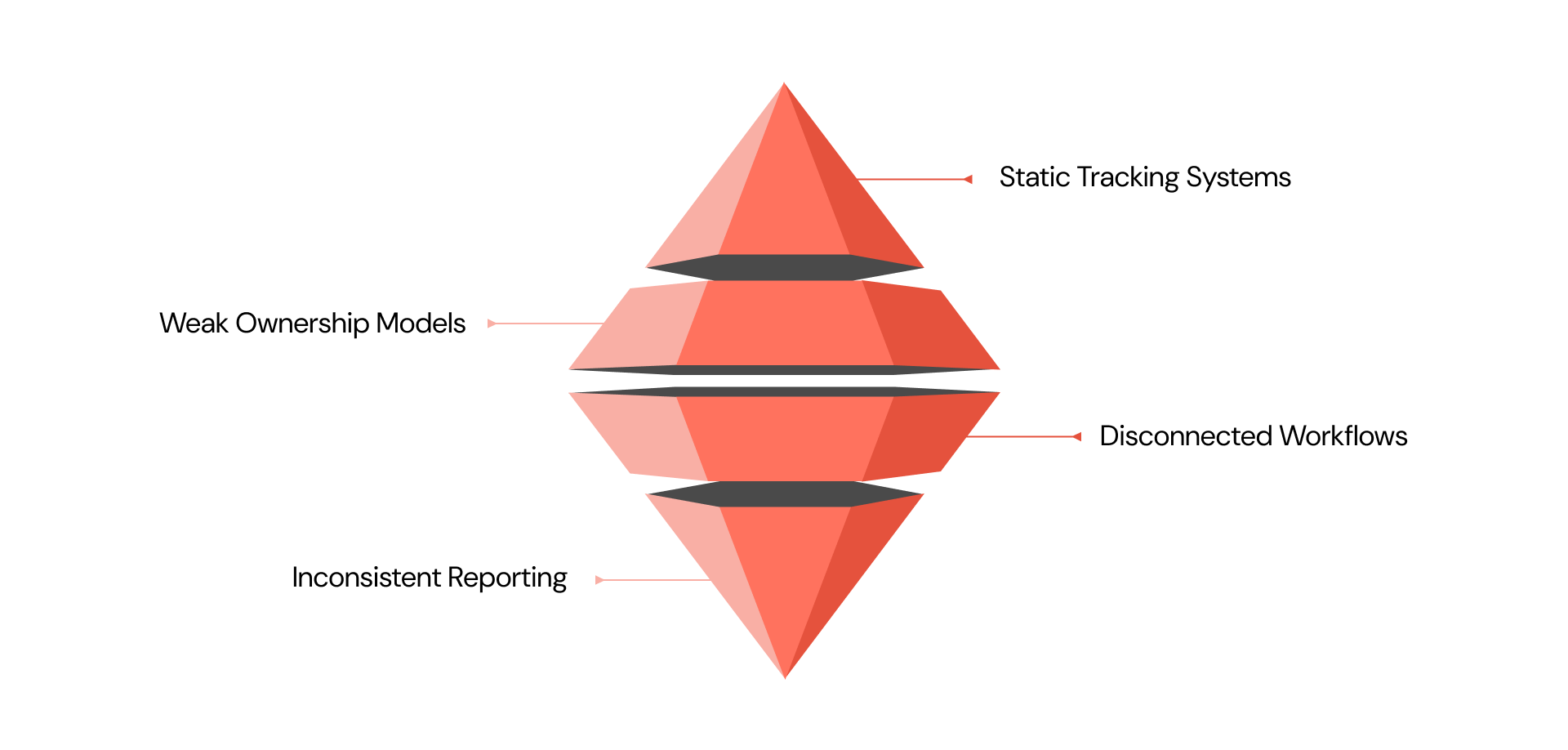
Regulatory programs rarely fail due to a lack of frameworks. They fail due to execution gaps that prevent consistent tracking, ownership, and resolution.
These failures are predictable and repeat across organizations, especially where systems are fragmented.
1. Static Tracking Systems
Regulatory issues are logged but not updated dynamically as conditions change. This creates outdated visibility, where new risks, incidents, or audit findings are not reflected in real time, leading to delayed responses and inaccurate reporting during audits.
Solution:
Implement event-driven tracking where issues update automatically based on audits, incidents, and system inputs to maintain real-time accuracy.
2. Weak Ownership Models
Ownership is assigned at a surface level without clear accountability for execution and closure. This results in unresolved issues, missed deadlines, and limited visibility into progress, especially when responsibilities span multiple teams or functions.
Solution:
Establish role-based ownership with defined responsibilities, deadlines, and automated tracking of task completion and escalation.
3. Disconnected Workflows
Compliance, risk, audit, and incident processes operate in separate systems without shared data or workflows. This fragmentation prevents organizations from linking issues across functions, increasing manual effort and reducing overall visibility into regulatory exposure.
Solution:
Centralize workflows into a unified system that connects compliance, risk, audit, and incident management for consistent tracking and visibility.
4. Inconsistent Reporting
Different teams report regulatory issues using varied formats, definitions, and scoring methods. This inconsistency makes it difficult for leadership to assess risk accurately, compare performance across departments, and prepare reliable audit documentation.
Solution:
Standardize reporting frameworks, risk scoring models, and dashboards to ensure consistency, comparability, and audit-ready outputs.
Best Practices for Reducing Regulatory Risk Without Increasing Overhead
Reducing regulatory risk requires structuring workflows to improve execution without adding operational complexity. Organizations that scale effectively focus on system consistency, visibility, and automation rather than increasing manual effort or introducing disconnected processes.
1. Centralize Compliance Activities
Managing compliance across multiple tools creates duplication, inconsistent data, and limited visibility into regulatory status. Centralization ensures all obligations, issues, and controls are tracked within a single system, allowing teams to operate from one shared source of truth.
Impact: Improves cross-functional visibility, eliminates duplication, and enables leadership to assess regulatory exposure without reconciling data across systems.
2. Standardize Processes
Inconsistent workflows across teams create variability in how regulatory issues are identified, tracked, and resolved. Standardization ensures every issue follows the same lifecycle, improving consistency in execution, reporting, and audit preparation across departments.
Impact: Reduces execution errors, improves consistency across teams, and ensures regulatory processes remain predictable and audit-ready.
3. Automate Tracking and Notifications
Manual tracking introduces delays, missed deadlines, and dependency on individual follow-ups. Automation ensures regulatory issues progress through defined workflows with reminders, alerts, and escalations triggered based on timelines and risk thresholds.
Impact: Reduces manual workload, improves response time, and ensures critical regulatory issues are addressed without reliance on constant supervision.
4. Link Risks, Controls, and Evidence
When risks, controls, and evidence are managed separately, traceability breaks down during audits. Linking these elements ensures every regulatory issue can be traced to its control, mitigation action, and supporting documentation.
Impact: Strengthens audit readiness, improves traceability, and enables faster compliance validation during internal and external reviews.
5. Enable Real-Time Visibility
Delayed reporting limits the ability to detect and respond to regulatory issues proactively. Real-time visibility through dashboards ensures leadership has accurate, current insights into issue status, risk exposure, and remediation progress.
Impact: Supports faster decision-making, improves oversight, and reduces the likelihood of issues escalating before corrective action is taken.
Also read: Regulatory Compliance Requirements for Financial Institutions
Operationalize Regulatory Issue Management Across the Organization with VComply
Organizations often manage regulatory issues across disconnected tools, making it difficult to track ownership, measure risk, and maintain audit-ready documentation. As regulatory complexity increases, these gaps create delays, inconsistencies, and limited visibility across teams.
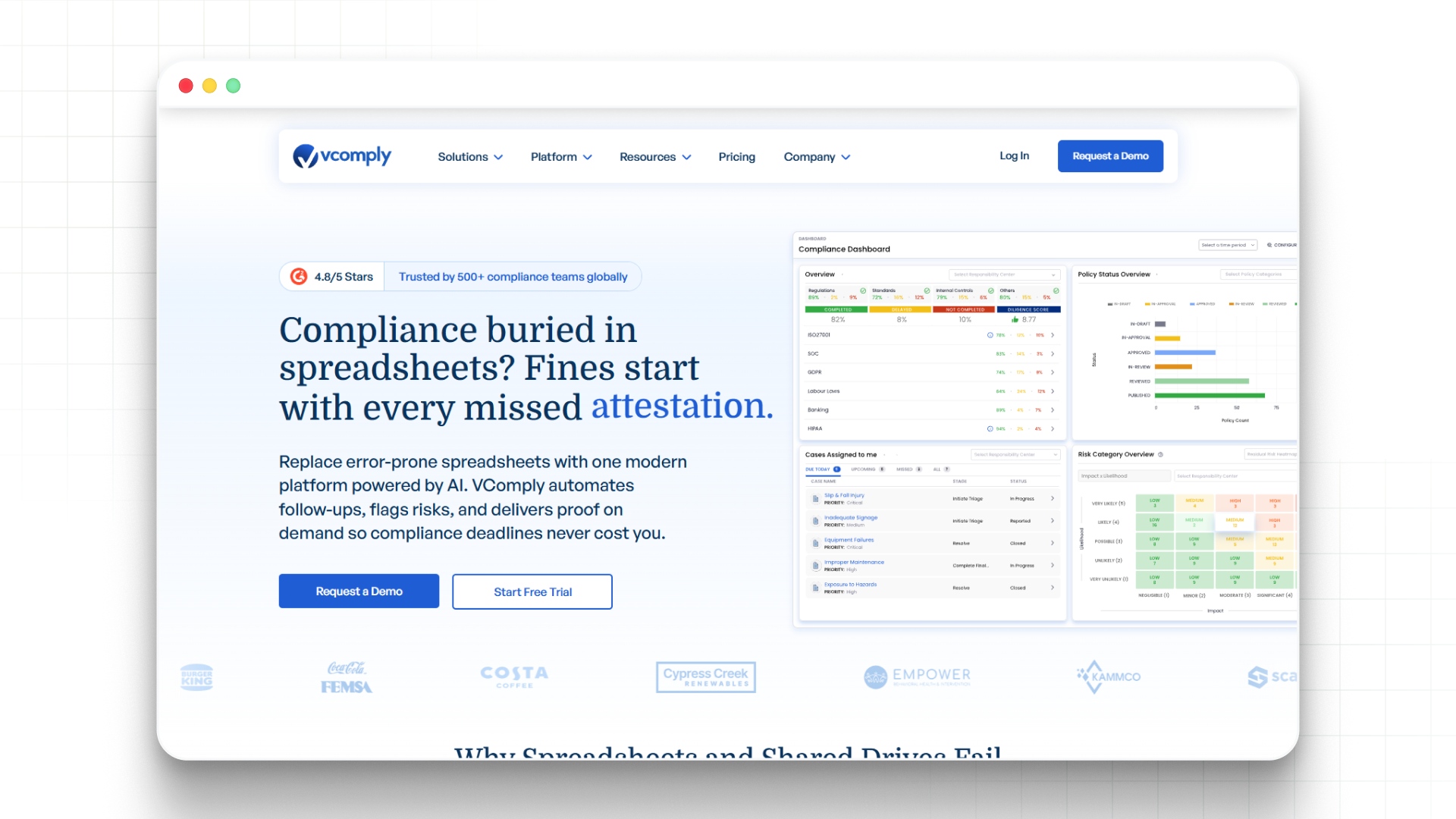
VComply provides a structured environment that centralizes compliance, risk, policy, and incident workflows into one system. This approach connects regulatory requirements with execution, improving accountability and enabling continuous oversight across the organization.
Within this system:
- ComplianceOps tracks regulatory obligations, assigns ownership, and maintains structured audit evidence
- RiskOps evaluates regulatory exposure using consistent scoring models and dashboards
- PolicyOps aligns policies with regulatory requirements and tracks attestation
- CaseOps manages issue resolution workflows with clear accountability and traceability
- GRCOps Suite connects all workflows into a unified system with shared data and reporting
This structure enables organizations to move from fragmented tracking to consistent, measurable regulatory issue management. Book a demo with VComply to learn more.
Conclusion
Regulatory issues do not result from isolated failures but from fragmented systems, unclear ownership, and inconsistent tracking. As organizations scale, these gaps become more visible during audits and regulatory reviews.
Structured workflows, risk scoring models, and centralized tracking improve visibility, strengthen accountability, and support audit readiness without increasing operational overhead.
Explore how ComplianceOps structures regulatory issue tracking and strengthens audit readiness. Start a 21-day free trial with VComply to evaluate structured compliance workflows in practice.
FAQs
Regulatory issues are gaps or failures in meeting legal and compliance requirements. These issues can arise from weak controls, missing documentation, or delayed remediation across workflows.
Organizations can track issues by assigning ownership, setting deadlines, and maintaining audit trails. Structured systems improve visibility and ensure issues are resolved consistently.
As organizations grow, regulatory requirements expand across teams and systems. Without structured processes, tracking and resolving issues become more complex and inconsistent.
Regulatory risk is measured using impact and likelihood scoring models. This helps prioritize issues based on operational and compliance consequences.
Organizations can centralize workflows, automate tracking, and maintain structured audit trails. Platforms like VComply provide a connected system for consistently managing compliance, risk, and policies.