

Patient Care Policies in Healthcare: Key Types, Examples, and Best Practices for 2026
Healthcare teams operate in high-pressure, fast-moving environments, and even small gaps in guidance can lead to big consequences.

The U.S. Office of Inspector General reports that 25 percent of Medicare patients experience harm during hospital stays, and many of these events are preventable.
More often than not, the issue isn’t clinical skill; it’s unclear, outdated, or inconsistent healthcare policies. When procedures live in binders, scattered folders, or outdated PDFs, staff lose the clarity they need to deliver safe, consistent care.
Strong patient care healthcare policies change that. They reduce variation, support compliance, and give every clinician a clear roadmap for safe, effective treatment.
This guide explains what patient care policies are, highlights essential healthcare policies examples and patient care policies examples, and outlines how to build policies that truly improve care quality.
Key Takeaways
- Patient care policies standardize how healthcare teams deliver care, reduce variation, and support safer clinical decision-making.
- Common patient care policies examples include admission/discharge workflows, medication protocols, infection control, emergency response, documentation standards, and HIPAA-aligned privacy rules.
- Strong healthcare policies protect against preventable harm, reduce legal and compliance risks, and improve communication across multidisciplinary teams.
- Outdated, scattered, or unclear healthcare policies increase safety events, regulatory exposure, and operational inefficiencies.
- A structured policy lifecycle, including drafting, reviewing, training, attestation, and continuous updates, keeps policies current, compliant, and actionable.
What Are Patient Care Policies?
Patient care policies are the formal, standardized guidelines that direct how clinicians deliver care across a healthcare facility. They translate regulations, accreditation standards, evidence-based practices, and internal protocols into clear, actionable instructions that staff can follow at the point of care.
These healthcare policies define how care is delivered, from routine assessments to high-risk procedures, ensuring that every patient receives safe, consistent, and equitable treatment. They help teams respond to medical situations, coordinate across departments, and comply with federal and state regulations.
Because each healthcare environment is different, patient care policies are tailored to the type of facility, specialty, patient population, and services offered. A pediatric unit’s isolation protocol will differ significantly from that of a behavioral health or oncology unit.
When well-designed and consistently managed, healthcare policies provide:
- Clear clinical and operational expectations
- Standardized workflows for common and high-risk situations
- Guidance for emergencies, escalations, and treatment decisions
- Protection against legal liability and compliance failures
- A foundation for training, onboarding, and continuous improvement
They’re not just documents; they are the backbone of safe patient care and essential health care policies and procedures required for accreditation and regulatory compliance. A platform like VComply can facilitate these collaborations by centralizing policy management and streamlining communication among stakeholders.
Types of Patient Care Policies (Modeled After Real Healthcare Needs)
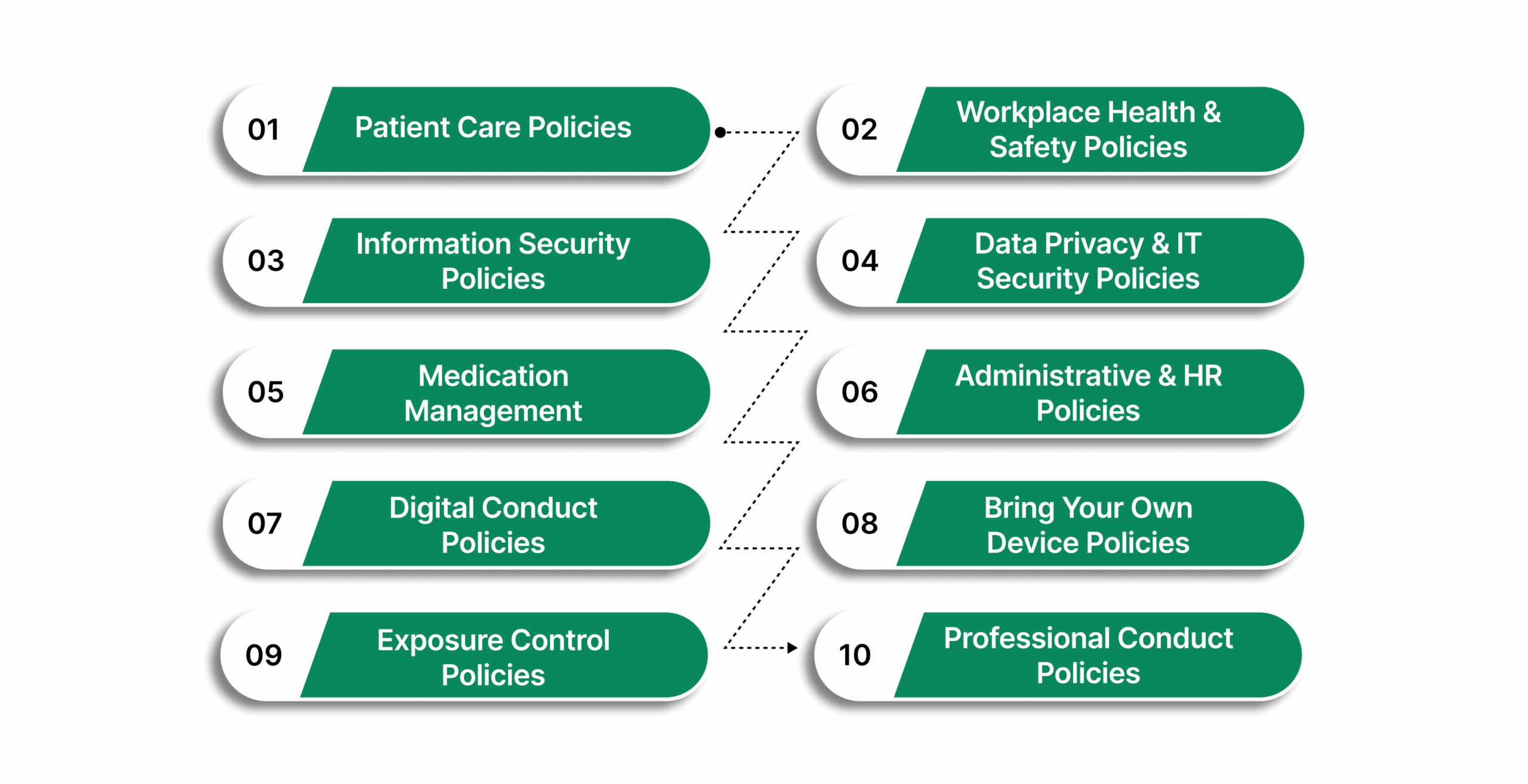
Healthcare facilities rely on a wide range of policies to deliver safe, consistent, and compliant care. Below are the essential categories, based on the most common policy frameworks used by U.S. hospitals, clinics, long-term care facilities, and specialty centers.
1. Patient Care Policies
These policies outline how clinicians assess, treat, and support patients throughout their care journey.
Examples include:
- Clinical protocols and care pathways (e.g., sepsis, stroke, falls, pressure injuries)
- Treatment and procedure workflows tailored to each specialty
- Guidelines for handling medical emergencies like cardiac arrest or respiratory distress
- Exposure management (e.g., bodily fluids, infectious agents)
- Transfer and referral procedures between units or facilities
Why they matter: They reduce variation, prevent errors, and ensure every patient receives evidence-based, standardized care.
2. Workplace Health & Safety Policies
Healthcare workers face high exposure to physical, chemical, and biological hazards. These policies protect staff and support OSHA compliance. These belong to the critical list of healthcare policies every facility needs.
Examples include:
- PPE requirements (masks, gloves, gowns, respirators)
- Handling hazardous materials and regulated medical waste
- Guidelines for preventing workplace injuries (e.g., safe patient handling, needle-stick prevention)
- Wellness and fatigue management policies
- Safe facility operations and hazard reporting protocols
Why they matter: Healthy staff deliver better care, and safety protocols greatly reduce occupational risks.
3. Information Security Policies
Physical security is just as important as clinical safety in today’s healthcare settings.
Examples include:
- Visitor access and identification badges
- Workplace violence prevention and response
- Active shooter protocols
- Escalation steps for suspicious behavior or unauthorized access
Why they matter: Hospitals are high-risk environments, and clear security rules keep patients, staff, and visitors safe.
4. Data Privacy & IT Security Policies
As technology expands, so does the risk of data breaches. Healthcare remains the most targeted industry, and violations are expensive.
Examples include:
- HIPAA Privacy & Security Rule procedures
- Guidelines for protecting PHI in EHRs
- Secure data transmission, encryption, and storage requirements
- Use of telehealth, texting, and emails
- Breach reporting and investigation workflows
Why they matter: Strong privacy policies protect patient information and prevent costly regulatory penalties.
5. Medication Management & Drug Handling Policies
Medication errors are among the top causes of preventable harm, making these policies essential.
Examples include:
- Safe administration protocols (verification steps, barcode scanning)
- Storage, labeling, and refrigeration requirements
- Pharmacy compounding and dispensing rules
- Handling controlled substances and diversion prevention
- Processes for documenting medication errors or missing inventory
Why they matter: They prevent dosing mistakes, contamination, and compliance violations.
6. Administrative & HR Policies
These policies support daily operations and staff management while ensuring fairness and consistency.
Examples include:
- Attendance, scheduling, and shift-change rules
- Dress code and identification standards
- Patient visitation policies
- Bed capacity and patient flow guidelines
- Staff onboarding and competency validation
Why they matter: Clear operational rules reduce confusion and keep the facility running smoothly.
7. Social Media & Digital Conduct Policies
Social media poses significant reputational and privacy risks in healthcare.
Examples include:
- What staff may and may not post related to work
- Use of official facility accounts
- Employee guidelines for sharing opinions online
- Rules preventing PHI disclosure through posts, photos, or messages
- Disclaimers and brand-representation standards
Why they matter: One inappropriate post can lead to HIPAA violations or public backlash.
8. BYOD (Bring Your Own Device) Policies
With smartphones now integrated into care delivery, personal devices pose privacy and security risks.
Examples include:
- When staff may use personal phones at work
- Whether PHI can be accessed or texted from personal devices
- Encryption and password requirements
- Email and app usage rules
- Remote-wipe or security requirements for lost devices
Why they matter: BYOD policies prevent accidental PHI exposure and cybersecurity threats.
9. Infectious Disease & Exposure Control Policies
COVID-19 highlighted how crucial these policies are, but every facility needs them year-round.
Examples include:
- Isolation precautions (standard, contact, droplet, airborne)
- Disease surveillance and outbreak reporting
- Employee health screening and vaccination requirements
- Quarantine and return-to-work procedures
- Emergency communication plans during outbreaks
Why they matter: They prevent spread, protect staff, and reduce liability during outbreaks.
10. Code of Ethics & Professional Conduct Policies
Not every situation can be covered by a policy, which is why ethical principles must guide judgment.
Examples include:
- Respect, equity, and patient-first behaviors
- Maintaining professional boundaries
- Conflict of interest rules
- Ethical decision-making frameworks for complex cases
- Standards for teamwork, integrity, and accountability
Why they matter: A strong ethical culture ensures consistent behavior even when procedures don’t explicitly cover a situation.
Next, let’s explore why these healthcare policies matter so much in day-to-day care.
Read: 5 Steps to Easy and Effective Policy Communication
Why Patient Care Policies Matter
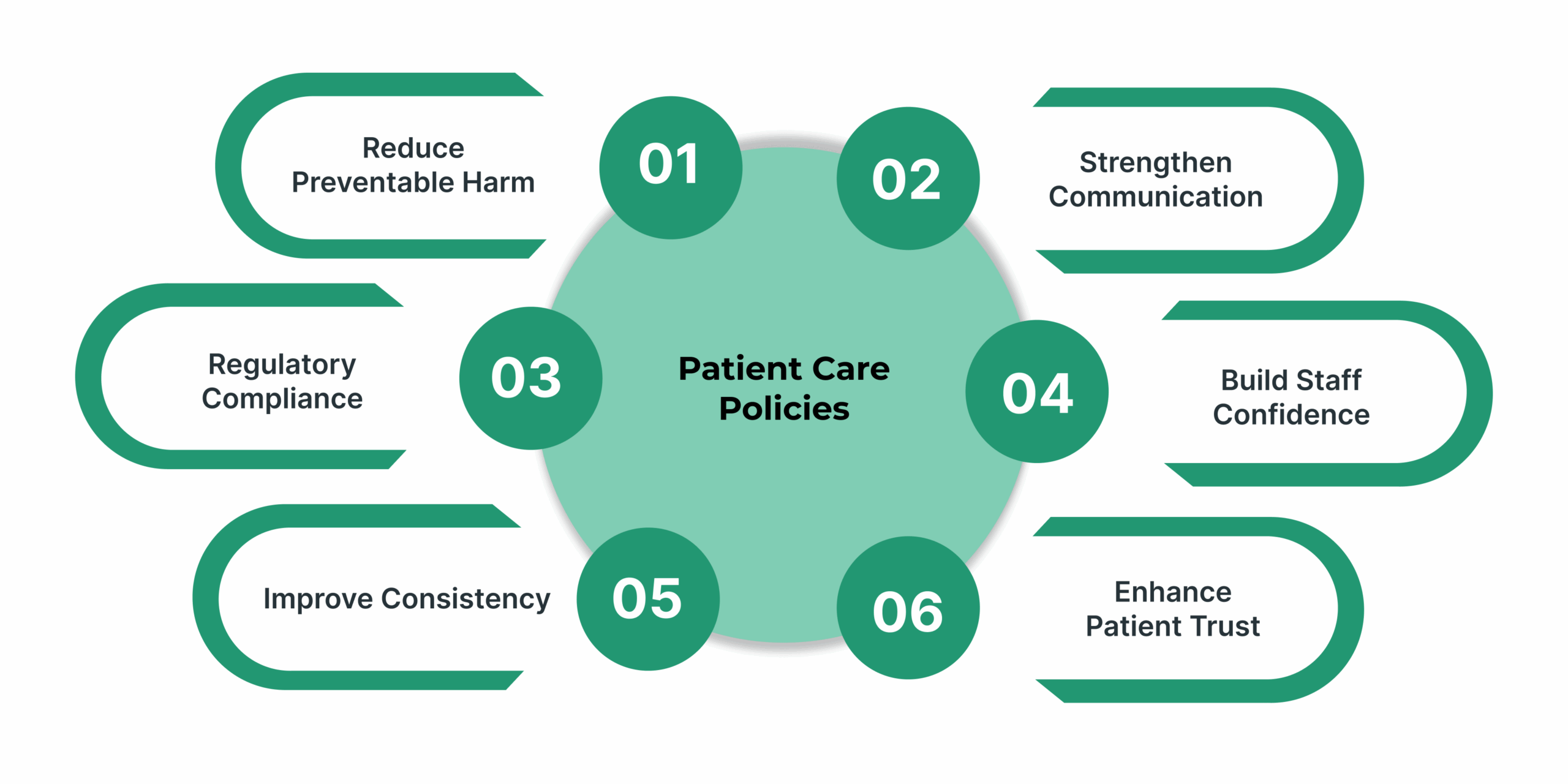
Patient care policies do more than outline procedures; they create the structure that healthcare teams rely on to deliver safe, timely, and compliant care. In busy clinical environments where decisions must be made quickly, clear policies reduce uncertainty and guide everyone toward consistent, high-quality practice.
Here’s why strong policies are essential:
1. Reduce Preventable Harm
Clear, standardized procedures reduce variation in care, one of the biggest drivers of avoidable safety events. Policies help clinicians respond appropriately, especially in high-risk or time-sensitive scenarios. Strong examples of healthcare policies prevent errors and ensure predictable, evidence-based care.
2. Strengthen Communication and Coordination
Policies ensure every team member, including physicians, nurses, pharmacists, techs, and administrative staff, works from the same playbook. This improves handoffs, reduces miscommunication, and keeps care aligned across shifts and departments.
3. Support Legal and Regulatory Compliance
Clear health care policies and procedures align staff with the requirements of HIPAA, CMS, EMTALA, OSHA, and The Joint Commission. Policies translate these rules into daily practice and protect the organization from fines, liability, and citations.
4. Build Staff Confidence and Competency
Policies serve as a reliable reference point for new and experienced staff. They support onboarding, competency validation, and ongoing training, making it easier for clinicians to work safely and confidently.
5. Improve Consistency Across Multi-Site Systems
For organizations with multiple locations, shared patient care policy standards ensure care quality stays consistent across all locations. This is critical for quality metrics, patient outcomes, and brand trust.
6. Enhance Patient Trust and Transparency
Patients trust systems with strong patient care policies, privacy protections, and ethical guidelines. Policies reinforce patient rights, informed consent, safety measures, and privacy protections, all of which build confidence in the care they receive.
Ensure your healthcare team has instant access to these crucial guidelines through a centralized digital platform like VComply.
Read: Addressing the Importance of Policies in Compliance
Benefits of Patient Care Policies
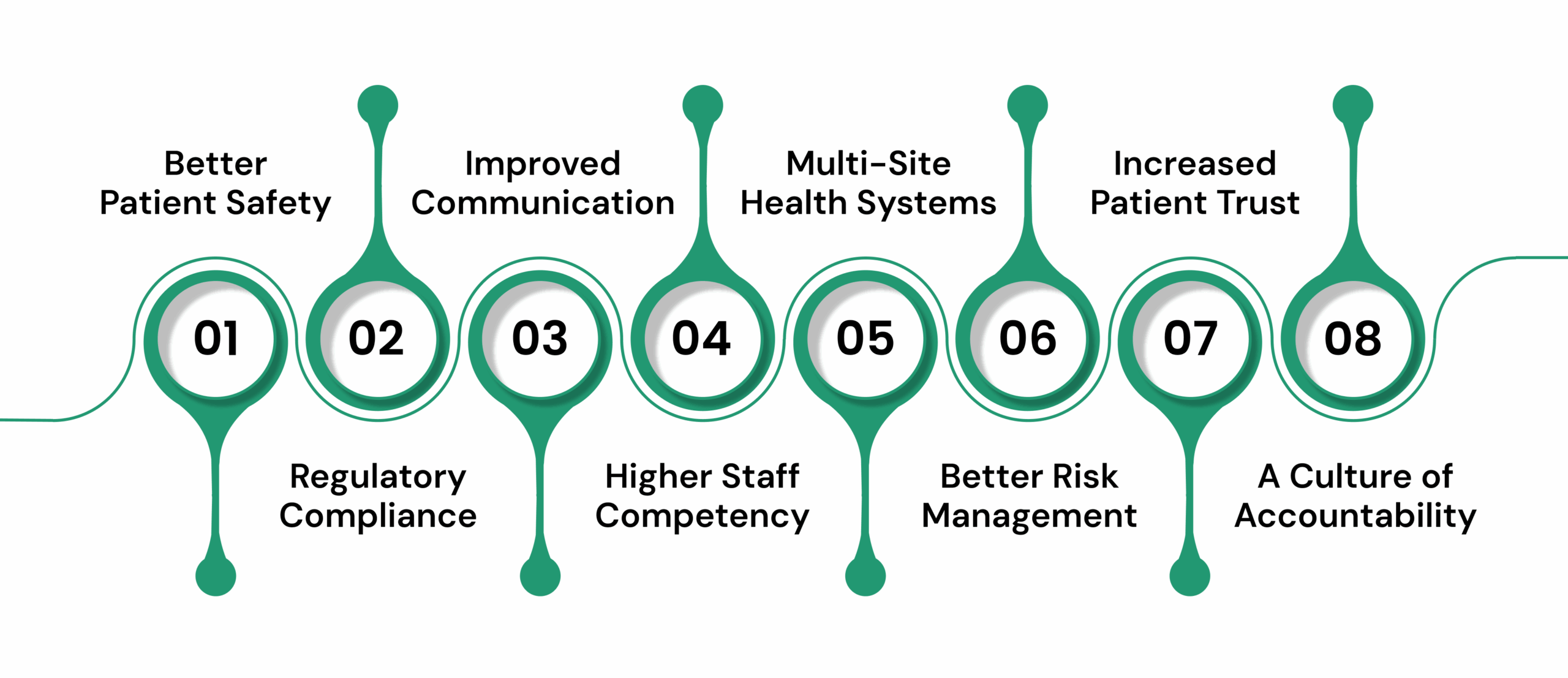
When consistently implemented, these policies improve safety, streamline workflows, and ensure patients receive the same standard of care no matter who is treating them or where they are treated.
Below are the key benefits every healthcare organization gains from well-designed patient care policies:
1. Better Patient Safety & Reduced Preventable Harm
Clear, standardized policies give clinicians step-by-step guidance for routine and high-risk situations.
Why it matters:
- Reduces care variation (a major driver of medical errors)
- Helps staff respond confidently during emergencies
- Lowers the likelihood of preventable adverse events
- Supports evidence-based, predictable clinical practice
2. Stronger Legal & Regulatory Compliance
Healthcare organizations must adhere to federal, state, and accreditation standards (HIPAA, CMS, OSHA, The Joint Commission, etc.). Policies help by:
- Translating regulatory requirements into daily workflows
- Documenting due diligence
- Reducing risk of citations, fines, or legal exposure
- Ensuring staff follow approved, compliant procedures
3. Improved Communication & Coordination
In healthcare, miscommunication can lead to errors, delays, and inconsistent care.
Policies strengthen communication by:
- Standardizing handoffs and documentation
- Ensuring alignment across departments and shifts
- Creating shared expectations for treatment, escalation, and reporting
- Supporting continuity of care at every stage of the patient journey
4. Higher Staff Competency & Confidence
Policies serve as a “single source of truth” for clinical and operational expectations. They support staff by:
- Making onboarding smoother
- Providing clear references for decision-making
- Reducing uncertainty in complex scenarios
- Reinforcing consistent training and performance expectations
5. Consistency Across Multi-Site Health Systems
Healthcare networks depend on reliable, repeatable processes, especially when facilities vary in size, resources, and staffing.
Policies ensure that:
- Care delivery is uniform across locations
- Patient transfers and referrals follow the same standards
- System-wide quality metrics remain stable
- Every site meets the same compliance and safety expectations
6. Better Risk Management & Fewer Operational Breakdowns
Policies help organizations anticipate and manage risks before they escalate. Examples include:
- Clear escalation steps for unusual events
- Defined workflows for managing medication, equipment, and emergencies
- Documentation requirements that support investigations and RCA
- Reduced operational delays or rework
7. Increased Patient Trust & Overall Experience
Patients notice when care is consistent, respectful, and well-organized. Policies reinforce:
- Patient rights and informed consent
- Privacy and confidentiality
- Safe environments
- Predictable care processes that build patient confidence
8. A Culture of Accountability & Continuous Improvement
Policies establish what “right care” looks like and set the foundation for learning. They help organizations:
- Identify performance gaps
- Update practices based on new evidence
- Maintain accountability across teams
- Build a culture where safety and quality come first
Read: 5 Steps to Easy and Effective Policy Communication
Challenges in Implementing Patient Care Policies
Even the best-written policies fail if they’re not easy to access, understand, or update. Below are the most common challenges healthcare organizations face.
1. Keeping Up With Regulations
Healthcare rules change constantly: HIPAA updates, CMS mandates, Joint Commission standards, state-level variations.
The challenge: manual policy updates are slow and error-prone.
2. Ensuring Staff Follow Policies
Multiple shifts, high turnover, and heavy workloads make consistency difficult.
The challenge: staff may skip steps or use outdated versions.
3. Communication Breakdowns
Policies exist, but staff can’t find them during critical moments.
The challenge: scattered documents across shared drives, binders, and email chains.
4. Lack of Standardization Across Locations
Multi-site systems often operate with inconsistent procedures.
The challenge: different facilities “interpret” policies differently.
5. Limited Training & Reinforcement
Policies are written, but never properly introduced or refreshed.
The challenge: knowledge decays quickly without ongoing training.
6. Documentation & Audit Readiness
Surveyors expect real-time documentation, not manual logs.
The challenge: outdated systems slow teams down and increase audit risk.
7. Technology Gaps
Using outdated or paper-based policy systems makes compliance nearly impossible.
The challenge: no traceability, no version control, no attestations.
How to Create Effective Patient Care Policies (Step-by-Step Guide)
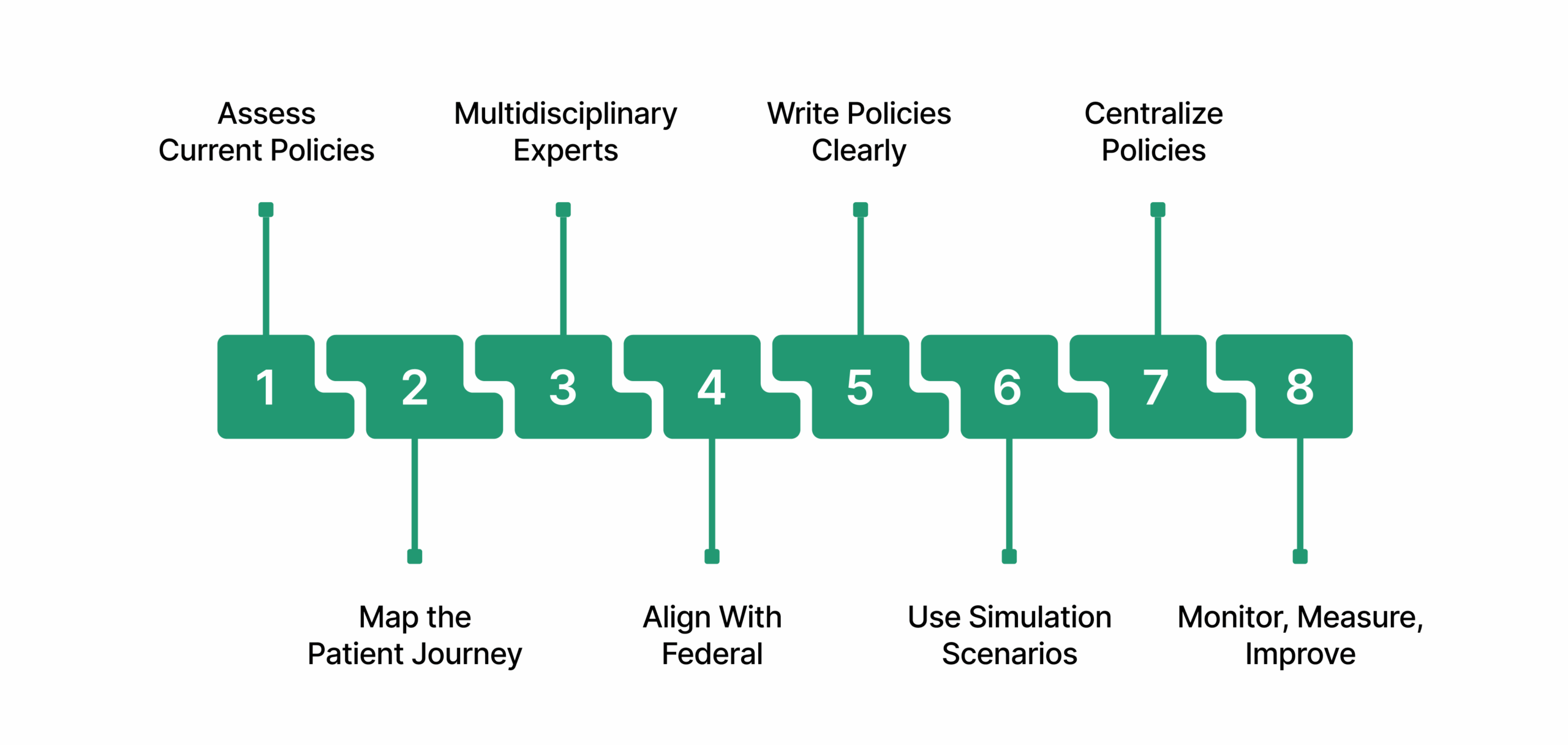
A structured approach ensures policies are accurate, compliant, and practical for frontline teams.
Step 1: Assess Current Policies
Identify outdated, duplicate, or missing policies. Speak with clinical and operational teams to understand real-world gaps.
Step 2: Map the Patient Journey
Outline every touchpoint, admission, treatment, handoffs, and discharge. This reveals where policies are needed most.
Step 3: Bring Multidisciplinary Experts Together
Include nurses, physicians, quality leaders, HR, IT, pharmacy, security, and legal teams.
Step 4: Align With Federal, State, & Accreditation Standards
Cross-check all policies with regulations such as:
- HIPAA
- CMS Conditions of Participation
- OSHA
- The Joint Commission
- State health department rules
Step 5: Write Policies Clearly
Use plain language, checklists, and step-by-step instructions. Avoid jargon.
Step 6: Train Staff & Use Simulation Scenarios
Real-world training ensures staff know how to apply policies, not just read them.
Step 7: Centralize Policies in One Digital Hub
This ensures staff always access the latest version, not outdated PDFs.
Step 8: Monitor, Measure, Improve
Collect feedback, audit compliance, and update policies annually or when regulations change.
Simplify Healthcare Policy Management with VComply PolicyOps
Managing healthcare policies manually is no longer realistic. With rising regulatory pressure, staffing shortages, and increasing complexity, organizations need a system that reduces administrative burden and strengthens compliance.
VComply gives healthcare teams a centralized, automated way to:
- Create, update, and distribute patient care policies
- Track staff attestations and training
- Maintain version control and audit trails
- Assign ownership and monitor compliance
- Ensure survey readiness across every facility
A modern, unified approach improves safety, reduces risk, and ensures frontline teams always have the right guidance at the right time.
Start your 21-day free trial of VComply and bring clarity, consistency, and compliance to your patient care policies.

Conclusion
Healthcare moves fast, and without clear policies, even skilled teams can struggle to deliver safe, consistent care. Patient care policies provide the structure clinicians rely on: they reduce variation, strengthen communication, minimize risk, and ensure compliance with ever-changing regulations.
Organizations that treat policy management as a living, continuous process, supported by modern tools, achieve better outcomes, fewer errors, and higher patient trust.
If you’re ready to streamline policy management, strengthen compliance, and give your staff the clarity they need, a platform like VComply can transform how your organization creates, manages, and governs patient care policies. Request a demo with VComply today.
Frequently Asked Questions
Patient care policies are formal guidelines that outline how clinicians assess, treat, monitor, and support patients. They standardize clinical practices, reduce risks, and ensure compliance with federal and state regulations. These policies help staff deliver consistent, safe, and high-quality care across all departments.
They provide clarity in high-pressure clinical environments, prevent errors, improve communication, and ensure alignment with standards like HIPAA, CMS, OSHA, and The Joint Commission. Strong policies also simplify audits and survey readiness.
Key patient care policies examples include:
– Treatment and procedure protocols
– Infection prevention and PPE guidelines
– Medication administration and controlled-substance rules
– Clinical escalation and emergency response procedures
– Patient rights, informed consent, and communication guidelines
– Admission, transfer, and discharge processes
These form the backbone of safe, consistent care.
Policy development typically involves a multidisciplinary group: nursing leadership, physicians, quality and safety leaders, compliance teams, pharmacy, HR, IT, and legal. Large systems often use a centralized committee to ensure standardization across locations.
Most healthcare facilities review policies annually or when major changes occur, such as new regulations, updated clinical guidelines, or safety events. High-risk policies (e.g., infection control or medication management) may require more frequent updates.
The most effective methods include:
– Centralizing policies in one accessible digital system
– Using mandatory attestations
– Conducting regular training and simulations
– Running audits and compliance checks
– Providing real-time updates and alerts
Automation significantly improves adoption and reduces errors.