

Top 5 ISO 22000 Compliance and Food Safety Tools: Features & Best Fit
Maintaining food safety isn’t optional; it’s a core part of protecting consumers and brand reputation. As regulations tighten and supply chains grow more complex, meeting ISO 22000 standards demands continuous monitoring, documentation, and risk control across every process.

Manual tracking or scattered systems make compliance difficult, increasing the risk of audit failures or costly recalls.
ISO 22000 compliance and risk software simplifies this process by centralizing data, automating workflows, and ensuring consistent oversight from production to distribution. It helps organizations stay audit-ready, reduce errors, and build a culture of proactive food safety.
In this guide, we’ll explore how these tools strengthen compliance and highlight the top software solutions leading the market today.
Key Takeaways:
- ISO 22000 compliance and risk software unifies every aspect of food safety, from hazard analysis and supplier monitoring to audit preparation, in one system, eliminating the inefficiencies of manual tracking.
- Automation turns compliance from a reactive task into a proactive process. It standardizes HACCP reviews, flags deviations instantly, and ensures every corrective action is traceable, verifiable, and completed on time.
- Centralized visibility drives accountability across teams and sites. Real-time dashboards let quality managers see where lapses occur, whether in sanitation, documentation, or supplier certification, enabling faster interventions.
- The real value isn’t just audit readiness — it’s risk reduction. These platforms minimize the chance of contamination, mislabeling, and recall-triggering errors that can damage both consumer trust and brand equity.
- Top-rated tools like VComply, Ideagen, Effivity, Trustwell, and FoodReady go beyond certification checklists. They embed compliance into day-to-day operations, integrating analytics, alerts, and supplier traceability for continuous improvement.
What Is ISO 22000 Compliance and Risk Software?
ISO 22000 compliance and risk software is a digital platform that helps food manufacturers, processors, and distributors manage all aspects of food safety compliance in one place. It replaces manual recordkeeping and spreadsheet-based tracking with automated workflows, centralized documentation, and real-time monitoring aligned with ISO 22000 standards.
These systems are designed to:
- Map and manage Food Safety Management System (FSMS) processes.
- Track and verify Hazard Analysis and Critical Control Points (HACCP) compliance.
- Maintain audit-ready records and traceability across production lines and suppliers.
- Automate risk assessments, corrective actions, and reporting.
- Centralize training records, certifications, and policy updates.
By consolidating all compliance activities, organizations gain better visibility into risks, streamline audits, and ensure every process from sourcing to packaging meets global food safety requirements.
Key Risks and Challenges in Achieving ISO 22000 Compliance
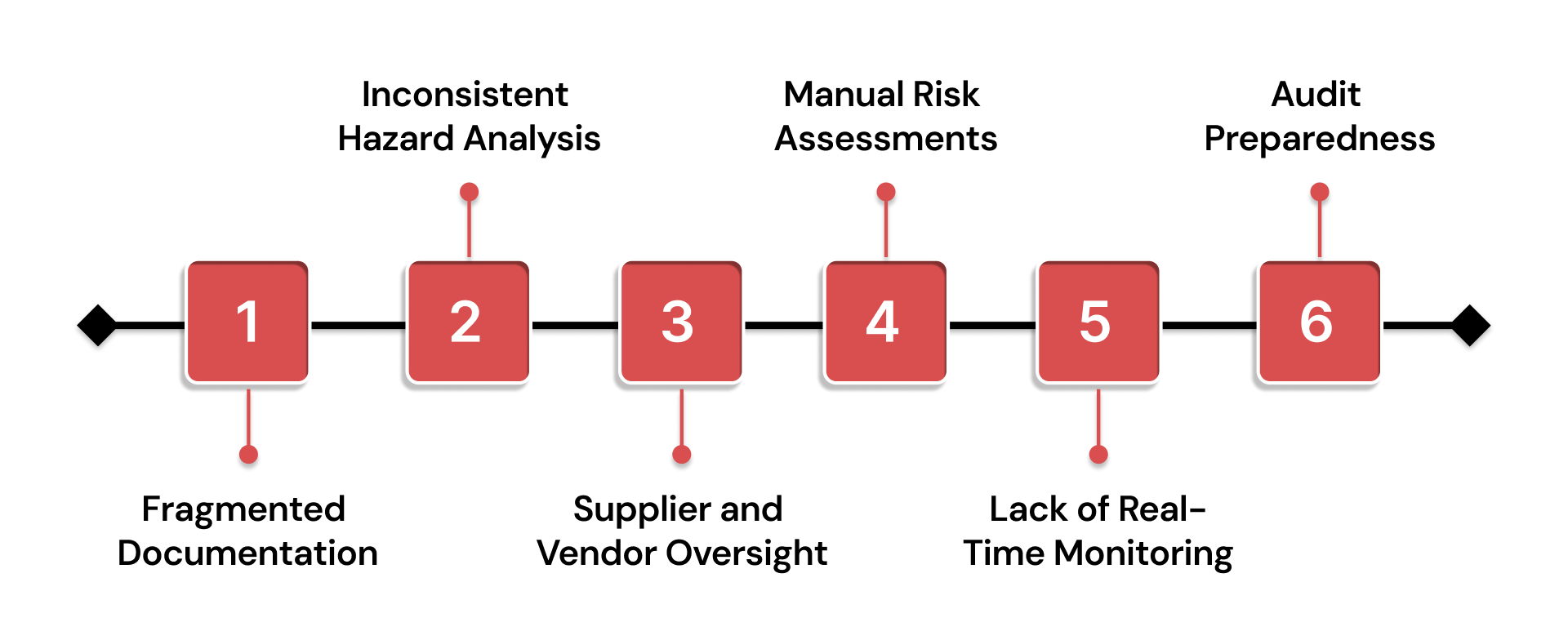
Maintaining ISO 22000 compliance requires constant coordination between people, processes, and documentation. Many food manufacturers still rely on spreadsheets or fragmented systems, which increases the risk of non-compliance, recalls, or certification delays.
Below are some of the most common challenges organizations face.
1. Fragmented Documentation
Critical records such as HACCP plans, supplier certifications, and temperature logs often exist across multiple systems or paper files. This fragmentation makes it difficult to maintain version control or prove compliance during audits.
2. Inconsistent Hazard Analysis
When teams manually assess food safety hazards, the results can vary widely. Without standardized workflows or digital tracking, identifying high-risk areas becomes subjective and error-prone.
3. Supplier and Vendor Oversight
Food safety depends heavily on supplier reliability. Lack of visibility into third-party compliance or expired certifications can introduce hidden risks into the supply chain. In 2023, the USDA and FDA issued 547 food recalls. The leading causes were undeclared allergens, bacterial contamination, and foreign object contamination.
While not all of these incidents stem directly from suppliers, many trace back to ingredient mismanagement, incorrect labeling, or documentation lapses within supplier networks, reinforcing the need for continuous oversight and compliance tracking.
4. Manual Risk Assessments and Reporting
Manually gathering and reviewing compliance data takes time and often leads to missed trends or late corrective actions. This reactive approach increases exposure to violations and slows down audits.
5. Lack of Real-Time Monitoring
Without automated monitoring, deviations in temperature, contamination levels, or sanitation standards may go unnoticed until they become critical. The World Health Organization estimates that unsafe food causes over 600 million illnesses annually, emphasizing the need for proactive control systems.
6. Audit Preparedness
Preparing for certification or surveillance audits requires organized, verifiable documentation. When records are incomplete or scattered, teams spend weeks assembling evidence, risking delays or non-conformities.
These challenges make it clear that manual or siloed compliance methods can no longer keep up with modern food safety expectations. Implementing dedicated ISO 22000 compliance software enables teams to manage these risks more effectively and ensure continuous, audit-ready operations.
Benefits of Food Safety and Compliance Software
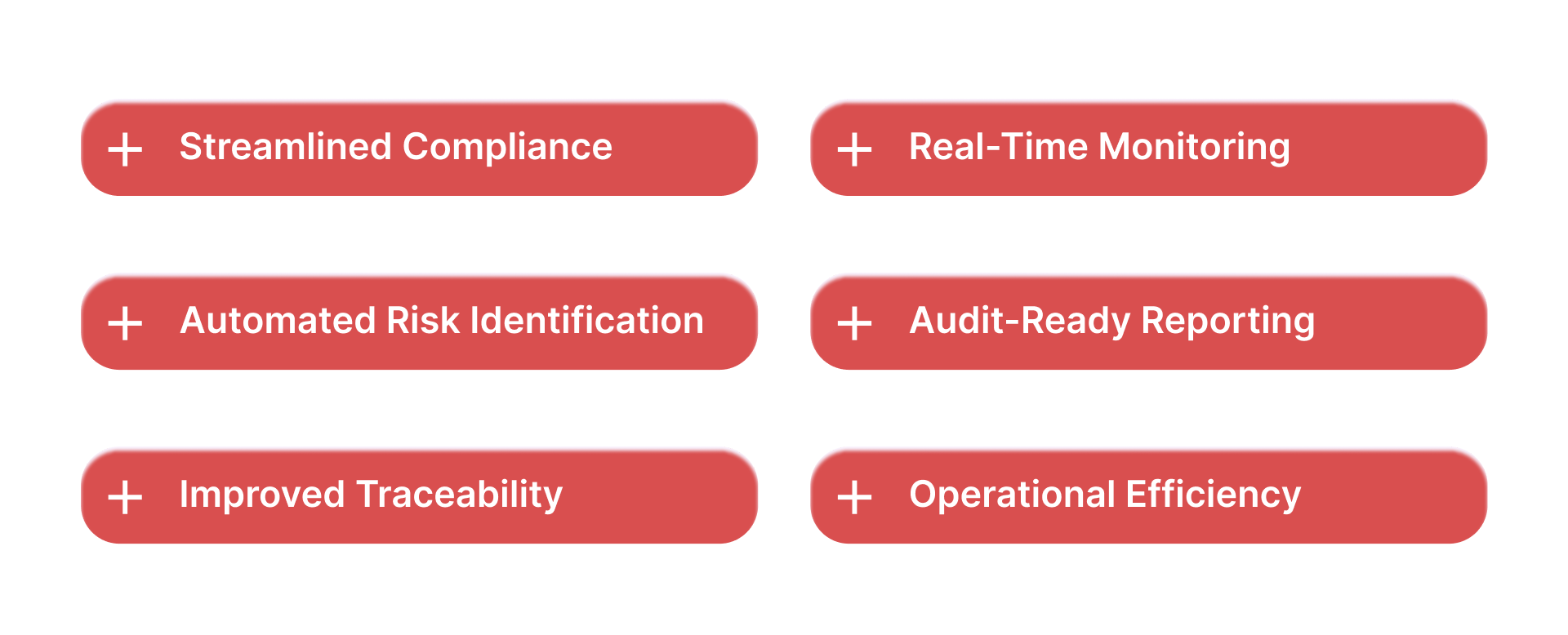
The food safety and compliance software helps food businesses move from reactive to proactive safety management. It centralizes operations, automates compliance tasks, and builds accountability at every step of the supply chain.
- Streamlined Compliance Management: The software consolidates documentation, SOPs, and audit records in one place. This ensures consistent version control, faster retrieval during inspections, and simplified certification renewals.
- Automated Risk Identification and Mitigation: Built-in analytics help identify patterns and predict potential hazards before they escalate. Teams can assign corrective actions, track completion, and monitor effectiveness in real time.
- Improved Traceability and Transparency: End-to-end visibility ensures that every ingredient, batch, and supplier is traceable. This reduces the time needed for root cause analysis and helps minimize recall scope.
- Real-Time Monitoring and Alerts: IoT integrations and automated alerts notify teams of temperature deviations, equipment failures, or hygiene breaches, allowing faster intervention and preventing contamination risks.
- Audit-Ready Reporting: With centralized data and automated reports, organizations can prepare for ISO audits without manual effort. Audit trails show exactly when and how compliance tasks were completed.
- Enhanced Operational Efficiency: By digitizing workflows and automating repetitive tasks, food safety teams can focus on process improvement rather than administrative work.
When compliance tools work as part of daily operations, food safety becomes predictable, measurable, and easier to sustain.
Top 5 Food Safety Software Solutions
Selecting the right food safety software helps organizations ensure compliance, minimize contamination risks, and stay audit-ready year-round. Here are the top five food safety and compliance platforms trusted by manufacturers, processors, and distributors worldwide.
1. VComply
VComply is a governance, risk, and compliance (GRC) platform designed to help food and beverage organizations strengthen safety, quality, and regulatory oversight. It streamlines compliance workflows, automates reporting, and provides full visibility into risk management across multiple sites or franchises.
- Centralized Compliance Dashboard: Monitor all safety, quality, and audit activities in one unified view.
- Policy & SOP Management: Create, share, and enforce standardized policies and health protocols across locations.
- Automated Workflows: Assign and track compliance tasks with real-time notifications and escalation triggers.
- Vendor & Supplier Compliance Tracking: Manage vendor certifications and monitor third-party compliance performance.
- Audit & Issue Management: Conduct site reviews, record evidence, and link findings to corrective actions.
- Risk Identification & Mitigation: Connect incidents to control measures, assess risk impact, and drive preventive actions.
- Pre-Configured Dashboards & Reports: Gain actionable insights into compliance performance and audit readiness.
Best Fit For: Food and beverage enterprises, quick-service restaurants (QSRs), and aggregators that need to manage multi-location compliance programs, health and safety policies, and supplier risks from a single system.
Pricing: Custom pricing based on organization size and modules required.
Trial/Demo: Free demo available; 21-day trial available on request.
2. Ideagen
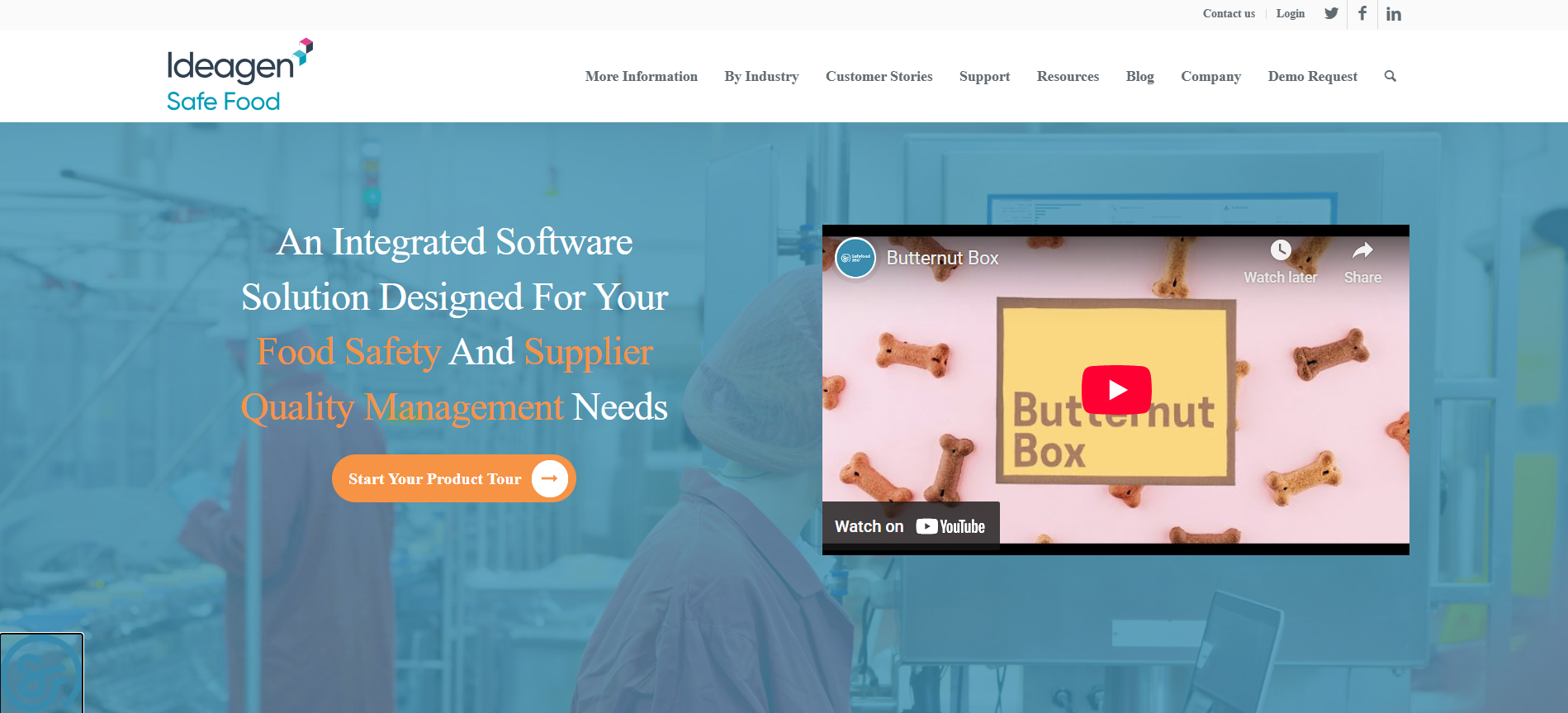
Ideagen’s Safefood 360 delivers a full‑scale quality, compliance, and food safety management platform tailored for food and beverage operations. It supports key frameworks and helps manufacturers, processors, and distributors gain visibility, automate workflows, and manage supplier and product‑quality risks.
Key Features:
- Supplier & Traceability Management: Track raw materials, packaging, and inbound vendor data across supply‑chain risks.
- HACCP/PRP Integration & Food‑Safety Workflow: Enforce hazard‑analysis, critical‑control‑points, and prerequisite programs through digital processes.
- Audit and Incident Management: Centralized audit logs, mobile checklists, and incident/CAPA workflows.
- Document & Policy Control: Automated version control, acknowledgements, and standardized SOPs across sites.
- Real‑Time Dashboards & Analytics: Configurable BI views and proactive risk alerts for food‑safety performance.
Best Fit For: Food manufacturers, processors, and large‑scale beverage operations that require a robust compliance platform covering supplier traceability, food safety frameworks, audits, and multi‑location oversight.
Pricing: Custom pricing.
Trial/Demo: Demo available on request. No free trial.
3. Effivity
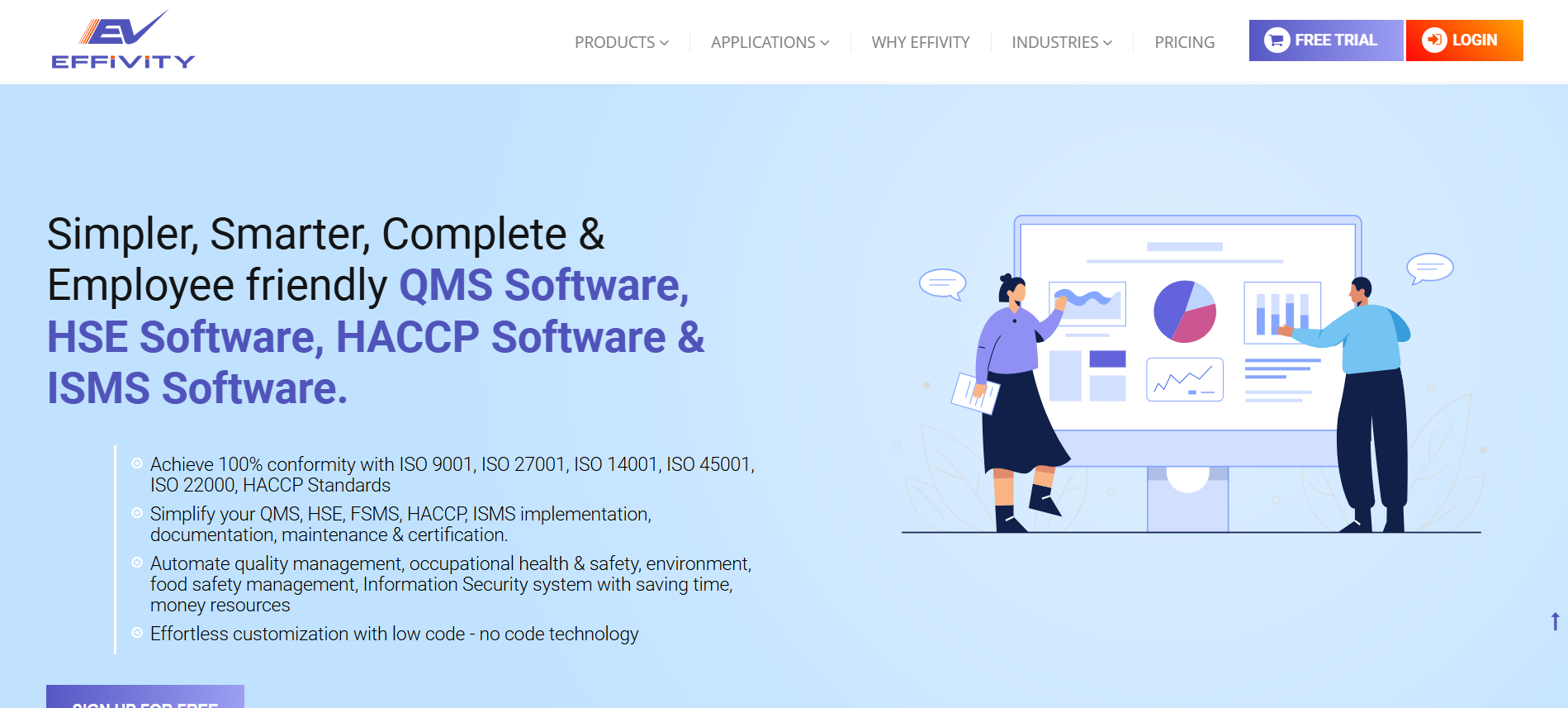
Effivity is a cloud‑based compliance platform built to support food safety, quality, health & safety, and environmental standards. Designed for organizations looking to go from manual spreadsheets to a unified digital system, it appeals especially to mid‑sized manufacturers and multi‑site operations.
Key Features:
- FSMS/HACCP Workflow & ISO 22000 Support: Configure hazard analysis, CCPs, and prerequisites aligned with ISO 22000 and FSSC 22000.
- Document & Record Control: Route approvals, maintain version history, and centralize SOPs and training logs.
- Audit‑Ready Dashboards & Reports: Real‑time visibility into compliance status, non‑conformances, corrective actions, and performance metrics.
- Automated Alerts & Task Assignments: Trigger reminders for upcoming audits, certifications, supplier review, or review tasks needing action.
- Supplier & Vendor Compliance Oversight: Monitor and manage third‑party compliance, certifications, and traceability risks.
Best Fit For: Food manufacturers or processors with multiple sites, or firms managing food safety alongside quality and safety systems.
Pricing: Subscription‑based pricing starting at $217/month.
Trial/Demo: A 15‑day free trial is available. Demo option for product demo.
4. Trustwell
Trustwell is the food‑industry software platform that emerged from the merger of FoodLogiQ and ESHA Research in 2023. It supports supply‑chain traceability, quality incident management, compliance workflows, and recall readiness for food manufacturers, processors, retailers, and restaurants.
Key Features:
- Supplier & Traceability Management: Track your products from farm to fork, including lot‑level data and critical tracking events.
- Quality Incident Capture & Workflow: Log quality issues via mobile or desktop, communicate with suppliers, and manage incident resolution.
- Compliance & Audit Readiness: Build and maintain supplier documentation, certifications, and audit traceability for regulatory or brand compliance.
- Recall & Withdrawal Management: Execute recalls and product withdrawals efficiently via a mobile‑enabled platform that escalates notifications.
- Embedded Analytics & Insights: Use real‑time dashboards, trend analysis, and supplier performance metrics to drive continuous improvement.
Best Fit For: Mid to large‑scale food manufacturers, processors, distributors, retailers, or restaurant chains that need end‑to‑end supply‑chain visibility, traceability, and quality/compliance workflows
Pricing: Custom pricing.
Trial/Demo: Demo available on request. No free trial offerings.
5. FoodReady
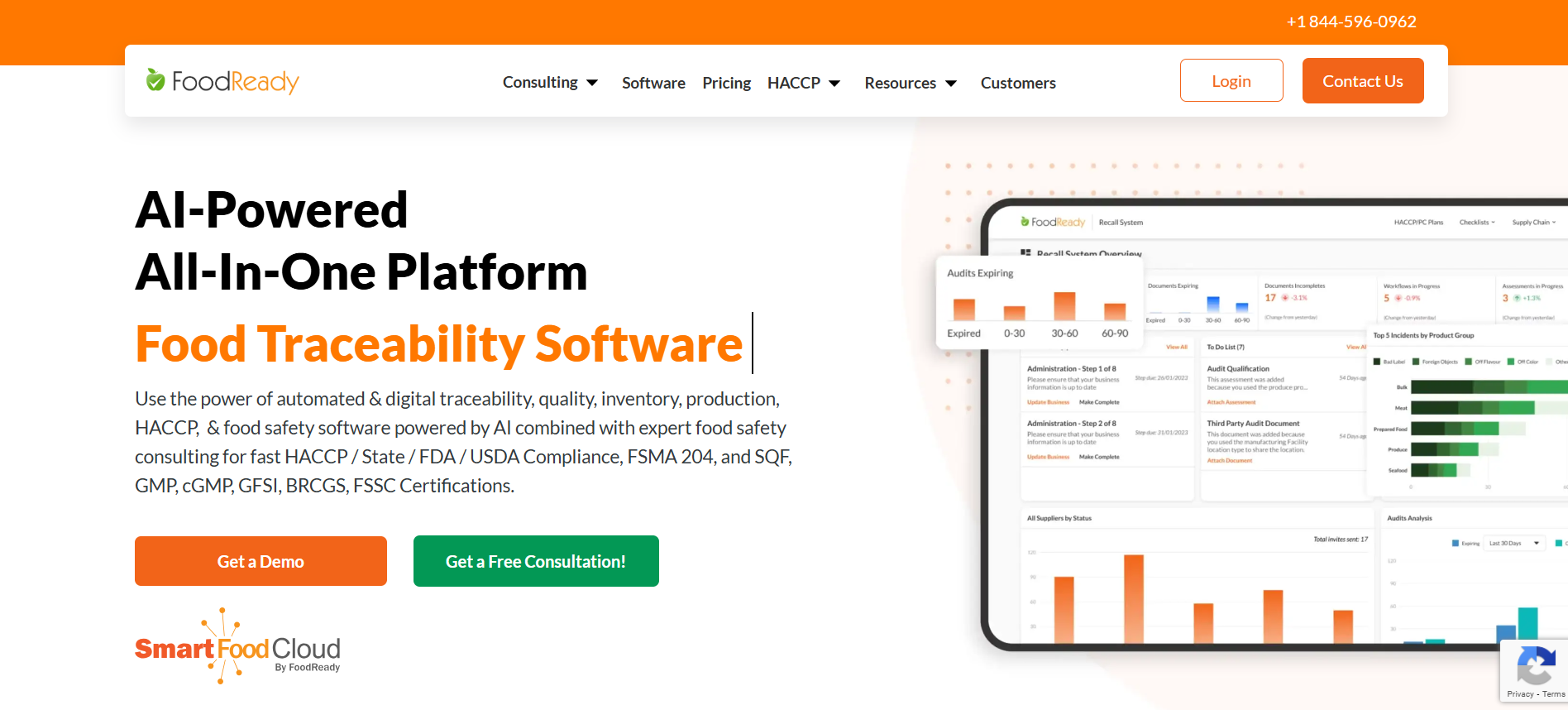
FoodReady is an AI‑powered food safety and production platform built for manufacturers, processors, and distributors. It combines document automation, traceability, inventory control, and HACCP/SOP workflows into a single solution, designed to make compliance and audit readiness faster and more proactive.
Key Features:
- AI HACCP & Plan Builder: Automatically generate food safety plans with hazard analysis and prerequisite programs.
- Digital Traceability & Lot Tracking: Full‑spectrum lot tracking from raw materials to finished goods, supporting FSMA 204 key data elements.
- Smart Checklists & SOP Automation: Create operational checklists and SOPs quickly and maintain them in mobile/desktop workflows.
- Production & Inventory Integration: Batch management, BOM execution, receiving/shipping traceability, and production order monitoring.
- Supplier Document Management: Store and monitor supplier certifications, ingredient records, and vendor compliance in one place.
Best Fit For: Processors, co‑packers, manufacturers, and food‑service businesses who face complex compliance demands and want a unified software platform that handles production, traceability, and food safety under one system.
Pricing: Custom quotes required based on company size, modules, and facility complexity.
Trial/Demo: Demo available upon request. No option for a free trial.
Each of these platforms brings a different strength — whether it’s audit automation, supplier traceability, or real-time analytics. Next, let’s look at how to evaluate and select the most effective solution for your organization.
Also read: Best GRC Tool for Food and Beverage Manufacturing in the US
How to Pick the Right Food Safety Software
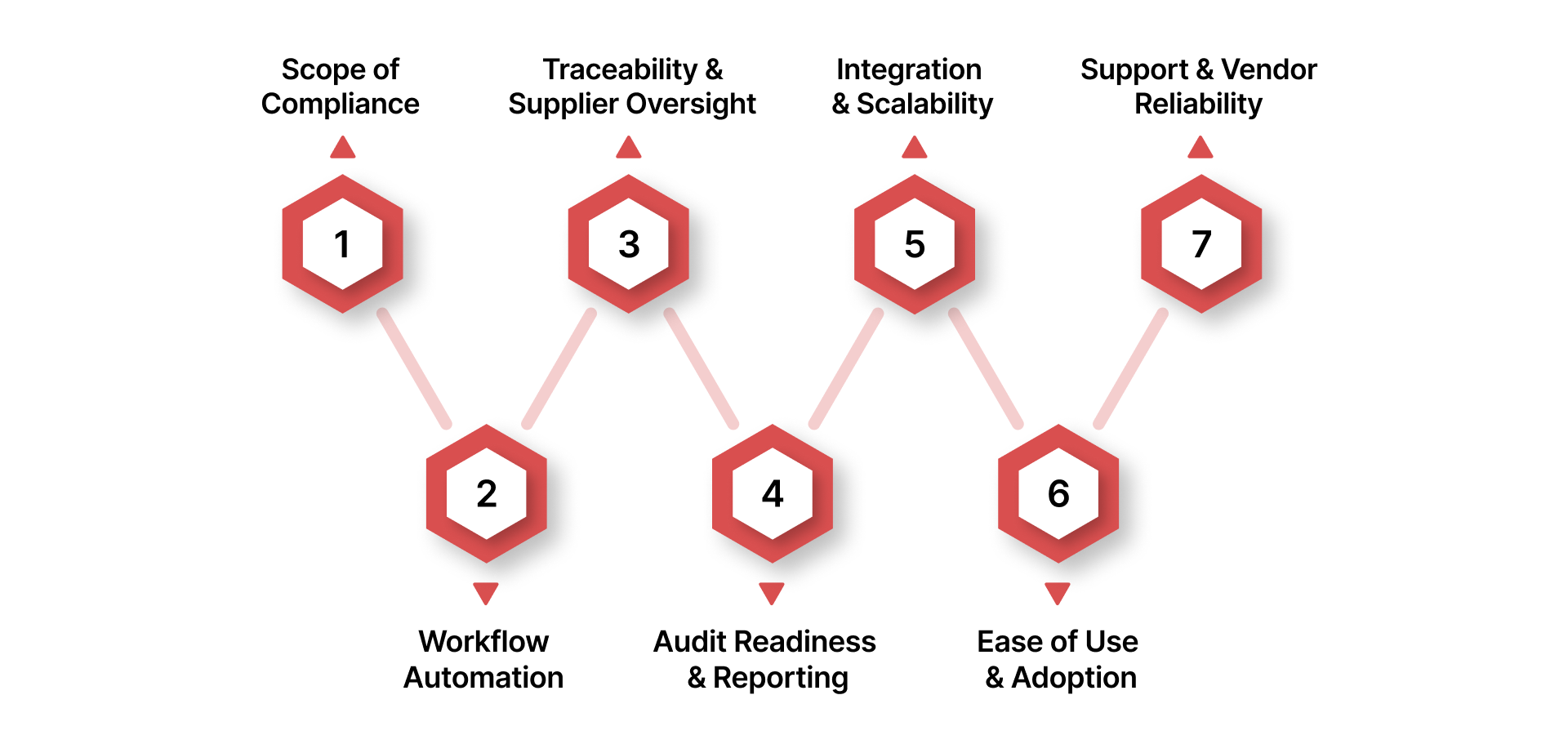
Selecting the right food safety and compliance platform is critical to streamline operations, maintain regulatory adherence, and reduce risk. Consider these factors when evaluating solutions:
- Scope of Compliance: Ensure the platform supports the standards relevant to your operations, such as HACCP, ISO 22000, FSSC 22000, SQF, or FSMA.
- Workflow Automation: Look for software that can automate routine tasks like inspections, checklists, non-conformance tracking, alerts, and corrective actions.
- Traceability & Supplier Oversight: For multi-site operations or complex supply chains, check that the software tracks raw materials, finished goods, and supplier compliance.
- Audit Readiness & Reporting: Dashboards, real-time reporting, and automated audit trails simplify inspections and reduce preparation time.
- Integration & Scalability: The platform should integrate with existing ERP, quality, or production systems and scale with your business as it grows.
- Ease of Use & Adoption: User-friendly interfaces, mobile access, and role-based dashboards improve adoption across frontline and management teams.
- Support & Vendor Reliability: Evaluate vendor support, onboarding assistance, training, and updates to ensure long-term reliability and compliance guidance.
Choosing a solution that aligns with your specific operational, regulatory, and scale needs will maximize ROI, minimize risks, and embed food safety into daily operations rather than treating it as a periodic task.
Tips for Maximizing Food Safety Software Impact
Even the best software only works when paired with strong operational practices. Focus on these areas to get the most out of your food safety and compliance platform:
- Train and Empower Your Team: Ensure all staff understand how to use the software, log incidents, and follow workflows. Role-based dashboards and mobile access can improve frontline engagement and accountability.
- Monitor and Improve Continuously: Use audit results, performance dashboards, and non-conformance data to identify trends, refine processes, and prevent recurring issues. Regular reviews foster a culture of proactive safety management.
- Embed Compliance in Daily Operations: Embed software workflows into routine tasks like inspections, production checks, and supplier reviews. Making compliance part of everyday operations ensures consistency and reduces errors.
- Automate Alerts and Follow-Ups: Configure automated reminders for audits, certifications, or corrective actions to ensure timely responses and maintain audit readiness.
- Ensure Leadership Oversight: Senior management should review dashboards, KPIs, and trends regularly. Leadership oversight drives accountability and aligns safety practices with business objectives.
- Keep Standards and Procedures Current: Keep the system aligned with changing regulations, supplier requirements, and industry best practices to maintain compliance and mitigate risk.
Implementing these tips ensures that your software becomes more than just a tracking tool—it becomes a central part of a culture of food safety, operational excellence, and regulatory compliance.
Also read: Understanding Food Manufacturing Regulations and Standards
Wrapping Up
Food safety compliance is more than a regulatory requirement; it’s a competitive advantage. ISO 22000 compliance and risk software helps organizations streamline audits, enforce safety workflows, and maintain accountability across teams and suppliers. Choosing the right platform ensures traceability, minimizes risk, and embeds food safety into daily operations rather than treating it as an afterthought.
For teams looking to centralize compliance, automate tasks, and gain real-time visibility into safety and risk, VComply offers a robust, scalable solution. From policy management to risk tracking and dashboards, it empowers your organization to stay audit-ready and proactive.
Book a demo today and see how VComply can transform your food safety compliance processes.
FAQs
ISO 22000 includes interactive communication, system management (FSMS), prerequisite programs (PRPs), and HACCP principles. Together, they ensure effective food safety management, hazard control, and accountability across the entire food production and supply chain.
ISO 22000 certification is not legally required, but implementing its standards helps comply with regulations, meet customer or industry expectations, and demonstrate a reliable commitment to food safety practices and due diligence.
Software centralizes documentation, automates workflows, tracks hazards, and generates reports, making audits faster, improving accountability, and ensuring adherence to ISO 22000 standards. It also enables proactive monitoring and quick corrective actions.
Yes. Even smaller operations can streamline audits, reduce errors, monitor suppliers, and maintain safety protocols efficiently using a cloud-based or mobile-enabled food safety platform. This ensures scalability as the business grows.
Dashboards provide real-time visibility into compliance status, while automated alerts ensure timely corrective actions, helping teams prevent issues before they escalate and maintain audit readiness. They also support data-driven decision-making.