

Internal Audit Report Template: Key Types and Best Practices
An internal audit report provides a clear, structured summary of how well an organization is managing risks, controls, and regulatory responsibilities. By highlighting key findings and recommending corrective actions, it guides leadership toward stronger governance and more efficient operations. Ultimately, it serves as a decision-making tool that helps the organization improve performance and maintain accountability.

Internal audit reports play a crucial role in communicating key insights that guide decision-making and organizational action. With so much information coming from various sources, emails, project management tools, and instant messages, it’s important to create reports that cut through the noise and highlight the most critical findings. According to PwC’s 2023 Global Internal Audit Survey, nearly 50% of internal audit functions overlook key risks, like inflation and macroeconomic volatility.
This disconnect highlights a critical gap between audit priorities and the strategic challenges organizations face. As a result, internal audit reports must be crafted with an understanding of these business challenges, making sure that audit activities are aligned with the organization’s key risks and objectives.
This guide will walk you through best practices for creating internal audit reports that are clear, actionable, and directly linked to the organization’s priorities. It includes a structured internal audit report template designed to help you communicate findings effectively and deliver insights that support better decision-making and improved organizational performance.
Key Takeaways
- Internal audit reports influence how quickly risks convert into action, shaping leadership decisions and the organization’s overall control posture.
- Different internal audit report templates serve distinct objectives, allowing teams to switch formats without rebuilding reporting structures or losing evidence alignment.
- SAR, DSAR, KYC, AML, IT, and TPRM audits each benefit from automation, especially where multi-system evidence and high-volume verification are involved.
- Common audit failures often stem from unclear control steps and fragmented evidence, not from audit methodologies themselves.
- Using platforms like VComply strengthens audit outcomes by linking controls, evidence, workflows, and dashboards into one governed environment.
What is an Internal Audit Report?
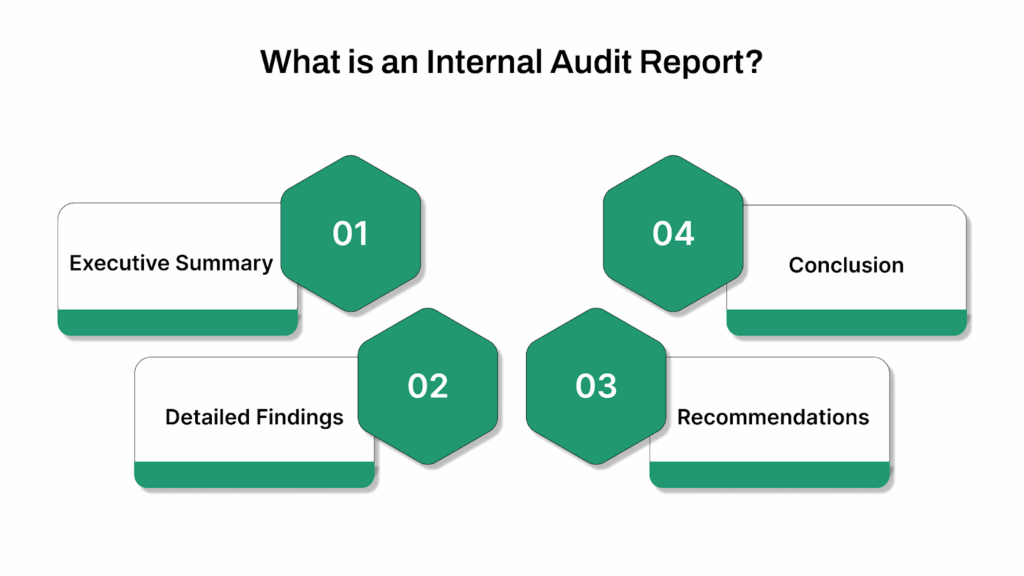
An internal audit report is a document created by auditors to summarize the findings of an audit for the organization’s management and board. It evaluates various aspects, such as compliance with regulations, risk management effectiveness, and the strength of internal controls.
This report is critical in providing a transparent account of the company’s operational health. It outlines issues that need attention and suggests practical steps for improvement, aiming to assist in strategic decision-making and improve operational efficiencies.
Here’s what typically goes into an internal audit report:
- Executive Summary: This part offers a snapshot of the audit’s scope, primary findings, and an overarching assessment designed to give busy executives a quick overview of the audit’s implications.
- Detailed Findings: This section provides a thorough review of each specific finding from the audit, including the context, supporting evidence, and the implications of these findings.
- Recommendations: The report shifts from analysis to action, providing targeted suggestions for addressing the issues uncovered during the audit.
- Conclusion: This section wraps up the report by assessing the overall health and effectiveness of the current controls and processes, and often provides an audit opinion.
A clear definition sets the base, but the real value emerges when you look at how these reports influence decisions across risk, controls, and day-to-day oversight.
Strengthen your audit preparation with a clear, repeatable process by reviewing the 4 Steps to Conducting a Successful Internal Audit

Importance of Internal Audit Reports
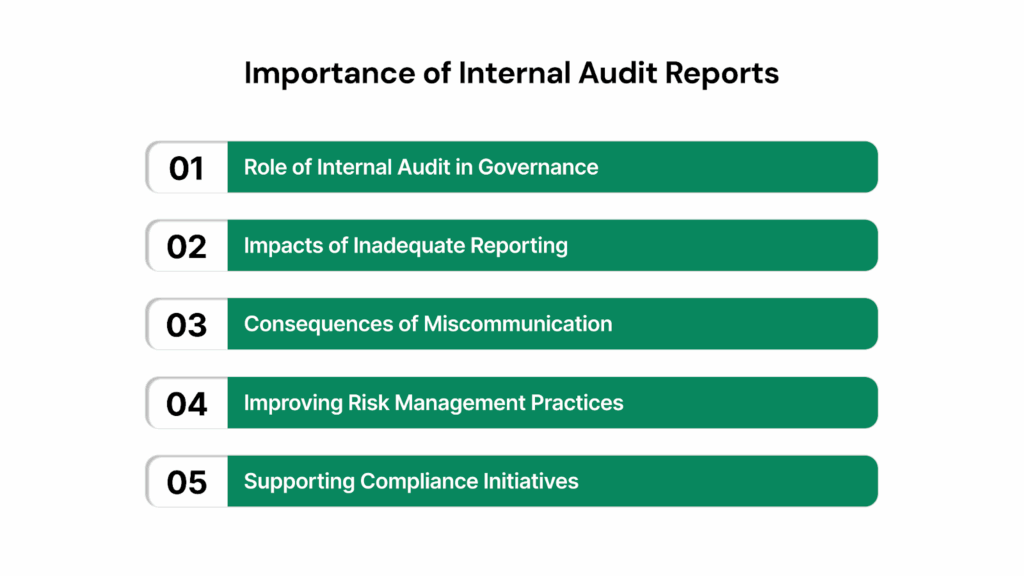
Internal audit reports influence how leaders interpret operational signals and prioritize corrective steps. They shape the pace at which risks move from identification to action. When structured with clarity, they help decision makers focus on issues that truly affect organizational stability.
- Role of Internal Audit in Governance: Internal audits are central to strengthening organizational governance. By evaluating risks, controls, and processes, these reports deliver essential feedback to stakeholders, allowing transparent and informed decision-making by management and the board.
- Impacts of Inadequate Reporting: Poorly structured reports can result in significant misunderstandings. These flaws delay risk management responses and prevent the strengthening of internal controls, adversely affecting operational efficiency.
- Consequences of Miscommunication: Unclear communication of audit findings and recommendations can lead to overlooked or misunderstood issues. This oversight can expose the organization to regulatory penalties, financial losses, and reputational damage.
- Improving Risk Management Practices: Detailed internal audit reports are vital for refining an organization’s risk management strategies. They provide an in-depth analysis of risk exposures and the effectiveness of existing controls, facilitating strategic adjustments that align with organizational objectives.
- Supporting Compliance Initiatives: Effective internal audit reports are fundamental to compliance programs. They assess adherence to regulations and provide a roadmap for addressing discrepancies. This proactive stance not only guarantees legal compliance but also promotes a culture of accountability and continuous improvement.
Once the role of these reports is clear, the focus shifts to the specific formats auditors rely on to present findings with a structure that suits each audit type.
Top 5 Types of Internal Audit Report Templates
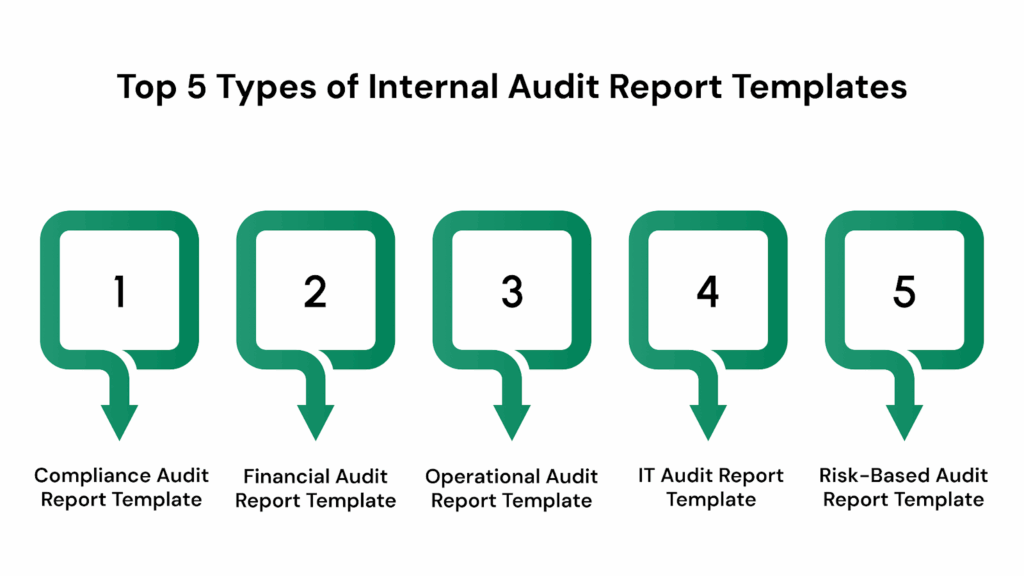
A strong internal audit report template library helps audit teams switch between audit types without reworking the structure each time. It also supports consistent evidence mapping so reviewers can compare findings across units. These templates give auditors clearer pathways to frame conclusions with fewer formatting decisions.
1. Compliance Audit Report Template
Used to assess organizational alignment with external regulations and internal policies.
- Scope Coverage: Details regulatory standards, audit period, and business units reviewed.
- Findings Summary: Summarizes specific compliance failures with recommendations for remediation.
- Corrective Actions: Lists priority actions and responsible parties with clear, measurable deadlines.
2. Financial Audit Report Template
Focuses on verifying the accuracy and integrity of financial statements and underlying processes.
- Controls Assessment: Evaluates internal controls over transaction recording and asset safeguarding.
- Misstatement Risks: Identifies potential risks of material misstatements across accounts.
- Management Comments: Includes management’s formal responses and plans for issues raised.
3. Operational Audit Report Template
Analyzes operational workflow efficiency, risk, and alignment with organizational objectives.
- Process Mapping: Documents key operations, workflows, and accountability.
- Performance Gaps: Pinpoints inefficiencies or non-compliance with internal procedures.
- Actionable Outcomes: Provides stepwise recommendations for process changes or risk mitigation.
4. IT Audit Report Template
Assesses technology systems, data controls, and cybersecurity preparedness.
- System Security Review: Addresses vulnerabilities in network security, access rights, and data handling.
- Incident Response: Evaluates readiness and documentation for cyber incidents or outages.
- Control Weaknesses: Details gaps in IT controls and proposes mitigation steps by priority.
5. Risk-Based Audit Report Template
Centered on evaluating and prioritizing risks that impact business performance and continuity.
- Risk Register: Presents identified risks classified by likelihood and impact.
- Control Effectiveness: Assesses whether current controls sufficiently mitigate key risks.
- Assurance Ratings: Assigns ratings to risk areas, guiding risk leaders on required attention.
After outlining the key templates used across audit functions, it helps to look at a sample format that shows how those elements come together in a real reporting structure.
Sample Internal Audit Report Template
A well-structured internal audit report template guarantees clarity, consistency, and completeness in documenting audit findings. It helps simplify the reporting process and provides a roadmap for actionable improvements within the organization. Below is a detailed internal audit report template to guide you in creating comprehensive and effective internal audit reports:
| Section | Details |
| Title Page | – Report Title: Internal Audit Report – Organization Name – Audit Date– Auditor(s) Name(s) – Version Number |
| Revision History | – Date: [Insert Date] – Description of Revisions: [Brief description] – Revised By: [Name] |
| Table of Contents | – Automatically generated, includes all sections and subsections with page numbers |
| Executive Summary | – Purpose of Audit: Overview of the audit’s objectives – Scope: Areas and processes covered – Key Findings: Summary of critical findings – Recommendations Summary: Overview of key recommendations – Conclusion: Summary of audit outcomes |
| Introduction | – Background: Context and rationale for the audit – Audit Objectives: Specific objectives of the audit – Scope of Audit: Detailed scope of the audit areas – Audit Criteria: Standards and frameworks used as benchmarks (e.g., COSO for internal controls, ISO 31000 for risk management, and ISO 27001 for information security |
| Audit Methodology | – Audit Approach: Description of the audit strategy and methods used – Data Collection Techniques: How data was gathered, including tools and techniques – Analytical Tools Used: Software or methodologies utilized in the audit process |
| Findings and Observations | – Detailed Observations: In-depth review of each audited area – Risk Assessments: Evaluation of risks associated with the findings – Control Analysis: Analysis of the control environment pertaining to the findings – Compliance: Assessment against the audit criteria, including specific regulations and standards |
| Recommendations | – Recommendations: Specific, actionable recommendations based on findings – Implementation Priorities: Prioritization based on risk and impact – Responsible Parties: Identification of parties responsible for each action – Timeline: Proposed deadlines for action implementation |
| Conclusion | – Overall Assessment: Comprehensive summary of findings and the effectiveness of controls – Audit Opinion: The auditor’s overall opinion based on the audit findings |
| Appendices | – Supporting Documents: Detailed list and description of all referenced documents – Glossary: Definitions of terms used in the report – Audit Team Details: Information about the audit team involved |
| Approval Section | – Auditor’s Signature: Sign-off by the lead auditor – Management Response: Management’s commitment to address the audit findings and oversight assurance |
This template is structured to make sure that internal audits are thoroughly documented, with clear objectives, detailed findings, actionable recommendations, and strategic follow-ups.
It incorporates essential frameworks like COSO for internal controls, ISO 31000 for risk management, ISO 27001 for information security, and GDPR for data protection to support internal auditors in delivering audits that not only assess compliance and risks but also improve operational efficiencies and internal control systems. By systematically addressing each section, organizations can use internal audit reports to improve governance and decision-making processes.
Step-by-Step Guide: How to Conduct an Internal Audit

Conducting an internal audit involves a series of systematic steps designed to evaluate the effectiveness of an organization’s internal controls, compliance with regulations, and risk management processes. Here’s a step-by-step guide to effectively manage an internal audit, including how to utilize an internal audit report template to simplify the documentation:
Step 1: Assemble the Audit Team
Select candidates with strong analytical skills, attention to detail, and excellent communication abilities. The team should be objective, ethical, and capable of working both independently and collaboratively.
Step 2: Define Audit Objectives and Scope
Establish clear objectives for the audit based on an understanding of the organization’s goals. Define the scope by identifying the processes, departments, and areas to be audited.
Step 3: Conduct a Risk Assessment
Assess risks annually to determine the ‘audit universe.’ This process involves identifying, ranking, and prioritizing potential risks and high-risk areas that will dictate the focus of the audit.
Step 4: Develop an Audit Plan
Create a comprehensive plan that outlines the audits to be performed, schedules, and responsibilities. The plan should be communicated across the organization to guarantee transparency.
Step 5: Perform Audit Scoping and Fieldwork
Determine the breadth of the audit and begin fieldwork, which may include transaction testing, observations, and analyses. Adjust the scope as new information is discovered.
Step 6: Document Findings and Prepare Preliminary Report
Gather and analyze data to identify deviations or deficiencies. Prepare a preliminary report using an internal audit report template that includes sensitive or urgent findings.
Step 7: Follow-up and Continuous Improvement
Make sure that recommendations are implemented and conduct follow-up audits to verify corrective actions. This step is crucial to confirm the effectiveness of the audit process and the implementation of suggested improvements.
Once the audit process is complete, attention moves to the tools and templates that shape those findings into a report that leaders can act on without ambiguity.
Read: The Role of Internal Controls and Risk Assessment in Organizations
Improving Internal Audit Reports with Effective Tools and Templates
Utilizing specialized tools like VComply can significantly improve the efficiency and consistency of internal audit reporting. Here’s how you can optimize the audit reporting process in your organization:
- Adopting Standardized Templates and Practices: Implementing standardized internal audit report templates makes sure that audit reports are comprehensive, uniform, and aligned with regulatory requirements. This not only saves time but also improves the quality and consistency of the reports.
- Integrating Technology in Audit Reporting: The automation features within audit management platforms simplify workflows, integrate audit findings, and guarantee accuracy. These features support real-time collaboration and use analytics for continuous process improvement.
- Maintaining Compliance with Regulatory Requirements: Using internal audit report templates that are up-to-date with applicable standards and frameworks guarantees compliance and minimizes the risk of non-compliance penalties.
- Strengthen Data Security and Integrity: Implementing strong security measures in audit reporting tools protects sensitive information and makes sure that access is restricted to authorized personnel only. This is crucial for maintaining the integrity of the data and compliance with privacy regulations.
After looking at the tools that shape the report format, the next step is to focus on the writing practices that determine how clearly the findings land with reviewers.
Best Practices for Crafting Internal Audit Reports
Effective internal audit reports are crucial for guaranteeing organizational improvements and maintaining compliance. They should be comprehensive, clear, and actionable. Here are seven best practices to improve the quality of your internal audit reports:
- Detailed Observations and Recommendations: Document each observation meticulously, noting associated risks and impacts. Provide actionable recommendations that target the root causes, guaranteeing that each suggestion is feasible and clear.
- Balancing Positive and Negative Findings: Aim for a balanced report by acknowledging both strengths and weaknesses. Highlighting positive aspects along with areas for improvement promotes a constructive dialog and encourages engagement from stakeholders.
- Including Comprehensive References: Citing standards, regulations, and frameworks that pertain to the audit’s scope improves the report’s credibility. This not only reinforces the findings but also helps stakeholders contextualize the audit results.
- Guaranteeing Logical Flow and Coherence: Structure the report to flow logically from general information to specific details. Use an internal audit report template to maintain a consistent structure that guides the reader through the findings coherently.
- Interactive Elements for Engagement: Digital reports should include interactive elements such as clickable content or expandable sections. This makes the report more engaging and allows readers to navigate quickly to sections of particular interest.
- Executive Summary for Quick Insights: Start with an executive summary that distills key points, conclusions, and recommendations from the audit. This section should be concise and crafted to give busy executives a quick overview without delving into the full report.
Once the report-writing standards are in place, the spotlight turns to the operational setup that supports them, starting with how centralized controls reduce friction during each audit cycle.
See how top platforms differ in workflows, evidence handling, and reporting through the Review of The Top 3 Internal Audit Management Software Systems in 2025.
Simplify Internal Audits with Centralized Controls
VComply offers a comprehensive solution designed to simplify internal audits by automating essential processes such as risk assessment, evidence collection, and report preparation. Its versatile features guarantee efficiency and accuracy at every stage of the internal audit lifecycle, making it a perfect fit for organizations looking to improve compliance and operational transparency.
Key Features of VComply for Internal Audits:
- Customizable Internal Audit Report Templates: Use pre-built templates to standardize and simplify report generation, guaranteeing all critical elements are included. This feature helps save time while maintaining consistency and clarity.
- Centralized Documentation: Store all audit-related documentation, from checklists to findings, in one secure location. This centralized approach allows for smooth data integration and facilitates collaboration across teams.
- Integration with Risk Management Frameworks: Use VComply’s configurable workflows to align internal audits with industry standards like ISO 31000 or COSO, guaranteeing comprehensive coverage of compliance requirements.
Whether you’re preparing for regulatory audits or building a long-term compliance strategy, VComply provides the tools to optimize your internal audit process. By automating repetitive tasks and providing actionable insights, it empowers audit teams to focus on strategic value creation.
Schedule a demo today to see how VComply can improve your internal audit framework and guarantee reliable compliance management customized to your organization’s needs.
Final Thoughts
Creating an internal audit report template that works across teams can raise the quality and clarity of every review cycle. It also gives auditors a consistent structure that supports sharper insights without adding extra work. As organizations grow, having a reliable internal audit report template helps reduce variation in reporting and makes audit outcomes easier to compare.
VComply supports this approach with features built for audit teams that want fewer manual steps and more control over their reporting flow. Customizable layouts, guided checklists, and collaborative workflows help teams spend more time interpreting findings instead of managing formatting or follow-ups.
To see how these capabilities fit your process, you can try VComply free for 21 days and review how it supports your audit reporting needs.
FAQs About Internal Audit Report Templates
An internal audit report template gives incoming auditors a fixed structure for evidence, findings, and follow-through items. This lowers variation in formatting even when project teams change.
Yes. A sample internal audit report template can include dual sections that separate narrative insights from measurable data, which helps readers interpret results without confusion.
Teams often add reviewer names, timestamps, cross-functional comments, and verification notes. These fields turn the internal audit report template into a clear trail of responsibility.
A structured evidence checklist inside a sample internal audit report template guides new auditors to list source documents, reference IDs, and validation steps, reducing missed items.
Yes. A modular internal audit report template can include optional sections that activate only for quarterly, semiannual, or annual cycles, keeping one version flexible for varied timelines.