

Compliance Software Cost Comparison: Pricing Across Top Enterprise Platforms
Procurement decisions for compliance platforms often stall when cost cannot be tied to operational impact. Teams are asked to justify spend across multiple frameworks while still managing audits, evidence collection, and control tracking with limited visibility into the total cost of ownership.

In practice, much of the cost sits outside licensing, in manual coordination, fragmented systems, and audit preparation.
At the same time, vendor pricing models make direct comparison difficult, with bundled modules, user tiers, and add-ons obscuring long-term spend. For governance leaders, the challenge is not identifying the cheapest tool, but understanding how pricing translates into operational efficiency, audit readiness, and scalability.
What is Compliance Software Cost Comparison?
A compliance software cost comparison examines how different platforms price governance capabilities, including regulatory tracking, policy management, risk monitoring, and audit documentation. Rather than evaluating subscription fees alone, these comparisons consider the broader cost structure of compliance systems, including implementation effort, regulatory framework mapping, integrations with enterprise systems, and ongoing governance operations.
What Compliance Software Cost Actually Includes

Comparing compliance platforms requires looking beyond subscription pricing. In regulated environments, the true cost of a compliance system includes the resources required to implement regulatory frameworks, configure governance workflows, and maintain ongoing oversight across the organization.
1. Platform Licensing
Most enterprise platforms charge subscription fees based on users, modules, or deployment scope. Some vendors price individual governance functions—such as compliance tracking or risk management—separately, which can increase costs as programs expand.
2. Implementation and Configuration
Initial deployment often requires mapping regulatory obligations to internal controls, configuring approval workflows, and integrating the platform with existing systems. Organizations operating under frameworks like the NIST Cybersecurity Framework, which helps organizations structure and manage cybersecurity risk, frequently need additional configuration to align controls with internal processes.
3. Regulatory Content Libraries
Many compliance platforms include pre-mapped regulatory frameworks. For example, the Payment Card Industry Data Security Standard (PCI DSS) establishes technical and operational requirements designed to protect payment card data.
While these libraries accelerate implementation, governance teams must still validate and adapt control mappings to their environment.
4. Ongoing Governance Operations
Compliance programs require continuous effort, including keeping up with regulatory requirements, coordinating policy attestations, and maintaining audit evidence. Over time, these operational activities represent a significant portion of the overall cost of maintaining a structured compliance program.
Common Pricing Models Used by Enterprise Compliance Platforms
Enterprise compliance platforms typically structure pricing around how governance programs operate across departments and regulatory frameworks. Rather than simple subscription tiers, vendors use models that reflect deployment scope, user participation, and governance functionality.
1. Per-User Licensing
Some compliance platforms charge based on the number of users accessing the system. This model can work for small compliance teams, but it becomes more complex when governance activities, such as policy attestations or incident reporting, require participation from employees across the organization.
2. Module-Based Pricing
Many enterprise platforms price capabilities separately. Compliance management, risk management, policy governance, and incident workflows may each be licensed as individual modules. While this allows phased adoption, costs often increase as organizations expand governance programs.
3. Enterprise Platform Licensing
Large GRC platforms frequently use enterprise agreements that bundle multiple governance capabilities into a single contract. Pricing typically reflects organizational size, regulatory scope, and integrations with existing systems. This model is common for organizations aligning compliance programs with frameworks such as the NIST Cybersecurity Framework.
Side-by-Side Comparison of Compliance Platforms
Pricing across compliance platforms varies widely because vendors target different governance use cases, from privacy consent management to security certification automation and enterprise GRC. Below is a side-by-side comparison of the top compliance software platforms.
| Platform | Pricing Model | Official Starting Price | Best Fit v-comply+1 |
| VComply | Modular enterprise | Custom enterprise pricing, Modules start at $1,000/mo | Unified compliance & risk management |
| Usercentrics | Tiered SaaS | Essential ~€7/month vendr+1 | Privacy consent for web/app |
| Vanta | Tiered SaaS | Custom pricing | SOC 2/ISO for tech firms |
| Sprinto | Framework-based | Custom pricing | Security automation for SMBs |
| Optro AI | Enterprise licensing | Custom enterprise pricing | SOX/internal audits |
| Hyperproof | Enterprise subscription | Custom pricing | Continuous monitoring |
| Onspring | SaaS subscription | Custom pricing | Mid-market risk teams |
| LogicGate | Modular licensing | Custom pricing | Configurable GRC programs |
| Secureframe | Framework-based SaaS | Custom pricing | SOC 2/ISO certifications |
| Apptega | Enterprise SaaS | Custom pricing | Cybersecurity frameworks |
Enterprise Compliance Platforms: Feature and Pricing Overview
Selecting a compliance platform requires more than comparing subscription costs. Read below to understand how each system supports regulatory oversight, policy governance, risk monitoring, and audit readiness across the organization.
1. VComply
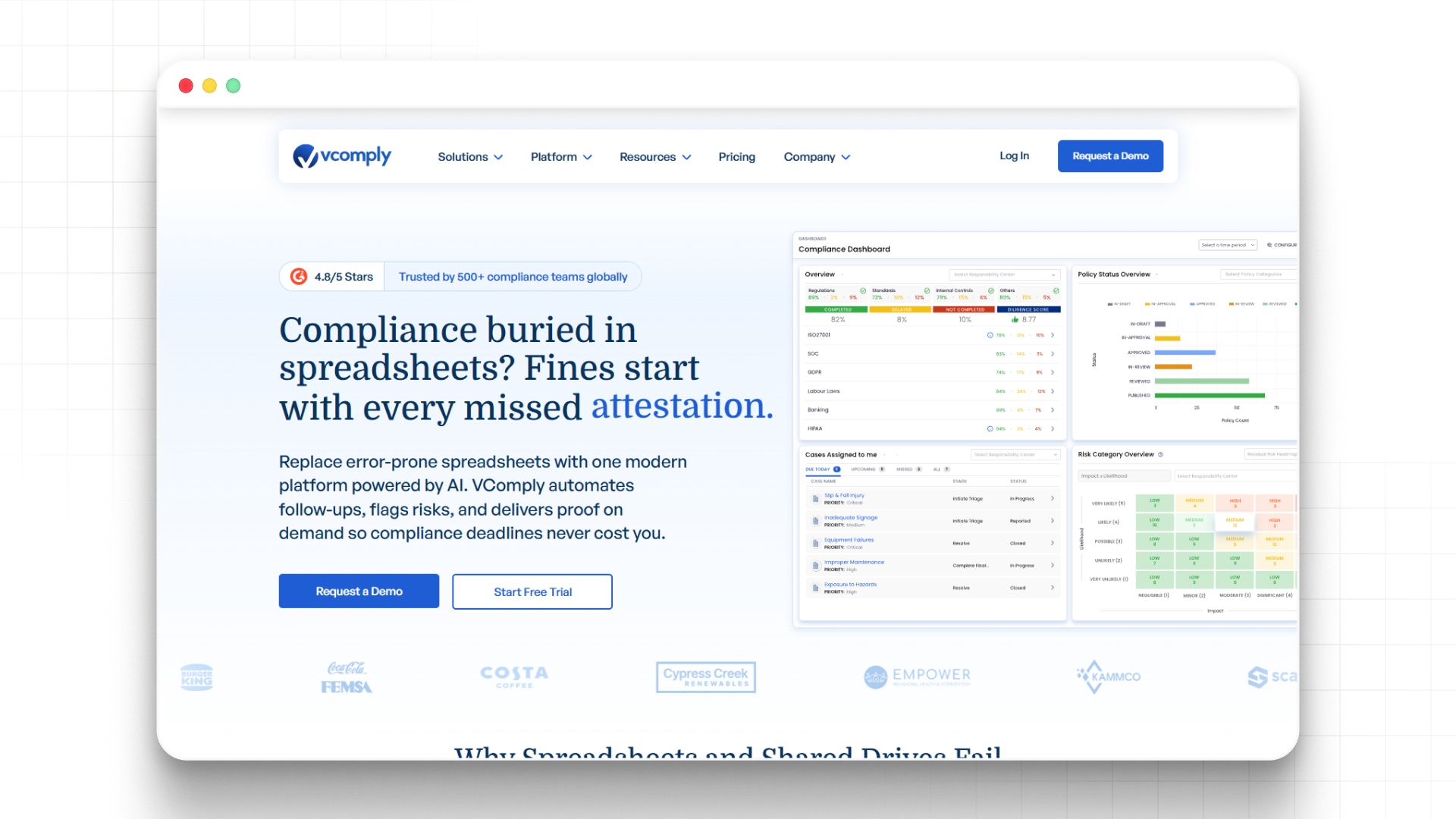
VComply is a cloud-based Governance, Risk, and Compliance (GRC) platform designed to help organizations operationalize compliance across departments. It replaces fragmented oversight methods, such as spreadsheets, email approvals, and disconnected systems, with structured workflows that track regulatory obligations, enforce policy governance, and maintain audit-ready documentation. The platform is used by regulated organizations to create accountability for compliance tasks, monitor risk exposure, and maintain visibility into governance performance across business units.
Key Features
- Regulatory obligation tracking – Map regulatory requirements to internal controls, assign ownership, and monitor compliance tasks through structured workflows.
- Automated compliance task management – Schedule recurring compliance activities, send reminders to task owners, and track completion status across departments.
- Policy management with attestation tracking – Distribute policies, maintain version control, and track employee acknowledgments to ensure policies are reviewed and accepted.
- Risk assessment and monitoring – Identify risks, assign risk owners, document mitigation plans, and track remediation progress through centralized dashboards.
- Incident reporting and investigation workflows – Capture incidents, assign investigators, document findings, and monitor corrective actions in a structured system.
- Centralized audit evidence repository – Store compliance documentation, control evidence, and audit records in a searchable system accessible during regulatory reviews.
- Governance reporting dashboards – Provide leadership with real-time visibility into compliance status, risk posture, and unresolved incidents across the organization.
Best For
Mid-market and enterprise organizations that need a structured system to manage compliance obligations, policy governance, risk monitoring, and incident resolution across regulated environments.
G2 Rating
Pricing
Modules start at approximately $1,000 per month, with enterprise pricing varying based on deployment scope and organizational requirements.
Demo / Free Trial
Demo available
21-day free trial available
2. Usercentrics
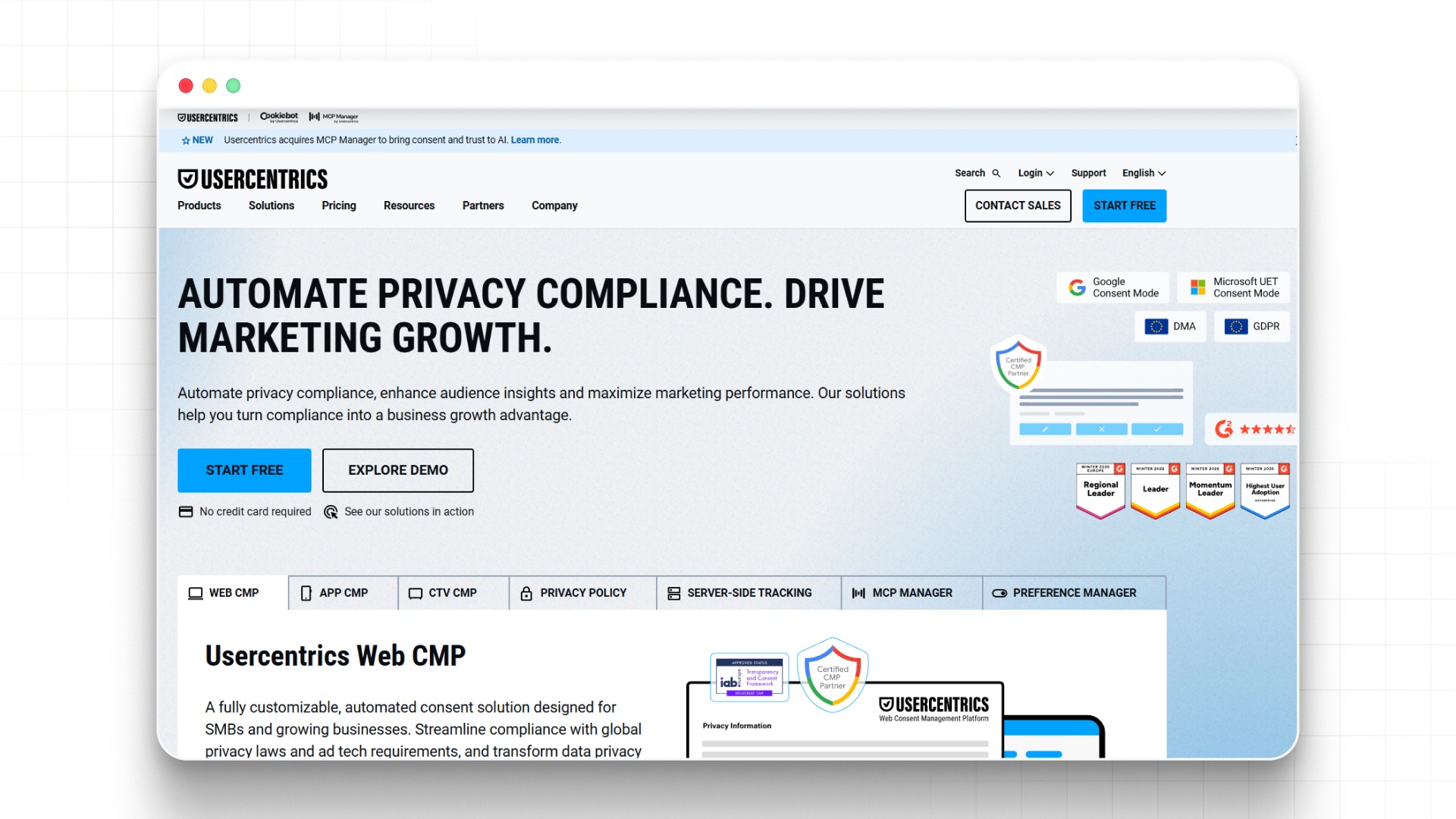
Usercentrics is a privacy compliance platform focused on consent management for websites, mobile applications, and digital services. The platform helps organizations collect, manage, and document user consent to meet global privacy regulations such as GDPR and CCPA. It primarily serves marketing, product, and legal teams that need to manage tracking technologies while maintaining compliance with data protection requirements.
Key Features
- Consent management platform (CMP) – Collect and manage user consent for cookies, trackers, and data processing across websites and apps.
- Automated cookie and tracker scanning – Detects tracking technologies on websites and blocks them until consent is obtained.
- Customizable consent banners – Configure consent prompts to align with branding, regulatory requirements, and user preferences.
- Consent documentation and audit logs – Stores consent records and activity logs to demonstrate compliance during regulatory reviews.
- Privacy regulation support – Supports multiple privacy laws including GDPR, CCPA/CPRA, and other regional regulations.
Best For
Organizations managing website and application privacy compliance, particularly those operating in jurisdictions with strict consent requirements.
G2 Rating
4.5 / 5
Pricing
- Free plan available
- Paid plans start at approximately $8/month, with higher tiers based on domains and traffic volume.
Demo / Free Trial
- 14-day free trial available
- Demo available
3. Sprinto

Sprinto is a compliance automation platform designed to help organizations prepare for security certifications such as SOC 2, ISO 27001, and HIPAA. The platform integrates with cloud infrastructure, identity systems, and developer tools to automate evidence collection and continuously monitor security controls. It is widely used by SaaS companies that need to demonstrate security compliance to customers and auditors.
Key Features
- Automated evidence collection – Integrates with cloud services and business tools to gather compliance evidence automatically.
- Continuous compliance monitoring – Tracks control performance and surfaces security gaps that could affect certification readiness.
- Framework mapping – Provides pre-configured controls for frameworks such as SOC 2 and ISO 27001.
- Audit readiness workflows – Organizes compliance documentation and audit tasks to support certification processes.
- Security and risk visibility dashboards – Provides centralized reporting on compliance posture and control effectiveness.
Best For
Startups and technology companies seeking automated support for security certifications such as SOC 2 or ISO 27001.
G2 Rating
4.8 / 5
Pricing
Sprinto pricing typically starts around $4,000–$10,000 per year for smaller deployments and increases depending on frameworks, infrastructure complexity, and organization size.
Demo / Free Trial
Demo available
Free trial: N/A
4. Optro AI

Optro AI is an enterprise platform designed to support internal audit, risk management, and compliance oversight programs. The platform is widely used by large organizations to manage SOX compliance, control testing, and internal audit workflows in a centralized system. It enables teams to coordinate audits, document internal controls, and track remediation efforts while maintaining visibility into risk and compliance activities across business units.
Key Features
- Internal audit management – Plan, execute, and track audit activities with structured workflows, task assignments, and progress monitoring.
- SOX compliance management – Document internal controls, perform testing, and maintain evidence to support financial compliance programs.
- Risk assessment and issue tracking – Identify risks, track remediation actions, and monitor risk exposure across the organization.
- Automated workflow and task assignments – Assign responsibilities and automate notifications to keep audit and compliance activities on schedule.
- Real-time reporting dashboards – Provide visibility into audit progress, control testing, and unresolved issues across governance programs.
Best For
Large enterprises running structured internal audit and SOX compliance programs.
G2 Rating
4.6 / 5
Pricing
Optro AI pricing typically starts around $30,000–$50,000 per year for mid-market deployments and can exceed $100,000+ annually for large enterprise programs, depending on modules and scale.
Demo / Free Trial
Demo available
Free trial: N/A
5. Vanta
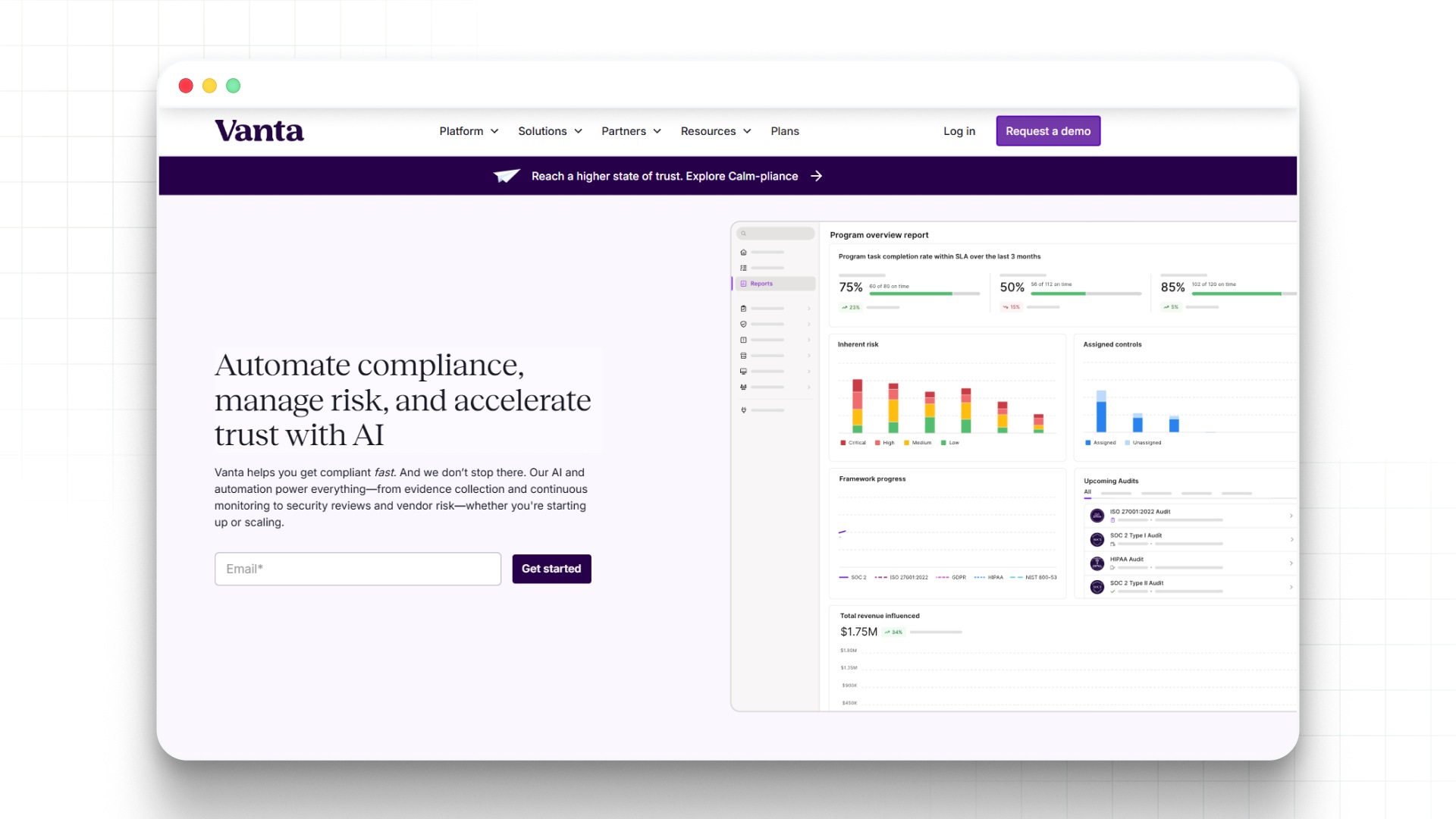
Vanta is a security compliance automation platform that helps organizations achieve certifications such as SOC 2, ISO 27001, and HIPAA. The platform integrates with cloud infrastructure, identity providers, and development tools to automate evidence collection and continuously monitor security controls. It is widely used by technology companies that need to demonstrate a security and compliance posture to customers and auditors.
Key Features
- Automated evidence collection – Pulls security and configuration data directly from integrated systems to support compliance documentation.
- Continuous control monitoring – Automatically checks system configurations against compliance requirements and flags issues that require remediation.
- Policy template library – Provides pre-built security policy templates aligned with common frameworks to accelerate compliance readiness.
- Audit workflow management – Organizes documentation and communication with auditors during certification processes.
- Trust center reporting – Allows organizations to demonstrate security posture to customers through centralized compliance reporting.
Best For
Technology companies and startups are pursuing certifications such as SOC 2, ISO 27001, and HIPAA.
G2 Rating
4.6 / 5
Pricing
Vanta does not publicly disclose pricing; organizations must request a vendor quote. Independent estimates typically place deployments in the $10,000–$100,000+ annual range, depending on company size and frameworks supported.
Demo / Free Trial
Demo available
Free trial: N/A
6. Hyperproof

Hyperproof is a cloud-based governance, risk, and compliance platform designed to help organizations manage compliance programs, monitor controls, and maintain audit readiness across multiple frameworks. The platform centralizes compliance evidence, risk assessments, and audit documentation so teams can manage regulatory obligations without relying on spreadsheets or disconnected tools. It is commonly used by technology and mid-market companies managing security compliance programs.
Key Features
- Control and framework management – Map internal controls across multiple frameworks such as SOC 2, ISO 27001, and NIST to reduce duplicate compliance work.
- Continuous compliance monitoring – Track the health of controls and surface compliance gaps before audits.
- Automated evidence collection – Integrate with cloud services and internal systems to gather compliance evidence automatically.
- Centralized risk management – Maintain risk registers and align risks with control activities and mitigation plans.
- Audit workflow coordination – Organize audit documentation, manage auditor requests, and track remediation tasks.
Best For
Mid-market organizations managing multiple security compliance frameworks and preparing for recurring audits.
G2 Rating
4.5 / 5
Pricing
Starting at approximately $12,000 per year, with pricing increasing depending on frameworks, integrations, and organization size.
Demo / Free Trial
Demo available
Free trial available
7. LogicGate Risk Cloud

LogicGate Risk Cloud is an enterprise GRC platform designed to help organizations build and automate governance workflows across risk, compliance, audit, and third-party risk management. The platform is known for its configurable architecture, allowing organizations to design customized governance processes without extensive development resources. It is widely used by large enterprises with complex risk management programs.
Key Features
- Configurable governance workflows – Build custom workflows for risk management, compliance tracking, policy management, and audit processes.
- Centralized risk and control management – Maintain risk registers, assign risk owners, and track mitigation activities across departments.
- Regulatory change management – Monitor regulatory updates and map new requirements to internal controls.
- Third-party risk management – Assess and monitor vendor risks through structured questionnaires and documentation workflows.
- Executive reporting dashboards – Visualize risk exposure, compliance status, and remediation progress across governance programs.
Best For
Large enterprises that require highly customizable governance workflows across risk, compliance, and third-party risk management.
G2 Rating
4.6 / 5
Pricing
Custom enterprise pricing; vendors typically provide quotes based on deployment scope and number of governance applications.
Demo / Free Trial
Demo available
Free trial: N/A
8. Secureframe

Secureframe is a compliance automation platform designed to help organizations achieve security certifications such as SOC 2, ISO 27001, and HIPAA. The platform integrates with cloud infrastructure and security tools to automate compliance monitoring, collect audit evidence, and simplify certification processes. It is commonly used by technology companies preparing for their first security compliance audits.
Key Features
- Automated compliance monitoring – Continuously monitor systems against security framework requirements.
- Evidence collection integrations – Pull security and configuration data from integrated tools to support audit documentation.
- Security policy management – Provide templates and workflows for maintaining compliance policies aligned with certification frameworks.
- Vendor risk management – Assess third-party vendors and document supplier security posture.
- Audit readiness tools – Organize compliance documentation and streamline communication with auditors.
Best For
Technology companies and startups pursuing security certifications such as SOC 2 or ISO 27001.
G2 Rating
4.7 / 5
Pricing
Estimated $15,000–$40,000 annually, depending on company size, frameworks supported, and integrations.
Demo / Free Trial
Demo available
Free trial: N/A
9. Onspring

Onspring is a no-code governance platform used to build customized risk, compliance, and audit workflows. The platform enables organizations to configure governance applications without extensive development work, allowing teams to automate processes such as policy management, risk assessments, and third-party risk reviews.
Key Features
- No-code workflow automation – Build governance processes without programming.
- Risk and compliance management – Track risks, controls, and compliance obligations across business units.
- Third-party risk assessments – Evaluate vendor risks and maintain documentation of supplier due diligence.
- Audit management workflows – Manage audit plans, findings, and remediation activities.
- Reporting dashboards – Provide visibility into governance activities and compliance progress.
Best For
Mid-market organizations that need flexible governance workflows without complex software development.
G2 Rating
4.7 / 5
Pricing
Typically starts around $20,000 annually, with pricing varying based on modules and deployment size.
Demo / Free Trial
Demo available
Free trial: N/A
10. Apptega

Apptega is a cybersecurity compliance platform designed to help organizations manage security frameworks, risk assessments, and continuous compliance programs. The platform focuses heavily on cybersecurity governance and is often used by managed security service providers (MSSPs) and organizations managing frameworks such as NIST, CMMC, and ISO 27001.
Key Features
- Cybersecurity framework management – Track compliance across frameworks such as NIST, CMMC, ISO 27001, and PCI DSS.
- Risk and control assessments – Conduct structured security assessments and document remediation actions.
- Task and workflow management – Assign compliance tasks and track remediation progress across security teams.
- Compliance reporting dashboards – Provide visibility into security posture and framework readiness.
- Document repository and evidence tracking – Maintain centralized compliance documentation for audits.
Best For
Organizations and service providers managing cybersecurity compliance programs across multiple frameworks.
G2 Rating
4.7 / 5
Pricing
Entry pricing typically starts around $8,000 per year, depending on frameworks and program scope.
Demo / Free Trial
Demo available
Free trial available
How to Evaluate Compliance Platforms Beyond Pricing
Pricing comparisons help narrow vendor options, but governance leaders typically evaluate platforms based on how effectively they support operational oversight.
Governance Visibility
Leadership teams need clear insight into compliance status, risk exposure, and remediation progress. Platforms that centralize obligations and control monitoring provide more consistent oversight across departments.
Regulatory Coverage
Organizations must align governance programs with regulatory expectations. For example, the U.S. Securities and Exchange Commission (SEC) requires public companies to maintain effective internal controls and demonstrate accountability for compliance processes.
Workflow Automation
Manual tracking often leads to inconsistent documentation and missed compliance activities. Structured workflows help assign responsibility, trigger reminders, and maintain accountability.
Audit Readiness
Platforms that centralize evidence and maintain detailed audit trails make it easier for compliance teams to respond to internal audits and regulatory examinations.

Structure Compliance Oversight Beyond Pricing Comparisons
Pricing comparisons can help narrow down potential compliance platforms, but governance leaders ultimately need systems that support how compliance work actually happens. Regulatory obligations must be assigned, policies distributed and acknowledged, controls monitored, and incidents documented in a consistent and auditable manner. Without a structured operational framework, even well-intentioned compliance programs can struggle to maintain oversight across departments.
ComplianceOps helps organizations operationalize compliance programs by centralizing regulatory obligations, assigning accountability for compliance tasks, and maintaining audit-ready documentation within structured workflows.
Explore how ComplianceOps structures compliance oversight across departments.
Start a 21-Day Free Trial.
Conclusion
Enterprise compliance platforms vary widely in pricing because they support different governance needs, from certification automation to organization-wide compliance oversight. For governance leaders, the key evaluation factor is not only cost but how effectively a platform supports regulatory accountability, policy enforcement, and audit readiness.
As compliance programs expand across multiple frameworks and business units, maintaining oversight through fragmented processes becomes increasingly difficult. Structured governance systems help ensure obligations are tracked, responsibilities are assigned, and evidence is consistently maintained.
VComply provides a centralized framework for managing compliance operations, enabling organizations to monitor obligations, maintain audit readiness, and sustain consistent governance oversight. Book a demo to see how VComply can help structure and streamline your compliance management.
FAQs