

How AI-Driven Compliance Platforms Enable Continuous Audit Readiness
As a Chief Compliance Officer or Director of Internal Audit, audit readiness is a constant responsibility, not a one-time event. Preparing for SOX or HIPAA audits often means coordinating across teams, systems, and stakeholders to ensure evidence is complete, controls are working as intended, and reporting timelines stay on track.
Many compliance teams still rely on manual processes that add time and complexity to this effort, especially as audit scopes expand.
For compliance leaders in financial services and healthcare managing distributed teams, expectations continue to rise. In 2026, evolving regulations and increased scrutiny mean audit readiness must be continuous, transparent, and defensible. Teams are expected to demonstrate control effectiveness in real time, not just at audit time.
This is where AI-driven compliance platforms add practical value. This article explores how AI enables continuous audit readiness and the platforms that automate evidence collection and real-time visibility.
At a Glance
- AI-driven compliance platforms shift audit readiness from periodic preparation to continuous oversight.
- Automated evidence collection reduces manual effort across siloed tools and teams.
- Real-time monitoring surfaces control gaps and risks earlier, before audits begin.
- Predictive insights help compliance teams prioritize testing and remediation with limited resources.
- Platforms like VComply ComplianceOps enable audit-ready operations without increasing headcount.
What Are AI-Driven Compliance Platforms And Why They Matter
AI-driven compliance platforms apply machine learning and automation to core GRC workflows, ensuring continuous audit readiness rather than assembling it on demand. These platforms ingest data from controls, systems, and business owners, then normalize, tag, and validate evidence as it is produced.
What differentiates AI-driven platforms from traditional GRC tools is how they operate day to day. Instead of waiting for scheduled reviews, they monitor control health in real time, flag anomalies as they emerge, and highlight gaps that require attention. This gives compliance and audit leaders an always-up-to-date view of readiness across frameworks such as SOX and HIPAA.
For CCOs and audit directors, the value is operational. AI reduces dependence on manual follow-ups, shortens audit response cycles, and improves confidence in reporting. By turning fragmented activities into connected workflows, AI-driven platforms make audit readiness predictable, scalable, and defensible as regulatory expectations increase.

How AI Improves Audit Readiness
AI improves audit readiness by embedding control monitoring, evidence management, and risk detection into daily operations instead of treating them as pre-audit activities. The result is continuous visibility and fewer surprises when audits begin.
Key ways AI-driven compliance platforms strengthen audit readiness include:
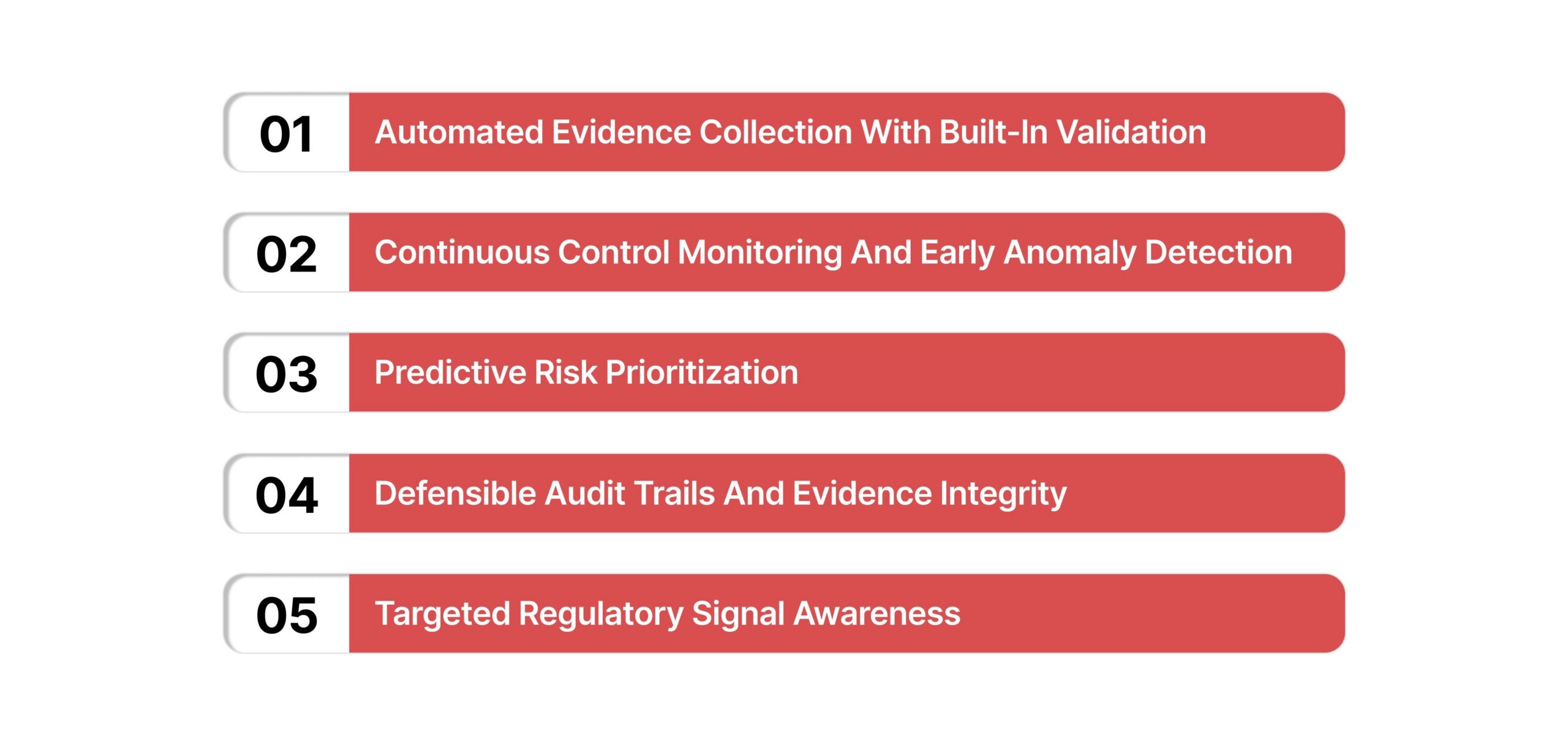
- Automated Evidence Collection With Built-In Validation
AI identifies required evidence, maps it to the correct controls and frameworks, and validates completeness as evidence is produced. This reduces last-minute requests and limits inconsistencies during audit testing. - Continuous Control Monitoring And Early Anomaly Detection
Control performance is monitored in real time. When deviations or unusual patterns emerge, the system flags them early, allowing teams to investigate and remediate issues before they become findings. - Predictive Risk Prioritization
By analyzing historical findings, control performance trends, and regulatory exposure, AI helps compliance and audit teams focus testing and remediation on areas with the highest audit impact. - Defensible Audit Trails And Evidence Integrity
Actions, approvals, changes, and evidence are automatically timestamped and logged as work occurs. This creates complete, traceable audit trails that auditors can review without manual reconstruction. - Targeted Regulatory Signal Awareness
AI helps teams focus on regulatory changes that materially affect existing controls and audit scope, reducing noise while ensuring alignment with evolving requirements.
In platforms like VComply ComplianceOps, these capabilities are embedded directly into compliance workflows. Dashboards surface control health, evidence status, and open risks in one place, enabling continuous, measurable, and resilient audit readiness as scrutiny increases.
Top AI-Driven Compliance Platforms For Audit Readiness
Not all AI-driven compliance platforms solve the same problem. Some focus on automating evidence for a narrow set of frameworks. Others surface insights but leave execution to manual follow-ups. For CCOs and Internal Audit leaders, the real differentiator is whether the platform changes how audit readiness is operated day to day.
The comparison below starts with platforms built for continuous audit execution, not point-in-time compliance.
1. VComply
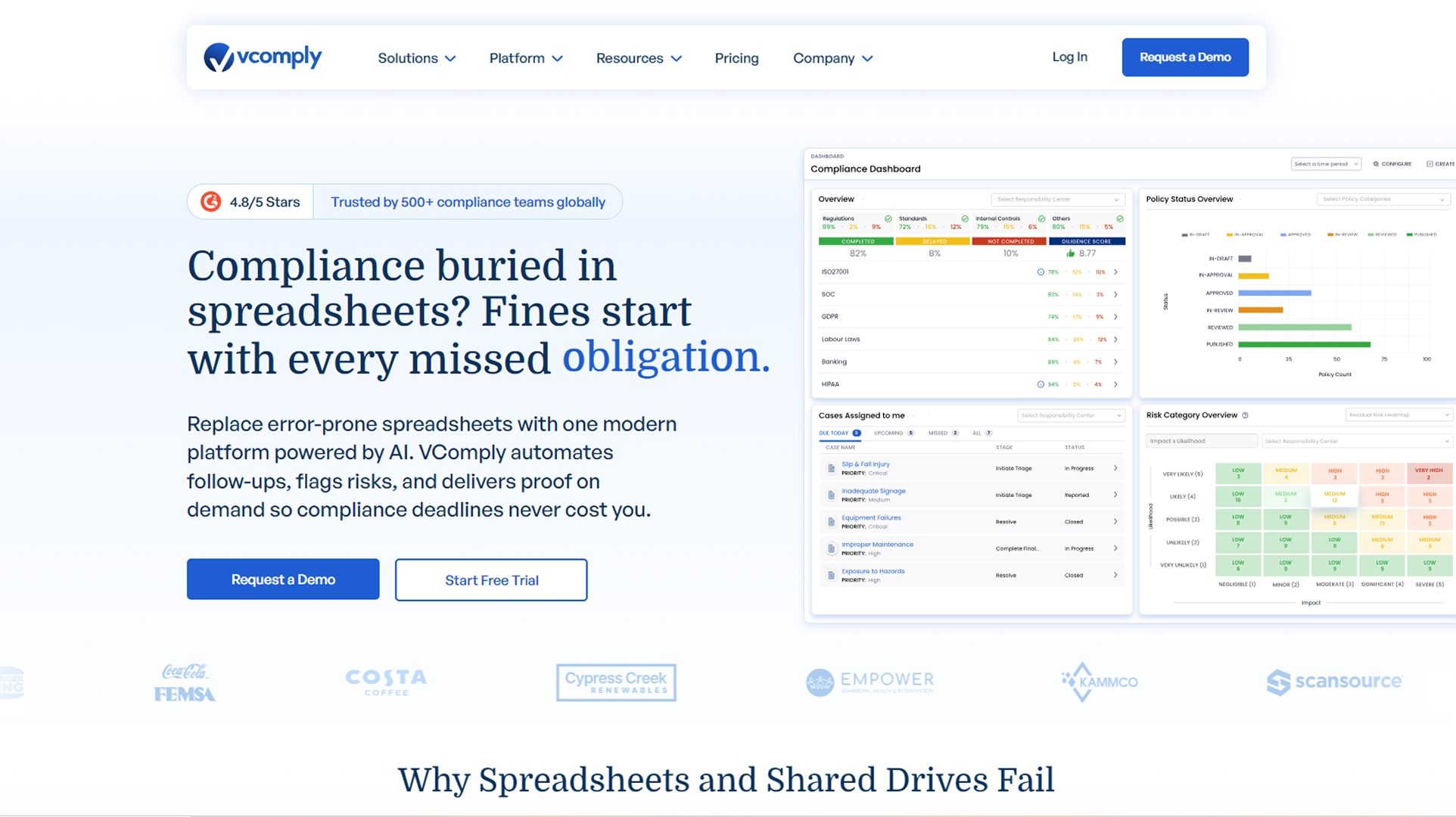
VComply is designed for compliance and audit leaders who need audit readiness to function as a continuous operational process rather than a seasonal project. Instead of treating AI as a reporting layer, VComply embeds it directly into execution workflows. This is particularly relevant for mid-to-large US organizations where audits span multiple business owners, systems, and regulatory frameworks.
Key Features:
- Centralized Evidence & Audit-Ready Records: Upload, tag, and secure documents, attestations, and incident logs directly against controls and tasks so evidence is always ready for auditors.
- Automated Workflows & Real-Time Alerts: Customizable workflows with reminders and escalation triggers ensure controls, tasks, and remediation actions move forward without manual follow-up.
- Integrated Compliance, Risk & Audit Dashboards: Visual dashboards and heatmaps show risk posture, overdue actions, and compliance gaps across the organization in real time.
- Pre-Built Framework Libraries: Rapidly deploy regulatory programs using built-in frameworks and templates, reducing setup effort and ensuring consistent compliance structure.
- Incident & Issue Management: Track and resolve cases with due dates, reminders, and visibility across teams.
- Policy & Procedure Integration: Centralize policy creation, approval, distribution, and attestations in one system tied to controls and risk programs.
- Real-Time Reporting & Analytics: Configurable reports and dashboards provide insights tailored for audit readiness and executive oversight.
- Integrations & Collaboration: Connect compliance work to tools like Outlook, Teams, and Slack to reduce adoption friction and embed workflows into existing team habits.
Best For:
Mid-market to large US organizations in financial services, healthcare, energy, higher education, and regulated industries that need a single platform to operationalize audit readiness, unify governance, risk, compliance, and evidence, and automate repetitive, error-prone tasks across teams.
G2 Rating: 4.6 / 5
- Pro GRC Suite: Starts at approximately $1,000 / month, including compliance, risk management, audit planning, incident tracking, real-time analytics, and dashboards.
- Enterprise GRC Suite: Custom pricing with added security, customization, dedicated support, and onboarding.
Trial / Demo:
- 21-day free trial available (with guided onboarding call).
- Live demo by request to walk through compliance workflows and dashboards.
2. Drata
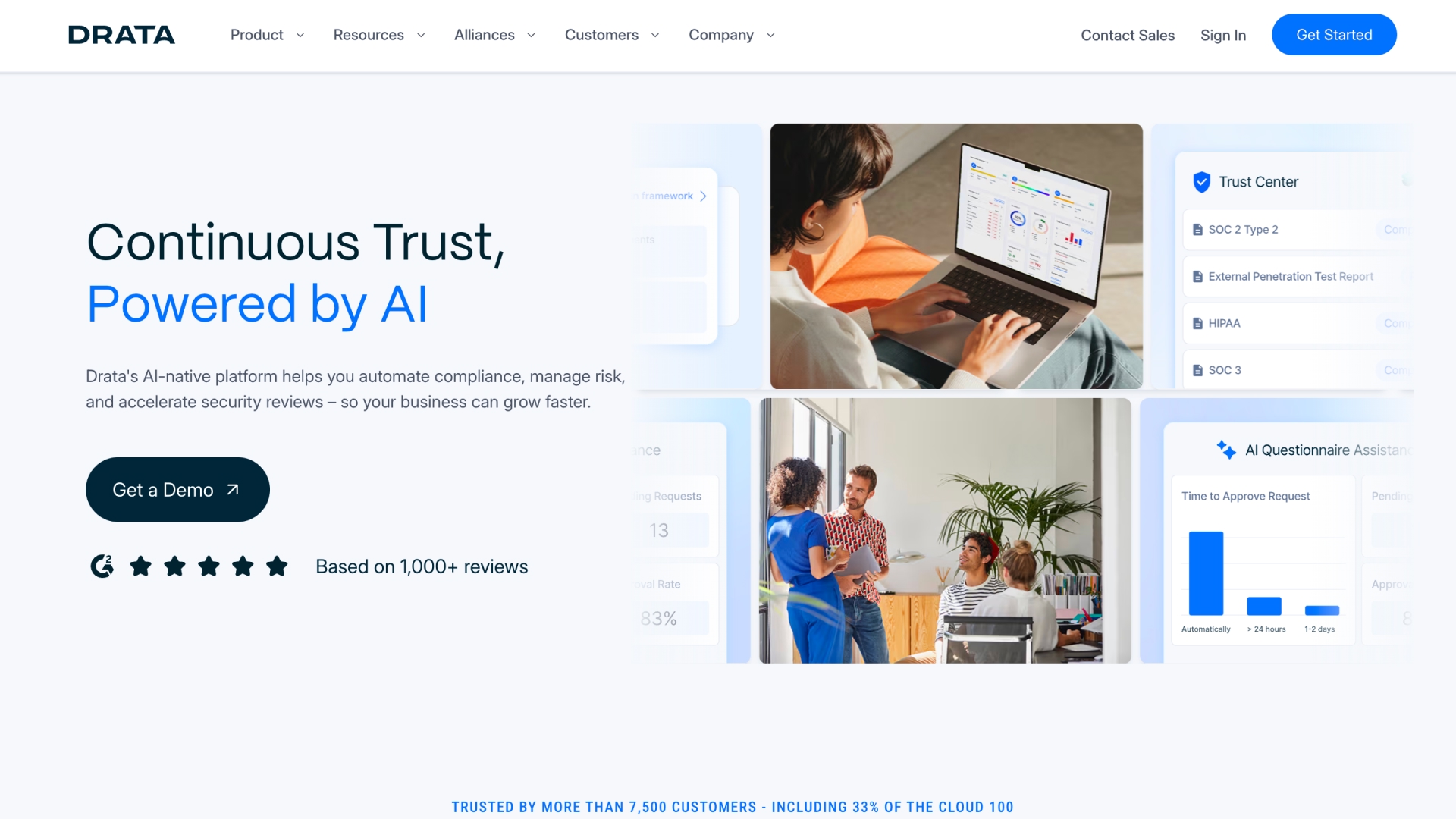
Drata is an AI-native compliance and trust automation platform that emphasizes continuous monitoring, automated evidence collection, and real-time compliance status to support audit readiness for frameworks such as SOC 2, ISO 27001, HIPAA, GDPR, and more. It is designed to replace manual, reactive compliance work with automated workflows and transparency across risk, controls, and evidence.
Key Features:
- Continuous Compliance Monitoring: Drata continuously checks control states and evidence across hundreds of integrations, keeping readiness up to date rather than relying on periodic batch uploads.
- Automated Evidence Collection: Connects to 200+ systems and data sources to automatically collect and organize evidence, minimizing manual tracking and documentation.
- Real-Time Alerts & Control Status: Built-in alerts notify teams of failing controls or missing evidence as they arise, reducing last-minute remediation work.
- Cross-Framework Support: Enables mapping and reuse of controls across multiple frameworks (SOC 2, ISO 27001, HIPAA, etc.), reducing duplicated setup and accelerating multi-framework readiness.
- Collaboration & Operational Dashboards: Centralized dashboards and workflows align compliance, IT, and audit teams around a shared view of risk and readiness.
- AI-Powered Assurance Features: Drata’s emerging AI agents can validate controls, score control health, and recommend or initiate remediations as part of continuous risk oversight.
- Audit-Ready Reporting: Generates reports and evidence views that can be shared with auditors or internal leadership without extensive manual formatting.
Best For:
Organizations with mature, tech-driven compliance and security programs that require deep integrations, continuous monitoring, and cross-framework audit readiness. Drata is particularly effective for teams managing multi-framework compliance at scale and that value real-time control status and automated evidence resilience. It may be less suitable for organizations seeking very rapid deployment with minimal customization, as initial setup and integrations can take more time and configuration effort.
G2 Rating: 4.8 / 5
Pricing: Custom
Trial / Demo: Live demo available on request.
3. Vanta
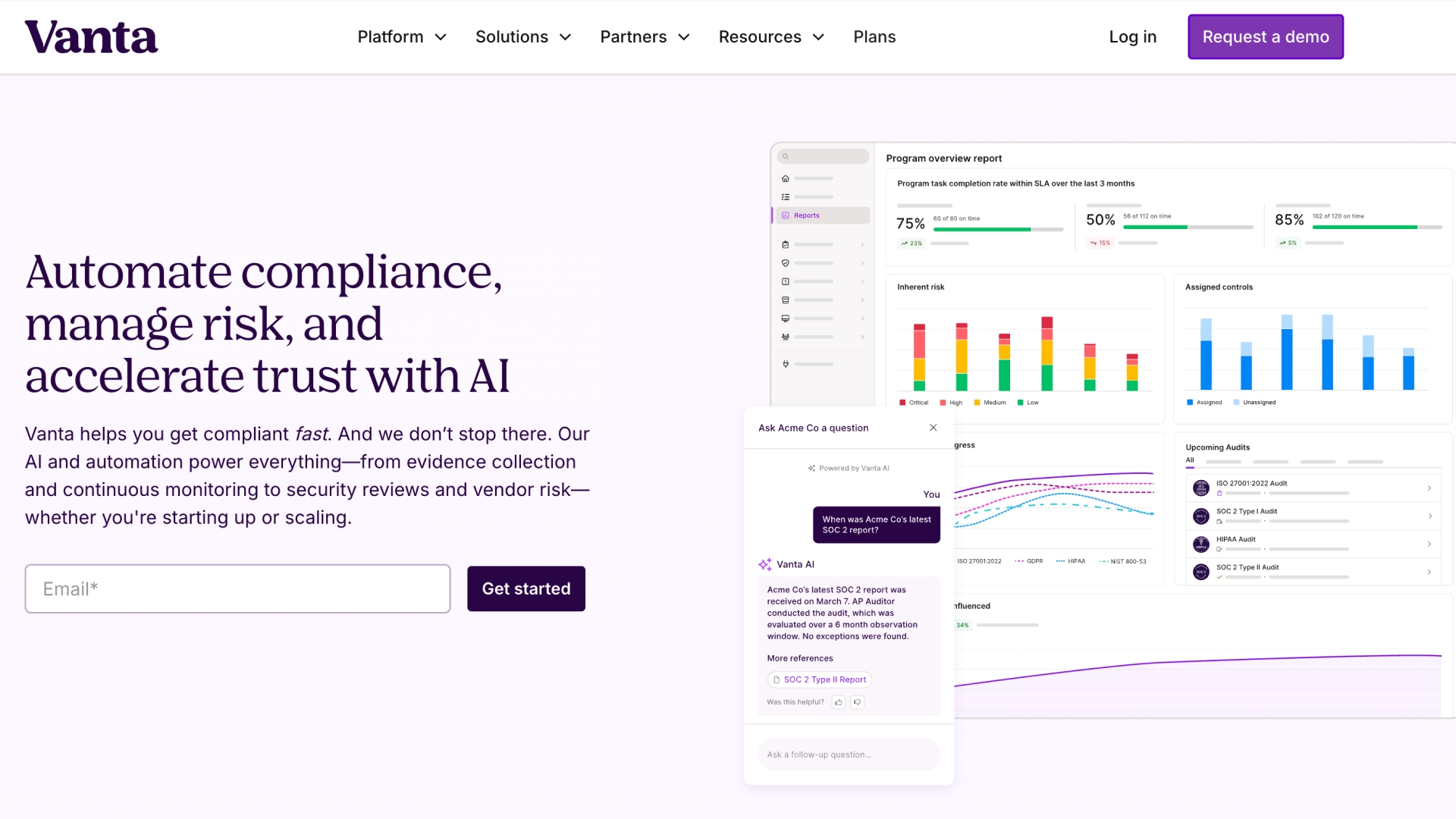
Vanta uses automation and AI-augmented workflows to support continuous control monitoring, evidence collection, and audit readiness across SOC 2, ISO 27001, HIPAA, GDPR, and other frameworks. It integrates deeply with infrastructure, identity, and cloud sources to maintain up-to-date compliance status and automate routine evidence tasks.
Key Features:
- Automated evidence collection from 200+ systems
- Continuous control validation and real-time alerts
- Framework mapping and reusable controls
- AI-assisted questionnaire automation
- Trust Center for stakeholder reporting
Best For:
Organizations that need continuous evidence automation and deep integrations with security and cloud systems. Particularly suited to tech-centric environments prioritizing automated readiness for multiple frameworks. May require configuration effort for bespoke enterprise workflows.
G2 Rating: 4.6 / 5
Pricing: Custom
Trial / Demo: Live demo available on request
4. Hyperproof
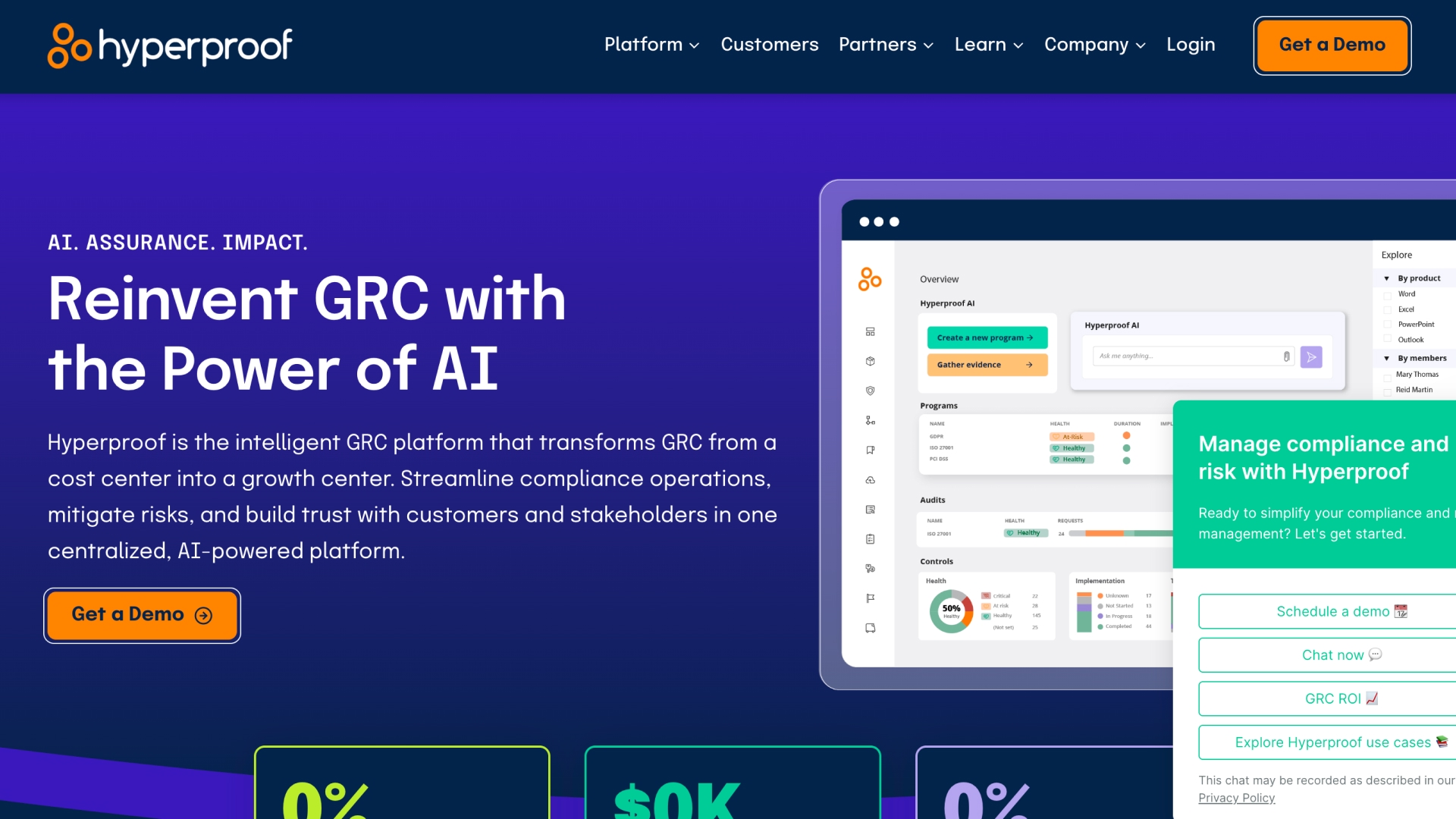
Hyperproof is an AI-enabled governance, risk, and compliance platform that centralizes controls, evidence, and audit workflows. Its automation focuses on reducing redundancy, surfacing gaps in evidence, and providing real-time visibility into compliance posture across frameworks.
Key Features:
- AI-enabled workflow and evidence automation
- Centralized control mapping across frameworks
- Real-time compliance dashboards
- Integrated compliance, risk, and audit workflows
- Adaptive modules for enterprise needs
Best For:
Mid-market to large enterprises that manage multiple compliance frameworks and complex audit cycles. Ideal for teams wanting a unified execution layer for controls, evidence, and audit tasks. Less suited for very small teams needing rapid, out-of-the-box simplicity.
G2 Rating: 4.5 / 5
Pricing: Custom
Trial / Demo: Live demo available on request
5. Secureframe
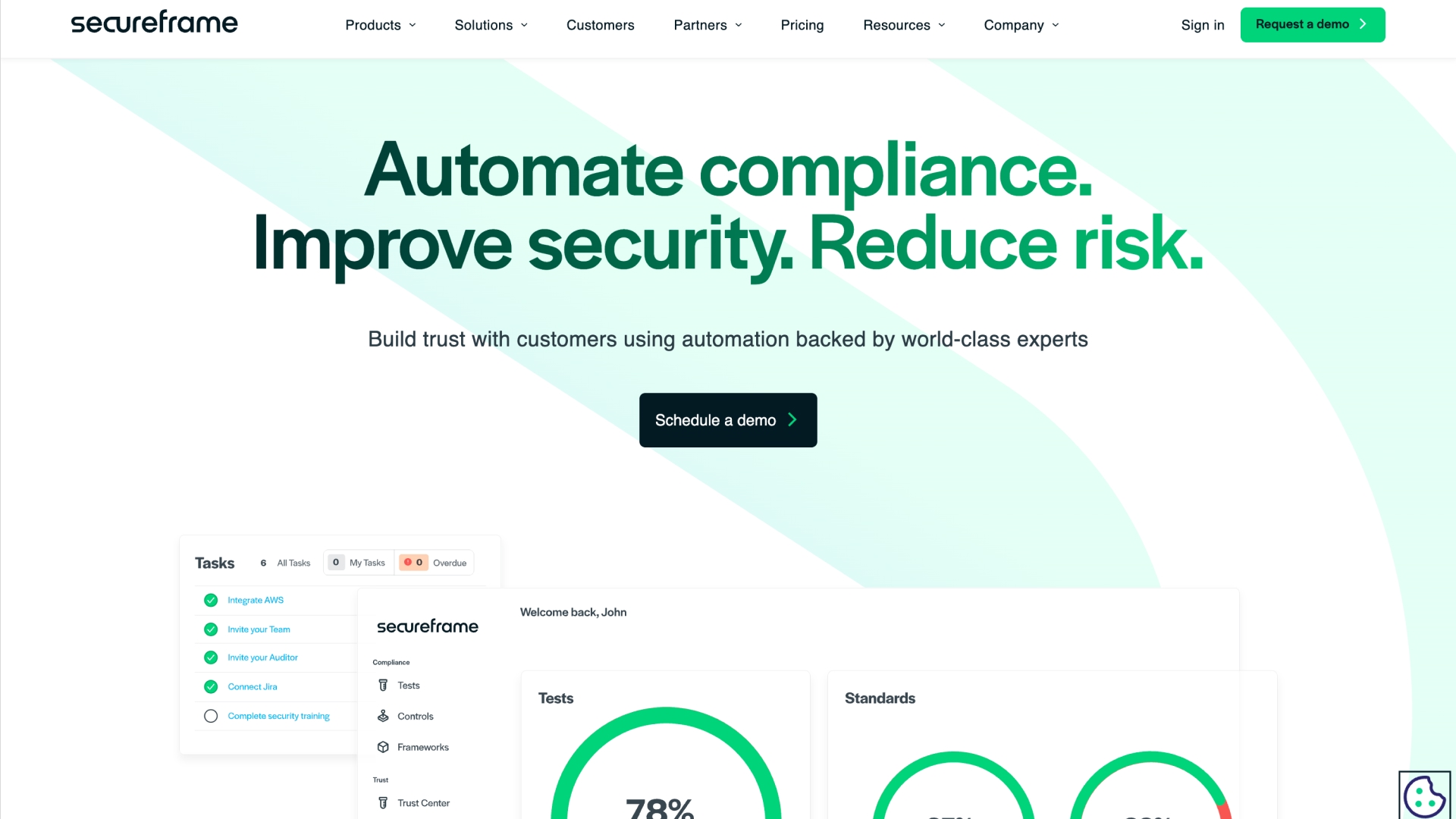
Secureframe is a compliance automation platform designed to help organizations achieve and maintain certifications like SOC 2, ISO 27001, and HIPAA through automated evidence collection, continuous control monitoring, and built-in workflow guidance. It focuses on streamlining audit readiness by reducing manual effort and centralizing compliance data.
Key Features:
- Automated evidence collection and real-time control checks
- Support for major frameworks including SOC 2 and ISO 27001
- Continuous monitoring that tracks compliance health over time
- Policy and task automation to enforce compliance workflows
- Auditor friendly dashboards and reporting tools
Best For:
Mid-sized and growing organizations that want a balanced approach between automation and ease of setup for continuous audit readiness. Secureframe’s structured workflows help teams stay compliant without complex configuration. Smaller teams may find value in its guidance and simplicity, while very large enterprises seeking deep customization might require additional integrations or modules.
G2 Rating: 4.7 / 5
Pricing: Custom
Trial / Demo: Live demo available on request
6. OneTrust
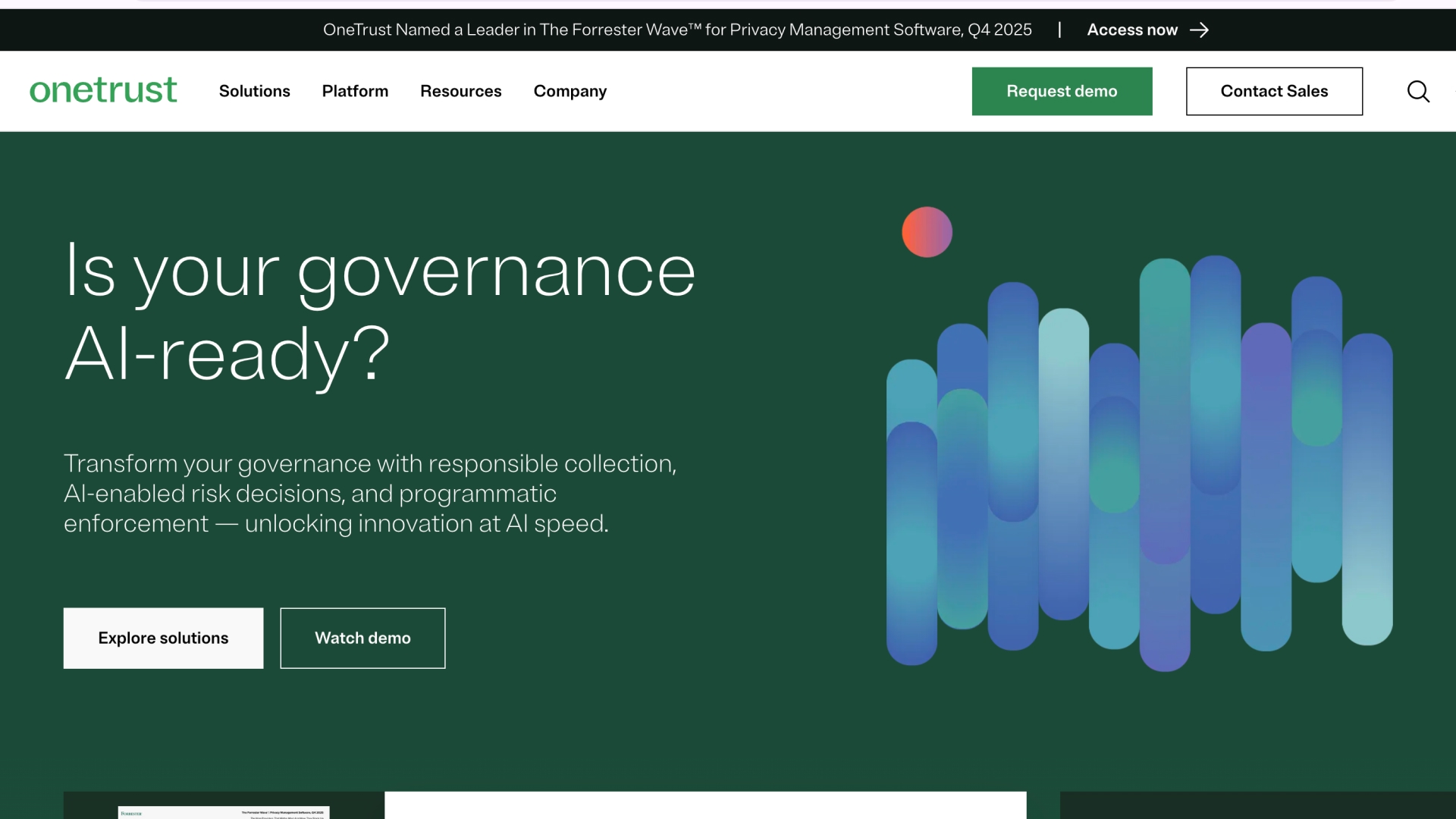
OneTrust is a broad governance, risk, and compliance platform that integrates compliance automation with privacy, consent, third-party risk, and AI governance capabilities. Rather than focusing solely on continuous evidence collection, OneTrust embeds automated compliance workflows within a wide spectrum of regulatory, risk, and privacy domains, making it suitable for organizations with diverse compliance obligations.
Key Features:
- Automated compliance task workflows and policy support
- Real-time monitoring of controls, risks, and privacy obligations
- Integrated privacy management and third-party risk automation
- AI governance and data use compliance tooling
- Broad regulatory framework support, including GDPR, CCPA, and more
Best For:
Large enterprises or organizations with broad compliance portfolios, especially those needing integrated privacy, risk, and compliance automation across multiple regulatory domains. OneTrust’s breadth is advantageous for complex regulatory landscapes, but smaller teams or those focused purely on traditional audit readiness (e.g., SOC 2, HIPAA) may find it broader than necessary.
G2 Rating: 4.3 / 5
Pricing: Custom
Trial / Demo: Live demo available on request
7. Sprinto
Sprinto is a compliance automation platform built for cloud-native and fast-growing technology companies. It uses workflow automation and integrations to help teams maintain continuous readiness for audits such as SOC 2, ISO 27001, HIPAA, and GDPR by automating control monitoring, evidence collection, and compliance tasks. Sprinto also offers Sprinto AI features like automated security questionnaire responses, intelligent evidence and policy gap assessment, and due diligence automation.
Key Features:
- Automated real-time evidence collection and mapping to controls
- Continuous monitoring of controls and compliance posture
- AI-assisted security questionnaires and risk mapping
- Centralized dashboards showing audit readiness progress
- Policy templates and workflow automation across frameworks
Best For:
Cloud-first organizations and mid-sized SaaS teams that want fast time-to-value, real-time visibility into control health, and automation of repetitive audit tasks. Sprinto excels at helping teams reach and maintain readiness quickly, especially for SOC 2 and ISO certifications. It may be less ideal for highly customized enterprise scenarios where deep GRC orchestration or cross-domain integrations are required.
G2 Rating: 4.8 / 5
Pricing: Custom
Trial / Demo: Live demo available on request
8. Scrut Automation
Scrut Automation is a compliance automation solution that helps teams prepare for audits like SOC 2, ISO 27001, and HIPAA by automating evidence collection, policy enforcement, and documentation workflows. It supports continuous control monitoring and centralized audit evidence organization, enabling compliance and security teams to collaborate efficiently with auditors. While not as broad in scope as some enterprise GRC platforms, Scrut focuses on core automation where audit readiness depends on evidence centralization and process visibility.
Key Features:
- Automated evidence collection tied to control requirements
- Real-time compliance dashboards and tracking
- Integration with common development and security tools
- Policy and control documentation automation
- Auditor collaboration features (invite, review, request)
Best For:
Mid-sized companies and service providers that need focused audit readiness automation without investing in a full enterprise GRC suite. Scrut is well-suited for teams that want structure around evidence workflows and control monitoring, though it may be less comprehensive for organizations with highly complex GRC needs or extensive cross-domain compliance programs.
G2 Rating: 4.9/5
Pricing: Custom
Trial / Demo: Live demo available on request
Benefits Of AI-Driven Compliance Platforms For Audit Readiness
For compliance and audit leaders, the value of AI is not theoretical. It shows up in fewer late nights before audits, fewer follow-up requests from auditors, and clearer answers for leadership. When implemented correctly, AI-driven compliance platforms deliver operational benefits that manual processes cannot scale to match.
Key benefits include:
- Continuous Audit Readiness Instead Of Periodic Preparation
Evidence, control status, and remediation progress are tracked as work happens. Teams are no longer assembling readiness retroactively under audit pressure. - Earlier Risk Detection And Fewer Audit Findings
Real-time monitoring and anomaly detection surface control issues before they become formal findings, reducing remediation cycles and repeat observations. - Reduced Manual Effort Across Teams
Automated evidence collection, task routing, and validation reduce reliance on spreadsheets, email follow-ups, and ad-hoc coordination. - Stronger Audit Defensibility
Timestamped audit trails, documented decisions, and linked evidence provide clear proof of control effectiveness and response actions. - Better Use Of Limited Resources
Predictive insights help teams prioritize testing and remediation where audit impact is highest, instead of spreading effort evenly across low-risk areas.
These benefits matter most in regulated environments where audit scope grows faster than team size.
What Actually Differentiates Strong AI-Driven Platforms
Many platforms claim to be “AI-powered.” The difference for audit readiness lies in where AI is applied.
High-performing platforms use AI to:
- Reduce coordination friction
- Maintain live visibility into control health
- Enforce accountability across distributed owners
- Preserve evidence integrity automatically
Platforms that limit AI to reporting or surface-level analytics still leave execution gaps. Audit readiness improves only when AI is embedded into day-to-day compliance workflows, not layered on top of them.
This is why execution-first platforms like VComply ComplianceOps stand out. AI supports evidence operations, control monitoring, and issue follow-up directly inside workflows, ensuring readiness is maintained continuously rather than reconstructed later.
For compliance leaders, this distinction determines whether AI reduces audit stress or simply changes how it is reported.

Final Thoughts
Audit readiness in 2026 is no longer about knowing the requirements. It is about sustaining visibility, control, and accountability across growing regulatory scope and limited resources.
AI-driven compliance platforms enable this shift by automating evidence operations, detecting risk earlier, and enforcing execution across teams. When readiness is continuous, audits become verification exercises instead of disruption events.
Choosing the right platform requires looking beyond automation claims and evaluating how deeply AI is embedded into daily compliance work. Platforms that connect controls, evidence, risk, and remediation into one operating layer deliver the strongest long-term value.
If your goal is to move from reactive audits to continuous readiness, seeing the platform in action matters.
Book a free demo of VComply to see how AI-driven workflows, real-time dashboards, and automated evidence operations support audit readiness across frameworks.
FAQs
An AI-driven compliance platform uses automation, machine learning, and analytics to monitor controls, collect evidence, detect risk, and maintain audit readiness continuously rather than periodically.
AI automates evidence collection, validates completeness, tracks control health in real time, and flags gaps early. This reduces manual reconciliation and last-minute requests during audits.
Yes. Leading platforms map controls and evidence across frameworks such as SOX, HIPAA, ISO, and SOC 2, allowing teams to reuse work and maintain readiness at scale.
No. AI augments teams by removing manual overhead and surfacing insights. Judgment, interpretation, and decision-making remain human-led.
Focus on execution. Evaluate how the platform handles evidence ownership, control monitoring, issue follow-up, audit trails, and real-time visibility, not just reporting or dashboards.