

Compliance Controls 101: Types, Examples, and Best Practices
Maintaining compliance has become a daily struggle in a variety of industries, including financial services, healthcare, higher education, energy, and manufacturing.

Organizations must adhere to an increasing number of regulations, such as GDPR, SOX, FATCA, and AML requirements, as they grow and operate internationally.
Compliance controls help organizations manage legal, financial, and operational risks by ensuring internal policies and processes stay aligned with regulatory expectations. For compliance officers, risk managers, CTOs, and CEOs, strong compliance controls make it easier to balance regulatory obligations with operational efficiency, without slowing the business down.
In this article, we will explore the various types of compliance controls, their importance, and best practices for effectively implementing them within your organization’s risk and compliance processes.
Key Takeaways
- Compliance controls help organizations manage risks and comply with complex regulations such as FATCA, GDPR, SOX, and AML.
- A mix of preventive, detective, and corrective controls ensures a well-rounded compliance strategy.
- Effective use of technical controls, like encryption, ensures the protection of sensitive data, complying with regulations like GDPR.
- Secondary controls offer an added layer of protection to reinforce primary controls, reducing vulnerability to potential risks.
- Regular monitoring, testing, and staff training are essential for maintaining the effectiveness of compliance controls.
What are Compliance Controls?
Compliance controls are a set of internal procedures and practices designed to ensure that an organization adheres to relevant legal, regulatory, and internal requirements. For industries like financial services (e.g., AML regulations, FATCA), healthcare (e.g., HIPAA), and energy (e.g., EPA regulations), these controls are vital to prevent violations and minimize risk. Compliance controls typically consist of a combination of preventive, detective, and corrective measures that collectively protect an organization from non-compliance risks.
Some key regulations influencing compliance controls include:
- GDPR (General Data Protection Regulation): Affects any organization handling EU citizens’ data, enforcing stringent rules for data protection.
- SOX (Sarbanes-Oxley Act): Applies to publicly traded companies in the U.S., focusing on corporate governance and financial reporting standards.
- FCPA (Foreign Corrupt Practices Act): A U.S. law that prohibits bribery and corruption in international business dealings.
- AML (Anti-Money Laundering): Regulations aimed at preventing financial crimes such as money laundering and terrorist financing.
Also Read: What is GRC: Governance, Risk, and Compliance Explained
As we look at the importance of compliance controls, let’s consider how they fit into broader risk and compliance processes.
Importance of Embedding Compliance Controls into Risk and Compliance Processes
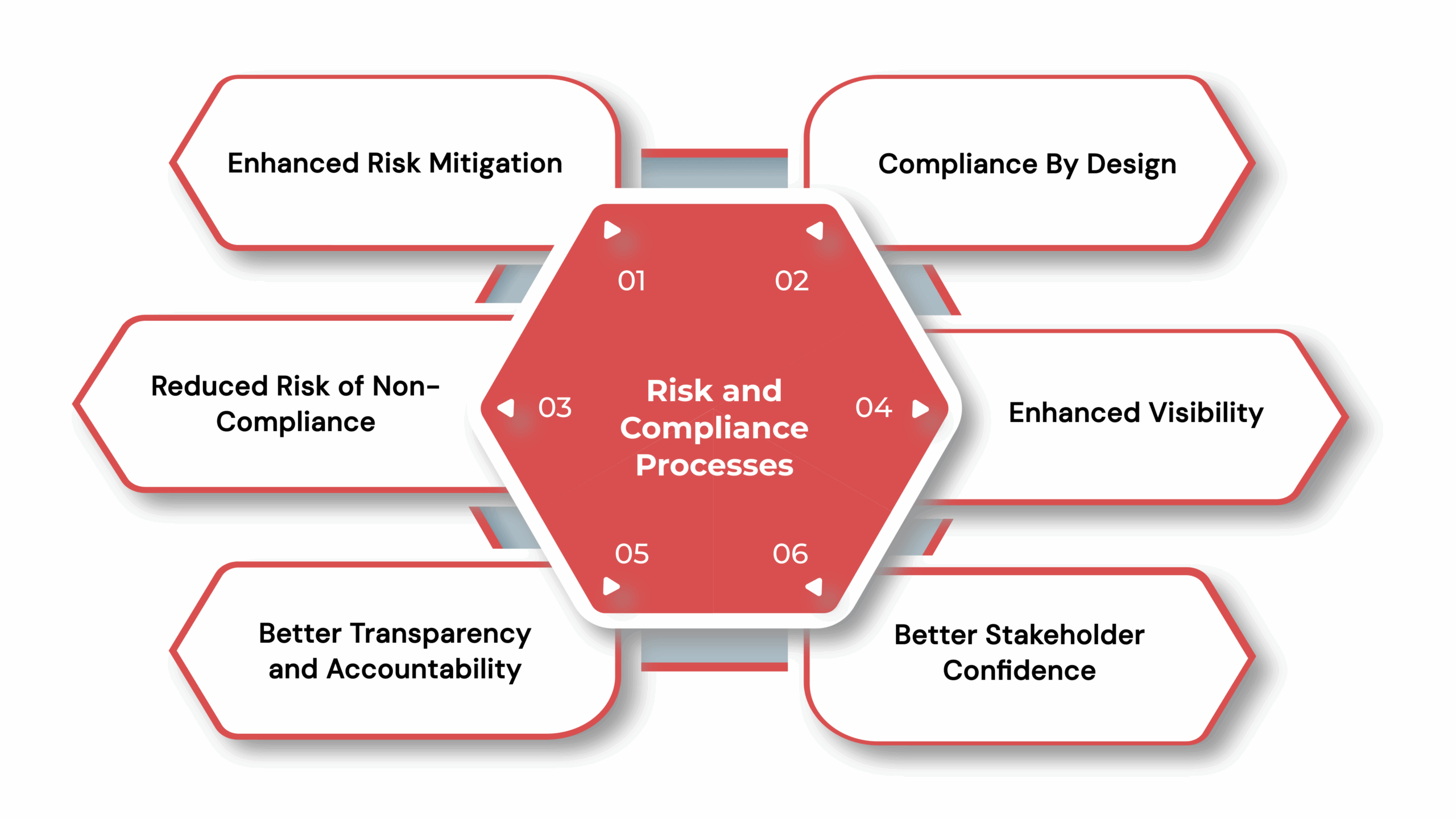
Embedding compliance controls into your risk management strategy is crucial for proactive risk mitigation and regulatory adherence. This is especially vital for industries like financial services, healthcare, and education, where non-compliance can lead to severe consequences.
- Enhanced Risk Mitigation
By embedding compliance controls into risk management, businesses can identify and mitigate risks early. For industries with complex regulatory requirements like SOX (financial services) or HIPAA (healthcare), these controls help prevent costly violations.
- Compliance By Design
Incorporating compliance into the organizational framework fosters a culture of compliance, ensuring consistent adherence to regulations like FDA standards in healthcare or EPA regulations in energy.
- Reduced Risk of Non-Compliance
Embedded compliance controls reduce the likelihood of non-compliance by continuously monitoring processes and making adjustments as needed. This proactive approach is critical for maintaining operational integrity in regulated sectors.
- Enhanced Visibility
Compliance controls provide ongoing oversight, giving decision-makers visibility into potential issues. This is crucial for maintaining transparency and meeting the expectations of stakeholders, regulators, and auditors in industries like higher education (e.g., FERPA) or energy (e.g., EPA).
- Better Transparency and Accountability
Clear, documented compliance controls ensure transparency and foster accountability among employees and stakeholders. For example, in financial services, transparency in audit trails helps maintain compliance with FINRA regulations.
- Better Stakeholder Confidence
When compliance controls are robust, stakeholders, including customers and regulators, have more confidence in the organization. This is especially important in healthcare, where patient trust is paramount, and in energy, where regulatory compliance impacts public safety and environmental standards.
Managing compliance controls becomes effortless with VComply’s ComplianceOps. This platform automates regulatory compliance tasks, field audits, and reporting, ensuring your organization stays aligned with critical compliance regulations such as SOX, HIPAA, GDPR, and ISO 27001. With features for setting up workflows and tracking progress, you gain full control over your compliance activities, ensuring deadlines are met and manual errors are minimized.
Also Read: Top 10 Real Estate Compliance Management Software in Dubai for 2025
Let’s now explore the different types of compliance controls businesses can implement.
8 Types of Compliance Controls with Examples
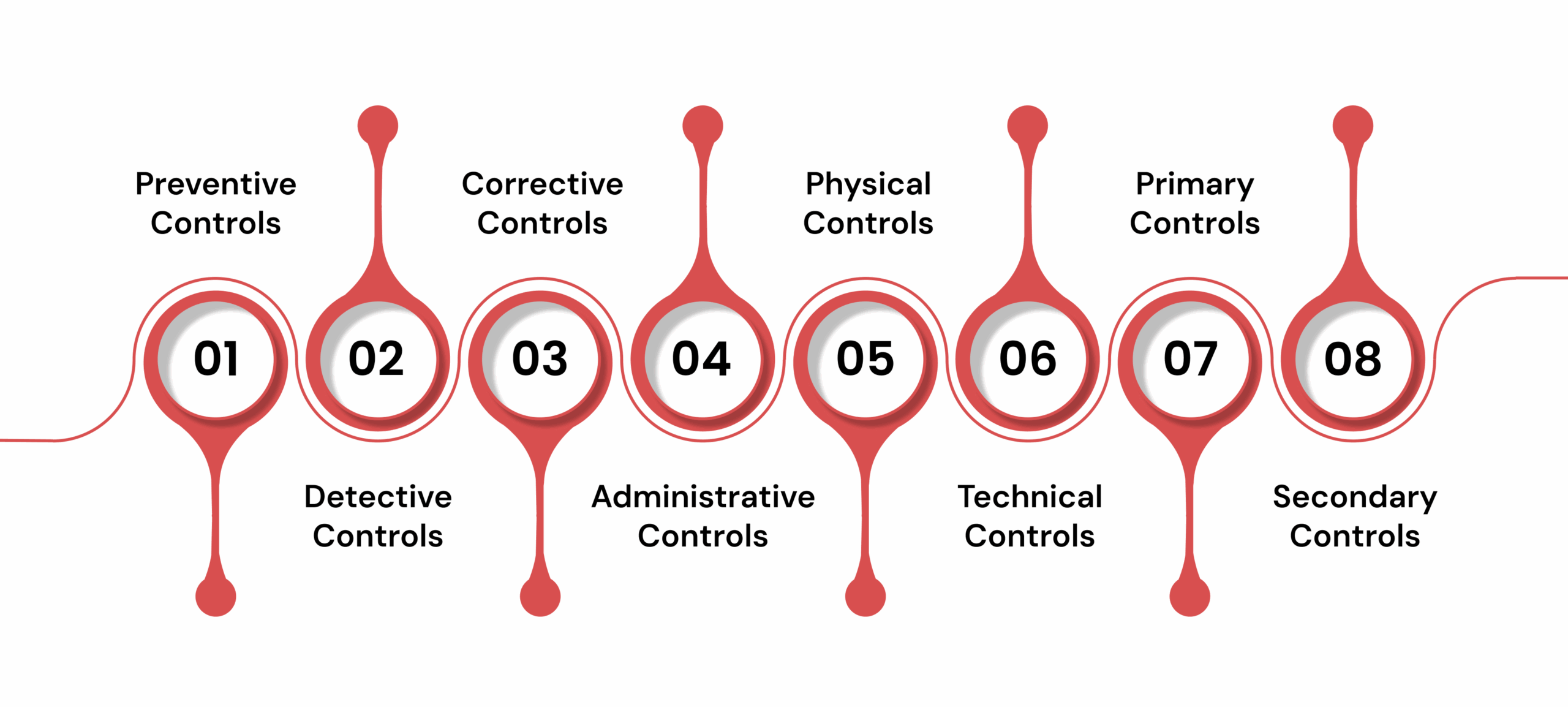
Compliance controls are essential in ensuring regulatory adherence, mitigating risks, and maintaining operational efficiency within organizations. Let’s explore the main types of compliance controls:
1. Preventive Controls
Preventive controls are designed to prevent non-compliant actions before they occur. These measures proactively mitigate the risk of compliance violations, making them essential for industries with strict regulatory oversight, such as financial services (e.g., Dodd-Frank Act) or healthcare (e.g., HIPAA).
Example: A financial services firm might require employees to complete annual compliance training before they are allowed to access sensitive client data, ensuring they are familiar with applicable financial regulations and safeguarding against fraud.
2. Detective Controls
Detective controls help identify compliance violations after they have occurred, allowing organizations to take corrective action. This is particularly important in energy and manufacturing sectors, where real-time detection can help avoid large-scale environmental or safety violations (e.g., EPA regulations).
Example: A manufacturing plant implements software that monitors access to critical infrastructure and alerts the management team if unauthorized access occurs, ensuring any data breaches are quickly detected.
3. Corrective Controls
These controls are put in place after a violation has occurred to correct the issue and prevent recurrence. In higher education, corrective controls can be crucial in ensuring adherence to accreditation standards or funding guidelines.
Example: If a university inadvertently misreports student data, corrective measures may include re-training staff, conducting an internal audit, and revising reporting procedures to ensure future compliance with FERPA regulations.
4. Administrative Controls
These controls consist of policies, procedures, and guidelines that organizations create to ensure compliance with internal processes and external regulations. Healthcare organizations rely heavily on administrative controls to adhere to standards like HIPAA.
Example: An energy company creates an internal audit committee tasked with reviewing compliance with environmental regulations, including EPA reporting standards, to minimize regulatory penalties.
Also Read: Understanding B2B SaaS Compliance: A Complete Overview
5. Physical Controls
Physical controls are implemented to restrict access to sensitive information or assets. This is especially relevant for organizations that handle valuable or sensitive data in industries like manufacturing and financial services.
Example: A financial institution installs keycard access to data centers to ensure that only authorized personnel can enter, thus protecting sensitive financial data from unauthorized access.
6. Technical Controls
These controls use technology to safeguard digital systems and data, which is critical for sectors dealing with large volumes of sensitive information, such as healthcare (e.g., HIPAA compliance) and energy (e.g., cybersecurity standards).
Example: A healthcare provider encrypts patient data during transmission to ensure that it complies with HIPAA and protects sensitive patient information from cyber threats.
7. Primary Controls
Primary controls are foundational and mitigate key risks by ensuring compliance in crucial areas. For industries like financial services (e.g., SEC regulations) and manufacturing, primary controls act as the first line of defense against financial mismanagement or operational errors.
Example: A manufacturing firm mandates that all users must use complex passwords to access production systems, reducing the risk of cyberattacks on operational infrastructure.
8. Secondary Controls
Secondary controls act as an additional layer of protection, complementing primary controls. These are especially useful in industries such as higher education and healthcare, where multiple layers of compliance are necessary.
Example: A university implements multi-factor authentication (MFA) for faculty to access student records, adding an extra layer of protection to prevent unauthorized access even if primary controls (passwords) are compromised.
Click here to download your free Access Control Policy template
Now that we’ve covered the types, let’s move to how to effectively implement these controls in your organization.
7 Best Practices to Implement Compliance Controls Effectively
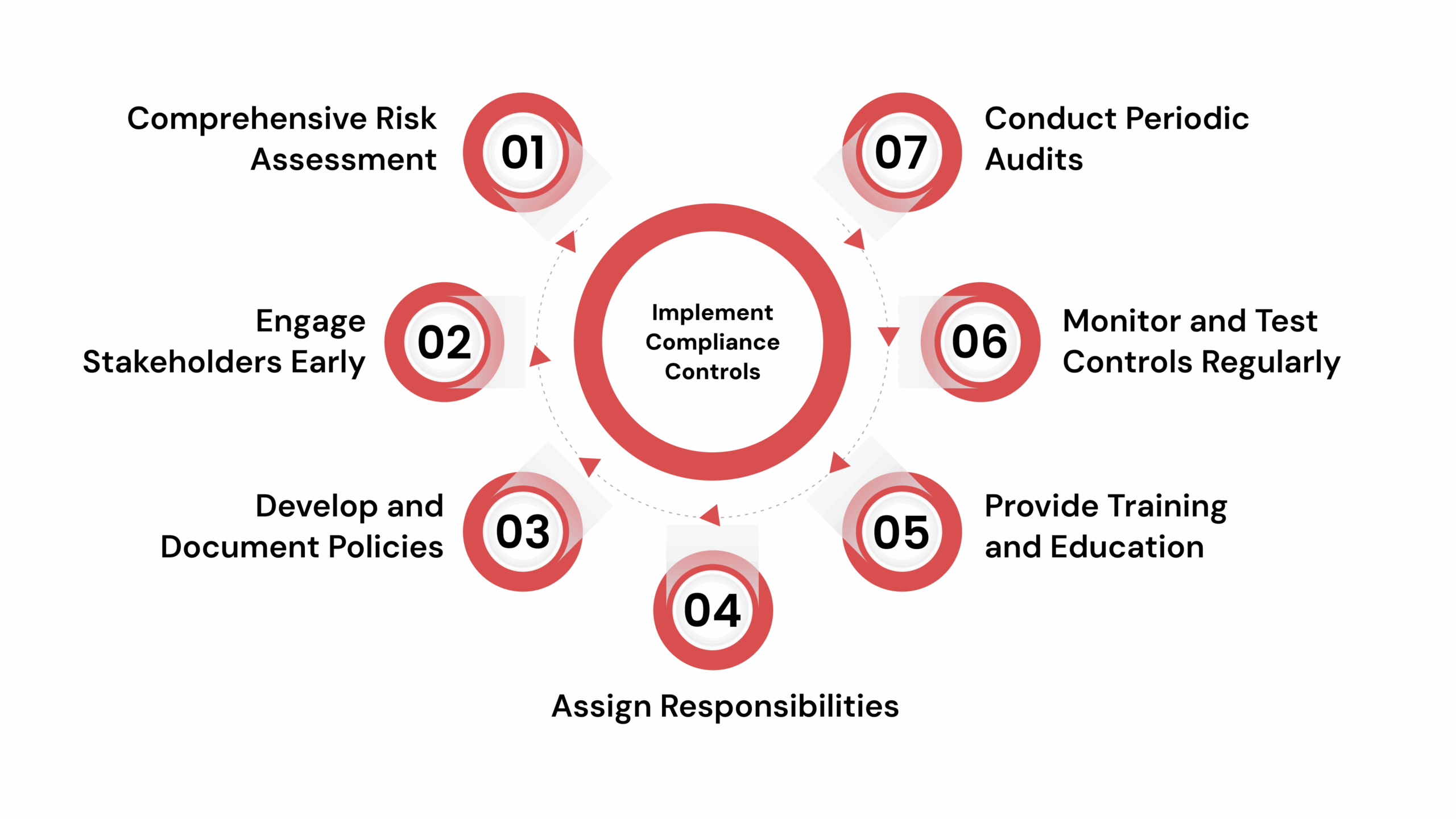
Implementing compliance controls effectively is important for mitigating risks, ensuring regulatory adherence, and safeguarding an organization’s reputation. Below are the techniques to ensure successful implementation:
1. Conduct a Comprehensive Risk Assessment
Assess your company’s specific risks based on industry regulations, such as GDPR (for healthcare and financial services) or ISO 27001 (for manufacturing), to tailor your compliance controls accordingly.
With RiskOps, VComply automates risk assessments, helping you identify, quantify, and scale your compliance control efforts. Gain a real-time overview of your organization’s compliance posture, ensuring it aligns with regulatory frameworks such as FCA, FDA, EPA, and FERPA. By automating your compliance controls, you reduce risks and ensure continuous regulatory adherence.
2. Engage Stakeholders Early
Incorporating input from key stakeholders (compliance officers, IT departments, and legal teams) is crucial to the successful implementation of compliance controls, especially in regulated industries like energy (e.g., EPA standards) and financial services (e.g., SOX compliance). Encourage cross-department collaboration to align on compliance priorities and ensure that each team understands its responsibilities.
3. Develop and Document Policies and Procedures
Create comprehensive, well-documented compliance policies that meet industry-specific standards (e.g., FISMA for government contracting or HIPAA for healthcare). Regularly update documentation to reflect changes in laws and regulations, ensuring your policies remain aligned with evolving compliance requirements.
4. Assign Responsibilities
Designate specific personnel to monitor compliance, ensuring accountability across teams. This is especially critical in industries such as higher education, where federal and state regulations require detailed reporting and adherence to guidelines (e.g., Title IX compliance). Assign a dedicated compliance officer to oversee risk management and ensure compliance tasks are prioritized across departments.
5. Provide Training and Education
Continuous education and training on regulatory changes are essential for ensuring compliance within industries like healthcare (e.g., HIPAA training) and financial services (e.g., anti-money laundering (AML) training). Implement regular refresher courses for employees to stay up-to-date with changing regulations, fostering a compliance-first culture.
6. Monitor and Test Controls Regularly
Regularly test compliance controls to ensure they are effective. This is crucial in industries where the risk of non-compliance could lead to significant financial penalties or operational disruptions (e.g., manufacturing under OSHA). Use automated compliance testing tools to streamline the process, ensuring that controls remain effective and adaptable to new regulations.
7. Conduct Periodic Audits and Reviews
Periodic audits help verify the effectiveness of compliance controls and ensure continued alignment with industry standards such as GDPR for financial services or FDA regulations for healthcare. Regular internal and external audits help identify gaps in compliance and allow for corrective action before issues escalate.
Also Read: Best Hyperproof Alternative Solutions
Next, let’s examine the different methods of testing and monitoring compliance controls.
3 Methods of Compliance Control Testing and Monitoring
Effective testing and continuous monitoring of compliance controls help ensure that they remain effective and adaptable to changing regulations. Below are the methods to use for testing and monitoring compliance controls:
1. Manual Approach
Manual testing involves reviewing each control individually to ensure it meets the required standards. This approach is most effective in smaller organizations or when addressing specific high-risk areas where regulatory scrutiny is intense, such as GDPR for healthcare or SOX for financial services.
2. Automated Control Testing
Automated testing streamlines compliance checks and ensures consistency across large, complex organizations. This method is especially relevant for energy companies subject to EPA regulations or manufacturers needing to comply with safety standards like OSHA. Automation helps reduce human error and ensures ongoing adherence to changing regulations.
3. Continuous Control Monitoring
Continuous monitoring of compliance controls is critical for maintaining real-time vigilance over operations, especially for sectors like financial services (e.g., Anti-Money Laundering (AML) controls) or healthcare (e.g., HIPAA compliance). Automated systems track compliance activities in real-time, allowing organizations to promptly address issues and stay proactive about emerging risks.
Also Read: Key Strategies for Healthcare Real Estate Compliance
Let’s look at the potential risks businesses face when they fail to incorporate proper compliance controls.
Risks of Not Incorporating Controls in Risk and Compliance Processes
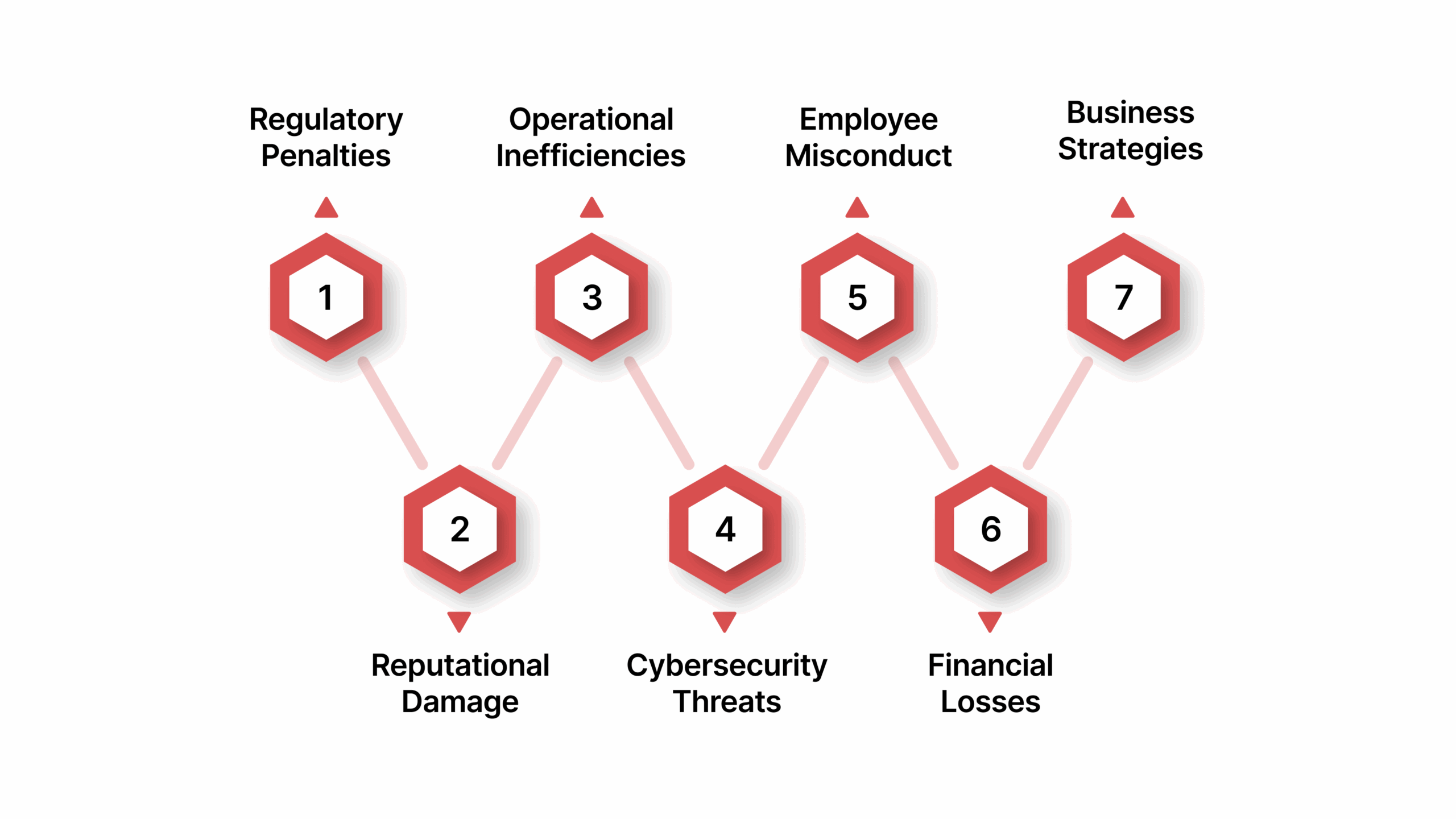
Failure to integrate compliance controls into risk and compliance processes exposes businesses to significant risks. These include:
1. Regulatory Penalties and Fines
Non-compliance can lead to significant financial penalties and fines, impacting both the business’s financial standing and its reputation. For example, failing to comply with GDPR (healthcare) or SOX (financial services) can lead to costly legal penalties.
2. Reputational Damage
Non-compliance results in reputational harm, which can damage customer trust and hinder future business opportunities. Companies in energy or financial services may lose their standing with stakeholders if found violating EPA regulations or SEC guidelines.
3. Operational Inefficiencies
Without effective controls, inefficiencies arise, leading to delays, errors, and increased operational costs. Organizations may struggle to align their processes with ISO 9001 standards or other operational frameworks critical for maintaining competitive advantages.
4. Data Breaches and Cybersecurity Threats
Without technical controls like encryption or secure access protocols, businesses face exposure to data breaches and cyber threats. This is particularly concerning for financial services and healthcare, where breaches violate regulations like CCPA or HIPAA.
5. Employee Misconduct
Inadequate policies and procedures can lead to fraud or unethical behavior. Strong compliance controls ensure adherence to corporate guidelines, especially in sectors like higher education, where non-compliance with Title IX can result in serious legal and ethical issues.
Get Your Free eBook on The Compliance and Risk Trends for 2023
6. Financial Losses
Non-compliance can lead to financial losses, including legal battles, fines, and compensation claims. Businesses in energy or manufacturing that fail to meet OSHA safety standards, for instance, may face costly litigation and shutdowns.
7. Misaligned Business Strategies
Without compliance controls, business strategies may not align with regulatory frameworks, leading to inefficiencies or missed market opportunities. This is crucial for healthcare and higher education, where alignment with regulations like FERPA or ACA is essential for institutional success.
Also Read: What is GRC: Governance, Risk, and Compliance Explained
Finally, let’s explore how VComply can help strengthen your compliance controls.
Use VComply’s Solutions to Maintain Effective Compliance Controls
VComply offers a comprehensive suite of tools to help organizations in industries like healthcare, financial services, energy, manufacturing, and higher education maintain effective compliance controls. Here’s how VComply can assist:
- Pre-built Regulatory Framework: Access pre-configured controls aligned with industry standards, such as ISO 27001 for energy companies, HIPAA for healthcare, or SOX for financial services. VComply’s ComplianceOps helps manage regulatory compliance, field audits, and reporting, ensuring all compliance demands are met.
- Custom Frameworks: Design custom compliance frameworks tailored to your organization’s unique needs, be it for EPA regulations in the energy sector or FDA requirements in healthcare. With RiskOps, you can automate, assess, and scale risk management programs while identifying and managing potential risks.
- Workflow Automation: Automate the entire compliance process from policy creation to risk management, aligning with industry standards like ISO 9001 (manufacturing) or GDPR (healthcare). VComply’s PolicyOps streamlines policy development, review, and approval, ensuring all employees adhere to company guidelines.
- Evidence Management: VComply provides secure, role-based access to compliance-related documents, ensuring transparency and accountability. With CaseOps, you can report, triage, track, and resolve compliance issues more efficiently, helping organizations in regulated industries stay compliant with evolving standards.
- Alerts and Notifications: Set custom alerts for compliance programs and notifications for timely action. With VComply, you can ensure compliance deadlines are met across departments, reducing the risk of non-compliance in high-stakes industries such as energy and financial services.
- Comprehensive GRC Management: VComply’s GRCOps Suite enables you to manage and track multiple GRC activities in real time seamlessly. With this all-in-one platform, you can confidently demonstrate compliance by gaining visibility into every policy, control, risk, and case.
Request a free demo to see how VComply helps you automate and streamline your compliance processes, giving you control over every stage of your GRC operations.
Wrapping up
Effective compliance controls mitigate risks, enhance transparency, and build trust with stakeholders in industries like financial services, healthcare, energy, and manufacturing. By integrating preventive, detective, and corrective controls, businesses safeguard against operational, financial, and reputational harm. Ongoing monitoring, regular audits, and employee training ensure compliance with key regulations like SOX, HIPAA, EPA, and ISO 27001.
VComply’s ComplianceOps simplifies the management of compliance controls and regulatory reporting, while RiskOps efficiently scales your organization’s risk management program. Together, they provide streamlined tracking and management of compliance activities, helping your business stay aligned with key regulations such as CCPA, OSHA, and SEC compliance requirements.
Start your free trial with ComplianceOps and see how VComply enhances your compliance controls and reporting, ensuring regulatory alignment.
FAQs
Compliance controls help identify, mitigate, and manage risks proactively, ensuring business continuity by aligning operations with regulatory and operational standards to prevent disruptions.
In order to detect possible threats, improve risk mitigation techniques, and guarantee that legal and regulatory requirements are consistently fulfilled, compliance controls offer an organized framework.
Sensitive data is shielded from unwanted access by technical controls like firewalls, encryption, and access management, guaranteeing adherence to data protection laws like the CCPA and GDPR.
Secondary controls act as an additional layer of protection, supporting primary controls by providing redundancy, helping to mitigate risks that primary controls may overlook.
Ineffective compliance controls can lead to failed regulatory audits, legal penalties, and reputational damage, as regulators may find gaps in adherence to required standards and processes.