


Share



How King Faisal Specialist Hospital Built Governance That Lasts
At King Faisal Specialist Hospital & Research Centre, digital transformation has never been about chasing technology trends. It’s been about something quieter: creating structure that outlives individuals.
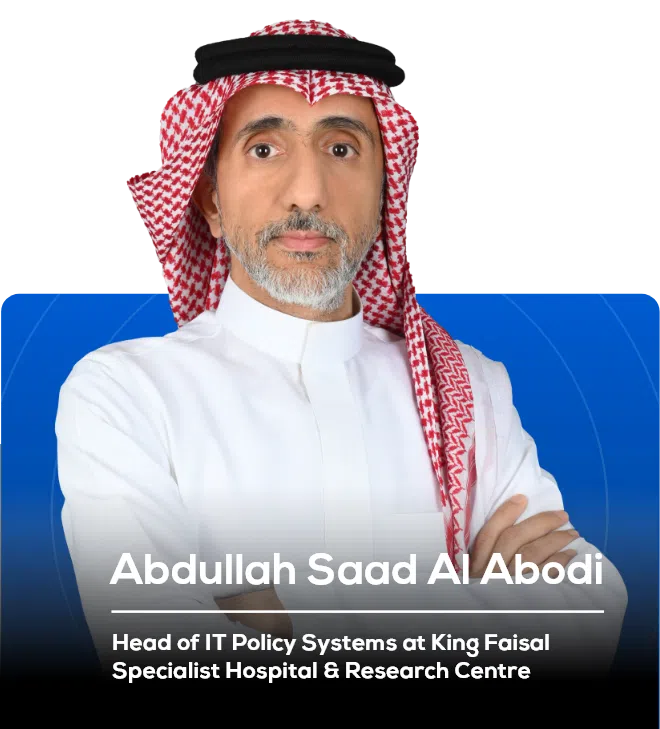
For more than twenty years, Abdullah Saad Al Abodi, now Manager – Business Informatics Support has helped one of Saudi Arabia’s most respected hospitals turn policy management from a fragmented, paper-heavy function into an institutional discipline. His philosophy is simple: compliance is not control, it’s continuity.

“In healthcare, compliance isn’t an administrative task,” he says. “It’s what ensures decisions are safe, traceable, and aligned with patient care.”
He has seen every phase of that evolution first-hand. When he joined the hospital in 2001, policies lived in cabinets. Teams circulated forms by hand. Locating the latest version of a procedure could take half a day. “You’d sometimes find two versions of the same policy,” he recalls. “Both signed, both active — no one is sure which one to follow.”
The first step: moving from paper to policy intelligence
By 2005, Abdullah and a small internal task force began designing the hospital’s first electronic policy-management system. The goal wasn’t glamour; it was control.
“It took us almost two years just to agree on the structure,” he says. “Each department wanted its own logic, its own approval path. We had to convince people that centralization didn’t mean losing ownership.”
The outcome was modest by today’s standards — digital approval flows, expiry dates, and document tracking, but transformative at the time. For the first time, the hospital could see which policies were active, when they were due for renewal, and who was responsible for each.
“We weren’t chasing technology. We were chasing visibility, making sure everyone was working from the same truth.”
That visibility changed habits. Reviews happened on time. Outdated documents stopped circulating. Audits went from emergency exercises to scheduled routines.
Integration and control
As new clinical and administrative systems were introduced into the hospital, from lab management to imaging and research databases, data integrity became the next frontier.
“Every application holds a piece of the patient record,” Abdullah explains. “The challenge is making sure they all speak the same language, securely.”
His team introduced encryption, user-access controls, and validation rules for every system that touched patient data. Governance moved beyond documents to include interfaces and protocols — the unseen connectors that keep medical and IT systems aligned.
“A single mismatch can have consequences,” he says. “It’s not just about compliance with regulators. It’s about reliability for clinicians.”
Culture before code
Abdullah is quick to point out that none of this would have worked solely because of the software. It worked because staff accepted why it mattered. When the hospital decided to replace its legacy policy system after more than a decade, he deliberately opened the process. The nursing, quality, IT, and research departments all participated in the evaluation.
“People support what they help design. If you enforce a tool, they resist it. If they select it, they take care of it.”
Over the course of six months, the team reviewed fifteen vendors. They compared functionality, ease of use, and hosting options — an essential criterion given Saudi Arabia’s data-sovereignty rules.
Their final choice, VComply, stood out for its Microsoft 365 integration, bilingual interface, and local-cloud capability. “It was the only platform that covered almost everything,” he says. “We didn’t want complexity. We wanted something everyone could use.”
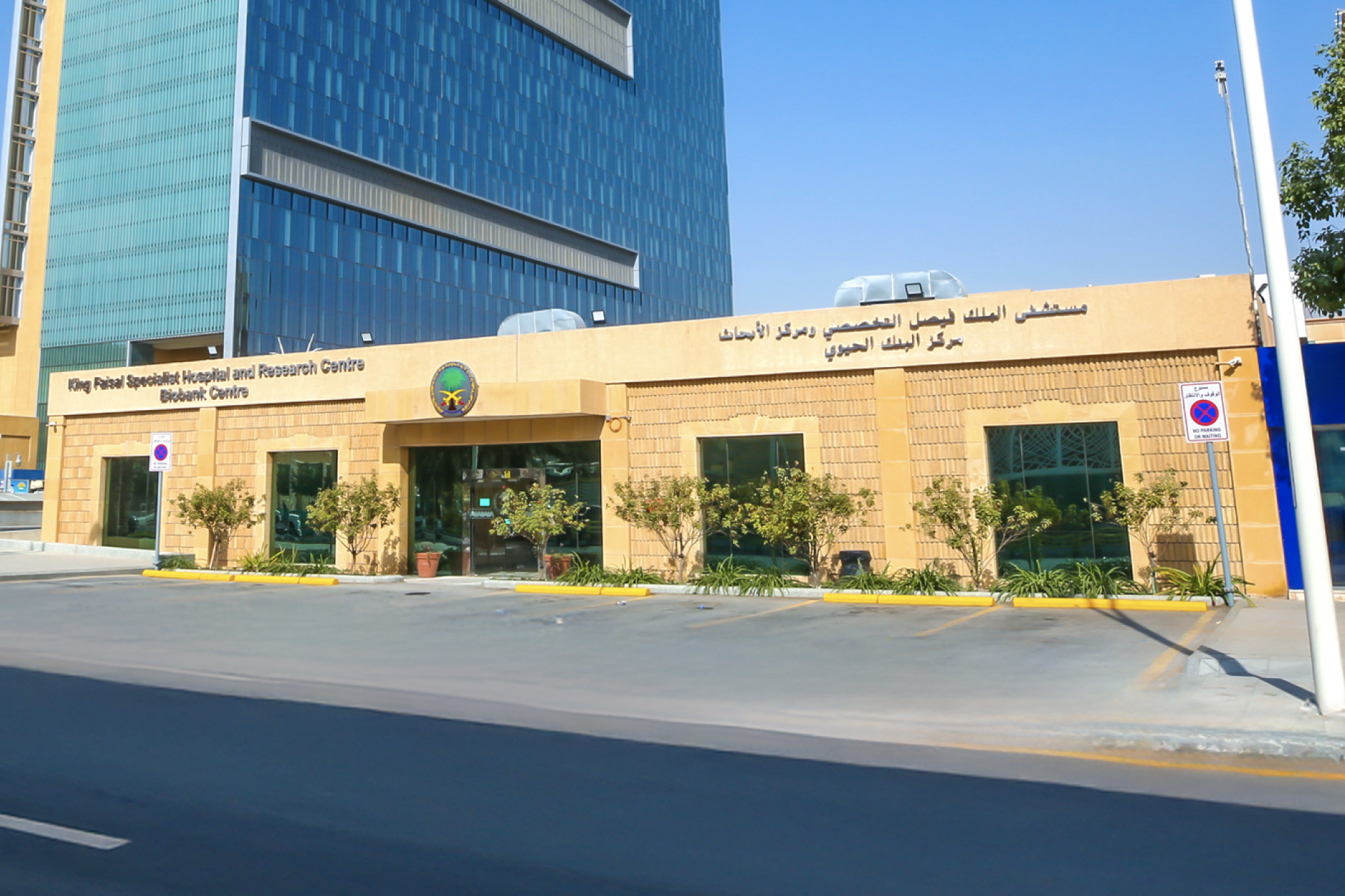
Implementation was steady rather than sudden. “We moved in phases,” he adds. “Migration, training, then expansion. The system became part of daily work, not a project, but infrastructure.”
Artificial intelligence: cautiously forward
The next stage, now underway, is applying artificial intelligence to governance tasks.
The hospital is piloting AI-assisted policy drafting, translation, and search. Staff will eventually be able to request a specific policy in Arabic or English using natural language.
Abdullah views AI as support, not substitution. “AI can help us write or translate, but judgment stays with leadership,” he says.

For a bilingual organization with thousands of documents, the time savings are tangible. More importantly, the hospital can maintain version control even as policies grow in number and complexity.
“It’s about speed and consistency,” he explains, “but also about auditability. You can trace how a policy evolved, line by line.”
Vision 2030 and institutional maturity
Saudi Arabia’s Vision 2030 framework has become a defining context for every major public institution. For healthcare, this means digital integration, research capabilities, and readiness to serve global patients. King Faisal Specialist Hospital is central to that agenda. It operates as a national referral center while expanding into international collaboration and medical tourism.
“The Vision 2030 direction is clear,” Abdullah says. “We must be globally competitive and locally compliant.”
Governance platforms like VComply support that balance by embedding local data-protection requirements, including hosting data within the kingdom while enabling transparency across departments. The same compliance data that satisfies regulators now informs internal performance reviews and digital-transformation tracking.
“Technology without governance is just noise. What matters is structure — knowing exactly how every change is managed.”
The new horizon: predictive compliance
Abdullah’s current focus is on what he calls “predictive compliance,” using analytics to identify potential lapses before they occur.

“The data tells you patterns,” he says. “If you can see which policies are renewed late, or which departments delay reviews, you can act early.”
This approach shifts compliance from retrospective assurance to planning, closer to how clinicians use preventive medicine. “It’s the same mindset,” he explains. “Don’t wait for failure to prove the system works.”
His team is already building dashboards that combine policy metrics, training completion rates, and audit findings. “Once you have clean data,” he says, “you can learn from it.”
A philosophy of steadiness
Through every upgrade, Abdullah has resisted the urge to label his work as transformation.
“Transformation suggests a finish line,” he says. “Governance doesn’t end. It adapts.”
That steadiness is visible in how King Faisal Specialist Hospital handles change: methodically, collaboratively, without drama. The hospital’s compliance architecture now underpins everything from accreditation readiness to clinical safety.
“When compliance becomes quiet, that’s when it’s working,” Abdullah says. “It means people trust the system enough to focus on their real job – caring for patients.”
It’s an understated vision, but one that defines modern governance: progress measured not by the flash of new tools, but by the calm reliability of a system that holds together.