

Guide to Compliance Policies and Procedures
Compliance failures rarely begin with dramatic breakdowns; they often start with small gaps in policies that go unnoticed until the consequences surface. In a regulatory environment where expectations evolve quickly, clarity in policies and procedures is no longer optional; it is foundational to organizational stability.

Organizations that fail to comply with data protection regulations face an average cost of $14.82 million, underscoring how quickly gaps in governance can escalate into serious financial exposure.
For compliance leaders, risk managers, and executives, the challenge rarely stems from a lack of intent; it stems from policies that are open to interpretation, procedures that vary across teams, and frameworks that struggle to keep pace with regulatory change. When employees are not aligned on what to do, when to act, and how to respond, accountability weakens, audit readiness suffers, and risk multiplies.
This blog breaks down what compliance policies and procedures truly require today, why they are critical to organizational resilience, and how to build frameworks that support both protection and long-term growth.
Key Takeaways
- Strong compliance policies and procedures give you structure, clarity, and consistent execution across all teams.
- Clear distinctions between policies and procedures help you guide expectations while ensuring daily actions follow defined steps.
- Identifying laws, mapping risks, and involving process owners early helps you build documentation that fits real operations.
- Effective communication and enforcement techniques ensure your policies are understood, followed, and continuously improved.
- VComply streamlines policy creation, updates, approvals, and tracking through automated workflows and connected Ops modules.
What Are Compliance Policies and Procedures?

When you think about strengthening your compliance foundation, the first step is understanding what policies and procedures actually represent in day-to-day operations. You use them to set expectations for how your teams act, make decisions, and follow required controls.
They give structure to activities that would otherwise rely on individual judgment, which often creates inconsistency. When these documents are clearly defined, you gain predictable outcomes and fewer surprises during assessments or internal checks.
Here are the essentials:
- Policy Definition: A policy gives you a clear rule or requirement that guides behavior or decision-making. For example, you might set a policy that all third-party vendors must complete a risk screening before onboarding.
- Procedure Definition: A procedure outlines the exact steps your teams follow to carry out a requirement. If your policy requires vendor screening, the procedure tells your staff how to request documents, evaluate responses, and document the review.
- Operational Intent: These documents help you translate expectations into everyday actions. This is especially helpful when you manage multiple functions that interpret compliance differently.
- Alignment With Internal Roles: Strong policies ensure that each role knows its responsibilities. Your IT lead, security analyst, and procurement manager understand exactly what you expect from them in each scenario.
- Support for Consistent Decision Making: When your staff relies on documented procedures, decisions become easier to justify during audits or leadership reviews.
- Clarity During High-Pressure Moments: Situations like urgent access requests or unusual vendor exceptions are easier to manage when you already have defined steps to follow.
Policy vs. Procedure: The Practical Difference
Understanding the difference between a policy and a procedure helps you guide your teams with clarity and consistency. You rely on policies to set expectations for what must happen, while procedures tell your staff exactly how to make it happen.
When these two elements work together, you eliminate ambiguity, reduce variability in execution, and give your organization a structure that stands up during reviews or assessments.
Below is a simple comparison you can use with your teams.
| Element | Policy | Procedure |
| Purpose | Tells you what rule or requirement must be followed | Shows you the step-by-step method to carry out that rule |
| Focus | Direction, intent, expectations | Actions, sequencing, documentation |
| Audience | Anyone impacted by the requirement | Individuals responsible for execution |
| Level of Detail | High-level and principle-based | Specific, operational, and task-focused |
| Example | You must classify sensitive data before storage | Follow these steps to label, record, and store each data type |
Also Read: Are You Audit-Ready? A Deep-Dive Guide for Internal Compliance Leaders
Understanding their definition is the first step; next, it’s important to explore the core purpose these compliance policies and procedures serve within an organization.
The Core Purpose of Compliance Policies and Procedures
When you build policies and procedures with intention, you give yourself a framework that protects your operations and strengthens how your teams behave under real pressure. You use these documents to set expectations that support consistency, reinforce discipline, and give visibility into activities that matter for your regulators and board.
Below are the core purposes to focus on:
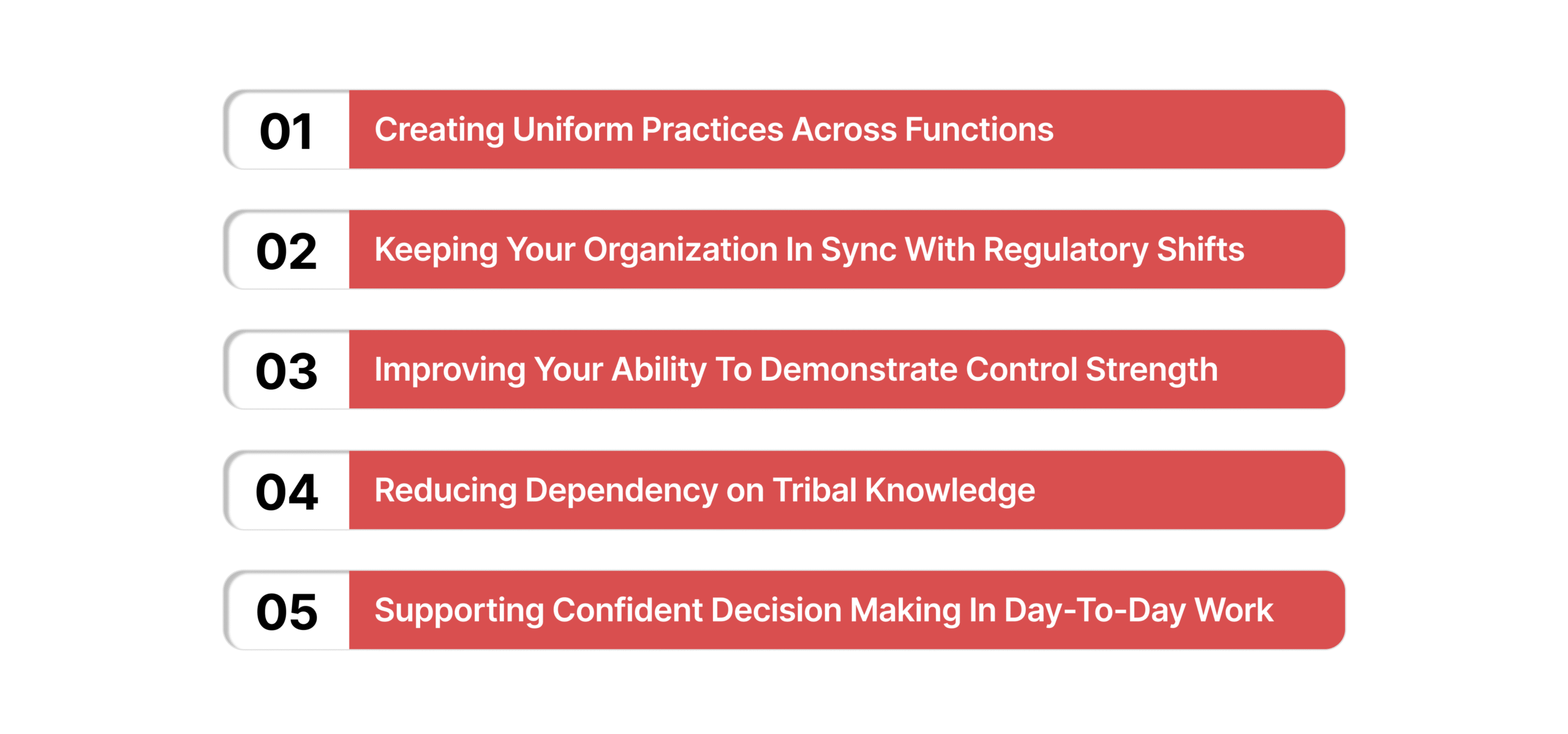
- Creating Uniform Practices Across Functions: You prevent each department from interpreting requirements in its own way. For example, your finance team and technology team follow the same control logic even if their tasks differ.
- Keeping Your Organization In Sync With Regulatory Shifts: You can update strategic requirements quickly when new state or federal rules apply to you. This helps you avoid reactive firefighting and maintain alignment across your teams.
- Improving Your Ability To Demonstrate Control Strength During Reviews: When you document expectations clearly, you give assessors and auditors a transparent view of how your environment operates. This makes it easier for you to prove that your controls are functioning.
- Reducing Dependency on Tribal Knowledge: Your operations do not stall when key employees leave or transfer departments because you already have structured guidance that new owners can follow.
- Supporting Confident Decision Making In Day-To-Day Work: Your team members know the boundaries, requirements, and intended outcomes before acting, which helps them make quicker choices without escalating every question.
Having clarified their core purpose, the next step is to understand the essential components that make compliance policies truly effective.
Key Components of Strong Compliance Policies

Strong compliance policies give your organization clarity, consistency, and a clear line of sight into how expectations should be met across different functions. For you as a compliance leader or risk owner, the strength of a policy depends on how well it guides real decisions, not how long the document is.
Below are the components that make a policy truly effective:
- Scope and Applicability: Clarifies where the policy applies and who must follow it. For example, a data handling policy might cover your cloud engineering team, customer support, and all vendor integrations touching sensitive data.
- Defined Responsibilities And Ownership: Assigns clear accountability so there is no confusion about who approves, who monitors, and who executes. This helps you avoid stalled tasks or cross-functional delays.
- Regulatory References: Points to the specific laws, frameworks, or internal standards the policy supports. This is useful when you must show direct alignment to state or federal requirements during reviews.
- Control Requirements and Expected Outcomes: States the minimum controls and performance results you expect from each team. For instance, you might require encryption at rest for sensitive data and expect documented confirmation before deployment.
- Conditions and Boundaries: Sets the limits for acceptable actions so your teams know what is allowed and what needs approval. This prevents unnecessary escalations while still keeping you protected.
- Approval Requirements: Specifies who signs off on new versions or major updates. This keeps your governance clean and ensures leadership visibility into important changes.
Now, let us explore the types of compliance policies.
Types of Compliance Policies You Need to Know
Compliance policies generally fall into two main categories, each serving a distinct purpose in keeping your organization aligned and accountable.
1. Corporate Compliance Policies
Corporate compliance policies focus on internal rules and standards. They guide employee behavior, corporate governance, financial practices, and data security, helping cultivate a culture of integrity and accountability.
Examples include:
- Code of Conduct: Sets expectations for ethical behavior, confidentiality, and conflict-of-interest management.
- Anti-Harassment Policy: Defines unacceptable behaviors, reporting channels, and consequences, promoting a safe workplace.
- Financial Practices: Ensures accounting and internal controls prevent fraud or mismanagement.
2. Regulatory Compliance Policies
Regulatory compliance policies ensure your organization follows external laws, industry standards, and government regulations. These policies protect your organization from legal penalties, maintain licenses, and reinforce trust with regulators.
Examples include:
- Data Privacy Policies: Such as GDPR, ensuring personal data is collected, stored, and processed lawfully.
- Healthcare Standards: Like HIPAA, safeguarding sensitive patient information.
- Environmental Regulations: Policies to minimize environmental impact and promote sustainability.
Well-designed compliance policies translate rules into clear actions. Here are some real-world examples:
- Data Protection Policy: Outlines encryption, access controls, and breach response procedures.
- Environmental Compliance Policy: Sets standards for energy use, waste management, and sustainability.
- Whistleblower Policy: Encourages reporting unethical or illegal activity without fear of retaliation.
These examples show how policies guide behavior while procedures ensure consistent execution.
While strong compliance policies set the strategic direction, effective compliance procedures translate those policies into actionable steps.
Key Components of Effective Compliance Procedures
Effective procedures give your teams the exact actions they must follow to meet compliance expectations without confusion or misinterpretation. You rely on them to translate requirements into practical steps that fit how your operations actually work.
When procedures are clear and easy to follow, you reduce delays, strengthen execution, and help your staff maintain consistency even during high workload periods or tight deadlines.
Below are the components that make a procedure operationally strong:
- Detailed Task Instructions: Break down each action your team must take. For example, if you run an access review, the procedure lists how to pull user data, verify entitlements, and record confirmations.
- Required Inputs and Outputs: Defines what information or materials are needed to start the task and what proof must exist once it is done. This improves the quality of your documentation.
- Clear Sequencing Of Activities: Organizes steps in the correct order so your staff does not skip important checks. This is useful during tasks that involve handoffs between departments.
- Documentation and Evidence Rules: Specifies where evidence should be stored, what format is acceptable, and who must validate it. This prevents scattered records that slow you down during reviews.
- Exception Pathways: Outlines what your team should do when something cannot be completed as written. This keeps operations moving while still giving you traceability.
- Cross-Functional Collaboration Points: Identifies when another team needs to review, approve, or contribute. This helps you avoid slowdowns caused by unclear communication.
- Time Expectations And Deadlines: Sets realistic completion windows so you can monitor progress and respond quickly if tasks fall behind.
With the key elements of effective procedures established, the next step is learning how to build comprehensive compliance policies and procedures from the ground up.
How to Build Compliance Policies and Procedures From Scratch

Building policies and procedures from scratch gives you the chance to shape a framework that truly fits your organization instead of relying on templates that rarely match your environment. It allows you to set expectations based on how your teams actually work, what risks matter most to you, and which regulatory obligations apply across your footprint.
Below is how you can approach the process in a structured way.
Identify Applicable Laws, Frameworks, and Standards
Identifying the laws, frameworks, and standards that apply to you is the first strategic step in shaping policies and procedures that hold up during reviews. This is where you anchor your entire compliance structure to the specific rules governing your industry, your data, and your operating regions.
When you map these requirements early, you avoid scrambling later or retrofitting controls that do not fit your workflows.
Below are the areas you should examine closely:
- Industry Specific Regulations: Look at rules tied to your sector. For example, if you handle protected health information, HIPAA dictates how you must safeguard patient data.
- Federal and State Requirements: Check obligations that apply to your operating locations. This is especially important if your teams or customers are spread across different states.
- Security And Privacy Frameworks: Map frameworks like NIST CSF or ISO 27001 to understand control expectations that influence how you shape access, data, and technology practices.
- Contractual Obligations: Review agreements with customers or partners. You may need to maintain certain controls to meet commitments defined in these contracts.
- Operational Standards Your Teams Already Follow: Identify informal practices your departments rely on, especially those approved by leadership. These may need to be formalized to prevent inconsistency.
Map Risks and Controls Before Drafting
Mapping risks and controls before drafting helps you set a documentation foundation that reflects how your environment truly operates. Instead of jumping into policy writing, you first clarify where your vulnerabilities exist and which safeguards reduce those exposures.
This makes your final documents purposeful rather than generic. Below are the steps that guide a strong mapping exercise:
- Identify Process Specific Weak Points: Review workflows across functions to see where errors or gaps are most likely to occur. For example, you may find delays in privilege removals that increase access risk.
- Classify Risks Based On Impact And Likelihood: Rank risks so you understand where to focus first. This gives you a clear hierarchy when structuring control expectations.
- Select Controls That Directly Address Each Risk: Choose safeguards that realistically fit your operations. For instance, if manual reviews create inconsistencies, automated checks may serve as a stronger option.
- Validate Controls With Relevant Teams: Confirm that your chosen safeguards are workable. This prevents you from drafting procedures that cannot be executed in real conditions.
- Define Success Criteria For Control Performance: Clarify how you measure effectiveness, whether through testing cycles, accuracy rates, or completion timelines. This will guide your monitoring activities later.
Unstructured risk identification and manual control mapping often lead to policies that look complete but fail during real reviews. VComply Risk Management Software helps teams systematically identify, assess, and map risks to controls before policies are drafted.
Use Clear Language and Operational Clarity
Clear language is one of the most powerful tools you have when creating policies or procedures that your teams can actually follow. When your documents are simple, direct, and free of interpretation gaps, you reduce mistakes and eliminate confusion that often slows down compliance tasks.
Operational clarity also helps new employees or cross-functional owners understand what is expected of them without relying on side conversations or tribal knowledge.
Below are the practices that reinforce clarity:
- Write In Plain, Direct Terms: Use wording that your operational teams can apply immediately. For example, instead of complex phrasing about authorization, you can state that approval must come from the designated system owner.
- Avoid Ambiguous Instructions: Replace vague words with precise actions. If you want staff to validate a dataset, specify how they should check it and what must be confirmed.
- Use Action-Oriented Verbs: Start steps with clear commands like review, record, verify, or update. This guides your teams toward consistent execution.
- Define All Important Terms: Create a reference section when your policy introduces specialized phrases. This prevents misinterpretation among teams with different technical backgrounds.
- Match Language To Actual Operations: Align your wording with the tools and processes your teams already use. This avoids instructions that sound correct on paper but do not match reality.
- Add Examples For Complex Requirements: If a step is easy to misread, include a brief scenario. This helps your staff understand what correct execution looks like.
Involve Process Owners Early
Engaging process owners early ensures that your policies and procedures reflect how work is actually performed across your organization. These individuals understand the operational realities, system constraints, and workflow dependencies that you might miss when drafting alone.
When you bring them into the conversation from the start, you avoid creating documents that look good on paper but cannot be executed.
Below are the ways to involve process owners effectively:
- Schedule Early Discovery Sessions: Meet with owners before drafting to understand current workflows and challenges. For example, your IT team may highlight automation steps you did not know existed.
- Validate Feasibility Before Finalizing Controls: Confirm that all required actions are realistic based on available tools, staffing, and technical skills.
- Capture Operational Insights That Improve Accuracy: Ask owners to walk you through real scenarios. This helps you document steps that match day-to-day execution.
- Include Owners In Review Cycles: Share drafts for feedback so they can flag unclear instructions or missing steps that could impact performance.
- Clarify Their Responsibilities For Future Updates: Set expectations that owners will contribute to revisions when processes or technologies evolve.
Once you understand how to build compliance policies and procedures, it becomes easier to identify the common gaps that often weaken them.
Common Gaps Found in Compliance Policies and Procedures
Many compliance programs struggle not because of missing documentation but because existing policies and procedures contain gaps that weaken execution. These gaps create uncertainty for your teams, expose you to regulatory scrutiny, and make it harder to demonstrate control performance during assessments.
Below are the most common gaps you should watch for:
- Policies That Do Not Reflect Current Systems: Documents may reference tools or workflows your teams no longer use. For example, you might still describe a legacy approval process even though it has been automated.
- Procedures That Skip Critical Verification Steps: Missing checks often create blind spots that increase the chance of errors during tasks like access reviews or control testing.
- Lack of Clear Triggers for When A Procedure Should Be Followed: Staff may not know when to initiate a specific process, which leads to inconsistent timing and incomplete execution.
- Unclear Ownership for Policy Sections: Without defined owners, updates stall, and accountability weakens. This becomes a problem when regulators ask who manages key requirements.
- Insufficient Guidance for Handling Exceptions: Teams may improvise their own methods for unusual situations, which leads to unpredictable outcomes and poor traceability.
- Outdated References to Regulations or Standards: If your documents include old rules, you risk misalignment with current expectations and introduce gaps during audits.
Recognizing these common gaps sets the stage for strengthening your program, starting with effective communication of compliance policies.
Compliance Policy Communication Best Practices

Effective communication determines whether your policies stay active in daily operations or remain forgotten in a shared folder. You need a strategy that ensures every team member understands what is expected, why the requirement matters, and how it connects to their role.
Below are the practices that support strong communication:
- Tailor Messages To Specific Roles: Present expectations in a way that matches the responsibilities of each group. For instance, your engineers may need technical detail while your HR team needs high-level context.
- Deliver Information In Simple Formats: Use short briefs, visual summaries, or quick reference guides to help staff absorb key points without reading a long document.
- Provide Clear Context Before Releasing A Policy: Explain why the change is happening and what outcome you want to see. This builds alignment and minimizes confusion.
- Use Centralized Channels For Dissemination: Communicate through platforms your teams already use so they do not miss updates. This keeps distribution consistent.
- Reinforce Expectations During Team Meetings: Encourage managers to review policy highlights during recurring check-ins. This increases visibility and reminds employees of critical requirements.
- Offer Targeted Training For Complex Topics: Provide short, focused sessions when a policy introduces new responsibilities or tools. This improves confidence and adoption.
Policy updates often fail when teams rely on emails, shared folders, or inconsistent communication channels. VComply Policy Management Software enables controlled policy publishing, tracked acknowledgements, and role-based access across the organization.
Effective communication lays the foundation, but strong enforcement techniques are what ensure compliance policies are consistently followed.
Policy Enforcement Techniques That Work
Enforcing policies effectively requires more than publishing documentation. You need mechanisms that help your teams follow expectations consistently while giving you visibility into where performance slips. Strong enforcement improves reliability, reduces operational surprises, and helps you catch issues early before they turn into findings.
Below are proven techniques that support stronger enforcement:
- Set Clear Control Checkpoints: Identify moments in a workflow where verification must happen. For example, before granting system access, require a documented review of user privileges.
- Use Periodic Testing To Confirm Execution: Conduct targeted checks to see whether teams are following required steps. This helps you spot inconsistencies and address them quickly.
- Hold Owners Accountable For Timely Completion: Track completion rates for tasks tied to each policy and follow up when deadlines slip. This keeps momentum high.
- Integrate Alerts For High Risk Activities: Use automated reminders when a required action is missed or delayed. This reduces dependence on manual oversight.
- Provide Corrective Action Guidance: Give teams clear instructions for resolving gaps. This prevents prolonged issues caused by uncertainty about how to respond.
- Offer Coaching When Patterns Emerge: If repeated mistakes occur, schedule short coaching sessions with the responsible team. This improves understanding and reduces future errors.
After establishing effective enforcement techniques, the next challenge is ensuring those policies work seamlessly across multiple sites and distributed teams.
Creating a Multi-Site Policy Framework for Distributed Teams

Managing compliance across multiple sites introduces unique complexity because each location may operate with different systems, cultural expectations, and regulatory pressures. You need a policy framework that provides consistency without restricting regional teams from meeting their local obligations.
Below are the foundational practices to follow:
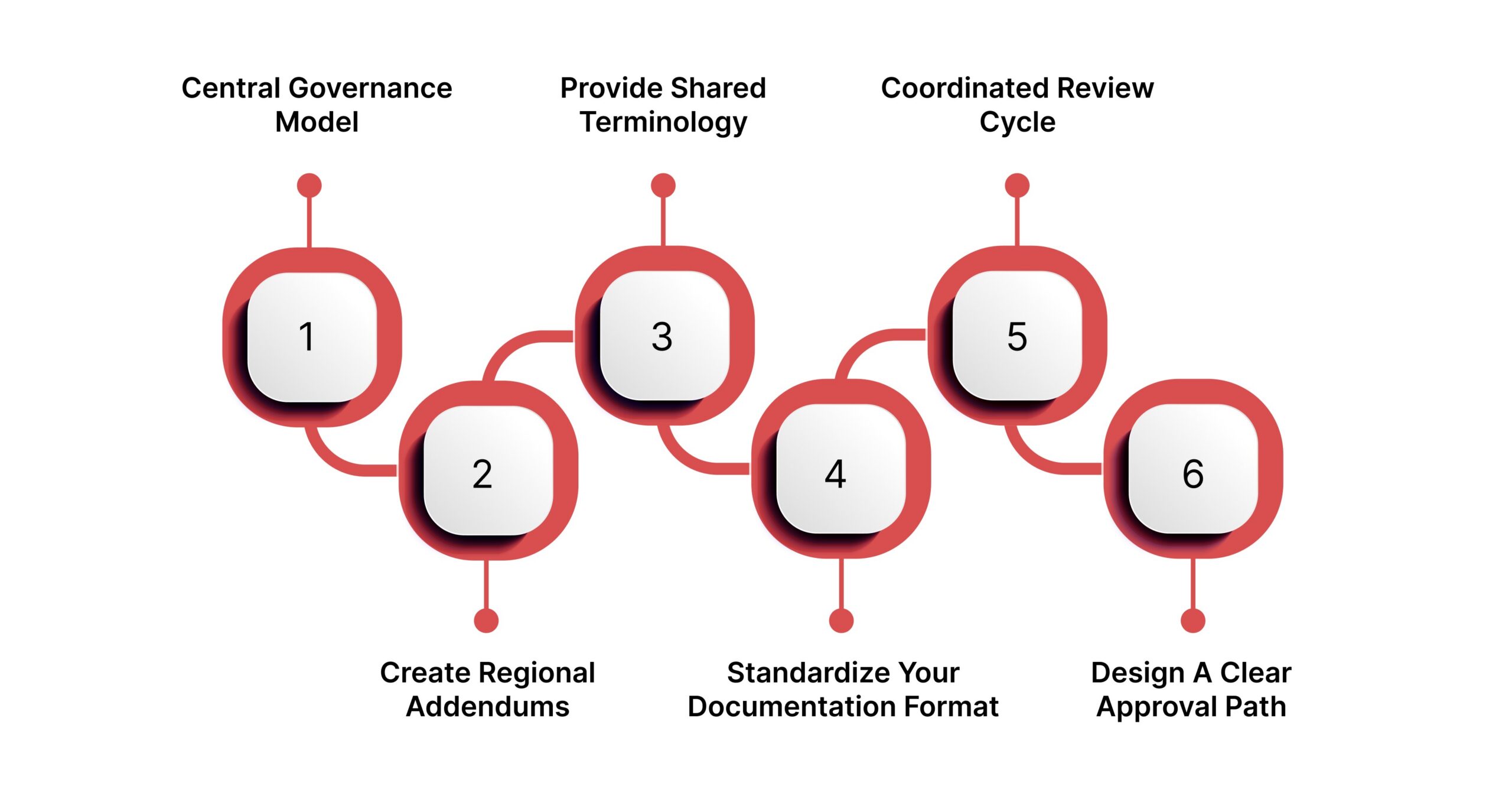
- Establish A Central Governance Model: Define the core rules all sites must follow so your organization maintains uniform expectations. This keeps your baseline controls strong.
- Create Regional Addendums For Local Requirements: Add location-specific sections only where necessary. For example, a site operating under stricter privacy laws may need additional guidelines for data handling.
- Standardize Your Documentation Format: Use a layout and structure that each site can adopt. This makes your framework easier to understand and compare across regions.
- Provide Shared Terminology and Definitions: Align language so staff across sites interpret instructions the same way. This increases consistency during operational tasks.
- Build A Coordinated Review Cycle: Schedule organization-wide reviews while allowing regional teams to flag local changes. This keeps your entire framework accurate.
- Design A Clear Approval Path: Clarify who signs off on global policies and who approves local updates. This prevents delays and maintains accountability.
With a multi-site framework in place, the final step is understanding the right tools, like VComply, to streamline and simplify policy and procedure management.
How VComply Simplifies Policy and Procedure Management?
VComply gives you a structured, centralized, and fully automated way to manage every stage of your policy and procedure lifecycle. Instead of relying on scattered documents, disconnected approvals, or manual version control, you gain a single system that keeps everything current, auditable, and accessible to the right people.
Each feature is designed to reduce your administrative load, strengthen oversight, and help you maintain consistency across locations, teams, and regulatory environments.
Here is how VComply makes the entire process easier and more reliable:
- PolicyOps for Version Control, Approvals, and Access: You get a central repository where every policy stays organized with automated version tracking. VComply timestamps every change, routes updates to the right approvers, and restricts access based on roles so that only authorized users can edit or publish. This eliminates outdated documents and ensures your staff always sees the latest approved version.
- Linking Policies To Controls, Risks, And Evidence: VComply lets you connect each policy directly to its related risks, controls, and required evidence. When auditors ask how a requirement ties back to your risk posture, you already have a mapped view. This is especially valuable when you need quick explanations during assessments or leadership reviews.
- Automated Workflows For Policy Review Cycles: Instead of manually tracking review dates, VComply triggers reminders for owners based on your chosen review intervals. The system guides them through updates, captures approvals, and stores the full history. This prevents expired documents and keeps your framework aligned with current regulations and operational changes.
- Role-Based Access For Compliance, Risk, Audit, And Incident Teams: All four core Ops functions, ComplianceOps, RiskOps, PolicyOps, and CaseOps, work together within the platform so each team sees exactly what they need. Compliance teams monitor adherence, risk teams validate control mappings, audit teams review historical activity, and incident teams reference relevant policies when responding to events.
- Structured Publishing And Employee Acknowledgements: VComply allows you to publish updated policies with controlled distribution and track which employees have read and acknowledged them. This gives you clear proof of awareness and strengthens accountability across your organization.
- Centralized Evidence Storage for Control Execution: When your procedures require documentation, owners can upload evidence directly to the system. You gain organized, searchable records that support testing, reporting, and ongoing assurance activities.
- Reporting Dashboards That Highlight Gaps: VComply’s dashboards show overdue reviews, incomplete acknowledgements, missing approvals, and policy exceptions. This helps you intervene early instead of discovering issues during an audit.
Read Next: How to Build a Risk Register That Actually Guides Decisions
Understanding how VComply streamlines policy management naturally leads to the bigger picture. Bring all these insights together by seeing it in action and exploring how it fits into your workflow. Start a free trial and experience a simpler, more confident way to manage policies.

Wrapping Up
Building strong compliance policies and procedures is one of the most effective ways to protect your organization, improve operational discipline, and stay ahead of regulatory expectations. When your documentation is clear, aligned to real workflows, and reinforced through consistent execution, you reduce uncertainty and strengthen confidence across your teams.
VComply gives you the technology foundation to manage this entire lifecycle without manual tracking or fragmented ownership. This reduces administrative load, improves visibility, and gives you the confidence that your framework stays accurate and audit-ready at all times.
If you want a smarter, simpler way to streamline policy and procedure management, book a demo with VComply and see how the platform can transform your compliance operations.
FAQs
Compliance policies focus on regulatory requirements and control expectations that you must follow to avoid legal or operational risk. Company policies are broader internal rules that guide conduct, culture, or general operations. Compliance policies typically map to laws or frameworks, while company policies support overall organizational behavior and standards.
Most regulated organizations review compliance policies at least annually, with additional reviews triggered by regulatory updates, new technologies, or business changes. A structured review schedule ensures your documents stay accurate, actionable, and aligned with current risks. Some high-risk areas may require semiannual or event-driven reviews for tighter oversight.
Approval usually sits with compliance leadership, senior management, or a designated governance committee. These groups ensure the policy reflects regulatory expectations, aligns with the organization’s risk posture, and supports operational needs. Clear approval ownership helps maintain accountability and prevents outdated or unvetted documents from reaching employees.
Modern GRC platforms offer built-in acknowledgement tracking that records who has viewed and accepted each policy. These tools provide dashboards, reminders, and audit trails that reduce manual follow-ups. They help you verify awareness across departments and demonstrate to auditors that staff received and understood required updates.
Effectiveness is measured through control testing, completion rates, accuracy of evidence, and the frequency of errors or exceptions. You may also evaluate how consistently teams follow steps during real scenarios. Strong procedures show predictable outcomes, minimal rework, and clear alignment between expected actions and documented execution.