

GDPR and CCPA: Key Differences and How You Stay Compliant
When compliance still lives in spreadsheets and email threads, small gaps quickly turn into missed deadlines and audit fire drills.
This pressure intensifies as you support growth with limited legal or IT resources and little real-time visibility into privacy tasks. Each new regulation, business unit, or geography adds manual work, duplicated controls, and higher exposure to costly penalties.

For a mid-market compliance manager, the real challenge is scaling GDPR and CCPA compliance without hiring more staff or slowing the business. That means moving beyond theory to operational processes that keep you audit-ready, automated, and in control every day.
Key Takeaways
- GDPR and CCPA create ongoing operational work, not one-time compliance tasks, especially for growing, regulated organizations.
- Managing both regulations separately leads to duplicated effort, missed requirements, and higher audit and enforcement risk.
- The biggest compliance failures come from manual tracking, unclear ownership, and poor visibility across teams and locations.
- A unified operational approach allows you to handle consent, opt-outs, and privacy requests consistently across regulations.
- Scalable GDPR and CCPA compliance depends on standardized workflows, clear accountability, and continuous audit readiness.
What Is GDPR?
The General Data Protection Regulation, or GDPR, is a European privacy law that applies when you handle personal data of individuals located in the European Union. Even as a U.S.-based organization, you are accountable if your products, services, or operations touch EU residents’ data.
For compliance managers, GDPR creates ongoing operational responsibilities, not just legal obligations. You must demonstrate how data is collected, used, protected, and deleted across teams, systems, and third parties, at all times.
Key GDPR requirements you must operationalize include:
- Clear documentation of how and why personal data is processed.
- Consistent handling of consent, access, and deletion requests.
- Ongoing risk assessments for high-impact data activities.
- Evidence that controls are followed, monitored, and updated.
What Is CCPA?
The California Consumer Privacy Act, or CCPA, is a U.S. privacy law that gives California residents control over how businesses use their personal information. It applies to many mid-market organizations that collect, share, or sell consumer data at scale.
Unlike GDPR, CCPA focuses heavily on consumer choice and transparency, which introduces daily execution challenges. You must track opt-out requests, respond within strict timelines, and prove compliance during audits or investigations.
Core CCPA obligations you must manage operationally include:
- Clear notice of data collection and usage practices.
- Timely response to access, deletion, and opt-out requests.
- Consistent enforcement of privacy policies across departments.
- Reliable records that show requests were handled correctly and on time.
Key Differences Between GDPR and CCPA
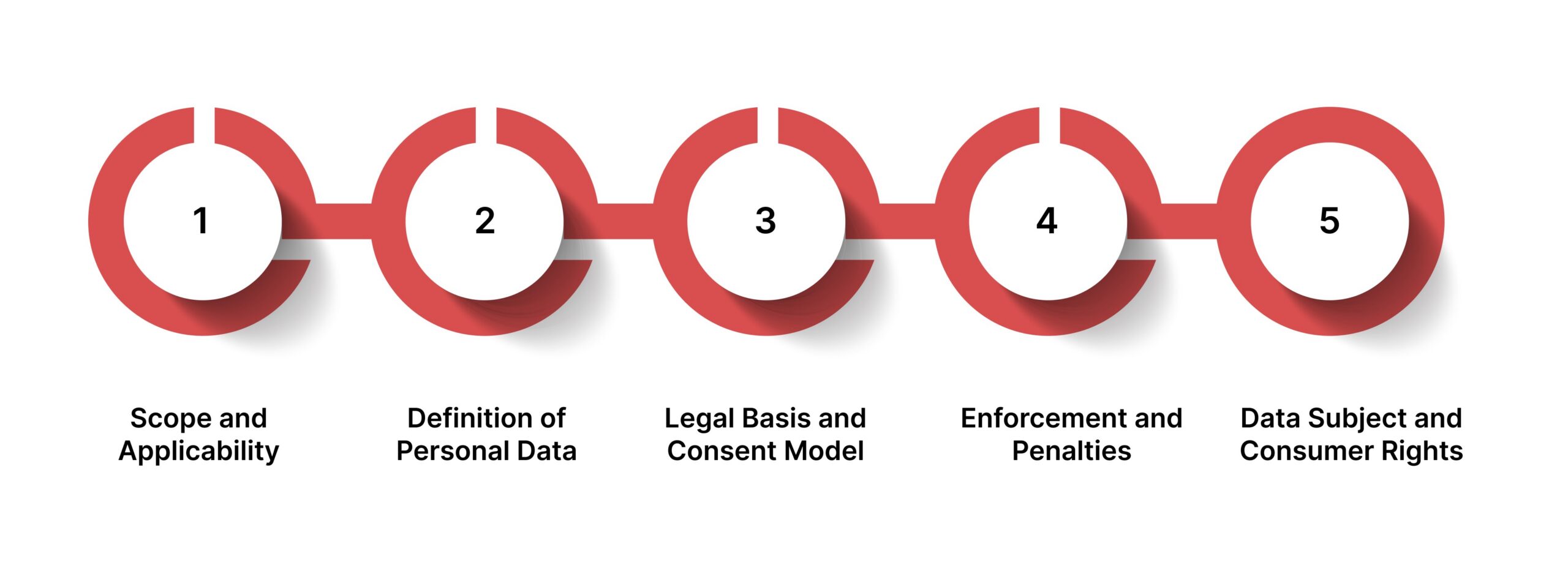
Although both regulations aim to protect personal data, they take very different approaches to scope, enforcement, and compliance obligations. These distinctions directly affect how you design and operate your privacy program.
1. Scope and Applicability
GDPR applies globally to any organization that collects or processes the personal data of individuals located in the EU or EEA, regardless of where the business operates.
CCPA applies only to for-profit organizations that meet defined revenue or data-volume thresholds and handle personal data belonging to California residents.
What this means for you: GDPR has broader territorial reach, while CCPA applies selectively based on business size and activity.
2. Definition of Personal Data
GDPR defines personal data very broadly, covering any information that can directly or indirectly identify an individual, including digital identifiers and behavioral data.
CCPA defines personal information as data that identifies, relates to, or can reasonably be linked to a consumer or household, with specific statutory exemptions.
What this means for you: GDPR typically requires wider data inventories and stricter classification controls than CCPA.
3. Legal Basis and Consent Model
GDPR requires you to establish a lawful basis for every instance of data processing, often relying on explicit opt-in consent or contractual necessity.
CCPA does not require a lawful basis for processing but focuses on consumer choice, primarily through opt-out rights for data selling or sharing.
What this means for you: GDPR is consent-driven by default, while CCPA is rights-driven and disclosure-focused.
4. Enforcement and Penalties
GDPR allows regulators to impose significant fines, reaching up to 4 percent of global annual revenue or €20 million for severe violations.
CCPA and CPRA enforce penalties on a per-violation basis and introduce private rights of action in certain data breach cases.
What this means for you: GDPR violations carry higher financial exposure, while CCPA increases litigation and reputational risk.
5. Data Subject and Consumer Rights
Both laws grant individuals the right to access and delete their personal data, but GDPR expands protections to include portability, objection, and processing restrictions.
CCPA emphasizes transparency, disclosure, deletion, and opt-out rights specifically for California consumers.
What this means for you: GDPR requires broader rights management workflows, while CCPA prioritizes consumer choice and disclosure controls.
Also Read: How to Prepare Your Organization for GDPR and Data Privacy?
GDPR vs. CCPA: Side-by-Side Comparison
Use this table as a quick reference to understand how GDPR and CCPA differ at a glance, especially when assessing overlapping compliance obligations.
| Comparison Factor | GDPR | CCPA / CPRA |
| Geographic Scope | Applies globally to organizations processing personal data of EU or EEA residents, regardless of business location. | Applies to organizations handling personal data of California residents only. |
| Applicability Thresholds | No revenue or size threshold; applies to any qualifying data processing activity. | Applies to for-profit businesses meeting specific revenue, data volume, or data monetization thresholds. |
| Definition of Personal Data | Broad definition covering any data that directly or indirectly identifies an individual. | Covers data that identifies, relates to, or can reasonably be linked to a consumer or household, with certain exemptions. |
| Consent Model | Primarily opt-in, requiring a lawful basis for processing such as consent or contractual necessity. | Primarily opt-out, focusing on disclosure and consumer choice around selling or sharing data. |
| Consumer / Data Subject Rights | Includes access, deletion, correction, portability, objection, and restriction of processing. | Includes access, deletion, correction, and opt-out of sale or sharing rights for consumers. |
| Enforcement Authority | Enforced by independent data protection authorities across EU member states. | Enforced by the California Attorney General and the California Privacy Protection Agency. |
| Maximum Penalties | Up to €20 million or 4 percent of global annual revenue, whichever is higher. | Monetary penalties assessed per violation, with additional private rights of action for certain data breaches. |
| Breach Notification | Requires notification to regulators within 72 hours of becoming aware of a breach. | Requires notification without unreasonable delay, with no fixed regulatory timeframe. |
Penalties and Fines for Noncompliance
Non-compliance with GDPR or CCPA does more than trigger regulatory scrutiny. It exposes you to financial penalties, legal action, and long-term reputational damage.
GDPR Penalties and Fines
GDPR enforces one of the strictest penalty frameworks globally. Regulators can impose fines based on the severity, intent, and duration of the violation.
For serious noncompliance, fines can reach up to €20 million or 4 percent of your global annual revenue, whichever amount is higher.
Lesser violations, such as inadequate recordkeeping or delayed breach notifications, can still result in fines of up to €10 million or 2 percent of global revenue.
What this means for you: GDPR penalties scale with organizational size, making privacy failures especially costly for large and growing enterprises.
CCPA and CPRA Penalties and Fines
CCPA and CPRA use a different enforcement model focused on per-violation penalties rather than revenue-based fines.
Regulators may impose penalties of up to $2,500 per unintentional violation and up to $7,500 per intentional violation, with each affected consumer counting as a separate violation.
In addition, CCPA introduces private rights of action for certain data breaches, allowing consumers to pursue statutory damages without proving actual harm.
What this means for you: Even a single incident affecting thousands of consumers can quickly escalate into significant financial and legal exposure.
Business Impact of Getting Privacy Compliance Right
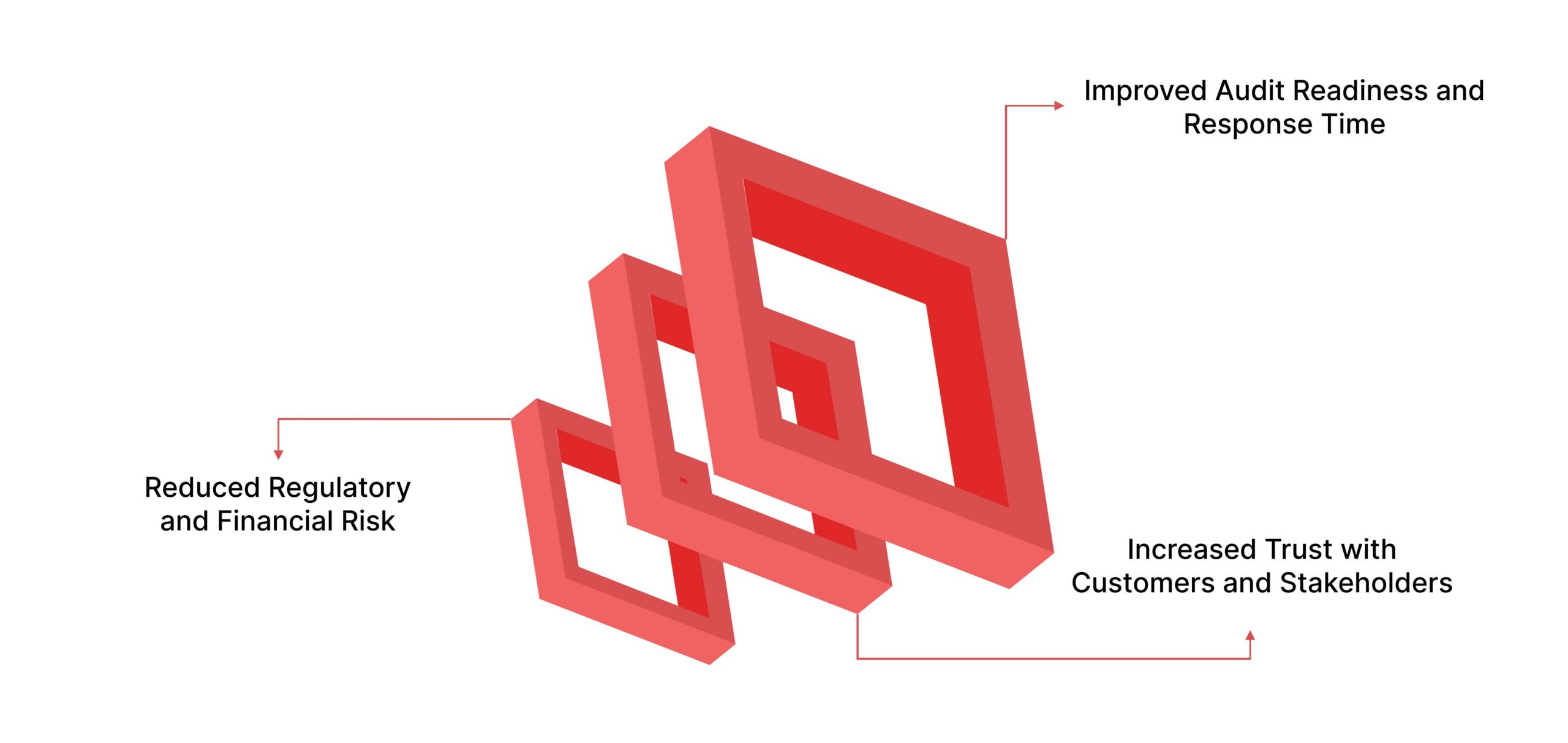
Privacy compliance is not just a legal obligation. When implemented effectively, it delivers tangible business value across risk management, audit readiness, and stakeholder trust.
1. Reduced Regulatory and Financial Risk
Strong privacy controls help you identify and address compliance gaps before they turn into violations. By maintaining clear documentation, defined responsibilities, and consistent processes, you lower the likelihood of fines, legal action, and regulatory intervention.
Proactive compliance also reduces the financial impact of incidents by enabling faster detection, containment, and response.
2. Improved Audit Readiness and Response Time
Well-structured privacy programs ensure that policies, controls, and evidence are always accessible. Instead of scrambling to collect documentation during audits or regulatory inquiries, you can respond quickly and confidently.
Faster response times demonstrate accountability and reduce disruption to day-to-day operations.
3. Increased Trust with Customers and Stakeholders
Transparent data practices signal that you take privacy seriously. When customers and partners know their information is handled responsibly, trust increases and relationships strengthen.
Consistent compliance also reassures investors, regulators, and internal stakeholders that risk is managed responsibly across the organization.
Manage GDPR and CCPA More Effectively With ComplianceOps
ComplianceOps helps you manage GDPR and CCPA requirements in one centralized system instead of scattered documents and spreadsheets. You gain consistent visibility into regulatory obligations, controls, and evidence, making your privacy posture easier to track and maintain.
By assigning ownership and tracking work through completion, ComplianceOps improves accountability and reduces the risk of missed obligations. Evidence stays organized and accessible, helping you stay audit-ready without last-minute effort.
How ComplianceOps supports privacy compliance:
- Centralized tracking of GDPR and CCPA obligations and controls
- Clear task ownership with status visibility across teams
- Structured evidence collection and retention for audits and inquiries
- Continuous monitoring to surface gaps before they become risks
This approach makes privacy compliance more reliable, easier to manage, and less reactive over time. Book a 21-day free trial with VComply to learn how we support your privacy compliance.

Wrapping Up
Managing GDPR and CCPA compliance is no longer a one-time exercise. As privacy expectations evolve and enforcement increases, relying on manual processes and fragmented tools exposes you to unnecessary risk and operational strain. Without structure, visibility, and accountability, even well-intentioned compliance efforts can fall short.
Operationalizing privacy compliance through a centralized approach makes the difference. When obligations, ownership, and evidence are clearly tracked, compliance becomes more predictable, audits become less disruptive, and risks are identified earlier. This shift allows you to focus less on reacting to issues and more on maintaining consistent, defensible compliance.
VComply helps you make that shift by turning privacy requirements into manageable, day-to-day operations. If you’re looking to strengthen audit readiness, reduce regulatory risk, and gain confidence in your GDPR and CCPA programs, book a demo with VComply to see how it fits into your compliance strategy.
Frequently Asked Questions
Yes, GDPR applies to U.S. companies if they collect or process personal data of individuals located in the European Union. Physical presence in the EU is not required.
CCPA applies to businesses that collect personal data of California residents and meet specific revenue or data volume thresholds. Many mid-market companies qualify without realizing it.
GDPR generally carries higher financial penalties, including fines up to four percent of global annual revenue. CCPA penalties are lower but can escalate quickly with repeated violations.
Yes, you can comply with both by aligning shared privacy processes like data mapping, request handling, and documentation. A unified operational approach reduces duplication and audit risk.
The biggest challenge is operational execution, not understanding the laws. Manual tracking, unclear ownership, and disconnected workflows often lead to missed deadlines and compliance gaps.