

Enterprise Risk Management Fundamentals Overview
You deal with risks every day, whether they come from changing regulations, shifting market demands, or internal processes that fall behind. Some of these issues feel small at first, but they often grow into bigger problems when your team doesn’t have a clear structure to manage them.
You may even find yourself reacting to issues instead of planning ahead, which creates pressure during audits, assessments, and board reviews.
Many leaders feel this strain. You might worry about missing a key control, discovering a compliance gap too late, or managing risks through scattered spreadsheets that offer no real visibility. If you’ve ever thought, “We should have caught this sooner,” you’re not alone. According to McKinsey, only around half of organizations consider their governance, risk, and compliance practices mature, and the average self-rating for risk management is just 2.6 out of 4.0 (source: McKinsey Issue 19 Report). This shows how common it is for companies to operate without a strong foundation.
A structured enterprise risk management program helps you change that. It gives you a clear way to identify risks, assign ownership, and track progress across teams. It also helps you respond faster with better insight into your operations. With the right approach, you build consistency, reduce surprises, and improve confidence in every decision. This overview walks you through the fundamentals so you can strengthen your risk posture with a more organized and reliable system.
Key Takeaways
- An enterprise risk management program centralizes risk, compliance, and operational activities for better visibility.
- Structured processes include risk identification, assessment, mitigation, monitoring, and continuous improvement.
- Key ERM elements: governance roles, risk appetite, standardized processes, controls, workflows, and incident management.
- Covers major risk types: compliance, operational, cybersecurity, financial, strategic, and third-party/vendor risks.
- Implementation steps: assess risks, prioritize, assign ownership, develop mitigation plans, deploy reporting, and train teams.
- A strong ERM program ensures consistency, accountability, and reliable insights across teams and locations.
What Is an Enterprise Risk Management Program?
Once you move away from scattered risk activities, you need a clear understanding of what an enterprise risk management program involves. It is a structured approach that helps you identify, assess, and monitor risks across your entire organization. Instead of addressing issues after they escalate, you follow a defined process that brings order, consistency, and visibility to every stage of risk handling.
You use this program to bring your risk, compliance, and operational efforts into one system. This ensures that teams follow the same method, classify risks in the same format, and work from a unified set of guidelines. It also clarifies roles and responsibilities, which strengthens accountability and reduces confusion.
An effective enterprise risk management program usually includes:
- A common risk classification system so your teams can describe and group risks in a uniform way.
- A structured assessment method with clear scoring, impact levels, and likelihood ratings.
- A centralized risk repository where your controls, assessments, issues, and mitigation plans stay updated.
- Defined workflows that show how risks move from identification to monitoring and ongoing review.
- Dashboards and reports that help you track progress and share updates during audits or board reviews.
These elements help you replace fragmented processes with a more organized and dependable system. You gain a clearer view of emerging risks, control gaps, and areas that demand attention.
With a strong enterprise risk management program in place, you make more confident decisions because you rely on structured information instead of scattered data. This gives you a stable foundation to reduce surprises, support compliance needs, and build a more reliable approach to managing risks across your organization.
Why Enterprises Need a Formal ERM Program
Once you understand the foundation of an enterprise risk management program, the next step is recognizing why a formal structure matters. As your organization grows, risks spread across departments, systems, and regulatory requirements. If each team follows its own method, you end up with scattered insights and inconsistent assessments. This makes it harder to compare risks, assign ownership, or prepare for audits.
A formal ERM program helps you bring these activities together in a unified system. It gives you a consistent way to classify risks, review controls, and track mitigation efforts across your organization.
With a structured ERM program, you gain:
- A standardized method to capture and organize risks.
- Clear ownership for every risk and related control.
- Consistent scoring and documentation for assessments.
- Reliable, audit-ready reports and dashboards.
- Stronger alignment with regulatory expectations.
This structure supports better decision-making because your data stays organized, current, and comparable across business units.
Key Principles of an Effective ERM Program
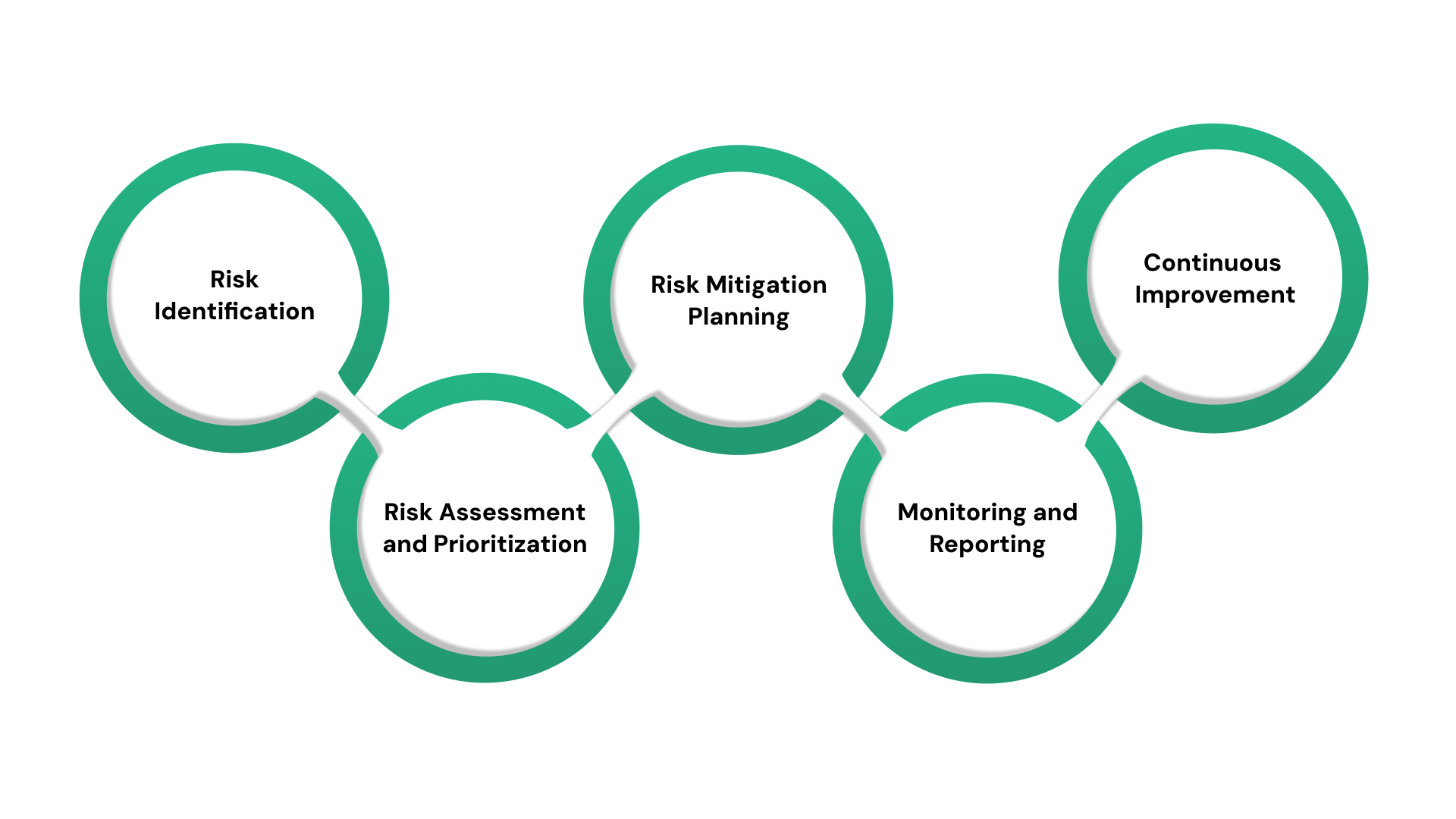
With the need for formalization established, you can now look at the core principles that make an ERM program effective. Each principle builds on the previous one, creating a complete and repeatable lifecycle for managing risks.
1. Risk Identification
You begin by identifying risks across strategic, operational, financial, and compliance domains. This step ensures that you capture both known issues and emerging threats. By using standardized categories and reviewing processes, controls, and regulatory inputs, you create a consistent inventory that becomes the foundation for the next stages.
2. Risk Assessment and Prioritization
Once you have a clear list of risks, the next step is to assess them. Here, you examine the likelihood, impact, and the strength of existing controls. A structured scoring model and heat map help you compare risks objectively. This transition from identification to assessment allows you to see which risks demand fast action and which ones require periodic oversight.
3. Risk Mitigation Planning
After priorities are clear, you move into mitigation planning. This step translates assessments into action. You define what needs to be done, who is responsible, and when it should be completed. By assigning owners and timelines, you ensure that mitigation work progresses in a controlled and predictable way.
4. Monitoring and Reporting
As mitigation plans move forward, you continue into ongoing monitoring. Dashboards, control reviews, and periodic assessments help you track progress and detect changes in exposure. This stage builds continuity by linking your plans with their real-world outcomes. It also strengthens your documentation for audits and leadership updates.
5. Continuous Improvement
Finally, you refine your ERM program based on what you learn. You update assessments, adjust controls, and revise processes as regulations and business needs change. This creates a cycle of improvement that keeps your ERM program stable, relevant, and aligned with current risks.
Together, these principles create a steady and repeatable risk lifecycle. You gain a program that adapts to your business needs, strengthens accountability, and gives you a clearer view of emerging issues. With this foundation, you manage risks with greater confidence and consistency.
Essential Elements in Building an ERM Program
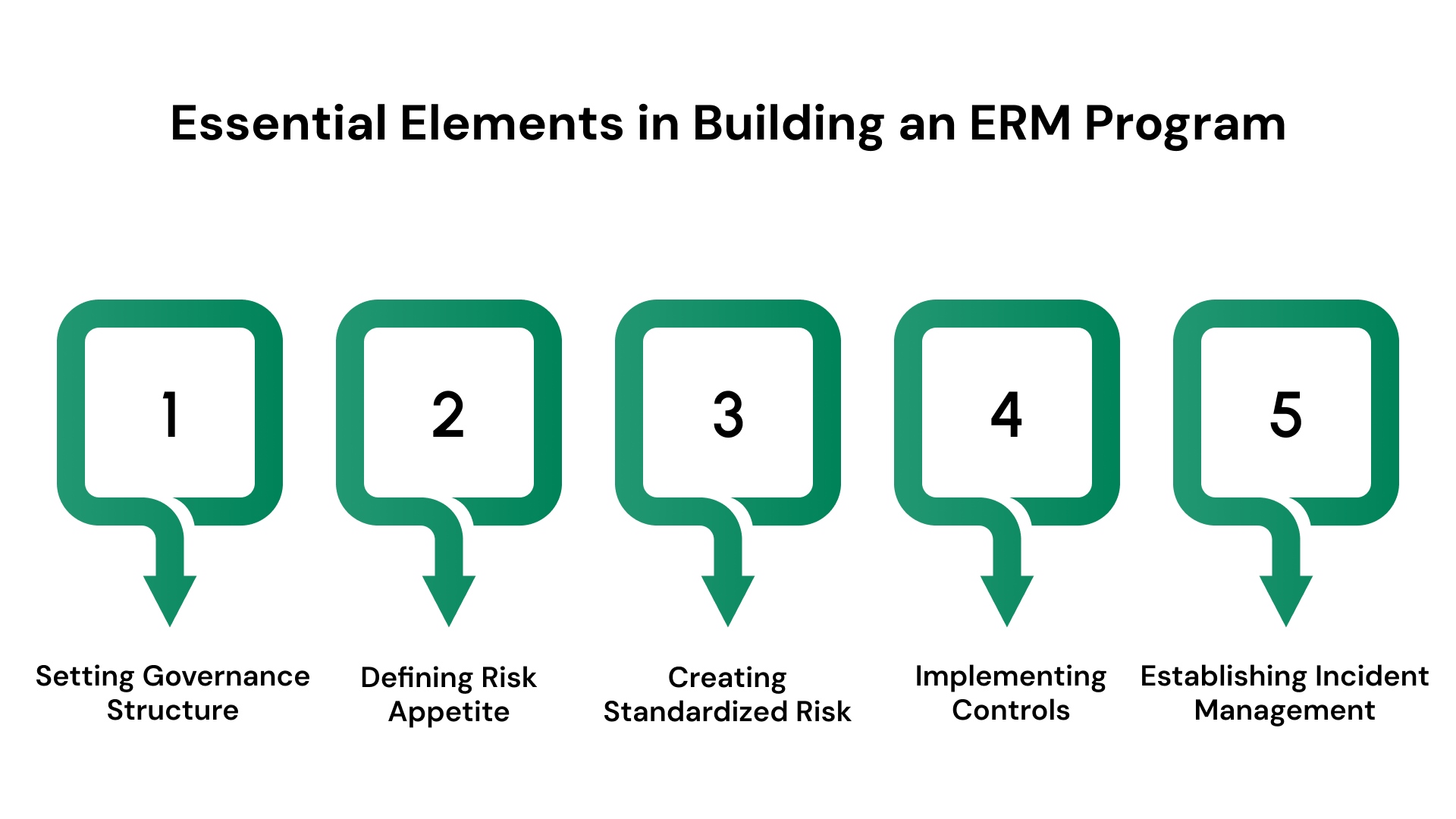
Once you understand the core principles of an ERM lifecycle, the next step is putting the right structural elements in place. These components help you translate your intent into a functioning enterprise risk management program that operates with clarity and discipline across teams.
1. Setting Governance Structure and Roles
A strong ERM foundation starts with governance. You define who makes decisions, who reviews risks, and who owns mitigation actions. This alignment ensures that your board, leadership, and functional teams follow the same direction.
To establish this structure, you typically:
- Assign defined owners for each risk.
- Set up escalation paths for high-impact issues.
- Form committees for oversight and periodic reviews.
Clear governance gives your program stability and reduces uncertainty during assessments and audits.
2. Defining Risk Appetite and Tolerance
Once governance is in place, you determine how much risk your organization is prepared to take. Risk appetite and tolerance levels guide daily decisions and keep actions aligned with leadership expectations.
You set:
- Thresholds for operational, financial, and compliance risks.
- Limits that trigger escalations.
- Guidelines for acceptable and unacceptable exposure.
This helps your teams judge situations consistently, especially when conditions change.
3. Creating Standardized Risk Processes
Standardized processes reduce variability and help you move away from scattered risk-handling approaches. You introduce common formats and review methods that every department follows.
Your processes typically include:
- Uniform templates for risk description and categorization.
- A fixed model for scoring likelihood and impact.
- Scheduled cycles for assessments, control reviews, and updates.
This consistency strengthens your data quality and improves the reliability of your risk evaluations.
4. Implementing Controls and Workflows
After processes are standardized, you support them with well-designed controls and workflows. These elements help you maintain structure and keep mitigation work on track.
Your control framework often includes:
- Preventive and detective controls mapped to relevant risks.
- Automated workflows for task assignments and approvals.
- Alerts and checkpoints that keep reviews on schedule.
This setup streamlines how risks move through your system and reduces delays caused by manual coordination.
5. Establishing Incident Management Procedures
You also need a structured method to manage incidents and unexpected events. Formal procedures help you respond quickly, capture essential details, and track corrective actions.
These procedures usually define:
- How incidents are logged and categorized.
- How severity is rated and assigned.
- Who responds, reviews, and closes the issue?
- What records must be maintained for audits or regulatory checks?
With a strong incident framework, your teams handle disruptions with more discipline and clarity.
Instead of managing risks reactively, these elements give you a more controlled and predictable system to work with. Each component adds structure to how you assess, document, and resolve risks, allowing your ERM program to operate with greater consistency as your organization grows.
Common Types of Risks an ERM Program Helps You Address

With your ERM structure defined, the next step is understanding the categories of risks your enterprise risk management program must handle. This context helps you classify issues correctly and maintain consistency as you expand your assessments across departments.
You encounter a wide range of risks, but the categories below represent the most common areas that require structured oversight.
1. Compliance and Regulatory Risks
Regulatory expectations continue to evolve, especially in industries with strict reporting and control requirements. You deal with obligations from SOX, HIPAA, PCI DSS, and sector-specific mandates.
An ERM program helps you track these rules, assign clear ownership, and maintain updated compliance records so you avoid penalties and audit challenges.
2. Operational Risks
Operational risks stem from internal processes, manual steps, system failures, and outdated controls. These issues often build up quietly until they disrupt service delivery or create inefficiencies.
By capturing them in your ERM system, you improve visibility and ensure mitigation work moves forward in a structured, timely manner.
3. Cybersecurity Risks
Cybersecurity risks continue to rise due to new attack methods and expanding digital footprints. Incidents such as ransomware, unauthorized access, and misconfigurations lead to major exposure.
Your ERM framework helps you assess vulnerabilities, align controls with security policies, and keep your teams informed through consistent reporting.
4. Financial and Credit Risks
Financial risks come from market changes, vendor instability, or internal forecasting gaps. These factors affect budgeting, liquidity, and performance.
With an ERM approach, you evaluate these risks using consistent scoring and keep leadership updated with clear financial indicators.
5. Strategic Risks
Strategic risks arise when your long-term plans do not align with market demand or internal capacity. These risks affect growth, product direction, and competitive positioning.
An ERM program supports strategic decisions by giving you a clearer view of underlying assumptions and potential impact.
6. Third-Party and Vendor Risks
Your reliance on vendors increases exposure to compliance gaps, control weaknesses, and service disruptions.
By managing these risks through your ERM system, you maintain oversight and ensure third-party dependencies stay aligned with internal standards.
Once you understand the types of risks your organization faces, the next step is putting a structured implementation plan in place. This turns your ERM strategy into an operational system that teams can follow consistently.
Also read: Key Features of Governance, Risk, and Compliance Management Software Solutions
ERM Program Implementation Steps
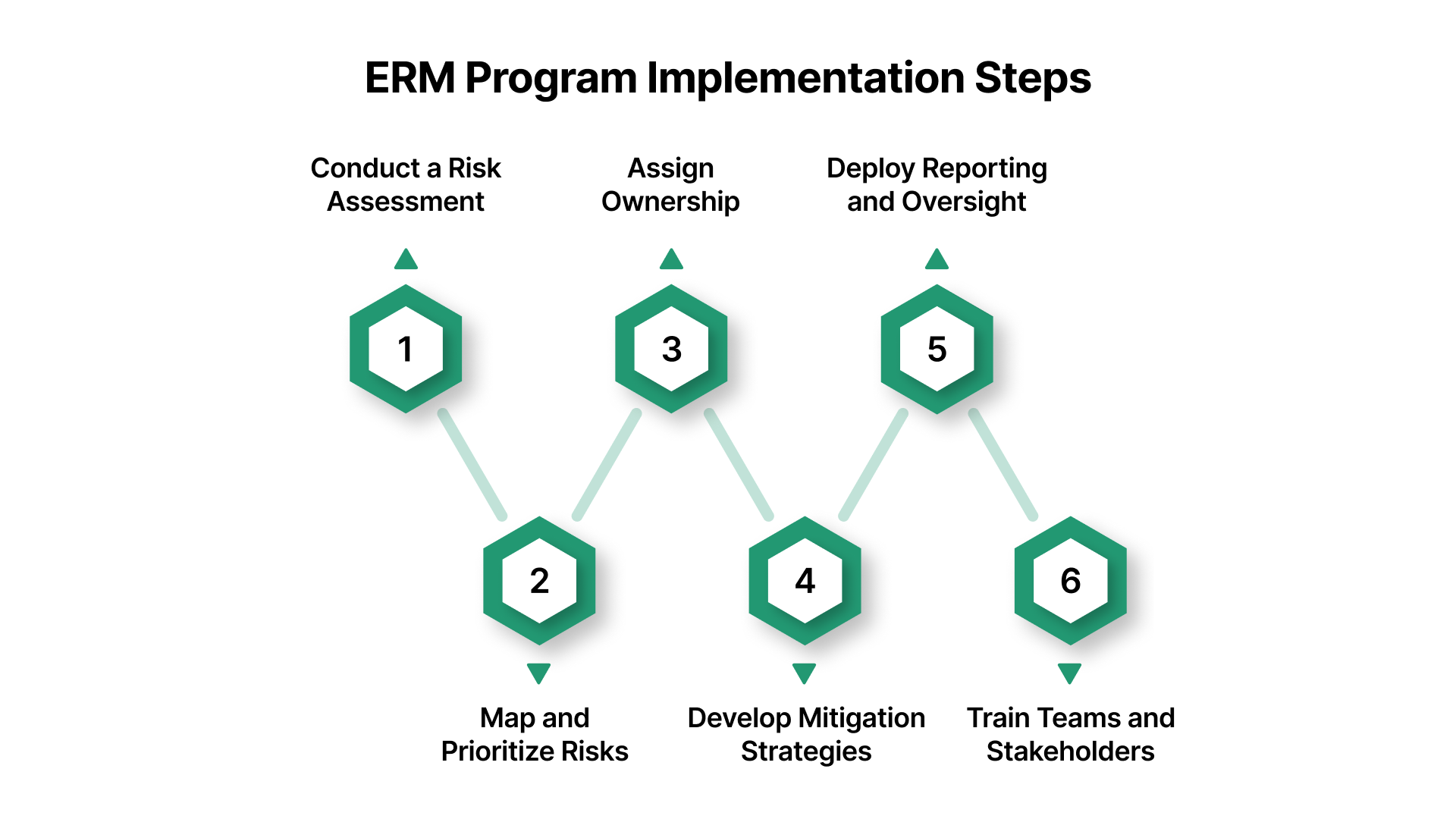
To move from planning to execution, you need a disciplined approach that converts your ERM principles into reliable workflows. These steps help you build a predictable system that scales with your organization.
1. Conduct a Risk Assessment
You begin by gathering information from processes, system owners, audits, and regulatory sources. This gives you a complete and validated picture of potential exposure.
By starting here, you ensure the rest of your program is based on accurate and current data.
2. Map and Prioritize Risks
Next, you categorize risks and score them using criteria such as likelihood, impact, and control strength. This step helps you understand which risks require immediate attention.
Prioritization makes your mitigation plans more targeted and prevents your teams from spreading their efforts too thin.
3. Assign Ownership
Clear ownership ensures accountability at every stage of the risk lifecycle. Each risk moves faster when a defined owner is responsible for updates and actions.
This also simplifies audit preparation and improves communication across teams.
4. Develop Mitigation Strategies
Once owners are assigned, you outline specific actions to reduce exposure. These may include updating controls, adjusting processes, improving documentation, or implementing new tools.
Structured plans help you track progress and measure improvements over time.
5. Deploy Reporting and Oversight Mechanisms
As mitigation work continues, you introduce dashboards, automated workflows, review cycles, and alerts. These elements give you ongoing visibility and enable stronger oversight.
Consistent reporting also keeps leadership informed and prepares you for audits with clearer, real-time data.
6. Train Teams and Stakeholders
Finally, you train teams on the ERM process, reporting expectations, and escalation paths. This ensures that everyone follows the same standards and contributes to the program’s stability.
Training reinforces your risk culture and keeps the system functioning smoothly.
With these steps in place, your ERM program becomes a functional framework rather than a collection of isolated activities. The next section can now explore challenges, best practices, or advanced components depending on the direction you want the blog to take.
Also: 7 Steps to Prioritize Important Goals in GRC
Why Enterprises Choose VComply for ERM
Once you set the foundation for a structured enterprise risk management program, the next challenge is operationalizing it across teams. This is where VComply supports you with a system designed to make ERM execution more organized, measurable, and predictable. The platform aligns your risk processes, controls, and reporting into one environment so you maintain steady oversight as your program matures.
1. Centralized Risk Management Environment
VComply unifies all risk activities in a single platform. You can log risks, assign owners, manage controls, and monitor updates without scattered spreadsheets. This gives you consistent data and reduces manual effort.
2. Structured Risk Registers and Scoring Models
You can build risk registers that match your internal framework. Configure likelihood and impact scoring, inherent and residual ratings, control mappings, documentation, and department-level categories. This keeps assessments uniform across the organization.
3. Automated Controls and Workflow Execution
VComply automates follow-ups and review cycles. Set reminders, track control testing, route tasks for approval, and receive alerts when controls fail or need action. This supports timely, predictable execution.
4. Clear Ownership and Accountability
Each risk, control, and mitigation plan can be assigned to specific owners. With role-based access and activity logs, teams stay aligned, accountability is clear, and audits run smoothly.
5. Visibility Through Dashboards and Reports
Leadership gets real-time insights through role-based dashboards, heat maps, trend views, and exportable reports for audits or board reviews. This improves communication of your overall risk posture.
6. Consistent Execution Across Global Teams
With simple navigation and defined workflows, teams across regions can adopt the same process without long onboarding cycles. This consistency helps you maintain a unified ERM program even when operations span multiple locations or regulatory environments.
With these modules working together, your teams can manage compliance tasks, risks, policies, and incidents within one consistent workflow. It brings structure to daily operations and helps you maintain oversight while the system handles routine execution.

Wrapping Up
A well-structured enterprise risk management program helps you handle risks with more clarity and less guesswork. When your teams follow the same process for identifying, assessing, and tracking risks, you avoid last-minute surprises and stay better prepared for audits, reviews, and changes in the business. This foundation allows you to move from reacting to issues to managing them proactively, giving you more confidence in every decision.
VComply makes it easier to put your ERM framework into practice. It brings all your risks, controls, workflows, and reports into one place so your teams don’t have to manage scattered spreadsheets or inconsistent processes. With clear ownership, automated reminders, and real-time dashboards, you get a smoother way to track progress and keep everyone aligned as your program grows.
If you’re ready to build a more organized and dependable ERM program, VComply can help you get there faster. Book a Demo and see how it supports consistent, connected risk management across your organization.
FAQs
An ERM program isn’t static. By integrating continuous monitoring, automated alerts, and a centralized repository for policies and controls, your organization can quickly adjust processes when regulations evolve. This ensures compliance without overhauling your entire system.
Yes. A structured ERM program standardizes processes, assigns clear ownership, and provides shared dashboards. This allows teams to work together on risk mitigation, track progress, and align priorities, reducing silos and miscommunication.
Modern ERM platforms automate risk tracking, workflow management, and reporting. They provide real-time dashboards, role-based access, and audit-ready documentation, which reduces manual errors and gives leadership instant insight into the organization’s risk posture.
ERM programs provide a clear view of operational, financial, and strategic risks. By quantifying exposure and linking risks to business objectives, executives can make informed decisions, prioritize initiatives, and allocate resources with confidence.