

Understanding What is a Risk-Based Approach
A risk-based approach helps organizations balance compliance with security by focusing on real-world threats rather than a simple checklist mentality. This method tailors security measures to specific risks, enabling proactive threat management instead of just meeting regulatory standards. This article explores the benefits, implementation steps, and the vital role of data, technology, and policy management in this strategy.

Did you know that more than 30,000 new vulnerabilities were disclosed in 2023, marking a 17% increase compared to 2022?
And the number doesn’t seem to stop anytime soon.
To mitigate these issues, a risk-based approach can significantly transform how organizations balance regulatory compliance with security needs. Too often, businesses adopt a “checklist” mentality, prioritizing compliance over actual security risks.
A risk-based approach helps organizations decide where to focus time, budget, controls, and oversight based on the level of risk involved. Instead of treating every requirement, control, vendor, process, or threat the same way, organizations assess likelihood, impact, exposure, and business context to prioritize what needs attention first.
This matters because compliance and risk teams are dealing with more obligations, tighter audit expectations, cybersecurity threats, third-party risks, privacy requirements, operational disruptions, and limited resources. A checklist-based approach may confirm that tasks were completed, but it does not always show whether the most important risks were addressed.
A risk-based approach changes that. It helps organizations identify high-risk areas, assign stronger controls where they are needed most, monitor changing threats, and document why certain actions were prioritized. In cybersecurity, for example, NIST CSF 2.0 emphasizes risk management practices that are formally defined, implemented, reviewed, and updated as business requirements, threats, and technology change.
For compliance, risk, audit, security, and operations teams, the value is simple: focus effort where failure would matter most. This guide explains what a risk-based approach means, why it matters, how it works, and how organizations can use technology to manage risk decisions, controls, evidence, and reporting more effectively.
Key Takeaways (TL;DR)
-
Understand how adopting a risk-based approach helps organizations prioritize threats and optimize resources effectively.
-
Learn why shifting from compliance-driven methods to risk-based strategies strengthens resilience and agility.
-
Discover key steps like continuous monitoring, data-driven assessment, and adaptive control implementation.
-
Explore how technologies like AI, automation, and analytics enhance real-time threat detection and response.
-
See how VComply empowers businesses to streamline compliance, monitor risks, and build proactive mitigation strategies.
What is a Risk-Based Approach?
A risk-based approach is a method of managing compliance, security, operations, and governance by prioritizing actions based on the likelihood and impact of risk.
Rather than applying the same level of control to every activity, a risk-based approach asks:
- What could go wrong?
- How likely is it to happen?
- What would the impact be?
- Which controls are already in place?
- What needs more attention, testing, or oversight?
- What evidence is needed to prove the risk is being managed?
In simple terms, a risk-based approach helps organizations focus on the risks that matter most.
For example, a vendor that handles sensitive customer data should receive more due diligence than a low-risk office supplier. A critical cybersecurity control should be tested more frequently than a low-impact administrative control. A high-risk regulatory obligation should have clearer ownership, stronger documentation, and tighter review cycles.
A strong risk-based approach usually includes risk identification, risk assessment, prioritization, control mapping, mitigation planning, monitoring, reporting, and evidence management. The goal is not to remove every risk. The goal is to understand risk clearly, make informed decisions, and apply the right level of control based on business impact.
Embracing a Risk-Based Approach
According to the Global Risks Report 2024 by the World Economic Forum, cybersecurity will continue to be a persistent concern with ongoing risks in 2025. There will be attacks targeting technology-driven resources and services, such as financial systems and communication infrastructure. This makes it even more crucial to adopt a risk-based approach.
A risk-based approach emphasizes identifying and prioritizing risks specific to an organization. Unlike compliance-driven strategies that focus on meeting prescribed standards, this approach addresses actual threats, enabling businesses to align their security efforts with their goals.
This shift is essential for staying ahead of threats, as it focuses on the most relevant risks rather than just ticking boxes. As organizations make this shift, the flexibility of a risk-based approach becomes apparent, especially when compared to the rigidity of traditional compliance frameworks.
It allows for more strategic decision-making and ensures that resources are allocated to mitigate the most critical threats first. With this foundational understanding, it’s important to examine how a risk-based approach fosters a more adaptive and resilient security environment.
Key Advantages of a Risk-Based Approach
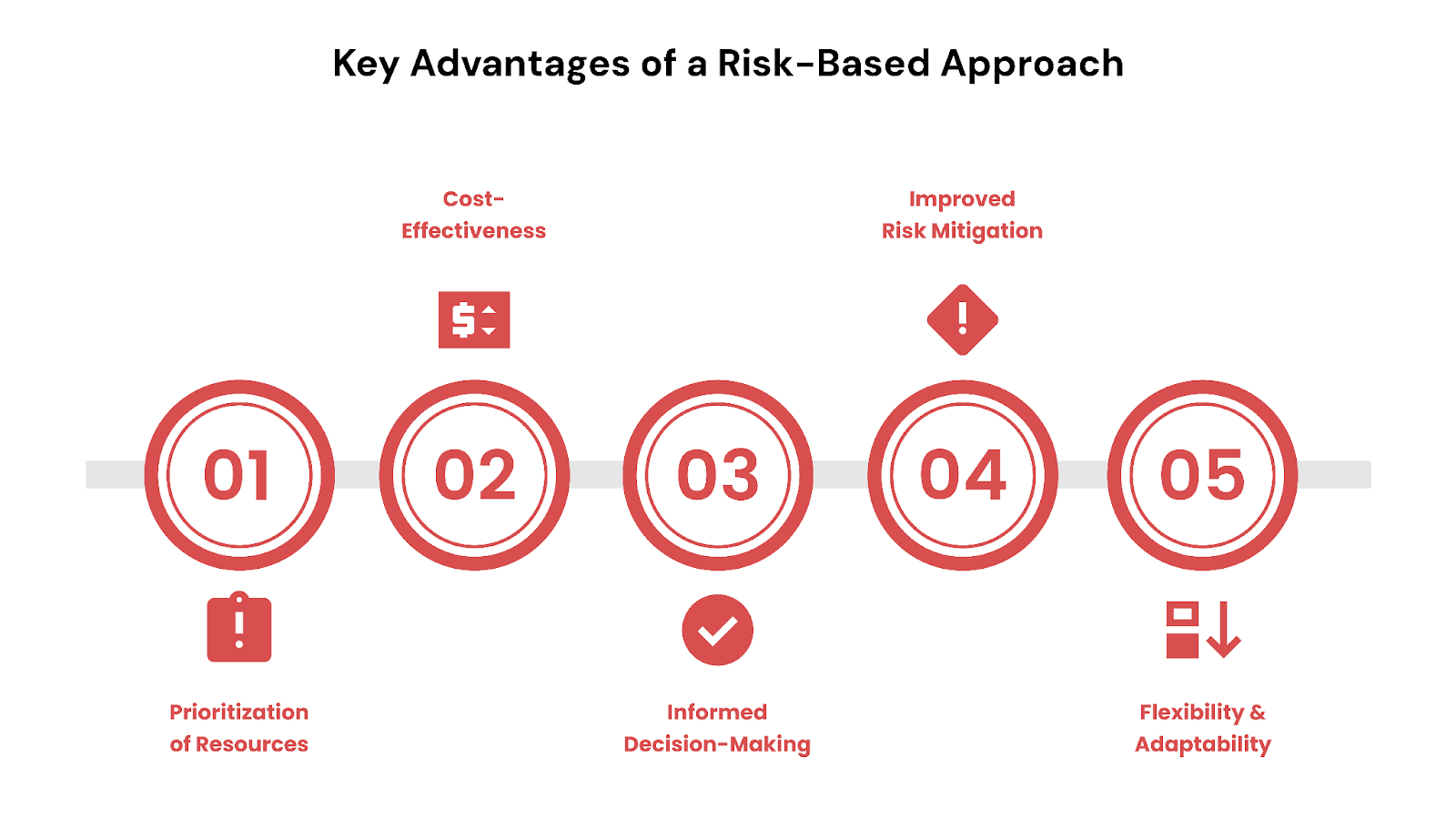
A risk-based approach is a strategy used in various fields to prioritize and address risks based on their likelihood and potential impact. By focusing on the most significant risks, organizations can allocate resources more effectively and make more informed decisions. Here are some key advantages of adopting a risk-based approach:
1. Prioritization of Resources
A risk-based approach helps organizations allocate limited resources (time, money, and personnel) to address the most critical risks first. This ensures that the most damaging or likely risks are mitigated or managed before less pressing issues.
2. Cost-Effectiveness
By focusing efforts on high-priority risks, organizations can avoid over-investing in low-impact areas. This leads to a more efficient use of resources, reducing unnecessary expenditures and focusing on areas that provide the most value.
3. Informed Decision-Making
A risk-based approach allows organizations to make decisions based on data and evidence, rather than gut feelings or assumptions. By assessing the potential impact and likelihood of various risks, stakeholders can prioritize actions that are most likely to improve overall outcomes.
4. Improved Risk Mitigation
By identifying and focusing on the most critical risks, organizations can develop targeted strategies for mitigating them. This reduces the likelihood of significant losses, whether in terms of financial cost, reputation, or other forms of damage.
5. Flexibility and Adaptability
A risk-based approach is dynamic, allowing organizations to adjust their strategies as new risks emerge or existing risks evolve. This adaptability is essential in fast-changing environments such as cybersecurity, finance, and healthcare.
Also Read: What Is Anti-Bribery and Corruption Compliance?
Steps to Implement a Risk-Based Approach
The annual average cost of cybercrime is expected to exceed $23 trillion by 2027, a significant increase from $8.4 trillion in 2022. Keeping this in mind, it is important to understand the right steps to implement a mitigating approach.
Implementing a risk-based approach involves a dynamic, ongoing process of identifying, assessing, and mitigating risks. Here are the key steps organizations should follow to successfully integrate this strategy into their framework:
Step 1: Conducting Thorough Risk Assessments
The first step is to conduct comprehensive risk assessments across the organization. This process should involve input from key personnel, including IT leaders and department heads, to uncover risks that might otherwise go unnoticed.
Risk assessments must take into account both internal and external threats, considering factors like evolving regulatory requirements, business processes, and technology vulnerabilities.
Once the risks have been identified, move to the next stage, where those risks are addressed with tailored controls that suit the organization’s needs.
Step 2: Developing and Implementing Appropriate Controls
Once risks are identified, appropriate controls should be developed and regularly updated to adapt to the evolving threat landscape. Frameworks like the NIST Cybersecurity Framework provide structure, while platforms like VComply streamline routine compliance tasks.
This ensures that security measures remain agile and responsive to emerging threats while also remaining compliant with changing regulations.
At this point, it becomes clear how critical ongoing monitoring is for ensuring that the risk management process remains effective. Continuous reassessment enables organizations to stay ahead of emerging risks and adapt to an ever-changing environment.
Step 3: Continuous Monitoring and Agility
To stay ahead of emerging threats, continuous monitoring is essential. Key Risk Indicators (KRIs) and Key Performance Indicators (KPIs) help track risk levels and performance. Ongoing vulnerability management and third-party assessments ensure that the organization remains agile in its response to new risks.
By constantly reassessing and refining security measures, businesses can minimize potential disruptions and stay ahead of cybercriminals.
As businesses move toward more advanced risk-based strategies, leveraging technology becomes an important next step in ensuring the strategy’s success.
Leveraging Technology for a Risk-Based Strategy
Technology plays a critical role in implementing a risk-based approach effectively. Tools like AI, machine learning, and automation help organizations assess and mitigate risks more efficiently.
These technologies move businesses beyond traditional methods, enabling more accurate and proactive risk management. With the integration of these advanced technologies, organizations are better positioned to detect and respond to threats in real-time.
Let’s explore some specific tools that enhance this process:
- VComply
VComply seamlessly integrates with the current spreadsheets and compliance frameworks, automating the manual aspects of the program within a single system of record. It’s scalable for teams, departments, or locations of any size and can be easily adapted without disrupting the existing processes.
By incorporating such tools, organizations can streamline their compliance management and free up valuable resources for proactive risk mitigation.
- AI and Machine Learning for Threat Detection
AI-driven tools help establish baseline behaviors to detect anomalies, such as insider threats or account compromises. Machine learning and big data platforms enhance real-time threat detection and predictive analytics.
With the power of AI, organizations can anticipate and address threats before they manifest, improving overall security posture. These technologies not only improve detection but also enhance decision-making capabilities, providing actionable insights that support long-term strategies.
- Data Analytics for Insightful Risk Management
Data analytics—spanning descriptive, diagnostic, predictive, and prescriptive analysis—provides insights into past events, current vulnerabilities, future threats, and actionable strategies.
Predictive analytics, in particular, helps organizations proactively address potential risks. By leveraging data-driven insights, companies can make informed decisions, further enhancing their risk management frameworks.
Incorporating these technologies and insights is essential for equipping organizations with the tools they need to develop a comprehensive risk-based strategy. However, successful deployment of such a strategy requires not only the right tools but also the right skills within the workforce.
Also Read: What Is a Whistleblower Hotline?
Key Skills for Successful Risk-Based Approach Deployment
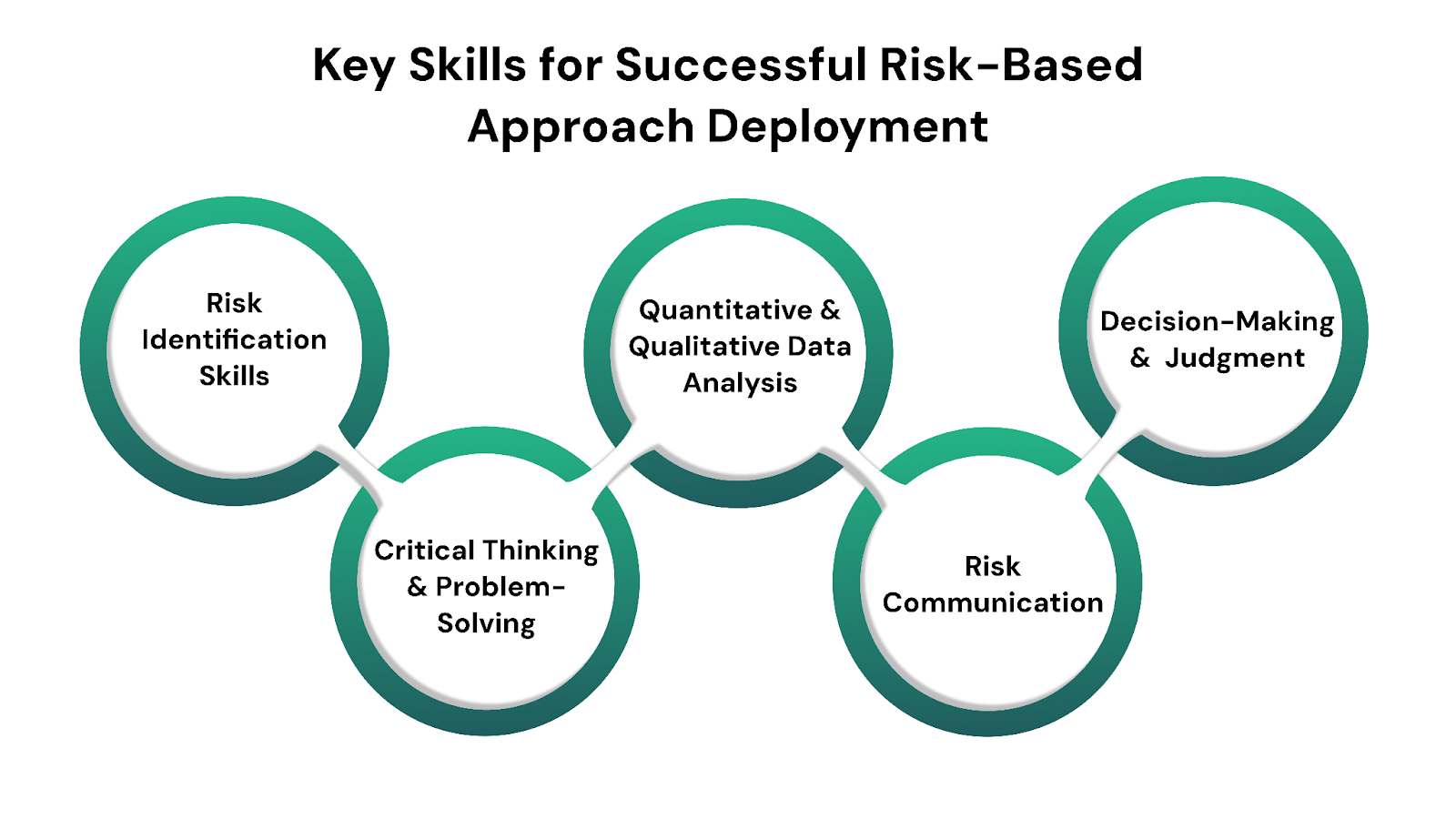
Deploying a successful risk-based approach requires a combination of technical, analytical, and interpersonal skills. These skills help ensure that risks are identified, assessed, prioritized, and mitigated effectively. Here are the key skills needed for successful risk-based approach deployment:
- Risk Identification Skills
It is the ability to systematically identify and categorize potential risks that could affect the organization. This includes both internal (e.g., operational, financial) and external (e.g., market, environmental) risks. Without identifying risks, an organization cannot effectively manage or mitigate them.
- Critical Thinking and Problem-Solving
It is the ability to think critically and evaluate different risk scenarios, and use analytical skills to come up with effective solutions. Critical thinking helps assess not just immediate risks but also underlying causes and long-term consequences, leading to better solutions.
- Quantitative and Qualitative Data Analysis
It is the proficiency in data analysis to identify trends, outliers, and patterns in both numerical and non-numerical data. This is important for both assessing existing risks and anticipating future ones. Accurate data analysis enables more precise risk predictions and enables organizations to measure the effectiveness of risk mitigation strategies.
- Risk Communication
It is the ability to clearly communicate risk findings, strategies, and mitigations to various stakeholders at different levels of the organization. It includes executives, teams, and external partners. Effective communication ensures that everyone involved understands the risks, their impact, and the steps needed to address them.
- Decision-Making and Judgment
It is the ability to make decisions under uncertainty, especially when the risk profile is not fully known or when there are competing priorities. Good decision-making in the face of risk can help organizations avoid negative consequences and seize opportunities for improvement.
Enhancing Your Risk-Based Approach with VComply
By shifting the focus from meeting regulatory standards to addressing real-world security threats, organizations are better equipped to handle emerging risks. VComply can play a critical role in this transformation by streamlining compliance processes and helping businesses implement a risk-based strategy effectively.
Through the integration of tailored risk mitigation plans and real-time monitoring, VComply enables organizations to be proactive in their approach.
Let’s explore some of the key features of VComply that make it an invaluable tool for risk-based approach.
- Tailored Risk Mitigation Plans
A risk-based approach requires designing security measures that address the most pressing risks. VComply allows businesses to create customizable compliance plans tailored to the unique needs of various teams, departments, or regulatory environments. This ensures that each part of the organization focuses on risks relevant to them, rather than applying a one-size-fits-all solution.
- Real-Time Monitoring for Proactive Risk Management
Real-time insights are crucial for effective risk management. VComply’s dashboards offer immediate visibility into the compliance status, enabling businesses to identify and address risks before they escalate. Ongoing monitoring of compliance activities ensures that organizations stay ahead of vulnerabilities and fine-tune their approach as needed.
- Centralized Compliance Management
VComply simplifies managing policies, documentation, and compliance activities in a single platform. This enables organizations to maintain a clear and comprehensive view of their compliance landscape, ensuring alignment with organizational risk priorities and up-to-date records for audits.
- Efficient Reporting and Audit Tools
VComply’s reporting tools ensure the organization remains audit-ready. By generating comprehensive reports and maintaining detailed audit trails, it helps track both compliance status and risk management efforts. These features provide transparency and accountability, empowering organizations to manage risks efficiently while ensuring compliance.
- AI and Machine Learning Integration
As threats grow more sophisticated, VComply integrates with AI and machine learning tools to predict and respond to threats proactively. AI-driven threat detection identifies anomalies in real time, while predictive analytics helps anticipate future risks.
Request a Free Demo Today and discover how VComply can enhance your risk-based approach. Streamline your processes, tailor your strategies, and ensure your organization is prepared to tackle the most relevant risks with confidence and efficiency.

Final Thoughts
In today’s digital landscape, a risk-based approach is not just a luxury—it’s a necessity. By quantifying risks in financial terms, businesses can allocate resources more effectively to address significant threats.
This approach enhances protection, strengthens resilience against cyber incidents, and reduces downtime and costs. Furthermore, it supports long-term sustainability by focusing on robust defenses rather than quick fixes.
It also gives organizations a competitive edge, instilling confidence among customers, investors, and partners in their commitment to data protection and privacy. As we’ve seen, a well-implemented risk-based approach provides more than just compliance—it creates a comprehensive framework for sustainable security and operational success.
Frequently Asked Questions
A risk-based approach is a method of managing compliance, security, and business risk by focusing resources on the areas with the highest likelihood and impact. Instead of treating every requirement or control equally, organizations identify the risks that matter most, prioritize them, and apply controls based on the level of exposure. This helps teams move beyond checklist-based compliance and focus on real-world threats.
A risk-based approach is important because it helps organizations use limited time, budget, and staff more effectively. By prioritizing high-impact risks first, teams can reduce exposure, strengthen resilience, and make better decisions about controls, monitoring, and remediation. It also helps compliance teams focus on actual risk, not just documentation.
To implement a risk-based approach, start by identifying key risks across the organization. Then assess each risk based on likelihood and impact, assign owners, map risks to controls, define mitigation actions, and monitor changes over time. The process should be reviewed regularly because risks change as regulations, systems, vendors, and business operations evolve.
The main benefits of a risk-based approach include better resource allocation, stronger risk mitigation, improved decision-making, greater flexibility, and more effective compliance management. It helps organizations focus attention on the risks most likely to affect operations, financial performance, regulatory obligations, security, and reputation.
A checklist-based approach focuses on completing predefined requirements, often treating all controls or tasks with the same level of importance. A risk-based approach looks at actual exposure and prioritizes actions based on likelihood, impact, and business context. This makes compliance more practical because teams can focus first on the risks that could cause the greatest harm.
GRC software supports a risk-based approach by helping teams centralize risks, assign owners, map controls, track mitigation actions, collect evidence, monitor key risk indicators, and report on risk status. It gives compliance, risk, and leadership teams better visibility into high-priority risks and helps ensure that remediation work is tracked to completion.