

Organizational Trust: How Compliance Execution Builds Credibility
Trust used to be shaped by reputation, relationships, and brand perception. Today, it’s shaped by visibility. In 2026, every policy leaves a trail. Every control can be tested. Every promise can be verified. Regulators, customers, employees, and investors no longer rely on what organizations say; they look at what systems prove.

Organizational trust is no longer built through mission statements or annual reports alone. It is built through daily execution: how access is controlled, how risks are managed, how incidents are resolved, and how policies are enforced when it matters.
Organizational trust is the confidence employees, customers, regulators, investors, and partners have that a company will act with integrity, follow through on commitments, and operate with accountability. In 2026, that trust is no longer built through brand messaging alone. It is built through proof.
How Does Compliance Build Organizational Trust?
Compliance builds organizational trust by proving that an organization can follow its commitments in practice. When policies are enforced, controls are tested, risks are managed, incidents are documented, and evidence is available, stakeholders can see that the organization is accountable and reliable.
Organizational trust is not only about what a company says. It is about what the company can prove through governance, risk management, compliance execution, audit trails, and transparent reporting.
This is why organizational trust and compliance are now closely connected. Trust depends on whether policies are followed, controls operate as designed, risks are managed before they escalate, and evidence is available when regulators, auditors, customers, or leadership need it.
Key Takeaways
- Execution as the Primary Signal: In 2026, trust is verified, not just granted. Organizations must move from “declarative trust” (what we say) to “demonstrative trust” (what we prove).
- GRC as a Trust Engine: Modern Governance, Risk, and Compliance (GRC) frameworks are no longer just about avoiding fines; they are strategic tools for building institutional integrity.
- Real-Time Accountability: The use of automated “Compliance Scores” and real-time audit trails provides stakeholders with a live view of an organization’s reliability.
- Stakeholder-Centric Governance: Trust is earned by protecting the interests of every participant in the ecosystem, from the end-user’s data privacy to the investor’s long-term returns.
What Is Organizational Trust?
Organizational trust is the confidence stakeholders have that a company will act with integrity, follow through on commitments, and operate consistently over time. For compliance teams, organizational trust is built when policies, controls, risks, incidents, approvals, and evidence show that the organization is doing what it says it will do.
In regulated industries, trust is closely tied to compliance. Customers want to know their data is protected. Regulators want evidence that obligations are being met. Employees want fair and consistent processes. Investors want confidence that risk is being managed. Compliance provides the structure and evidence behind that trust.
Organizational trust is built not just on stated values, but on visible, repeatable execution across governance, risk, compliance, and daily operations.
Why Organizational Trust Depends on Compliance
Compliance is one of the clearest ways an organization proves trust. It turns values into requirements, requirements into controls, and controls into evidence. Without compliance execution, trust often depends on statements, policies, or leadership promises. With compliance execution, trust becomes visible and verifiable.
| Trust Question | Compliance Proof |
|---|---|
| Can customers trust us with their data? | Privacy controls, access reviews, incident response records |
| Can employees trust the organization to act fairly? | Policies, acknowledgments, investigation workflows, consistent enforcement |
| Can regulators trust our program? | Evidence, audit trails, control testing, remediation history |
| Can investors trust leadership? | Risk reporting, governance oversight, issue tracking |
| Can partners trust our operations? | Certifications, vendor controls, policy governance, audit readiness |
Suggested Read: Why the Future of Compliance Management Lies in Operational Execution
How Compliance Builds Organizational Trust
1. Policies Create Clear Expectations
Policies define how the organization expects employees, vendors, and leaders to behave. But policies only build trust when they are current, accessible, approved, communicated, and acknowledged.
2. Controls Prove Commitments Are Being Followed
Controls show whether policies and compliance requirements are operating in practice. When controls are tested and documented, they give stakeholders proof that the organization is not relying on intention alone.
3. Risk Management Shows Leadership Is Paying Attention
Risk management builds trust by showing that the organization can identify threats early, assign ownership, and act before problems become failures.
4. Incident Response Protects Trust During Failure
Trust is not lost only when incidents happen. It is lost when organizations respond slowly, hide issues, or fail to document remediation. A structured incident response process shows accountability.
5. Audit Readiness Makes Trust Verifiable
Audit readiness shows that the organization can prove what was done, who did it, when it happened, and what evidence supports it. This is one of the strongest signals of organizational trust.
Organizational Trust vs. Brand Trust
Brand trust is what people believe about a company. Organizational trust is what stakeholders can rely on inside the company’s operating system. Compliance connects the two because it proves whether the organization’s promises are supported by action.
| Area | Brand Trust | Organizational Trust |
|---|---|---|
| Built through | Reputation, messaging, customer experience | Governance, accountability, compliance, risk management |
| Measured by | Perception, sentiment, loyalty | Evidence, controls, reporting, audit trails |
| Main audience | Customers and market | Employees, customers, regulators, investors, partners |
| Risk when weak | Lost preference | Regulatory exposure, employee distrust, audit issues, reputational damage |
| How to strengthen it | Better communication and experience | Better execution, controls, policies, reporting, and evidence |
Why Execution Determines Organizational Trust
Many organizations say the right things but fail to execute consistently. When policies are not enforced and controls do not operate as designed, organizational trust declines. Consistent execution proves competence and accountability. When commitments are met reliably, stakeholders trust the organization.
For compliance leaders, execution is where organizational trust becomes measurable. A policy that is never acknowledged does not build trust. A control that is not tested does not build trust. A risk register that is not acted on does not build trust. Organizational trust grows when compliance work is assigned, completed, documented, reviewed, and improved.
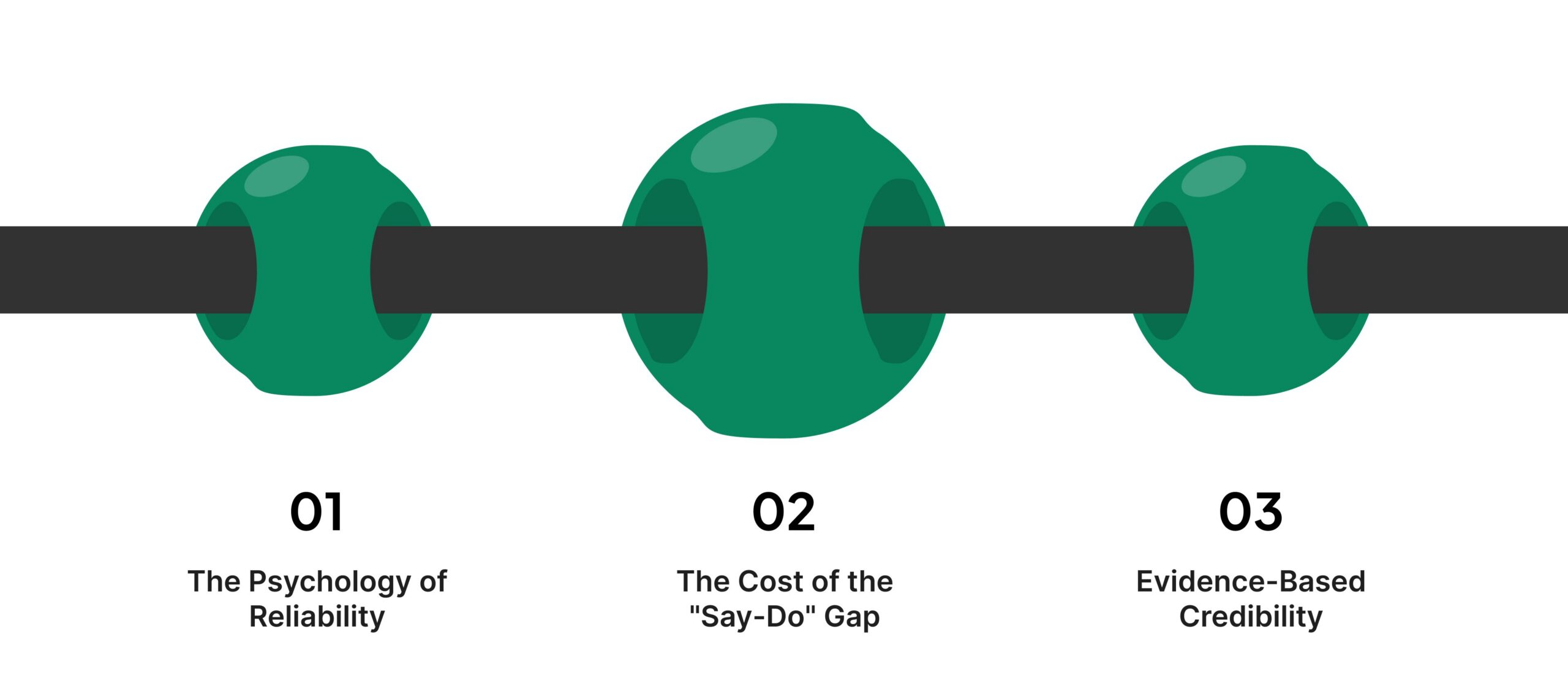
The Psychology of Reliability
Predictability is the bedrock of trust. In GRC terms, this means that your controls must work exactly as designed, every single time.
When a vendor asks for your SOC 2 report, and you can provide a clean, automated dashboard of your control status, you are signaling that your internal processes are disciplined and reliable. This “signal” reduces the friction of doing business and accelerates growth.
The Cost of the “Say-Do” Gap
In 2025, research by Great Place To Work indicated that when employees perceive a disconnect between leadership’s promises and operational reality, attrition rates spike by nearly 30%. This internal erosion of trust eventually leaks out to the public, damaging the brand’s reputation and stock performance.
Execution is the bridge that closes this gap, ensuring that the “Brand Promise” is identical to the “Customer Experience.”
Evidence-Based Credibility
Regulators are no longer satisfied with annual attestations. The SEC and other global bodies are moving toward continuous oversight. By executing a strategy of continuous evidence collection, organizations signal to regulators that they have nothing to hide.
This level of transparency reduces friction with regulators and supports more constructive oversight. Closing the execution gap requires structured governance, defined controls, and a well-implemented GRC framework that ensures accountability across the organization.
Why GRC Is Central to Organizational Trust in 2026
Governance, Risk, and Compliance (GRC) has traditionally been viewed as a defensive shield. However, in 2026, leading organizations are leveraging GRC as an offensive weapon to build organizational trust.
When GRC is executed well, it creates a “system of record” for integrity that is visible to every stakeholder.
Compliance as an Ethical Statement
Compliance is more than just following the law; it is a signal of respect for the rules of the society in which you operate. By using ComplianceOps to automate adherence to frameworks like GDPR or HIPAA, you are telling your customers: “We value your rights enough to invest in protecting them.”
This execution-led approach transforms compliance from a cost center into a trust asset.
Risk Management as a Reliability Signal
Trust is easily broken by “operational surprises”, system failures, supply chain disruptions, or data breaches. Effective RiskOps ensures that these risks are identified and mitigated before they become public-facing crises.
An organization that can demonstrate a mature risk posture signals to investors that its future returns are stable and its leadership is proactive.
Policy Execution: The Internal Trust Contract
Policies are the internal “laws” of an organization. If policies around DEI, sustainability, or data ethics are ignored or poorly executed, organizational trust collapses. Utilizing a dedicated policy management platform ensures that every employee is aware of their obligations and that every policy update is attested to and archived.
This disciplined execution ensures that the corporate culture remains aligned with its stated ethics.
As we move deeper into 2026, the definition of integrity is expanding to include how organizations manage the emerging challenges of AI and ESG.
Signs That Organizational Trust Is Weak
Organizational trust often weakens before a public failure occurs. Common warning signs include:
- Employees do not believe policies are enforced consistently
- Compliance tasks are completed late or only before audits
- Evidence is scattered across emails, spreadsheets, and folders
- Leadership cannot see open risks or overdue actions
- Incidents are handled inconsistently
- Audit findings repeat year after year
- Vendors and partners are not reviewed consistently
- Policy acknowledgments are incomplete
- Controls exist on paper but are not tested regularly
- Employees do not know where to report concerns
These are not only operational problems. They are trust problems. When an organization cannot show that expectations are followed, stakeholders begin to question whether the company is reliable.
Also Read: 15 Key Questions to Consider When Shaping Your Policy Decision
Navigating the 2026 Digital Trust Crisis: AI, ESG, and Transparency
The PwC 2026 Digital Trust Insights reveal that only 24% of organizations are spending sufficiently on proactive trust measures. This “waiting for trouble” approach is no longer viable in an era where AI and sustainability are under the microscope.
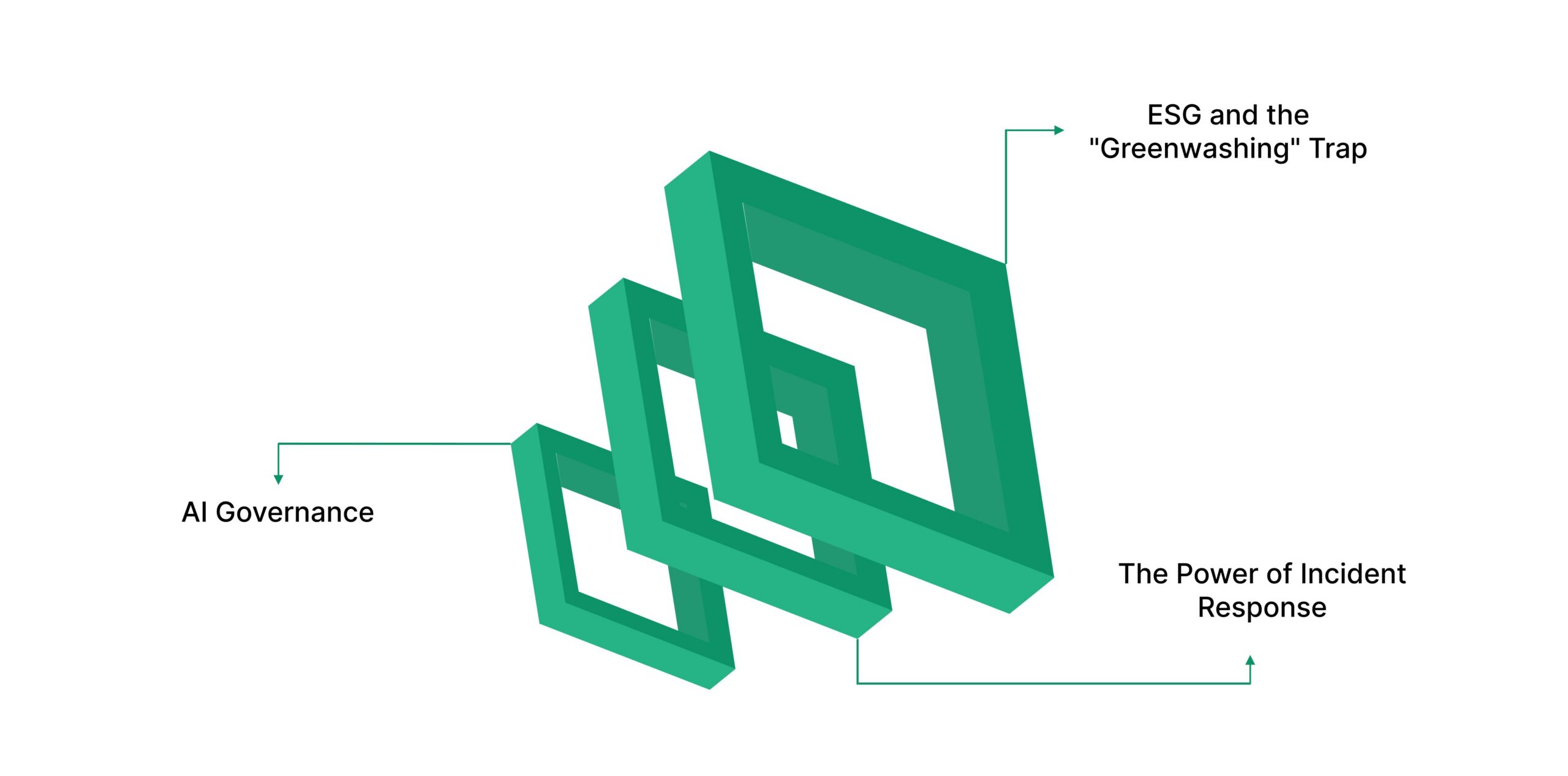
AI Governance
As autonomous agents begin to handle more business functions, the question of “Can we trust the algorithm?” becomes paramount. Organizations that execute a rigorous AI governance strategy, monitoring for bias, transparency, and data lineage, will win the trust of the 2026 consumer.
Conversely, those that deploy “Shadow AI” without oversight risk irreparable damage to their organizational trust.
ESG and the “Greenwashing” Trap
Sustainability is a major trust driver, but only if it is backed by data. Regulators in 2026 are cracking down on vague environmental claims. Signaling trust through ESG execution means providing real-time evidence of carbon reduction, supply chain ethics, and labor practices.
If you can’t prove it with an audit trail, the market will assume you are greenwashing.
The Power of Incident Response
Trust isn’t just about never having a problem; it’s about how you execute when a problem occurs. CaseOps allows organizations to manage breaches and ethics reports with full transparency and accountability.
A swift, honest, and documented response to a crisis can actually increase trust by demonstrating the organization’s commitment to remediation.
Also read: How VComply Helps Organizations Stay Ahead of Regulatory Compliance Updates with AI
While qualitative signals are important, the most successful 2026 leaders are finding ways to quantify trust through performance metrics
Measuring the Unmeasurable: Quantifying Trust Through Performance
How do you know if your execution is actually signaling trust? In the past, this was measured through vague sentiment surveys. In 2026, organizational trust is quantified through high-fidelity operational data.
The Compliance Score
A “Compliance Score” is a real-time KPI that reflects how well an organization is executing its internal and external obligations. By aggregating data from ComplianceOps, leaders can see a live numerical representation of their trustworthiness.
A high score signals that the company’s “engine” is running smoothly and that risks are under control.
Stakeholder Feedback Loops
Trust is a two-way street. Modern enterprises use automated surveys and feedback mechanisms to gauge how well their execution is being perceived by employees and partners. If there is a dip in the internal trust score, leaders can look at their RiskOps dashboards to see if operational failures or lack of transparency are the root cause.
Audit Readiness as a Maturity Marker
An organization that is “always audit-ready” is one that has mastered the art of execution. The ability to produce timestamped, immutable evidence at a moment’s notice is the ultimate proof of institutional integrity. It signals that the organization doesn’t just “do” compliance; it lives compliance.
Scaling this level of execution across a global, distributed workforce requires more than just good intentions; it requires a specialized technology stack.
Scaling Trust: Sustaining Credibility in Global Environments
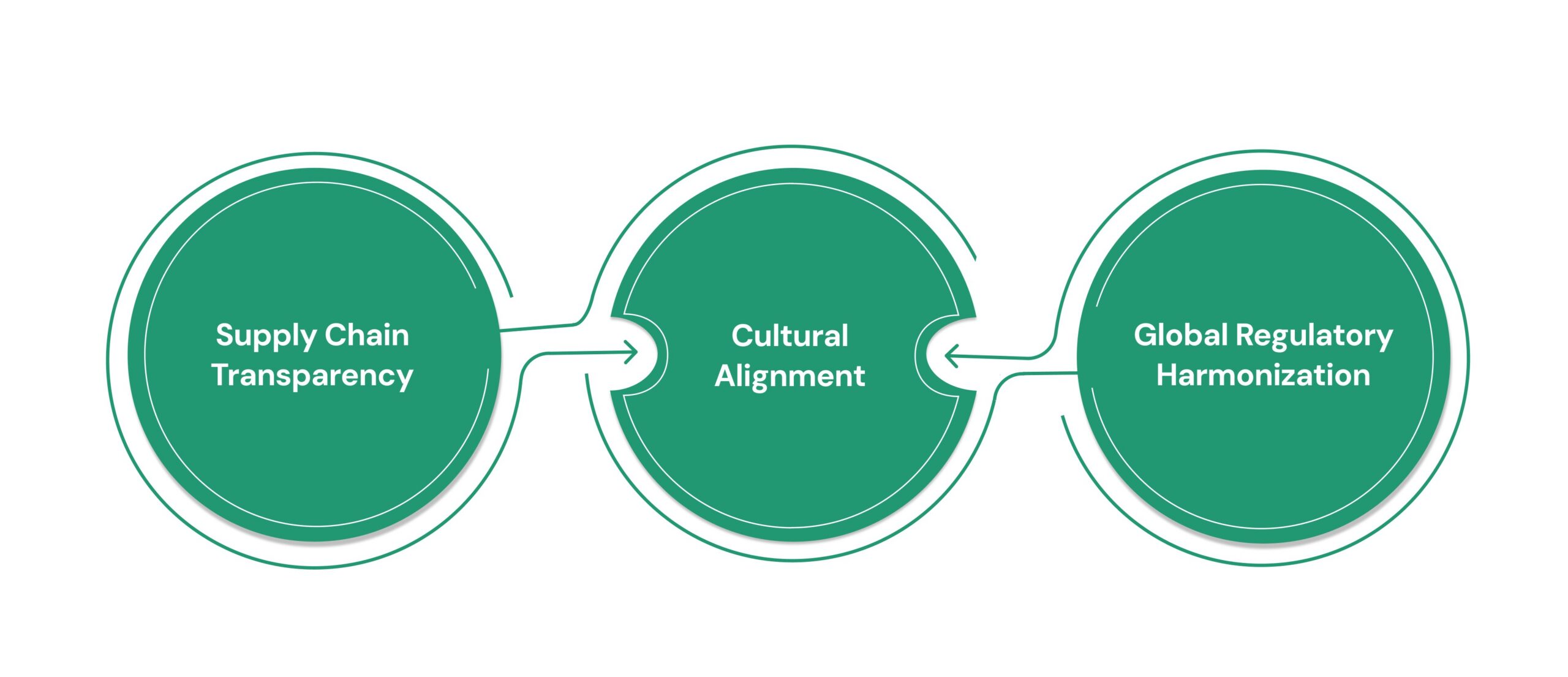
In 2026, business is distributed. Your employees are remote, your suppliers are global, and your customers are everywhere. Maintaining organizational trust across these silos is a significant execution challenge.
- Supply Chain Transparency: You are only as trustworthy as your least compliant vendor. Executing a robust third-party risk management program ensures that your trust signal isn’t weakened by external partners.
- Cultural Alignment: In a remote world, the “Policy as a Contract” becomes the primary culture-setter. Continuous communication and attestation via PolicyOps ensure that the “Trust Signal” is loud and clear, regardless of geography.
- Global Regulatory Harmonization: Using a “Map once, comply many” strategy allows global firms to execute their obligations across multiple jurisdictions without drowning in redundant work. This efficiency signals competence to the market.
Executing a Trust-First Strategy with VComply
In 2026, organizations signal trust through their ability to execute governance consistently and transparently. Continuous compliance has become the mechanism through which trust is demonstrated, to regulators, customers, employees, and investors alike.
VComply enables organizations to operationalize trust by embedding compliance into daily workflows and capturing evidence as work happens, not after the fact.
How VComply supports execution-led trust:
- ComplianceOps – Continuous Compliance Execution
ComplianceOps transforms regulatory obligations into active controls with automated evidence collection. This ensures organizations remain continuously audit-ready and can prove compliance in real time, strengthening trust through transparency. - RiskOps – Early Risk Visibility
RiskOps helps organizations detect and prioritize risks before they impact operations or reputation, reinforcing confidence in leadership’s ability to anticipate and manage disruption. - PolicyOps – Trust Through Consistency
PolicyOps ensures policies are communicated, acknowledged, and enforced consistently across the organization, closing the gap between stated values and day-to-day behavior. - CaseOps – Credible Incident Response
CaseOps enables structured, documented handling of incidents and ethics reports, helping organizations preserve trust even during failures through clear remediation and accountability.
Together, these capabilities help organizations move from declarative trust to demonstrable trust.
Schedule a free demo to see the platform in action.
Wrapping Up
The business landscape of 2026 has no room for “black box” operations. As regulatory pressures mount and stakeholder expectations evolve, the ability to signal organizational trust through consistent execution has become a survival imperative.
Trust is no longer a byproduct of good marketing; it is a byproduct of good governance.
By moving from reactive checklists to proactive, continuous execution, your organization can turn its compliance and risk programs into powerful engines for growth.
When you execute your promises with precision, you don’t just avoid penalties, you build a resilient, credible, and ethical brand that stakeholders are proud to support.
Start a 21-day free trial to see how VComply helps organizations maintain continuous compliance, real-time accountability, and audit-ready execution.
FAQs: Understanding the Role of Execution in Trust
Execution provides the “proof” that back up an organization’s claims. When a company says it cares about security and then consistently executes its patch management and access control policies without fail, it signals competence and reliability.
Trust is built when stakeholders see that promises are consistently transformed into measurable results.
Yes, but it requires radical transparency and perfect execution of a remediation plan. Trust recovery starts with an honest acknowledgment of the failure (integrity), followed by a clear, documented path toward fixing the root cause (competence).
Using tools like CaseOps to track and report on remediation progress is essential for regaining stakeholder confidence.
The decline is largely driven by a lack of transparency and a perceived disconnect between corporate leadership and the workforce. When employees see a “say-do” gap, where leadership speaks of values but executes on contradictory priorities, trust erodes.
Organizations that use PolicyOps to clarify expectations and ComplianceOps to show fair process tend to have much higher levels of internal trust.
Automation removes the potential for human error and “fudged” data. In 2026, stakeholders trust systems more than they trust individual assertions. An automated audit trail provides an objective, immutable record of execution that is far more credible than a manual spreadsheet.
Automation signals that the organization has invested in a “fail-safe” approach to its obligations.
Trust is about discipline, not just budget. Even a small organization can signal credibility by choosing a few key frameworks (like SOC 2 or ISO 27001) and executing them perfectly.
By using a scalable GRC platform like VComply, small businesses can automate the “heavy lifting” of evidence collection, allowing them to compete with larger firms on the basis of transparency and reliability.